







Quick Answer: Most hepatitis B rapid test mistakes come from not using enough blood, opening the test too early, or misreading faint lines. These simple errors can lead to invalid or false results. Always read the instructions carefully, warm your hand before the fingerprick, and make sure the test has a control line before trusting the outcome.
First: What Symptoms Might Push You to Test?
Most people don't take a hepatitis B test because they're feeling great. It usually starts with a weird body cue, a nervous text from a partner, or a quiet panic after scrolling WebMD. Maybe it was nausea that wouldn’t go away. Maybe your urine looked dark, or your eyes had a yellowish tinge you swore was just the bathroom lighting.
Hepatitis B is notorious for its silence. Many people have no symptoms for weeks or even months. When symptoms do show up, they can look like everyday stress or the flu, fatigue, loss of appetite, mild fever, maybe some joint pain. But in some cases, especially if the infection is acute, you might notice signs that scream “test me now,” even if they don’t say hepatitis out loud.
Here’s a closer look at what symptoms might trigger someone to grab a rapid test kit:
| Symptom | Why It Matters |
|---|---|
| Dark urine or pale stool | May indicate liver inflammation or bile duct issues from viral hepatitis |
| Yellowing of skin or eyes (jaundice) | Classic symptom of liver strain, common in acute hepatitis B cases |
| Nausea, vomiting, or abdominal discomfort | Often mistaken for food poisoning or PMS, but can be liver-related |
| Chronic fatigue | One of the most common early symptoms, especially in chronic infection |
| Fever and body aches | Can mimic the flu, but when paired with other symptoms, may signal something more serious |
Figure 1. Early hepatitis B symptoms are vague and easily mistaken for more common illnesses. This makes accurate testing all the more crucial.
Now that we know what might lead you to test, let’s get into what might go wrong, and how to stop the spiral before it starts.
Why Rapid Tests Fail (And It’s Not Always Your Fault)
It’s tempting to blame yourself when the test doesn’t work. When the result looks weird. When no line shows up, or the line is too faint, or the cassette leaks blood like a horror movie prop. But here’s the truth: some of these failures come from the test itself.
Like all medical devices, rapid kits are only as good as their handling. If the box was stored in a bathroom with wild humidity swings, if it was exposed to heat during shipping, or if it's past its expiration date (yes, that matters), accuracy can tank, even if you followed instructions perfectly.
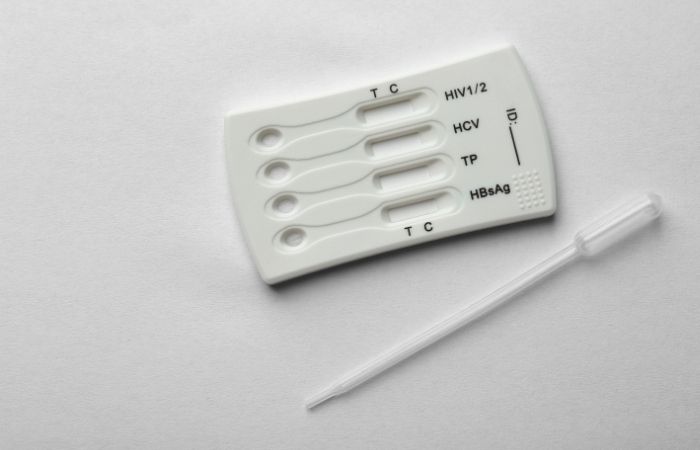
Then there’s the fact that many rapid hepatitis B tests only detect HBsAg, that’s the hepatitis B surface antigen. They don’t detect antibodies (like anti-HBs or anti-HBc), so they won’t tell you if you had the virus and cleared it, or if you're vaccinated. And they definitely won’t tell you if you’re immune. So if you’re trying to confirm a past infection or immunity status, you're using the wrong tool altogether.
Still, most test failures are user-driven, and completely preventable. That’s where we’re headed next.
People are also reading: Painless but Contagious: The Truth About Syphilis Sores
Common Mistakes That Wreck Your Result
- Not Enough Blood: Most rapid test kits require a precise amount of blood, usually 1–2 full drops. Half a drop won’t cut it. And if you accidentally dilute it with too much buffer or don’t fill the pipette properly, the test may not react at all. Result: invalid or false negative.
- Touching the Test Area: If you touch the collection well or the strip area before adding the sample, you risk contamination. Even skin oils can mess with the chemistry. Gloves help, but only if you’re not accidentally bumping the swab tip or cassette window mid-test.
- Bad Fingerprick Technique: If your hands are cold, blood won’t flow. If you don’t use the side of the fingertip or squeeze too hard, the sample might be thin or hemolyzed. Always warm your hands, use the lancet on the fleshy side, and let gravity do most of the work.
- Opening the Cassette Too Soon: If you open the foil pouch before you’re ready to test, moisture in the air starts degrading the chemicals. You have maybe 15–20 minutes before that strip starts to go bad. Prep first, unseal last.
- Misreading the Result Window: A faint line is still a line. The control line is your sign that the test ran correctly. If that line is missing, the result is invalid, no matter what else shows up. If both the control and test lines appear, even faintly, the test is considered positive for HBsAg.
In a moment, we’ll walk through a step-by-step testing process with a real-world timeline and everything you should (and shouldn’t) see at each point. But first, a look at what those results actually mean.
How to Actually Use a Hep B Rapid Test (Without Screwing It Up)
It’s one thing to read the pamphlet in the box. It’s another to do it while your hands are shaking, you’re sweating under a bathroom light, and you’re terrified that one drop of blood is about to define your next six months. That’s why this guide doesn’t just repeat the instructions, it walks through what’s happening at each stage, what can go wrong, and how to know you did it right.
Let’s say you’re testing alone, maybe after a one-night stand where the condom “didn’t make it.” You ordered a rapid test kit because you wanted answers faster than a clinic waitlist. Here’s what your testing timeline actually looks like.
Setup
Before you tear open the foil pouch, stop. Wash your hands thoroughly, then dry them with a clean towel. Find a flat surface to work on, bathroom counter, kitchen table, anything level. Lay out all components: lancet, alcohol pad, buffer dropper, cassette, pipette, gauze.
Do not open the test cassette until you’re fully prepped. The moment it hits air, the clock starts ticking. Humidity in the room begins breaking down the reagents. You’ve got maybe 15–20 minutes to use it before it’s less accurate than a magic 8-ball.
Fingerprick
Use the alcohol pad to clean the side of your fingertip, ideally the ring or middle finger. Let it dry (wet fingers smear blood). Use the lancet to puncture the side, not the pad, and let gravity pull the blood out. Don’t squeeze like you’re milking a lemon; it’ll mess with the blood’s composition. If blood flow is slow, run your hand under warm water for a minute first. You want a full, rounded drop, not a smear.
Use the pipette to collect 1–2 drops. That’s it. No extra, no shortcuts. Just enough to fill the line on the dropper. Don’t touch the tip to your skin. You’re not painting, it’s not a brush.
Test Application
Now open the cassette pouch. Drop the blood into the sample well (not the results window, yes, people mess this up). Then add the buffer solution, usually one or two drops, depending on the brand. Make sure the cassette is lying flat. If it’s tilted or propped up, the sample won’t flow evenly, and you’ll get weird line development or failed results.
Start the timer. Most tests take 10–15 minutes to develop fully. Reading too soon can give a false negative. Waiting too long can lead to “ghost lines” that make the result look positive when it’s not.
Reading the Results
This is where the stress hits. You’ve waited the right time, you’re staring down at the window, and now you have to interpret the outcome. Here’s what you might see, and what it actually means.
| Visible Lines | What It Means | What to Do |
|---|---|---|
| Only control line (C) | Negative for HBsAg | No active infection detected. Retest if recent exposure. |
| Control line (C) and test line (T) | Positive for HBsAg | Possible hepatitis B infection. See a doctor for confirmation and further testing. |
| No control line | Invalid test | Test failed. Discard and retest with a new kit. |
| Very faint test line + control line | Still considered positive | Retest for confirmation. Line strength does not affect result. |
Figure 2. Line visibility doesn’t always equal certainty. Control lines indicate functionality, not your status. If it’s not there, don’t trust the test, do it again.
How Long After Exposure Should You Test?
This part gets murky. Most rapid hepatitis B tests detect HBsAg, which typically shows up in the blood within 4 to 12 weeks after infection. If you test too early, you might get a false negative, not because you’re in the clear, but because the viral markers haven’t built up enough to trigger a positive result.
If your test is negative but you had a high-risk exposure recently (needle stick, condom failure, known-positive partner), don’t wait for symptoms to show up. Retest after the window period. Or better, get a full lab-based panel that includes antibody testing so you can see the full picture: past exposure, current infection, and immune status.
Hepatitis B is sneaky like that. The virus doesn’t always announce itself, but when it does, it’s not subtle. Liver damage isn’t a drama you want unfolding silently.
Check Your STD Status in Minutes
Test at Home with Remedium7-in-1 STD Test Kit

 For Men & Women
 Results in Minutes
 No Lab Needed
 Private & Discreet
Order Now $129.00 $343.00
For all 7 tests
That Can’t Be Right… Or Can It? Breaking Down Rapid Test Myths
“The line’s too faint, so it doesn’t count.” “My friend said one drop of blood is enough.” “You can reuse the lancet, it’s just your own blood.” “That test’s expired but still sealed, it’s probably fine.”
The internet is full of bad takes. Most of them don’t come from malice. They come from fear, embarrassment, or straight-up exhaustion. Testing for something like hepatitis B brings up all the stuff we don’t like to admit: who we sleep with, how careful we really are, what we’ve ignored. So when people post, they often post in panic. And panic rarely delivers medically accurate advice.
Let’s break down a few of the worst offenders before they cost someone real peace of mind, or worse, a false sense of safety.
The Faint Line Myth
If a test has a control line and a test line, no matter how faint, that is a positive result. Don’t listen to anyone telling you it has to be dark, bold, or visible from orbit to count. The intensity of the test line does not indicate how infected you are. It’s not a mood ring. It just says: “Yes, this antigen is present.” Full stop.
The “One Drop Is Enough” Myth
Most kits require a precise volume, usually 30–50 microliters. A drop is not a drop is not a drop. Too little, and the buffer can overwhelm the sample. Too much, and it can flood the strip, obscuring results or causing invalid readings. If you’re not filling the pipette line, you’re not giving the test what it needs to work properly.
The Reused Lancet Mistake
Aside from the hygiene risk (you know, bloodborne pathogens?), reused lancets dull out. That means less clean puncture, more squeezing, more tissue trauma, and often less usable blood. If you don’t bleed well, the test won’t read well.
The Expired Test Gamble
Expired tests are a crapshoot. The reagents degrade. Even if the lines appear, their sensitivity drops, and you may miss a weak positive. These are not canned beans. Shelf life matters.
Real Testing Mistakes (Yes, These Happened)
Case 1: Abdul, 32, tested negative. Two weeks later, his partner tested positive and accused him of lying. He hadn’t lied, he’d tested six days after a high-risk exposure. The virus hadn’t shown up yet.
Case 2: Lia, 25, misread a very faint test line as a smudge. Tossed the kit. Months later, routine blood work showed active hepatitis B. She hadn’t followed up because she thought the result was invalid.
Case 3: Matt, 42, reused a test that had been opened the day before. It was easier than ordering a new one. It also returned no result. Waste of time, waste of hope.
These aren’t cautionary tales to shame people. They’re reminders that even smart, careful adults make mistakes when panic is in the mix. That’s why knowing how the test works, and what to avoid, isn’t just useful. It’s necessary.
Common Mistakes and How to Avoid Them
| Mistake | What Happens | Fix It By |
|---|---|---|
| Not enough blood applied | False negative or no result | Warm hand, puncture side of fingertip, let blood drip naturally |
| Reading test too early | Test line hasn’t developed | Wait full 15 minutes. Don’t read early out of anxiety. |
| Opened cassette before prep | Humidity degrades test strip | Only open when everything else is set up |
| Faint test line dismissed as invalid | Missed positive result | Faint = positive if control line is present |
| Expired kit used | Reduced sensitivity, risk of error | Check date before using. Discard old tests. |
Figure 3. Most hepatitis B test errors can be fixed, or avoided entirely, with small adjustments and clearer understanding.
What to Do After a Positive Hep B Test
Let’s say the line is real. The control line is present, the test line is faint but visible, and you’re now staring at the cassette like it just cursed you. What happens next?
First: don’t spiral. This test isn’t a final diagnosis. Rapid hepatitis B kits detect HBsAg, a surface antigen that shows up in early or ongoing infection. It doesn’t tell you when you got it, how long it’s been in your system, or whether your liver is damaged. And it absolutely doesn’t mean you’re contagious forever or beyond hope.
Your next step is a confirmatory blood test through a lab. This will include a full hepatitis B panel: HBsAg, anti-HBs, anti-HBc (IgM and IgG). These results will show whether the infection is acute, chronic, resolved, or even a false positive. Yes, those happen. Especially if you’re immunosuppressed, recently vaccinated, or using a low-sensitivity kit.
You should also tell any recent partners, even if the result isn’t confirmed yet. It’s not about blame. It’s about care. Exposure can happen through sex, blood, shared needles, or even razors and toothbrushes in close quarters. Most people who pass it on don’t know they’re carrying it. That could’ve been you yesterday. It doesn’t have to be you tomorrow.
When to Retest, and Why It Matters
If your result was negative but you were exposed recently, you need to retest. Here’s a timeline to work from:
| Days Since Exposure | What to Know |
|---|---|
| 0–21 days | Too early for HBsAg to show. Rapid test likely negative. |
| 21–42 days | HBsAg may appear. Early positives possible. Retest if symptoms. |
| 42–90 days | Ideal window for accurate detection. Most acute cases show by now. |
| 90+ days | If still positive, may indicate chronic infection. Full panel recommended. |
Figure 4. Understanding window periods prevents false reassurance and ensures timely detection of hepatitis B infection.
If your first test was invalid, you don’t need to wait. Just get a new kit and do it properly, ideally with all the mistakes we outlined firmly in your rearview.
Prevention, Vaccines, and the Future of Testing
There’s one thing hepatitis B has that many STIs don’t: a highly effective vaccine. If you test negative, and you’re not immune, it’s not just an opportunity, it’s a call to action. Three shots over six months and you’re protected for decades. You don’t need to dodge it forever. You can just block the door.
Vaccination is especially crucial for people with multiple partners, anyone living with or dating someone who’s HBV-positive, healthcare workers, and people born in countries where the virus is common. The CDC recommends all adults up to age 59 get vaccinated at least once in their life. For those 60+, it’s still worth it if you’re at risk.
Meanwhile, rapid tests are getting better, faster, more sensitive, less prone to error. But they still rely on you. Your hands. Your setup. Your willingness to do it right even when you’re anxious. They’re not magic. They’re tools. And like any tool, their power depends on how they’re used.
So the next time you test, or the first time you do, bring patience. Bring care. And bring knowledge. You’ve got that part handled now.
People are also reading: Took a Trichomoniasis Test at Home? Here’s Exactly What to Do Next
FAQs
1. Can I get a false negative on a hepatitis B rapid test?
Yeah, you can. It’s not super common, but it happens, mostly when people test too early. Like, “three days after I panicked” early. The virus needs time to show up in your blood, and if you test before that, the strip won’t catch it. It's not magic, it's science. Wait a few weeks. Then test again if you're still freaking out, or better yet, get a proper lab test to settle it.
2. I saw a faint second line. Is that real or am I hallucinating?
Real. If there’s a line, no matter how ghostly it looks, it's a positive. People love to convince themselves it doesn't count unless it’s bold enough to punch them in the face, but that’s not how antigens work. A faint line is still the test saying “Yep, there’s something here.” Don’t argue with it. Confirm it at a lab.
3. Does hepatitis B just go away sometimes?
Sometimes, yes. If you're a healthy adult and it’s a new infection, your immune system might boot it out in a few months like an unwelcome houseguest. But if it sticks around longer than six months, it could turn chronic. That’s when your liver starts getting dragged into the drama. So yeah, some people clear it, others don’t. That’s why follow-up testing matters.
4. Is testing at home really reliable?
It’s reliable if you don’t sabotage it. Seriously. Most “bad” tests are just user error, like using a dried-out cassette or applying half a drop of blood like it’s seasoning. Follow the steps, use a fresh kit, don’t improvise, and you’ll get a decent read. But if something looks off, or your result feels sketchy, trust your gut and get a second opinion.
5. How soon can I test after an exposure?
Not immediately. Sorry. HBsAg usually shows up about 4 to 12 weeks after exposure. If you test earlier than that, you might miss it and think you're in the clear when you’re not. Best move? Wait about six weeks. If you’re still worried or something feels off, test again at the three-month mark.
6. Can I just reuse the lancet or kit if it’s still clean?
Sure, and while you’re at it, why not reuse a tissue too? Kidding. No, you cannot. Reusing parts messes with accuracy and sterility. Lancets dull fast, and open test strips start breaking down when exposed to air. These kits are one-use for a reason, unless you're into false hope and questionable blood chemistry.
7. What do I do if the test says positive?
Breathe. Then get it confirmed at a lab. A positive rapid test isn’t a full diagnosis, it’s a flag. You’ll want a proper hepatitis panel to know what’s really going on: active infection, past exposure, maybe even a false positive. And yeah, you should let recent partners know. It’s not a confession, it’s basic respect.
8. Should I still get the hepatitis B vaccine if I tested negative?
Yes, unless you like living on the edge. A negative test doesn’t mean you're immune, it just means you don’t currently have the virus. If you’ve never been vaccinated (or don’t remember), getting the shot now is a no-brainer. It’s one of the most effective vaccines out there. And no, you can’t get hepatitis B from it. That’s not how vaccines work.
9. Is hepatitis B even an STD?
Yes. And also… not only. Hep B is an STI, but it doesn’t limit itself to the bedroom. You can get it through blood, shared razors, childbirth, even sketchy tattoo setups. Sex is just one way in. So whether or not you’re sexually active, testing and vaccines still matter.
10. Why doesn’t this test tell me if I’m immune?
Because it's not designed to. It only looks for HBsAg, the surface antigen that shows up during an active infection. To know if you’re immune, you’d need a test for anti-HBs antibodies. That’s a lab job. This kit just answers one question: “Do I have hepatitis B right now?” For anything deeper, you're gonna need the full panel.
How We Sourced This
This article was built using up-to-date clinical guidelines, peer-reviewed research, and user-experience reports related to hepatitis B rapid testing. We prioritized evidence-based information from institutions like the CDC, WHO, and NIH, along with published studies on rapid diagnostic sensitivity and specificity. Below, we’ve highlighted some of the most relevant and reader-friendly sources. Around fifteen reputable sources informed this piece overall.
Sources
1. ASHA — Testing for STIs at Home: What You Need to Know
2. Healthline — We Tried the 7 Best At-Home STD Tests of 2025
3. Verywell Health — Understanding False Positive or False Negative STD Test Results
4. UAB Medicine — Home STD Tests Are Convenient, but There Are Drawbacks
5. Chlamydia Overview — StatPearls / NCBI Bookshelf (includes testing issues)
Reviewed by: Dr. Lena Hart, MPH, PhD, Infectious Disease Epidemiology
Author: Dr. F. David, MD


