







Quick Answer: A faint line in the test area of a syphilis rapid test is usually seen as a positive result. Line strength only shows the presence of antibodies, not how bad they are. It is best to test again to be sure.
Why Rapid Syphilis Tests Show Faint Lines
Rapid syphilis tests look for antibodies, which are your body's way of fighting off Treponema pallidum, the bacteria that causes syphilis. When those antibodies are there, they stick to the test strip's reagents and make a line that can be seen. But not every line is clear and bold. Some are so pale that they look like ghosts.
This happens for a few common reasons:
- Early-stage infection: Antibody levels may still be low.
- Past infection: Antibodies can linger for years after treatment.
- Test nearing expiration: Reagent sensitivity may drop.
- Low sample volume or dilution: You didn’t collect enough blood or buffer.
In all of these cases, a faint line is your test saying: “Something’s here. You should double-check.” It’s not guessing, it’s detecting. And just like a pregnancy test, faint still counts.
If your result looks weird, take a photo immediately and compare it to visual guides like this CDC interpretation page. Lighting can trick your eyes, so photos help remove the guesswork.

People are also reading: What’s the Best At-Home STD Test? Here’s What the Results Showed
Understanding Your Syphilis Test Window
Timing matters. A lot. Syphilis has one of the trickiest window periods of all the common STDs. It can take 3–6 weeks (or longer) from exposure for your body to produce enough antibodies to show up on a rapid test. That’s why a faint line often shows up in people who are in that early antibody buildup stage, or who were treated in the past.
Here’s a quick look at what that window might look like based on when you were exposed:
| Time Since Exposure | What May Happen | Test Result |
|---|---|---|
| 0–14 days | Too early for antibodies to form | Likely negative or invalid |
| 15–30 days | Antibodies start developing | Faint line may appear (early positive) |
| 30+ days | Detectable antibodies present | Clear positive or negative result |
| Post-treatment (months/years) | Antibodies may remain even if cured | Faint or clear positive, follow-up needed |
Table 1. Syphilis rapid test result interpretation by time since exposure. Always confirm positive results with a lab test, especially if you have no symptoms.
Bottom line: A faint line could be your body just starting to react, or it could be an echo from an older infection. Either way, it’s not something to ignore or shrug off. Next up: how to know if your result is valid at all.
What a Faint Line Actually Means on a Syphilis Rapid Test
Let’s cut to it: on most syphilis rapid test cassettes, any visible line in the “T” or test area, no matter how faint, should be considered positive. That line is detecting antibodies your immune system produces in response to Treponema pallidum, the bacteria that causes syphilis. Even a ghost of a line suggests that your body has reacted to the infection at some point.
We get it, faint lines feel sketchy. Maybe it doesn’t look as dark as the control line, or it showed up after a few minutes instead of immediately. But here’s the reality: the intensity of the line doesn’t determine the result, presence does.
If you’ve used a pregnancy test before, it’s a similar vibe. A line is a line. Faint doesn’t mean “almost” or “sort of.” It means positive.
Still not sure? Here’s the basic breakdown:
| Line Appearance | What It Likely Means | What You Should Do |
|---|---|---|
| Clear line in both “C” and “T” areas | Positive result | Get confirmatory testing at a clinic |
| Very faint line in “T,” strong “C” line | Still positive | Act as if it’s positive and retest at clinic |
| Line only in “C” area, no “T” line | Negative result | If you were recently exposed, retest in 3–6 weeks |
| No line in “C” area (even if “T” has a line) | Invalid test | Test again with a new kit |
Table 2. How to interpret different line combinations on a syphilis rapid test cassette.
If your test looks “iffy,” always prioritize clarity. That might mean taking a fresh test, testing with a different brand, or getting a lab-based confirmation. But don’t ignore a faint line just because it feels easier in the moment.
Why Lines Vary in Darkness
Why do some test lines look dark and others barely there? In most cases, it's one of three things:
- Antibody concentration: The signal might be stronger if your immune system made antibodies not too long ago. Sometimes, older or earlier infections cause weaker lines.
- Sample volume: If there isn't enough blood or buffer solution, the results will be uneven.
- Lighting and perception: To be honest? Some test lines are just harder to see in the dark, and stress can make you doubt what you see.
When you check the result, put the cassette on a flat surface near a window or under a bright lamp. Don't tilt it or try to read it in low light. Make sure you have the best chance of seeing it clearly.
Check Your STD Status in Minutes
Test at Home with Remedium7-in-1 STD Test Kit
 For Men & Women
 Results in Minutes
 No Lab Needed
 Private & Discreet
Order Now $129.00 $343.00
For all 7 tests
Timing Matters: When to Read the Result
Most rapid test kits tell you to check the result at 10–15 minutes after starting. Why does that matter?
If you read the test too early, the “T” line might not have developed yet. Read it too late (say, 30+ minutes), and you risk getting what's called a “dry line” artifact, a line that appears from evaporation or background bleed, not actual antibody detection.
Stick to the window printed in the instructions. That’s when the test is calibrated to show an accurate result. If you’re past that window and a line shows up? Take a fresh test and do it again.
Need a visual breakdown of when to check? That’s coming next.
What a Real Faint Positive Looks Like
We wish every result was crystal clear, but faint lines happen more than you’d think. Here’s what that might look like on your cassette:
| Line Pattern | What It Means | Next Step |
|---|---|---|
| Both “C” and “T” lines visible | Positive | Confirm at a clinic or via second test |
| “C” line only, no “T” line | Negative | Retest in 3–6 weeks if recent exposure |
| No “C” line, any “T” line or none | Invalid | Discard and test again with a new kit |
Table 4. How to interpret your syphilis rapid test result based on the lines that appear within the valid read window.
Seeing a faint line can feel like staring into a panic spiral. But knowing what you’re looking at helps you reclaim control.
“I Thought It Was a Smudge”
Jordan, 32, tested with an at-home syphilis rapid test after a one-night stand he later regretted. The control line popped up strong, but the “T” line was barely visible. At first, he thought it was a smudge, just a shadow or maybe a defect. He tossed the test.
“I didn’t want it to be real. It wasn’t even a full line, just this whisper of pink. But the next morning, I couldn’t stop thinking about it.”
He took a second test 24 hours later, and this time the “T” line showed up slightly stronger. That’s when he booked a clinic follow-up. The result? Positive for early latent syphilis.
Jordan’s story isn’t rare. If you’re seeing any second line, faint or not, that’s your cue to follow up. This isn’t about punishment, it’s about knowing, healing, and moving forward.
When to Retest (and When You Don’t Need To)
If you’ve just taken a syphilis test and it showed a faint positive line, retesting isn’t about doubt, it’s about confirmation. Here’s when you should retest:
If the faint line appears but you’re unsure of the timing or instructions If you didn’t use enough blood or buffer fluid If the test was read outside the suggested time window If your last risk exposure was less than 3 weeks ago (you may be testing too early)
But if the test was done correctly, and a faint line appeared during the valid read window? That’s enough to act on. You can confirm with a lab-based syphilis test or a second rapid test from a different brand if you need that peace of mind.
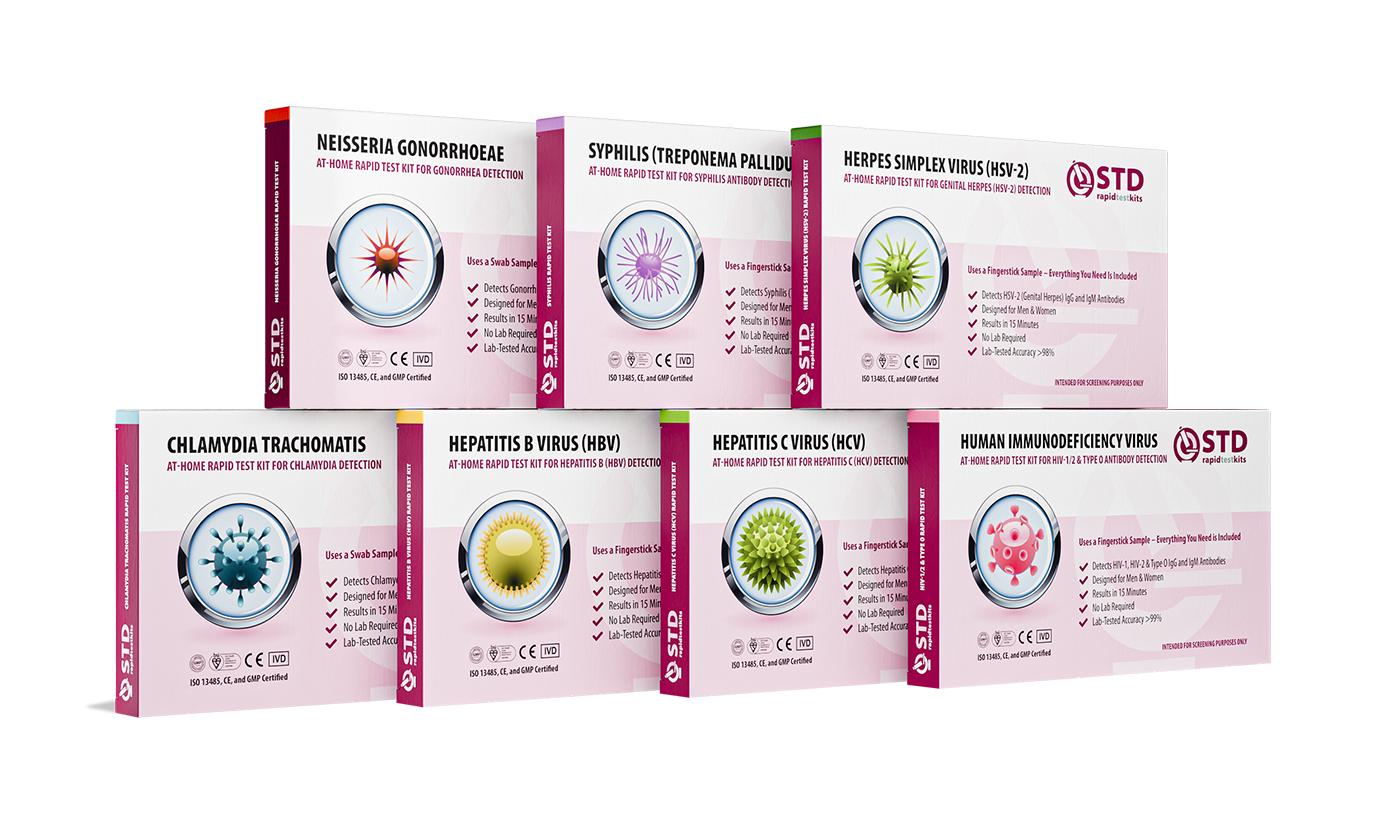
If you’re not sure where to go, or want to check discreetly, our syphilis rapid test kit can be used at home and gives clear results in minutes, no shipping delays, no awkward appointments.

People are also reading: Telling a Partner About STD Exposure, Without Shame or Panic
When the Faint Line Appears, But You Have No Symptoms
So you took a syphilis rapid test. You’re staring at a barely-there second line. And you feel... nothing. No rash, no sores, no weird discharge. Just a quiet panic rising in your chest because you’re wondering: How can I test positive if I don’t feel sick?
This is actually one of the most common experiences with syphilis. It doesn’t always show symptoms, especially in the early or latent stages. According to the CDC, many people carry syphilis for months (even years) without knowing. That’s how it spreads so easily.
Here’s the timeline rundown:
- Primary stage: You might notice a painless sore or ulcer where the bacteria entered (mouth, genitals, rectum).
- Secondary stage: Maybe a rash on your palms or soles. Or flu-like symptoms.
- Latent stage: No symptoms at all. But your blood will still test positive.
Bottom line? Absence of symptoms doesn’t equal absence of infection. A faint line can be your only sign that something’s up. Trust it, and confirm it.
You Took the Test Too Soon, Now What?
Let’s say you had a risky encounter two days ago. You’re feeling the stress, so you grab a syphilis test and run it immediately. The result? Negative. But here's the truth bomb: it might be a false negative, not because the test is broken, but because your body hasn’t had time to react yet.
Syphilis rapid tests detect antibodies, not the bacteria itself. That means your immune system has to notice the invader, build a response, and produce enough antibodies to be picked up by the test. This process usually takes 3–6 weeks post-exposure.
If you test too early, you’re flying blind. The infection could still be incubating. That’s why we recommend:
- Retest 3–6 weeks after exposure if your initial test was negative but you’re still concerned
- Watch for even mild or strange symptoms in the meantime (rash, sore throat, fatigue)
- Limit partner exposure until you’ve tested again and confirmed your status
This window period isn’t a flaw, it’s just biology. The best thing you can do is honor it, and don’t assume you’re in the clear until your body’s had a chance to respond.
| Your Test Result | What It Means | Recommended Action |
|---|---|---|
| Faint “T” line + clear “C” line | Likely positive (even without symptoms) | Book confirmatory testing ASAP and avoid new partners |
| No “T” line, clear “C” line | Negative | If exposure was recent, retest in 3–6 weeks |
| Strong “T” and “C” lines | Clear positive | Seek medical treatment and notify partners |
| No “C” line visible | Invalid test | Repeat with a new test and follow instructions closely |
Table 3. How to interpret your syphilis rapid test result and what to do next based on timing, visibility, and symptoms.
FAQs
1. Does a faint line really mean I have syphilis?
Yeah, it probably does. On rapid tests, a line is a line, even if it’s barely there. That faint “T” line isn’t optional; it means your body has made antibodies against syphilis. It’s not smudged lipstick or a trick of the light. If it shows up in the valid time window, take it seriously and follow up.
2. But mine was so faint, I had to tilt it to even see it. That still counts?
We hear this all the time: “I wasn’t sure it was even a real line.” If you had to squint, adjust your angle, or hold it under your bathroom light, yes, that still counts. These tests don’t care about drama; they care about presence. If you saw anything resembling a second line, even a whisper of one, it's likely positive.
3. Could it be a false alarm?
It's possible, but rare. False positives can happen if the test is expired, stored wrong, or read too late. That’s why confirmatory testing exists. If your faint line is stressing you out (which is fair), head to a clinic or take a second test from a different kit. Peace of mind is worth the follow-up.
4. What if there’s no control line?
Game over. No “C” line means the test didn’t run properly. It’s invalid, no matter what the “T” line says. Grab a new test, and this time double-check the steps: sample size, buffer amount, timer. You’ve got this.
5. Why does the test line even show up faint?
It could be an early infection with low antibody levels. It could be a sample that didn’t mix perfectly with the buffer. Or your immune response just isn’t pumping out a strong signal yet. Think of it like early morning sunlight, it’s still light, just not at full brightness. But it’s still there.
6. When should I take another test?
If your last exposure was recent, like within the last 2–3 weeks, you might’ve tested too early. Antibodies take time to show. Retest in 3–6 weeks if your result was negative but your gut says otherwise. But if you got a faint positive on a valid test? Don’t wait. Get that confirmed and move forward.
7. Is it still possible for me to be positive even if I don't have any symptoms?
Yes, and that's why syphilis is so sneaky. You can be in the early or latent stage of the infection and not show any symptoms, but you can still carry and spread it. If you see a faint line but don't have any symptoms, it's still time to take the next steps.
8. Should I tell my partner if it's only a faint line?
Yes, if the test is real. Faint doesn't mean "maybe." It means you probably got it. Telling your partners helps them get treated too, and it keeps the infection from going back and forth like a bad text thread.
9. How soon can I trust a home test after being around someone who has it?
Most quick syphilis tests look for antibodies, not the bacteria itself. That means they work best after your body has had time to react, which is usually three weeks or more after you were exposed. If you test positive before that time, you might get a false negative.
10. Should I go to a clinic or can I just retest at home?
If you have a reliable brand with clear instructions, you can definitely retest at home. But what if that second faint line comes back? It's time to get the experts involved. Clinics can do a confirmatory test and start treatment right away.
Before You Panic, Get Clear
That faint line isn’t trying to ruin your day, it’s trying to give you information. Whether this is your first test or your fifth, this moment is about clarity, not fear. A faint line doesn’t mean you’re dirty, doomed, or defective. It just means you deserve answers.
Order a syphilis rapid test kit here if you haven’t already. No waiting rooms. No lab confusion. Just results in your hands, fast.
How We Sourced This Article: To make sure that everything was correct and clear, we used clinical guidelines, peer-reviewed studies, and public health reports. This article was based on information from about fifteen reliable sources. Below, we've highlighted some of the most relevant and easy-to-read ones.
Sources
1. CDC 2021 Treatment Guidelines – Syphilis
2. American Sexual Health Association: Understanding Syphilis
3. CDC Laboratory Recommendations for Syphilis Testing, United States
4. MedlinePlus, Syphilis Tests: What They Are and How to Understand Results
5. Illinois Department of Public Health, Syphilis Testing and Laboratory Interpretation
About the Author
Dr. F. David, MD is a board-certified infectious disease specialist who focuses on quick testing and fair STI care. His work combines medical knowledge with communication that puts the reader first to help people make smart, stigma-free choices about their sexual health.
Reviewed by: L. Mahoney, PA-C | Last medically reviewed: October 2025


