





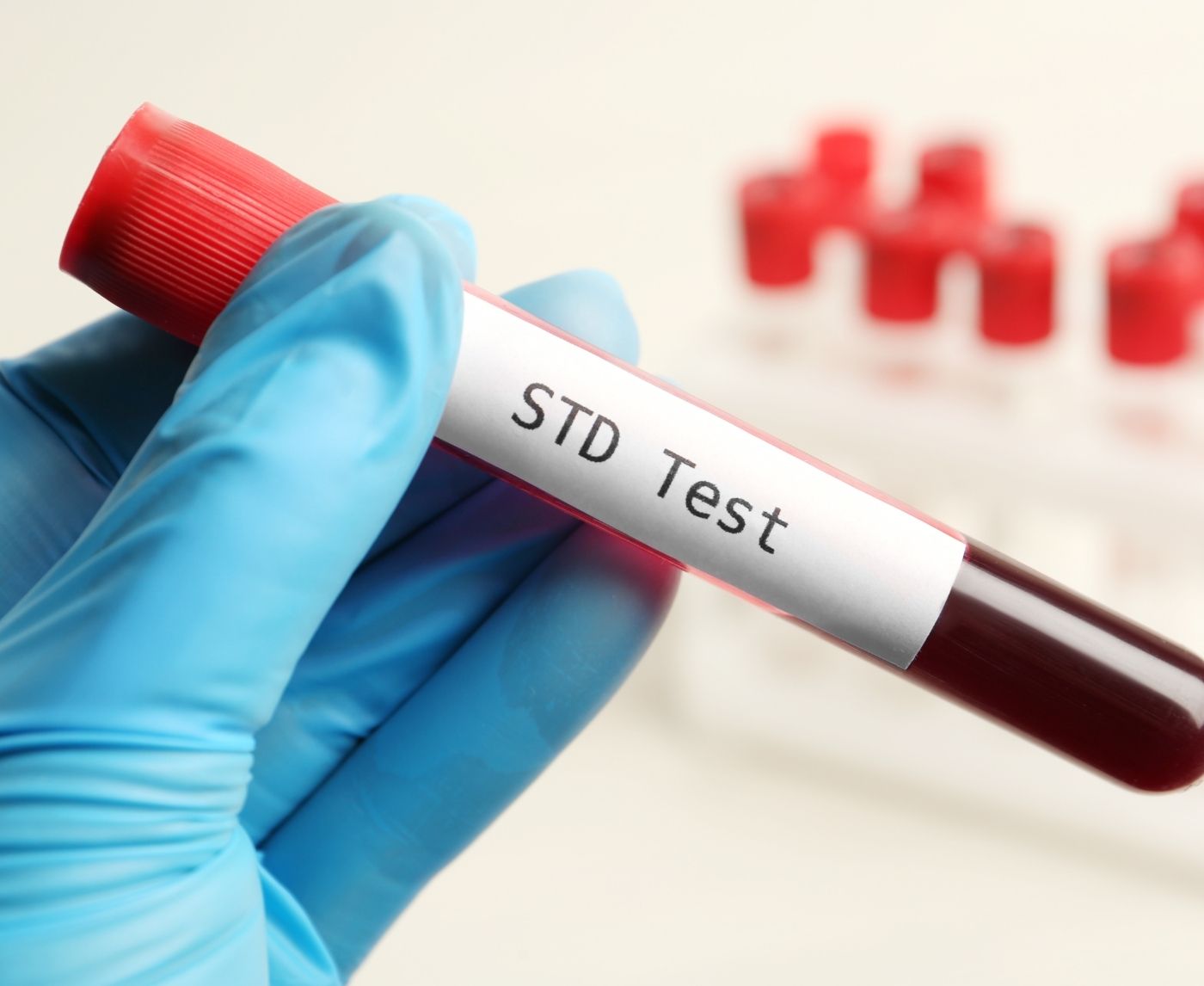

Quick Answer: Gonorrhea rapid tests can miss infections if used too early, improperly, or when symptoms come from a different or co-occurring STD. A negative doesn’t always mean you’re in the clear.
How Rapid Gonorrhea Tests Actually Work (In Plain Language)
A rapid gonorrhea test isn’t magic, it’s science and chemistry packed into a few inches of plastic. Most work by detecting specific proteins from the bacteria Neisseria gonorrhoeae. When those proteins are present in your urine or swab sample, they trigger a visible reaction, like a colored line on a test cassette. If the bacterial load is high enough and you collected the sample correctly, that line shows up. But if you test too early, use the wrong sample type, or the bacteria hasn’t multiplied enough to register, the test can miss it.
At-home rapid tests usually use immunochromatographic assays, basically, a flow test like a COVID rapid test. They’re fast, private, and empowering. But they’re not perfect. Unlike lab-based NAAT (nucleic acid amplification) tests, which look for the bacteria’s genetic material, rapid tests depend on detecting enough bacterial proteins to trigger the result. And sometimes, the signal isn’t strong enough, especially early in the infection.
They're not useless by any means though. It's more like they work best under specific conditions. And understanding those conditions could be the difference between false peace of mind and real protection.
Accuracy, Sensitivity, and What That Really Means
You’ll hear a lot of percentages thrown around when people talk about test accuracy: “95% accurate,” “99% sensitivity,” “specificity above 90%.” But what does that actually mean for your body, your risk, your moment of panic?
Sensitivity refers to how good the test is at catching true positives, people who actually have gonorrhea. Specificity is how well it avoids false alarms, people who test positive but don’t actually have it. The best rapid tests for gonorrhea can reach sensitivities between 85–95% and specificities over 95%, but that still leaves a gap, especially in early-stage or asymptomatic cases.
Let’s break it down visually.
| Metric | Meaning | Impact on You |
|---|---|---|
| Sensitivity | % of true positives the test correctly identifies | If too low, the test may miss your infection |
| Specificity | % of true negatives correctly identified | If too low, test may say you’re positive when you’re not |
| Accuracy | Overall correctness in all tested people | Good to know, but less helpful than sensitivity for self-diagnosis |
Table 1. What sensitivity, specificity, and accuracy really mean for you.
Now layer in the emotional side: you just swabbed your own genitals at 2AM, maybe after crying or panicking or silently Googling symptoms for hours. This isn’t theoretical, it’s personal. The difference between a false negative and a true one isn’t just a number; it’s your next week, your partner’s safety, your peace of mind.
Timing Is Everything: When Rapid Tests Miss Gonorrhea
Picture this: you had unprotected sex on a Friday. By Sunday, something feels off, maybe it burns a little when you pee, or your genitals just don’t feel “right.” You overnight a rapid test and take it that night. It’s negative. But the truth is, that test was never designed to catch an infection that early.
Most gonorrhea infections take 2 to 7 days to incubate, meaning, the bacteria is multiplying, but hasn’t reached detectable levels yet. For some, it can take longer. The ideal testing window with a rapid test? About 7–14 days after exposure. Testing too soon is one of the most common causes of a false negative, and yet, it’s exactly what anxious people tend to do.
In fact, the CDC notes that early testing, especially before the incubation period ends, can miss even high bacterial loads if the body hasn’t started shedding proteins detectable in urine or swab samples. That means you could still be infected, even if your test says “no.”
| Days Since Exposure | Likelihood of Detection | Testing Advice |
|---|---|---|
| 0–3 days | Very low | Wait before testing unless advised by a doctor |
| 4–7 days | Moderate | Testing possible, but may need to retest |
| 8–14 days | High | Ideal window for accurate results |
Table 2. Gonorrhea detection by timing. Source: CDC, Mayo Clinic guidance on STD incubation.
We’re trained to seek immediate answers, especially when our health, sex life, or relationships are on the line. But when it comes to gonorrhea, patience can literally improve your diagnosis. If you test too early, and symptoms don’t resolve or worsen, retest after 10–14 days. That’s not being paranoid. That’s being thorough.

People are also reading: Safe, Sane, and STI-Free: A Real Guide to BDSM and Sexual Health
Co-Infections and Misdiagnoses: Why It Might Not Be ‘Just Gonorrhea’
There’s another twist: maybe it’s not gonorrhea at all. Or maybe it is, but it’s not the only thing. The CDC estimates that co-infection with chlamydia occurs in up to 40% of people diagnosed with gonorrhea. That means even if your test catches gonorrhea, you might still be carrying something else, and if you only test for one, you’ll miss the rest.
Let’s talk symptoms. Burning with urination? Could be gonorrhea. But it could also be chlamydia, a urinary tract infection, or even irritation from recent sex or masturbation. Thick or cloudy discharge? That overlaps too. It’s not always easy to tell, and that’s exactly the problem.
Here’s a scene that plays out more than you’d think: someone tests positive for gonorrhea using a rapid kit, takes the right antibiotics, and thinks they’re clear. But two weeks later, symptoms return. Why? Because they also had chlamydia, which wasn’t caught, or treated. The symptoms weren’t just a fluke. They were a red flag for something the test didn’t screen for.
This is where combo testing matters. If your symptoms don’t match your results, or if you’re in a higher-risk situation (new partner, multiple partners, sex without condoms), consider using a combo rapid test that checks for both gonorrhea and chlamydia. These are available here and offer a more complete view of what’s really going on.
Testing is care, not confession. Covering more ground isn’t overkill, it’s just smart. Especially when your health, your partner, and your peace of mind are all part of the equation.
User Mistakes That Can Wreck Your Results
Sometimes it’s not the test, it’s how it was used. One of the top reasons rapid tests fail isn’t the science, but human error. Swabbing the wrong area, contaminating the sample, not waiting the full development time, or checking too early (or too late), all of these can skew your results.
Here’s how it happens: someone pees mid-stream into a test cup but forgets the instructions said to collect the first part of the stream. Or they swab but only dab the outer labia when it was meant to be an internal vaginal swab. These tiny mistakes can dilute the sample or miss the infected tissue entirely.
Another common misstep? Not waiting the full time for the cassette to develop, or waiting too long and misreading dried results. Some faint lines only appear in the final minute, and looking too early can cause false negatives. But reading after 20+ minutes can produce ghost lines that aren’t valid results.
If you’re unsure about your result, especially if symptoms persist, always plan to retest. No test is foolproof, and one error can cascade into a month of anxiety. You deserve better than guesswork. You deserve clarity.
Check Your STD Status in Minutes
Test at Home with RemediumGonorrhea Test Kit
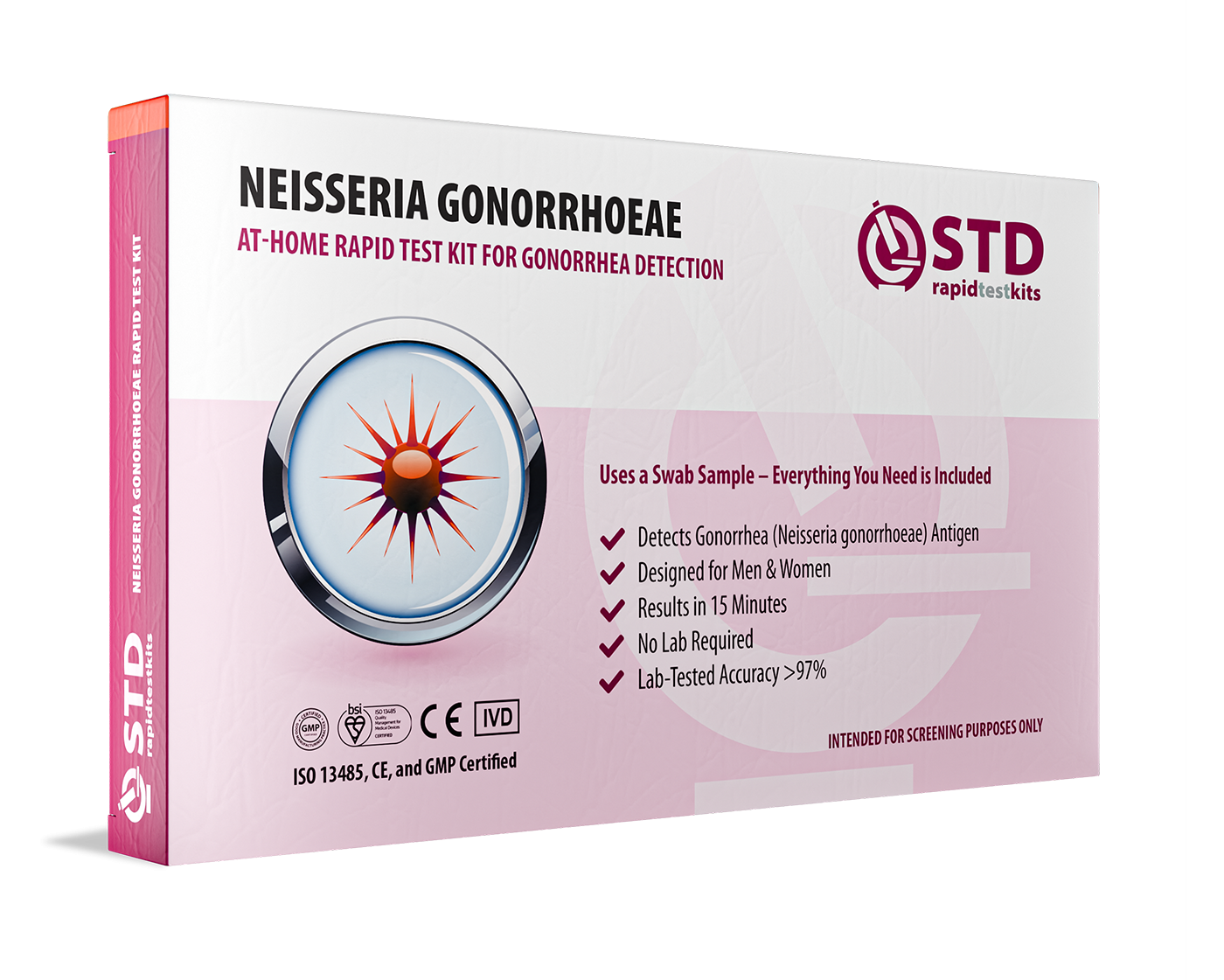
 For Men & Women
 Results in Minutes
 No Lab Needed
 Private & Discreet
Order Now $33.99 $49.00
Faint Lines and Other Confusing Results
There’s nothing like the anxiety of staring at a test cassette under bathroom lighting, holding it up to the bulb, turning it sideways, and whispering: is that a line?
Faint lines on a gonorrhea rapid test can mean several things. Sometimes, it’s a positive, just a low concentration of bacterial proteins. Other times, it’s a faulty strip, improper technique, or residue left from drying. If the line appeared within the official reading window (usually between 10–20 minutes), even a faint one should be treated as a potential positive. But if it appeared hours later, it’s likely not valid.
Tyrell, 24, had a scare after a weekend hookup. “I felt off, like a burning tightness. I took a rapid test and waited exactly 15 minutes. There was a super faint line. I wasn’t sure if I imagined it, so I called the helpline. They said it counts. I got treated and retested two weeks later, turns out I had chlamydia too. If I’d ignored that faint line, I’d still be walking around infected.”
Rapid tests require decisiveness. If your line is faint but visible within the read window, treat it as real. Then take action: confirm with a lab test if you can, start treatment if advised, and don’t rely on a single test if symptoms continue.
When You Should Retest or Confirm with a Lab
Not every negative test is wrong, but not every negative test is enough. So when should you retest?
If you tested within 7 days of exposure, retest after 14 days, even if you have no symptoms. If you’re experiencing burning, discharge, or pain and your test is negative, consider that you might be dealing with a co-infection, or that your gonorrhea levels were too low to detect at the time. Either way, don’t assume you're clear until symptoms resolve, or a follow-up test confirms it.
Lab-based NAAT tests (Nucleic Acid Amplification Tests) remain the gold standard. They’re more sensitive and can detect lower levels of bacteria. If you’ve received a faint line, conflicting results, or have ongoing symptoms despite negative rapid results, ask your doctor or a telehealth service for a confirmatory NAAT. Many clinics offer these, and some telehealth providers can send you a mail-in kit with lab-level sensitivity.
Also, consider re-testing if you've had unprotected sex with a new partner, or if your partner tests positive for gonorrhea, even if your initial result was negative. Testing is not a one-and-done deal, it’s a loop. Exposure, test, treat, confirm, retest if needed. It's how you close the gap between fear and certainty.
We’ve said it before, but it bears repeating: STD Rapid Test Kits can be part of that loop. Use them wisely, retest when needed, and follow up with lab testing if anything feels off.
People are also reading: The Honeymoon Isn’t the Time to Find Out: Get Tested First
FAQs
1. Can a gonorrhea test say negative when I actually have it?
Yep, unfortunately. If you test too early, like within the first few days after sex, it might not pick up the infection yet. Same goes if you swabbed the wrong area or didn’t collect the sample just right. A negative result isn’t a guarantee, especially if something still feels off down there. Retesting is your friend.
2. What’s the deal with faint lines on the test cassette?
Think of faint lines like whispers. They’re subtle but still worth listening to. If that faint line shows up within the time window listed in the instructions, treat it like a positive and follow up. Waiting too long and then seeing a line? Could be a drying artifact. Either way, don’t guess. When in doubt, test again.
3. How long do I need to wait after sex to test for gonorrhea?
Best case? Wait 10 to 14 days. Worst case? You test too early, get a false negative, and walk around thinking you're fine. If you're feeling anxious before that window, sure, test, but just plan to test again later to be safe. Testing once doesn’t mean testing done.
4. My test said I’m negative, but it still burns when I pee. What now?
That burning could be a few things, UTI, chlamydia, even irritation from a wild weekend. Or maybe you tested too soon. If symptoms stick around, trust your body over a plastic strip. Retest. And maybe go for a combo kit next time, because infections love to show up together.
5. If I tested a month after exposure, is that too late?
Nope, not at all. Gonorrhea doesn’t vanish on its own. You can test weeks or even months later and still get a reliable result. If you’ve had new partners since then, though, make sure your timeline matches your most recent exposure.
6. Does every gonorrhea test also check for chlamydia?
Not unless it says so. Some rapid tests are gonorrhea-only, which is fine, but chlamydia often tags along and shows up with similar symptoms. If you’re not sure what you’ve got, a combo test covers more ground. Bonus: fewer sleepless nights.
7. My partner tested positive, but my test is negative. Do I believe it?
Short answer: retest. Long answer: exposure doesn’t always mean instant infection, and timing really matters. If they’re positive, assume you might be too, even if your test says otherwise. A follow-up test (or a lab-based one) is the smart move.
8. Can you have gonorrhea and not know it?
Oh yes. Gonorrhea can be sneaky, especially in women, people with anal exposure, or anyone who assumes “no symptoms” means “no problem.” That’s how it keeps spreading. No shame in not knowing. Just test, treat, and move on smarter.
9. Can alcohol or antibiotics mess with the test?
Drinking? No. But antibiotics? Definitely. If you were on meds, especially ones that fight bacteria, you could kill off just enough gonorrhea to dodge detection, but not enough to clear the infection. Always test before treatment starts, or wait at least two weeks after.
10. Is it okay to use the test while on my period?
Totally fine, especially if it’s a urine test. For swabs, blood can sometimes mess with the read, so if you want super clear results, wait until your period’s done or use a test that relies on urine instead of a vaginal swab.
You Deserve Answers, Not Assumptions
If your body is still sending signals, a negative test isn't the end of the story. Gonorrhea is common, can be treated, and sometimes doesn't show up. But when doctors miss a diagnosis, it can cause problems that no one should have to deal with alone. You deserve real answers, whether it's a test that was done too late, a co-infection, or a faint line that looks like a question mark.
Don’t wait and wonder, get the clarity you deserve. This at-home combo test kit checks for both gonorrhea and chlamydia discreetly and quickly.
How We Sourced This Article: We combined current guidance from leading medical organizations with peer-reviewed research and lived-experience reporting to make this guide practical, compassionate, and accurate. In total, around fifteen references informed the writing; below, we’ve highlighted some of the most relevant and reader-friendly sources.
Sources
1. CDC – Gonorrhea Statistics and Testing Guidelines
2. Gonococcal Infections Among Adolescents and Adults — CDC
3. Getting Tested for STIs — CDC
4. Coinfection with Chlamydial and Gonorrheal Infection — PMC / NIH
5. Chlamydial and Gonococcal Genital Infections: A Narrative Review — PMC / NIH
6. Gonorrhea Laboratory Information — CDC
About the Author
Dr. F. David, MD is a board-certified infectious disease specialist focused on STI prevention, diagnosis, and treatment. He blends clinical precision with a no-nonsense, sex-positive approach and is committed to expanding access for readers in both urban and off-grid settings.
Reviewed by: J. Martinez, MPH | Last medically reviewed: October 2025
This article is for informational purposes, it should not replace all medical advice.


