







Quick Answer: The best time to test for hepatitis B is 4 to 6 weeks after exposure for the most accurate results, though some tests may detect infection earlier. Testing too soon can lead to false negatives.
Who This Article Is For (And What’s At Stake)
This guide is for anyone who’s just had a moment. A moment where something felt off, dangerous, or simply “what if?” Maybe it was sex without a condom. Maybe it was a slip-up at work involving blood. Maybe it was discovering that someone you were intimate with didn’t disclose their hepatitis B status, or didn’t know it themselves.
It’s also for people who don’t have the luxury of waiting weeks to see a doctor or live in a space where getting tested means explaining more than they want to. If you’re on a road trip, couch-surfing, working in a high-risk environment, or navigating sex after trauma, this article is your judgment-free, medically grounded roadmap to timing your test right.
What Testing Too Early Actually Means
“I just wanted to know. I thought if the test said negative, I could stop freaking out,” said Malik, 29, who took a hepatitis B test three days after a needle-sharing incident at a house party. “I got a negative. I told myself I was fine. But I wasn’t.”
Malik’s story isn’t rare. Testing too early after exposure to hepatitis B can result in a false negative, a result that looks clean but simply hasn’t caught up to what’s really happening inside your body. That’s because hepatitis B doesn’t show up in your blood instantly. It has a biological waiting period called the window period, where infection is building but markers like HBsAg (hepatitis B surface antigen) haven’t hit detectable levels yet.
In that time, you might have no symptoms, or you might start feeling strange. Fatigue. Low-grade fever. A weird ache behind the eyes. Maybe nausea. But you’re left wondering: is that the virus, or is it just your anxiety metabolizing in real time?
The Hepatitis B Timeline: Exposure to Detection
The hepatitis B virus doesn’t act instantly. After it enters your body, usually through blood, semen, or vaginal fluids, it begins a quiet process of replication in liver cells. This incubation period can last weeks before any symptom or test reveals what’s happening. Here's how that timeline looks in real life:
| Phase | What’s Happening | Can a Test Detect It? |
|---|---|---|
| 0–7 Days After Exposure | Virus begins to enter liver cells but no immune markers appear yet. | No. Tests will likely be negative even if infected. |
| 2–4 Weeks After Exposure | HBsAg may begin to rise. Body is starting to respond. | Maybe. Some sensitive lab tests may detect infection early. |
| 4–6 Weeks After Exposure | Most people will have detectable HBsAg. Immune system is active. | Yes. This is the most reliable time for testing. |
| 3+ Months After Exposure | Chronic vs cleared infection can be determined via antibodies. | Yes. Confirmatory and immunity testing is most accurate now. |
Table 1. Hepatitis B infection timeline and test sensitivity. Timing matters when choosing the right window for accurate detection.
It’s not just about whether the test works, it’s about whether your body has built enough viral material or antibodies for the test to see anything. And that takes time. Rushing it won’t give you peace. It’ll give you a question mark shaped like a false negative.
The False Calm of a Negative Test
Rita, 34, had sex with a new partner one week before her annual physical. “I mentioned it to my doctor, and they ran a hepatitis panel,” she said. “Negative. I felt relieved. But about a month later, I started feeling... off.”
She developed dark urine, light-colored stools, and fatigue that wouldn’t quit. A second test revealed she was hepatitis B positive. “I didn’t know a test could miss something like that,” she said. Her first result wasn’t wrong, it was just too early.
Rita’s story is proof that when you test matters just as much as whether you test at all. One test isn’t always the final answer. Sometimes it’s just the beginning of the story.
And if you’re reading this after a recent risk, here’s the good news: testing again later doesn’t mean you were wrong to check early. It means you’re being smart. You’re using every tool available, knowledge, timing, and science, to protect yourself and your partners.
People are also reading: STD Testing Anxiety: What It Feels Like, What You’ll Go Through, and What Helps
Exposure Scenarios: Why the Details Change the Timeline
Not all risks are created equal. And not all exposures follow the same timeline. The type of contact you had can influence how early or how confidently a hepatitis B test can give answers. Let’s break it down, without judgment, just clarity.
If you had unprotected vaginal or anal sex with someone whose hepatitis B status is unknown, you're looking at a high-risk exposure. Hepatitis B is 50 to 100 times more infectious than HIV, and it can pass through tiny microtears in mucosal tissue. Add in a known HBV-positive partner, and the risk climbs even higher.
Needle exposures, whether through injection drug use, tattooing in unregulated environments, or medical accidents, are especially high-risk. The virus doesn’t need much blood to transmit. Even invisible traces can be enough. If that’s your scenario, testing between 4 and 6 weeks becomes critical, but some clinicians may recommend an early test followed by a repeat in 6–8 weeks to be sure.
Blood contact during sex, like from menstruation, cuts, or shared sex toys, can also carry risk. Here, the timing again depends on whether you're testing for HBsAg (the antigen indicating current infection) or anti-HBs/anti-HBc (antibodies that show recovery or immunity). A good lab panel will check all three markers, but at-home tests often focus on the antigen window, meaning testing too early may miss infections still incubating.
Then there are the gray zones: oral sex with visible cuts, shared razors or toothbrushes, kissing with open mouth sores. Technically lower risk, but not zero. If you’re here because of one of those moments, you’re not overreacting. You’re just paying attention.
| Exposure Scenario | Risk Level | Recommended Test Timing |
|---|---|---|
| Unprotected vaginal/anal sex with unknown status | High | Initial test at 4 weeks, retest at 8–12 weeks if negative |
| Needle-sharing, tattoo with unsterile equipment | Very High | Test at 4–6 weeks, repeat at 3 months |
| Blood contact during sex (e.g., menstruation) | Moderate to High | Test at 4 weeks, monitor symptoms |
| Shared razors or toothbrush | Low to Moderate | Test at 6 weeks, especially if ongoing risk |
| Oral sex with cuts or sores | Low | Optional test at 6–8 weeks |
Table 2. Hepatitis B exposure scenarios and optimal testing windows. Use this as a guideline, not a substitute for individual risk counseling.
Worried you tested too early? You’re not alone. Plenty of people do. That’s why building in a retest plan is part of the care process, not a failure.
At-Home vs Clinic Testing: What Changes When You DIY
You're standing in your bathroom holding the test cassette. Your hands shake. Your heart thuds. You just need an answer.
At-home hepatitis B test kits can be game-changers for privacy and speed. Most use lateral flow technology to detect the HBsAg antigen, which appears during active infection. But here’s the catch: if you test before that antigen shows up in your blood, you’re going to get a negative result, even if the virus is already inside you.
Clinic-based tests, especially those run through major labs or public health centers, often check multiple markers: HBsAg, anti-HBs, and anti-HBc. That gives a more complete picture, not just of whether you’re currently infected, but whether you’ve recovered, been vaccinated, or were exposed in the past.
If you only have access to a rapid test, make sure you understand its limits. Look for FDA-cleared kits that clearly state which markers they detect and what time window they’re validated for. Read the instructions, yes, every word. Timing, storage, and sample handling all affect accuracy.
And always, always consider a second test later if you test negative early on. Think of it not as repeating yourself, but as following through. Peace of mind isn't always instant. Sometimes it comes in phases, and that’s okay.
If you’re ready to take that next step, you can order a discreet Hepatitis B rapid test kit here or explore combination options to check for other STDs too.
False Negatives and Retesting: How to Avoid Regret
The most common trap people fall into isn’t missing a test. It’s trusting a test too soon.
If you test within the first two weeks after exposure, your chances of a false negative are high. Even with the most sensitive antigen tests, the virus needs time to accumulate in the bloodstream at detectable levels. That means you could be carrying it, and still show a clean result. That clean result isn’t peace. It’s a delay.
Retesting can feel redundant or scary. But it’s actually empowering. It means you understand the science and you’re refusing to let a single data point define your health. For most people, the recommended retest window is 6–12 weeks after the first exposure, especially if the early test was negative and risk was high.
If you were treated for another STD during that period, consider retesting for hepatitis B as well. Coinfections are common, and the window periods may not line up perfectly. The same goes if you started a new relationship or resumed sexual activity while waiting, each new exposure resets the clock.
Remember Malik? His negative test gave him false calm. A follow-up test three weeks later, encouraged by a friend who was studying nursing, caught the real picture. He got treatment. He told his partners. He moved from fear to action. That’s the goal.
If you're unsure when to retest, or how long to wait, use the Window Period Calculator to get a personalized suggestion based on your exposure type and date.
Check Your STD Status in Minutes
Test at Home with RemediumHepatitis B & Hepatitis C Test Kit
 For Men & Women
 Results in Minutes
 No Lab Needed
 Private & Discreet
Order Now $49.00 $98.00
For all 2 tests
What Happens If You Test Positive?
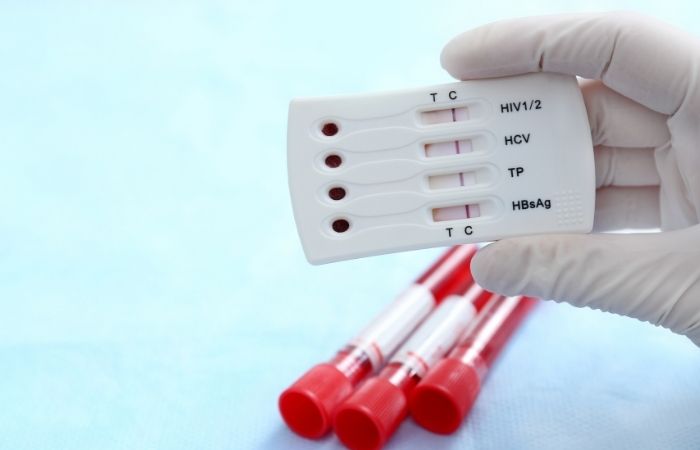
You’re staring at the test cassette. The control line shows up, and then, slowly, a faint test line appears. Your stomach flips. You Google “positive hepatitis B test” so fast your phone screen blurs. What now?
First: breathe. Hepatitis B can feel like a life sentence in the moment you see that result. But for many people, it resolves on its own. Most healthy adults who acquire hepatitis B will clear the virus naturally within six months. That doesn’t mean you do nothing, but it does mean there’s hope built into the biology.
If your result is positive, confirm it through a clinic or lab that can run a full hepatitis B panel. You’ll want to know not just whether you’re infected, but whether it’s acute or chronic, and whether treatment is necessary. Chronic hepatitis B can be managed with antiviral medications and regular liver monitoring. Many people live full, healthy lives with it.
Aysha, 26, got a positive result after testing herself at home. “I froze,” she said. “But my doctor walked me through it. I had no symptoms, but they ran liver tests. I ended up not needing treatment. Just monitoring. That gave me power back.”
If you're in this position, now is the time to take care of your body and your peace of mind. Contact a provider. Talk to partners, gently, honestly. You’re not a danger. You’re not dirty. You’re someone taking responsible, brave steps forward. That’s something to be proud of.
If you need to test someone close to you or want to confirm your results again in the future, consider the Combo STD Home Test Kit for broader screening.
Privacy, Shipping, and Discreet Support That Actually Works
One of the hardest parts of testing isn’t biology, it’s logistics. Who sees the package? Will the return address give something away? What if someone asks what’s inside?
The answer: they won’t. At-home test kits like those from STD Rapid Test Kits come in unmarked packaging, without health-related words or branding. No one but you needs to know. You can have them shipped to your apartment, a friend’s house, or even a PO box if you’re especially concerned.
Shipping usually takes 1–3 days depending on your location. For many users, tests arrive faster than the anxiety can fully bloom. Results are private, fast, and don’t require a doctor’s visit or insurance claims. If you need help interpreting results or choosing your next step, the site includes tools and links to resources like the Risk Checker.
Testing doesn’t have to be dramatic. It doesn’t have to feel like a confession. It can just be care, quiet, proactive, life-affirming care.

People are also reading: How Home STD Tests Are Quietly Changing Sexual Health in Delaware
FAQs
1. Can you test positive for hepatitis B and not have symptoms?
Yes. Many people who test positive for hepatitis B have no symptoms, especially during the early phase. That’s why timing your test is essential, waiting until the virus is detectable can give accurate results even if you feel completely fine.
2. How long should I wait to test after unprotected sex?
Ideally, wait 4 to 6 weeks before taking a hepatitis B test to allow enough time for the surface antigen (HBsAg) to become detectable. If you're anxious, an early test at 2 weeks is okay, but follow up again later for confirmation.
3. I'm freaking out. A barely visible line means I'm testing positive?
Yes, in most cases. If you can see a test line, even a faint one, it means that hepatitis B surface antigen is present. You can, however, double-check your results and make sure that user error or kit degradation isn't to blame by having them tested again at a clinic or lab.
4. Can the hepatitis B vaccine cause a false positive?
No. The vaccine contains only surface antigen proteins, not the virus itself, so it cannot cause infection or a positive result on antigen tests. It can, however, cause positive results on antibody tests showing immunity.
5. What if I was exposed again during the window period?
If you had another risky exposure after your first test, the clock resets. Each new exposure means you’ll need to consider retesting based on that latest contact date.
6. Does hepatitis B testing work the same for pregnant people?
Yes, but pregnant individuals are routinely screened as part of prenatal care. If you’re pregnant and concerned about a recent exposure, ask your provider for timing-based testing guidance, it’s safe and encouraged.
7. Can immunosuppression delay a positive test?
Yes, sometimes. If you have a weak immune system, you might not make as many antigens or antibodies that can be seen. This could mean that it takes longer to get a positive result. In those cases, longer window periods or PCR-based tests might be more accurate.
8. Should I stay away from alcohol while I wait to test?
It’s a good idea to avoid alcohol if you suspect a hepatitis B infection. Even in the early stages, your liver is involved in the fight, and alcohol adds unnecessary stress. It won’t affect test results directly but can affect your recovery.
9. I took antibiotics...will that change the results of my test?
No. Antibiotics don't work on viral infections like hepatitis B, and they don't change the results of blood-based antigen tests.
10. Could a combo test be a good option to check for Hep B?
Some combination kits do include hepatitis B, but not all. Be sure to check product details. The Combo STD Home Test Kit from STD Rapid Test Kits includes hepatitis B among its panel options.
You Deserve Answers, Not Assumptions
If you’ve made it this far, you’re already doing something powerful: facing the unknown head-on. Whether it was a one-time scare, a long-term concern, or just a lingering “what if,” your instinct to learn and protect yourself is a form of self-respect.
Hepatitis B isn’t a punishment or a judgment. It’s a virus. And you are a person with the right to know your status without shame or confusion.
If you’re ready to take the next step, don’t wait and wonder, get the clarity you deserve. This at-home combo test kit checks for the most common STDs discreetly, and even includes Hep B.
How We Sourced This Article: We combined current guidance from leading medical organizations with peer-reviewed research and lived-experience reporting to make this guide practical, compassionate, and accurate. In total, around fifteen references informed the writing; below, we’ve highlighted some of the most relevant and reader-friendly sources.
Sources
1. CDC: Hepatitis B Information
2. WHO: Hepatitis B Fact Sheet
5. Screening and Testing for Hepatitis B
6. StatPearls / NCBI Bookshelf: Hepatitis B
7. PMC: Early Dynamics of HBV‑DNA and Surface Antigen
9. Challenges and Future of HBV Diagnosis
10. Reassessment of Hepatitis B Window Periods
About the Author
Dr. F. David, MD is a board-certified infectious disease specialist who works to stop, diagnose, and treat STIs. He combines clinical accuracy with a straightforward, sex-positive attitude and is dedicated to making his work available to more people in both cities and rural areas.
Reviewed by: A. Morgan, MPH | Last medically reviewed: October 2025
This article is for informational purposes and does not replace medical advice.


