How Home STD Tests Are Quietly Changing Sexual Health in Delaware
From Wilmington to the Sussex County coast, Delawareans are using at-home STI tests to skip clinic wait times and protect their privacy. Here is what a rapid kit actually does, when to test after a possible exposure, what your rights are under Delaware law, and where to confirm a positive result in-state.




- Delaware law protects STI testing privacy from age 14 up, and out-of-pocket home test purchases never reach your insurance file or medical record.
- Rapid lateral-flow kits screen the most common STIs at home in 15 minutes, but a positive result needs a clinic confirmation (the lab NAAT) before treatment.
Published: September 2025 | Last updated: April 2026 | Editorial review and quality control: Martina N.
Delaware sits at an awkward intersection for sexual-health access. The state runs from Wilmington's dense urban grid to the rural ZIPs of Sussex County, and clinic options thin out fast once you leave the I-95 corridor. Add insurance gaps, long wait lists at Planned Parenthood, and the small-town reality that the receptionist might be your neighbor's cousin, and a lot of Delawareans never get tested at all. Home test kits are filling that gap quietly, and they are worth understanding clearly before you order one.
This guide explains what at-home rapid STI tests do (and don't do), how Delaware law protects your results, when to test after a possible exposure, and where to confirm a positive in-state. The goal is plain information from public-health sources, not anxiety bait. Most readers who land on this page do not end up needing a test. The ones who do should know what they are buying.
Are at-home STD tests in Delaware reliable, private, and worth ordering?
Yes for the common bacterial and viral infections, with caveats. Rapid lateral-flow kits screen for chlamydia, gonorrhea, syphilis, HIV, herpes, and (for women) trichomoniasis and HPV. They ship to every Delaware ZIP in 1 to 3 business days in unbranded packaging. Delaware law lets anyone 14 or older test without parental consent, and out-of-pocket purchases never appear on insurance records. A positive home result still needs a clinic confirmation before treatment, since the at-home kit is a screening tool, not a final diagnosis.
Key Takeaways
- Delaware law protects STI testing privacy from age 14 up, and out-of-pocket home test purchases never reach your insurance file or medical record.
- Rapid lateral-flow kits screen the most common STIs at home in 15 minutes, but a positive result needs a clinic confirmation (the lab NAAT) before treatment.
Why At-Home Testing Matters Across Delaware
Sexual-health access in Delaware has the same fault lines as the rest of the state's healthcare map. Wilmington and Newark run on appointment-saturated clinics where same-week slots are scarce. Kent County has a thinner network, and Sussex County is mostly served by a small handful of community health centers covering large geographic areas, including La Red Health Center in Georgetown and Westside Family Healthcare's regional sites.
The CDC's national STI surveillance program shows that chlamydia and gonorrhea rates remain elevated in the U.S., with rural counties consistently reporting longer time-to-diagnosis than urban ones. That delay matters: untreated chlamydia can cause pelvic inflammatory disease and fertility problems in women, and untreated syphilis progresses through stages that get harder to treat. Home testing does not replace clinical care; it shortens the window between concern and answer for people who would otherwise wait weeks for an appointment.
Privacy is the second motive. In smaller towns, walking into a clinic that everyone knows treats STIs is a real social cost for some people, especially LGBTQ+ residents, college students living with parents, and uninsured workers who cannot afford a clinic bill. A discreet test that arrives in plain packaging removes that friction without removing the option to follow up at a clinic later.
In rural Delaware counties, longer time-to-diagnosis for chlamydia and gonorrhea raises the risk of complications like pelvic inflammatory disease and fertility loss. Home testing does not replace a clinic, but it shortens the gap between concern and answer for the people who feel that gap most acutely.
What's Inside a Rapid Test Kit
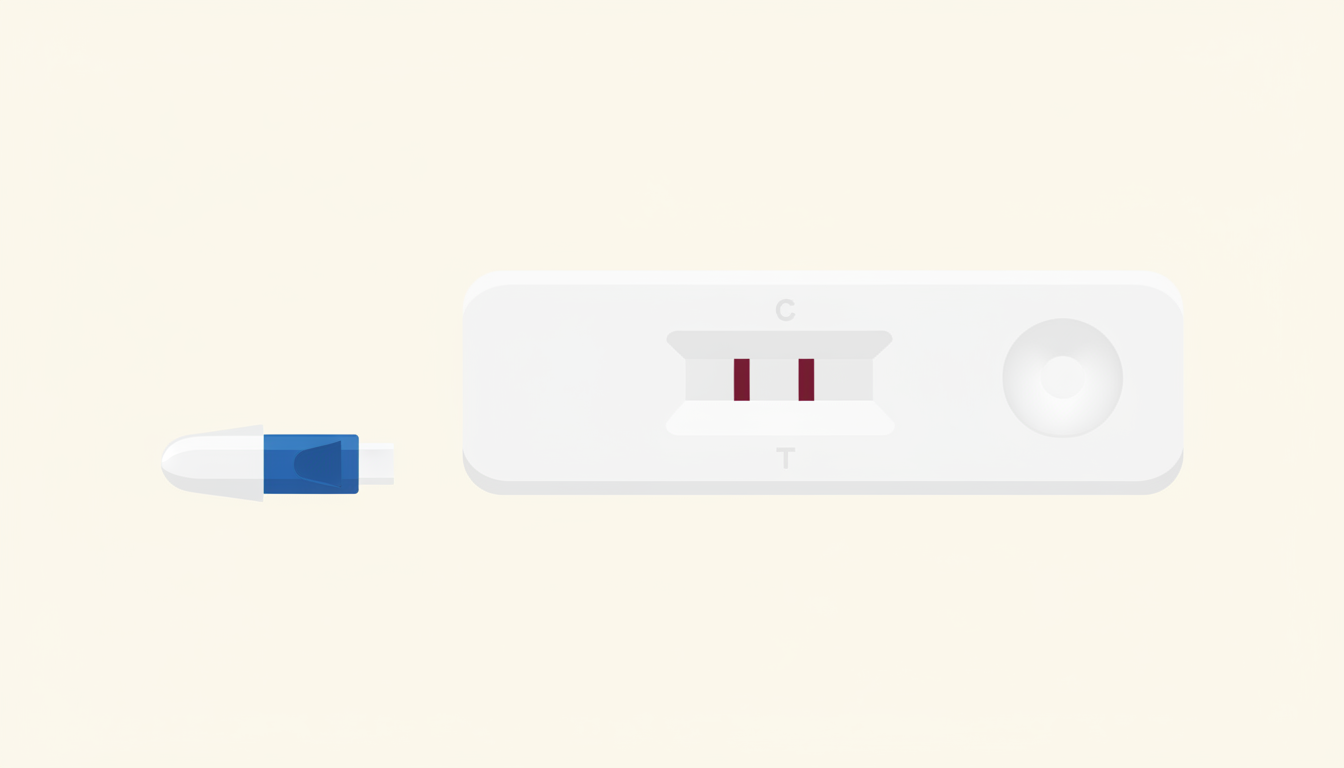
Most at-home STI kits sold to Delaware residents are lateral-flow immunoassays, the same technology family as a home pregnancy test. They use a small amount of a body fluid (blood from a fingerstick or a self-collected vaginal/penile swab depending on the infection) and develop a colored line on a strip when the target antigen or antibody is present. Results read in 15 to 20 minutes for true rapid kits.
This is meaningfully different from a clinical NAAT (nucleic acid amplification test) run at a lab. The CDC considers lab NAAT the gold standard for chlamydia and gonorrhea diagnosis because it amplifies bacterial DNA from a tiny sample, giving very high sensitivity even before symptoms appear. Lateral-flow tests are screening tools: faster, cheaper, private, with somewhat lower sensitivity in early or asymptomatic infection. Treat a positive home result as a strong screening signal that needs clinic confirmation, never as the final word.
Sample type depends on the infection:
- Swab tests: chlamydia, gonorrhea, trichomoniasis (women only), HPV (women only). Self-collected genital swab.
- Blood tests: HIV, syphilis, hepatitis B, hepatitis C, HSV-1, HSV-2. Fingerstick blood drop.
- Combination kits: bundle several of the above into one box.
None of the home kits sold on this site use throat or rectal swabs. If your concern is throat or rectal exposure (oral or anal contact), a clinic visit for site-specific NAAT is the correct path. Be wary of any home product that claims to test pharyngeal or rectal infection from a generic swab; the CDC's screening guidance reserves those routes for laboratory testing.
| Infection | Sample type | Result time | Confirm at a clinic if positive? |
|---|---|---|---|
| Chlamydia | Self-collected swab | 15-20 minutes | Yes |
| Gonorrhea | Self-collected swab | 15-20 minutes | Yes |
| HIV | Fingerstick blood | 15-20 minutes | Yes |
| Syphilis | Fingerstick blood | 15-20 minutes | Yes |
| HSV-1 / HSV-2 (antibody) | Fingerstick blood | 15-20 minutes | Yes |
| Trichomoniasis (women only) | Vaginal swab | 15-20 minutes | Yes |
| HPV (women only) | Vaginal swab | 15-20 minutes | Yes; pap smear is the standard follow-up |

When To Test After a Possible Exposure
The single most common mistake with home tests is testing too early. Every infection has a window period, the time between exposure and when the test can reliably detect the infection. Test inside that window and you risk a false negative even if you are infected.
Window periods for lateral-flow rapid tests are generally a little longer than the windows for lab NAATs, because antibody-based detection takes time to develop while DNA amplification can pick up bacteria sooner. The CDC's HIV testing guidance and the manufacturer inserts on individual kits give the authoritative numbers; the table below summarizes typical home-test windows.
| Infection | Earliest reliable home test | Recommended retest |
|---|---|---|
| Chlamydia | 14 days post exposure | Repeat at 21+ days if early test was negative |
| Gonorrhea | 14 days post exposure | Repeat at 21+ days if early test was negative |
| Trichomoniasis | 1-4 weeks post exposure | Repeat after 4 weeks if symptoms persist |
| HIV (rapid antibody) | 23-90 days post exposure | 12 weeks for a definitive negative |
| Syphilis | 3-6 weeks post exposure | 12 weeks for a definitive negative |
| HSV-2 (antibody) | 6-12 weeks post exposure | Up to 16 weeks for full seroconversion |
| After antibiotic treatment | Wait 21+ days post-treatment | Confirms cure for chlamydia / gonorrhea |
Privacy and Consent in Delaware
Two pieces of state law shape how private home testing is in Delaware. First, Delaware code allows minors aged 14 and older to consent to STI testing and treatment without parental notification (Title 16, Chapter 7, Subchapter I). That covers in-clinic services and applies just as cleanly to a home kit purchased online. Second, federal HIPAA-style protections plus most state-level confidentiality rules mean that out-of-pocket purchases (paid by debit card or cash app) never generate an Explanation of Benefits sent to a household policyholder.
The practical effect: if you order a home kit, pay out of pocket, and do not share the result, no parent, employer, or future provider sees it unless you choose to tell them. Most home-test brands ship in unbranded outer packaging with a generic return label, so even the box on the porch does not broadcast what is inside. Lab-processed mail-in samples (when the kit uses one) are keyed to the kit's serial number, not your name, and results are released through a secure online portal that requires multi-step verification.
One important nuance: confirmation at a Delaware clinic is still essential, and that clinic visit will appear on your insurance record like any other appointment. That is a planning detail, not a reason to skip the step.
This article is published by stdrapidtestkits.com, which sells at-home STI testing kits. We recommend products based on fit-for-purpose for the reader's concern, not commercial benefit. Where the right answer is a clinic visit, this guide says so.
What Delaware Sex Ed Leaves Out
Delaware mandates HIV-prevention education in public schools but does not require schools to teach medically accurate information on every common STI. According to SIECUS curriculum profiles for Delaware, condom basics and HIV are typically covered, while herpes, HPV, asymptomatic transmission, and partner notification often are not. The result is that many Delaware adults remember a sex-ed class that mentioned HIV and pregnancy and not much else.
This matters because the most common STIs are the ones least often taught. CDC data show that HSV-1 (the virus behind oral cold sores) is widespread among U.S. adults aged 14 to 49, and HSV-2 affects a meaningful share of the same age band. HPV is the most common sexually transmitted infection in the country, and most strains cause no symptoms before potentially leading to cervical or oropharyngeal changes years later. Both viruses spread by skin contact, including non-penetrative contact, which means the school-class shorthand ("you only get an STI from sex") is inaccurate.
The CDC's chlamydia fact sheet notes that chlamydia often has no symptoms at all, making it the most commonly reported STI in the U.S. and a leading preventable cause of fertility loss in women under 30. For chlamydia, the absence of a burning sensation or discharge is the normal presentation. Most people with chlamydia never develop noticeable symptoms, which is exactly why untreated infections persist for months or years. Home testing closes the symptom-blind gap by giving people a way to screen without waiting for a symptom that may never come.
Where To Confirm a Positive Result in Delaware
Any positive home test should be confirmed at a clinic before treatment. Confirmation matters for two reasons: lateral-flow false positives do happen (specificity is high but not perfect), and treatment selection depends on a clinical confirmatory test that the home kit cannot run. Treatment for chlamydia and gonorrhea is short-course antibiotics; HIV requires linkage to specialty care; syphilis treatment depends on disease stage. The clinic visit is also where partner notification and a test-of-cure plan get arranged.
The Delaware clinics most commonly used for follow-up are listed below. All offer confidential testing, most offer sliding-scale or no-cost services for uninsured patients, and several have telehealth options for the initial intake.
| Clinic | Locations | Services | Phone |
|---|---|---|---|
| Delaware Health and Social Services (DPH STD Program) | Wilmington, statewide referrals | Free STI testing, HIV care, PrEP access | (302) 255-9040 |
| Planned Parenthood of Delaware | Wilmington, Newark, Dover | Testing, treatment, telehealth | (800) 230-7526 |
| Henrietta Johnson Medical Center | Wilmington | STI and HIV testing, treatment | (302) 655-6187 |
| La Red Health Center | Georgetown, Sussex County | Sliding-scale STI testing, bilingual services | (302) 855-1233 |
| Westside Family Healthcare | Multiple sites statewide | STI screening, family planning | (302) 224-6800 |
Many people who have an STI do not have any symptoms. Without testing, you cannot know your STI status and may unintentionally pass an infection to a sex partner.
What To Do If a Home Test Is Positive
The first step after a positive home result is to pause. Most STIs treated early are fully curable (chlamydia, gonorrhea, syphilis, trichomoniasis), and the chronic ones (HIV, hepatitis B, HSV) are now manageable conditions with established treatment paths. The CDC describes STIs as extremely common in the U.S., affecting millions of people who often have no symptoms and are unaware they are infected, so the diagnosis is common even when it feels isolating.
The practical sequence:
- Call a Delaware clinic. One of the locations in the table above can confirm the result within a few days. Many take walk-ins or same-week appointments.
- Do not start self-treatment. Antibiotics for chlamydia and gonorrhea require a prescription, and the right antibiotic depends on the specific infection. Leftover antibiotics from another illness can mask test results without curing the infection.
- Tell recent partners. Anonymous partner-notification tools like TellYourPartner.org can do this on your behalf if a direct conversation feels unmanageable.
- Plan a retest. After treatment, retest at the manufacturer's or CDC-recommended interval (typically 21 days for cured bacterial infections, 12 weeks for HIV). The retest confirms the infection is gone, which matters before resuming sex with a regular partner.
Cost is a frequent worry. Delaware DPH and the federally qualified health centers in the state offer reduced-cost or free STI treatment for uninsured patients. Most chlamydia and gonorrhea treatments are inexpensive even at retail pharmacy. HIV and hepatitis treatment access is supported by state and federal assistance programs, including the Ryan White HIV/AIDS Program for HIV-positive residents.
Delaware Public Health and federally qualified health centers including La Red, Westside, and Henrietta Johnson offer sliding-scale or no-cost STI testing and treatment for uninsured residents. The 211 Delaware helpline can route you to the closest qualifying clinic.
How Fast Kits Reach Delaware Addresses
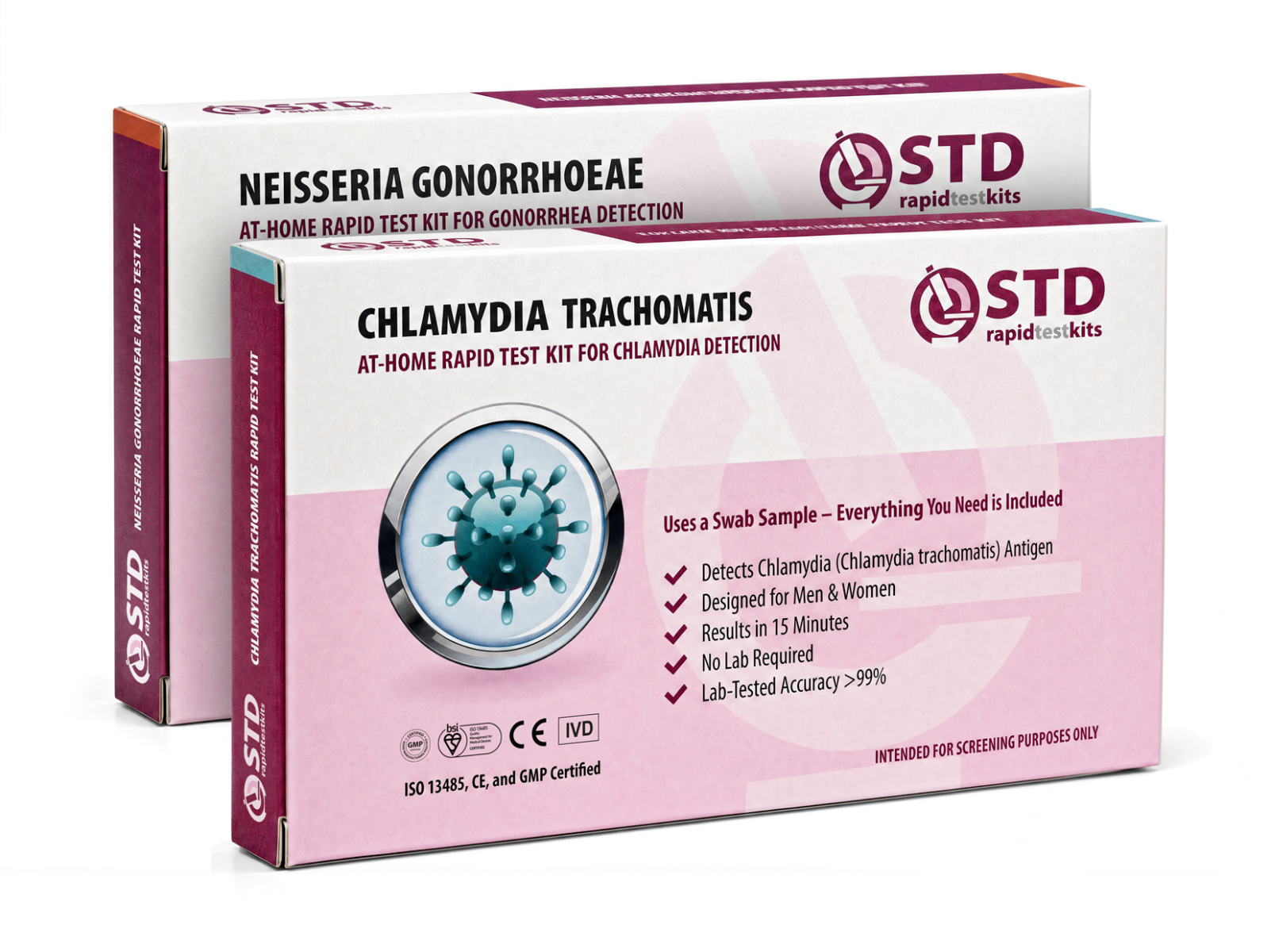
Most home-test brands serving the Delaware market ship from regional fulfillment centers in New Jersey, Pennsylvania, or Maryland, which puts the entire state inside a 1-to-2-day delivery window for standard shipping. Orders placed before about 1 PM Eastern usually leave the warehouse same-day. Expedited overnight options exist if you need the kit faster.
Outer packaging is unbranded across the major brands, and the prepaid return label (for kits that route a sample back to a partner lab) is similarly anonymous, with no clinic or condition name visible on the parcel.
| Region | Standard delivery | Expedited available? | Discreet packaging? |
|---|---|---|---|
| Wilmington, Newark | 1-2 business days | Yes | Always |
| Dover, Smyrna | 2 business days | Yes | Always |
| Seaford, Rehoboth, Sussex County rural ZIPs | 2-3 business days | Yes | Always |
FAQs
- How accurate are at-home STI tests compared to a lab?
- Lateral-flow rapid kits for the most common STIs typically report sensitivity in the mid-to-high 90s percent and specificity over 99 percent when used after the correct window period. The CDC's gold standard for chlamydia and gonorrhea is laboratory NAAT, which is somewhat more sensitive in early infection. Treat the home kit as a screening tool: a positive should always be confirmed at a clinic, and a negative inside the window period should be repeated at the longer-window mark.
- Can teens in Delaware order tests without parental consent?
- Yes. Delaware Code Title 16, Chapter 7, Subchapter I allows minors aged 14 and older to consent to STI testing and treatment without parental notification. Online kit purchases paid out of pocket do not generate insurance paperwork that would alert a parent.
- Will an at-home test show up on my medical record?
- Not unless you bill it through insurance or share the result with a provider. Out-of-pocket purchases (debit card, cash app, prepaid card) leave no insurance trail. The privacy ends if you bring a positive result to a clinic that bills your insurance for the confirmatory visit, which is unavoidable if you want treatment.
- Which STIs do home rapid kits not cover?
- Pharyngeal (throat) gonorrhea or chlamydia, rectal infections, and bacterial vaginosis are not addressed by the kits sold on this site. If your exposure was oral or anal, a clinic visit for site-specific NAAT is the right path. Our home kits are validated for genital and bloodstream sample types only.
- How soon after a possible exposure should I test?
- Window periods vary by infection: chlamydia and gonorrhea, 14 days; HIV rapid antibody, 23 to 90 days; syphilis, 3 to 6 weeks; HSV-2 antibody, 6 to 12 weeks (up to 16 weeks for full seroconversion). Test inside the window for early peace of mind, then retest at the longest applicable window for a definitive result. The CDC's STI testing guidance is the authoritative source for these numbers.
- What if I test positive at home?
- Confirm at a Delaware clinic before starting any treatment. Lateral-flow false positives do occur, and the right antibiotic for chlamydia or gonorrhea depends on a clinical assessment. Most Delaware DPH and federally qualified health centers offer sliding-scale or no-cost confirmation and treatment for uninsured patients.
- Are the women-only HPV and trichomoniasis kits appropriate for men?
- No. Our HPV and trichomoniasis rapid kits are validated for vaginal self-swab only and are not appropriate for male readers. A male reader concerned about either infection should see a clinic for a urine NAAT (trichomoniasis) or a clinical exam (HPV-related lesions).
- Can my partner and I test together?
- Yes. Many Delaware couples order a single combination kit and use the strips for both partners. The kits ship with materials for one tester each, so two-person testing usually means ordering two kits or a couple-pack where the brand offers one.
- U.S. Centers for Disease Control and Prevention. STI surveillance, screening guidance, and the role of laboratory NAAT as the diagnostic gold standard.
- U.S. Centers for Disease Control and Prevention. Chlamydia detailed fact sheet covering symptoms, transmission, and the asymptomatic nature of the infection.
- U.S. Centers for Disease Control and Prevention. HIV testing guidance, including window-period recommendations for rapid antibody and combination tests.
- World Health Organization. Sexually transmitted infections fact sheet, global incidence and population-level transmission patterns.
- Delaware Division of Public Health. STD/STI program services, clinic listings, and free testing access for Delaware residents.
- Sexuality Information and Education Council of the United States. Delaware state profile of sex-education curriculum requirements.
- Delaware Code, Title 16, Chapter 7, Subchapter I. Minors' consent to STI testing and treatment in Delaware (official state code).