





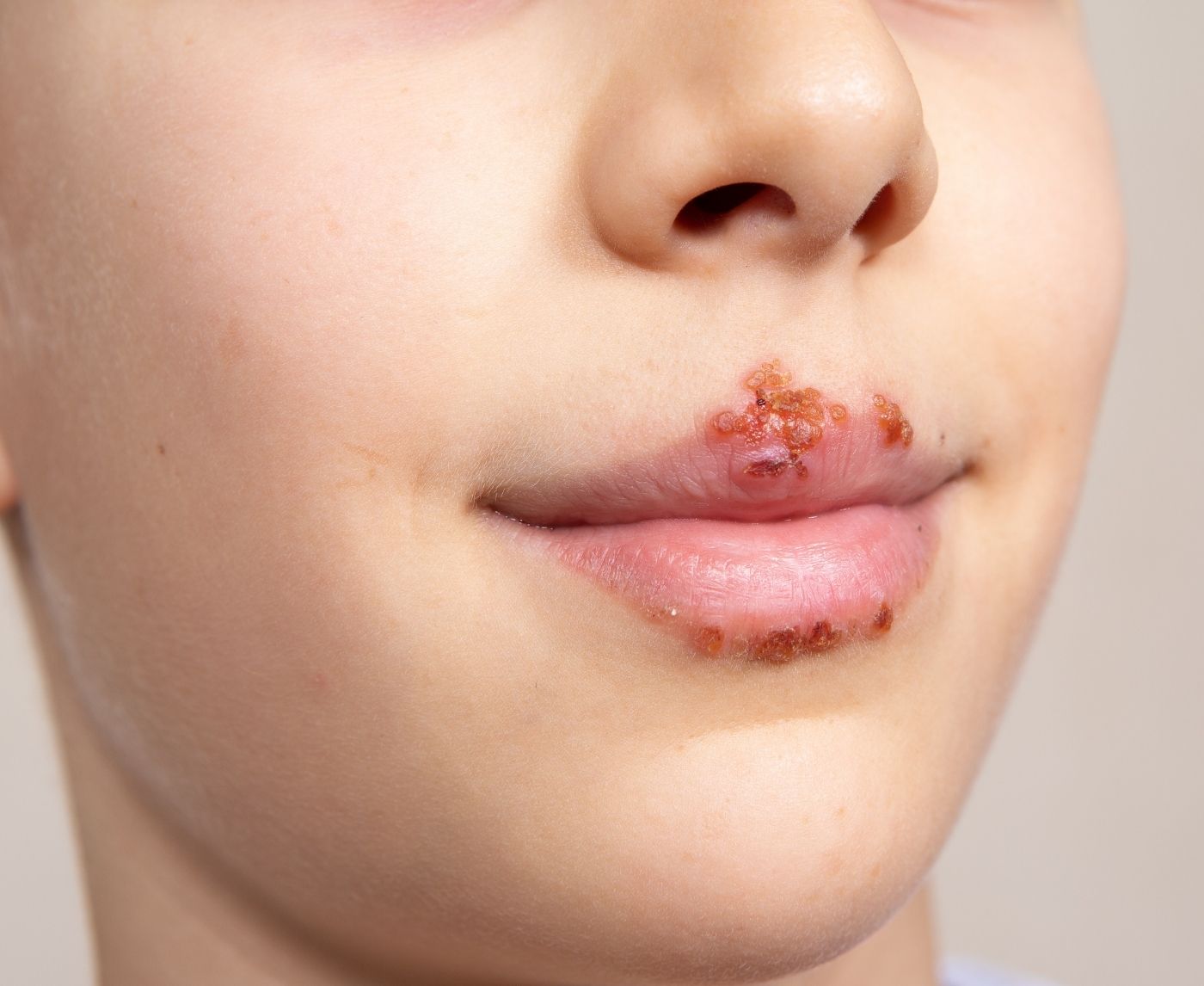

Quick Answer: Herpes can absolutely spread through kissing, even when no cold sore is visible. HSV-1 sheds from the skin silently and can infect mouths or genitals during oral contact.
“But It Was Just a Kiss”: When Herpes Doesn’t Play Fair
Jessica, 26, still remembers the shame spiral. “I had this one date. He was sweet, respectful, we only kissed. I thought I was being safe. A week later I had this raw patch inside my cheek. I Googled for hours, convinced it was cancer. Turned out it was herpes.” She pauses. “I didn’t even know you could get it that way.”
And why would she? The myth runs deep: that herpes equals sex, or that you can “see it coming” because of blisters. But that’s not how HSV-1 behaves. In reality, the virus lives quietly in the nervous system, flaring up from time to time. But even when it’s invisible, it can still be active. This is called asymptomatic viral shedding, when someone is contagious but symptom-free.
According to a study published in the Journal of Infectious Diseases, people with HSV-1 shed the virus from their mouths on roughly 10–18% of days, even without symptoms. In other words, kissing someone with HSV-1 is always a gamble, even if they look perfectly healthy.
Herpes Isn’t Always “Down There” , And That’s the Problem
The phrase “oral herpes” makes it sound like the kind you don’t need to worry about. But that’s the trap. Because HSV-1 and HSV-2 aren’t confined to mouths or genitals anymore. Thanks to oral sex, kissing, and a whole lot of bad sex-ed, both viruses are now showing up in places they traditionally didn’t “belong.”
Here’s the kicker: HSV-1, once known as the “cold sore virus,” is now a leading cause of genital herpes. That means someone can kiss you, pass HSV-1 to your mouth, and later, through oral sex, transmit it to your partner’s genitals. Or vice versa. And since oral sex is often considered “safe” sex, few people use protection during it, making the risk of silent transmission even higher.
Still not convinced your mouth matters? Let’s break down how HSV actually spreads.
| Scenario | Transmission Risk | Notes |
|---|---|---|
| Kissing with visible cold sore | Very high | Blister contains active HSV-1 particles |
| Kissing with no symptoms | Moderate | Asymptomatic shedding still possible |
| Receiving oral sex from someone with cold sore | High | Risk of genital HSV-1 transmission |
| Sharing drinks/lip balm during outbreak | Low to moderate | Depends on viral load and timing |
Table 1: Common HSV-1 transmission routes, including kissing and oral-genital contact.
It Doesn’t Look Like the Pictures , And That’s Why It Spreads
If you’ve ever searched “herpes outbreak photo,” you’ve probably seen the worst-case scenarios, open sores, clusters of blisters, dramatic swelling. In reality? It’s often a tiny cracked corner of the lip, a single bump mistaken for a zit, or an invisible itch deep inside the mouth. Many people never even know they’re having an outbreak.
This is where the emotional damage happens. People don’t recognize it. They don’t think they’re contagious. So they kiss. They hook up. They reassure partners they’re “clean” because they don’t feel sick. And the virus keeps moving.
Consider Danny, 33, who gave his partner genital herpes without knowing he had HSV-1. “I hadn’t had a cold sore in years,” he says. “Didn’t realize I could still pass it. I just… didn’t know.”
That's the problem: people don’t test for herpes unless they’re symptomatic, and most don’t even realize herpes testing isn’t part of routine STD panels. According to the CDC, unless you specifically ask for a herpes test, you probably won’t get one.
People are also reading: Cystitis or Chlamydia? What That Post-Wedding Burn Could Mean
The Role of Asymptomatic Shedding , and Why It Changes Everything
Here’s the uncomfortable truth: you can get herpes from someone who’s never had a cold sore in their life. That’s how sneaky this virus is. They could have contracted it years ago and be silently shedding now. It’s one reason up to 80% of people with oral HSV-1 don’t know they have it, per data from the World Health Organization.
This kind of silent transmission is what makes kissing such a misunderstood risk. It’s not about blaming your partner, it’s about understanding the biology. Herpes doesn’t need permission. It just needs skin.
And if you’ve already had oral herpes, you might still be vulnerable to genital infection depending on the strain and your immune response. That’s why timing and testing matter, even if you’re only dealing with a cold sore.
Cold Sores vs Genital Herpes: Why the Location Doesn’t Always Help
There’s this myth we carry: cold sores mean you’re fine, genital herpes means you're “dirty.” It’s a stigma grenade with no medical grounding. The truth? Both are caused by the herpes simplex virus. Both can be painful. Both can be invisible. The only real difference is where they show up first, and even that line is fading.
People often assume that cold sores are “not a real STD.” But HSV-1 is now a leading cause of first-time genital herpes infections, especially among younger people and in queer communities where oral sex is often seen as lower risk. According to peer-reviewed data in Sexually Transmitted Infections journal, oral-genital transmission has sharply increased over the past decade, especially from people who had no idea they carried HSV-1 in the first place.
Let’s look at how the virus behaves differently, or not, depending on the site of infection:
| Infection Site | Common Symptoms | Misdiagnosed As | Transmission Risk |
|---|---|---|---|
| Mouth (Oral HSV-1) | Tingling, sore lip, cracked skin | Chapped lips, acne, canker sores | High via kissing or oral sex |
| Genitals (HSV-1 or HSV-2) | Itching, burning, tiny sores | Razor burn, UTI, yeast infection | High via skin-to-skin or oral-genital |
Table 2: Symptom and transmission overlap between oral and genital herpes.
The takeaway? If you’ve had a cold sore, you’ve had herpes. And that matters when it comes to who you kiss, when you have oral sex, and how you talk to partners.
Should You Test for Herpes After Kissing?
Short answer? Not always, but sometimes yes. If you’ve kissed someone with a cold sore, or if you’re having new symptoms (like burning in the mouth, tingling on the lips, or strange bumps in or around your genitals), it may be time to get tested. The tricky part? Herpes testing isn’t always accurate right away.
Blood tests (called IgG antibody tests) only pick up herpes once your body has made antibodies, which can take 2 to 12 weeks after exposure. That means if you test too soon, you could get a false negative. Swab tests of active sores are more accurate, but they rely on you having visible symptoms, and catching them fast, ideally within 48 hours of showing up.
That’s where home herpes test kits come in. They allow you to test discreetly without a clinic visit, but you’ll still need to time it right. Most are blood-based and can detect antibodies for HSV-1 and HSV-2, but they won’t differentiate location. Meaning: they’ll tell you if you have the virus, but not where it lives in your body.
If you’ve recently had a concerning kiss, here’s what to consider:
| Time Since Exposure | Best Testing Option | Accuracy Notes |
|---|---|---|
| 1–7 days | Monitor for symptoms | Too early for antibodies or swab unless sore appears |
| 10–14 days | Swab if sore present | Most accurate if lesion is fresh |
| 3+ weeks | Blood-based herpes antibody test | Can detect prior exposure, not location |
Table 3: Herpes testing options and timing after a risky kiss or oral exposure.
If your symptoms persist or return, or you just want peace of mind before being intimate again, consider retesting at the six-week mark. And remember: a positive HSV-1 result doesn’t make you dirty. It makes you human, just like more than half the global population who carry it.
“I Got Genital Herpes From My First Kiss”
Luis, 21, had never had sex. Not even oral. But at a New Year’s party, he kissed someone whose lip looked a little “chapped.” Two weeks later, after receiving oral sex from someone else, he developed sores on his genitals. Confused and ashamed, he finally got tested. It was HSV-1, genital.
“It was crushing,” he admits. “I didn’t even know what I had. I just assumed it was an STD from the oral, but the doctor said it might’ve actually started with the kiss.” He pauses. “I felt stupid for not knowing. But I also realized how nobody talks about this stuff.”
His story is more common than you’d think. Herpes doesn’t require penetration. It doesn’t need symptoms to spread. And it absolutely doesn’t care whether you’re “careful.”
So if you’ve kissed someone and you’re worried, get tested. Talk to a provider. Check in with yourself. And remember: knowing is care, not confession.
Check Your STD Status in Minutes
Test at Home with RemediumOral Herpes Test Kit

 For Men & Women
 Results in Minutes
 No Lab Needed
 Private & Discreet
Order Now $33.99 $49.00
Let’s Talk About Cold Sores After a Hookup
It happens more than you think. You go out. You make out. Maybe it stops there, maybe it doesn’t. A few days later, you notice a burning spot on your lip, or worse, on your genitals. Your mind spins: was it from them? Was it from me? Is it herpes? Or something else entirely?
This is the emotional quicksand of post-hookup anxiety. And herpes, with all its sneaky behaviors, is one of the leading culprits. The worst part? The stigma doesn’t match the science. Most people who carry HSV-1 picked it up in childhood from a relative’s innocent kiss. But when that same virus shows up later in a sexual context, the shame can be overwhelming.
Rina, 29, remembers her moment clearly. “We hooked up once. Just made out at a party. I was drunk, he was cute, and I didn’t see anything wrong with his face. Five days later I had a sore on my lip. I felt gross. I called out of work. I didn’t want to be seen.” It took her months to realize it wasn’t her fault, and even longer to talk to someone about it.
This is why trauma-informed herpes education matters. Because the virus doesn’t care if you’re cautious. It doesn’t mean you’re reckless. It means you’re a human being who kissed another human being. The only real mistake is not knowing how it works, or being too afraid to ask.
At-Home Herpes Testing: What to Know Before You Swab
If you’re not ready to face a clinic, you’re not alone. Shame and anxiety keep a lot of people from walking into a waiting room with a suspicious bump or burning sensation. That’s where STD Rapid Test Kits come in. You can test from home, with no judgment, no paperwork, and no awkward waiting.
The most common kits for herpes testing rely on blood samples, usually via a simple finger prick. These tests check for IgG antibodies, which your body makes in response to an HSV-1 or HSV-2 infection. Here’s the key thing to remember: antibody tests don’t detect the virus itself. They detect your immune system’s reaction to it, which takes time to develop.
If you test within the first 1–2 weeks after kissing someone with herpes, your result might come back negative even if you were exposed. That’s why retesting later is often recommended. For many people, the six-week to 12-week window is when accurate results finally show up.
Still not sure if you need a test? Here’s a good rule of thumb: If you're worried, curious, or symptomatic, test. If you’re just now learning your partner has HSV-1 and you want to know your own status, test. If you’ve never had a cold sore but your new hookup does? Test. And most importantly, don’t let shame stop you.
If your head keeps spinning, peace of mind is one test away. Order a confidential herpes test kit here.
If You’re Positive, You’re Not Alone
Here’s what no one tells you: herpes is one of the most common infections on the planet. The World Health Organization estimates that nearly 67% of people under 50 have HSV-1. That’s billions of people. Most of them don’t even know it. And those who do? They’re living normal, fulfilling, sex-positive lives.
If you test positive after a kiss, that doesn’t mean you’re contagious every day. It doesn’t mean you’ll get constant outbreaks. And it doesn’t mean you can’t have relationships. It just means your virus lives in your body now. It might show up from time to time. Or it might not. Everyone’s journey is different.
You might feel grief. You might feel shame. But you’re still you. Still deserving of care, respect, pleasure, and connection. And with antiviral medications like valacyclovir, you can reduce the chance of transmission significantly, by up to 50% when combined with condom use. That’s real prevention power.
Kevin, 40, says herpes taught him more about honesty than fear. “I used to hook up without ever talking about status. Now I lead with it. And you know what? Most people appreciate the honesty. Some even share their own stories.”
Disclosure is scary. But silence and ignorance? Even scarier. And when you speak up, you make space for someone else to do the same.

People are also reading: STD with a Condom? How Travel Sex Risks Get Missed
FAQs
1. Can I really get herpes from just a kiss?
Yep. That one sweet, harmless-seeming kiss can be all it takes. Even if there’s no cold sore in sight, the virus can still be active on the skin. It’s called asymptomatic shedding, basically, herpes being sneaky. So yes, kissing can absolutely spread HSV-1, even when no one looks “sick.”
2. What if I didn’t see a cold sore, am I still at risk?
Unfortunately, yeah. Most people think “no sore = no danger,” but herpes doesn’t work that way. The virus can shed silently, meaning it’s contagious even without the telltale blister. That’s what makes it so common, and so confusing. You’re not paranoid. You’re paying attention.
3. How soon should I test if I kissed someone with herpes?
Timing is everything. If it’s been less than a week, it’s too soon for a blood test to pick anything up. Your best bet is to wait at least 6 weeks, 12 if you want the most accurate result. If a sore shows up before that? Swab it fast (ideally within 48 hours). That’s the gold standard.
4. Is oral herpes really considered an STD?
Technically, yes, and no. HSV-1 (oral herpes) is usually passed through kissing in childhood, but it becomes an STD when it moves to the genitals via oral sex. The virus doesn’t care about labels. It just travels where the opportunity allows. And these days, oral herpes causes a lot of new genital herpes cases.
5. What does a herpes outbreak actually look like?
Not always like the textbook photos. It might be a tiny cut on your lip, a single painful bump, or a raw spot inside your mouth that you assume is from pizza crust. On the genitals, it can feel like razor burn, a yeast infection, or just general irritation. That’s why people miss it, or write it off.
6. What if I’ve had cold sores my whole life? Can I still pass herpes to a partner?
Yes. Even if your cold sores are rare or barely noticeable, you can still pass HSV-1 to someone else, especially during oral sex. It’s not about how often you get outbreaks. It’s about the virus showing up uninvited, even when you think it’s asleep.
7. I tested positive for HSV-1. Do I have to tell my partners?
Legally, it depends where you live. Ethically? Honesty helps. The stigma around herpes is way worse than the virus itself. Sharing your status (in a calm, clear way) helps partners make informed choices, and might encourage them to share theirs. More people have it than you think.
8. Is it worth testing if I’ve never had symptoms?
That depends on your goals. Some people want to know their status for peace of mind or before entering a relationship. Others would rather not know unless something shows up. Just remember: not having symptoms doesn’t mean you’re not carrying the virus. It just means you haven’t seen it yet.
9. Can I still kiss someone if I’ve tested positive?
You can, just be mindful. Kissing during an outbreak is a no-go. But between outbreaks? Talk to your partner. Some folks are comfortable with the risk; others aren’t. Antiviral meds can reduce transmission risk, and so can good timing. As always, consent and context matter.
10. Is it possible to get genital herpes from someone who’s only had cold sores?
100%. This is how a lot of people get blindsided. If someone with oral HSV-1 goes down on a partner, the virus can move to the genitals. That’s why cold sores deserve more respect than they usually get, they’re not harmless, just misunderstood.
You Deserve Answers, Not Assumptions
If there’s one thing herpes doesn’t need to spread, it’s your permission. Kissing might seem innocent, but it’s also one of the most common ways HSV-1 moves from person to person. The good news? Once you know how it works, you can take real steps to protect yourself and others, without shame, without panic, and without hiding.
If you’ve kissed someone with a cold sore, or you’re just unsure about your own status, now is the time to find out. Clarity is not just about results, it’s about peace of mind. This at-home combo test kit checks for the most common STDs discreetly and quickly, including both HSV-1 and HSV-2.
How We Sourced This Article: We combined current guidance from leading medical organizations with peer-reviewed research and lived-experience reporting to make this guide practical, compassionate, and accurate. In total, around fifteen references informed the writing; below, we’ve highlighted some of the most relevant and reader-friendly sources.
Sources
1. CDC
2. WHO
5. CDC – Herpes
6. PMC – A Comprehensive Overview
About the Author
Dr. F. David, MD is a board-certified infectious disease specialist focused on STI prevention, diagnosis, and treatment. He blends clinical precision with a no-nonsense, sex-positive approach and is committed to expanding access for readers in both urban and off-grid settings.
Reviewed by: Avery Lin, MPH | Last medically reviewed: October 2025
This article is for information only, it should not be used as replacement for all medical advice.


