






Quick Answer: STD results are often delayed due to lab backlogs, clinic batching, or administrative bottlenecks. At-home tests, especially rapid kits, can bypass these delays entirely, delivering results in as little as 15 minutes.
Why Waiting for STD Results Feels Like a Trap
Jess didn’t think it would be a big deal. She went to an urgent care on a Sunday afternoon after noticing a burning sensation during urination. The doctor said it was probably a UTI but ran a few STD tests “just in case.” She left with a prescription and a warning: “Your results will take a few days.”
Five days turned into seven. Seven turned into nine. No email. No call. Just growing anxiety and a thousand worst-case scenarios. “I was googling every symptom at 3AM, convincing myself it had to be gonorrhea, then herpes, then both,” Jess recalled. When the clinic finally called, 12 days later, the results were negative. But by then, the stress had done its damage.
If you’ve been there, you know: the problem isn’t just the wait. It’s the lack of control. Traditional clinics rarely tell you where your test is in the process. Results get batched, labs get backed up, and admin teams fumble the final delivery. All while you're left in the dark, imagining the worst.
The Real Reasons STD Results Take So Long
You might assume testing in a clinic would be faster. But in reality, multiple factors drag the timeline out. Let's break down what actually slows things down, compared side-by-side with how at-home testing avoids each step.
| Process Step | Clinic-Based Testing | At-Home Rapid or Mail-In Test |
|---|---|---|
| Sample Collection | Often requires waiting room, nurse availability | Self-collected on your schedule |
| Sample Transport | Couriered in daily/weekly batches to labs | Overnighted directly to lab (or not needed for rapid kits) |
| Lab Processing | Queued with hundreds of other tests | Expedited for individual mail-in kits |
| Result Delivery | Manual entry or nurse callback (can be delayed) | Digital portal or app notification, often within 48–72 hours |
| Total Time | 3 to 10+ days | 15 minutes to 3 days |
Table 1. Common problems with STD testing and how at-home kits get around them. Clinics use batch processing and third-party labs, but at-home solutions are made to get results to you quickly and directly.
The takeaway? Clinics are built for volume, not urgency. Most aren't trying to delay you, they’re just stuck in a system that wasn't designed for people who need answers now. If you’ve ever felt like you’re just another name in a chart, you’re not wrong. That’s why more people are turning to at-home options that let you skip the queue entirely.
“I Couldn't Wait for the Clinic, So I Didn't”
Marco, 27, had just started dating someone new when he noticed a sore on his inner thigh. He panicked. The weekend was coming, and he knew clinics would be closed or packed. “I didn’t want to go to urgent care and wait for hours just to be told to wait even longer for results,” he said.
Instead, Marco ordered a Combo STD Home Test Kit Friday morning. It arrived Saturday. By noon, he had tested himself for seven infections, and had a result for each one. “I almost cried when I saw everything was negative,” he admitted. “Not just from relief, but because it was so damn fast.”
Marco’s story isn’t rare. The rise of FDA-approved at-home STD kits, especially ones with rapid results, has changed what’s possible for people who can’t wait a week or more. And let’s be real: who wants to wait when your health and relationships are on the line?
Clinic vs At-Home Testing: The Speed, Privacy, and Pressure Gap
When you’re anxious about an STD, speed isn’t just a preference, it’s emotional survival. Every hour you wait can feel like a countdown to disaster. But traditional clinic systems aren’t built around your timeline. They’re structured for insurance, billing codes, patient intake cycles. If your results come back in a week, that’s considered efficient. But it sure doesn’t feel that way when your symptoms won’t stop screaming.
Compare that to testing in your own bathroom, on your own clock. You’re not just avoiding paperwork, you’re avoiding the crushing weight of medical gatekeeping. No receptionist asking what the test is for. No lab techs mishandling your name. Just you, the test, and peace of mind in under an hour.
Still, not all at-home STD tests are the same. Some provide instant results with rapid technology, others require mailing a sample. Both beat most clinic timelines, but each has pros and cons. Here's a direct comparison of the three most common testing methods:
| Testing Method | Result Time | Privacy Level | When It’s Best |
|---|---|---|---|
| At-Home Rapid Test | 10–20 minutes | Very high | You need immediate reassurance and quick answers |
| At-Home Mail-In Lab Kit | 2–4 days (including shipping) | High | You want lab-grade accuracy without leaving home |
| Clinic-Based Testing | 3–10 days or more | Low–Moderate | You have symptoms requiring physical exam or need treatment on-site |
Table 2. Comparison of STD test types by turnaround time, privacy, and use case. Rapid kits offer the fastest results, while lab kits strike a balance between accuracy and convenience.
This isn’t about bashing clinics. They save lives and offer services many people need, especially if symptoms are severe, or you’re managing multiple health conditions. But if your priority is knowing quickly whether you’re infected, at-home tests often win by a mile. And for people managing panic, relationship strain, or stigma, that timing matters more than ever.

People are also reading: I Didn’t Have Sex, But I Do Have Blisters. When Herpes Shows Up Unexpectedly
Symptoms Don't Wait, So Why Should You?
Sometimes, the wait isn’t just inconvenient, it’s dangerous. Take Ana, 21. She started noticing a foul smell and unusual discharge after a spring break hookup. It was embarrassing, but she pushed through. Two days later, the itching started. Her student health center was booked out for a week. When she finally got tested, it took another eight days to get results, positive for trichomoniasis.
“If I’d had a test at home, I would’ve started treatment a full week earlier,” she said. Instead, Ana endured a full 10 days of worsening symptoms, guilt, and unnecessary pain. Her case wasn’t rare, nearly 70% of trich cases in women are missed or misdiagnosed due to delays in testing or no testing at all, according to the CDC.
Symptoms don’t operate on a 9-to-5 clinic schedule. They flare up at midnight, on weekends, on road trips, after parties. Waiting days, or even weeks, just to confirm what your body’s already telling you can turn discomfort into trauma. Rapid tests help you break that cycle.
That’s why more people are keeping at-home kits on hand the same way they’d keep a pregnancy test or thermometer. It’s not about assuming the worst. It’s about not being left in the dark when your body’s asking questions no one else can answer fast enough.
Your Test, Your Timeline: Why Control Matters
There’s a kind of dignity in being able to test when you want to. In choosing the moment, setting, and pace. For many, that control is its own kind of medicine, especially if you’ve ever felt dismissed, judged, or hurried in a medical setting.
Jay, 32, shared their experience after a scary hookup: “I walked into a clinic and felt like I had to justify even being there. The nurse asked if I’d been ‘risky’ lately. I almost walked out.” Instead, Jay went home and ordered a rapid test online. It arrived in discreet packaging two days later. “I felt safer testing alone, even if it meant figuring it out myself.”
Whether it’s queerness, gender identity, sex work, or just social anxiety, the walls of traditional healthcare aren’t always trauma-informed. At-home tests let you bypass that power dynamic completely. You’re not a chart. You’re not a liability. You’re a person with questions, and a right to quick, clear answers.
STD Rapid Test Kits offers several options, including rapid kits you can interpret within 15 minutes and mail-in options that include a pre-paid label and simple return instructions. If your brain won’t stop spinning while you wait for results, peace of mind could be one test away.
Why Labs Take Longer (Even When Clinics Say “Fast”)
It’s a common trap: a clinic promises “fast STD testing” and then sends your sample off to a lab that takes days, or longer, to respond. What happened to “fast”? The truth is, most clinics don’t actually do testing on-site. They collect your sample, label it, batch it with others, and ship it out, often to overwhelmed third-party labs that prioritize volume over urgency.
Some labs wait until they’ve received a critical mass of tests before they even start processing. Others are simply overbooked, especially during outbreak seasons or post-holiday spikes. If you've ever had your sample “lost” or your result delayed without explanation, it’s probably due to one of these back-end issues, not because your case was more complicated than someone else’s.
Here’s how standard lab-based testing compares to at-home rapid or mail-in tests in terms of processing flow:
| Step | Clinic & Lab Model | At-Home Rapid/Mail-In Model |
|---|---|---|
| Sample Collected | By clinic staff, logged into EMR | By user, no wait or intake needed |
| Sample Sent | Batch-shipped daily or every few days | Sent immediately or not at all (for rapid kits) |
| Lab Queue | Prioritized by test type and volume | Processed individually upon arrival or instantly (rapid) |
| Result Delivered | Manually uploaded or relayed via nurse call | Auto-released in portal or instant via cassette read |
| Common Delay | 3–10+ days | 0–3 days |
Table 3. Systemic differences in STD result workflows. Even when a clinic visit is “same day,” the lab timeline often isn't. At-home tests skip these bottlenecks entirely.
Some clinics have improved their systems. A few now use telehealth portals or integrated lab tracking. But most still rely on legacy methods, phone calls, paper records, and manual updates. That lag can be the difference between catching an infection early and passing it to someone else before you even know you have it.
Check Your STD Status in Minutes
Test at Home with Remedium8-in-1 STD Test Kit
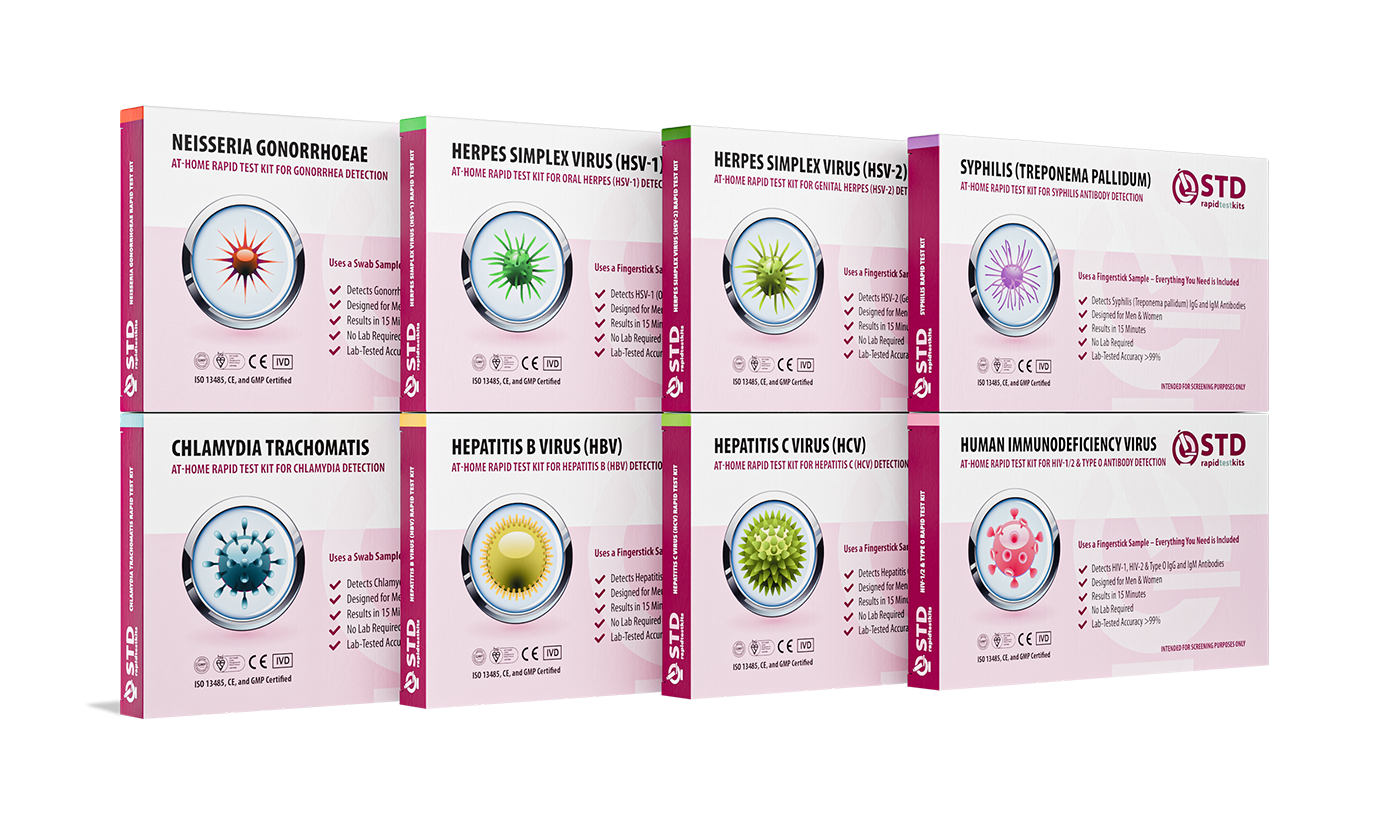
 For Men & Women
 Results in Minutes
 No Lab Needed
 Private & Discreet
Order Now $149.00 $392.00
For all 8 tests
Can You Trust a 15-Minute Result?
This is where most people pause. “Okay, so rapid tests are faster, but are they accurate?” The answer: for many common STDs, yes, especially when tests are used correctly and during the right window.
Take chlamydia and gonorrhea. Rapid antigen tests can detect infection with solid accuracy, especially when used 7 to 14 days after exposure. For syphilis, rapid antibody tests often rival clinic screenings. And for HIV, the most recent generation of at-home oral swab or blood-spot tests have sensitivity rates above 92%, depending on timing and type.
That said, timing matters. Testing too early, before your body has produced enough markers for detection, can yield false negatives. That’s not unique to rapid tests. It happens with lab-based PCRs too. The key is understanding when to test and when to consider a follow-up.
When Should You Retest? Follow the Timing, Not the Fear
Ty, 24, panicked after a one-night stand and took a rapid chlamydia test four days later. It came back negative. But symptoms persisted. At the 14-day mark, he tested again, this time, it was positive. “I almost didn’t retest because I thought the first one meant I was in the clear,” he said.
Stories like Ty’s are common. They don’t mean rapid tests don’t work, they mean testing too early can’t always catch an infection. That’s why many experts recommend a “test and re-test” model for high-risk exposures. Use a rapid test for immediate peace of mind, then follow up within the optimal window for confirmation.
If you’ve already been treated, retesting too soon can pick up dead viral particles and cause false positives. If you haven’t been treated, or keep getting exposed, a retest at 30 to 45 days helps catch any late-showing infections.
Think of it like this: the first test gives you calm. The second gives you closure.
A Different Kind of Safety Net
At-home testing doesn’t just move faster, it feels different. It flips the power dynamic. You’re not begging for clarity. You’re claiming it. You get to decide when to test, how to interpret the result, and when to act on it.
That empowerment can be lifesaving, especially for people in abusive relationships, queer folks who’ve been burned by medical gatekeeping, or just anyone sick of sitting in parking lots and waiting rooms wondering if someone will judge them for getting tested at all.
When you test from home, you don't have to explain. You don't have to wait. You don’t have to ask permission to care about your health. You just do it. Quietly. Privately. On your terms.
If you’re in that anxious space, unsure whether to test again, or still waiting on slow clinic results, consider an option that puts the timeline back in your hands. This combo test kit screens for multiple infections in one discreet box. No one else needs to know. Just you, and a 15-minute answer.

People are also reading: Can You Get an STD in Your Eye? Yes, Here’s What It Looks Like
FAQs
1. Why are my STD results taking so damn long?
You're not imagining it, STD results from clinics can take anywhere from 3 to 10 days, and sometimes longer. Labs get backed up, samples get batched, admin teams forget to call. It’s not personal, it’s systemic. Meanwhile, you’re sitting there Googling symptoms like a detective with a WebMD addiction. That’s why many people go for at-home kits now, they skip the bottlenecks and put you in control.
2. Is an at-home test really as good as the ones at the clinic?
Short answer: pretty damn close, especially if you're using an FDA-approved brand and timing it right. Most use the same tech as the labs, NAAT, antigen, antibody. The main difference? You're not stuck in a waiting room filling out insurance forms while your anxiety spikes. Just read the instructions, follow the window period, and test smart.
3. Can I test too early and get a false negative?
Yes. If you test too soon, like within 2 or 3 days of a hookup, your body might not have produced enough bacteria or antibodies for detection yet. Think of it like baking: you can’t test if the cake’s done if it hasn’t even hit the oven. That’s why it’s smart to test again around the 14-day mark if your first test was early or your exposure was risky.
4. Do rapid STD tests actually give results in 15 minutes?
Yep, and it’s just as satisfying as it sounds. Some at-home rapid kits (like for syphilis, HIV, or chlamydia) give you a visual result on a cassette strip, kind of like a pregnancy test. You wait, you watch, and then boom, answers. No apps, no portals, no 2AM clinic callbacks that never come.
5. Is it weird to keep an STD test at home, just in case?
Not at all. Honestly, it’s smart, like keeping Plan B or a first-aid kit in the bathroom drawer. Think of it as preparedness, not paranoia. Symptoms can show up suddenly, or you might want to test before sleeping with a new partner. Having a kit on hand lets you handle it without panic, delay, or awkward pharmacy trips.
6. Can I trust a negative result if I still feel off?
Trust your gut, but also trust the science. If you tested during the right window and used the kit correctly, it’s probably accurate. But if symptoms are hanging around (burning, discharge, sores), retest. Sometimes symptoms are from something else (like BV, a yeast infection, or irritation). Either way, don’t sit in silence, get clarity.
7. Will my partner see the test box in the mail?
Nope. Discreet packaging is the standard now. Most kits come in plain envelopes or boxes with zero branding. Unless your partner is psychic or obsessed with return addresses, they won’t know what’s inside. And if you're living with nosy roommates? The test won’t give you away unless you leave it out next to your toothbrush.
8. Do I have to talk to a doctor after I test?
Not unless you want to. If your result is negative and you’re symptom-free, no need. If it’s positive, many at-home providers link you to treatment through telehealth. No judgment, no in-person drama. You get what you need, when you need it, without begging for appointments or explaining your sex life to a stranger.
9. How soon should I retest after treatment?
Give it at least three weeks post-treatment, four is better. Retesting too soon might pick up dead bacteria or leftover DNA, especially with PCR-based tests. That can give you a false positive, which just restarts the anxiety spiral. Wait, then test again to make sure everything’s cleared. Clean slate, clean bill of health.
10. How do I know which STD test I even need?
If you’re not sure what you’re testing for, go with a combo panel. It checks for the most common infections, chlamydia, gonorrhea, syphilis, HIV, and more, in one shot. It’s the easiest way to stop guessing. If you had unprotected sex, new symptoms, or a partner just dropped a “we need to talk” bombshell, a combo test is your fastest route to peace of mind.
You Deserve Answers, Not Waiting Games
You're not the only one who has been waiting for STD results for days, stuck in the gray area between fear and relief. That space in between is where anxiety grows. But it doesn't have to be like that. Testing these days gives you more control, more speed, and less shame.
Testing should fit into your schedule, not someone else's, whether you're worried about a one-night stand, having symptoms, or just being proactive. People like you asked for better choices, which is why rapid tests exist. You don't have to sit in silence and wait for a lab result that might not come for a week. Get answers now, on your own terms.
Don’t wait and wonder, get the clarity you deserve. This at-home combo test kit checks for the most common STDs discreetly and quickly.
How We Sourced This Article: We combined current guidance from leading medical organizations with peer-reviewed research and lived-experience reporting to make this guide practical, compassionate, and accurate. In total, around fifteen references informed the writing; below, we’ve highlighted six of the most relevant and reader-friendly sources.
Sources
2. Sexually Transmitted Infections (STIs) | CDC
3. CDC STI Treatment Guidelines, 2021
5. CDC STI Screening Recommendations
6. Accuracy of self‑collected vs clinician‑collected specimens for STIs (Jaya et al.)
7. Self‑collection of samples as an additional approach (Ogale et al.)
8. The Acceptability of Self‑Collected Samples for STI Testing
9. A review of current guidelines and research on common STIs (Gannon‑Loew et al.)
About the Author
Dr. F. David, MD is a board-certified infectious disease specialist who works to stop, diagnose, and treat STIs. He combines clinical accuracy with a straightforward, sex-positive approach and is dedicated to making his work available to readers in both cities and rural areas.
Reviewed by: Marla Thompson, NP | Last medically reviewed: October 2025
This article is for informational purposes and does not replace medical advice.


