






Quick Answer: Cold sores are caused by the herpes simplex virus, usually HSV-1, but they can transmit HSV-2 as well. You can’t tell the type or location of herpes by symptoms alone. The only way to confirm which type you have, and where, is through testing.
Why This Confusion Matters More Than You Think
Most people think of herpes in two separate categories: cold sores on your mouth, genital herpes below the belt. But that split is a myth. Both oral and genital herpes can be caused by either HSV-1 or HSV-2, and both types can be transmitted during oral sex, even when no visible sores are present.
Take Ty, 27, who had what he assumed was a cold sore pop up every few months since college. His dentist called it “just a stress blister.” But when his new partner got diagnosed with genital herpes weeks after their first hookup, which included oral but not vaginal sex, he realized his so-called cold sore wasn’t just cosmetic. “I had no idea I could give someone herpes from a kiss,” Ty said. “I thought it only counted if it was…you know, down there.”
That disconnect is why so many people spread herpes without meaning to, and why testing matters even when symptoms seem “mild” or familiar.
Cold Sore vs. Herpes: What You're Actually Looking At
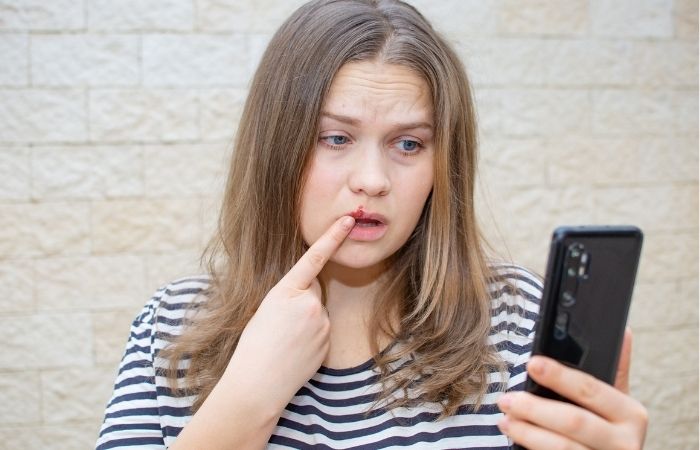
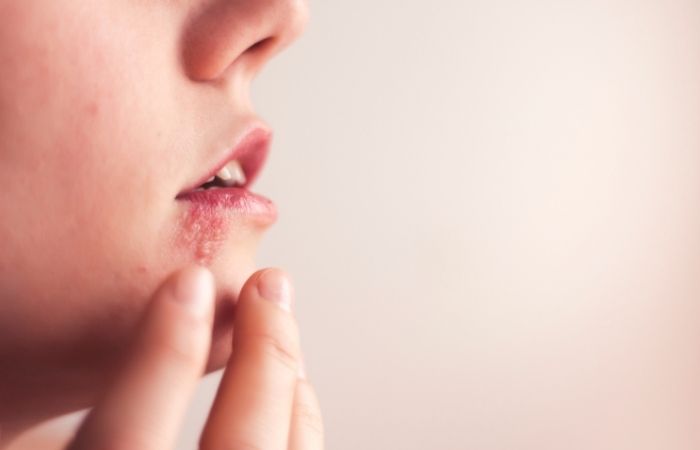
Cold sores and genital herpes lesions are both signs of active herpes infection. What differs is the type (HSV-1 or HSV-2) and location (oral or genital). But visually? They can look nearly identical: fluid-filled blisters, redness, crusting, tingling, pain, or itch.
Here's how they typically compare:
| Feature | Cold Sore (HSV-1 or HSV-2) | Genital Herpes (HSV-1 or HSV-2) |
|---|---|---|
| Location | Lips, nose, chin, inside mouth | Penis, vulva, anus, buttocks, thighs |
| Common Virus Type | Usually HSV-1 | Usually HSV-2, but HSV-1 rising |
| Appearance | Clustered fluid-filled blisters, scab over | Same blistering, but may be smaller or hidden |
| Symptoms | Burning, tingling, tightness, pain | Same, often with swollen lymph nodes |
| Triggering Factors | Stress, illness, sun exposure, menstruation | Sex, friction, hormone shifts, weakened immunity |
Figure 1. Visual and symptom comparison between cold sores and genital herpes. Testing is the only way to confirm virus type and transmission risk.
Still not sure what you’re dealing with? That’s exactly why people test.
How You Can Get Genital Herpes from a Cold Sore
Let’s get brutally honest here: if you’ve ever performed oral sex while you had a cold sore, or even just that “tingle”, you could have transmitted herpes. HSV-1, the most common cold sore virus, can cause genital herpes when transferred via oral-genital contact.
What makes it trickier? Over 50% of U.S. adults carry HSV-1, many without symptoms. That means your partner could have herpes and never know it, and vice versa. Even kissing can transmit HSV-1. And if you’ve never had it before, you’re at risk of a first outbreak anywhere it lands: mouth, genitals, even eyes.
If you’ve ever worried “could I have given or gotten herpes without knowing?”, the answer is probably yes. But that doesn’t mean it’s too late to take control.
Order a discreet herpes test kit to find out if you're carrying HSV-1, HSV-2, or both, oral or genital symptoms or not.
When and How to Test for Herpes
There are two main ways to test for herpes:
| Test Type | What It Detects | Timing Accuracy | Sample Needed |
|---|---|---|---|
| Swab Test (PCR) | Active HSV-1 or HSV-2 in lesions | Best within 48 hours of outbreak | Blister or sore fluid |
| Blood Test (IgG Antibodies) | Past exposure to HSV-1 or HSV-2 | Accurate 6–12 weeks after exposure | Fingerstick or blood draw |
Figure 2. Herpes testing types and timing accuracy. Blood testing is best for asymptomatic screening or identifying hidden infections.
So if you don’t currently have symptoms, but had a suspicious sore last month, or want to protect a partner, you’ll likely need an IgG antibody test. If you have an active lesion now, get it swabbed within 48 hours.
Don’t have time or privacy for a clinic? Our Herpes 1 & 2 test kit lets you test yourself at home, fast, discreet, and easy to interpret.
People are also reading: How to Know If That Eye Infection Might Actually Be an STD
Why Cold Sore Photos Can Be Misleading (And Stress-Inducing)
If you’ve ever typed “herpes photos” into Google at 2AM, you’re not alone. The search results are horrifying, swollen, cracked, oozing images that rarely resemble what people actually see in real life. But those extremes don’t represent the full spectrum of herpes symptoms. And the truth? Many outbreaks are mild. Some are invisible. Others look like shaving bumps, allergies, or chapped lips.
Vanessa, 35, remembers the moment she went from worry to panic. “I had what looked like a pimple on the inside of my thigh after a weekend at the beach. I freaked out and searched images, and what I saw made me cry. But mine didn’t look anything like that. I wasted days spiraling when I could’ve just tested.”
Photos can help guide you, but they’re never diagnostic. That tiny bump might be a clogged follicle, or a subtle herpes sore. It might be a cold sore, or angular cheilitis. It might be nothing, or a sign of something you deserve clarity on. Only a test can tell you where you really stand.
How Herpes Travels, Even When You Feel Fine
One of the most devastating parts of herpes is how silently it can spread. People think you can only catch or transmit it during a visible outbreak, but that’s a myth. Asymptomatic shedding, when the virus is active on the skin without visible sores, is real and common, especially in the first year after infection.
James, 23, thought he was being responsible. “I hadn’t had a cold sore in over six months, so I figured it was safe to go down on my girlfriend. Then she had a full-blown outbreak down there a week later. That’s how we found out I’d been carrying HSV-1 all along.”
Herpes doesn’t play fair. It doesn’t always show itself. And even when you think you’re in the clear, the virus may be silently replicating on your skin. That’s why proactive testing matters, not just for your peace of mind, but for the health of the people you love.
If you’ve ever had a cold sore and are now sexually active, you owe it to yourself (and your partner) to get tested for both HSV-1 and HSV-2. You might already be carrying one, or both, without knowing.
What Cold Sores Can’t Tell You About Your Status
There’s a huge misconception that symptoms tell you everything you need to know. That if you get cold sores, it’s just oral herpes, nothing more. That if you don’t have sores at all, you must be clean. But herpes doesn’t work that way. Your body might produce antibodies without you ever noticing an outbreak. Or you might have one or two mild symptoms and assume it’s something else.
The virus can live in nerve clusters, waiting. It can show up on your genitals after oral sex with someone who "only" has cold sores. It can travel back and forth between partners. It can erupt once and never again, or flare up during every illness or stress cycle. The only way to know your herpes status with certainty is to test for it.
Don’t wait until your partner gets diagnosed and you’re forced into reactive mode. Don’t rely on guesswork, WebMD photos, or the absence of symptoms. A simple at-home herpes test could give you the clarity you need to move forward without shame or uncertainty.
Check Your STD Status in Minutes
Test at Home with RemediumGenital Herpes Test Kit
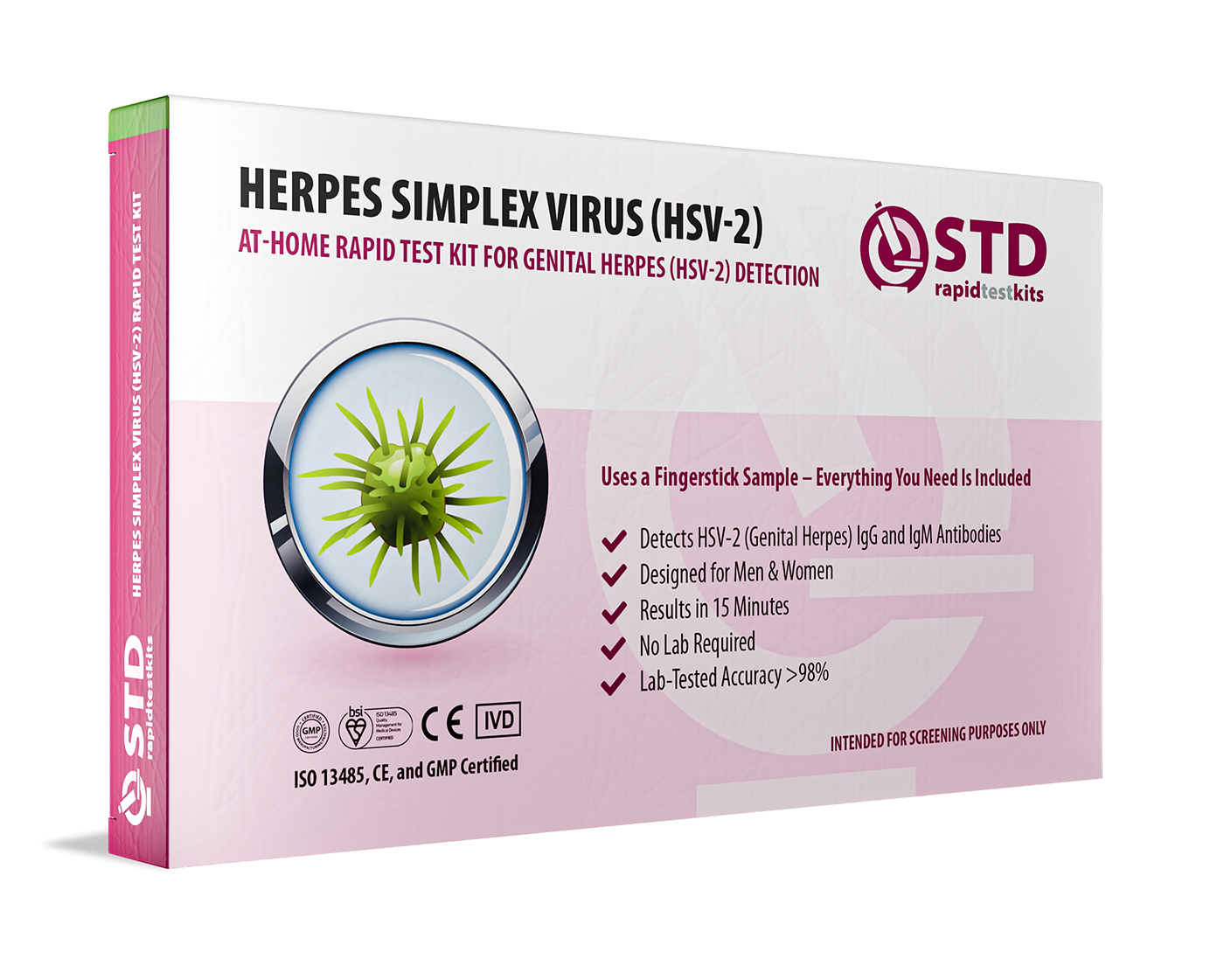
 For Men & Women
 Results in Minutes
 No Lab Needed
 Private & Discreet
Order Now $45.99 $49.00
Should You Test Even If You’ve Only Had Cold Sores?
This is one of the most common, and most important, questions we get. If you’ve had cold sores for years, do you really need to test? Here’s the thing: while oral cold sores are usually HSV-1, some are HSV-2. And without testing, there’s no way to know which type you have, or if it’s spread.
Cold sores may have felt like a non-issue in high school, but as soon as sex enters the picture, they become relevant. Especially if you’ve performed oral sex without protection. Especially if your partner has a known or unknown history of HSV. Especially if you plan to have children, share toys, or engage in intimacy where bodily fluids are involved.
Think of testing like checking your blind spot. It’s not about punishment. It’s about safety, control, and empowerment. The worst that can happen? You find out you already have antibodies and can make smarter choices going forward. The best? You catch a silent infection before it spreads, or reassure yourself you’re in the clear.
Either way, you win. Either way, you know.
But I Don’t Have Genital Symptoms, Why Bother?
Genital herpes is often misrepresented in movies and media as “obvious.” Angry red sores. Intense pain. Clear signs. But in reality? Many people with genital herpes experience symptoms so mild they mistake them for a yeast infection, razor burn, or an allergic reaction.
Aliyah, 30, thought she was dealing with recurring UTIs. Her doctor agreed, until she finally insisted on a herpes test. “The results came back positive for HSV-2. I was shocked. All this time I was treating the wrong thing. No one told me herpes could feel like this.”
Don’t let a lack of classic symptoms lull you into false reassurance. Herpes hides. It imitates. It mimics other conditions. But it can also cause real stress and health risks when left undiagnosed, especially during pregnancy, immunosuppression, or high-risk partnerships.
Whether you’re asymptomatic, unsure, or dealing with something “weird but not painful,” testing is always a valid next step. The result may surprise you, but it can also liberate you.
The Role of At-Home Herpes Testing (When You Don’t Want to Explain It to Anyone)
Let’s face it, getting tested for herpes at a clinic can feel like a nightmare. The receptionist might judge. The waiting room might be packed. You might run into your neighbor. And maybe the scariest part? Having to say the word “herpes” out loud. That’s why at-home testing exists, and why it’s become a lifeline for people who need answers without the interrogation.
Danny, 21, knew he should get tested after a cold sore showed up right after hooking up with a new partner. “There was no way I was going to a student clinic and asking for a herpes test. I ordered a home kit, pricked my finger, and got the results in a couple of days. No awkward conversations. Just answers.”
Most at-home herpes kits test for HSV-1 and HSV-2 antibodies using a small blood sample. They don’t tell you exactly where the virus is located (oral or genital), but they do tell you whether your body has encountered it, and which type. From there, you can have informed conversations, set boundaries, and seek treatment if needed.
If you’ve had cold sores, performed oral sex, or just want to clear the fog of uncertainty, you can order a rapid herpes test today and know exactly what you’re dealing with, on your terms.
Timing Is Everything: When to Test for the Most Accurate Results
If you just had an outbreak, or a partner disclosed a diagnosis, you might feel the urge to test immediately. And while that urgency is valid, testing too early can lead to false reassurance. That’s because the immune system needs time to produce detectable levels of antibodies, especially if you’re using an IgG test.
Here’s a simplified way to think about it:
| Scenario | Best Time to Test | Why It Matters |
|---|---|---|
| Active cold sore or lesion | Within 48 hours (swab test) | Detects virus DNA directly from the sore |
| Possible exposure (no symptoms) | Wait 6–12 weeks (IgG test) | Allows antibodies to build for accurate results |
| Recurring cold sores and unclear status | Anytime (IgG test) | Shows if you’ve developed antibodies from past exposure |
Figure 3. Testing timing by scenario. Swabs catch active virus; blood tests detect long-term immune response.
If you test early and get a negative result, but still suspect herpes, don’t panic. Just retest at the appropriate window. False negatives are common in the early stages. And remember: the goal of testing isn’t punishment, it’s clarity. Clarity helps you communicate better, prevent transmission, and understand your body’s signals.
People are also reading: Took Antibiotics After Sex? Here's Why Probiotics Might Matter
If It’s Positive, What Happens Next?
The word “positive” can feel like a wall slamming down. But it doesn’t mean your love life is over. It doesn’t mean you’re dirty. It doesn’t mean you’ve done anything wrong. It just means your body encountered a virus, and now you know about it.
Niko, 26, took an at-home test after a new partner asked if he’d ever been tested for herpes. “I’d never even thought about it. Turns out I was positive for HSV-1. I was stunned, but also kind of relieved. I had cold sores as a kid, now I just understood what they meant.”
If you test positive for HSV-1 or HSV-2, you can’t donate blood while actively symptomatic, but you can still live, love, and have sex. You may want to inform partners (more on how to do that gently below). You can talk to a provider about antiviral medications like valacyclovir to reduce outbreaks and transmission risk. You can explore safer sex tools like condoms, dental dams, and suppressive therapy to protect partners. And most of all, you can stop guessing.
This is your body. This is your status. And this is your chance to move forward, without fear, shame, or secrecy.
If you’re ready to stop spinning, we’re here to help you start knowing
FAQs
1. Can cold sores really give someone genital herpes?
Yes, this surprises people all the time. Cold sores are usually caused by HSV-1, and if you go down on someone while you’ve got one (or even just the tingles), the virus can show up on their genitals. It’s still herpes, just delivered differently. One moment of “it’s probably nothing” can lead to an unexpected outbreak.
2. How do I know if it’s HSV-1 or HSV-2?
You can't eyeball it. There’s no visual clue, no color code, no special tingle that tells you which type you have. Only a blood test or a sore swab can confirm if you're carrying HSV-1, HSV-2, or both. And honestly? A lot of folks are walking around with HSV-1 from childhood and don’t even realize it until they test.
3. Is it worth testing if I’ve had cold sores for years? T
otally. If you’re sexually active now, especially if you’ve done any oral-to-genital contact, testing clears up the guesswork. It tells you not just what type of herpes you have, but what you might be passing on, even if you’re not having “classic” symptoms. Knowing your type helps with protection, medication options, and honest conversations.
4. What if I don’t have any symptoms, should I still test?
If you’ve never had a cold sore, never felt that burn or blister, but you’ve had unprotected sex or oral encounters, you still might carry herpes. Some people never have outbreaks. Others mistake them for ingrown hairs or yeast infections. If you’ve got a partner with herpes, or just want to check your status for peace of mind, testing makes total sense.
5. Does testing tell me where the virus is, mouth or genitals?
Sadly, no. A blood test shows you’ve been exposed to HSV-1 or HSV-2, but it doesn’t pinpoint the location. A swab test during an active outbreak will tell you where the virus is active in that moment. But if you’re asymptomatic? You’ll have to use context, like where your past sores showed up, to help interpret results.
6. How soon after a hookup can I get an accurate herpes test?
It depends on the test. If you’ve got an active sore, swab it within 48 hours, don’t wait. If you’re using a blood test and you’re symptom-free, wait about 6–12 weeks after the encounter. That gives your body time to build antibodies so the test can actually pick them up. Sooner than that, and you might get a false negative.
7. Does herpes go away if I leave it alone?
Herpes doesn’t go away, but it can chill out. It lives in your nerves and pops up when triggered by stress, hormones, illness, etc. Some folks have one outbreak and never again. Others flare up often. Treatment helps reduce those outbreaks and lowers the chance you’ll pass it on. But nope, it doesn’t disappear on its own.
8. Can I still have sex if I test positive?
Of course. You might want to do a few extra things, like using condoms or dental dams, not having sex during outbreaks, and maybe starting antiviral meds. Many people with herpes have happy, loving, and hot sex lives. Not abstinence or shame, but communication and care are what matters.
9. Will my partner think I cheated if I test positive?
That’s a painful fear, but herpes doesn’t always mean recent transmission. It can hide for years, especially if symptoms were mild or misread. A positive result doesn’t mean betrayal. It means now you both know, and you can decide how to move forward with more honesty, not blame.
10. Is every cold sore definitely herpes?
Technically, yeah. If you’ve got that tingling, blistering, scab-it-over pattern on your lip, it’s almost always HSV-1. That’s not the same as saying it’s “bad”, but it’s still herpes. That said, not every red bump is a cold sore. Sometimes it’s impetigo, sometimes it’s a cracked corner, sometimes it’s just irritation. When in doubt? Test it out.
You Deserve Answers, Not Assumptions
Herpes doesn’t follow the rules we were taught. It hides in plain sight, masquerades as mild irritations, and travels through mouths, not just genitals. Cold sores are more than just a cosmetic inconvenience, they’re a real part of a bigger picture. But the power to decode that picture? It’s in your hands.
If you’ve ever asked yourself, “Is this just a cold sore, or something more?”, don’t stay stuck in doubt. Don’t scroll through horror images and hope for the best. Get real answers on your terms.
This at-home Herpes 1 & 2 test kit gives you clarity without judgment, because you deserve to know what’s going on with your body, not guess.
How We Sourced This Article: We combined clinical guidance from top medical institutions with peer-reviewed research and real-life experiences to offer a compassionate, factual guide to cold sores and herpes testing. Around fifteen reputable sources informed this article; below are six of the most relevant for readers seeking deeper information.
Sources
1. CDC – Genital Herpes Fact Sheet
2. Mayo Clinic – Genital Herpes Overview
4. CDC – Herpes (STD Treatment Guidelines)
5. CDC – Herpes Testing Guidelines
6. WHO – Herpes Simplex Virus Fact Sheet
7. NCBI / StatPearls – Herpes Simplex Type 2
8. JAMA – Genital HSV‑1 Viral Shedding Study
9. Journal of Infectious Diseases – HSV‑2 Global Burden Study
About the Author
Dr. F. David, MD is a board-certified infectious disease specialist focused on STI prevention, diagnosis, and treatment. He blends clinical precision with a no-nonsense, sex-positive approach and is committed to expanding access for readers in both urban and off-grid settings.
Reviewed by: T. Nguyen, NP-C | Last medically reviewed: October 2025
This article is for information only and should not be used as medical advice.


