







Quick Answer: At-home STD test results can take as little as 15 minutes, while clinic-based results often take 2–7 days depending on the test type and location. Rapid kits give faster peace of mind, especially when timing matters.
Who This Guide Is For (And Why Speed Matters)
This article is for anyone stuck in the “do I wait it out or act now?” spiral. Whether you’re mid-travel, between partners, or recovering from a condom mishap, waiting for STD test results can be more stressful than the risk itself. Maybe you don’t want to go through your primary care provider. Maybe you’re worried your ex will find out. Maybe you live hours from the nearest clinic. Whatever the reason, speed and privacy are no longer luxuries, they’re necessities.
STD testing has changed. You no longer have to wait in cold chairs under fluorescent lighting, trying not to make eye contact with anyone else. With discreet at-home kits, testing is becoming faster, more private, and less emotionally loaded. But is it really better? This guide breaks down how long different STD test methods take, from walk-in clinics to mail-in lab kits to rapid-result home cassettes, and which one might be right for you, depending on what you need right now.
Clinic Testing: Why It Takes So Long (Even When It Shouldn’t)
Let’s be clear, clinics aren’t slow because they don’t care. They’re slow because they’re overwhelmed. Between limited staff, lab partnerships, billing systems, and patient backlogs, your test might not even reach the lab for a day or two. Then the lab itself processes hundreds of samples daily. Even if your swab or urine sample only takes minutes to analyze, it’s probably waiting behind dozens of others.
Most clinics use lab-based tests like NAATs (nucleic acid amplification tests) or PCR (polymerase chain reaction). These are highly accurate and can detect chlamydia, gonorrhea, and trichomoniasis with precision. But the lab delay means you’re often stuck in a holding pattern. And if the clinic sends results via a patient portal, you might also wait for them to be uploaded or released by a provider.
One Reddit user described calling the clinic six times over five days just to find out that their provider was “off on Fridays” and hadn’t reviewed the results yet. “I was spiraling,” they wrote. “I was sure I had HIV. I couldn’t sleep, couldn’t eat. Turned out it was nothing. But those days were hell.”
At Home Rapid Tests: What Makes Them So Fast?
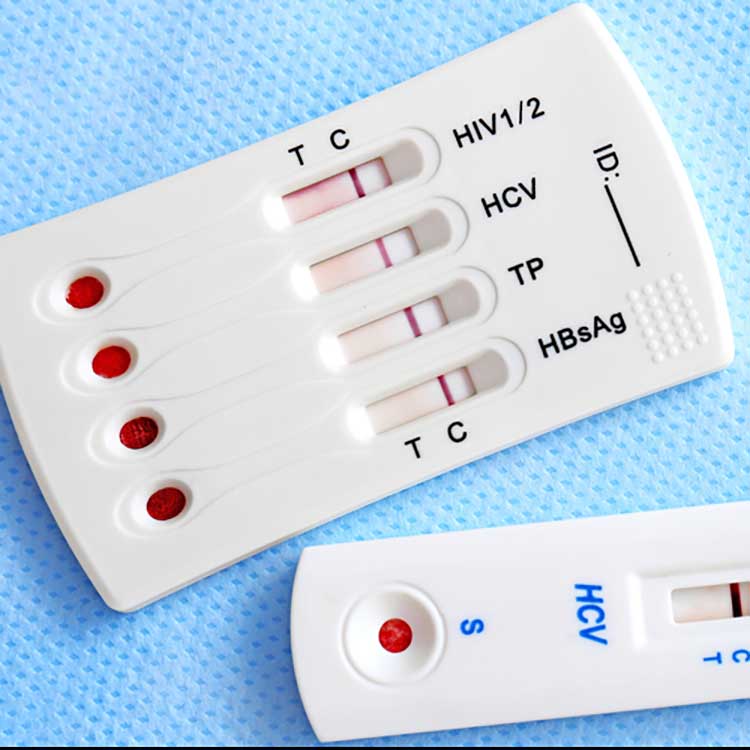
Unlike clinic-based testing that relies on third-party labs, at-home rapid STD tests use lateral flow or immunochromatographic technology. That’s a fancy way of saying they behave like pregnancy tests or COVID swabs. You collect a sample, usually blood via fingerstick, or sometimes urine or a swab, add it to the test cassette, and wait for the lines to appear.
For infections like syphilis, HIV, or chlamydia, results often show up in 10 to 20 minutes. These tests are ideal for people who need immediate clarity: maybe they’re about to have sex with someone new, maybe they’re feeling a new itch or sore, or maybe they just can’t mentally handle another day of not knowing.
Of course, not all rapid tests cover every STD, and some may have slightly lower sensitivity in early infection stages. But the best brands are FDA-cleared and align with WHO and CDC guidelines for rapid diagnostic tools.
| Test Method | Result Time | Common Infections Detected | Test Location |
|---|---|---|---|
| At-Home Rapid Test | 10–20 minutes | HIV, Syphilis, Chlamydia | Home (no lab needed) |
| Clinic-Based Lab Test (NAAT/PCR) | 2–7 days | Chlamydia, Gonorrhea, Trichomoniasis | Clinic + lab |
| Mail-In At-Home Lab Kit | 2–5 days after mailing | Multiple (panel kits) | Home + mail-in lab |
Table 1. STD testing methods compared by result speed, test type, and location.
People are also reading: Can You Take Wegovy or Ozempic If You Have HIV or Hep C?
When Every Hour Feels Like a Week: Why Speed Isn’t Just a Luxury
For a lot of people, waiting isn’t just inconvenient, it’s agonizing. You’re not just waiting on a number or a result. You’re waiting to decide whether to tell your partner something. You’re waiting to have sex again. You’re waiting to figure out if you’re sick or just paranoid. That limbo? It eats people alive.
Speed matters differently depending on your context. If you're pregnant or trying to become pregnant, testing delays can affect the timeline of care. For people who’ve had a sexual assault, testing quickly can influence medical and legal options. And for someone in a non-monogamous dynamic, speed determines how many people are exposed, or protected, in a short window.
Let’s say you had unprotected sex last night and woke up feeling... off. A clinic may not be open until Monday. Even if you get an appointment, it might take 72 hours to get results. That’s three more days of panicking, over-Googling symptoms, and spiraling through worst-case scenarios. Now imagine instead: you test at home this afternoon. You get a result in 15 minutes. It might not answer everything, but it gives you direction. It breaks the panic loop.
One user wrote on a support forum: “I had to know before I saw my partner again. I used a combo rapid kit, and even though I still planned to retest at a clinic later, it helped me breathe again.” That’s the power of speed, it’s not just medical. It’s emotional. It’s relational.
How Long It Actually Takes by STD Type
One of the trickiest parts about STD testing is that every infection has its own rhythm. Some tests return results fast but are more likely to miss early infections. Others take longer but are hyper-sensitive. If you test too early, even the fastest result won’t help because it might be a false negative. Timing your test correctly matters just as much as speed.
Below is a breakdown of common STDs, the typical testing method used, and how fast results usually come back depending on where and how you test. This is based on typical workflows from clinics, mail-in labs, and rapid kits, plus guidance from organizations like the CDC and WHO.
| STD | Fastest Test Type | Clinic Result Time | At-Home Result Time |
|---|---|---|---|
| Chlamydia | NAAT (PCR) | 2–5 days | 20–30 mins (rapid); 2–4 days (mail-in) |
| Gonorrhea | NAAT (PCR) | 2–5 days | 2–4 days (mail-in only) |
| Syphilis | Rapid treponemal test | 2–7 days | 15–20 mins (rapid); 2–4 days (mail-in) |
| HIV | Ag/Ab combo or rapid antibody | 1–3 days | 20 mins (rapid); 1–2 days (mail-in) |
| Trichomoniasis | NAAT or antigen | 2–5 days | Not widely available in rapid form |
Table 2. Estimated result times by infection and test method. Times may vary based on lab backlog and region.
It's worth noting that mail-in lab kits often strike a balance between accuracy and convenience. You get lab-grade sensitivity without the need to physically visit a provider. However, they still involve mailing delays and processing queues. If overnight shipping isn't available in your region, you could be waiting longer than expected.
Compare that to someone in a rural area or who doesn’t drive. Just getting to a clinic can be a 40-minute bus ride. Add in walk-in wait times or insurance processing, and the “fast, reliable clinic test” suddenly eats up an entire day, and your mental bandwidth.
“I Couldn’t Wait a Week to Know”
Devon, 22, had just started seeing someone new. They’d been careful, mostly. One night, things got rushed, and the condom broke. Devon brushed it off, until they noticed a slight burning during urination a few days later. “I wasn’t even sure it was related,” they said. “But once I started thinking about it, I couldn’t stop.”
Devon called their student health center and got an appointment three days later. After the swab, they were told results might take “up to a week” depending on lab flow. That wait nearly wrecked them. “I couldn’t focus. I kept thinking, what if I gave something to my new partner? What if it’s HIV? What if it’s something I can’t cure?”
On day four, Devon gave up and ordered a rapid test kit. “Even just doing it calmed me down. The process made me feel like I was in control again.” The result was negative, and the clinic later confirmed the same. But for Devon, it wasn’t just the outcome, it was the relief of not being stuck in the unknown.
“Waiting can feel worse than knowing,” they said. “At least if you know, you can act.”
When Faster Isn’t Always Better: Tradeoffs You Need to Know
It’s tempting to grab the fastest test available and move on, but faster isn’t always better. While at-home rapid tests deliver speed and privacy, they can come with slight compromises in sensitivity. That means if you test too early or during a low-viral-load phase, you could get a false negative, especially for infections like chlamydia or HIV in the early window.
That doesn’t mean these tests aren’t valuable. In fact, most FDA-cleared rapid kits for HIV or syphilis have strong reliability if used at the right time post-exposure. But this is where timing matters more than urgency. If you use a rapid test within 48 hours of exposure, you might not catch the infection, even if it’s there.
Think of rapid tests as a first checkpoint. They’re ideal when you’re scared, can’t access a clinic, or need to decide something now. But they don’t replace clinical follow-up. That’s why even people who get a negative rapid result after a risky encounter are often advised to retest at the optimal window period, usually 14 to 21 days for most bacterial STDs.
Speed brings emotional relief, but accuracy brings long-term certainty. The goal isn’t to choose one or the other, it’s to use both strategically. Start with what calms your nervous system, then plan for follow-up when the time is right.
Check Your STD Status in Minutes
Test at Home with Remedium10-in-1 STD Test Kit
 For Women
 Results in Minutes
 No Lab Needed
 Private & Discreet
Order Now $189.00 $490.00
For all 10 tests
What If You’re Still in the Window Period?
The “window period” refers to the time between exposure and when an infection becomes detectable by a test. During this period, even the most sensitive test might miss an early infection. For some STDs, this can be as short as 5 days. For others, like HIV or syphilis, it can stretch to weeks.
This is where a lot of people make mistakes. They test early, sometimes the same day as the exposure, get a negative, and move on. Then, symptoms start. Or worse, nothing shows at all but they unknowingly pass the infection to someone else. Rapid tests help reduce that anxious waiting period, but they don’t erase the biology of incubation and detection thresholds.
If you’re within the first 7 days after a potential exposure and have no symptoms, testing early is fine for your peace of mind, but schedule a follow-up. Use that early test to regain control of your emotions. Then, follow up 14–21 days later with either another rapid or a clinic-based test. If symptoms appear sooner, test immediately and don’t wait for the perfect day.
If your head keeps spinning, peace of mind is one test away. This at-home combo test kit checks for multiple common infections with fast results and discreet shipping.
Let’s Talk About Privacy: What At-Home Tests Get Right
Speed is only part of the appeal. For many people, privacy is just as crucial. Walking into a clinic, even a sexual health one, can feel like a confession. You might run into someone you know. You might be forced to answer awkward questions at check-in. You might feel like your nurse is silently judging your choices. None of that exists with at-home testing.
At-home kits are shipped in plain, unmarked boxes. There’s no branding on the outside, no “STD” label screaming from your mailbox. Even billing is designed with discretion, no health insurance involvement, no itemized statements sent to your parents or partners.
Everything happens on your terms: you order it, collect the sample privately, and view the results in your own time. That sense of control doesn’t just protect your dignity, it can increase the likelihood that people actually follow through on testing. When stigma disappears, action becomes easier.
It’s not just about hiding, it’s about freedom. Freedom from shame. Freedom from the system. Freedom to make decisions about your body without a third party holding the clipboard.
Why Clinics Still Matter (And When to Use One)
Despite the speed and ease of at-home options, clinics still play an essential role. If you’re experiencing intense symptoms, like pelvic pain, unusual bleeding, high fever, or swollen lymph nodes, you need to be evaluated in person. Rapid tests can guide, but they don’t replace physical exams or confirmatory diagnostics like cultures or imaging.
Clinics are also essential when results come back positive. Some rapid test kits include telehealth support or referral instructions, but if you test positive and feel overwhelmed, going in-person may help ground you and get treatment started quickly.
Insurance can also change the equation. If you have good coverage and live near a responsive clinic, it may be more cost-effective to test there, though you may lose out on immediacy and privacy.
The best move? Combine both. Use rapid testing when speed and discretion matter, and plan clinical follow-up based on your symptoms, timing, and result history. Testing isn’t one moment, it’s a process. What matters is making the next right move, not the perfect one.
How Fast Is Fast Enough?
That depends. For some, fast enough means having results before the weekend. For others, it’s about getting clarity before a new sexual partner. And for many, it just means ending the mental torment that comes from waiting without knowing.
There’s no perfect timing for everyone. But there is a best timing for you, based on what you feel, what you did, and what you can handle emotionally. If you're caught in that loop of uncertainty, don’t wait until you “deserve” a test. You already do. You don’t need more symptoms. You don’t need a reason that sounds good out loud. Your peace of mind is reason enough.
That’s the quiet power of testing fast. It’s not just about catching something. It’s about catching yourself, before the worry takes over.

People are also reading: The STD That Almost No One Gets Tested For
FAQs
1. How long do clinic STD test results really take?
Longer than you think. Even if the test itself only takes hours, your sample sits in a lab queue behind dozens of others. Most people get results in three to five days, but weekends, holidays, or provider sign-offs can stretch it to a full week. And yes, calling to “check in” rarely speeds it up.
2. Are at-home STD tests actually faster?
Absolutely. The whole point is skipping the waiting room and the red tape. Rapid kits can give results in fifteen minutes while you’re still in your pajamas. Mail-in tests take longer, but you control the clock, no clinic scheduling drama, no “we’ll call you when it’s ready.”
3. Can I really trust a 15-minute at-home test?
You can trust it the same way you trust a pregnancy or COVID test, it’s reliable when used correctly and at the right time. For things like HIV and syphilis, the accuracy is remarkably high. Just remember: testing too soon after exposure can throw off any result, no matter where you take it.
4. Why does it feel like clinics take forever?
Because they often do. Clinics rely on third-party labs that batch tests for efficiency. That means your sample waits until there’s a full tray to process. It’s not personal, it’s logistics. Add in provider reviews, electronic systems, and delayed portal updates, and you’ve got the perfect recipe for anxiety.
5. What’s the fastest way to get results if I’m freaking out?
Go rapid. Order an at-home kit that screens for multiple infections at once, like this combo rapid test. You’ll know in minutes whether to relax or follow up. It’s the difference between losing sleep and taking action before breakfast.
6. Can I test right after unprotected sex?
You can, but it might be too soon for total accuracy. If it’s been less than five days, a test can give you peace of mind, but it might miss early infection. Think of it as an emotional first-aid step, not a final answer. The smart move? Retest in two to three weeks for confirmation.
7. What if I don’t want anyone to know I’m testing?
Then at-home is your best friend. The kits ship in plain packaging, no “STD” labels, no pharmacy side-eyes. Even the billing is discreet, no weird charges showing up next to your grocery order. It’s private, adult, and drama-free. Just how it should be.
8. I tested positive, now what?
Take a breath. Most STDs are treatable, and none define who you are. If your at-home test is positive, schedule a clinic or telehealth visit for confirmation and treatment. You can even order partner kits to help them test privately too. This isn’t the end of your story, it’s the start of taking back control.
9. Do mail-in kits take longer than clinics?
Sometimes yes, sometimes no. Many labs will send you results back within 48 hours of getting your sample if you mail it out overnight. That's usually faster than waiting for your clinic to post the results. The most important thing is to pick a service that has dependable shipping and clear turnaround times.
10.What if my test comes back negative but I still feel like something is wrong?
Listen to your body, it’s smarter than most tests. Retest after the window period or go to a clinic if you’re having symptoms. Sometimes what feels like a “negative” result just means “too early to tell.” Trust your instincts. They’re part of the diagnostic process too.
You Deserve Answers, Not Assumptions
Waiting in the dark doesn't help, whether you're scared after a hookup, have a quiet suspicion, or made a promise to your partner. You can skip the silence and get back to clarity with quick at-home STD testing. Quick doesn't mean careless. It means having power.
Don't wait and wonder; get the clarity you need. This discreet and quick at-home combo test kit checks for the most common STDs.
How We Sourced This Article: We combined current guidance from leading medical organizations with peer-reviewed research and lived-experience reporting to make this guide practical, compassionate, and accurate. In total, around fifteen references informed the writing; below, we’ve highlighted six of the most relevant and reader-friendly sources.
Sources
1. CDC – STD Screening Recommendations
2. Mayo Clinic – STD Testing Overview
5. Laboratory and point-of-care diagnostic testing for sexually transmitted infections
6. STD testing: What’s right for you?
7. STD/STI Testing: What To Expect
8. Accurate, rapid, point-of-care tests for sexually transmitted infections
9. Point-of-Care Testing for Sexually Transmitted Infections: A Review
About the Author
Dr. F. David, MD is a board-certified infectious disease specialist focused on STI prevention, diagnosis, and treatment. He blends clinical precision with a no-nonsense, sex-positive approach and is committed to expanding access for readers in both urban and off-grid settings.
Reviewed by: Taylor Mendez, RN, MPH | Last medically reviewed: October 2025
This article is only for information and should not be used as medical advice.


