

Published: September 2025 | Last updated: April 2026 | Editorial review and quality control: Martina N.
Trichomoniasis is the most common curable sexually transmitted infection in the world, and it is also one of the most likely to be missed. The infection is caused by a single-celled parasite called Trichomonas vaginalis. It is treatable with a single course of antibiotics. The catch is that most people who carry it have no obvious symptoms, and most clinics do not test for it unless you specifically ask. So it spreads quietly, gets confused for bacterial vaginosis or a yeast infection, and keeps coming back when partners are not treated.
If you have been treated for BV more than once in a year, or if a UTI never quite cleared, or if you got a 'full panel' and your symptoms still feel off, this guide is for you. We summarize what current CDC, NHS, and Mayo Clinic guidance says about trich, why standard panels skip it, what testing involves, and what to do next.
Why does trichomoniasis go undiagnosed so often?
Trichomoniasis affects <a href="https://www.cdc.gov/trichomoniasis/about/" target="_blank" rel="noopener">more than two million people</a> in the United States, but most standard STI panels do not include it. Routine clinic screening typically covers chlamydia, gonorrhea, HIV, and syphilis. Trich is usually left off unless you ask for it by name or unless symptoms strongly point toward it. About 70% of infected people have no symptoms, so without a deliberate test, the infection is easy to miss for months or years.
Key Takeaways
- About 70% of people with trichomoniasis have no symptoms at all, which is why so many cases go years without diagnosis (CDC).
- Most 'full' STI panels do not include trich. If you want a definitive answer, you usually have to request the test by name.
How trichomoniasis gets misdiagnosed as BV, yeast, or a UTI
Trichomoniasis rarely shows up with dramatic symptoms. When it does, the picture overlaps with three other common conditions: bacterial vaginosis, vulvovaginal yeast infections, and lower urinary tract infections. The result is a familiar pattern in clinic visits. A patient comes in with itching, an unfamiliar discharge, or a burning sensation when they urinate. The provider treats for the most likely culprit, prescribes antibiotics or an antifungal, and sends the patient home. Symptoms ease for a few weeks, then return. The cycle repeats.
The CDC's clinical fact sheet on trichomoniasis describes the classic discharge as thin, frothy, and yellow-green with a mild odor, but most cases are not classic. Many women report only intermittent itching, light spotting after sex, or a vague sense that something is off that no one can pin down. That ambiguity is exactly why the diagnosis gets missed.
Treatment for BV (oral metronidazole at a different dose) and treatment for yeast (an antifungal like fluconazole) do not reliably clear trichomoniasis. A patient given the wrong therapy may feel temporarily better as inflammation calms down, then notice symptoms creeping back as the parasite continues to colonize the vaginal canal and urethra. The table below maps the overlap and where the differences sit.
| Sign or symptom | Trichomoniasis | Bacterial vaginosis (BV) | Yeast infection | Lower UTI |
|---|---|---|---|---|
| Discharge color | Yellow-green or frothy, sometimes thin | Thin, gray-white, often copious | Thick, white, cottage-cheese-like | Usually none |
| Odor | Often present, may worsen after sex | Strong fishy odor, especially after sex | Mild or none | None |
| Itching or irritation | Common, can be intermittent | Less common | Very common, often intense | None |
| Burning when urinating | Possible | Uncommon | Possible | Hallmark symptom |
| Pain during sex | Possible | Uncommon | Common | Uncommon |
| Lower abdominal cramping | Occasional, mild | Uncommon | Uncommon | More common with kidney involvement |
| Confirmed by | Lab NAAT or rapid antigen swab | Vaginal pH and microscopy | Microscopy or culture | Urinalysis or urine culture |
Why men carry trichomoniasis silently and pass it on
Trichomoniasis is harder to spot in men than in women. Most men have no symptoms at all. When symptoms occur, they are usually mild: a brief tingling or burning during urination, occasional discharge, or a vague irritation that is easy to attribute to dehydration or friction. Many men never seek testing unless a partner asks them to, and even when they do, trich testing is not routine in male clinical evaluation.
This is the engine behind reinfection. A woman gets tested, gets treated, clears the infection, then reconnects with the same partner who never realized they were carrying it. Within weeks, symptoms return. The lab calls it 'recurrence.' Public health calls it ping-pong transmission. The CDC recommends partner therapy for trichomoniasis precisely because of this pattern.
If you have tested positive for trich, your current sexual partners should be evaluated and treated, even when they have no symptoms. Sexual health clinics commonly extend that recommendation to partners from the past 60 days as a practical lookback window.
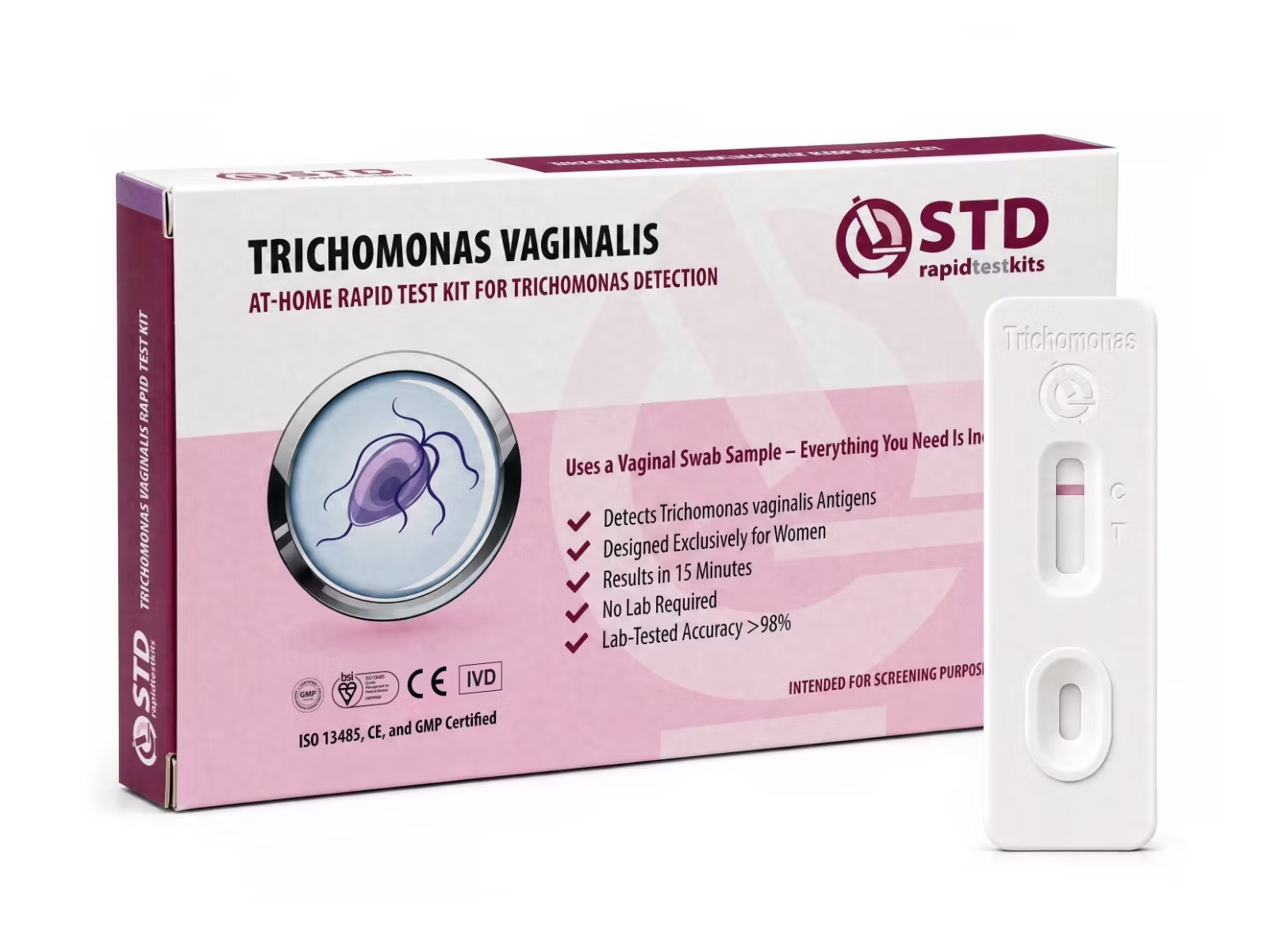
Our at-home rapid trichomoniasis kit uses a self-collected vaginal swab and is validated for female anatomy only. We do not currently sell a male-compatible at-home trich test. Male partners who need testing should see a sexual health clinic or primary care provider and request a urethral or first-void urine NAAT for Trichomonas vaginalis specifically, since standard panels often skip it.
What a 'full STI panel' usually leaves out
The phrase 'full panel' carries a lot of confidence, and almost no consistency. In most clinics, a routine STI panel includes a few core tests: chlamydia, gonorrhea, HIV, and syphilis. Some panels add hepatitis B or hepatitis C. Most stop there. Trichomoniasis is treated as an add-on. Unless you ask for it by name, or unless your symptoms loudly point to it, it is usually left off the lab order entirely.
The exclusion is a guideline gap, not a deliberate oversight by individual clinics. CDC screening recommendations advise routine trichomoniasis screening for HIV-positive women and for women with symptoms or known exposure, but stop short of universal screening for asymptomatic women. Because most women with trich are asymptomatic, the guidelines effectively guarantee that many cases are never tested for.
If you have ever had a clinic visit where you were told you were 'tested for everything,' the practical question to ask is: which tests, exactly, were on the requisition? Trichomoniasis should be on it if you want to know your status for it. Otherwise, assume it was not.
- Ask the provider to confirm trichomoniasis is on the lab requisition.
- Request the test by name if it is not, especially if you have had recurrent BV or unexplained vaginal symptoms.
- Ask whether your partner can be evaluated at the same visit, since partner treatment closes the reinfection loop.
Untreated trichomoniasis: complications worth knowing
Most trichomoniasis cases are uncomplicated and clear quickly with one course of antibiotics. The reason testing matters is what untreated trich can do over time. The infection causes low-grade inflammation in the vaginal canal, urethra, and cervix, and that inflammation has documented downstream effects.
The CDC notes that untreated trichomoniasis increases susceptibility to HIV acquisition by disrupting the local mucosal barrier. In women who already have HIV, untreated trich can also raise the likelihood of transmitting HIV to a partner. The biology is straightforward: more inflammation means more recruited immune cells in the genital tissue, which means more cells available for HIV to infect or shed from.
In pregnancy, trichomoniasis has been associated with preterm delivery, premature rupture of membranes, and low birth weight, according to CDC and Mayo Clinic guidance. Routine prenatal care does not always include trichomoniasis screening; pregnant women with symptoms or known exposure should specifically request the test.
Pelvic inflammatory disease (PID) is more strongly linked to untreated chlamydia and gonorrhea than to trich, but trichomoniasis-related cervicitis (inflammation of the cervix) is a documented contributing factor in mixed-pathogen presentations. Caught early and treated, trichomoniasis is a brief inconvenience that resolves with one short antibiotic course.
When to test for trichomoniasis, and when to retest
Timing matters more than people realize. The CDC describes an incubation period for trichomoniasis of roughly 5 to 28 days. That window means a test taken 24 hours after a possible exposure can easily come back negative even when the infection has been transmitted. For most rapid antigen and lab NAAT tests, the practical recommendation is to test 7 to 14 days post-exposure when symptoms are absent, and immediately if symptoms appear.
If symptoms persist after a negative test, retest. A single negative result during the early window does not rule out infection. Repeat testing is also recommended after a positive result and treatment: CDC treatment guidelines suggest retesting within 3 months because reinfection from an untreated partner is the most common cause of recurrence.
The choice between an at-home rapid test and a clinic NAAT comes down to access and accuracy. Lab NAAT remains the most sensitive option and is what large clinics and hospital labs use. At-home rapid lateral-flow tests are screening tools: they offer privacy, fast results, and the ability to test without an appointment. A positive at-home result is worth confirming with a clinic NAAT and starting treatment promptly. A negative at-home result with persistent symptoms is worth following up with NAAT.
Note: this site sells rapid at-home STI test kits, including the trichomoniasis test referenced below.
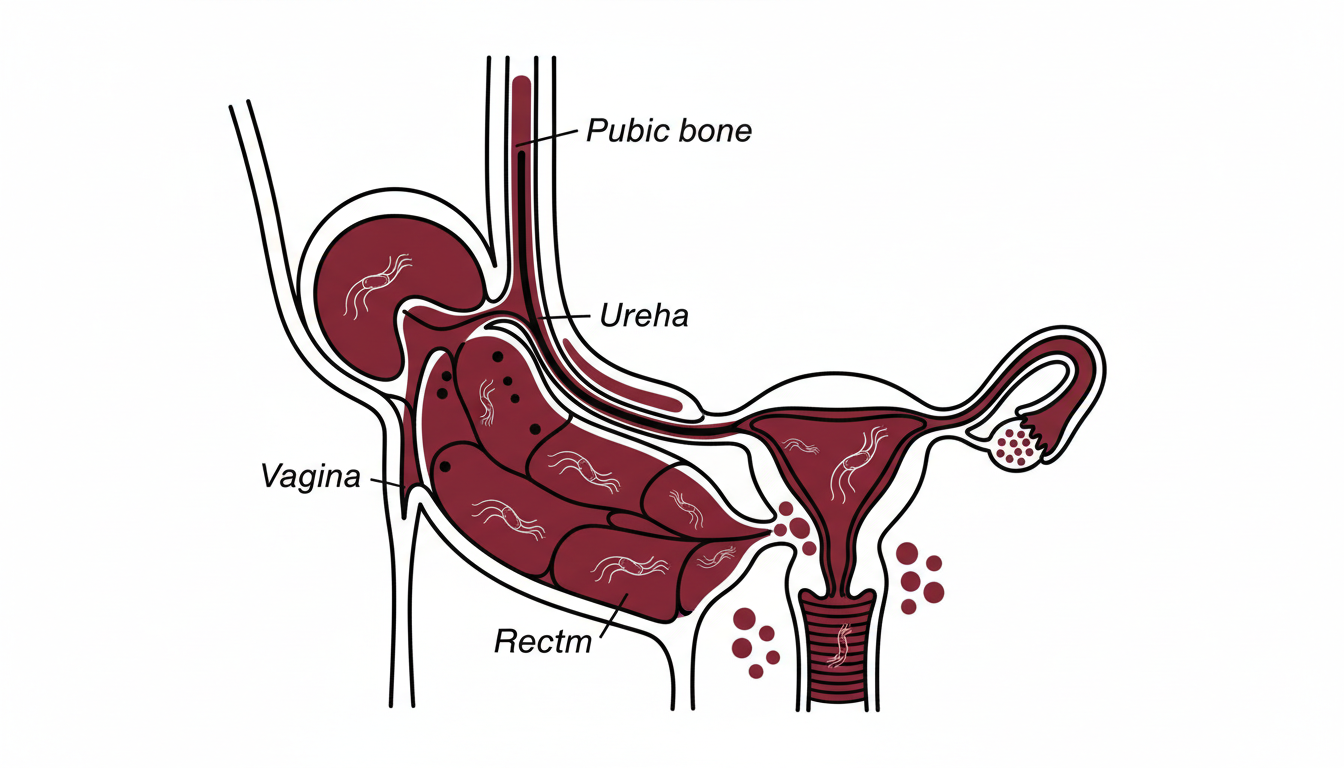
Most people who have trichomoniasis cannot tell. About 70% of infected people do not have any signs or symptoms.
Treatment, partner therapy, and the reinfection loop
Treatment for trichomoniasis is short and effective when both partners follow through. Current CDC treatment guidelines recommend metronidazole 500 mg orally twice daily for 7 days for women, and a single 2 g oral dose of metronidazole for men. Tinidazole is an alternative single-dose option. Most patients clear the infection on a first round when partners are treated at the same time.
The reinfection loop is what trips people up. A patient takes the antibiotics, finishes the course, and feels fine. A few weeks later symptoms return. In most of these cases the original treatment worked; the patient was simply re-exposed to the same untreated partner. Partner therapy is required for both people, and retesting roughly 3 months after treatment is reasonable, especially if you remain in the same partnership.
If symptoms persist after both partners have completed treatment, the next step is a follow-up clinic visit. Persistent or recurrent symptoms after partner-inclusive therapy can point to metronidazole-resistant strains, which are uncommon but documented, and which respond to higher-dose or alternative regimens.
- Both partners take the prescribed antibiotic course at the same time.
- Per CDC guidance, abstain from sex until both partners have completed the full treatment course and any symptoms have resolved.
- Retest within 3 months of a positive result, since reinfection from an untreated partner is the most common cause of recurrence.
Who gets missed: the structural picture
Trichomoniasis prevalence is not evenly distributed. CDC surveillance data has consistently shown significantly higher rates among Black women in the United States compared with other racial and ethnic groups, a pattern researchers attribute to differences in screening access, partner network density, and provider patterns rather than to biology. Awareness and access do not match prevalence.
Other groups commonly underserved by routine STI care include women in non-monogamous relationships, queer women, trans patients, low-income patients without consistent insurance coverage, and patients in rural areas without easy access to sexual health clinics. For all of these groups, the gap between guideline-driven screening and real-world access is wider than for the textbook 25-year-old presenting with classic symptoms.
The pattern reflects unequal access to screening rather than anything intrinsic about the affected groups. Patients most likely to carry trich silently are also the patients most likely to be told their 'full panel' was complete when it was incomplete.
- Title X-funded family planning clinics, which provide sliding-scale STI testing regardless of insurance status.
- Local health department STI clinics, which often run trich testing as standard for women presenting with vaginal symptoms.
- At-home self-collected swab tests, which bypass scheduling and provider gatekeeping for the initial screen.
Quiet confidence about your status
If you are reading this because something feels off, the next step is small and concrete: confirm whether trichomoniasis was on your last test. If it was not, request it by name at your next visit, or use a self-collected at-home swab. Either path gives you a definitive answer. Both are private. Neither requires you to argue with a provider about whether your symptoms count.
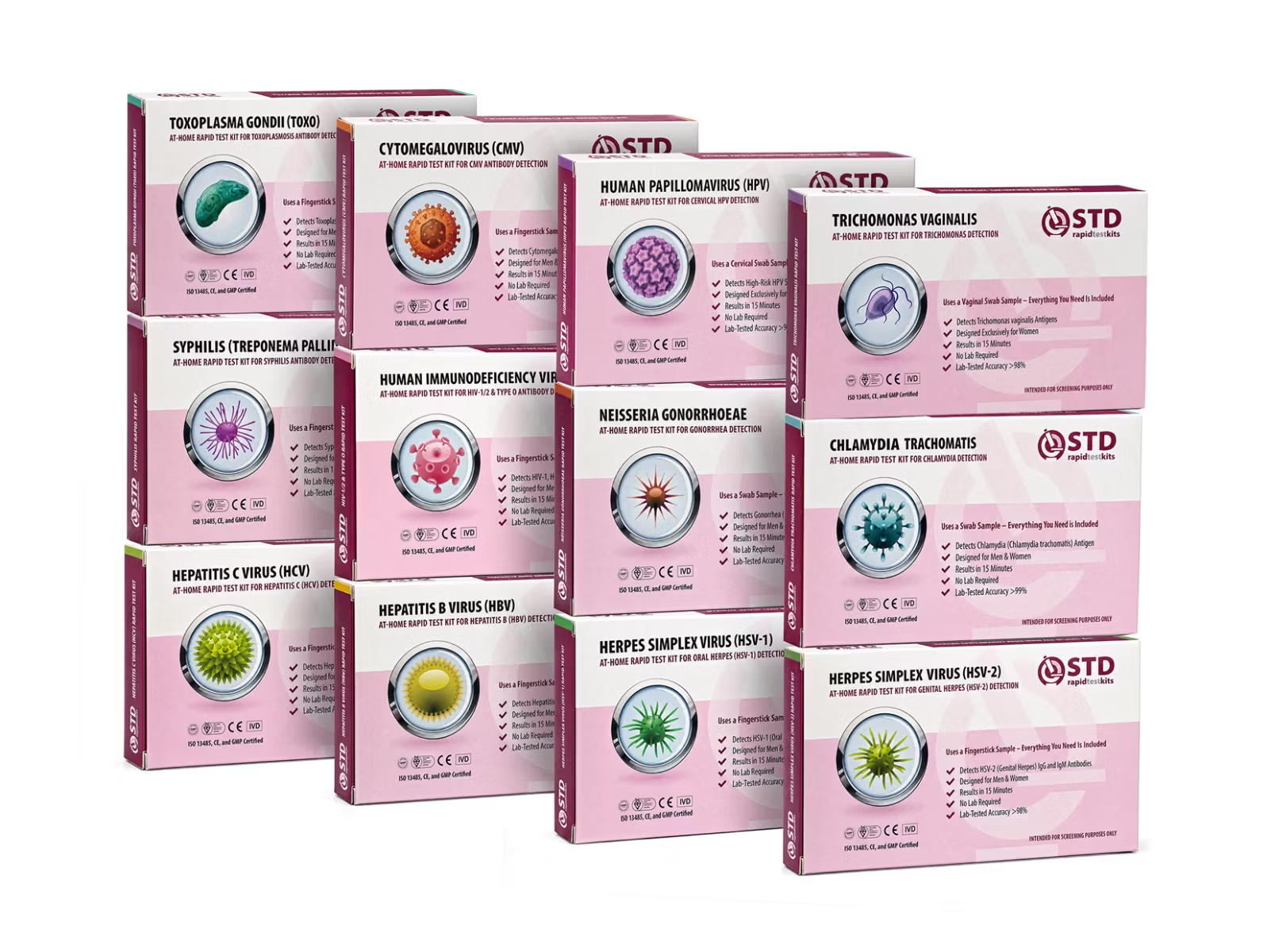
If your initial concern is broader than trich alone, a multi-infection panel can cover the most common STIs in a single screen. The 10-in-1 women's combination kit linked below includes trichomoniasis alongside chlamydia, gonorrhea, syphilis, hepatitis, HIV, HSV, and HPV components for a comprehensive at-home check.
- At your next clinic visit, request a trichomoniasis NAAT by name and confirm it is on the lab requisition before you leave.
- Or use a self-collected at-home rapid swab as an initial screen, with clinic confirmation and treatment if the result is positive.
Frequently asked questions about trichomoniasis testing
- Why is trichomoniasis usually not on a standard STI panel?
- Because CDC guidelines do not require it for asymptomatic patients. The four infections that anchor every standard panel (chlamydia, gonorrhea, HIV, syphilis) are federally reportable and supported by long-standing universal screening evidence. Trich is not yet in that tier, so labs treat it as an opt-in test that the ordering clinician has to add. If you did not ask for it specifically, it was almost certainly left off.
- How long after exposure can I test for trichomoniasis?
- The CDC describes an incubation period of 5 to 28 days. For most rapid antigen and NAAT tests, the practical sweet spot is 7 to 14 days post-exposure if you have no symptoms. If symptoms develop, test immediately. A single negative result early in the window does not rule out infection; repeat testing is reasonable if symptoms persist.
- Can I have trichomoniasis with no symptoms?
- Yes, and this is the most common scenario. About 70% of people with trich are asymptomatic, according to the CDC. Asymptomatic carriers can still transmit the infection, which is the main reason routine partner testing matters even when neither partner feels anything is wrong.
- What is the difference between trichomoniasis and bacterial vaginosis?
- Both can cause discharge and odor, though they have different causes. BV is an overgrowth of anaerobic vaginal bacteria and is not sexually transmitted in the classic sense. Trichomoniasis is caused by the parasite Trichomonas vaginalis and is sexually transmitted. The treatments differ in dosing, and treatment for one does not reliably clear the other. Confirmation requires a specific test.
- Can men get tested for trichomoniasis at home?
- Our at-home rapid trichomoniasis kit uses a self-collected vaginal swab and is validated for female anatomy only. Male partners needing testing should see a sexual health clinic or primary care provider and request a urethral or first-void urine NAAT for Trichomonas vaginalis specifically, since standard panels often skip it.
- How is trichomoniasis treated?
- Current CDC treatment guidelines recommend metronidazole 500 mg orally twice daily for 7 days for women, and a single 2 g oral dose of metronidazole for men. Tinidazole is an alternative single-dose option. Most cases clear with a single course. Both partners must be treated at the same time, otherwise reinfection is likely.
- I was treated and symptoms came back. Did the treatment fail?
- Most often, no. The most common cause of post-treatment recurrence is reinfection from an untreated partner. The CDC suggests retesting within 3 months after a positive result for this reason. If both partners completed treatment and symptoms still recur, return to the clinic; metronidazole-resistant strains exist but are uncommon and respond to alternative regimens.
- Does trichomoniasis cause infertility or cancer?
- Direct links to infertility or cancer are not established for trichomoniasis. Chronic untreated infection does cause persistent genital inflammation, which the CDC has linked to increased HIV acquisition risk and, in pregnancy, to preterm delivery and low birth weight. Most of these risks resolve once the infection is treated.
- U.S. Centers for Disease Control and Prevention. Trichomoniasis fact sheet, source for the about-70%-asymptomatic figure, the 5 to 28 day incubation window, the more-than-two-million U.S. infections estimate (2018), and partner therapy guidance.
- U.S. Centers for Disease Control and Prevention. STI treatment guidelines, source for current metronidazole and tinidazole dosing, the abstinence-during-treatment guidance, and the recommended retesting interval after treatment.
- NHS. Trichomoniasis: symptoms, testing, and treatment overview for U.K. readers, used as a cross-reference on classic and atypical symptom patterns.
- Mayo Clinic. Trichomoniasis overview, used for context on pregnancy-related associations and complication framing.
- Planned Parenthood. Patient-facing overview of trichomoniasis testing, treatment, and partner notification.
