







Quick Answer: A rash after sex could be caused by herpes, but it can also come from irritation, allergic reactions, or fungal overgrowth. Herpes typically shows up as painful or itchy blisters in clusters and may be preceded by a tingling sensation. Testing is the only way to know for sure, especially if symptoms return or last longer than a few days.
When a Rash Feels Like a Warning
For many people, skin is the first messenger of fear. After sex, any unexpected redness, bumps, or burning becomes a question mark. One that sticks. That post-hookup vulnerability, when you’re alone, checking yourself in dim light, wondering what’s normal and what’s a red flag, is deeply emotional. It’s also medically important.
Rashes after sex aren't rare. But they aren’t always an STD either. The skin around the genitals is highly sensitive and reactive, which means it responds quickly to friction, new products, heat, sweat, and yes, viral infections. What matters is how it looks, when it started, what it feels like, and how it changes.
Herpes is often the first fear. And it makes sense, painful blisters in intimate places feel ominous. But the truth is, many things can mimic herpes, and herpes can look wildly different in different bodies. Some outbreaks are textbook: fluid-filled vesicles that burst, scab, and recur. Others are subtle, dry, or mistaken for razor burn. Understanding these differences is the first step in figuring out what your body is trying to say.
What a Herpes Rash Actually Looks and Feels Like
Herpes isn't always dramatic. That’s what surprises most people. The first outbreak, if you even notice one, can be painful and come with other symptoms: body aches, swollen lymph nodes, low-grade fever. But after that, the virus tends to go quiet, hiding in nerve endings and only flaring under certain conditions: stress, immune changes, hormone shifts.
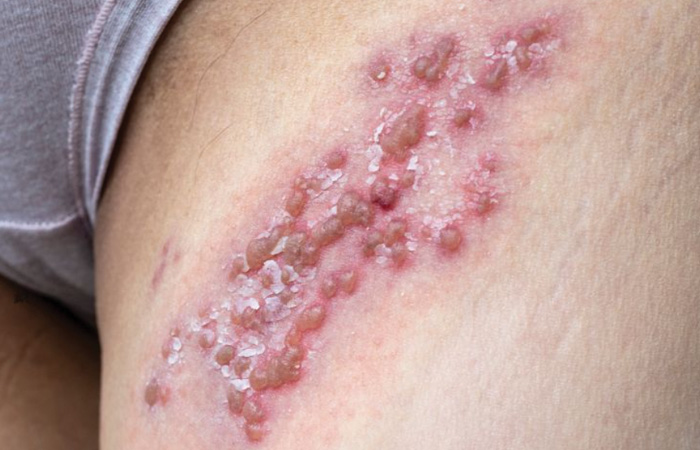
Visually, herpes usually starts with a prodrome, a term for the early warning signs before the rash appears. This might feel like tingling, itching, or burning in one spot. Then, small red bumps emerge. These bumps often cluster and develop into clear or yellowish blisters. They may burst, ooze, crust over, and eventually fade.
The process often takes one to two weeks. First outbreaks are usually more intense and longer-lasting. Later ones might only last a few days. What matters is that herpes tends to come back, usually to the same area, often with similar sensations.
Compare that to an allergic reaction or irritation rash, which shows up quickly, doesn’t blister in the same way, and fades when the irritant is removed. Herpes has a rhythm. A fingerprint. It’s not always obvious, but it’s often patterned.
Stages of a Typical Herpes Rash
| Stage | Timeframe | What It Looks/Feels Like |
|---|---|---|
| Prodrome | 1–2 days before rash | Tingling, sensitivity, burning, often in same spot as previous outbreaks |
| Initial Bumps | Day 0–2 | Red, itchy or sore bumps forming in clusters |
| Blisters | Day 2–5 | Fluid-filled vesicles, sometimes painful or itchy |
| Ulcers/Crusting | Day 5–9 | Blisters burst and scab, sensitive to touch or friction |
| Healing | Day 9–14+ | Crusts fall off, skin re-epithelializes, may leave mild discoloration |
Figure 1. Timeline and sensory stages of a herpes outbreak. Not everyone experiences every stage, some people may only have minor irritation or small bumps mistaken for something else entirely.
People are also looking for: Think Oral Sex Is Safe? Here’s What You Might Be Missing
This Isn’t Just Razor Burn, And Here’s Why
Let’s get real about the skin drama that happens after sex. Your body’s largest organ, your skin, is protective but reactive. And after intense intimacy, especially with new partners, products, or positions, your skin might flare up. That doesn’t mean you’ve been infected. But it doesn’t mean you’re safe, either. This is where so many people get trapped in confusion.
A few common non-STD causes top the list. First, there’s friction. Long sessions, dry skin, or aggressive positions can leave you raw. That might look like redness, sensitivity, or even raised lines from sheets or pubic hair stubble. It hurts, but it fades fast. Usually within 48 hours.
Then there’s contact dermatitis. That’s a fancy name for a reaction to something your skin doesn’t like: latex, lube, fragrance, dye, spermicide, even semen or sweat. In one case, a woman named Layla broke out in an angry, itchy rash every time she used her partner’s expensive cologne-scented laundry detergent. It wasn’t an infection, it was a textile rebellion.
Other culprits? Razor bumps, ingrown hairs, yeast overgrowth, or fungal infections like jock itch. These conditions are common in warm, sweaty creases like the groin. And they love to pop up after intimacy, especially if your skin barrier is already compromised from shaving or sweat. They’re not sexy. But they’re not sexually transmitted either.
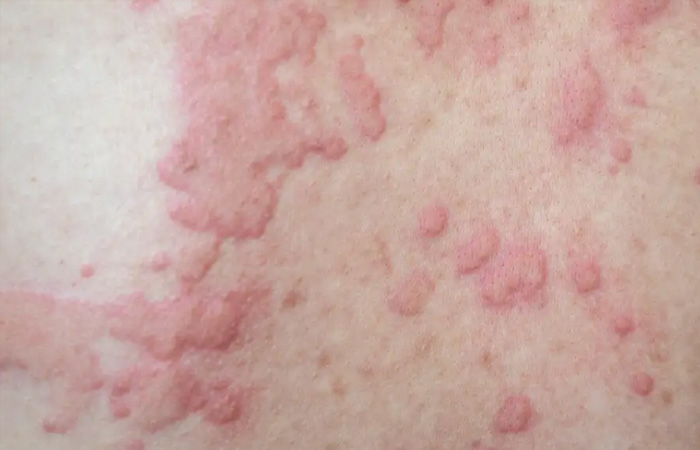
The trouble is, many of these rashes look similar. Redness. Bumps. Sensitivity. A rash without blisters could still be herpes. And blisters that aren’t painful might be yeast or irritation. This overlap is what makes self-diagnosing dangerous, and why knowing patterns matters more than isolated symptoms.
When It’s Herpes, And When It’s Probably Not
Imagine two nights. In the first, you wake up the morning after a steamy hotel stay with a cluster of bumps that burn when you pee. You swear you felt something strange the night before, like heat under your skin. In the second, you just tried a new flavored lube, and now your outer labia are itchy and blotchy, but the sensation is more annoying than painful. Same area. Same timing. Totally different implications.
Herpes tends to recur. It likes to show up in the same place. It often starts with a warning sign, an internal buzz, sting, or sensitivity before anything appears. Then, it moves through a process: bumps, blisters, ulcers, healing. Reactions and chafing don’t follow that same rhythm. They come on fast, and they fade fast, unless something keeps irritating them.
Here’s a structured look at how herpes compares to its skin lookalikes:
Herpes vs Other Common Post-Sex Rash Causes
| Feature | Herpes | Other Rashes |
|---|---|---|
| Timing of symptoms | Often delayed (2–10 days post-contact) | Usually immediate or within 24 hours |
| Sensory warning signs | Tingling, burning, stinging | Itching or mild irritation, often generalized |
| Lesion appearance | Grouped blisters or ulcers | Redness, bumps, scaling, or patchy rash |
| Location pattern | Same spot in recurrent outbreaks | Variable, often changes depending on trigger |
| Resolution speed | 7–14 days, slower without antivirals | Typically improves within 1–3 days |
| Systemic symptoms | Possible fever, fatigue, swollen nodes | Rare unless infected or severe reaction |
Figure 2. Key differences between herpes and common non-infectious or non-viral causes of rashes following sexual activity.
Check Your STD Status in Minutes
Test at Home with RemediumGenital Herpes Test Kit
 For Men & Women
 Results in Minutes
 No Lab Needed
 Private & Discreet
Order Now $45.99 $49.00
What a Misdiagnosed Rash Looks Like
Matt assumed it was an allergic reaction. The rash showed up a day after sex and burned when he walked. No blisters, just soreness and redness near the base of his shaft. He applied hydrocortisone and waited. It didn’t get worse, but it didn’t improve either. Five days later, the redness spread and small ulcers appeared. He went to urgent care thinking it was a yeast infection, and left with a herpes diagnosis. The provider told him he likely had a mild prodrome that went unnoticed, and early signs were mistaken for irritation.
That story isn’t rare. Many people miss the early signs of herpes, especially if they don’t see textbook blisters. Others assume every bump is herpes, when it’s really a clogged hair follicle or sweat rash. The only way to know? Testing.
Why Symptoms Alone Aren’t Enough
The human mind loves certainty. But skin conditions don’t play fair. They morph. They mimic. They show up differently based on your skin tone, shaving habits, immune system, and even hormone cycles. What feels like herpes to one person could be nothing to someone else, or vice versa.
This is why most online symptom checkers fall short. They can guide your suspicion, but they can’t replace clinical tools. For herpes specifically, diagnosis hinges on either swabbing an active lesion or checking your blood for antibodies, each with its own timing and limitations.
And here's the kicker: up to 80% of people with herpes don’t know they have it. That’s because many outbreaks are mild, go unnoticed, or get chalked up to something else entirely. If your rash is recurrent, painful, or doesn’t resolve with typical care, it's time to take testing seriously.
So When Should You Actually Test?
If you're staring at a rash after sex and wondering whether it's herpes, the urge to test immediately makes sense. You want answers. But here's where things get tricky, timing matters. Testing too early can miss the virus. Testing too late can mean missing your window to swab an active sore.
There are two main types of herpes tests: swab tests (for active lesions) and blood tests (for antibodies). If you have visible blisters, a provider can collect a sample and run a PCR or viral culture. PCR is more sensitive and often preferred. But if the sores have crusted over or started healing, the test might not work. Timing really is everything.
For blood tests, you’re looking at IgG antibodies, your body's long-term immune response. These usually show up 4 to 6 weeks after exposure. So if you're asymptomatic or your rash has healed, a negative result might just mean it's too soon. This is why many people test twice: once early, then again after the window period has passed.
Let's take Lena’s story. She felt a mild itch and saw a small blister near her vulva three days after unprotected sex. She panicked, went to urgent care, but the swab came back inconclusive, it had already started healing. She waited six weeks, got an IgG test, and found out she had HSV‑1. Her partner, who only had cold sores, likely passed it through oral sex. The timeline matched. So did her symptoms. But she only found clarity by testing again later.
That kind of uncertainty is excruciating, but it’s also common. If you're navigating this space, you're not alone. The path to answers is rarely straight. But it is doable.
What About Other STDs That Cause Rashes?
Herpes gets most of the attention, but it’s not the only STD that can cause skin changes. Secondary syphilis can cause a flat, red, spotty rash, even on your palms and soles. Chlamydia and gonorrhea don’t usually show up as rashes, but they can lead to inflammation and irritation if left untreated. HIV seroconversion (the period right after infection) can bring flu-like symptoms and a widespread rash. Molluscum contagiosum, while technically not classified as a classic STD, causes firm, dome-shaped bumps and spreads through close contact, including sexual contact.
These rashes don’t look like herpes, but they might feel confusing, especially if you’ve never seen anything like them. That’s why most clinicians recommend full-panel STD testing if you’re experiencing any unexplained rash after sexual activity. Even if it ends up being contact dermatitis or a heat rash, ruling out other causes gives you peace of mind, and data.
People are also looking for: One Night Stand, One Mystery Sore, and One Big Lesson
What to Do While You Wait
Waiting on test results can feel like a second form of suffering. You watch every change in your skin. You overanalyze past hookups. You Google too much. And none of it makes the hours pass faster. But there are a few things you can do that make a real difference.
First, treat the skin gently. No harsh soaps, no scrubbing. Use warm water, unscented cleansers, and soft cloths. If there’s pain, try a cool compress or sitz bath. Some people find relief using petroleum jelly or zinc-based creams, not to heal herpes specifically, but to protect the skin while it does its thing. If itching is severe, over-the-counter lidocaine creams may help.
Second, pause sexual activity until you have answers. Not just for your peace of mind, but to protect others. Even if it’s “just” irritation, giving your skin time to repair is always wise.
And finally, document what you see. Take photos. Make notes about when symptoms started, what they felt like, how they changed. If you end up talking to a provider, that information will help immensely.
You Deserve Clarity, Not Panic
If you're in that in-between space right now, itchy, confused, waiting, know this: the worst part isn’t the rash. It’s the not knowing. It’s the spiral. But knowledge really is power here. Testing gives you answers. Answers give you a plan. And plans help you breathe again.
If your symptoms are new, ongoing, or just don't feel right, take the next step toward peace of mind. You can start discreetly from home, no awkward questions, no waiting rooms. Testing is care, not confession.
This combo at-home STD test kit checks for multiple infections at once, including herpes, quickly and confidentially.
You’re Not Dirty. You’re Doing the Right Thing.
If you made it this far, chances are you’re worried. Maybe scared. Maybe spiraling between tabs and texts, wondering what a bump means. Let’s pause that loop for a second.
Getting a rash after sex doesn’t make you reckless. It makes you human. Your skin reacts. Your body signals. You’re paying attention, and that matters. Whether it's herpes, a reaction, or something in between, you’re not doomed. You're informed. And now you’re equipped to act.
You don't have to wait in fear. You can find out what you need to know without leaving your house. STD Rapid Test Kits gives you private, simple home tests that respect your privacy and give you the power to make your own decisions. You don't deserve shame; you deserve relief.
FAQs
1. Can a herpes rash show up the same day you have sex?
Not likely. Herpes takes time to cook under the surface. If you’re seeing bumps or redness within hours, you’re probably looking at friction burn, a lube reaction, or maybe even that enthusiastic hotel sheet doing too much. Herpes usually needs 2–12 days to show itself after exposure.
2. What if there are no blisters, just redness and burning?
Herpes doesn’t always play by the book. Some people get tiny cuts or irritated patches that never fully blister. If it’s recurring, painful, or comes with that weird internal tingle, don’t ignore it. Better to test and know than guess and stress.
3. How do I know it’s not just razor burn?
Razor burn usually shows up in neat little dots, think red, itchy pinpricks, right where you shaved. It doesn’t cluster like herpes, it doesn’t come with deep stinging, and it usually fades in a day or two. If it’s spreading, crusting, or keeps coming back in the same spot? Time to investigate.
4. Does it always hurt if it’s herpes?
Surprisingly, no. Some outbreaks are painful enough to make wearing underwear feel like sandpaper. Others just itch a little or feel like heat under the skin. Some people feel nothing at all. That’s part of what makes herpes tricky, it doesn’t announce itself with a megaphone.
5. Can lube or condoms cause a rash that looks like an STD?
Absolutely. If your body doesn’t vibe with latex, glycerin, or certain preservatives, it’ll let you know fast. A red, itchy, angry rash, especially where skin made contact, is a big clue. Try switching to unflavored, unscented, body-safe products before assuming the worst.
6. I tested negative. So why do I still have symptoms?
Timing is everything. If you tested too early, your body might not have built detectable antibodies yet. If you swabbed a healing sore, the virus might have gone quiet. It doesn’t mean you’re in the clear, just that you might need to retest later. Frustrating? Yes. But it happens.
7. Can I have herpes and not know it for years?
Yes. Crazy, isn't it? A lot of people have HSV-1 or HSV-2 but never have an obvious outbreak. Some people only find out when they get tested regularly or when their partner does. If your immune system keeps the virus in check, it can stay dormant for a long time. That's why so many people give it to others without meaning to.
8. Should I tell a partner if I’m not sure what this rash is?
That depends on your comfort and your timeline. If you’re waiting on results or even just starting to wonder, a heads-up can help you both move smarter. Something as simple as “Hey, something’s going on with my skin, I’m getting it checked out” keeps doors open without shame.
9. Do all STD rashes mean herpes?
Not even close. Syphilis has its own whole vibe. So does molluscum, HPV, and even some yeast infections that get out of hand. If something looks off, don’t just Google “herpes pics” and panic. Get tested, get answers, and remember, it’s skin, not a sentence.
10. Will a herpes test show up right away after exposure?
Not usually. If you have a visible sore, get it swabbed ASAP. But if you're going the blood test route, wait at least 4–6 weeks. Testing too early is like checking your mailbox before the letter’s mailed, you’ll just keep looking and feeling worse.
How We Sourced This Article:There are about 15 sources that this guide is based on, including clinical studies, CDC advice, expert overviews of dermatology, and stories from real patients. We checked out peer-reviewed studies, sexual health educators, and top medical sources like Medical News Today and Mayo Clinic. Every claim was carefully chosen to be both true and easy to understand, so that readers could act without fear.
Sources
1. CDC – Genital Herpes Overview
2. Mayo Clinic – Genital Herpes Symptoms
3. Medical News Today – Herpes Skin Rash Symptoms
4. Health.com – Herpes or Not? Conditions That Look Like Herpes
5. ASHA – Signs & Symptoms of STDs
6. STD Center NY – 9 Reasons It Might Be Herpes
About the Author
Dr. F. David, MD is a board-certified infectious disease specialist focused on STI prevention, diagnosis, and treatment. He blends clinical precision with a no-nonsense, sex-positive approach and is committed to expanding access for readers in both urban and off-grid settings.
Reviewed by: Dr. Kendra Liu, MPH | Last medically reviewed: October 2025
This article is for informational purposes and does not replace medical advice.


