






Quick Answer: Syphilis is an ancient STD with a brutal past and a rising modern presence. Once treated with mercury, it’s now fully curable with penicillin, but rising again due to testing gaps, stigma, and asymptomatic spread.
When the “French Disease” First Struck
Historians still argue about where syphilis came from. One camp blames it on colonization, saying Spanish sailors returning from the Americas brought it to Europe around 1495. Another theory suggests it had always existed in a milder form, only mutating into a more virulent version due to massive troop movements and war-time brothels. What’s not debated? That it hit Europe like a bomb.
After the 1494 Siege of Naples, French soldiers developed a frightening new illness: painful sores, fevers, bone deformities, and neurological symptoms. It spread so rapidly that by 1500, it had reached every corner of the continent. Physicians had no idea what it was, let alone how to stop it. Some described patients whose flesh seemed to rot from the inside. Treatment? Raw mercury rubbed into wounds, or steam baths so hot they blistered skin. These cures often did more harm than the disease itself.
People assigned blame quickly. Italians called it the “French Disease.” The French called it the “Neapolitan Disease.” Russians blamed the Poles. The English just called it “the pox.” But behind the finger-pointing, syphilis exposed the fault lines of class, sex, and medicine. It didn’t care if you were a king or a courtesan.
Kings, Artists, and Infants: Syphilis in the Spotlight
One of the earliest known cases might have been King Charles VIII of France, who fell mysteriously ill with symptoms that mirror modern-stage syphilis. Across the next few centuries, rumors swirled about prominent figures: painter Albrecht Dürer, writer John Wilmot, even Napoleon’s army. In an era before antibiotics, syphilis wasn’t just an STD, it was a sentence. Stage by stage, it could devour your skin, your joints, your brain.
By the 1800s, doctors understood more about its progression. The disease unfolds in four acts: primary, secondary, latent, and tertiary. The first might look like a small, painless sore (called a chancre). Secondary syphilis brings a rash that often shows up on the palms and soles, something no other common disease does. Latent syphilis can sit hidden for years. And tertiary? That’s when it gets scary. It can damage your brain, heart, nerves, and bones, sometimes fatally.
It’s estimated that at least 15% of adults in some major European cities carried syphilis by the mid-1800s. Babies were born blind or stillborn due to congenital syphilis. Mental hospitals quietly housed people in late-stage infections. And yet, no reliable cure existed.
| Historical Period | Notable Treatment | Effectiveness |
|---|---|---|
| 1490s–1600s | Mercury ointments and fumigation | Low (often toxic or fatal) |
| 1700s | Sarsaparilla root and herbal tonics | Very low, placebo effect |
| 1900s (pre-antibiotic) | Salvarsan (arsenic-based drug) | Moderate (better than mercury) |
| 1940s onward | Penicillin injection | Very high (98%+ cure rate in early stages) |
Table 1. How syphilis treatments evolved across five centuries, and why penicillin changed everything.
People are also reading: STD Myths That Are Putting You in Danger
The Penicillin Revolution (And the Ugly Truth Behind It)
It wasn’t until 1943 that scientists realized penicillin, already being used for battlefield wounds, could eliminate syphilis entirely. For the first time, there was a safe, effective cure. But the history of how we got there isn’t exactly clean.
One of the darkest chapters in American medical history is the Tuskegee Syphilis Study. From 1932 to 1972, the U.S. Public Health Service observed 600 Black men in Alabama, 399 of whom had syphilis, and deliberately withheld treatment to study how the disease progressed. Even after penicillin was widely available in the 1940s, researchers continued the experiment. Many of the men died. Some passed it to their wives. Children were born with congenital syphilis. No consent. No apology, until 1997.
This is more than just a footnote in history. This is why a lot of people still don't trust doctors, especially in communities of color. Syphilis isn't just a germ; it stands for systemic harm, being left behind, or being used as a test subject.
But it also marked the beginning of the modern sexual health era. Mass testing campaigns, contact tracing, and penicillin treatment drives became part of public health infrastructure. For a while, it worked. By the 1990s, syphilis was almost eliminated in many countries.
Check Your STD Status in Minutes
Test at Home with RemediumSyphilis Test Kit
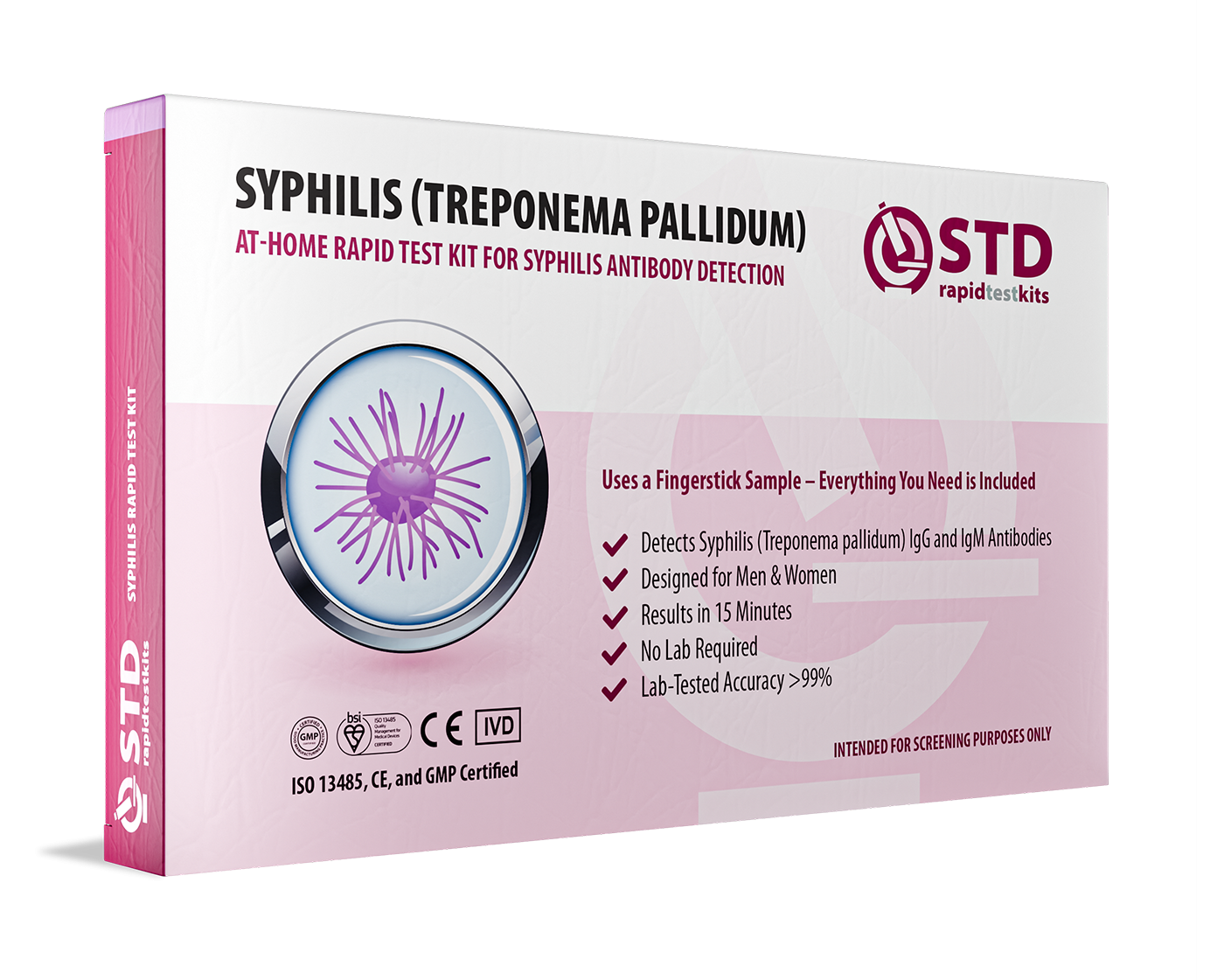
 For Men & Women
 Results in Minutes
 No Lab Needed
 Private & Discreet
Order Now $33.99 $49.00
Why Syphilis Came Back (And You Didn’t Hear About It)
Jordan’s story isn’t rare. After a weekend hookup in Palm Springs, he noticed a flat reddish patch near his groin, no pain, just weird. He brushed it off, blamed his new body wash, and forgot about it. Three weeks later, he developed what looked like a rash on his hands. Google sent him down a spiral. He kept seeing one phrase: secondary syphilis. “There’s no way,” he thought. “Isn’t that a 1700s thing?”
But here’s the twist: syphilis is back. Quietly. Persistently. In 2023 alone, the U.S. saw the highest rate of syphilis cases in over 70 years, including a shocking rise in congenital syphilis, where the infection passes from mother to baby. Some counties reported increases of over 200% in just two years.
Why now? Experts point to a web of reasons: less consistent condom use, cuts to public health funding, fewer sexual health clinics, the rise of dating apps, and a general decline in routine STD testing. During the COVID-19 pandemic, many health departments reallocated staff and resources, leaving STD surveillance systems to wither. Syphilis didn’t pause. It just slipped under the radar.
And because it often hides in plain sight, with early symptoms that look like ingrown hairs, allergies, or eczema, many people never realize they have it. They don’t get tested. They don’t treat it. And they pass it on without knowing.
How Syphilis Tricks the Body, and the Doctor
There’s a reason syphilis is nicknamed “The Great Imitator”. Its symptoms mimic dozens of other conditions: viral rashes, autoimmune disorders, even cancer in some cases. That’s what makes it so dangerous, and so overlooked.
During primary syphilis, the sore (chancre) is usually painless. It can show up on the genitals, mouth, or rectum, and disappear in a few weeks even without treatment. This disappearance makes people think the issue resolved itself. But that’s just the beginning. Secondary syphilis can cause fatigue, fever, swollen lymph nodes, and a non-itchy rash, often on the palms and soles, but not always. It may fade, too. And then the infection hides.
Latent syphilis can lie dormant for years. A person might think they’re totally healthy, until tertiary symptoms hit. Brain inflammation. Vision changes. Heart complications. Nerve damage. The road from a silent sore to total system failure can take a decade. And yet, the entire progression is preventable with a single injection of penicillin, if caught in time.
| Stage | Common Symptoms | Contagious? | Detection Method |
|---|---|---|---|
| Primary | Painless sore (chancre) at site of exposure | Yes | Blood test or swab of sore |
| Secondary | Rash on palms/soles, fever, fatigue | Yes | Blood test (RPR or VDRL) |
| Latent | No symptoms | No | Blood test only |
| Tertiary | Brain, nerve, or organ damage | No | CSF test, imaging, clinical diagnosis |
Table 2. The four stages of syphilis, how they manifest, and how they’re detected.
The Power of Testing: Yesterday’s Shame vs Today’s Tools
Syphilis used to be a death sentence. Now, it’s fully curable, and often caught early, if people test. But stigma and silence still block the way. In the past, getting tested meant a clinic visit, possible judgment, and awkward conversations. That’s still true in many places. But today, at-home test kits are rewriting that experience entirely.
No one should have to drive three towns over just to pee in a cup or ask for a blood draw. For many, especially LGBTQ+ folks, sex workers, people in rural communities, or those without health insurance, testing at home can mean the difference between early treatment and late-stage damage. The stakes are high, but the access is changing.
STD Rapid Test Kits offers a discreet, doctor-trusted solution. You can test for syphilis and other common STDs from the privacy of home, no awkward check-ins, no waiting room stress. It’s the modern answer to an ancient problem.
Need fast peace of mind? This syphilis test kit delivers results in minutes and fits in your pocket. Order, test, move forward.
People are also reading: WaitI’ve Never Had SexHow Is This an STD?!
Case Study: “I Thought It Was Eczema. It Was Syphilis.”
Melanie, 33, had been dealing with stress-related skin flare-ups for years. When she noticed dry, flaky patches on her wrists and a small sore on her inner thigh, she chalked it up to a rough razor and winter air. She was dating someone new but hadn’t had “that conversation” yet. A few weeks later, she started waking up drenched in sweat and had a fever that wouldn’t quit. When she finally went to a clinic, they ran a full STD panel.
“I couldn’t believe it. Syphilis wasn’t even on my radar. I didn’t think people got that anymore,” she said. “I felt dirty. But my nurse said, ‘You’re not dirty. You’re just someone who didn’t have all the info, and now you do.’”
Melanie got a single penicillin shot, followed by a short course of follow-up blood tests to confirm treatment success. Her partner tested positive, too. They were scared, but now they’re fine, and more open with each other than ever.
This is how syphilis still shows up in 2025. Quiet. Confusing. Treatable.
Check Your STD Status in Minutes
Test at Home with Remedium3-in-1 STD Test Kit
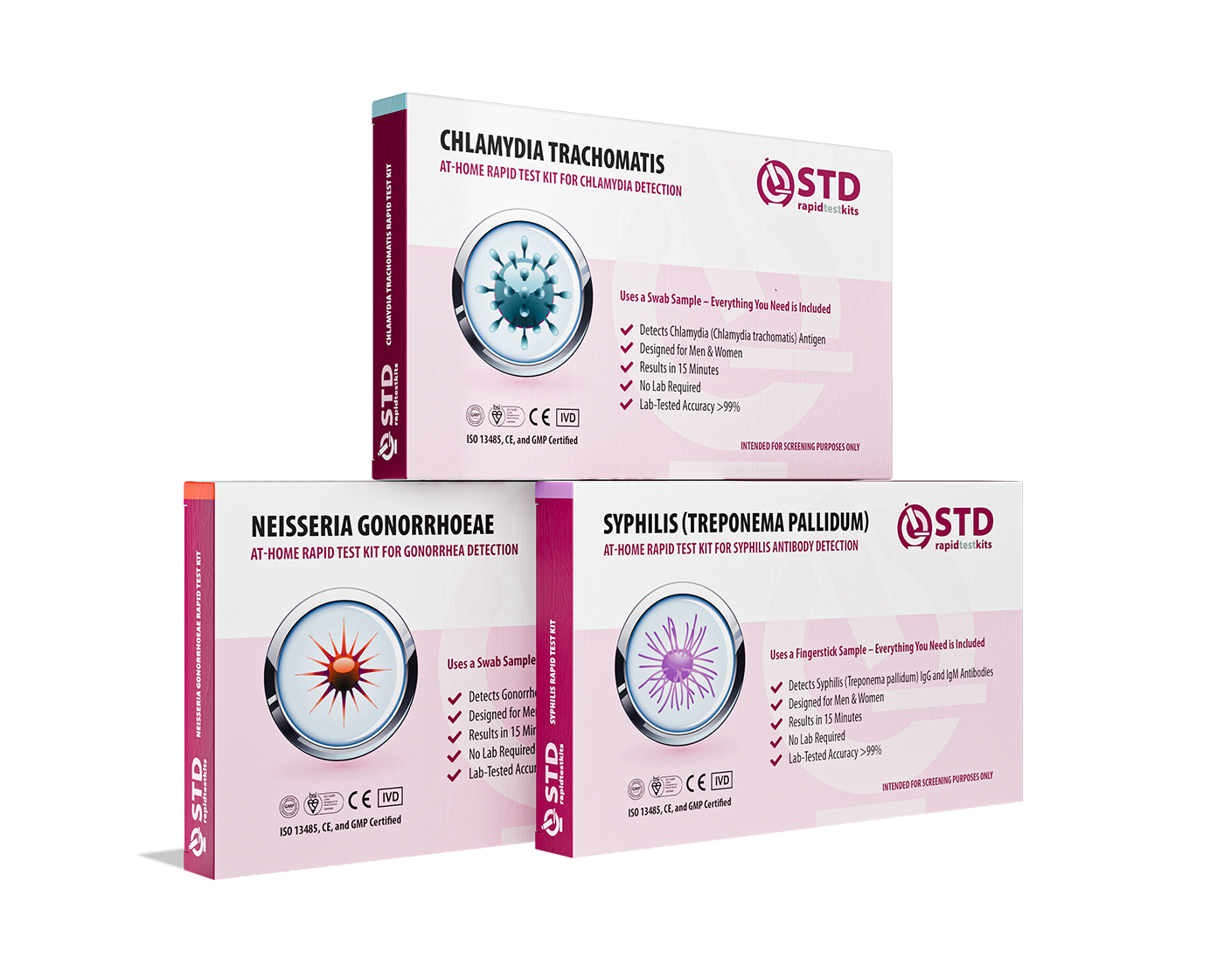 For Men & WomenResults in MinutesNo Lab NeededPrivate & Discreet
Order Now $69.00 $147.00
For all 3 tests
Why Syphilis Isn’t “Over”, And Who’s Most at Risk Now
One of the hardest truths? Syphilis never left. It just went quiet. It disproportionately affects communities that have historically been excluded from care: Black, Indigenous, and Latinx populations; gay and bisexual men; transgender women; people who use drugs; those without stable housing. The rise in congenital syphilis is especially devastating, because it means pregnant people aren’t being screened in time, or at all.
Public health experts are ringing alarm bells. Between 2018 and 2023, the number of babies born with syphilis in the U.S. more than tripled. Some were stillborn. Others face a lifetime of complications, blindness, deafness, bone malformations. The tragedy? All of it was preventable with routine testing and treatment.
In many rural and conservative states, funding cuts have closed sexual health clinics. School sex ed remains abstinence-only. Telehealth can’t always fill the gap. And for those without cars or insurance, even a short trip for a test can become a barrier. But stigma does just as much damage as distance.
There’s no typical “face” of syphilis anymore. It’s not just a disease of soldiers or sex workers. It’s college students. Married couples. People who had one unexpected night. People who didn’t know their partner had an ex who tested positive last month. It’s all of us, unless we stay informed and tested.
Modern Testing: Old Disease, New Rules
Let’s break it down plainly: testing is care, not confession. And today, testing for syphilis is faster and more discreet than ever. Rapid blood tests, like those offered by STD Rapid Test Kits, can detect antibodies linked to Treponema pallidum, the bacterium behind syphilis, within minutes.
There’s still no single “perfect” test, because the type of test you need depends on where you are in the infection timeline. Rapid tests are great for early detection and screening. More advanced or confirmatory testing may be needed if symptoms are vague or if the infection has entered a latent stage. But testing early, and often, is what matters.
And yes, at-home testing is just as legitimate as a clinic visit. Tests are FDA-approved, highly sensitive, and include clear instructions. The key is timing: most blood-based syphilis tests are reliable three to six weeks after exposure. Some people may test positive sooner; others might need a follow-up if exposure was recent and symptoms haven’t yet appeared.
If you’re in a high-risk group, or just uncertain, consider pairing a syphilis test with a combo kit that checks for chlamydia, gonorrhea, and HIV. Multiple STDs can exist at the same time, and some even raise your risk of acquiring others.
If you’re worried, curious, or just overdue, this is your nudge. Order a combo kit and take control.
FAQs
1. Can you really get syphilis from oral sex?
Yes, oral sex isn’t a free pass. If someone has a sore (and they might not even know it), the bacteria can pass through tiny cuts in your mouth or genitals. We hear “oral = safe” a lot, but syphilis doesn’t care where the contact happens. If mouths are involved, so is the risk.
2. I thought syphilis was cured, like, a hundred years ago. Why is it still around?
Because shame spreads faster than facts. Yes, penicillin can cure syphilis completely, but only if you know you have it. Most people don’t get tested until symptoms scream, or until a partner tells them. In that gap, it keeps moving silently from person to person.
3. What does a syphilis sore actually look like?
Picture a small, round ulcer, smooth edges, no pain. It might show up on your genitals, anus, or even inside your mouth. A lot of people miss it because it’s painless and goes away on its own. But don’t be fooled, disappearing doesn’t mean healed. It just means the bacteria has moved on to the next stage.
4. If I had syphilis and didn’t know, would I feel anything?
Not always. That’s the trap. You might feel tired. You might notice a weird rash that doesn’t itch. Or you might feel nothing at all. Some folks go years without symptoms and only find out because they tested for something else, like HIV, and got flagged.
5. Can I get syphilis again after being treated?
Absolutely. You won't be immune forever after just one treatment. You can get rid of it like strep throat, but if you come into contact with it again, you can get it again. That's why it's important to get tested again, especially if you have sex with new or multiple partners.
6. Is it true syphilis can affect your brain?
Sadly, yes. That’s called neurosyphilis, and it usually shows up in the late stages. It can cause memory issues, vision problems, mood changes, or even paralysis. It’s rare these days, but only because we have testing. Let it go untreated, and it can still go there.
7. How fast can I test after a risky hookup?
Most blood tests will pick it up 3–6 weeks after exposure. Earlier than that, you might get a false negative. If something’s bothering you sooner, like a sore or rash, it’s totally okay to test early and retest later. Peace of mind matters, even if it means two rounds.
8. I’m pregnant. Do I need to worry about syphilis?
Yes, and we say that gently but urgently. Syphilis during pregnancy can cause miscarriage, stillbirth, or serious newborn complications. The good news? Testing is easy and treatment is safe during pregnancy. If you're expecting, make sure it's part of your screening panel, and don’t be afraid to ask your doctor directly.
9. Can I really test for syphilis at home?
Hell yes. You don’t need a waiting room or a white coat to get clarity. At-home test kits are fast, private, and accurate. They’re made for people who want control without the awkwardness. Just follow the instructions and treat your results like you would from any clinic: with care, action, and zero shame.
10. What should I do if I test positive?
Breathe first. Then call a provider. Syphilis is treatable with antibiotics, usually just a shot or a short course depending on the stage. You’ll want to pause sexual activity, notify partners (there are anonymous options if needed), and maybe retest later to confirm it’s cleared. It’s a detour, not a dead end, and you’re not alone.
You Deserve Answers, Not Assumptions
The tale of syphilis is a reflection. It shows how we've treated each other, sex, and medicine over the years. This disease has affected people in every way possible, from the plagues of the 15th century to the test kits of the 21st century. But we have tools that work now, unlike before. The only thing you need is information and the guts to use it.
If something feels off, don’t wait. That bump, rash, or weird fatigue might be nothing, or it might be your body quietly asking for help. The good news is that testing isn’t just possible, it’s easy. And with the right treatment, syphilis doesn’t stand a chance.
Don't wait and wonder; get the answers you need. This at-home combo test kit checks for the most common STDs quickly and without drawing attention to itself.
How We Sourced This Article: We combined current guidance from leading medical organizations with peer-reviewed research and lived-experience reporting to make this guide practical, compassionate, and accurate.
Sources
1. Brief History of Syphilis – National Library of Medicine
2. WHO: 2024 Report on Rising STI Trends
3. BMC Infectious Diseases: U.S. Syphilis Resurgence Analysis
4. CDC: Syphilis - Detailed Fact Sheet
5. World Health Organization: STI Fact Sheet
6. Planned Parenthood: Syphilis Info Page
About the Author
Dr. F. David, MD is a board-certified infectious disease specialist focused on STI prevention, diagnosis, and treatment. He blends clinical precision with a no-nonsense, sex-positive approach and is committed to expanding access for readers in both urban and off-grid settings.
Reviewed by: Jamie Patel, NP-C | Last medically reviewed: September 2025
This article is for informational purposes only and should not be seen as medical advice.


