







Quick Answer: Most at-home STD test kits are highly accurate when used correctly, especially those that use lab-based analysis. Rapid kits can give fast results, but confirmation testing may sometimes be needed depending on the infection and the timing of exposure.
Why People Turn to At-Home Testing
The reasons are endless: clinic wait times, lack of privacy, fear of judgment, or simply the need for answers at midnight instead of next Thursday. At-home kits promise discretion and speed, letting people swab, prick, or collect a sample in the safety of their bedroom. For many, this is the difference between getting tested and never getting tested at all. Public health experts know that access matters as much as accuracy, because an unused test is less accurate than anything.
But convenience raises its own anxieties. People want reassurance that a box bought online or at a pharmacy won’t fail them at the exact moment they’re most vulnerable. The stakes are too high. Missed infections can lead to pelvic inflammatory disease in women, epididymitis in men, infertility in couples, and even increased risk of HIV transmission. Accuracy is not about numbers on a chart, it’s about futures preserved or altered forever.
People are also reading: Best At-Home STD Tests Compared: Speed, Accuracy, and Privacy
Symptoms That Push People Toward At-Home Kits
The first sign is often subtle. Burning after urination that doesn’t fade. A strange discharge that wasn’t there yesterday. Lower abdominal cramps that feel out of place. Many ignore these warnings until anxiety grows louder than embarrassment. At that tipping point, the choice often comes down to: face the clinic, or try a discreet kit at home. For people who’ve convinced themselves they can’t walk through a clinic door, at-home testing is the only realistic option.
Consider Marcus, 22. He noticed clear discharge but told himself it was nothing. After two weeks, he bought a rapid test kit online. His result was positive for chlamydia. That small strip changed his trajectory, he sought treatment, told his partner, and avoided months of silent complications. His story illustrates both the power and the limitations of these kits: they can open the door to care, but their accuracy must match their promise.
The Science Behind Test Accuracy
Accuracy in testing isn’t one simple number. It’s made of two pieces: sensitivity and specificity. Sensitivity measures how well a test catches infections when they’re present. Specificity measures how well a test avoids false alarms when infections aren’t there. A good test scores high on both, giving you confidence whether the answer is yes or no. Most FDA-approved at-home kits report sensitivity and specificity rates above 90 percent, which rivals many clinic-based tests. The caveat is timing. If you test too soon after exposure, the infection may not have built up enough to detect, no matter how good the test is.
This is why window periods matter. Each infection has a biological timeline, how long it takes for the body to carry enough bacteria or antibodies to show up on a test. Testing during this window is like trying to catch smoke before the fire is strong. No kit, at-home or in-clinic, can change biology. What kits can change is accessibility: they put testing into the hands of people who might never otherwise seek it.
| STD | Common Test Type (At-Home) | Typical Window Period | Accuracy Range |
|---|---|---|---|
| Chlamydia | Urine or swab, NAAT (lab-based) | 1–2 weeks | 90–95% sensitivity |
| Gonorrhea | Urine or swab, NAAT (lab-based) | 1–2 weeks | 90–95% sensitivity |
| HIV | Oral swab, blood drop (antibody or Ag/Ab) | 2–6 weeks (varies by test) | 92–99% sensitivity |
| Syphilis | Finger-prick blood antibody test | 3–6 weeks | 85–98% sensitivity |
Table 1. Accuracy ranges of common at-home tests, showing why timing and infection type influence results.
Case Study: The False Negative That Changed Everything
Ana, 25, took an at-home HIV test just ten days after a risky encounter. The result came back negative, and she breathed a sigh of relief. Weeks later, her clinic test told a different story, positive. Her early test hadn’t failed; it had simply been too soon. Her case shows why understanding window periods is as important as buying the kit itself. At-home tests are reliable, but only if you use them when your body has something to show. Misused, they offer false reassurance that can delay lifesaving treatment.
Clinic vs. At-Home Testing: Who Gets It Right?
In the exam room, the fluorescent lights hum and the nurse asks questions you’d rather not answer. At home, it’s just you, a swab, and a cardboard box. Both paths lead to answers, but accuracy depends on what you’re testing for and how the sample is processed. Clinics often use NAATs, nucleic acid amplification tests, the gold standard for detecting infections like chlamydia and gonorrhea. Many at-home kits use the very same technology, especially mail-in versions where your sample is shipped to a certified lab. In those cases, accuracy isn’t about the setting; it’s about whether you followed the instructions carefully.
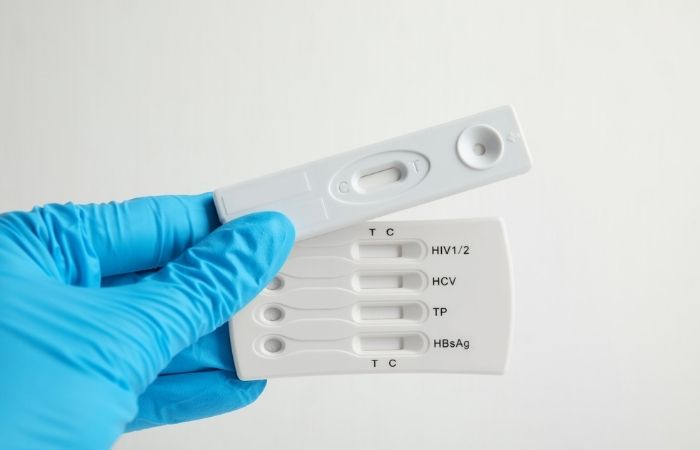
Rapid kits, on the other hand, trade some precision for speed. A finger prick that gives you a result in 20 minutes feels powerful, but it can be slightly less sensitive than lab-based analysis. For HIV, oral swab tests done at home are about 92 percent accurate at detecting positive cases after the window period, compared to 99 percent in labs. That gap may seem small, but for someone relying on absolute certainty, it matters. The good news is that even rapid kits are accurate enough to flag most infections, and they provide a crucial bridge to confirmatory testing.
Check Your STD Status in Minutes
Test at Home with Remedium7-in-1 STD Test Kit

 For Men & Women
 Results in Minutes
 No Lab Needed
 Private & Discreet
Order Now $129.00 $343.00
For all 7 tests
The Numbers People Don’t See
Accuracy isn’t an abstract concept, it’s measured in sensitivity and specificity, but few people ever see those numbers when they buy a kit. Imagine if every box came with a truth table explaining its odds of being wrong. People would treat results with the right mix of confidence and caution. Instead, marketing often oversimplifies. Terms like “over 99% accurate” sound comforting, but they leave out the nuance of what that percentage applies to: is it 99% accurate at detecting negatives, or positives, or both?
Here’s where the details matter. For chlamydia and gonorrhea, mail-in NAAT kits can match clinic sensitivity almost exactly, around 95 percent. For syphilis, at-home antibody tests detect most cases after six weeks, but can miss very early infections. For HIV, the reliability of self-tests depends on the type: oral swabs catch slightly fewer early infections than finger-prick blood tests, but both remain highly dependable when timed correctly. In other words, the kit in your hand is not guesswork, it’s science, but science with limits.
| Test Setting | Strengths | Limitations |
|---|---|---|
| Clinic-Based Testing | Gold standard lab equipment, professional collection | Time-consuming, less privacy, stigma barrier |
| Mail-In At-Home Kits | Lab analysis, comparable accuracy to clinics | Requires proper sample collection, wait for shipping |
| Rapid At-Home Kits | Immediate results, high privacy, accessible | Slightly lower sensitivity, may need confirmation |
Table 2. Comparing accuracy and limitations of different STD testing settings.
Myth Busting: The Fears That Keep People Away
One common myth is that at-home tests are “fake” or “cheap knockoffs.” The reality is that many FDA-approved kits use the same labs and methods your doctor would. Another fear is that home testing guarantees false results. While errors happen, they usually come from using the test too early or not following the instructions, not from the kit being defective. A third myth is that clinics always get it right, when in fact, improper sample collection can cause false negatives anywhere. The difference is that in clinics, a nurse double-checks your swab; at home, the responsibility falls on you.
When you strip away the myths, the truth is clear: at-home tests are not second-class. They are tools designed to lower barriers, to give people choices. They are part of the same diagnostic universe as clinic tests, just with more privacy and less small talk with strangers in scrubs. The fear that you’re “cheating” by using them is rooted in stigma, not science.
Case Study: The Kit That Restored Trust
Devon, 31, had been avoiding clinics after a bad experience with a dismissive nurse. When he and his partner decided to stop using condoms, he insisted on getting tested but couldn’t bring himself to schedule an appointment. They ordered a comprehensive at-home kit instead, mailed their samples, and got results within a week. Both tested negative.
“It wasn’t just about the results,” he said. “It was about finally feeling like I could take care of my health without being judged.”
For Devon, accuracy wasn’t only about numbers on a lab report, it was about restoring the trust he had lost in the system.

People are also reading: Which STD Test Kit Do You Need? (Pee, Swab, or Blood Explained)
False Positives, False Negatives: The Stories Behind the Numbers
Accuracy isn’t about perfection. Every test, whether done in a clinic or at home, carries a margin for error. A false negative means an infection is present but not detected, often because the test was taken too soon. A false positive means the test says you’re infected when you’re not, usually due to cross-reactivity or user error. Numbers can feel abstract until you hear the stories. A man swears he’s “cured” because his rapid kit shows negative after one week, only to discover at a clinic that he tested during the window period. A woman panics over a faint line on a syphilis kit, convinced she’ll have to explain a lifelong infection to her partner, only to learn later it was a false alarm. These outcomes don’t mean the tests don’t work, they mean context matters.
Manufacturers calculate sensitivity and specificity from clinical trials, but in real life, user behavior shapes the results. Did you swab correctly? Did you follow the waiting time exactly? Did you test after the right number of weeks? These questions are the hidden variables that make the difference between a test delivering clarity or confusion.
How Window Periods Shape Trust
Window periods are the invisible trap for anyone testing too early. Chlamydia and gonorrhea need about one to two weeks before showing up on NAATs. HIV requires at least two to six weeks depending on the type of test. Syphilis may not register until six weeks or more. If you test too soon, the most accurate kit in the world will shrug and hand you a false negative. This isn’t a flaw in the kit; it’s biology. Yet many people don’t know these timelines, and marketing rarely spells them out clearly. That gap between expectation and reality is where trust breaks down.
Imagine Riley, 28, who tested negative for HIV just days after a risky encounter. She reassured herself with that single result. Months later, a clinic test revealed the truth. “I felt betrayed by the kit,” she said. In reality, the kit had done exactly what it was built to do, it simply couldn’t detect what wasn’t there yet. Riley’s story is why understanding window periods isn’t optional; it’s the difference between false reassurance and real protection.
The Role of Confirmation Testing
No matter how accurate a kit claims to be, doctors still recommend confirmation for positives, and sometimes even for negatives, if suspicion is high. This is standard practice, not an indictment of at-home kits. Think of it like a smoke alarm: even if it goes off, you still step outside and check for fire. Confirmation testing ensures that your next step, whether it’s starting treatment or telling a partner, rests on certainty. Many people resent this “extra step,” but it’s part of how medicine keeps errors low and trust high.
Some companies build this into their process. Mail-in kits, for example, often include telehealth consultations if results come back positive, making it easier to transition from testing to treatment without unnecessary delays. This integration increases trust by showing users they aren’t left alone to interpret a strip of paper or a digital readout in the dark.
| STD | Best Test Type (At-Home) | Risk of False Negative | Need for Confirmation |
|---|---|---|---|
| Chlamydia | Mail-in NAAT | High if tested within 7 days of exposure | Recommended if symptoms persist |
| Gonorrhea | Mail-in NAAT | High if tested within 7 days of exposure | Recommended due to resistance concerns |
| HIV | Oral swab or finger-prick rapid test | Moderate if tested within 2 weeks | Always confirmed with lab test |
| Syphilis | Finger-prick blood antibody test | High if tested within 6 weeks | Always confirmed in clinic |
Table 3. How timing and test type affect false negatives and the role of confirmation testing.
Case Study: When Accuracy Gave Someone Peace
Jordan, 35, had gone years without testing, convinced it would be too humiliating. After a partner encouraged him, he ordered a full mail-in panel. A week later, the lab results came back negative across the board. “It was the first time I slept through the night in months,” he said. Accuracy, in that moment, wasn’t just about science, it was about relief, dignity, and the ability to move forward without the heavy weight of doubt. His story shows that when used properly, at-home kits can offer more than numbers. They offer clarity.
FAQs
1. Are at-home STD tests really accurate?
For most of the big infections, chlamydia, gonorrhea, HIV, yes. Especially if you use a mail-in kit that sends your sample to a certified lab. The “rapid strip” kits are a little more hit-or-miss, but they’re still far better than crossing your fingers and hoping symptoms don’t show up.
2. Can I get a false negative with one?
Definitely. Picture someone taking a pregnancy test the morning after sex, it’s not going to show anything yet. Same idea here. If you swab too early, the kit can’t pick up what your body hasn’t built up. That’s how a lot of people fool themselves into thinking they’re in the clear.
3. What about false positives?
They’re less common, but they happen. A faint line on a syphilis test once sent a woman into a tailspin until the clinic told her it was a misfire. False positives sting emotionally, but they’re the reason doctors always say: treat the home kit as step one, not the final word.
4. Which is better: a rapid test or a mail-in kit?
If you need an answer tonight, the rapid test has your back. If you want accuracy that rivals a clinic, go with mail-in. They both have a place, it’s speed versus precision, not right versus wrong.
5. Do I still need to go to a clinic if I test positive at home?
Yes. Always. The kit is the alarm bell; the clinic is the fire crew. You need both to finish the job. Without confirmation, you’re guessing about treatment and risking reinfection with your partner.
6. How long should I wait after sex before testing?
Depends on the bug. Chlamydia and gonorrhea: give it a week or two. HIV: at least a couple weeks for most kits. Syphilis: a month or more. Test too early and you’re just burning money and time.
7. Are they safe to use?
Absolutely. You’re not wielding a scalpel, you’re swabbing or pricking a finger. The biggest danger isn’t the kit, it’s ignoring what it tells you or deciding not to follow up when it matters.
8. Can I check for everything at home?
Not everything. Most kits cover the heavy hitters, chlamydia, gonorrhea, HIV, syphilis. Some include trichomoniasis. But herpes, HPV, and a few others are still clinic territory for now.
9. Do I have to tell my partner if I test?
If the result is positive, yes. Otherwise you’re just volunteering to get reinfected on repeat. Silence doesn’t protect anyone, it just resets the clock for the next round of antibiotics.
10. Why bother testing if I don’t have symptoms?
Because a lot of STDs stay silent while they do real damage. Chlamydia can quietly scar fallopian tubes. Gonorrhea can mess with male fertility. Waiting for symptoms is like waiting for smoke before you admit the fire is real, by the time it shows, the damage may already be done.
Why Accuracy Is About More Than Numbers
At-home kits don’t promise perfection, but they give people something better than silence: access. Used properly, they are reliable enough to trust and powerful enough to change behavior. The real question isn’t whether they’re flawless, but whether they’re giving you answers that lead to the right next step. For most people, the alternative to a kit isn’t a clinic, it’s nothing. And nothing is the least accurate result of all.
If you’re ready to know where you stand, a discreet combo at-home STD test kit can give you answers without judgment. Accuracy, privacy, and peace of mind don’t have to wait for an appointment.
How We Sourced This: About fifteen sources shaped this article, including CDC and WHO fact sheets, peer-reviewed journals, and clinic data on at-home test accuracy. We also included real-world patient stories to illustrate what numbers alone can’t. Here are five of the most relevant sources.
Sources
2. WHO – Sexually Transmitted Infections Fact Sheet
3. What to Know About At-Home STD Tests | WebMD
4. Testing for STIs at Home | ASHA Sexual Health
5. Screening for STIs at Home or in the Clinic? | PMC
About the Author
Dr. F. David, MD is a board-certified infectious disease specialist focused on STI prevention, diagnosis, and treatment. He blends clinical precision with a no-nonsense, sex-positive approach and is committed to expanding access for readers in both urban and off-grid settings.
Reviewed by: Dr. H. Karim, MPH | Last medically reviewed: September 2025
This article is for informational purposes and does not replace medical advice.


