






Quick Answer: A negative chlamydia test can be wrong if you test too early, don’t collect enough sample, or if the infection is in a site the test doesn’t cover. False negatives happen, which is why retesting and confirmatory lab tests matter when symptoms persist.
The Anxiety of Negative Results With Symptoms
Chlamydia is notorious for being sneaky, often silent, sometimes loud. When the body does show signs, like burning urination, discharge, or pelvic pain, people rush to test for answers. But timing and technique can turn those answers into question marks. That’s why so many stories begin with relief followed by confusion:
“I tested negative, but I still feel off.”
Maya, 21, tested herself a week after unprotected sex. The result was negative, but by the next weekend the burning hadn’t stopped. Her clinic test came back positive. That emotional whiplash, going from reassurance to betrayal, is what makes false negatives one of the most stressful aspects of sexual health. It’s not paranoia; it’s biology and human error colliding.

People are also reading: Common Mistakes That Can Skew Your Chlamydia Test Results
How Chlamydia Tests Work (And Where They Fail)
Most clinic-based tests for chlamydia use NAATs (nucleic acid amplification tests). These look for the bacteria’s genetic material with extremely high sensitivity and specificity, often above 95%. At-home rapid tests, by contrast, usually detect bacterial proteins through lateral flow technology. The speed and privacy are real, but the sensitivity is lower. This trade-off is where false negatives sneak in.
On top of that, chlamydia doesn’t always settle where the test looks. Urine-based kits may miss throat or rectal infections. A swab might not collect enough bacteria if technique is rushed. Even labs have their limits, though their margins of error are smaller. Put simply: the science is strong, but it’s not infallible.
Sensitivity, Specificity, and Accuracy Explained
These three words pop up in every testing study, but they don’t always translate into real-world meaning. Sensitivity measures how good a test is at catching true positives, people who really have chlamydia. Specificity tells us how well the test avoids false alarms, flagging people who don’t have it. Accuracy reflects the overall reliability of the test. Where rapid tests struggle most is sensitivity, meaning they sometimes miss infections that are actually there.
| Measure | What It Means | Typical Range for Chlamydia Tests |
|---|---|---|
| Sensitivity | How often positives are correctly identified | 70–90% for rapid, 95%+ for NAAT |
| Specificity | How often negatives are correctly identified | 90–98% for rapid, 98–99% for NAAT |
| Overall Accuracy | How often results match reality | 80–95% for rapid, 95%+ for NAAT |
Table 1. Typical accuracy ranges for chlamydia rapid tests versus lab-based NAATs. Rapid kits are convenient, but they’re more prone to false negatives.
Numbers look impressive on paper, but they don’t comfort someone staring at a negative strip while their body screams otherwise. That gap between data and lived reality is what this article aims to unpack, so you know when to trust the result and when to dig deeper.
The Window Period Problem
The biggest culprit behind false negatives isn’t the test itself, it’s the calendar. Chlamydia takes time to multiply inside the body. If you test too soon, there may not be enough bacterial material for even the best test to catch. This gap is called the window period, and it’s where most people trip up.
Jonas, 24, tested himself just four days after a drunken one-night stand. Negative. He shoved the cassette in the trash and tried to move on. But a week later, the burning got worse. By day twelve, his repeat test was positive. His first test wasn’t “wrong”, it was just too early to tell the truth. Timing matters as much as the kit you’re holding.
| Days After Exposure | Chance of Detection | Why Accuracy Shifts |
|---|---|---|
| 0–5 days | Low | Bacteria not yet at detectable levels |
| 7–14 days | Moderate | Some infections show, but misses still possible |
| 14+ days | High | Bacterial load usually sufficient for detection |
Table 2. The chlamydia test window period. Testing too early can deliver false reassurance.
How Antibiotics Can Throw Off Results
Another sneaky factor? Antibiotics. Even unrelated ones, like for a sinus infection, can temporarily suppress chlamydia bacteria. That means if you pop antibiotics before testing, the bacteria may dip below detectable levels, handing you a false negative. Then, once the medication clears from your system, the infection resurfaces in full swing.
Ella, 32, was given antibiotics for a dental procedure right before she tested. Her test came back negative, but her partner later tested positive for chlamydia. When she returned for a NAAT, she too was positive. The timing of the antibiotics masked the infection just long enough to fool the kit. This is why most doctors say to get tested before getting treatment, unless you need antibiotics right away.
Mistakes made by people: the human side of false negatives
It's hard to admit, but we mess up instructions all the time.
With at-home chlamydia tests, common errors include not collecting enough urine, skipping swab rotations, mixing reagents incorrectly, or reading the strip too soon. Panic doesn’t help, people often rush through the process, desperate for a quick “all clear.” But biology doesn’t reward shortcuts.
Dante, 29, confessed on a forum that he barely read the directions before swabbing. His first test: negative. The next day, calmer and more careful, he followed every step and got a faint positive. Human error isn’t just possible, it’s expected when you’re anxious and ashamed. And shame itself is another barrier; it drives people to test in secret, hurriedly, which increases mistakes.
This isn’t a moral failing, it’s the reality of testing when you’re stressed, scared, and often alone. The fix isn’t perfection, but patience and clarity: slow down, follow every step, and retest if doubt lingers.
Check Your STD Status in Minutes
Test at Home with RemediumChlamydia Test Kit
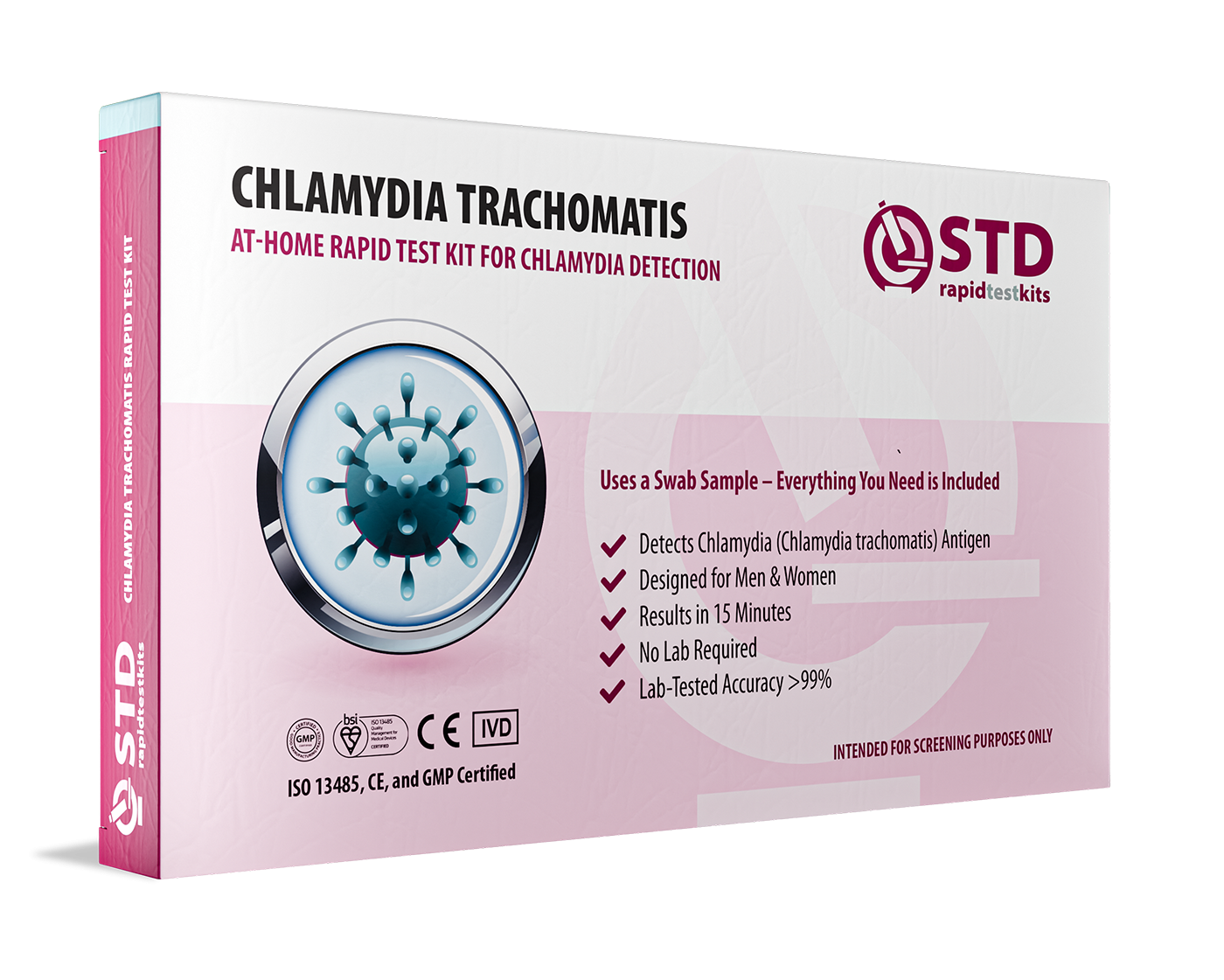
 For Men & Women
 Results in Minutes
 No Lab Needed
 Private & Discreet
Order Now $33.99 $49.00
When a Faint Line Haunts You
Few things trigger more anxiety than staring at a test strip and wondering if that shadow is real. With chlamydia rapid tests, even the faintest visible line should be taken seriously. It doesn’t mean “half positive.” It means the test picked up something, even if bacterial levels are just beginning to rise. The safe move is to confirm, not to convince yourself it was just bad lighting.
Leila, 25, spent hours moving her cassette under lamps, phone flashlights, even her car dome light. The line looked different every time. By the next week, her lab NAAT came back positive. That faint ghost of a line wasn’t lying, it was her body quietly signaling infection. If you’re unsure, retest or confirm at a clinic. Faint lines are whispers, not illusions.
Why Confirmatory Testing Matters
Rapid kits are a great first step, but when stakes are high, nothing beats a lab-based NAAT. These tests amplify bacterial DNA, which makes them far more sensitive than lateral flow devices. For anyone with symptoms but a negative rapid, or for those who see a faint positive line, confirmatory testing is the standard next move.
Kai, 30, illustrates this well. His rapid test was negative even though his partner had just tested positive. A clinic NAAT told the real story: he was infected, and treatment started immediately. The rapid test wasn’t useless, it flagged the need to take things seriously, but the lab sealed the diagnosis. This “screen fast, confirm with science” combo is often the most reliable path.
When Retesting Makes Sense
Not every negative needs to be doubted, but if symptoms persist or risk exposure is high, retesting adds peace of mind. After treatment, retesting ensures the infection is gone and rules out reinfection. For people with ongoing exposure risk, regular retesting is part of staying safe. Here’s how clinicians usually frame it:
| Situation | Recommended Retest Timing | Reason |
|---|---|---|
| Symptoms continue but test is negative | 2–3 weeks after exposure | Early testing may miss infection |
| Completed treatment for chlamydia | 3–4 weeks after finishing medication | Confirm clearance and rule out reinfection |
| Ongoing high-risk exposure | Every 3–6 months | Early detection prevents long-term damage |
Table 3. Retesting timelines for common chlamydia scenarios. Retesting is not paranoia, it’s good sexual health hygiene.
Shame, Secrecy, and Why Accuracy Suffers
Many false negatives aren’t about science, they’re about secrecy. People rush through instructions in their car or bathroom because they’re terrified of being found out. Shame drives mistakes, and mistakes drive wrong results. This vicious loop keeps infections hidden longer than they need to be.
Andre, 27, admitted he ran his test at a gas station restroom during a road trip. He barely swirled the swab, shoved the vial together, and tossed the strip after five minutes. His first test was negative. A week later, calmer and in private, he followed the instructions properly, and saw a clear positive line. Stigma didn’t just delay his diagnosis; it delayed his treatment. This is why breaking shame is as important as breaking transmission chains.
Prevention and Treatment: Moving Forward Without Fear
The good news is that chlamydia can be treated, usually with a short course of antibiotics from a doctor. Telling your partners, avoiding getting sick again, and making habits that keep your sexual health safe for a long time are the harder parts. Condoms lower the risk a lot, but regular testing is what really keeps you in charge. Don't think of it as a punishment for having fun; think of it as taking care of your body and your relationships.
If you’re still second-guessing your result, peace of mind can be as close as a discreet retest. Kits are available on the STD Rapid Test Kits homepage, including the option to order a chlamydia rapid test kit directly. Whether it’s in your bedroom, bathroom, or dorm, you deserve clarity, and you deserve to take care of yourself without shame.
People are also reading: How Early Is Too Early to Test for Chlamydia?
FAQs
1. Can a chlamydia test really be wrong?
Absolutely. Picture this: you test five days after a hookup, your strip says negative, and you exhale. But the bacteria are still setting up camp, too few for the test to notice. Two weeks later? Different story. The test didn’t “lie,” it just wasn’t ready to catch the truth yet.
2. Why do I feel burning if my test says negative?
Because bodies don’t follow lab schedules. Burning can be from early chlamydia that’s not detectable yet, but it can also be from a UTI or even irritation. If the sensation sticks around, don’t shrug it off, retest after the window period or get a lab check.
3. What about those barely-there lines?
If you have to squint, you’re not crazy. A faint line still means the test picked something up. It’s like the volume knob turned low, but the song is still playing. Treat it as a warning and confirm with a clinic test instead of gaslighting yourself.
4. Are at-home kits good enough?
They’re solid for quick answers, but they’re not magic. Clinics use NAATs, which are like microscopes for DNA. Home kits are more like binoculars, fast, private, but sometimes they miss things. They’re a great first step, not the last word.
5. Can I test my throat or butt with a standard kit?
Not really. Most consumer kits are designed for urine or genital swabs only. If the risk was oral or anal sex, you’ll need a clinic or a mail-in kit that actually covers those sites. Otherwise you’re testing the wrong neighborhood.
6. Do antibiotics mess with results?
Yep. Even antibiotics you take for a sinus infection can knock the bacteria down just enough to fool a test. That’s why providers usually want you tested before starting treatment, otherwise you get a false sense of security.
7. Should I really tell my partner?
If you want to avoid the “ping-pong” game of passing chlamydia back and forth, then yes. It doesn’t have to be a Shakespearean confession, just a straightforward text or an anonymous notification tool. Awkward for a moment, but better than both of you staying infected.
8. What if I leave the test too long before checking it?
Then you’re basically reading tea leaves. After the recommended 15–20 minutes, evaporation lines show up and confuse everything. Too early, it’s unfinished; too late, it’s unreliable. Stick to the timer, not your nerves.
9. How often should I get tested?
If you’re in a stable monogamous relationship, you can relax a bit. If you’ve got new or multiple partners, think of testing like oil changes, every 3–6 months keeps things running smoothly and avoids ugly surprises.
10. Can I trust one negative test?
You can trust it for the moment it was taken, but don’t treat it like a lifelong guarantee. If you tested at the right time and feel fine, odds are good you’re clear. If your body’s still waving red flags, don’t overthink, just retest or go to a clinic.
Check Your STD Status in Minutes
Test at Home with Remedium3-in-1 STD Test Kit
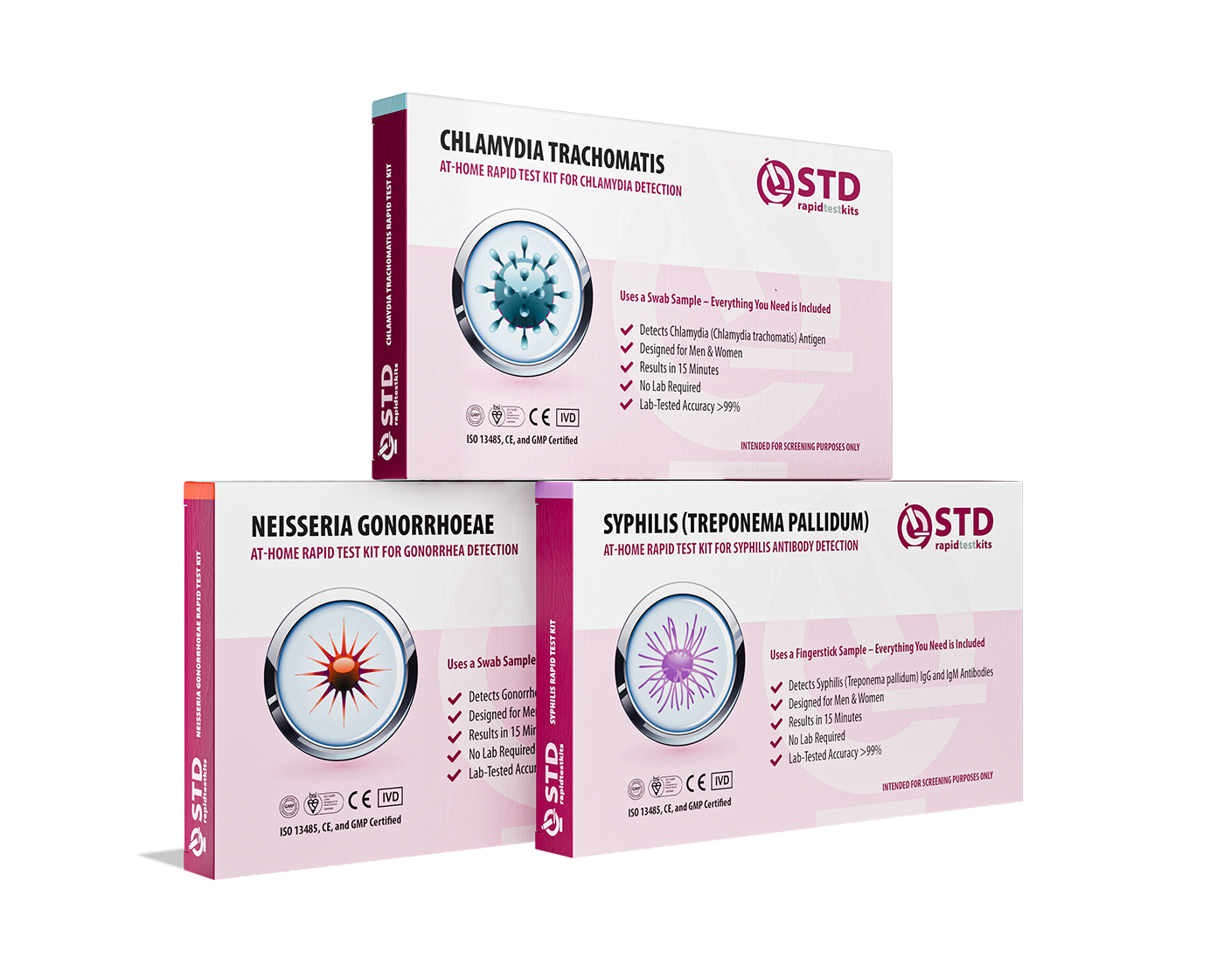 For Men & WomenResults in MinutesNo Lab NeededPrivate & Discreet
Order Now $69.00 $147.00
For all 3 tests
You Deserve Clear Answers, Not Guesswork
False negatives can make you feel like you’re losing your mind, symptoms screaming one thing, the strip saying another. But the truth is that chlamydia testing isn’t broken, it’s just bound by biology and human error. Retesting, confirming at a lab, and treating early are all part of the safety net that keeps you healthy and in control.
Don't wait and wonder if you're not sure. Get the peace of mind you need with a quick and private at-home test that checks for several STDs. One test away from peace of mind.
How We Sourced This Article: We used about fifteen sources to make this guide. These sources included the CDC, WHO, Mayo Clinic, and peer-reviewed studies on how accurate chlamydia tests are, as well as real-life voices from sexual health forums. The goal was to find a balance between clinical accuracy and the real-life experiences of people dealing with testing stress. Here are some of the most important sources.
Sources
1. Mayo Clinic – Chlamydia Diagnosis and Treatment
2. Planned Parenthood – Chlamydia Overview
3. WHO – Sexually Transmitted Infections Fact Sheet
4. Screening for Chlamydial and Gonococcal Infections | NCBI Bookshelf
5. Screening for Chlamydial and Gonococcal Infections — Diagnostic Accuracy & False Negatives | JAMA
6. I Tested Positive for Chlamydia — How False Negatives May Affect Results | Medical News Today
About the Author
Dr. F. David, MD is a board-certified infectious disease specialist focused on STI prevention, diagnosis, and treatment. He blends clinical precision with a no-nonsense, sex-positive approach and is committed to expanding access for readers in both urban and off-grid settings.
Reviewed by: Dr. L. Hernandez, MPH | Last medically reviewed: September 2025
This article is for informational purposes and does not replace medical advice.


