







Quick Answer: Polyamory itself doesn’t cause more STDs. The risk depends on safer sex practices, partner testing frequency, and communication. More partners often means testing more often, not automatic infection.
Why This Conversation Matters (And Who Needs It Most)
For many polyamorous people, the biggest battles aren’t just about logistics or jealousy, they’re about stigma. “You must have STDs,” strangers say. “That’s so unsafe.” But polyamory, like monogamy, spans a spectrum: some people have sex with many partners, others keep their circle small. Some use condoms every time, others negotiate testing schedules instead.
This article is for anyone living outside the one-partner script: polyamorous, ethically non-monogamous, swingers, or even folks who aren’t sure where they land. It’s also for anyone dating or curious about dating poly people, who wants to know what health conversations to expect. And it’s especially for the anxious late-night Googler wondering if their lifestyle is secretly “too risky.”

People are also reading: Why Trich Gets Missed, And What Your Discharge Might Be Telling You
Does Polyamory Really Mean More STD Risk?
Here’s the hard truth: the number of partners can increase opportunities for exposure. But it’s not the whole story. Research published in journals like Sexual Health shows that polyamorous individuals often have lower rates of undiagnosed STDs compared to people in “monogamous” relationships with unfaithful partners. Why? Because poly communities tend to normalize regular testing and open conversations about safer sex.
So yes, mathematically, more partners means more potential contact points. But the protective factors, condom use, PrEP for HIV, routine screening, honesty about recent results, can more than offset that risk. Meanwhile, someone in a closed relationship with a cheating partner may face higher risk, simply because they believe they’re “safe” and never test.
In other words: Polyamory doesn’t increase STD risk automatically. Lack of communication and skipped testing does.
How Often Should You Get Tested in Polyamory?
This is the question poly folks ask most, and the one doctors don’t always answer clearly. The CDC recommends at least annual testing for sexually active adults, but in poly networks, once a year usually isn’t enough. Many polyamorous people choose to test every 3 to 6 months, or after any new partner, depending on their agreements.
Think of it like maintaining a car: the more miles you drive, the more frequent the oil changes. If you’re sexually active with multiple partners, the “maintenance schedule” looks different. Here’s a breakdown:
| Partner Frequency | Suggested Testing Interval | Why |
|---|---|---|
| Closed triad / small circle | Every 6–12 months | Low outside risk, still good to confirm |
| Moderate partner turnover | Every 3–6 months | Ensures infections are caught early |
| Frequent new partners / group play | Every 1–3 months | Higher contact points = higher need for routine checks |
Table 1. Suggested STD testing intervals in polyamorous contexts. These are guidelines, not rules, individual factors like condom use, PrEP, and STI history matter.
Window Periods: Why Timing Matters Even More in Polyamory
How many partners you have and how soon a test can find an infection both affect when you can get tested. This is where the idea of a "window period" comes into play. The window period is the time between when you are exposed to an STD and when a test can reliably find the infection. If you test too soon, you might feel safer than you really are.
For poly folks with overlapping encounters, this becomes especially important. Imagine testing negative a week after a new partner, feeling fine, and then unknowingly passing on chlamydia because the infection wasn’t detectable yet. That’s not carelessness, that’s biology. Which is why building window periods into your agreements is one of the most practical tools for reducing risk.
| STD | Common Test Type | Window Period | Best Time to Test |
|---|---|---|---|
| Chlamydia | NAAT / Rapid Test | ~7–14 days | 2+ weeks |
| Gonorrhea | NAAT / Rapid Test | ~7–14 days | 2+ weeks |
| Syphilis | Blood (treponemal) | 3–6 weeks | 6–12 weeks |
| HIV | Ag/Ab Combo | 2–6 weeks | 6+ weeks |
| Herpes (HSV) | Blood antibody | 3–12 weeks | 12 weeks |
Table 2. Window periods for common STDs. In poly networks, where partners often overlap, waiting until the peak detection point can reduce false negatives.
Condoms vs Reality: Protection Isn’t Perfect
Condoms are one of the best ways to lower the risk of STDs, and poly communities often make them normal. But here's the catch: condoms aren't magic shields. They do a good job of keeping chlamydia and gonorrhea, which spread through fluids, from spreading, but they don't work as well against skin-to-skin infections like herpes and HPV.
Take group sex scenarios. Condoms might be swapped mid-session, oral sex might not involve protection, and toys may get shared. Each of these creates small but real opportunities for transmission. That doesn’t mean you’re doomed, it just means “always use condoms” is helpful but not the full picture. Testing fills in the gaps condoms can’t cover.
Check Your STD Status in Minutes
Test at Home with Remedium3-in-1 STD Test Kit
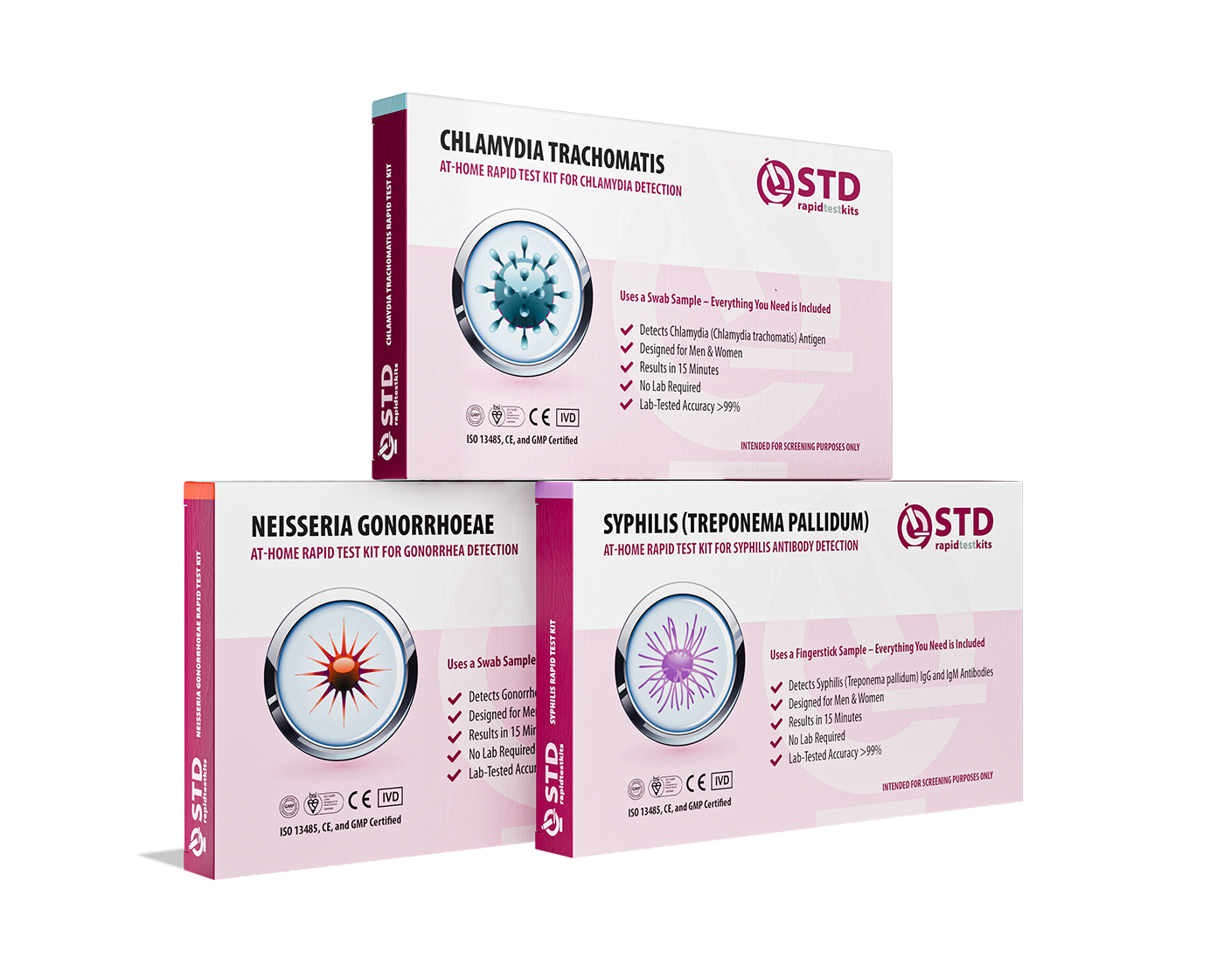
 For Men & Women
 Results in Minutes
 No Lab Needed
 Private & Discreet
Order Now $69.00 $147.00
For all 3 tests
“We Thought Monogamy Was Safer. It Wasn’t.”
Ana, 28, practiced polyamory for years but took a break to settle into a “closed” relationship. “I thought being with just one partner meant less risk,” she recalls. Six months later, she developed painful urination and discharge. Her clinic confirmed it was gonorrhea. Her partner had cheated once, assumed it was “no big deal,” and never tested.
“It hit me that poly wasn’t the problem. Lack of honesty was.”
Ana returned to polyamory with a new perspective: regular testing, open conversations, and shared calendars where partners logged test dates. “Ironically, I feel safer now than when I was in a supposedly monogamous relationship,” she says.
Her story changes the game: polyamory, when done openly, can actually lower the number of STD surprises compared to monogamy, which is based on blind trust.
The Role of Trust and Testing Agreements
In poly circles, it's common to hear things like "we all test every three months" or "new partners need a recent negative panel before fluid bonding." These aren't just rules; they're ways to take care of yourself. They help people deal with risk without losing closeness or the ability to be spontaneous.
Some polycules even make testing a regular part of their lives. For example, they might have partner date nights with mail-in kits, group swabbing parties with trusted providers, or calendar reminders that are shared between households. It may sound clinical, but in practice it becomes a ritual of care that shows that pleasure and duty can go hand in hand.
Poly vs. Monogamy: Who’s Really at Higher Risk?
It’s easy for outsiders to point at polyamory and assume it’s inherently “dangerous.” But the data paints a more complicated picture. Studies have shown that people in self-identified monogamous relationships often skip regular testing because they believe they’re safe. The problem? Cheating happens. And when it does, partners usually don’t disclose, which means no one tests, and infections spread quietly.
Polyamorous folks, on the other hand, often test more frequently and have explicit conversations about safer sex. A Canadian survey published in Sexual Medicine found that while poly individuals reported more partners, they also reported higher testing rates and condom use compared to their “monogamous” peers. In practice, the actual risk balances out, or sometimes even tilts lower for poly communities that normalize care.
So it’s not the relationship style that determines risk, it’s the habits. Honesty, protection, and consistent screening make the difference.

People are also reading: Common Mistakes That Can Skew Your Chlamydia Test Results
“Testing Became Part of Our Love Language”
Marcus, 35, has been polyamorous for nearly a decade. “In my circle, testing isn’t awkward, it’s hot,” he laughs. “We send each other screenshots of our results like love notes.” For Marcus, the act of testing is part of intimacy, a way to show partners that he values their health as much as his own.
“One time, a partner showed up with a fresh test kit as a surprise. We did it together before we even opened a bottle of wine.”
Marcus's story is an example of how poly communities can change the way we think about sexual health. Testing is no longer something to be ashamed of or afraid of; it can be a way to show trust, foreplay, or even a ritual. It's not careless; it's on purpose.
STDs That Matter Most in Polyamory Networks
While every infection deserves attention, some spread more easily in contexts with multiple partners or overlapping encounters. Understanding the “big players” can help you focus your prevention strategy:
| STD | Why It Matters in Poly Networks | Best Prevention Strategy |
|---|---|---|
| Chlamydia | Often asymptomatic, easily passed unknowingly | Routine testing every 3–6 months |
| Gonorrhea | Rising rates of antibiotic resistance | Testing + partner treatment if positive |
| Syphilis | Increasing outbreaks in non-monogamous networks | Blood tests every 6–12 months |
| Herpes | Skin-to-skin spread, even without symptoms | Condoms, dental dams, and disclosure |
| HIV | Still the most serious infection globally | PrEP, condoms, and regular testing |
Table 3. Common STDs in polyamorous communities and how to reduce their impact.
Notice the theme: prevention isn’t about abstinence, it’s about regular checks, using the tools that exist, and treating testing like brushing your teeth. Routine, normal, necessary.
Why At-Home Testing Fits the Poly Lifestyle
Polyamorous lives can be busy, with different calendars, homes, and even cities to deal with. It's not always possible to make time for clinic visits every few months. That's when testing at home comes in. It's private, easy to use, and very accurate when done right.
Some polycules even order combo packs together so everyone can test at the same time. It turns the process into a shared act of care, not just a chore. Whether it’s a single-use chlamydia test or a multi-STD panel, the point is access. The easier the test is to take, the more likely people are to actually do it.
And when you’re balancing more than one relationship, that convenience matters more than ever. Health shouldn’t take a backseat to logistics.
Beyond Risk: The Emotional Side of Testing
Window periods and risk stats are important, but testing also has an emotional impact. If you ask about STD results in a polyamorous relationship, it doesn't mean you don't trust the other person; it means you respect them. It says, "I care about you enough to know, and I want you to be safe with me too."
This changes the cultural script for a lot of poly people. Testing becomes a way to get closer to someone instead of being afraid and keeping things to yourself. That change in feelings is just as important as the science.
And when shame comes creeping in, as it always does, it's helpful to remember that STDs are infections, not moral judgments. Take care of them, deal with them, and move on. Polyamory doesn't have to mean fear; it can also mean freedom and responsibility.
Check Your STD Status in Minutes
Test at Home with Remedium7-in-1 STD Test Kit
 For Men & WomenResults in MinutesNo Lab NeededPrivate & Discreet
Order Now $129.00 $343.00
For all 7 tests
FAQs
1. Does polyamory automatically mean higher STD risk?
Not really. Having multiple partners gives more chances for exposure, sure, but the real driver of risk is whether people test, talk, and use protection. A polycule that swaps test results over brunch is often safer than a couple that never tests because “we’re exclusive.”
2. How often should polyamorous people test for STDs?
Think of it like oil changes on a car: the more miles you drive, the more often you check. For many poly folks that means every 3–6 months, or sooner if there’s a new partner. Some make it a ritual, seasonal panels in spring and fall, or syncing tests before a group weekend away.
3. Can poly people actually be safer than monogamous people?
Yes, and it happens all the time. Because poly communities tend to normalize testing, results get caught early. Meanwhile, plenty of “monogamous” folks only learn about an infection when symptoms hit, often after someone cheated quietly. It’s not about the number of partners; it’s about the honesty of the agreements.
4. What if one of my partners hates the idea of testing?
That’s worth paying attention to. Refusing to test doesn’t just put you at risk, it undermines trust. In healthy poly circles, testing is seen as care, not control. If a partner won’t engage, ask yourself what that says about how they treat your health.
5. Do condoms make poly people totally safe?
They’re powerful, but not perfect. Condoms are excellent against fluid-based infections like gonorrhea or chlamydia. But herpes, HPV, and syphilis can still spread through skin-to-skin contact. It’s like wearing a raincoat in a storm: you’ll stay mostly dry, but a little water may still sneak in.
6. Should I test before or after seeing a new partner?
Both is ideal. A “before” test shows good faith. A “post-window” test (about 2 weeks for chlamydia and gonorrhea, longer for HIV or syphilis) confirms nothing slipped through. Some poly folks treat it like a handshake: welcome aboard, let’s check together.
7. How do poly people juggle all the different testing schedules?
Creative hacks abound. Some sync it with rent day, others link it to birthdays or holidays. One polycule we spoke with orders combo kits in bulk and tests as a group, it turns into a mini ritual, followed by pizza and movies.
8. How do I bring up testing without killing the mood?
Make it flirty. “I’d love to get tested together, it’s kind of hot knowing we’re both safe.” Or frame it as care: “I get tested every 3 months because I want us to feel relaxed and confident with each other.” Respect is sexy.
9. What if I already have an STD, can I still be poly?
Absolutely. Plenty of people manage herpes, HIV, or HPV responsibly while living full poly lives. The key is disclosure and management: treatment, meds if needed, and agreements about risk. Health doesn’t disqualify you from love.
10. Where can I test quickly and discreetly?
At-home kits are the easiest option. No awkward waiting room, no explaining your partner network to a stranger. You can order tests here, get them shipped in plain packaging, and know your status in minutes.
Polyamory and Health: It’s About Care, Not Fear
The truth is that having more partners might give you more chances to be honest, safe, and care for your community, but it might also give you more chances to be seen. Polyamory isn't bad for your health; silence and stigma are. You build relationships based on trust, not fear, when you make testing normal and talk openly with your partners.
How We Sourced This Article: We drew on guidance from organizations like the CDC and WHO, peer-reviewed studies on polyamory and sexual health, and firsthand accounts from poly communities. About fifteen references informed this article; the six below are the most relevant and accessible for readers.
Sources
1. Planned Parenthood – STDs and Safer Sex Practices
2. Healthline – STD Basics and Testing Timelines
3. Getting Tested for STIs | CDC
4. CDC STI Screening Recommendations
5. Polyamory, Birth Control & STIs: A Comprehensive Guide | Bedsider
6. STI Boundaries and Polyamory — NonMonogamy Help
About the Author
Dr. F. David, MD is a board-certified infectious disease specialist focused on STI prevention, diagnosis, and treatment. He blends clinical precision with a no-nonsense, sex-positive approach and is committed to expanding access for readers in both urban and off-grid settings.
Reviewed by: J. Morales, MPH, RDN | Last medically reviewed: September 2025
This article is for informational purposes and does not replace medical advice.


