






Quick Answer: Chlamydia home tests are usually right if you take them 14 days or more after being exposed. Faint lines could mean a weak positive, an early infection, or a mistake by the user. You may need to retest to be sure.
Why This Matters: False Negatives Happen More Than You Think
Chlamydia is one of the most common STDs in the world, and one of the trickiest to detect. It’s often symptomless, especially in the first few weeks after exposure. Many people get tested too early, misread faint lines, or trust a single rapid result without realizing they’re still in the window period for detection.
Case in point: Alex, 27, took a rapid chlamydia test five days after a condom-free hookup. The result was negative. No symptoms ever showed up, so they assumed all was good, until their next partner tested positive and backtracked the timeline. When Alex got retested at a clinic three weeks later, the infection had been there all along. That early test just didn’t catch it.
This isn’t rare. According to CDC data, nearly 70% of women and 50% of men with chlamydia show no symptoms. Combine that with test timing issues and test strip ambiguity, and it’s easy to see how people slip through the cracks, even when they’re trying to do everything right.
How Chlamydia Rapid Tests Actually Work
To understand accuracy, you need to understand the mechanics. Most over-the-counter or discreetly ordered chlamydia rapid tests use lateral flow technology, the same basic science as pregnancy tests or COVID swabs. They’re looking for antigens or DNA fragments of the chlamydia trachomatis bacterium in your urine or genital swab.
Unlike lab-based NAAT (nucleic acid amplification tests), which amplify DNA to detect even tiny amounts of bacteria, rapid tests give you a visual readout based on what’s present in the sample, right now. That’s where timing, symptoms, and sampling matter a lot.
Here’s how rapid test accuracy stacks up against other common options:
| Test Type | Sample Type | Detection Method | Typical Accuracy | Best Use Case |
|---|---|---|---|---|
| Rapid Chlamydia Test | Urine or genital swab | Antigen detection | 85–92% sensitivity, ~98% specificity | Privacy and quick answers post-exposure |
| Mail-In Lab NAAT | Urine or swab (self-collected) | DNA amplification | 95–99% sensitivity and specificity | High-accuracy results with discreet shipping |
| Clinic-Based NAAT | Urine, cervical, urethral, or rectal swab | DNA amplification | ~99% accuracy | Symptomatic or complex cases |
Table 1. Comparison of chlamydia test types. Rapid tests are useful and convenient, but accuracy depends heavily on timing and sample handling.
So while rapid chlamydia tests aren’t useless, far from it, they’re not bulletproof. If you test too soon, use the kit incorrectly, or misread a faint line, you could be walking away with false confidence.
People are also reading: False Negatives, Faint Lines, and the Truth About Chlamydia Home Tests
What a Faint Line Might (or Might Not) Mean
Nothing derails your sanity like a faint test line you can barely see. Does it mean you're infected? Is the test defective? Is your bathroom lighting playing tricks on you?
Here's where the anxiety gets real: even experienced clinicians debate faint line results in rapid tests. The visual nature of the test means it's subject to interpretation. Most test kit instructions will tell you that any line in the test window, no matter how faint, should be treated as a positive. But in practice, it’s more complicated.
A faint line could mean:
, You're early in the infection and the antigen load is low
, The sample was diluted (e.g., you peed too much or drank too much water)
, The test expired or wasn’t stored correctly
, Cross-contamination or handling errors
Real-world example: Mel, 32, had a faint positive and no symptoms. They panicked, waited 72 hours, and took another test, still faint. They mailed a NAAT to a lab just to be sure. That one came back clearly positive. It wasn’t a mistake; it was just the beginning of an infection the rapid test barely caught.
So while a faint line is technically a positive, the best move is to confirm with either another rapid test in a few days or a mail-in NAAT. Treat faint lines as signals, not certainties. And always retest if you're unsure.
Why False Negatives Happen (Even When You Did Everything Right)
Let’s say you followed the rules. You used protection. You waited a week. You even triple-checked the test instructions. But the result still came back negative, and later, you found out you were positive. How does that happen?
First, there’s the window period: the time between exposure and when the infection becomes detectable. For chlamydia, that’s typically 7 to 14 days, though it can vary. If you test too early, your body might not have enough bacterial load for the test to pick up.
Then there’s the issue of sample quality. If the urine sample is too diluted (maybe you drank a lot of water before testing), or if the swab didn’t collect enough bacteria from the cervix, urethra, or rectum, the test might come back negative even when you're infected.
And finally, human error plays a massive role. Home test kits assume perfect conditions, quiet bathroom, calm hands, no distractions. But real life rarely cooperates. Maybe you read the result at the wrong time. Maybe you skipped the prep step. Maybe you left the test on the windowsill where it baked in sunlight. Each of these can impact accuracy.
Consider this scene: Ty, 24, tested six days after a risky encounter using a swab-based chlamydia test. He followed the instructions, but misread the clock. Checked it at 7 minutes instead of 15. It showed negative. Two weeks later, he developed urethral pain and got retested at a clinic. NAAT came back positive. That early test hadn’t lied, but it hadn’t told the full story either.
Accuracy isn’t just about the test itself, it’s about how and when you use it.
Check Your STD Status in Minutes
Test at Home with Remedium7-in-1 STD Test Kit
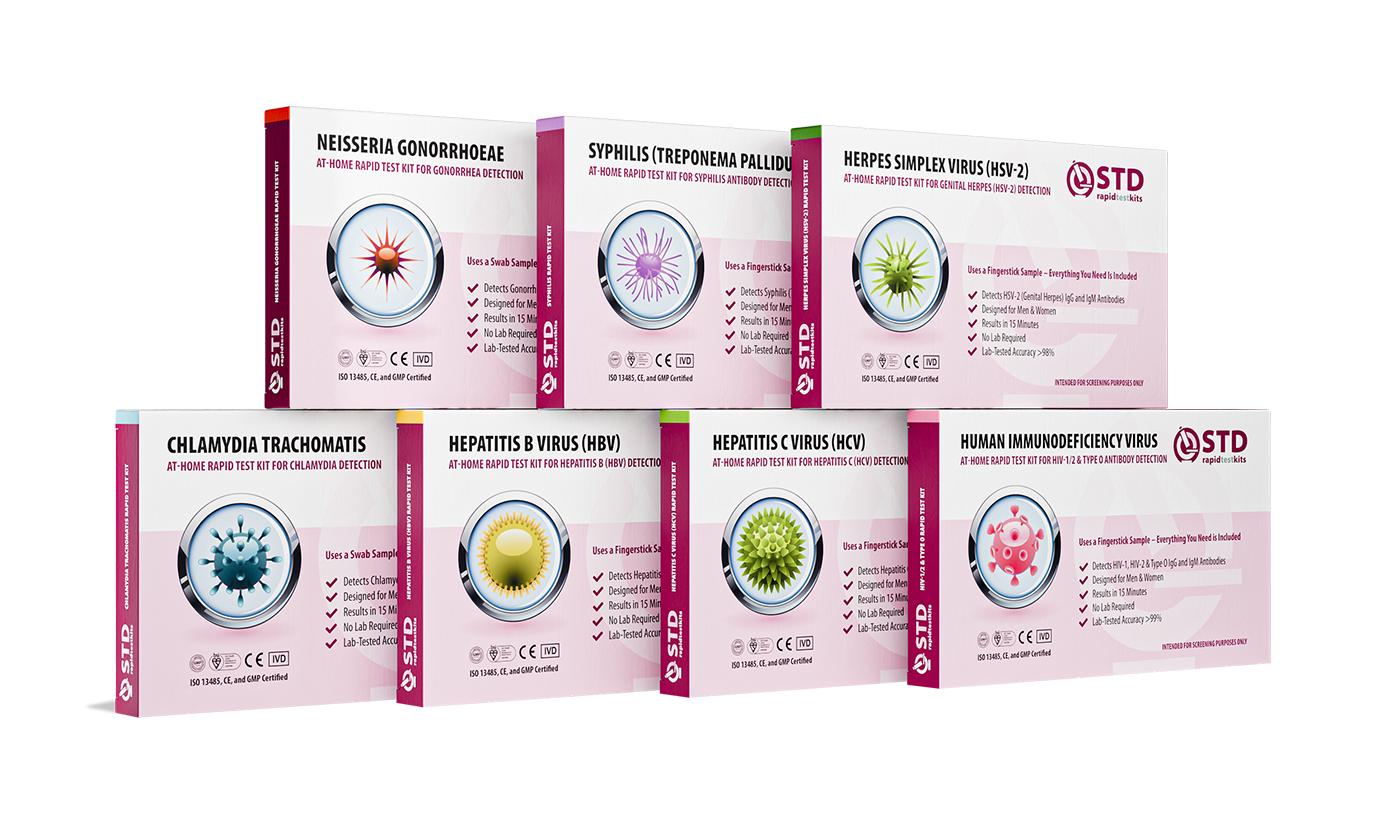
 For Men & Women
 Results in Minutes
 No Lab Needed
 Private & Discreet
Order Now $129.00 $343.00
For all 7 tests
Timing Isn’t Just Technical, It’s Emotional
When you're waiting for a test result, especially one you took in your bedroom or a public restroom, the minutes stretch. The stakes feel enormous. What if it’s positive? What if it’s wrong? What if your whole life changes based on a strip of paper?
That emotional urgency makes people test too early. You want certainty fast, especially after a questionable encounter or a cheating partner confession. But rushing the timeline usually leads to one of two outcomes: a false negative or a confusing faint line that doesn’t offer peace of mind either way.
Let’s break it down in terms of what we know about detection timing:
| Days Since Exposure | Test Accuracy (Rapid) | Retest Needed? | Reason |
|---|---|---|---|
| 0–5 days | Low (under 60%) | Yes | Below window period; likely undetectable |
| 6–10 days | Moderate (60–85%) | Recommended | Borderline detection; confirm in 1 week |
| 11–14 days | High (85–92%) | Maybe | Approaching peak sensitivity |
| 15+ days | Highest (90%+) | Not usually | Optimal test timing |
Table 2. Accuracy of chlamydia rapid tests based on timing after exposure. Retesting is advised if you tested early, had symptoms later, or received unclear results.
Knowing when to test can change everything. If you got a negative at day five and feel off at day twelve, don’t assume you’re fine. That second test, done after the window period, might be the one that finally gives you the real answer.
What About No Symptoms? That Doesn’t Mean No Risk
One of the most misleading things about chlamydia is how quietly it can exist in your body. No burning. No discharge. No pain. And yet, it’s still there, infecting partners, climbing into the reproductive tract, and increasing the risk of infertility or pelvic inflammatory disease (PID).
Nina, 22, took a test after her partner tested positive. She had no symptoms at all. Her rapid test at day 7 showed a faint line, but she dismissed it. “Probably a fluke,” she told herself. Two weeks later, she started spotting between periods and finally booked a clinic visit. That faint line had been the warning shot.
Don’t wait for symptoms to tell you something’s wrong. Chlamydia isn’t that courteous. Especially in people with vaginas, it can quietly escalate into long-term damage without a single obvious signal.
That’s why at-home testing isn’t just about symptoms, it’s about exposure and timing. If you’ve had unprotected sex, even if you feel totally fine, a test 14+ days later is still the best way to rule things out.
People are also reading: Took Antibiotics for an STD, But Are You Really Cleared?
When to Retest, and When a Single Test Isn’t Enough
Not every test gives you the full story the first time. Sometimes it's about repeating the question, not because you doubt the answer, but because you asked too soon.
If your rapid test was negative but you tested within 7 days of exposure, you should plan to test again after the 14-day mark. That’s not paranoia, it’s protocol. Many STDs, including chlamydia, have a lag between exposure and detectability. And that lag can make even good tests look unreliable if you don’t time them right.
For example: Luis, 31, tested at day 4 and got a negative. Still anxious, he waited until day 16 and tested again. This time, a strong positive. The initial test didn’t fail, it was just premature.
Even if your exposure was weeks ago, you may need to retest if you’ve had new partners, ongoing symptoms, or inconsistent condom use. Also, after treatment for chlamydia, a retest is usually advised at 3 months to rule out reinfection. Especially if your partner wasn’t treated with you, or you’re not sure if they were honest about getting treated at all.
If you had a faint line, the advice is clearer: test again in 3 to 7 days, ideally with a mail-in lab kit or a clinic-based NAAT. That second test is your tie-breaker. It cuts through the doubt.
Still wondering what kind of test to choose? Here’s how to think it through.
Check Your STD Status in Minutes
Test at Home with Remedium6-in-1 STD Test Kit
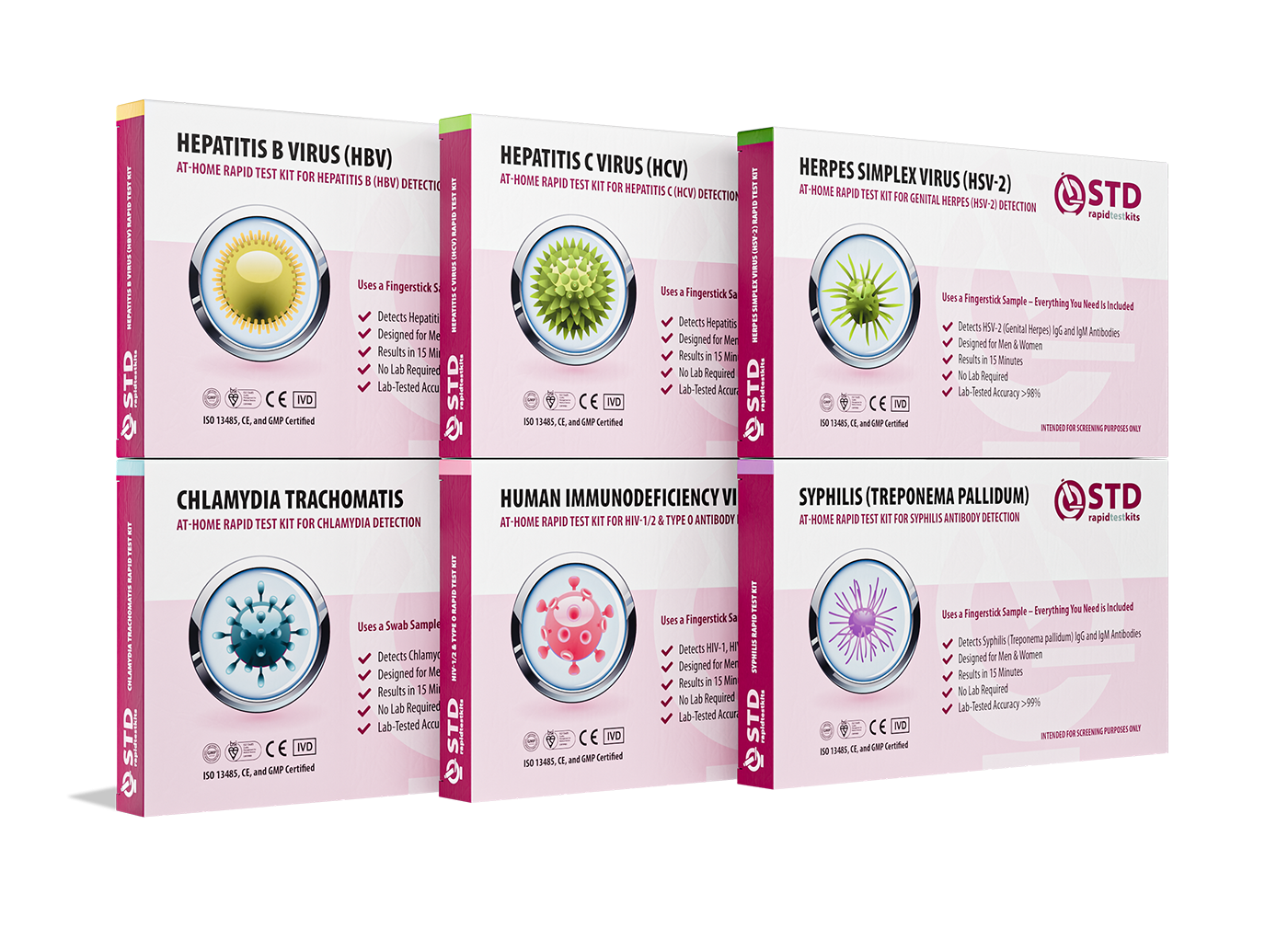 For Men & WomenResults in MinutesNo Lab NeededPrivate & Discreet
Order Now $119.00 $294.00
For all 6 tests
At-Home Rapid Test vs Lab Test: Which Should You Use?
Both options have their place. If you're trying to get answers fast and need privacy, a rapid test offers peace of mind, especially if you’re past the 14-day mark and have no symptoms. It’s convenient, discreet, and gives results in minutes.
But if your situation is complicated, early testing, vague symptoms, recent treatment, or a history of exposure from partners who may not be honest, a lab-based NAAT is the gold standard. These are the same kinds of tests used in clinics, just ordered online and self-collected at home.
Let’s look at the tradeoffs again in a lifestyle-focused way:
| Scenario | Best Test Type | Why |
|---|---|---|
| Had sex 2 days ago and feel anxious | Wait + then rapid or lab test | Too early now; plan test for 14+ days |
| Tested positive previously, want to confirm cure | Lab test (NAAT) | Rules out residual bacteria or reinfection |
| Got a faint line and no symptoms | Retest with lab or second rapid test | Confirms if it was a true positive or artifact |
| Symptomatic but first test was negative | Lab test + medical follow-up | May have tested too early or need broader screening |
Table 3. Choosing the right test based on timing, symptoms, and emotional urgency. Your situation, not just the science, should guide your next step.
If you’re still unsure, remember: you can always start with a rapid test and follow up with a lab test. Testing isn't a one-time verdict, it’s part of taking control of your sexual health. And it gets easier each time you do it.
Your Test Doesn’t Just Affect You, Here’s Why That Matters
Many people who test for chlamydia are thinking about their own risk, their own body. But STDs are never isolated. If you get a false negative and don’t know you’re infected, you might unknowingly pass the infection to a partner. Or worse, they might catch it and assume they were the source, blowing up trust in a relationship built on shaky information.
Testing, when done accurately and responsibly, isn’t just self-care, it’s partner care. It says: I value both of us enough to double-check. I want facts, not assumptions. That shift in mindset turns a test from a fear-based ritual into an act of respect.
Lena, 35, had been with her girlfriend for six months when she decided to get tested just for routine peace of mind. The at-home test came back with a faint line. Surprised, she ordered a lab test to confirm. Positive. Her girlfriend tested too, also positive. They traced it back to an early hookup neither had mentioned. Was it awkward? Yes. But it saved both of them from unknowingly carrying and spreading an infection that could’ve gone untreated for years.
Chlamydia doesn’t make you dirty. It doesn’t mean you’re irresponsible. But not testing, or ignoring suspicious results, can put others at risk. And that’s one decision you can easily control.
FAQs
1. Can a chlamydia home test really be wrong?
Yeah, it can. Especially if you take it too early, like within the first few days after sex. That’s not the test’s fault; it’s just biology. Chlamydia needs time to build up in your system before it shows up. So if you tested at day 3, felt relieved, and moved on, you might have missed the window when a test could actually catch it.
2. What does a faint line even mean?
Think of it like a whisper: it’s saying “something might be here.” Most test kits tell you to treat any visible line as a positive, even if it's ghostly pale. But faint lines also happen if the sample was weak, the timing was too early, or you didn’t swab deep enough. If you're unsure, take a deep breath and test again in a few days, or use a mail-in lab test for backup.
3. How long should I wait to test after unprotected sex?
The sweet spot is about 14 days. That’s when accuracy peaks for most rapid tests. Earlier than that and you’re rolling the dice. If you’re feeling anxious before day 14, that’s totally normal, but wait it out if you can, or plan to retest later.
4. I have no symptoms. Should I still be worried?
Honestly? Yes. Most people with chlamydia don’t feel a thing. No burning, no discharge, no warning. That’s why it spreads so easily, and why testing based on exposure (not just symptoms) is so important. If your last hookup skipped the condom and you’re sitting there wondering if you’re fine, just test. Silence isn’t always safety.
5. Can I trust a negative result if I tested early?
Not entirely. A negative at day 5 doesn’t guarantee anything. The infection may not have built up enough to detect yet. If your gut says something’s off, or if your partner later says, “Hey, I tested positive”, don’t hesitate. Retest. It’s not about being paranoid; it’s about being smart.
6. What should I do if my partner tested positive but I didn’t?
First: don’t panic, and don’t jump into blame. If your test was early, it might have just missed the infection. Or maybe you lucked out. Either way, it’s safest to test again in a week or two. And consider treatment, especially if you’ve been exposed. Many doctors will treat both partners to stop ping-ponging the infection back and forth.
7. Should I still test if we used a condom?
Condoms help a lot, but they’re not a forcefield. If the condom broke, slipped, or didn’t cover everything (especially during oral or genital contact), there’s still a chance of transmission. Testing isn’t just for “risky” sex. It’s for peace of mind, even when you tried to play it safe.
8. Do I need to retest after I’ve been treated?
Yes, and here's why: people can get sick again, especially if their partner didn't get treated too. Most of the time, guidelines say to test again after three months. It's not because the meds didn't work; it's to make sure nothing came back in after the fact.
9. Is it awkward to ask my partner to test too?
It can feel that way, but it’s also a power move. You’re looking out for both of you. Try framing it like: “I just tested and it got me thinking, wanna test together?” Normalize it. Make it part of your shared health check, not a guilt trip. Testing can be intimate, not just clinical.
10. How private are these at-home kits really?
Very. They come in plain packaging, no giant labels shouting “STD TEST INSIDE!” You do it yourself, in your space, on your time. And you don’t need to share the results with anyone unless you want to. For a lot of people, that’s the dealmaker. Privacy equals control.
You Deserve Answers, Not Assumptions
Whether you’re panicking over a faint line, doubting a negative, or just trying to do the right thing after a risky encounter, the truth is this: one test isn’t always enough. Accuracy isn’t just about the science, it’s about timing, technique, and context. And your peace of mind shouldn’t rest on a maybe.
If you're still not sure, that faint line is still bothering you, or you just want to be sure with a test you can trust, go ahead and do it.
Don’t wait and wonder, get the clarity you deserve. This chlamydia rapid test kit delivers fast results in the privacy of your own space. For lab-level accuracy, check out our combo kits too.
How We Sourced This Article: We combined current guidance from leading medical organizations with peer-reviewed research and lived-experience reporting to make this guide practical, compassionate, and accurate.
Sources
1. Evaluation of a Point-of-Care Test for Chlamydia and Gonorrhea
2. Accuracy of Self-Collected vs Clinician-Collected Samples
3. Evaluation of EasyNAT CT/NG Assay for Chlamydia Detection
4. At-Home Pharyngeal and Rectal Swabs vs Clinic Testing
About the Author
Dr. F. David, MD is a board-certified infectious disease specialist focused on STI prevention, diagnosis, and treatment. He blends clinical precision with a no-nonsense, sex-positive approach and is committed to expanding access for readers in both urban and off-grid settings.
Reviewed by: Alicia Brenner, MPH | Last medically reviewed: September 2025
This article is for information only and should not be taken as medical advice.


