






Quick Answer: STD symptom panic at night is often driven by anxiety and uncertainty, not actual infection. While some symptoms may warrant testing, late-night Googling increases fear, not clarity. At-home STD tests offer discreet answers without shame.
Why Nighttime Makes STD Fear So Loud
Picture this: you've just come home from a date. Maybe things got intimate. Maybe they didn’t. Maybe it was last week, last month, or three months ago. But tonight, out of nowhere, a twinge. A heat. A red patch. Or maybe nothing physical at all, just a gnawing feeling in your gut that won’t shut up. You try to distract yourself, but eventually, you open your phone. And down the rabbit hole you go.
Late-night hours intensify doubt. The distractions of the day, work, friends, errands, have vanished. All that’s left is you, your body, and the echo chamber of Google. At 2AM, even the most minor sensation can feel like evidence. And because STD symptoms can be vague, delayed, or mimic other conditions like razor burn or allergic reactions, your brain fills in the blanks with worst-case scenarios.
According to the National Institutes of Health, health anxiety peaks during quiet, isolated periods, especially before bed. Combine that with shame or confusion about sexual activity, and your mind becomes a 24-hour STD search engine. This spiral isn’t irrational. It’s your brain trying to make sense of fear in the absence of information. The problem? Most symptom searches don’t give clarity. They give chaos.
When a Search Becomes a Spiral
Gabriel, 28, didn’t notice the redness until after a hookup the previous weekend. It wasn’t painful. He’d shaved a day earlier, so maybe it was just irritation. Still, by midnight, he was wide awake and Googling. “I searched everything, herpes pictures, STDs from oral, even razor burn vs STI,” he said. “By 2AM, I had convinced myself I had herpes and needed to tell every partner from the last six months.”
What Gabriel experienced is common: a feedback loop where uncertainty leads to searching, which leads to more uncertainty. The Internet isn’t built to give you peace of mind, it’s built to feed you content. You’ll find Reddit threads from terrified strangers, WebMD entries listing rare complications, and images that don’t even match what you’re dealing with. In the dark, your brain interprets every vague sentence or stock photo as confirmation. But self-diagnosing an STD through search results? It rarely ends in resolution.
This doesn’t mean you should ignore symptoms. But it does mean that compulsive symptom checking can erode your ability to make calm, clear decisions. Real testing, not endless Googling, is the only way to know. And with discreet at-home test kits now available for common infections like Chlamydia or Herpes, you don’t have to wait weeks or show up at a clinic shaking.
People are also reading: The Four Stages of HIV: 2025 Insights, Research Updates, and Real-Life Perspectives
Real Symptoms or Just Fear? Here's How to Tell
So what does an actual STD feel like, and how do you know if what you’re feeling is real or imagined? Unfortunately, there’s no easy answer. Some people experience no symptoms at all. Others notice burning, itching, discharge, or sores. But many of the sensations people panic over at night, random tingles, light burning, or a single red spot, are caused by non-STD factors like friction, hormonal shifts, or anxiety itself.
Let’s break it down in context:
| Symptom | Common STD Cause | Non-STD Cause |
|---|---|---|
| Itching in genital area | Trichomoniasis, Herpes, Pubic lice | Dry skin, shaving irritation, synthetic underwear |
| Red bump or pimple | Herpes, Syphilis | Ingrown hair, acne, friction blister |
| Burning during urination | Chlamydia, Gonorrhea | Dehydration, UTI, spicy food + alcohol |
| Mild discharge | Chlamydia, Gonorrhea, Trichomoniasis | Normal vaginal secretion variation, lubrication products |
Table 1. Common STD-like symptoms and their frequent non-STD explanations. Always test if symptoms persist or if you’ve had recent unprotected exposure.
In clinical settings, patients often misattribute normal body functions to infections. Why? This is because fear and shame change how we see things. The CDC says that many STDs don't show any symptoms in the early stages. But that doesn't mean every new sensation is a hidden disease. If you're panicking at night, pause and ask: has there been a recent exposure? Has this symptom persisted more than 24–48 hours? Is it escalating? If not, panic may be driving the narrative more than biology.
What Late-Night Searches Can’t Tell You
Late-night Googling feels urgent because it offers an illusion of control. You think: if I just read a little more, I’ll figure it out. But the human body doesn’t work like a search engine. A red patch doesn’t come with a pop-up explanation. And the Internet can’t see your skin, test your blood, or interpret context.
Even symptom checker tools, while helpful in a general sense, can’t replace actual diagnosis. Many use broad algorithms, not real-time medical data. Worse, they rely on your own interpretation of symptoms, which are often filtered through anxiety. A harmless bump becomes “clustered blisters.” A mild tingle becomes “burning pain.” It’s not you being dramatic, it’s what panic does to perception.
This is where the cycle becomes dangerous. You might avoid testing because Google didn’t confirm your fears. Or you might catastrophize and convince yourself you’re infected when you're not. Either way, you’re stuck in limbo. And limbo is where shame grows loudest.
Check Your STD Status in Minutes
Test at Home with Remedium7-in-1 STD Test Kit

 For Men & Women
 Results in Minutes
 No Lab Needed
 Private & Discreet
Order Now $129.00 $343.00
For all 7 tests
Case Study: “I Thought I Had Everything”
Amira, 34, had been celibate for four months when she hooked up with an old friend. They used protection. But a week later, she noticed a dry patch near her vulva. “I wasn’t even sure it was new,” she recalled. “But I stayed up for four nights straight, reading every herpes post online. I convinced myself I had all the STDs, herpes, HPV, even syphilis. I couldn’t sleep, couldn’t eat. I didn’t even have sex again. I just panicked.”
What broke the cycle for Amira wasn’t an article, it was a test. She ordered an at-home test kit, peed in a cup, and mailed it in. Her results came back negative for all common STDs. “It was the first night I slept in weeks,” she said. “And I realized I’d spent more time punishing myself than protecting myself.”
Testing won’t always erase anxiety. But it moves you out of speculation and into action. Whether the result is positive or negative, you finally know what’s real. And that’s when healing, physical or emotional, can start.
Why the Brain Associates Sex with Guilt
This isn't just about STDs. It’s about how we’ve been conditioned to fear our own pleasure. From abstinence-only education to moral panic in media, sex has long been framed as dangerous, dirty, or shameful. So when something feels off, even slightly, our brains jump to punishment logic: “This is what I get for hooking up.”
But STDs are not punishments. They are infections, just like strep or the flu. They spread through contact, not character. Yet stigma persists. According to a study in the Journal of Sex Research, people are significantly more likely to delay STD testing due to shame than for other types of health screening.
This delay doesn’t just hurt your health, it fuels the panic cycle. The longer you go without testing, the louder the internal voice gets. And when that voice starts whispering at night, it’s hard to tell what’s fact and what’s fear. That’s why reducing stigma, within yourself, not just society, is the first step to peace of mind.
How At-Home Testing Breaks the Loop
Not everyone has the time, privacy, or emotional bandwidth to go to a clinic. That’s where at-home STD test kits come in. They offer discretion, control, and answers, without the judgment, long waits, or awkward conversations. And for someone in a 2AM panic spiral, they offer something even more valuable: a plan.
Today’s at-home STD test kits can detect Chlamydia, Gonorrhea, Herpes, Trichomoniasis, Syphilis, HIV, and more with high accuracy. Many use the same technology labs rely on (NAAT or PCR testing) and come with easy-to-follow instructions, prepaid shipping, and results via a secure portal.
| Test Type | At-Home Option | Result Time | Best For |
|---|---|---|---|
| Rapid Fingerstick | Yes (e.g., Herpes, Syphilis) | 15–20 minutes | Immediate reassurance, one infection |
| Mail-In Urine/Swab | Yes (e.g., Chlamydia, Gonorrhea) | 1–3 business days | More comprehensive STD screening |
| Clinic PCR/NAAT | No (in-person only) | 1–7 days depending on location | Advanced cases, symptoms requiring care |
Table 2. Comparing testing options by speed, scope, and convenience. At-home options offer speed and privacy for common STDs.
Need clarity now? Our Combo STD Test Kit screens for the most common infections in one simple box, delivered discreetly and ready when you are. Whether you’re afraid it’s herpes, trich, or just anxiety, peace of mind is just a test away.
People are also reading: Long-term STDs can increase your risk for urogenital cancers
When to Test (And When to Wait)
If you’re deep in symptom panic, your first instinct may be to test immediately. But depending on the STD and how long it’s been since your last sexual contact, testing too early can actually give you a false negative. That’s why knowing the window period, the time between exposure and when an infection can be detected, is crucial.
Let’s say you had unprotected sex three days ago and feel a slight burning sensation tonight. You take a test. It’s negative. But if the test is done too early, the infection may not show up yet, even if it’s present. That false reassurance might delay proper treatment, or give anxiety even more room to grow when symptoms persist.
Here’s what you need to know about when to test:
| STD | Minimum Test Time | Ideal Test Window |
|---|---|---|
| Chlamydia, Gonorrhea | 5–7 days after exposure | 14+ days |
| Syphilis | 3–6 weeks | 6–12 weeks |
| Herpes (initial outbreak) | 4–12 days | 7–21 days (for swab); 4–6 weeks (blood) |
| Trichomoniasis | 5–7 days | 2+ weeks |
| HIV | 10–33 days (NAAT), 18–45 days (Ag/Ab test) | 6+ weeks |
Table 3. Typical STD window periods. Retesting may be necessary depending on the timing of your test and any ongoing exposure risk.
If you’re unsure how many days it’s been or what kind of exposure occurred, our Window Period Calculator can help estimate your best test date. If symptoms are severe or unusual, don’t wait, seek medical care immediately. But for low-grade panic and curiosity-based testing, waiting for the right window increases both accuracy and peace of mind.
Check Your STD Status in Minutes
Test at Home with Remedium6-in-1 STD Test Kit
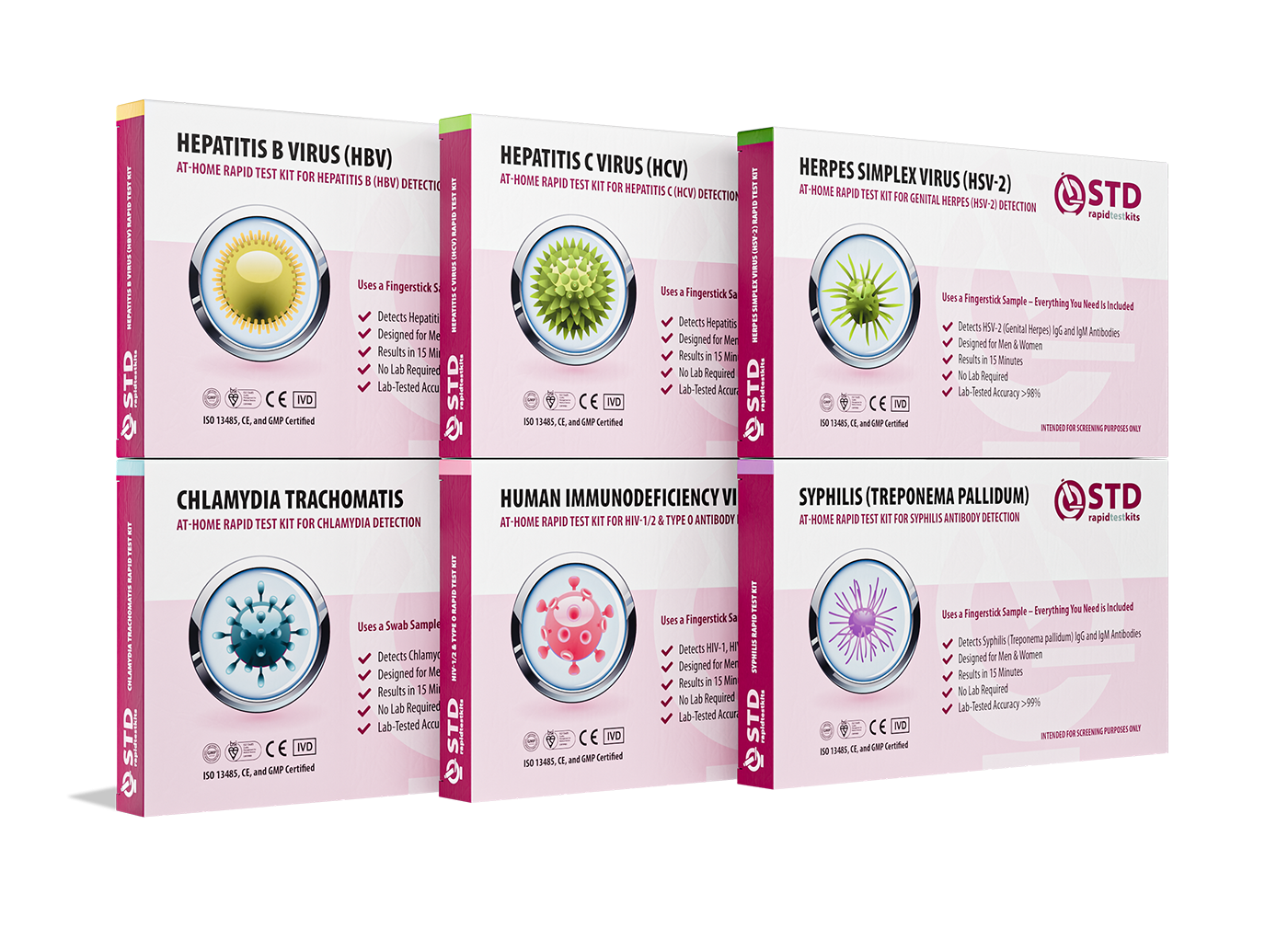 For Men & WomenResults in MinutesNo Lab NeededPrivate & Discreet
Order Now $119.00 $294.00
For all 6 tests
What to Do After the Spiral
The morning after a panic spiral feels heavy. Maybe you didn’t sleep. Maybe you have eight tabs open and no clear answers. Maybe you cried. It’s okay. Here’s how to ground yourself when the emotional dust settles:
First, breathe. You are not dirty. You are not broken. You are not alone. Second, pick a path: either order a test or schedule one at a clinic. Even if the exposure was months ago, knowing your status resets your brain’s alarm system. Third, commit to stop Googling symptoms without a plan. Every time you feel the urge, write down the fear instead. Turn “I think I have herpes” into “I felt itchy for a minute. I haven’t been tested since my last partner. I can test today.”
It's not just about the results of the tests; it's about getting your power back. When you choose action over obsession, you start rebuilding trust in your body and your decisions. If you're still not sure which test to get, check out our guide: Which STD Test Do I Need?
Reclaiming Trust in Your Body
STD panic thrives in silence. But your body is not your enemy. It may have sensations you don’t fully understand, especially after sex. Friction, hormonal shifts, even lube ingredients can cause reactions. And when you combine that uncertainty with stigma, it’s easy to assume the worst.
But your body also sends you real signals. The trick is learning to listen without spiraling. That takes practice. Testing helps, but so does reframing your mindset. Instead of asking, “What’s wrong with me?” ask, “What’s my body trying to tell me right now?” That shift alone can calm the storm enough to make a rational choice, whether that’s hydration, rest, or testing.
One test can be a turning point. It’s not just about ruling something out, it’s about realizing you deserve to feel safe in your own skin, without shame or fear whispering in your ear at 2AM. Start where you are. The answers are closer than you think.
FAQs
1. Why do I always spiral about STDs at night?
Because nighttime is quiet, and your brain hates silence when it's anxious. During the day, you’ve got distractions. But at 2AM? It’s just you, your body, and a growing list of “what ifs.” That weird itch you ignored at lunch suddenly becomes herpes in your mind. You’re not broken, just wired for worry when the world slows down.
2. Can anxiety actually cause STD-like symptoms?
Yep, it really can. Stress messes with your nervous system and can cause tingling, itching, even muscle tension in places you didn’t know could feel tense. Think of it like a false alarm. Your body’s yelling “danger” even when there isn’t any, and your genitals are just caught in the crossfire.
3. I found a red bump. Is it herpes?
Could be. Could also be an ingrown hair, friction blister, razor bump, or a bug bite. One bump isn’t enough to call it. Herpes usually shows up as painful clusters or blisters, but symptoms vary wildly. When in doubt, test. Don’t guess.
4. I tested negative… why am I still freaking out?
Because fear doesn’t always follow logic. Even with a negative result, your brain might still say, “But what if…?” This is especially true if you tested too early or had a confusing sexual encounter. Reassure yourself with the facts: if you tested after the window period and used the test correctly, you can trust it. Still worried? Retest after a couple of weeks for peace of mind.
5. How long should I wait to test after a hookup?
Depends on what you’re testing for. Most common STDs like Chlamydia and Gonorrhea show up within 7–14 days. Syphilis and HIV take a little longer. If you’re panicking 48 hours after sex, that’s too early for most tests, but not too early to make a plan. Use a window period calculator if you’re not sure when to test.
6. Is Googling symptoms ever helpful?
It can be, if you’re using credible sources and staying calm. But for most people, especially at night, it becomes a rabbit hole. One Reddit thread leads to another, and suddenly you're convinced a mosquito bite is syphilis. When you catch yourself spiraling, pause. Breathe. Bookmark a few trustworthy resources (like Planned Parenthood) and walk away when the panic picks up.
7. Do I need to test even if I feel fine?
Yes. Many STDs don’t show symptoms for weeks, or ever. You can feel 100% normal and still have Chlamydia or Trichomoniasis. Testing isn’t just for people with symptoms; it’s for anyone who’s been sexually active. Think of it like brushing your teeth. You don’t wait for a cavity to start caring.
8. What if I’m too embarrassed to get tested?
That’s why at-home tests exist. No awkward clinic trip, no small talk with a receptionist, no side-eyes in the waiting room. You pee in a cup or swab at home, then mail it in or wait 15 minutes for a rapid result. No shame. No drama. Just answers.
9. My partner won’t get tested. What do I do?
First, that’s a conversation worth having. If they’re avoiding it out of fear, try to meet them there, this stuff is scary for a lot of people. But if they’re dismissive or disrespectful? That’s not just a sexual health issue; it’s a trust issue. You deserve partners who care about your well-being, full stop.
10. What if I test positive?
Then you get treated. Most STDs are curable (like Chlamydia and Gonorrhea) or manageable (like Herpes or HIV). It’s not the end of your sex life, your love life, or your dignity. It just means you’re human. Take a breath, talk to a provider, and make a plan. You’re going to be okay.
You Deserve Answers, Not Assumptions
The cycle of Googling at midnight might seem like it will never end, but it doesn't have to. You don't have to guess, panic, or be afraid every time your body feels different. You can find out. On your own terms. In your own area. Without feeling bad or judging.
You can get clear even if you're reacting to a feeling, a memory, or just a spiral of anxiety. And it all starts with testing. No more tabs. No more "what ifs." It's just you, your results, and what you need to do next.
Order your discreet Combo STD Test Kit today and take back the peace of mind you deserve.
How We Sourced This Article: We combined current guidance from leading medical organizations with peer-reviewed research and lived-experience reporting to make this guide practical, compassionate, and accurate.
Sources
2. Cyberchondria: Parsing Health Anxiety from Online Behavior – NIH (2016)
3. STI Testing and Diagnostics – World Health Organization
4. Getting Tested for STIs – Cleveland Clinic
6. Planned Parenthood – When and How to Get Tested
About the Author
Dr. F. David, MD is a board-certified infectious disease specialist focused on STI prevention, diagnosis, and treatment. He blends clinical precision with a no-nonsense, sex-positive approach and is committed to expanding access for readers in both urban and off-grid settings.
Reviewed by: J. Lin, PA-C | Last medically reviewed: September 2025
This article is for informational purposes and does not replace medical advice.


