







Quick Answer: You can have sex again after a herpes or chlamydia diagnosis, often within weeks. With proper treatment, communication, and protection, intimacy doesn’t just return, it can thrive.
It Started With a Symptom
Maybe it was an itch that wouldn’t go away. Maybe it burned when you peed. Maybe you noticed a bump that wasn’t there before and spiraled into a week of late-night Googling. For some, there were no symptoms at all, just a text from an ex saying, “You should probably get tested.”
Chlamydia often presents with subtle signs: discharge, pelvic discomfort, or a burning sensation. Herpes might show up as blisters, tingling, or flu-like symptoms, but in over 80% of cases, it’s asymptomatic or misdiagnosed as razor burn or ingrown hairs [CDC].
Symptoms may bring you to the clinic, but they’re just the start of the story. What follows, diagnosis, disclosure, decision-making, is where the real fear sets in. Not the fear of the virus itself, but of what it might cost you: intimacy, love, desire.
Why This Hurts More Than It Should: The Shame Problem
Let’s be real, if you’d been diagnosed with strep throat, no one would suggest you were dirty. But say “STD,” and the assumptions start flying. Dirty. Irresponsible. Promiscuous. Damaged goods. These words don’t come from science. They come from stigma.
In a 2023 survey by the American Sexual Health Association, 64% of people with genital herpes said that the worst part of their diagnosis wasn't the symptoms; it was the shame. One in three people with chlamydia said they didn't date for at least a year after treatment, even though the antibiotics got rid of the infection in just seven days.
Here’s the truth: catching an STD doesn’t make you reckless, irresponsible, or unlovable. It means you’re human. It means your body, like millions of others, was vulnerable to something common, treatable, and navigable.
And that shame? It’s not just a personal burden. It’s a public health threat. People who feel ashamed are less likely to disclose, less likely to test, and more likely to pass on infections unknowingly. By reclaiming your right to love and be loved after a diagnosis, you’re not just helping yourself, you’re disrupting the entire cycle of silence.
The Reality of Sex After Chlamydia
Let’s start with the facts. Chlamydia is a bacterial infection that clears with antibiotics, typically azithromycin or doxycycline. Within 7 days of starting treatment, the bacteria is usually gone. The CDC recommends waiting a full week after completing meds before having sex again [CDC].
But physically being “cleared” and feeling emotionally ready? Two very different timelines.
Many people describe a lingering fear: “What if it didn’t work?” “What if I give it to someone else?” “What if they find out and leave?” These worries are valid, but they’re also manageable. Most reinfections happen not because the meds failed, but because someone’s partner wasn’t treated, or sex resumed too soon.
This is where communication comes in. Not perfect scripts, just honest facts: “I had chlamydia. I got treated. I’ve waited the full 7 days. If you want to test too, I support that.” That sentence isn’t a risk, it’s a trust-building moment. And if someone walks away? That’s their baggage, not your fault.
Thousands of couples navigate this every year. Chlamydia doesn’t ruin your sex life. Ignoring it might. But facing it, head on, with care and confidence, makes you a safer, stronger, more self-aware partner.

People are also reading: A Look Back at the History of STDs
Sex After Herpes: The Timeline Isn’t Everything
Unlike chlamydia, which you treat and clear, herpes doesn’t go away. That’s where things get more complicated, and more emotional. Genital herpes is caused by HSV-1 or HSV-2, and while antiviral medications like valacyclovir reduce outbreaks and lower transmission risk, the virus remains in the body permanently.
But permanent doesn’t mean contagious forever. And it definitely doesn’t mean your sex life is over.
Jess, 32, didn’t have a single outbreak the year after her diagnosis. “I got it from a guy I was seeing casually,” she said. “Once I learned about suppressive therapy, condoms, and timing sex around symptoms, I realized it wasn’t as scary as I thought. The bigger hurdle was my own fear of being rejected.”
Herpes can be transmitted even when there are no visible sores, especially during the first year after infection when viral shedding is higher. But with consistent medication and condom use, the transmission risk drops dramatically. One study found that suppressive therapy reduced the risk of HSV-2 transmission to an uninfected partner by nearly 50%, and condoms offered an additional 30% reduction.
So when can you start having sex again? Medically, once your outbreak clears and you feel physically comfortable. Emotionally, when you’ve had time to process and can talk about it without crumbling inside. You don’t owe anyone perfection. Just honesty, clarity, and your own peace of mind.
What’s Different (and Not) Between Herpes and Chlamydia
| Aspect | Herpes (HSV-1/2) | Chlamydia |
|---|---|---|
| Is it curable? | No, but manageable with antivirals | Yes, with antibiotics |
| When is it safe to have sex again? | After outbreaks clear and/or with suppressive meds | 7 days after completing antibiotics |
| Do you need to tell partners? | Yes, always, even with low risk | Yes, especially if you had sex before treatment |
| Testing accuracy | Swab tests during outbreak > Blood tests | NAAT urine or swab tests = Highly accurate |
| Retesting? | No, but regular suppression check-ins help | Yes, after 3 months if new exposure risk exists |
Figure 1. A side-by-side look at herpes and chlamydia, including what changes after diagnosis, and what doesn’t have to.
Myths That Kill Your Confidence (And the Truth That Restores It)
There’s a reason so many people with herpes and chlamydia stop dating: the internet is full of garbage. Reddit threads claim your love life is over. TikTok creators joke about being “undateable.” Even well-meaning friends say, “Maybe just take a break from dating for a while.”
But most of this fear isn’t rooted in fact. Let’s debunk a few of the most damaging myths:
Myth: “You can’t have sex without infecting someone.” Truth: With proper timing, condoms, and meds, the risk can be extremely low, especially for herpes. For chlamydia, treatment clears infection entirely in most cases [WHO].
Myth: People will always turn you down. Truth: Most people don't really leave. A study from 2021 found that 71% of partners were supportive when they found out about herpes or chlamydia. The diagnosis itself doesn't make one uncomfortable; the surprise does. Don't be ashamed; lead with clarity.
Myth: “You can’t have casual sex anymore.” Truth: You can, but it has to be informed. Some people with herpes include their status on dating profiles to filter out anyone unwilling to have the conversation. Others wait until there’s a vibe, then talk. Both are valid. You’re still allowed to want sex, even if it’s not with a forever partner.
What matters is consent. Not in the legal sense, but in the emotional one. You’re not dangerous. You’re not deceitful. You’re someone with information. And when you share it, confidently, kindly, you give others the chance to meet you in trust.
What Real Disclosure Sounds Like
Let’s say you meet someone. There’s a spark. You’ve kissed. Things might go further. But then your heart tightens, you know you need to say it.
Disclosure doesn’t have to be a dramatic sit-down or a long monologue. It can be simple. Here’s a version people have actually used:
“Before we get more physical, I want to tell you something. I have genital herpes. I manage it with medication, and I haven’t had an outbreak in months. There’s still a small risk of transmission even with protection, so I wanted to be upfront. If you have questions, I’m here.”
This script does four things: it states the fact, sets the tone, defines the risk, and opens the floor. You don’t need to justify how you got it. You don’t need to make it sound cute. You just need to own your truth, with calm self-respect.
Some people will thank you. Others will ghost. But those who stay? They’re already showing you they’re capable of real intimacy, the kind that starts before your clothes come off.
Check Your STD Status in Minutes
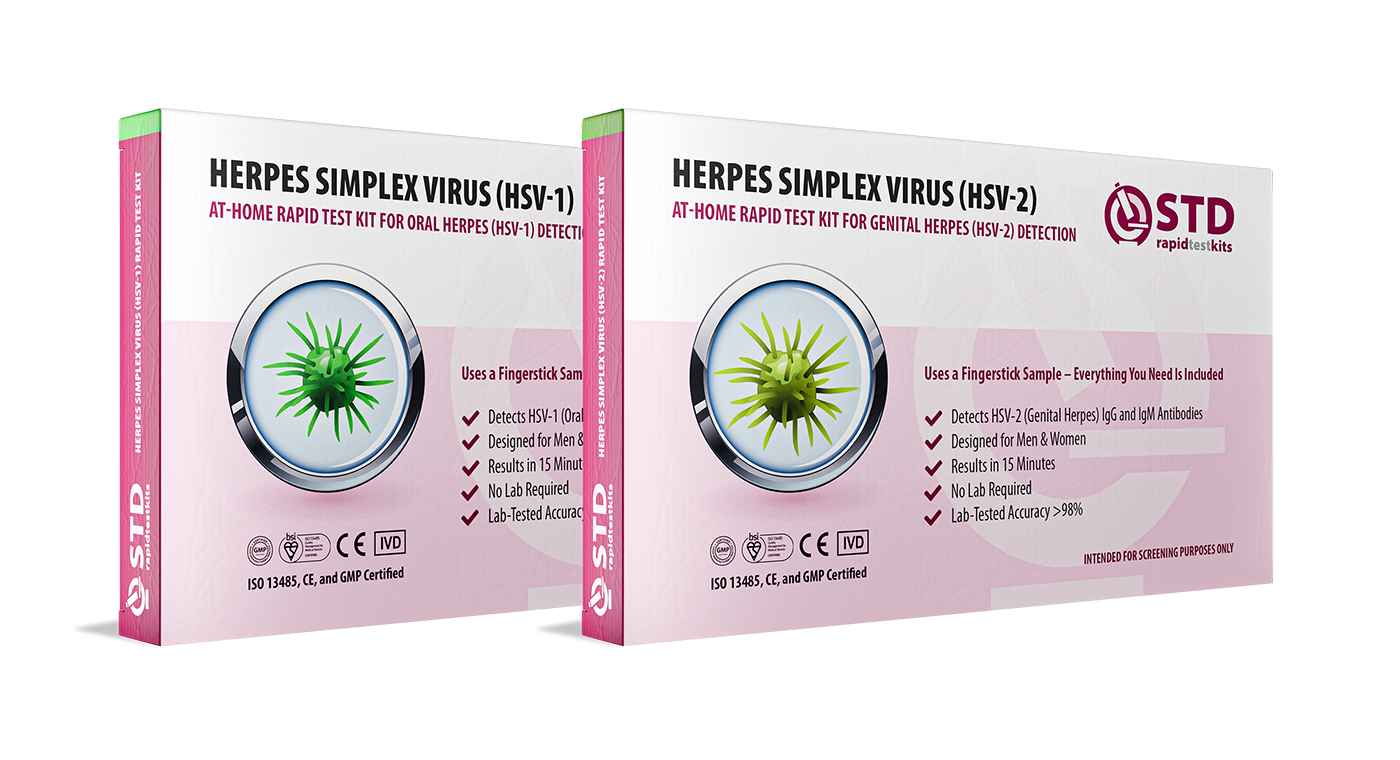
Test at Home with RemediumGenital & Oral Herpes Test Kit
 For Men & Women
 Results in Minutes
 No Lab Needed
 Private & Discreet
Order Now $75.00 $98.00
For all 2 tests
Your Desire Didn’t Die With Your Diagnosis
The body remembers pain, but it also remembers pleasure. After an STD diagnosis, many people say their desire changes. Some feel afraid of sex. Some feel detached from it. Others feel reckless, like they’ve already “ruined” themselves, so what’s the point of being careful now?
This is trauma talking. And like all trauma, it deserves healing, not judgment.
Reclaiming your sex life starts with asking what you want, not what you’re allowed to have. You may want soft, slow intimacy with a long-time partner. You may want wild sex with someone you just met. You may want both. Having herpes or chlamydia doesn’t change what turns you on. It just adds a few layers of thoughtfulness to how you get there.
Leo, 28, was celibate for almost a year after testing positive for HSV-2. “I thought I needed to be asexual now,” he said. “But then I realized I wasn’t afraid of sex. I was afraid of the conversation.” Once he worked through that, first in therapy, then with a close friend he trusted, he started dating again. He used condoms. He disclosed early. And he had some of the best sex of his life, because it was honest sex.
You don’t need to wait until the shame disappears to start healing. Sometimes the healing happens during desire itself, when your body shows you it’s still worthy of touch, of pleasure, of being chosen.
Tools That Help: Not Just Protection, But Peace
Let’s talk about gear. Because the goal isn’t just to reduce risk, it’s to reduce anxiety. Here’s what actually helps:
| Protection Tool | What It Does | Best Used When |
|---|---|---|
| Condoms/Dental Dams | Reduce skin-to-skin and fluid contact | All sexual activity, especially with new partners |
| Suppressive Therapy (Valacyclovir) | Lowers HSV-2 shedding, fewer outbreaks | Ongoing if diagnosed with genital herpes |
| STD Rapid Test Kits | At-home clarity, fast results | After a new partner or when symptoms appear |
| Honest Communication | Builds consent, lowers fear, increases trust | Before sex, whether casual or committed |
Figure 2. Protection is more than physical, it’s emotional. These tools help make intimacy feel safer, not just cleaner.
What works for one person might not work for another. Some prefer to use condoms 100% of the time. Others decide, with informed consent, to go without in long-term relationships. The key is: nobody gets surprised. Nobody gets manipulated. Everyone gets to make a choice.
Where Testing Fits Into the Picture
If you’ve been treated for chlamydia, you don’t need to retest unless symptoms persist or you have a new partner. But if you’re in an ongoing relationship where both partners were infected, make sure both completed treatment before resuming sex. Otherwise, you risk ping-ponging the bacteria back and forth.
With herpes, there’s no “test to clear it.” But if your original diagnosis came from a blood test (which can be unreliable), and you’ve never had symptoms, you may want to confirm with a swab test during a potential outbreak. Many people are misdiagnosed with herpes via IgM blood tests that shouldn’t even be used anymore [CDC].
In both cases, at-home testing is a powerful option, especially for chlamydia and other bacterial STDs. You can get results in minutes, without awkward clinic waits. If you're not sure whether something is a pimple or a blister, or you're just spiraling over a hookup from two weeks ago, peace of mind is one test away.
That’s why tools like this exist. Not to scare you. To set you free. This at-home combo test kit checks for the most common STDs discreetly and quickly, no clinic, no judgment, just answers.

People are also reading: No Symptoms, Big Problems: The Long-Term Effects of Undiagnosed STDs
When the Body’s Ready, But the Mind Still Hurts
Your outbreak is gone. Your tests are clear. You’ve disclosed, used protection, followed all the right steps. But sex still feels scary. Or awkward. Or empty. That’s not failure. That’s trauma residue.
Sex is one of the most emotionally loaded things we do as humans. It’s not just about contact. It’s about vulnerability, identity, power, and worth. After an STD diagnosis, all of that gets scrambled. That’s why some people rush into sex, to prove they’re still desirable. Others avoid it completely, afraid of being exposed again.
Both reactions are normal. What matters is that you notice what’s behind your choices. Are you avoiding intimacy because you’re not ready, or because you think you no longer deserve it? Are you jumping in because you’re healed, or because you’re trying to numb the fear?
There’s no wrong timeline. But if the shame is still in your body, talking to someone helps. Not just a partner. A friend. A therapist. A forum where people share what this really feels like. Connection is part of the medicine. And healing doesn’t mean never having fear, it means knowing what to do with it when it shows up.
If you’ve gotten this far in the article, it means you care. That’s the real start of healing. Everything else, testing, treatment, conversations, is just the structure around it.
FAQs
1. Can I still have sex after chlamydia or herpes?
Yes. Fully, truly, enthusiastically yes. With chlamydia, you can get back to sex just seven days after finishing treatment. With herpes, you can have sex once any sores have healed, and with a little planning (meds, condoms, honest convo), you’re good to go. Your diagnosis doesn’t cancel your desire. It just asks you to be smarter with it.
2. Do I have to tell every partner forever?
With herpes? Yeah, you do, because it’s a lifelong virus and informed consent matters. With chlamydia, if you were treated and it’s gone, it’s more about recent history. If you had sex before treatment with someone, they should know. If it’s been months and your results are clean, you don’t have to unpack your entire medical history on date three. Use your gut, and your ethics.
3. Will anyone still want to sleep with me?
You’d be shocked how often the answer is “yes.” Like, 100-million-people-have-STDs kind of shocked. A lot of people already have herpes. A lot more don’t care. One reader told us their partner said, “Cool, thanks for telling me. Now where’s the lube?” Don’t let one rejection turn into a life sentence of shame. There are people out there who see your truth and say, “So what?”
4. What if I'm terrified to bring it up?
That’s normal. Disclosure feels like standing naked on stage while someone decides if you're worthy. Here’s the trick: lead with calm confidence, not apology. Try: “Before things go further, I want you to know something about my health. I have genital herpes. I manage it, and I want you to feel safe and informed.” You don’t need a TED Talk. Just facts, framed with care.
5. How do I even feel sexy again?
Slowly. Deliberately. Maybe clumsily at first. Your brain needs time to trust your body again, and vice versa. Start solo if you need to. Wear lingerie for no one but yourself. Talk dirty in the mirror. Remind yourself that you’re still a sexual being, not a diagnosis with legs. You’re not broken. You’re healing. That’s hot in its own way.
6. Can I just not tell someone if we’re only hooking up once?
Tough question. With chlamydia, if you’re fully treated and test negative, you’re not contagious, so no disclosure required. With herpes, even without symptoms, transmission is possible. So yeah, disclosure still matters, even for one-night stands. If you’re not sure they’d care, tell them anyway. If they bolt, they saved you the trouble of fake moaning later.
7. What if my partner blames me?
Blame is often a shield for fear. Let them have their reaction, but don’t internalize it. The truth is, there’s no STD test that clears you of moral wrongdoing. Some people get infected the first time they have sex. Others sleep around and never test positive. It’s not about fault. It’s about moving forward with honesty and care.
8. Is oral sex safe now?
It depends. Herpes can be passed through oral even without visible sores. Chlamydia can live in the throat and be passed that way, too. Use barriers if you’re early in a relationship. Suppressive meds and time since treatment matter. And if you’ve both been tested and treated? Go ahead and enjoy, but maybe skip the “just spit on it” technique for now.
9. Should I tell someone I’m dating right away?
Nope. You’re allowed to vet them first. See if they’re kind. Emotionally intelligent. Worth your vulnerability. You don’t owe a stranger from an app your life story on day one. But once intimacy’s on the table, like, you’re about to swap fluids or fantasies, it’s time. Think of it as a test: if they react with shame, they probably weren’t ready for you anyway.
10. How do I know I’m ready to have sex again?
When it doesn’t feel like penance. When you want it for you, not just to prove you’re still “dateable.” When the fear is still there, but smaller than your curiosity. And when you can look someone in the eye and say, “This is my body. This is my truth. Take it or leave it.” That’s when you know. You’re not just ready. You’re powerful.
You Deserve Answers, Not Assumptions
You clicked on this article because something hurt, physically, emotionally, or both. Maybe it still does. Maybe you’re still scared. That’s okay. You’ve also taken a step that many people never do: you looked for real information, not rumors or judgment.
Chlamydia and herpes can change how you date and how you trust, but they can't take away your sex life. You can have safe, connected, and completely yours sex again with treatment, honesty, and support.
Don't put it off and wonder; get the answers you need. This at-home combo test kit checks for the most common STDs quickly and without drawing attention to itself.
How We Sourced This Article: We combined CDC guidelines, peer-reviewed studies, and personal narratives from lived experience forums to make this guide medically accurate, emotionally real, and practically useful. We consulted 15 total sources, including lifestyle media, sexual health journals, and global health agencies. Every link in this article was checked to ensure it leads to a reputable, current destination and opens in a new tab so you never lose your place.
Sources
1. WHO – Sexually Transmitted Infections (STIs) Overview
2. Planned Parenthood – Herpes: Facts, Treatment, and Sex
3. American Sexual Health Association – Living With Herpes
4. CDC – Herpes Blood Tests and Misdiagnosis Warning
5. CDC – Genital Herpes – Fact Sheet
6. CDC – Chlamydia – Fact Sheet
About the Author
Dr. F. David, MD is a board-certified infectious disease specialist focused on STI prevention, diagnosis, and treatment. He blends clinical precision with a no-nonsense, sex-positive approach and is committed to expanding access for readers in both urban and off-grid settings.
Reviewed by: Marissa Hale, NP, MPH | Last medically reviewed date : September 2025
This article is only meant to give out information and advice.


