







Quick Answer: Herpes doesn’t care how old you are. In fact, STD rates among adults over 60 are rising, and herpes can show up with vague symptoms, especially in older skin. If you’ve had unprotected sex, even once, getting tested is the only way to know.
The Symptoms That Didn’t Feel Like Symptoms
Here’s what they don’t tell you about herpes in older adults: it doesn’t always come with a dramatic “outbreak.” For me, it started with vague discomfort, no fever, no “tingling,” just a dry patch that looked like it needed more moisturizer. I’d read that herpes burns. Mine just itched.
According to a 2022 study published in the journal Sexually Transmitted Diseases, herpes in seniors often presents atypically, less ulceration, more redness or irritation, sometimes mistaken for yeast infections or dermatitis. This is partly due to skin changes after menopause and partly because we’re conditioned to look for the “classic” signs: clusters of painful blisters, flu-like symptoms, sexual promiscuity. None of which applied to me.
I only got tested because the soreness lasted more than a week. I sat in my robe Googling “itchy vulva after sex” and “dry crack near vagina STD?” and came across a photo that looked too familiar. My stomach dropped. I ordered an at-home herpes test that same night.
A Diagnosis That Didn’t Match the Mirror
“You have genital herpes,” the telehealth doctor said over video. Her voice was calm, practiced. I remember staring at her face and thinking: she’s younger than my daughter. I kept nodding like I understood, like I wasn’t spiraling. Herpes. At 68. I hadn’t even kissed anyone in years before this new relationship. And we only had sex twice.
I kept asking myself, how could I have herpes if I didn’t have any sores? If we used lube? If he didn’t seem sick? The doctor explained that herpes can spread even without visible symptoms. In fact, a majority of people who carry HSV-2 (the strain linked to genital herpes) don’t know they have it. According to the CDC, over 87% of people with HSV-2 are undiagnosed, and asymptomatic shedding is common.
I learned that condoms reduce risk but don’t eliminate it. That the virus lives in nerve endings and can reactivate without warning. That this wasn’t my fault. And yet, I felt crushed. Dirty. Late. Like I’d failed at something I didn’t even know I was supposed to be protecting against.
Why STDs Are Rising in Retirement Communities
Here’s what shook me the most: this isn’t rare. STD rates in adults over 60 have more than doubled in the past decade. According to the CDC’s 2022 STD Surveillance Report, new infections in people aged 55 and older are rising across the board, especially syphilis, gonorrhea, and herpes.
There are many reasons: more seniors are dating post-divorce or widowhood. Erectile dysfunction meds have extended sexual activity well into retirement. Condom use plummets after menopause because pregnancy is no longer a concern. And most sexual health campaigns still center youth, leaving older adults with outdated knowledge and little access to non-judgmental testing.
One 2021 study in the Journal of the American Geriatrics Society found that fewer than 20% of adults over 65 receive regular STD screenings, even when they report new sexual partners. The stigma is so baked in that even doctors often forget to ask.
At my retirement community, sex isn’t some rare unicorn, it’s real. People flirt over bingo and wine tastings. There are couples, casual arrangements, even poly groups. But there are no posters about testing. No condoms at the front desk. Just assumptions.
And here’s the kicker: the man I caught herpes from didn’t know he had it either.

People are also reading: HIV Isn’t Over, But You Have More Protection Than Ever
Dating After Diagnosis at 68
I ghosted him. The man I’d been seeing, the one I’d caught herpes from, I didn’t know how to tell him. I spent weeks rehearsing lines in the mirror. Should I text it? Say it was “just a rash”? Would he blame me, even though I was the one with a fresh diagnosis? I was 68 and suddenly back in high school, terrified of rejection, unsure how to speak about my own body.
Eventually, I called. I told him calmly, scientifically. That I’d tested positive for HSV-2. That I didn’t know who had it first. That he might want to get checked. There was a pause, then he said, “I’ve never had symptoms.” I almost screamed. That’s the whole point. This virus hides. It doesn’t ask if you feel sick.
To his credit, he was kind. He thanked me. He even got tested. But we didn’t see each other again. Not because of herpes, but because the diagnosis pushed me into a kind of reflection I wasn’t expecting. About who I am, what I want, and how much I’d abandoned my sexual self since my husband died.
At-Home Testing vs the Clinic: What I Learned Too Late
When I ordered my STD Rapid Test Kit, I wasn’t sure what to expect. The box was discreet. The instructions were clear. I pricked my finger, dropped the sample, and watched a second pink line appear like a storm cloud. Within 15 minutes, I had an answer. No waiting room. No receptionist side-eye. Just me, my truth, and a laptop full of bookmarked questions.
If I’d gone to a clinic, I might’ve waited longer. I might’ve chickened out. At-home tests offer more than convenience, they offer dignity. I didn’t have to explain why a 68-year-old woman needed an STD panel. I just did it. And I could breathe.
Still, I learned later that timing matters. Tests done too soon after exposure can miss the virus. Retesting 12 to 16 weeks after a new partner is recommended if your first test is negative but you’re still unsure. Especially with herpes, where seroconversion can take weeks to show on a test.
| Testing Method | Speed | Privacy | Best Use Case |
|---|---|---|---|
| At-Home Rapid Test | Results in 15–30 minutes | High (discreet delivery) | Fast reassurance, private disclosure |
| Mail-In Lab Test | 1–3 days after mailing | Moderate–High | Lab-grade accuracy without in-person visit |
| Clinic Testing | Same-day to 5 days | Low–Moderate | Persistent symptoms, confirmatory diagnosis |
Figure 1. Testing options compared for seniors reentering dating or exploring symptom concerns.
Myth: Herpes Means You’re Promiscuous
I was married for 31 years. One partner. Then no one for over a decade. Herpes didn’t care. You can get it from a single encounter. You can get it from oral sex. You can get it from someone who never had a visible outbreak.
This virus doesn’t ask how many people you’ve slept with, it just needs one. And it doesn’t just happen to the “reckless.” According to NIH research, older adults are more likely to misdiagnose herpes as “normal aging issues” like urinary tract infections or vaginal dryness. That’s why it spreads silently.
The shame? Not a medical concept: the virus doesn’t shame you. Society does. I’ve met women in their 70s who haven’t dated in years because of herpes. Men in their 60s who haven’t told a single soul. That silence does more damage than the virus itself.
So let’s call it what it is: an extremely common skin infection that gets wrapped in fear and silence. Over 500 million people worldwide have herpes. You're not a bad person, and you're not alone.
Check Your STD Status in Minutes
Test at Home with RemediumGenital & Oral Herpes Test Kit
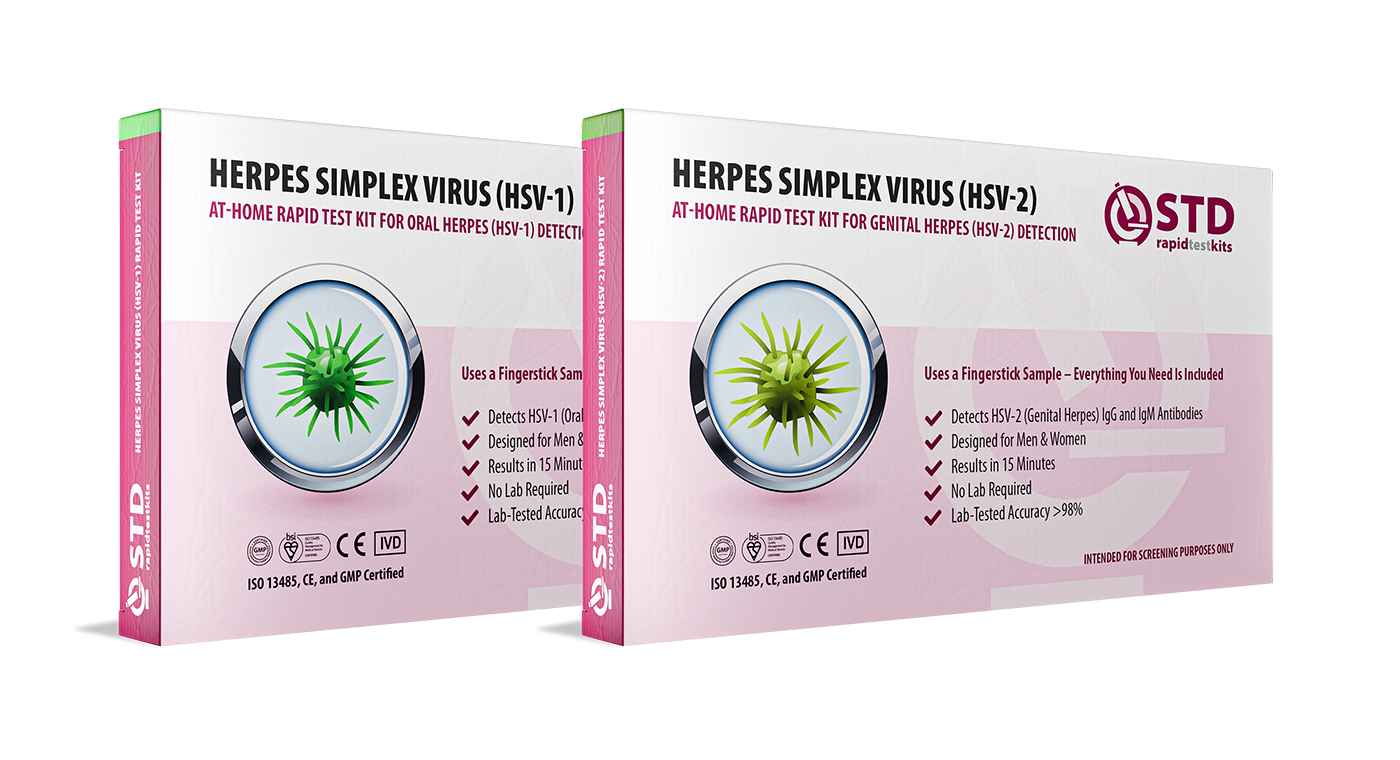
 For Men & Women
 Results in Minutes
 No Lab Needed
 Private & Discreet
Order Now $75.00 $98.00
For all 2 tests
Herpes and Pleasure Aren’t Mutually Exclusive
I thought I was finished. That herpes had put an end to my sex life. But it didn't, it actually made me open it again. With care, purpose, and on my terms.
I learned how to talk about my body. I started using lube again, not because of dryness, but because I finally prioritized comfort. I asked for what I wanted in bed. I talked about testing like it was foreplay, because being cared for is sexy. And I discovered that herpes doesn’t ruin intimacy. It redefines it, that is, if you let it.
You can 100% still be sexually active. Antiviral medications like valacyclovir can reduce outbreaks and transmission risk. Condoms help, too. So does communication. The more I spoke up, the less power herpes had over me.
Dating after diagnosis isn’t easy, but it’s real. And it’s better than hiding. If you're scared, know this: you are still desirable. Still worthy. Still in charge of your sex life.
Need clarity or just peace of mind? Order a discreet herpes rapid test and take back control today.
How I Tell People Now (And What Changed)
My first disclosure was a wreck. My second was better. By the third, I had a rhythm. I stopped making it a confession and started making it a conversation. Now I say it like this: “I have herpes. It’s common, manageable, and doesn’t define me. I take antivirals. I’m open to talking about what that means for us.”
I used to wait until things got serious. Now I bring it up when the vibe feels right, before sex, but not too far ahead. It’s part of my story, not my identity. And most people? They thank me. They appreciate the honesty. Some even share their own diagnoses, relieved that I opened the door first.
This didn’t come from therapy or a support group (though both are great). It came from trial, error, and finally realizing that silence helped no one, not even me. The stigma shrinks every time we speak.
Yes, You Still Need to Test After 60
If you’ve had unprotected sex, even just once, you should consider testing. That goes for all of us, especially those who haven’t been tested since their last long-term partner. Medicare covers some STD testing, but not all of it. And many doctors still skip the question entirely unless you bring it up.
I wish I’d asked sooner. I wish I’d tested before dating, not after symptoms appeared. But we don’t get to rewrite the beginning. Only the middle. I tell my friends now, yes, the ones in book club and on pickleball courts, that testing is care. It’s not a confession. It’s protection. It’s respect. It’s empowerment.
One friend told me she thought she “aged out” of STDs. I reminded her: bodies still work, skin still touches, and viruses don’t care how many birthdays you’ve had. STDs don’t retire.

People are also reading: Living with Herpes in a Relationship: What No One Tells You
What Helped Me Heal, Physically and Emotionally
The first few weeks after my diagnosis were the hardest. I cried in the shower. I scrubbed my sheets. I Googled every horror story and convinced myself no one would ever touch me again. That part was grief, not herpes. And it passed.
What helped was information, real, science-backed, non-shaming info. I read everything from WHO fact sheets to Reddit threads about people dating with HSV. I downloaded a symptom tracker to notice my cycle. I started suppressive medication. I even joined a Facebook group for older adults living with herpes, where the honesty was brutal and beautiful all at once.
What helped even more? Intimacy. The first person who kissed me after my diagnosis didn’t flinch. The first person who said “me too” made me feel like I wasn’t alone. The first time I had sex again, not just safe sex, but good sex, I remembered that I wasn’t broken. Just learning. And that’s okay.
If you’re navigating a diagnosis, don’t go dark. Get the facts. Find your people. Speak your truth, even if your voice shakes. Because herpes might live in your body, but it doesn’t own your story.
If you're wondering where to start, STD Rapid Test Kits offers fast, discreet options you can use at home. Results come quickly. Answers come sooner. Relief comes fastest when you stop guessing.
What I Wish I Knew Then
I wish I knew that herpes is common. That 1 in 6 Americans between 14 and 49 have HSV-2, and the rates are likely higher in older adults because of underreporting. That not everyone has “outbreaks.” That skin-to-skin contact, not fluid exchange, is what spreads it. That oral sex can transmit it. That dating with herpes isn’t impossible, it’s just different.
I wish I knew how strong I could be. That my body is still mine. That I could talk about it, write about it, live with it, even grow because of it. That the thing I was most afraid to name would eventually become the thing that gave me more control, more honesty, more boundaries, and weirdly, more joy.
I don’t tell everyone. But I tell enough. Because someone told me once, and it changed everything. So now I’m passing it on. For the 60-something woman reading this at 2AM, Googling symptoms she’s too scared to name, I see you. You are not too old. You are not too late. You are not alone.
FAQs
1. Can you get herpes even if no one has symptoms?
Absolutely. That’s actually how most people get it. The virus can hang out quietly in the body and still spread, especially during what’s called “asymptomatic shedding.” Your partner might look perfectly healthy, and still be contagious without ever knowing they’re carrying it. Welcome to herpes: the ninja of skin-to-skin infections.
2. Do older people get different herpes symptoms?
Often, yes, and that’s part of why it gets missed. In postmenopausal bodies, skin gets thinner, hormones shift, and immune responses dull. Instead of dramatic blisters, it might look like cracked skin, irritation, or just an itchy patch that won’t go away. It’s sneaky, which is why so many older adults chalk it up to dryness or detergents.
3. Am I too old to get tested?
Nope. Not even close. If you're still having sex, or even just thinking about getting back out there, testing is care, not a confession. The virus doesn’t care about your birthdate. Neither should you. STD testing after 60 isn’t overkill, it’s smart, proactive, and honestly, sexy as hell.
4. How do you even bring this up with a partner?
Deep breath. Then just say it. Something like, “Hey, before we get physical, I want to talk about sexual health. I have herpes, it’s managed, and I want you to feel informed.” Keep it grounded. The goal isn’t to impress them, it’s to respect both of you. And you'd be surprised how many people say, “Thank you for being honest. I have something to share too.”
5. Can I still have sex with herpes?
Yes, yes, and again yes. Herpes doesn't cancel your sex life, it changes how you prep for it. With medication and clear communication, you can lower transmission risks and still enjoy everything from cuddles to kink. Herpes is an inconvenience, not a stop sign.
6. How soon should I test after a new partner?
For herpes specifically, antibodies can take a while to show up. Testing right away might miss it. Most docs suggest waiting 12 to 16 weeks unless you’re having symptoms sooner. That said, peace of mind matters, test when you need answers, and don’t be afraid to retest if something still feels off.
7. Does Medicare cover this stuff?
Sometimes. If a doctor deems it medically necessary, like you have symptoms or a known exposure, it’s more likely to be covered. Routine screening just because you want to be safe? That’s trickier. Which is why so many older adults use discreet at-home kits. No paperwork. No side-eye. Just answers.
8. So herpes is not curable?
Nope. But manageable? 100%. Most people have fewer outbreaks over time, and many go years without one. Antivirals help, lifestyle adjustments help, and so does just knowing what’s happening in your body. It’s a forever virus, yes, but it doesn’t need to rule your life unless you let it.
9. What if I have it and my partner doesn’t?
It happens more often than you'd think. Herpes isn’t always contagious, and couples can go years without transmission if they're careful. Talk it out. Decide what safety looks like for both of you, condoms, meds, avoiding sex during outbreaks, and go from there. It is no death sentence, but a conversation.
10. Can I get herpes from oral sex?
Yup. HSV-1, the kind usually associated with cold sores, can absolutely be passed to your genitals during oral. So can HSV-2, though that’s less common. If someone has a sore near their mouth and goes down on you? That’s a potential herpes exposure. Dental dams and open communication can go a long way here.
You Deserve Answers, Not Assumptions
Whether you're retired, recently divorced, or just rediscovering intimacy after years of silence, your body still matters. Your health still matters. And your pleasure still matters. Herpes is not the end of your story. It’s just a chapter, a surprising, sometimes painful, but ultimately survivable one.
Don’t let shame write the script. If you’re curious, scared, or simply ready to know, you can get tested discreetly from home today. No waiting rooms. No raised eyebrows. Just the clarity you need.
Because knowledge is power. And simply put, peace of mind is entirely your right to have.
How We Sourced This Article: We used both personal stories and medical advice from the CDC, WHO, and peer-reviewed journals. This article makes sure that the information is medically correct and emotionally helpful by using real-life case studies, scientific data, and helpful resources. We made sure that every link to an outside site goes to a reliable source and opens in a new tab so you can read it easily.
Sources
1. CDC
2. Sexually Transmitted Diseases Journal
3. WHO – Herpes Simplex Virus Fact Sheet
4. Journal of the American Geriatrics Society
5. Planned Parenthood – Living with Herpes
6. NIH – Seroconversion Timelines for HSV
About the Author
Dr. F. David, MD is an infectious disease specialist who is board-certified and works to prevent, diagnose, and treat STIs. He combines clinical accuracy with a straightforward, sex-positive attitude and wants to make it easier for people to read in both cities and rural areas.
Reviewed by: Janelle Harper, NP-C, Infectious Disease | Last medically reviewed: September 2025
This article is meant to give you information, not to replace all medical advice.


