Published: July 2025 | Last updated: May 2026 | Editorial review and quality control: Martina N.
In 2026, the conversation about HIV prevention looks almost nothing like it did a decade ago. Twice-yearly PrEP shots are FDA-approved. Self-tests sit on pharmacy shelves next to pregnancy tests. The scientifically settled fact that someone on consistent HIV treatment cannot pass the virus through sex has its own three-letter acronym, U=U, and a global campaign behind it. The prevention toolbox has expanded faster than the public messaging has kept up with, which is why many people still believe HIV is either a finished story or a fight they have no role in.
Neither is true. UNAIDS reports approximately 40.8 million people are living with HIV worldwide as of 2024, with about 1.3 million new infections that year. The U.S. trend is slowly declining but unevenly distributed, with Black and Latino communities, men who have sex with men, transgender people, and people who inject drugs still carrying the heaviest share of new diagnoses according to CDC HIV surveillance. This article walks through what tools exist in 2026, what they actually do, what the data says about effectiveness, and how to decide what fits your situation, whether you are HIV-negative and looking at prevention, recently exposed and weighing options, or living with HIV and curious about what is changing.
Key Takeaways
- PrEP, when taken consistently, reduces the risk of getting HIV from sex by about 99% per the CDC, and long-acting injectable forms now offer protection for 2 to 6 months at a time.
- Someone living with HIV who maintains an undetectable viral load has effectively no risk of sexually transmitting the virus, the principle known as U=U or Undetectable equals Untransmittable.
Where HIV Prevention Stands in 2026
HIV is no longer the death sentence it represented in the 1980s and 1990s. With consistent antiretroviral treatment, someone diagnosed today can expect a near-normal lifespan, and with consistent prevention tools, someone HIV-negative has more ways than ever to stay that way. That progress is real. It is also unevenly distributed.
The World Health Organization tracks the global picture each year. Over 31 million people living with HIV are now accessing antiretroviral therapy, up from fewer than 1 million in 2001. According to UNAIDS, new HIV infections have declined by 40% since 2010, and AIDS-related deaths have fallen by 54% over the same period. At the same time, more than 60% of new infections occur in low and middle income countries, and Sub-Saharan Africa accounts for over half of all new diagnoses globally.
In the United States, CDC data shows new HIV diagnoses have been gradually declining, with the steepest declines among young men who have sex with men. Yet roughly 13% of people with HIV in the U.S. do not know they have it, which is the single biggest driver of ongoing transmission.
UNAIDS sets the global yardstick for ending HIV as a public health threat at three numbers: 95% of people with HIV diagnosed, 95% of those diagnosed on treatment, and 95% of those on treatment virally suppressed. As of 2024, the world is at roughly 87-89-93 against this target, with the largest remaining gaps in diagnosis and care linkage rather than in the science of treatment itself.
The Tools You Probably Don't Know Exist
Most people who got their HIV education before 2015 learned about two things: condoms and HIV tests done at a clinic. Both still matter. They are also no longer the whole picture.
Here is what is now available to a sexually active adult in 2026, drawing on current CDC, WHO, and NHS guidance:
- Daily oral PrEP. Tenofovir-based pills taken once a day. The CDC describes this regimen as reducing the risk of getting HIV from sex by about 99% when taken as prescribed.
- Long-acting injectable PrEP. Cabotegravir, brand name Apretude, given as a shot every 2 months. FDA-approved in late 2021 and now offered in over 30 countries.
- Twice-yearly injectable PrEP. Lenacapavir, FDA-approved in 2025 for HIV prevention based on the PURPOSE trial program, given as a shot every 6 months. The first option that requires only two clinical contacts per year.
- PEP (post-exposure prophylaxis). A 28-day antiretroviral course started within 72 hours of a possible exposure. Time-sensitive but highly effective when used promptly.
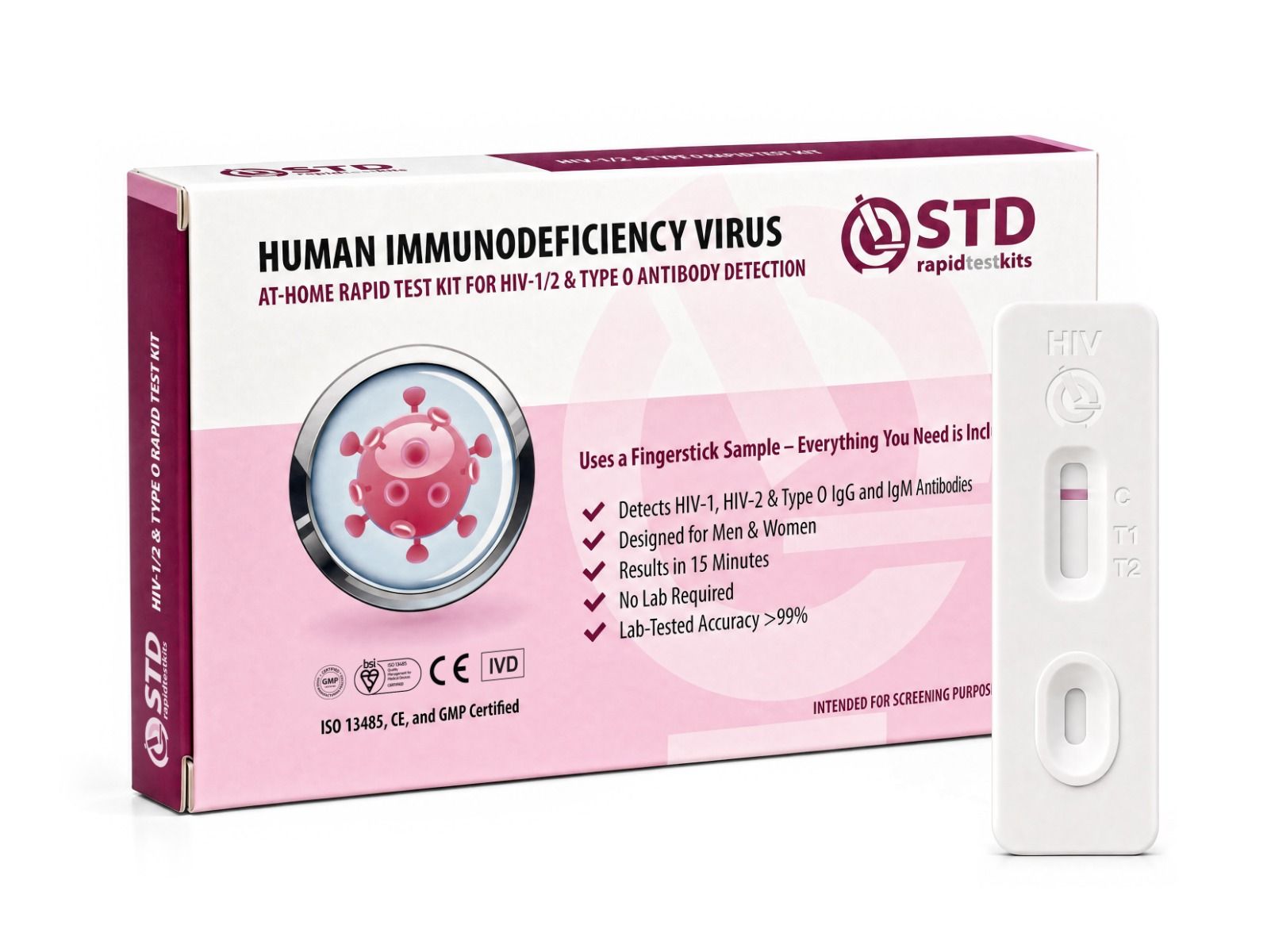
- At-home HIV testing. Oral fluid and fingerstick blood tests cleared for over-the-counter use, with results in about 15 to 20 minutes.
- U=U as prevention. Knowing a partner is undetectable on treatment means HIV cannot be transmitted sexually.
- Condoms. Still extremely effective at preventing HIV and most other STIs, particularly when other tools are unavailable or used inconsistently.
Long-Acting PrEP: What Changed
PrEP, pre-exposure prophylaxis, has existed since 2012, when the FDA approved the first daily oral form. The challenge with daily pills was always adherence. Forgetting doses or running out of refills cuts effectiveness sharply, and life rarely accommodates a perfect daily routine. That is the problem long-acting PrEP solves.
Cabotegravir injections, the every-two-months option, were approved in the U.S. in December 2021 under the brand name Apretude. A patient visits a clinic, receives an intramuscular injection in the gluteal muscle, and is protected for the next 8 weeks. The two-month interval makes adherence a calendar problem rather than a daily-pill problem, and trials before approval showed it was more effective than daily oral PrEP in real-world conditions, largely because more people took it consistently.
Lenacapavir, approved by the FDA in June 2025 for HIV prevention, pushed the interval out to six months. Two injections a year, delivered subcutaneously, full protection in between. The WHO began recommending lenacapavir as an additional PrEP option in 2025. Trials in the PURPOSE program found protection rates approaching 100% in the populations studied.
Access lags the science. Long-acting PrEP is more expensive per dose than generic daily tenofovir, and rollout in low and middle income countries is happening through licensing agreements with the Medicines Patent Pool and others, but not yet at the scale needed. For people in the U.S. or Western Europe with insurance, the practical barrier is usually finding a clinic that stocks it. For someone in rural Kenya or Honduras, the barrier is whether the local clinic has cold-chain storage and trained staff at all.
U=U: What "Undetectable Equals Untransmittable" Means
Decade-old research backs U=U. Several large cohort studies (PARTNER, PARTNER2, and Opposites Attract) followed mixed-status couples (one HIV-positive on suppressive treatment, one HIV-negative) through thousands of sexual encounters without condoms, and zero linked transmissions occurred when the positive partner was virally suppressed. The CDC, WHO, and NHS all formally endorse the U=U message based on this evidence.
What "undetectable" means in practice: a viral load test measures how many copies of HIV are circulating in someone's blood. Modern antiretroviral therapy can drive viral load below 200 copies per milliliter, the standard threshold for "suppressed," and often below 50 or even 20 copies, the threshold most labs call "undetectable." Once someone has maintained undetectable status for at least 6 months on consistent treatment, they cannot pass HIV on sexually.
This is not a hedge or an approximation. It is a categorical finding, repeated across multiple large studies, and it has reshaped prevention thinking. A partner on suppressive treatment is, from a transmission standpoint, equivalent to a partner without HIV at all. The qualifier is that suppression has to be maintained: missed doses, interrupted treatment, or drug resistance can let viral load rise, and the protection ends when it does.
Treatment and prevention are not separate categories. Getting someone diagnosed, into care, and stably suppressed is one of the most effective things any healthcare system can do to reduce new infections. That is part of why UNAIDS has framed its global targets around the 95-95-95 goal: 95% of people with HIV diagnosed, 95% of those diagnosed on treatment, and 95% of those on treatment virally suppressed.
People who take HIV medicine as prescribed and get and keep an undetectable viral load have effectively no risk of sexually transmitting HIV to their HIV-negative partners.
At-Home Testing: What Window Periods Mean
At-home HIV testing has come a long way from the early kits that took weeks to mail back to a lab. Modern over-the-counter rapid tests use either an oral fluid sample (a gum swab) or a fingerstick blood drop, and they deliver a result in 15 to 20 minutes in your own bathroom.
Most rapid HIV tests detect antibodies rather than the virus itself, and antibodies take time to appear after infection. That is what the CDC calls the window period: the gap between exposure and the time when a test can reliably detect infection. For oral fluid rapid tests, the window is typically 3 months. For most fingerstick blood rapid tests (third-generation antibody tests), reliable detection is also around 3 months, with most infections detectable by 6 to 12 weeks. Fourth-generation lab tests, which detect both antibodies and the p24 antigen, shorten the window to about 4 to 6 weeks. Nucleic acid (RNA) tests can detect HIV as early as 10 to 33 days after exposure but are usually done in clinical settings, not at home.
What this means in practice: if you have a possible exposure and test the next day, a negative result tells you about your status from before the exposure, not after. To rule out infection from a specific event, you generally retest at 3 months for confirmatory peace of mind. The exception is when PEP might still be an option, which is a different protocol covered below.
At-home rapid tests are useful as screening tools. A positive result on a rapid test always needs confirmation with a laboratory test, since false positives, while rare, do happen. A negative rapid test in someone with risk factors should be repeated after the window period closes. We sell a rapid fingerstick HIV blood test you can use at home; details on the kit are below.
PrEP vs PEP: Which One, When
Confusion between PrEP and PEP is common, and the difference matters because the timing rules are completely different.
PrEP, pre-exposure prophylaxis, is what someone takes before any specific exposure, on an ongoing basis, to prevent HIV from being able to establish infection if exposure happens. It is preventive, like wearing a seatbelt. Daily oral PrEP, the every-2-month cabotegravir injection, and the every-6-month lenacapavir injection are all forms of PrEP. The CDC recommends discussing PrEP with anyone who is sexually active and has a partner with HIV who is not virally suppressed, has multiple partners, has had a recent bacterial STI, or shares injection drug equipment.
PrEP becomes effective after a build-up period: about 7 days for protection from anal sex, around 21 days for protection from vaginal sex with oral PrEP. Injectable forms have their own onset profiles that the prescribing clinician will walk through.
PEP, post-exposure prophylaxis, is taken after a specific, recent exposure. The window to start PEP is 72 hours (3 days) from the time of exposure. After that, it is too late. The course is 28 days of antiretroviral medication, typically a combination including tenofovir and either lamivudine or emtricitabine, plus a third drug. PEP is highly effective when started promptly but the time pressure is real.
If you think you may have been exposed (a condom break with a partner of unknown status, sexual assault, a needlestick injury), the clinical advice is to seek PEP from an emergency department, urgent care, or sexual health clinic within hours, not days. Do not wait to test first. You can test once you have started PEP.
| PrEP | PEP | |
|---|---|---|
| When taken | Before exposure, on an ongoing basis | After a specific exposure, within 72 hours |
| Form | Daily oral pill, or injection every 2 months (cabotegravir) or 6 months (lenacapavir) | 28-day course of oral antiretroviral medication |
| Onset to full protection | About 7 days for anal sex, 21 days for vaginal sex on oral PrEP | Begins working immediately when started in the 72-hour window |
| Time pressure | None once on a stable schedule | Must start within 72 hours; sooner is better |
| Best fit for | Anyone with ongoing HIV exposure risk | A specific recent possible exposure |
Who Still Falls Through the Gaps
The tools exist. Access does not match the tools. Several specific populations still see disproportionate rates of new HIV diagnosis or delayed care, and the patterns are consistent across most high-resource countries.
In the U.S., CDC surveillance shows Black Americans accounted for around 40% of new HIV diagnoses in 2023 despite being roughly 13% of the population. Latino Americans accounted for around 30% of new diagnoses. Men who have sex with men remain the most affected group overall, particularly young Black and Latino men who have sex with men. Transgender women, especially Black and Latina transgender women, also see infection rates several times the national average. Rates among women have declined but remain meaningfully higher among Black women than white women.
The drivers of these disparities are documented and stable across studies: structural healthcare access barriers (lack of insurance, transportation, paid time off to attend appointments), provider bias and discomfort with discussing sexual health honestly, medical mistrust grounded in real historical harms, stigma that suppresses both testing and PrEP uptake, and gaps in culturally competent prevention messaging. PrEP usage in the U.S. has grown to over a million people, but uptake remains lowest among the groups with the highest infection rates, which is the inverse of what equitable prevention would look like.
Globally, the picture varies but the pattern is similar. Sex workers, people who inject drugs, men who have sex with men, transgender people, and people in prisons are categorized by the WHO as key populations because they consistently face both higher HIV exposure risk and lower prevention access.
When Should You Test, and How Often
The CDC recommends that everyone between ages 13 and 64 get tested for HIV at least once as part of routine medical care. People with ongoing risk factors should test more often. Practical guidance for adults:
- At least once a year for anyone sexually active with a new partner since their last test.
- Every 3 to 6 months for men who have sex with men, people with multiple sexual partners, people whose partners have multiple partners, anyone sharing injection equipment, and people on PrEP (testing is part of standard PrEP follow-up).
- Immediately, and again at the window period after any specific possible exposure. The first test catches pre-existing infection; the follow-up at 3 months catches infection from the specific exposure.
- Before starting any new sexual relationship if both partners agree to test together. This is increasingly normalized in 2026 and is a reasonable conversation to have.
- During pregnancy. Routine testing is part of prenatal care, ideally at the first visit and again in the third trimester. Treatment during pregnancy can reduce mother-to-child transmission to under 1%, per the CDC.
Testing is the entry point to every other prevention and treatment tool in this article. If you have been putting it off, the at-home kit below is one way to lower the friction.

What You Can Do This Week
Reading a long article about HIV prevention is one thing. Doing something with it is another. Here is a short list of low-friction next steps depending on where you are starting.
If you have never been tested: getting tested once is the single most useful thing you can do. An at-home rapid test is faster than scheduling a clinic visit and lets you confirm your status in about 15 to 20 minutes. If you have a recent exposure (less than 72 hours), see PEP guidance above and seek a clinic now rather than waiting to test.
If you are sexually active and HIV-negative: ask your usual healthcare provider about PrEP, or contact a sexual health clinic directly. In the U.S., the federal Ready, Set, PrEP program provides medication at no cost to eligible uninsured people. Telehealth services have made PrEP accessible by mail in most U.S. states.
If you are living with HIV: staying on consistent treatment protects you and your partners. If you have fallen out of care, restarting is straightforward and the longer you wait the worse the long-term outlook. NHS and other major health systems have re-engagement pathways specifically designed to be non-judgmental.
If a partner has HIV: ask them about their viral load and treatment status. A partner on suppressive treatment with a documented undetectable result is not a transmission risk. PrEP is an option you can layer on regardless.
If a partner is testing positive for the first time: the early days are emotionally hard, and modern HIV treatment is highly effective. Connecting with a community organization or a clinic with experience supporting newly diagnosed people generally helps both partners.
If you may have been exposed to HIV in the last 72 hours, do not wait to test before seeking PEP. Walk into an emergency department, urgent care, or sexual health clinic now. After 72 hours, PEP is no longer effective. Once you have started PEP, you can test.
The Honest Limits, and What Is Coming Next
Worth being clear about what HIV prevention cannot yet do. There is no licensed HIV vaccine, although several broadly neutralizing antibody candidates are in earlier-stage research. There is no functional cure available outside of a handful of stem-cell transplant cases done for other reasons. PrEP requires either daily adherence or scheduled injections; missing doses or appointments cuts effectiveness. Testing has a window period that means a recent negative cannot rule out a recent exposure. The tools work, and they are not magic.
The research pipeline for the next few years is meaningful. Lenacapavir's six-month dosing window is being studied for even longer intervals. New broadly neutralizing antibody combinations are being tested as preventive infusions that might offer protection for months at a time. An effective HIV vaccine remains the holy grail and is the focus of several ongoing trials, though earlier candidates have all fallen short. Multi-purpose technologies that prevent HIV alongside other STIs or pregnancy are also in clinical development.
The non-scientific side matters at least as much. Access pricing for long-acting PrEP, supply chain reliability in low-resource settings, stigma reduction, comprehensive sex education that includes U=U as a core fact, and pathways to make testing and prevention as routine as a flu shot. None of those require new science. They require political will and sustained investment, which have been uneven, and recent funding threats to programs like PEPFAR illustrate how quickly hard-won progress can be put at risk.
What HIV prevention cannot do yet
- No licensed HIV vaccine. Several broadly neutralizing antibody candidates are still in earlier-stage research.
- No functional cure outside a handful of stem-cell transplant cases done for other medical reasons.
- Testing has a window period: a recent negative result cannot rule out a recent exposure until the appropriate retest interval has passed.
- PrEP requires daily adherence or scheduled injections; missed doses or appointments cut effectiveness.
Frequently Asked Questions
- How soon after exposure can HIV be detected by a test?
- It depends on the test. Nucleic acid (RNA) tests done in a lab can detect HIV as early as 10 to 33 days after exposure. Fourth-generation antibody/antigen lab tests typically detect HIV by 4 to 6 weeks. Most at-home rapid antibody tests, oral or fingerstick, reach reliable detection at around 3 months. If you have a possible exposure, the CDC recommends testing right away and then retesting at the appropriate window for the type of test you used.
- Is at-home HIV testing accurate?
- FDA-approved at-home rapid HIV tests have high sensitivity and specificity when used after the window period has closed. A positive result on an at-home test should always be confirmed with a laboratory test, because false positives, while rare, do happen. A negative result in someone with risk factors should be repeated after 3 months from the most recent possible exposure.
- What is U=U and is it really 100%?
- U=U stands for Undetectable equals Untransmittable. Studies including PARTNER, PARTNER2, and Opposites Attract followed thousands of mixed-status couples with no condom use and found zero linked HIV transmissions when the partner with HIV had maintained an undetectable viral load on treatment. The CDC, WHO, and NHS all formally endorse U=U. The qualifier is that suppression has to be maintained; interrupted treatment can let viral load rise.
- Does PrEP work for all sexes and genders?
- Yes. Oral and injectable PrEP have been studied and are approved for use across cisgender men, cisgender women, transgender people, and nonbinary people. Onset times to full protection differ slightly by anatomy and by oral versus injectable form, which a prescribing clinician will walk through. The CDC's PrEP recommendations explicitly include all sexually active adults at substantial risk regardless of gender identity.
- How often should I test for HIV?
- The CDC recommends at least one HIV test in a lifetime as part of routine care for everyone aged 13 to 64. People with ongoing risk factors should test more often: every 3 to 6 months for men who have sex with men, people with multiple sexual partners, and people who share injection equipment, and at least annually for anyone sexually active with a new partner. People on PrEP test on the schedule their clinician sets, typically every 3 months.
- What is the difference between PrEP and PEP?
- PrEP, pre-exposure prophylaxis, is taken before any specific exposure, either as a daily pill or as a long-acting injection given every 2 months (cabotegravir) or every 6 months (lenacapavir). PEP, post-exposure prophylaxis, is a 28-day antiretroviral course taken after a specific recent exposure and started within 72 hours. PrEP is ongoing prevention; PEP is emergency intervention.
- Can HIV be transmitted through oral sex?
- The risk is low but not zero. The CDC categorizes the per-act risk of HIV transmission through receptive or insertive oral sex as very low compared to anal or vaginal sex. Risk is somewhat higher when cuts, sores, gum disease, recent dental work, or other STIs are involved. People concerned about oral exposure can still use condoms or dental dams, and PrEP also provides protection regardless of sex act.
- Is HIV still considered deadly?
- Not with consistent treatment. The NHS and other major health systems describe HIV today as a chronic, manageable condition. Someone diagnosed and started on antiretroviral therapy promptly can expect a near-normal lifespan and cannot pass the virus on sexually once virally suppressed. Untreated HIV still progresses to AIDS and is life-threatening, which is why early diagnosis matters so much.
- U.S. Centers for Disease Control and Prevention. HIV basics, prevention, testing, and U=U guidance.
- World Health Organization. HIV and AIDS fact sheet, global statistics, and recommendations on PrEP including long-acting lenacapavir.
- UNAIDS. Global HIV and AIDS statistics fact sheet (2024 data), including 95-95-95 targets, 40.8 million people living with HIV, and 40% decline in new infections since 2010.
- UK National Health Service. HIV and AIDS overview, treatment guidance, and U=U position.
- U.S. Centers for Disease Control and Prevention. Preventing HIV with PrEP, including injectable forms (cabotegravir / Apretude and lenacapavir).
