






Quick Answer: Delaware’s youth are facing an STD crisis driven by lack of housing, healthcare access, and stigma, not riskier behavior. Testing is essential, but often out of reach without support or affordable options.
From Hookup to Herpes Scare: A Delaware Reality
Let’s be clear: teens and young adults are having sex. That’s not new. What’s changed in Delaware is the safety net around those sexual experiences. Dorms are closing or overcapacity, especially at community colleges and trade schools where many students commute or couch surf. Sex ed is patchy at best. And the nearest clinic might be an hour away, if you even have gas money or a car.
One 19-year-old from Kent County described getting an itchy, red rash near her genitals after oral sex, but waiting three weeks to get seen because she didn't want her grandmother to find out. By the time she visited a mobile testing van in Dover, she'd already passed herpes to a partner. "I didn’t even know you could get it from oral," she said. "They never covered that in school."
According to Planned Parenthood, STDs like herpes, chlamydia, and gonorrhea often spread through oral sex, skin-to-skin contact, or even shared sex toys, none of which require penetrative intercourse. But many young people still believe that “real” risk only comes from vaginal or anal sex, leaving them vulnerable and misinformed.
Invisible Factors: How Housing and Healthcare Gaps Fuel Risk
Think about what happens when you don’t have a dorm room, a stable home, or a family doctor. Privacy disappears. So does routine care. Sofa-surfing teens and students who bounce between homes often lack consistent access to hygiene products, birth control, and basic check-ups. It’s not that they don’t care about their health, it’s that survival takes precedence over screening.
The Delaware Youth Homelessness Report found that over 1,200 youth in the state experience housing instability annually. When you’re sleeping in your car or crashing with a cousin, bringing up a burning sensation or a strange discharge feels low on the list. And the ER? That’s a last resort most avoid out of fear, stigma, or cost.
“A lot of our teens are scared to go to clinics because they think their parents will find out,” says a nurse practitioner with the Delaware Adolescent Program, Inc. “They end up Googling symptoms, panicking, and doing nothing.” It’s a pattern that leads to untreated infections and long-term complications like pelvic inflammatory disease, infertility, and increased HIV susceptibility.

People are also reading: Should You Get Tested for STDs Before a New Relationship? Here’s Why It Matters
Testing Deserts: Where Do You Even Go?
Even if a teen in Sussex County wants to get tested, the closest clinic might be in Rehoboth or Dover, and buses don’t always align with school or work hours. Telehealth helps, but only if you have stable internet, a private space, and a debit card. Free testing sites exist, but they're limited in hours, not well advertised, and often underfunded.
One solution gaining traction? At-home test kits. Options like the Combo STD Home Test Kit allow youth to test discreetly, without needing to leave their neighborhood or notify anyone. Results come in minutes, and instructions are clear enough for teens to follow without clinical help.
STD Rapid Test Kits ships statewide, offering an accessible, judgment-free alternative for those living in testing deserts. Still, awareness is a barrier, many teens don’t know these products exist, or worry they won’t work as well as clinic tests.
Check Your STD Status in Minutes
Test at Home with Remedium7-in-1 STD Test Kit

 For Men & Women
 Results in Minutes
 No Lab Needed
 Private & Discreet
Order Now $129.00 $343.00
For all 7 tests
“I Thought It Was Just a Yeast Infection”: Symptom Confusion in Real Life
Here’s the catch: many STDs don’t scream. They whisper. That itching you thought was from new soap? The discharge you chalked up to your period? The sore throat after oral sex? All could be signs of gonorrhea, chlamydia, or herpes, especially in people assigned female at birth. But those same symptoms are often mistaken for yeast infections, UTIs, or even hormonal changes.
Take Jalen, 22, who had a persistent burning while peeing but thought it was dehydration. “I had no idea guys could get chlamydia with no discharge,” he said. “By the time I tested, I’d already exposed two partners.” Jalen lives in a small town in Delaware’s southwest corner, where the nearest STI clinic is 45 minutes away. He ended up using an at-home test, after a Reddit thread scared him straight.
According to the CDC, up to 70% of chlamydia cases in women and 50% in men are asymptomatic. That’s why routine testing, not just testing when something feels “off”, is critical. But when you don’t have a provider or regular check-ins, “routine” becomes rare.
What You Can and Can’t Tell Without a Test
It’s easy to fall into the “wait and see” trap, especially when you’re young, uninsured, or scared. But symptoms alone can’t confirm or rule out anything. Here’s how the most common infections show up, or don’t, based on real user experiences and testing patterns in Delaware.
| STD | Common Symptoms | Asymptomatic Rate | Test Type | Typical Result Time |
|---|---|---|---|---|
| Chlamydia | Burning, discharge, pelvic pain | 70% (women), 50% (men) | NAAT (urine or swab) | 1–3 days (lab), 15 mins (rapid) |
| Gonorrhea | Discharge, pain, sore throat | 50–80% | NAAT (urine, swab, or throat) | 1–3 days (lab), 15 mins (rapid) |
| Herpes (HSV-1/2) | Sores, tingling, flu-like symptoms | 60–90% | Antibody or swab | 2–5 days (blood), varies (lesion) |
| Trichomoniasis | Foamy discharge, odor, itching | 70% (especially in men) | Antigen or NAAT | 15–20 mins (rapid) |
| HIV | None early, flu-like symptoms later | Many cases asymptomatic for years | Ag/Ab combo or NAAT | 20–30 mins (rapid), 1–5 days (lab) |
Figure 1: Common STD symptom patterns and test timing for Delaware youth. Based on CDC data and community health clinic reporting.
Why “Free” Clinics Aren’t Always Free, or Open
Many youth assume “just go to a clinic” is a simple answer. But in Delaware, that’s not always true. Some clinics have appointment-only policies, require ID, or charge sliding-scale fees that still feel unreachable for students and low-income youth. Others have closed or reduced hours post-COVID due to staffing shortages and budget cuts.
“I showed up to the place listed online and it was boarded up,” said Kayla, 20, from Wilmington. “I cried in the car. I thought I had syphilis and had nowhere to go.” Kayla eventually found a telehealth service, but it cost her $65 upfront, and treatment required a same-day prescription pickup she couldn’t afford.
This is where at-home kits come in. When access is patchy, privacy is sacred, and symptoms are vague or absent, testing at home becomes the most realistic option. Kits like the Combo STD Home Test Kit are designed for moments like these, immediate fear, delayed care, and invisible systems failing youth at every turn.

People are also reading: STD or Something Else? How to Tell If Your Symptoms Are a Warning Sign
Don’t Wait for It to Get Worse
If you’re worried right now, don’t ignore that gut feeling. Whether you have symptoms or not, testing is the only way to know. And in Delaware, where clinics can be far, judgment can feel close, and timing matters, doing it from home is more than convenient, it’s a lifeline.
Order a discreet Combo STD Home Test Kit today and get clarity in minutes, not weeks. You deserve answers, not assumptions.
Prevention Doesn’t Work If You Can’t Access It
Condoms don’t help if you can’t get them. And abstinence education doesn’t protect anyone when it replaces actual STI info. Many high schools in Delaware still use outdated sex-ed curriculums, if they offer any at all. Students report hearing “just wait” more often than “here’s what to do if it burns when you pee.”
Meanwhile, free condom access is inconsistent. Some schools stock them, others forbid them. Pharmacies sell them, but they’re often kept behind counters in rural areas, hard to reach if you’re underage or afraid of being seen. Add housing instability and lack of transportation to the mix, and suddenly “prevention” becomes a privilege.
Data from the National Library of Medicine shows that youth without consistent housing are significantly more likely to engage in condomless sex and less likely to seek care for symptoms. It’s not recklessness, it’s survival, silence, and shame.
Check Your STD Status in Minutes
Test at Home with Remedium6-in-1 STD Test Kit
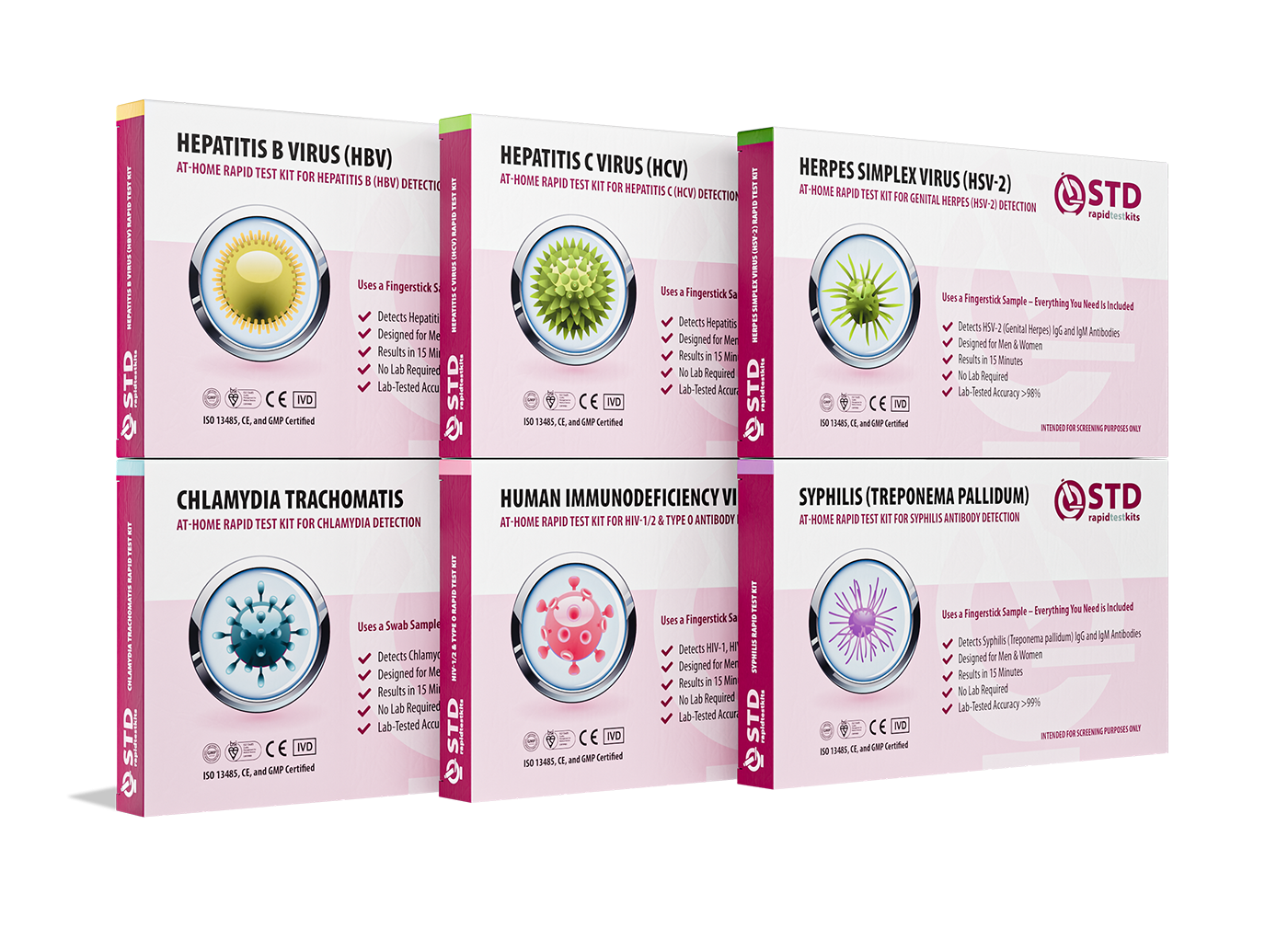 For Men & WomenResults in MinutesNo Lab NeededPrivate & Discreet
Order Now $119.00 $294.00
For all 6 tests
When Should You Retest? And Why It Matters
Even after a test, the story isn’t over. If you test too early, especially within the STD’s window period, you might get a false negative. If you’re re-exposed or still have symptoms, retesting isn’t paranoia, it’s protection. Here's how timing works for common retest scenarios.
| Scenario | Retest Timing | Reason |
|---|---|---|
| Tested negative, still have symptoms | Wait 7–14 more days and retest | Could be early testing within window period |
| Finished antibiotics for chlamydia or gonorrhea | Retest after 3 months | To confirm reinfection, not treatment failure |
| Tested positive for trichomoniasis | Retest in 2 weeks | High reinfection rates, especially in teens |
| New partner or exposure after testing | Test again after 2–3 weeks | Catch new infections post-exposure |
| Positive herpes diagnosis, symptoms change | Retest or follow up during outbreak | Different strains may require different care |
Figure 2: Retesting guidelines for common real-life scenarios among Delaware youth. Timing matters, so does not assuming one test is the end of the story.
What About Your Partner? The Hardest Conversations
Most young people fear testing not because of the result, but because of what it means for their relationships. What will they say? Will their partner get mad? Will they get blamed? And what if they didn’t even know the person’s last name?
The truth: you are not responsible for having an STD, you are responsible for what you do with that information. Partner notification doesn’t have to be a dramatic reveal. It can be a quiet text. Some at-home testing companies offer anonymous notification tools. Delaware public health clinics also provide scripts and telehealth support to guide these moments.
Think of it as protecting their health, not confessing guilt. One anonymous reader shared, “I texted my ex and said, ‘Hey, I tested positive for chlamydia. You might want to get checked too.’ That was it. He said thanks. I felt better. That was the scariest part, and it turned out fine.”
To make this easier, STD Rapid Test Kits allows you to order multiple kits at once. One for you, one for your partner. Normalize it like sharing a playlist, except this one could save their health.
The Emotional Aftermath: You’re Not Alone
Behind every result is a person, shaking hands, racing heart, and a browser history full of fear. Maybe it’s you. Maybe it’s someone you love. Regardless, testing positive doesn’t make you dirty, broken, or stupid. It makes you human. And it means you now have information that can guide care, treatment, and prevention moving forward.
If you’re scared right now, know this: treatment exists. Most STDs are curable. Those that aren’t, like herpes or HIV, are manageable with the right meds and support. What matters is not how you got here, but what you choose next. And that choice starts with knowledge.
Let that next step be a test, not a secret.
FAQs
1. Can you get an STD from oral sex?
Yes. Oral sex can spread infections like herpes, gonorrhea, chlamydia, and even syphilis. It's one of the most common ways for young people to get exposed without knowing it. Condoms and dental dams can help, but a lot of people skip them because they think oral sex is "safer."
2. Do STD test kits you can buy at home work?
Yes, especially if you use it after the right amount of time has passed. Lateral flow technology, which is similar to that used in pregnancy tests, is used in kits like the Combo STD Home Test Kit. If you need to, you can follow up with a lab or clinic for extra peace of mind.
3. How long should I wait to test after being exposed?
It depends on the STD. If you have chlamydia or gonorrhea, wait 7 to 14 days. For HIV, it takes 2 to 6 weeks. If you're not sure, always check the specific window period and retest. If you test too soon, you might get false negatives.
4. What if I can’t tell my parents I need a test?
You can order an at-home kit online, and most ship in discreet packaging. You don’t need parental permission to test in most states if you’re over 14. Check Delaware’s minor consent laws for confirmation or use telehealth for added privacy.
5. Can I get reinfected after treatment?
Absolutely. If your partner wasn’t treated or you have a new exposure, you can get the same STD again. That’s why follow-up testing and partner treatment are both critical steps.
6. Are condoms completely safe from STDs?
Condoms reduce the risk, but they are not completely safe. Herpes and HPV are two infections that can be spread through skin-to-skin contact that isn't protected by a condom. Still, using them every time makes it much less likely that you will be exposed.
7. What if I test positive but don't feel bad?
You still need treatment. Many STDs remain silent for weeks or months but still cause damage and are contagious. Don't wait for symptoms to take action, get treated promptly.
8. How do I talk to a partner about STDs?
Keep it direct and judgment-free. You can say: “I just got tested and found out I have [STD]. You should get tested too.” Many at-home services let you notify partners anonymously if needed.
9. Can I use insurance or Medicaid to pay for the test?
Some clinics in Delaware take Medicaid, but many home kits are paid for by the patient. Still, the privacy and ease of use often outweigh the small cost, especially if it's hard to get to the clinic.
10. Is there a way to test without anyone finding out?
Yes. At-home kits offer discreet shipping and don’t appear on insurance statements. Your results are private unless you choose to share them with a doctor or partner.
You Deserve Answers, Not Assumptions
Delaware’s youth are not reckless, they’re resourceful. They’re navigating hookups, housing insecurity, and health deserts with limited tools and even less trust. The STD crisis we see is not about morals. It’s about missed opportunities, misinformation, and systems that fail the people who need them most.
If you’ve read this far, you’re already doing the hard thing: facing the unknown. The next step is simple. Order a Combo STD Test Kit. Test in private. Get clear answers. And if it’s positive? There’s a plan for that, too. You're not alone, and you're not powerless.
How We Sourced This Article: We combined state-level data from the CDC and Delaware’s public health office with firsthand accounts, peer-reviewed studies, and youth services provider interviews. Our goal was to represent real barriers, emotional, logistical, and structural, that impact STD prevention and testing.
Sources
1. Evidence-Based Sexual Health Education Reduces Teen STI Risk
2. Universal STI Screening in Schools Increases Teen Detection Rates
3. Only ~20% of Sexually Active Adolescents Get Tested Annually
4. Delaware Division of Public Health – STD Program
5. Delaware DPH – STI Surveillance Data (2021 chlamydia rate 486.4/100k)
6. KIDS COUNT in Delaware – STD Rates by Race & Ethnicity
About the Author
Dr. F. David, MD is a board-certified infectious disease specialist who helps people avoid, find, and treat STIs.He wants to make it easier for people in both cities and the country to read. He does this by being honest about sex and using clinical accuracy.
Reviewed by: J. Ramos, MSN, FNP-BC | Last medically reviewed: September 2025
This article is for informational purposes and does not replace medical advice.


