







Quick Answer: STD symptoms like bumps, itching, or discharge should never be ignored, even if clinics are closed. Delayed testing leads to more transmission, worsened symptoms, and missed treatment windows. Home testing kits offer confidential, fast options when traditional care isn’t accessible.
When the System Shuts Down, But Your Body Doesn’t
You don’t stop needing healthcare just because the clinic shuts its doors. In the aftermath of COVID-19, many sexual health services still haven’t recovered. According to a JAMA Network study, clinic closures, particularly those tied to family planning, have significantly reduced access to STI testing across the U.S.
And it’s not just about pandemic-era burnout. Clinics in rural areas, low-income neighborhoods, and areas with high queer populations have been especially hard-hit. Iowa saw a measurable rise in chlamydia, gonorrhea, and syphilis following the closure of reproductive health centers in multiple counties. In short? When people can’t get tested, infections don’t pause, they just go undiagnosed, untreated, and quietly spread.
Maybe you've been there: staring at something weird on your skin, or feeling an internal itch that doesn’t go away, googling symptoms while the waitlist for care stretches out like a punishment. If you’ve ever searched “can’t get STD tested anywhere” or “clinic closed no STD test,” you’re not alone, and you're not wrong for feeling anxious or ashamed. You're just living in a system that's failed you.
This Isn’t Just a “You” Problem, It’s a National One
We’ve been trained to believe that if we care about our health, we’ll go in for regular testing. But what if “going in” isn’t an option? The CDC itself has acknowledged that overburdened and underfunded clinics are contributing to surges in STDs, especially among people who already face barriers due to race, gender, or income.
Between 2018 and 2022, STI testing rates for chlamydia and gonorrhea failed to return to pre-pandemic levels, according to a 2024 study in PubMed. During this same period, new diagnoses of syphilis and herpes began to rise. That’s not coincidence, it’s consequence.
When clinics close or cut back on hours, it has a ripple effect: people put off getting tested, ignore their symptoms, and hope the problem goes away. But STDs are not like bad roommates; they don't just leave. Untreated infections can cause permanent damage, especially in people with vaginas, and they’re often passed to partners before symptoms even appear. And in many cases, like Herpes or HPV, symptoms may fade but the virus stays with you for life.
People are also reading: The Science Behind Retesting: How Long Should You Wait?
“I Didn't Think It Was a Big Deal Until It Was”
Ty, 27, remembers the exact moment he realized his symptoms weren’t going away. “I’d had sex with someone new a few weeks earlier, but we used condoms. I started noticing this tingling down there. Like a raw nerve feeling. I called my clinic, but they weren’t doing walk-ins anymore.”
He waited. Then he worried. Then he tried urgent care. They told him it was likely friction, gave him cream, and told him to come back if it got worse. It did. By the time he got a full panel through a mail-in kit, his Herpes Simplex Virus (HSV-2) levels were high enough that he was experiencing recurrent outbreaks. “I could’ve started treatment earlier,” he says. “I could’ve told my partner. Instead I waited until I felt like I was falling apart.”
Ty’s not an exception. He’s the rule. Many people delay testing not out of ignorance, but because the system is hard to navigate, humiliating, or just plain closed. A 2023 BMC study found that providers themselves were struggling to offer consistent care, and overwhelmingly supported the expansion of home testing and self-sampling kits as a solution.
When Silence Is a Symptom Too
Here’s the cruel irony of STDs: the less obvious your symptoms, the more likely you are to delay testing, and the more dangerous that delay becomes. Many infections start with vague signs: a little redness, a weird smell, a sore that seems like a pimple. That’s exactly why terms like “STD bump or pimple” and “STD symptoms but no test” dominate search bars late at night.
But what if you never get a rash or sore at all? That doesn’t mean you’re in the clear. Roughly 70% of Chlamydia cases are asymptomatic, according to the CDC. Same with Gonorrhea. And many people who do get symptoms ignore them or write them off as heat, irritation, or yeast infections, especially when there’s no one around to confirm or explain.
This silence makes everything harder. Partners don’t get notified. Preventive care doesn’t happen. And people carry an internal shame they can’t name because there’s no diagnosis, only suspicion and Google tabs. It's a recipe for emotional exhaustion, not just physical risk.
Myth: If It Goes Away, It’s Not an STD
This is one of the most dangerous lies out there. We’ve heard versions of it everywhere: “If it was serious, it wouldn’t stop itching.” “Herpes always comes with blisters.” “I feel fine now, so it probably wasn’t anything.”
But the truth? Many STDs do exactly that, they flare up, fade, and lay dormant. Herpes is notorious for initial outbreaks that resolve in days or weeks, only to reappear when you least expect it. Syphilis often presents as a single painless sore (called a chancre) that disappears on its own, while the bacteria quietly enters the bloodstream, wreaking havoc behind the scenes.
A 2019 Open AIDS Journal study revealed that most people who delayed testing did so because their symptoms went away, or they believed they weren’t “the kind of person” to get infected. But that kind of thinking only perpetuates the cycle: stigma breeds silence, and silence spreads infection.
Check Your STD Status in Minutes
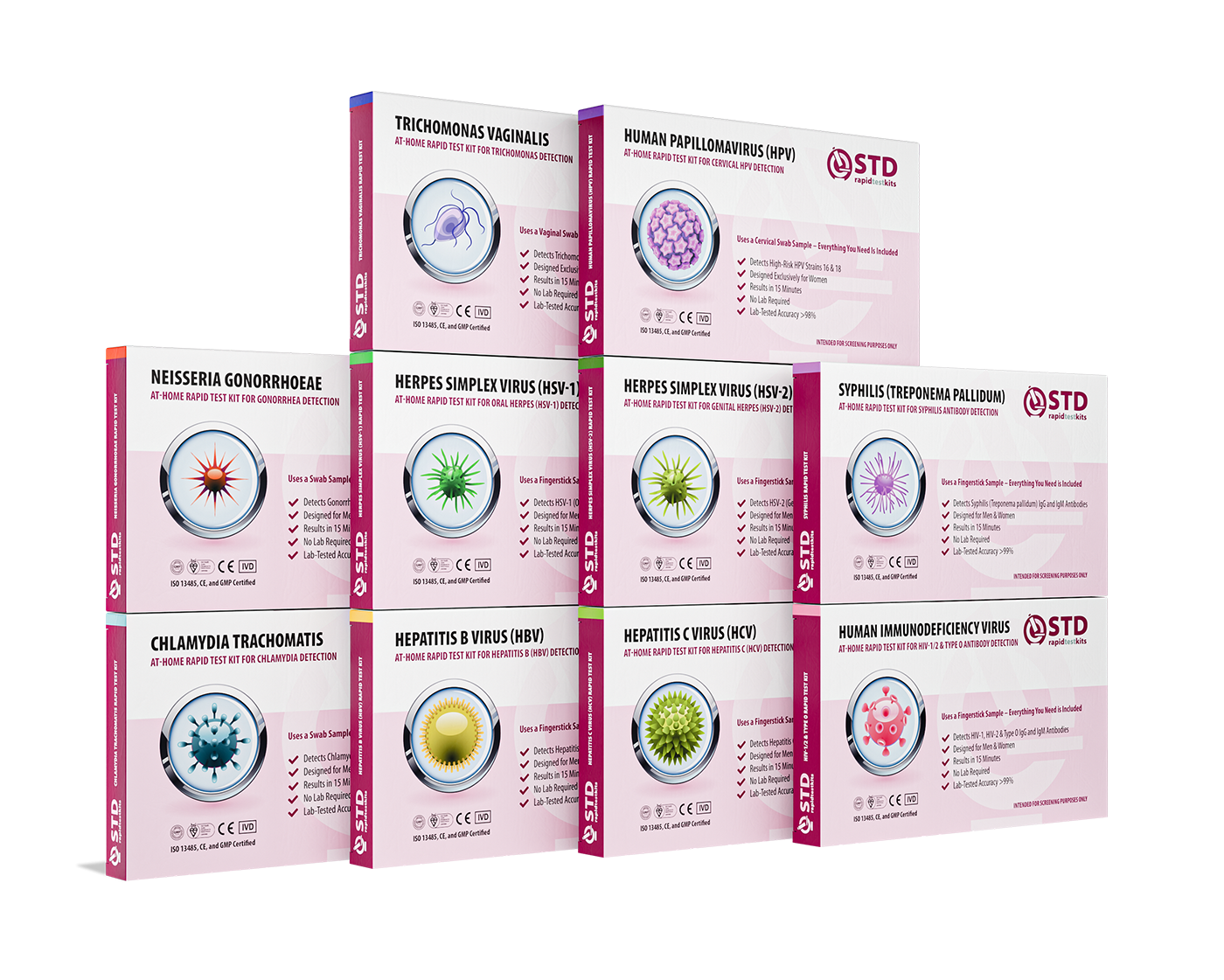
Test at Home with Remedium10-in-1 STD Test Kit
 For Women
 Results in Minutes
 No Lab Needed
 Private & Discreet
Order Now $189.00 $490.00
For all 10 tests
“I Just Didn’t Want to Talk About It”
Layla, 23, had never talked about STDs before she got one. “I always thought of myself as careful,” she said. “I used condoms, mostly. I got tested once in college. But when I started feeling sore after sex, I told myself it was friction. Or stress. I didn’t want to seem dramatic.”
She waited a month. By then, the discharge had gotten worse. When she called her OB-GYN, she was told the next opening was six weeks away. “I almost gave up,” she admitted. “I felt disgusting, but also invisible. Like I had a problem no one wanted to deal with.” When Layla finally got tested through an at-home Combo STD Home Test Kit, it confirmed a Chlamydia infection. Treatment was fast. Recovery was slow, not physically, but emotionally.
“I was angry,” she said. “Not just at myself, but at how hard it was to get basic care for something so common.”
Sex-Positive ≠ Shame-Free
Let’s get something straight: being sex-positive doesn’t mean being unrealistic. It means acknowledging that sex is normal, messy, and sometimes risky, but shame shouldn’t be part of the equation. The reality is, STDs don’t discriminate. You can get one the first time you have sex. You can get one in a monogamous relationship. You can get one even if you use condoms.
What makes the difference isn’t your “body count” or how careful you are. It’s whether you have access to tools, testing, treatment, knowledge, that help you act early and stay empowered. And when traditional healthcare doesn’t provide those tools, you need alternatives.
STD Rapid Test Kits offer confidential, accurate testing for multiple infections, including HIV, Herpes, Syphilis, and more. You don’t need a lab appointment. You don’t need to wait three weeks. You don’t even need to leave your home. Just prick, swab, send (or read the result right away, depending on the test). And more importantly, you get your power back.
When Urgent Care Isn’t Sexual Health Care
If you’ve ever sat in an urgent care waiting room, squirming on that paper-covered bench with a rash you’re too nervous to describe out loud, you already know: urgent care isn’t always equipped for sexual health. They might run a rapid test for a UTI or treat an external infection, but they’re often not trained, or resourced, to address full-spectrum STI screening, especially when it comes to viruses like Herpes or HPV.
Many patients get sent home with creams, false reassurance, or advice to “wait it out.” But every day that passes without proper testing is a day the infection can spread, to your body, your partners, and your peace of mind. That’s not just inconvenient. It’s dangerous.
A 2024 study from NYC clinics found a dramatic increase in “non-resolved” sexual health visits: people who came in with STD symptoms but left without a diagnosis due to delayed lab work or unavailable tests. For people with limited insurance, inflexible jobs, or no transportation, that delay is often the end of the line. They never come back.

People are also looking for: The STD That Looks Like Pink Eye But Can Melt Your Cornea
Why Waiting Hurts More Than Just You
We often frame sexual health as individual responsibility: “You should’ve gotten tested.” “You should’ve told them.” But that framing ignores the social reality: when public health systems break down, individuals carry the blame for structural failures.
Delaying testing doesn’t make you a bad person. It makes you human. You get scared. You get busy. You rationalize. You trust your partner. You wait for it to go away. But untreated STDs can lead to complications that ripple outward:
Pelvic inflammatory disease. Infertility. Increased HIV transmission risk. Neonatal infections. Chronic pain. Mental health spirals. Strained relationships. Self-blame that builds into full-body shame.
And yet, most of this is preventable, with testing. That’s it. No lecture. No shaming. Just the truth: testing is the linchpin. And when the door to care is locked, we need to break open new ones.
What You Can Do When the System Says “No”
If you’re feeling off, an itch, a bump, weird discharge, or just that gut-level “something’s not right”, don’t wait for the stars to align. You don’t need a perfect clinic, a clear symptom, or anyone’s permission. Just start where you are.
Notice what’s changed. A new odor? A patch of irritation? A headache that doesn’t feel like your usual stress? Trust that. Write it down. Take a photo if you need to. You don’t need a medical degree to know your body is asking for attention.
Can’t get into a clinic? That’s not the end of the story. At-home tests, like the Combo STD Home Test Kit, check for Syphilis, HIV, Herpes, and Gonorrhea with lab-level accuracy. No awkward small talk. No three-week wait. Just answers, fast, and on your terms.
And you don’t have to wait to talk to your partner. Even a simple “Hey, I’m getting tested just to be safe” is care in action, not shame. You’re not being dramatic. You’re showing up for both of you.
If you test positive, don’t spiral. Many kits come with telehealth options, real doctors who can prescribe treatment without you ever stepping into a clinic. No begging. No extra hoops.
This isn’t about being perfect. It’s about protecting your peace. Testing isn’t dirty. It’s powerful. It’s you refusing to ignore your body just because a system made it harder to listen.
Take control of your sexual health today.
Order Now $129.00 $343.00 Check Your STD Status in Minutes
Test at Home with Remedium
7-in-1 STD Test Kit
 For Men & WomenResults in MinutesNo Lab NeededPrivate & Discreet
For all 7 tests
You Deserve Answers, Not Assumptions
If no one has told you this yet, let me be the first: you’re not overreacting. You’re not dirty. You’re not alone. You’re a human being with real symptoms, real fears, and real reasons for seeking clarity. And you shouldn’t have to wait for a system to catch up in order to take care of yourself.
Clinic closures, understaffed programs, and overbooked providers are not your fault. But what you do next? That’s your power. You can choose to stay in the dark, or you can shine a light, even if it’s just with a swab, a test strip, or a conversation you were too scared to have yesterday.
Don’t wait and wonder, get the clarity you deserve. This at-home combo test kit checks for the most common STDs discreetly and quickly.
FAQs
1. What if my symptoms disappeared before I could get tested?
That’s honestly one of the biggest traps people fall into. Herpes, Syphilis, even Gonorrhea can start loud, then vanish, giving you false peace while still doing damage under the surface. If something looked or felt off, it’s always worth testing. Your body was trying to tell you something.
2. Is it weird to use an STD test at home?
Not even a little. It’s 2025 and we can test for almost anything without pants on. At-home kits are private, fast, and way less awkward than describing your discharge to someone who won’t make eye contact. Plenty of people use them regularly, even if they could go to a clinic.
3. Urgent care said it’s probably nothing. Should I trust that?
Sometimes? But if you’ve got symptoms that don’t feel normal, burning, bumps, weird smells, and they just hand you a cream, listen to your gut. Urgent care often isn’t trained for STDs. Don’t be afraid to double-check with a proper sexual health test.
4. Can I really have an STD with zero symptoms?
Yup. Happens all the time. Chlamydia and Gonorrhea are sneaky like that, especially in folks with vaginas. That’s why people say, “I had no idea until my ex tested positive.” No symptoms doesn’t mean no infection. It just means you won’t know unless you test.
5. How fast can I get results from an at-home kit?
Depends on the test. Some give results in 10–15 minutes (like rapid HIV or Herpes kits). Others you send to a lab and get results back in a few days. Either way, it beats a 3-week clinic wait or ghosting your symptoms until they scream.
6. Do I have to tell my partner if I’m waiting to test?
If you’re sexually active with them, yeah, it’s the kind thing to do. You don’t have to have all the answers, just honesty. Try: “Hey, I’m feeling off and I’m getting tested. Just a heads up.” It’s vulnerability, not weakness.
7. I feel gross even thinking I might have something. Is that normal?
Totally. But also, cut that shame loose. Infections happen. It’s not a moral failure, it’s biology. You’re still smart, sexy, lovable, and worthy of care. Testing doesn’t make you gross. It makes you powerful.
8. Can I test if I’m on my period?
Usually yes, especially with blood-based or external swab tests. If you’re using an internal vaginal swab, check the instructions, but most say it’s fine. If your period’s throwing off your symptoms, wait a day or two. Your call.
9. Will anyone else find out if I test at home?
Nope. Kits are mailed discreetly, and your results are yours. No awkward pharmacy pickups, no judgmental nurse vibes. Just you, your test, and peace of mind.
10. Do I need to test again after treatment?
For bacterial infections like Chlamydia? Definitely, usually about 3 months later. For viral stuff like Herpes, it depends on symptoms and meds. When in doubt, test again. You’re not being paranoid, you’re being proactive.
Sources
1. National Overview of STIs in the U.S., 2023 , CDC
2. Impact of COVID‑19 on STI Prevention and Screening , CDC
3. Effects of Clinic Closure on Syphilis Reporting , MMWR
4. CDC Labs for STI Testing Shut Down Amid Layoffs , Clinical Advisor
5. Statement on Cuts to CDC’s STD Prevention Division , ASTDA
6. Shutdown of U.S.'s Only Super-Gonorrhea Lab , Washington Post
7. Public Health Experts React to CDC STI Lab Closures , NCSD
8. STI Rates by U.S. Metro Area in 2025 , Innerbody Research


