







Quick Answer: A rash after vacation can be from sweat, heat, or friction, but it can also signal an STD like herpes, chlamydia, or gonorrhea. If symptoms persist, test immediately.
“It Looked Like Razor Burn, But It Didn’t Go Away”
Jo, 28, thought she’d nailed her solo trip to Tulum. She packed light, partied hard, and even hooked up with a fellow traveler she met on a snorkel tour. “It was just a vacation thing, nothing serious,” she remembers. “We used protection, mostly. I wasn’t thinking about anything long-term.”
Three days after she got back, a red rash showed up along her upper thigh. “It was itchy and kind of stung, especially when I wore tight leggings,” Jo says. “At first I thought it was a heat rash, or maybe a reaction to the salt water. But it started spreading.”
Jo did what most of us do: she Googled. “I searched stuff like ‘rash after beach trip’ and ‘STD rash vs heat rash’ at 2AM,” she admits. “Everything said it was probably nothing, but also maybe herpes? I was spiraling.”
That rash turned out to be a mild outbreak of genital herpes, likely triggered by friction and sun exposure. “I had no idea herpes could show up like that,” Jo says. “I thought it had to be blisters or super obvious.”
Jo’s story isn’t rare. According to a 2022 study published in the journal Sexually Transmitted Diseases, casual sexual encounters during vacations increase STD exposure risk by nearly 40%, especially when alcohol, sun exposure, and limited access to testing converge.
This Isn’t Just Razor Burn, And Here’s Why
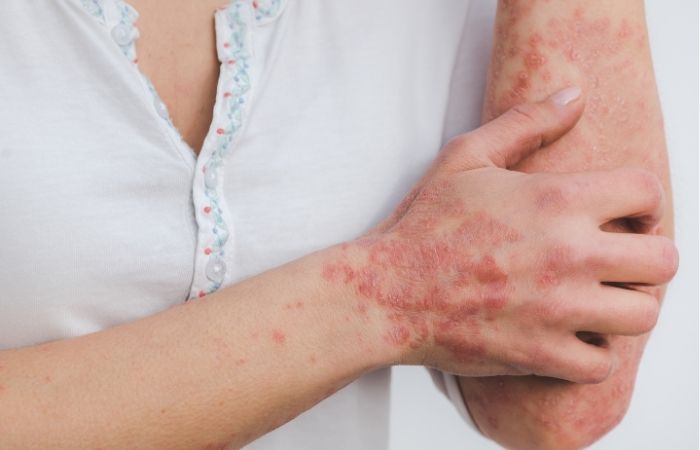
That rash between your legs? It might not be what you think. Post-vacation skin irritation is extremely common, tight swimsuits, sweat, sunscreen residue, and even different water quality can all leave you itchy or inflamed. But STDs like herpes, chlamydia, and gonorrhea can mimic those same symptoms, especially in their early stages.
Herpes, in particular, is a master of disguise. It doesn’t always present with full-blown sores. For many people, especially during a first outbreak, it can look like a small rash, a single red bump, or an ingrown hair that just won’t go away. And because the first outbreak can be delayed by up to two weeks, it’s easy to assume it’s “just irritation from the trip.”
The CDC confirms that herpes often goes undiagnosed because of this ambiguity. Add in post-vacation factors like sweating, shaving, and prolonged sun exposure, which can all exacerbate skin sensitivity, and it’s no wonder people miss the signs.
Other STDs also hide in plain sight. Chlamydia doesn’t typically cause visible rashes, but it can result in genital discomfort, discharge, or burning sensations that are easy to confuse with irritation from swimsuit fabric or sex in sand-adjacent environments. Meanwhile, gonorrhea can lead to itching or burning, especially in the throat or anus, common exposure zones for people having oral or anal sex during vacation, often without full protection.
The problem? We don’t associate paradise with pathogens. We assume rashes come from the sun, not sex. That’s part of what makes post-trip STDs so emotionally sneaky: they don’t “fit the vibe” of the vacation we just had.
People are also reading: Can STDs Affect Sperm? What Every Man Needs to Know
“You Can’t Get an STD from a Hot Tub”, And Other Lies We Tell Ourselves
Let’s be real: we’ve all convinced ourselves of something sketchy to protect the mood. “We used a condom, so it’s fine.” “It was just oral.” “I rinsed off right after.” But when it comes to sexual health, half-truths can carry full consequences, especially when they’re wrapped in island-time logic.
One of the biggest myths? That you can’t get an STD from a hot tub or poolside hookup. While it’s true that chlorinated water makes it hard for bacteria and viruses to survive, the real risk isn’t from the water itself, it’s from skin-to-skin contact in warm, moist environments where genitals and mouths are rubbing together, often without full protection.
STDs like herpes and HPV are passed through direct contact, not fluids. So yes, that slippery, sunscreen-slicked grind in a rooftop jacuzzi counts. Even if there was no penetration. Even if it was “just for a minute.”
Another common lie? “I would’ve seen symptoms by now.” That’s not how it works. Every STD has its own timeline, and many don’t show visible symptoms at all. According to the World Health Organization, more than 70% of chlamydia cases are asymptomatic. Herpes can take days to weeks to show, and often hides under the radar as tingling or sensitivity before any bumps appear. Syphilis starts as a small, painless sore that might go unnoticed entirely, especially in hard-to-see areas like the anus or behind the scrotum.
If your symptoms haven’t shown up yet, that doesn’t mean you’re in the clear. It just means your body is still processing the exposure. Think of it like a sunburn, sometimes you don’t notice the damage until it’s too late to undo it. That’s why most clinicians recommend waiting at least 10–14 days after exposure to test for herpes and chlamydia, and up to 90 days for HIV.
And yes, oral sex counts. You can absolutely contract gonorrhea, chlamydia, and even syphilis through oral-genital contact. Just because it didn’t “go all the way” doesn’t mean you’re not at risk. A 2023 study in the Journal of the American Medical Association (JAMA) found that over 30% of gonorrhea infections in young adults were located in the throat, not the genitals.
Check Your STD Status in Minutes
Test at Home with Remedium7-in-1 STD Test Kit

 For Men & Women
 Results in Minutes
 No Lab Needed
 Private & Discreet
Order Now $129.00 $343.00
For all 7 tests
When the Itch Isn’t Just the Heat
There’s something uniquely humiliating about scratching your crotch in a boardroom after a tropical vacation. It’s easy to blame the new laundry detergent or the fact that you didn’t exfoliate after shaving. And sure, sometimes it is just heat rash, common in humid climates, especially when you're walking around in damp swimwear for days.
But here’s the difference: heat rash usually clears up in a day or two, especially with a cool shower and breathable clothes. STDs don’t play by those rules. That itchy patch that won’t fade? The one that flares up after sex, or stings when you pee? That’s when it’s time to stop guessing and start testing.
Not sure what you're dealing with yet? This is what the timelines might look like:
- Herpes: Symptoms can appear between 2 and 12 days after being exposed. The first signs of an outbreak may be tingling, burning, or small blisters that form clusters and then crust over. Some people think these are razor burn or allergic reactions.
- Chlamydia: Most of the time, there are no symptoms, but when there are, they can include painful urination, strange discharge, or dull pelvic pain. Skin irritation is less common, but it can happen if you have a co-infection or if you rub against something during sex.
- Gonorrhea: Symptoms usually show up between 2 and 10 days after infection. It can make the genitals or throat red, swollen, or discharge. People might think it's irritation from oral sex or being around chlorine or salt.
- Syphilis: A small, painless sore (chancre) appears 10–90 days after exposure. It may heal on its own, but the infection continues to spread internally.
But timelines aren’t rules, they’re estimates. And when it comes to your body, you don’t need to “wait and see” if something gets worse. You can take charge right now.
Don’t Wait and Wonder, Get Answers That Matter
If you’re reading this because something feels off, whether that’s a rash, a weird bump, or just a gnawing sense that something isn’t right, you’re not overreacting. You’re paying attention. And that’s powerful.
You don’t need to make an appointment, explain yourself to a stranger, or wait weeks for lab results. This at-home combo test kit checks for the most common STDs and gives you answers quickly, privately, and without judgment. No shame. No waiting rooms. Just clarity.
Peace of mind is one test away.
“I Didn’t Think It Counted as Sex. I Was Wrong.”
Andre, 24, came back from a music festival in Mykonos with nothing but tan lines, some great pictures, and what he thought was an ingrown hair. “We didn’t even go all the way,” he says, describing a makeout and oral sex session in a beachside Airbnb shower. “It was mostly just fooling around. I honestly didn’t think I could catch anything that way.”
A few days later, he noticed a red bump that didn’t go away. It wasn’t painful, but it made him paranoid. He kept checking it in the mirror. “I didn’t want to go to a clinic and be judged for how messy the whole thing was,” Andre admits. “So I waited. And the bump turned into two.”
After finally ordering a home test, Andre learned he’d been exposed to HSV-1, the same virus that causes cold sores. “It was oral-to-genital transmission,” he says. “I didn’t even know that was possible. I thought herpes was only a big deal if it was ‘down there’, but turns out it can move between mouths and genitals, and back again.”
This isn’t about blaming anyone for how they explore intimacy. It’s about expanding what counts as “real risk” and giving people like Andre the tools to recognize it early, without shame. Oral sex, dry humping, even genital touching, all of these can transmit certain STDs, especially herpes, HPV, and syphilis. And no, you don’t have to be straight, monogamous, or “experienced” to get them.
Whether you’re cis, trans, bi, curious, fluid, monogamish or just figuring it out, your body deserves clarity. Queer sex is not exempt from STD risk. In fact, it’s often left out of traditional sex-ed, leaving LGBTQ+ people vulnerable to misinformation and underdiagnosis.
That’s why solution-focused care matters. Shame keeps people sick. But access, language, and affirming options keep people safe.
People are also reading: Say "I Do" to Health: The Importance of STD Testing Before Marriage
The Real Risk of “Wait and See”
Here’s the tricky part: sometimes symptoms fade before you act. That bump smooths out. That itch goes away. You convince yourself it was just “travel stress” or “too much chlorine.” And if no one saw it, did it even happen?
This is how infections get missed. Herpes outbreaks can resolve without treatment but remain contagious. Chlamydia can quietly spread to the fallopian tubes, increasing the risk of infertility. Gonorrhea left untreated in the throat can seed silently into sexual partners through kissing or oral. Just because it’s gone doesn’t mean it’s over.
The stakes get higher if you’re someone who hooks up again soon after your trip. Maybe there’s a new situationship waiting at home. Maybe you’re swiping again to shake off the vacation blues. That means potential transmission to someone else, without even knowing you were exposed. And that’s not about guilt, it’s about knowledge. Testing isn’t about punishment. It’s about power.
A 2022 review in the journal Lancet Global Health emphasized that most travelers delay or skip post-exposure STD testing, even after unprotected sex or new partners abroad. Why? Embarrassment. Clinic access. The belief that symptoms would be “obvious.”
But most STDs aren’t obvious. They’re subtle. They’re stealthy. And they’re exactly what you don’t want to find out about when it’s already too late to warn someone else.
Check Your STD Status in Minutes
Test at Home with Remedium3-in-1 STD Test Kit
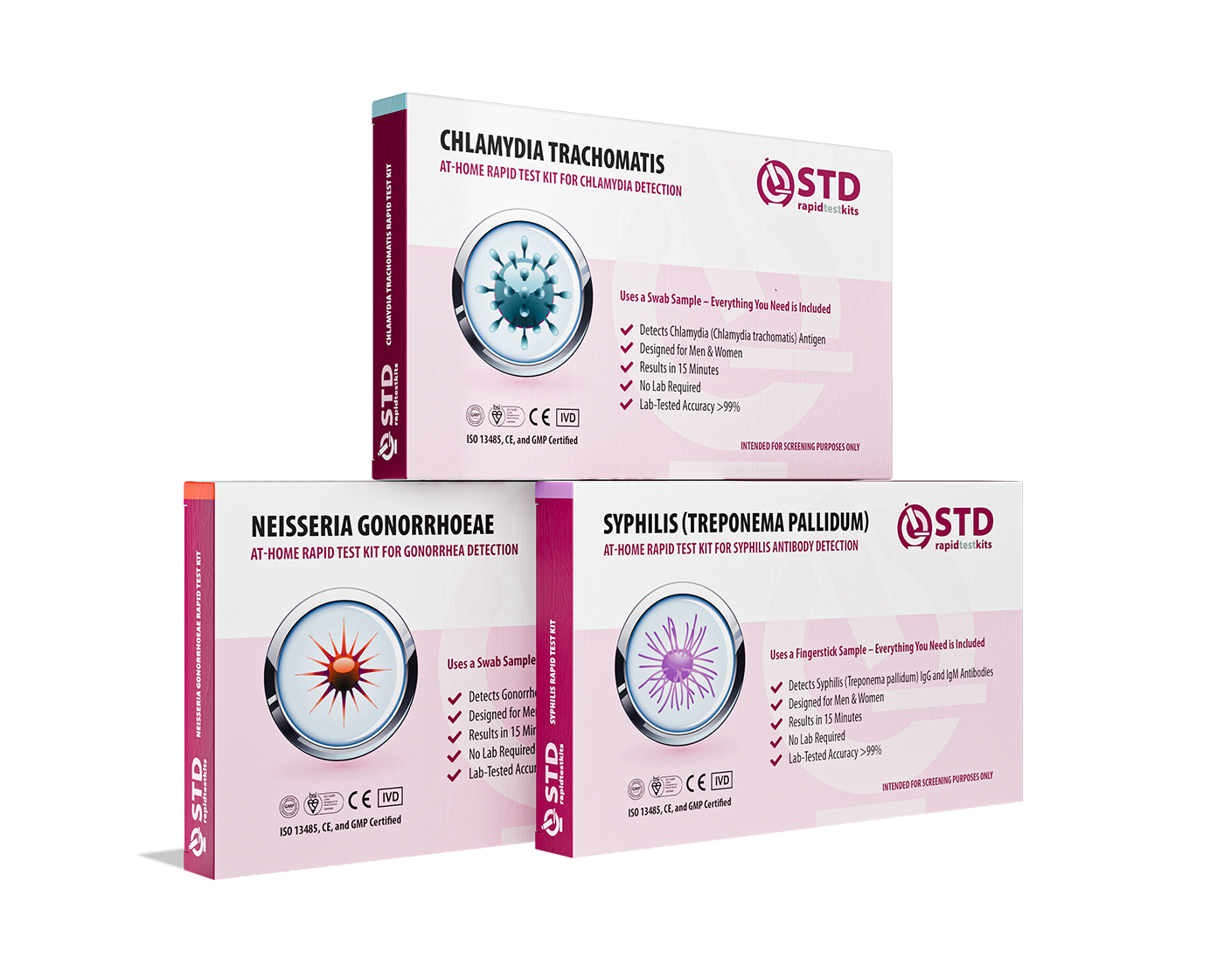 For Men & WomenResults in MinutesNo Lab NeededPrivate & Discreet
Order Now $69.00 $147.00
For all 3 tests
Vacation Isn’t a Free Pass, But It Shouldn’t Be a Punishment Either
It’s OK if you didn’t pack condoms. It’s OK if you thought the pool made it safe. It’s OK if the hookup was spontaneous and sweaty and beautiful and messy. None of that makes you reckless or dirty or broken. It makes you human.
What matters now is what you do with the information your body’s giving you. That rash? That weird pain? That post-orgasm burn that wasn’t there before? It might be nothing. But it might not be. And you deserve to know.
Whether you’re in a committed relationship, exploring casually, or just had a wild night you don’t want to unpack with anyone, getting tested is care. It’s adulting for your genitals. It’s love in action, whether for your partner or for your future self.
STD Rapid Test Kits offers confidential, easy-to-use home tests that screen for common infections without judgment or delay. You don’t need to explain yourself to anyone. You just need answers.
Testing isn’t shame. It’s strategy.
FAQs
1. Can sunburn cause a rash in your groin area?
Yes, but it’s rare. Groin rashes after vacation are more often caused by heat, sweat, friction, or infections, including STDs like herpes or chlamydia. If it doesn’t go away in a few days, test.
2. What does an STD rash actually look like?
It depends. Herpes can look like blisters or red bumps. Syphilis starts with a painless sore. Gonorrhea and chlamydia might cause redness or irritation, but not always a visible rash.
3. How long after a vacation should I wait to test for STDs?
You can test for most common STDs like chlamydia and gonorrhea after 1–2 weeks. For herpes, wait at least 10–14 days. For HIV, wait 3–12 weeks depending on the test type.
4. Can you get an STD from oral sex?
Absolutely. Oral sex can transmit herpes, gonorrhea, chlamydia, syphilis, and even HPV. Protection is important, even if there’s no penetration.
5. Is it possible to get herpes from a hot tub?
Not from the water. But close skin-to-skin contact in warm, wet environments (like making out in a hot tub) can transmit herpes if one person is shedding the virus.
6. I had a fling on vacation. We put on a condom. Do I still need to take a test?
Yes. Using condoms lowers the risk, but it doesn't get rid of it completely, especially for STDs that spread through skin contact, like herpes or HPV.
7. Can stress or travel cause an STD outbreak?
Yes. If you already have the herpes virus, being tired, getting sunburned, being dehydrated, or being stressed can all cause outbreaks, even if you didn't have sex on your trip.
8. How can I tell if it's just a rash from the heat or something worse?
If you cool down and wear loose, breathable clothes, the rash will usually go away in a day or two. But if the rash doesn't go away, hurts when you pee or have sex, or is near your genitals, it could be something more. If you're not sure, trust your gut and get tested.
9. What if I don’t have symptoms, should I still test?
Definitely. Most STDs are asymptomatic in their early stages. Testing is the only way to know for sure.
10. Is it safe to order an at-home STD test?
Yes. At-home tests like those from STD Rapid Test Kits are discreet, accurate, and doctor-trusted. You get quick results without leaving your house.
You Deserve Answers, Not Assumptions
No one books a beach vacation thinking they’ll come home worried about a weird bump. But sex doesn’t stop just because you’re out of office. And neither do the risks. The good news? You don’t have to spiral. You don’t have to wonder. And you don’t have to face this alone.
Testing is private. Testing is care. And testing is yours to do on your own terms. Whether it’s herpes, heat rash, or nothing at all, this combo home test kit gives you clarity, fast. Take control of your sexual health today.
Sources
2. Sexually Transmitted Diseases in Travelers
3. What to Know About Gonorrhea , Infectious Diseases
4. Diagnosis and Treatment of Sexually Transmitted Infections
6. FDA Clears First At‑Home Test for Chlamydia, Gonorrhea & Trichomoniasis


