Published: August 2025 | Last updated: May 2026 | Editorial review and quality control: Martina N.
The wedding planner has the venue. The caterer has the menu. Your mother-in-law has firm opinions about the seating chart. Somewhere on that long pre-wedding to-do list is a quieter item most couples skip: a frank sexual health conversation, followed by an STD test for both partners. It feels awkward, slightly accusatory, and a little out of place next to cake tasting.
Skipping it feels normal. We have been told for years that monogamy is the finish line for STD worry, that "exclusive" means "safe," and that bringing up testing with the person you are about to marry is somewhere between awkward and accusatory. Biology disagrees. Several common infections can stay silent for months or years after exposure, which means an infection acquired before the relationship can surface inside it. Two partners who have been faithful for years can both test positive on the same week and still be telling the truth.
This article is published by stdrapidtestkits.com, which sells at-home STD testing kits. We recommend products based on fit for the reader's concern, not commercial benefit. The advice below applies whether you ever buy one of our kits or simply book a clinic visit before the trip.
Key Takeaways
- Chlamydia, HPV, herpes, and syphilis can stay silent for months or years before symptoms appear, so a faithful long-term couple can both test positive without anyone breaking a vow.
- Standard pre-wedding STD panels usually skip HPV and herpes unless you ask for them by name. Confirm what your panel actually covers before assuming you are clear.
When the honeymoon isn't the first time
Mark and Lila thought they were finished with condoms. They had been engaged for a year, faithful to each other, and ready to enjoy their honeymoon without interruption. Halfway through their trip to Santorini, Lila noticed a burning sensation when she peed. She brushed it off as dehydration from the heat. By the time they got home, her swab came back positive for gonorrhea. Mark tested positive too. Neither of them had any symptoms before the trip.
Their story is more common than most couples expect. Chlamydia and gonorrhea are both notorious for staying silent, especially in women. The CDC's chlamydia page states bluntly that chlamydia often has no symptoms, which is why annual screening is recommended for sexually active women under 25 and for older women with risk factors. Untreated, the same quiet infection can drive pelvic inflammatory disease and fertility problems years later. Untreated chlamydia is a leading cause of PID in women with symptomatic infection, and repeated infections raise the risk of tubal scarring, chronic pelvic pain, and ectopic pregnancy. Catching the infection early and finishing a short course of antibiotics clears it before that downstream damage accumulates.
Symptoms also tend to surface when something changes the local environment, and the honeymoon supplies plenty of changes at once: more frequent sex, jet lag, alcohol, sun exposure, antibiotics taken for traveler's stomach, new lubricants, hot tubs, and shifts in vaginal pH. None of those things give you an STD by themselves. They simply change the local environment enough that an existing infection becomes noticeable, which can make it look like fresh transmission when it isn't.
Priya's experience went a different way. She did not notice anything during her honeymoon in Bali. Two weeks after coming home, a painful sore appeared on her vulva, and she thought it might be an ingrown hair. Her gynecologist ran a swab and confirmed herpes simplex virus type 2. Her now-husband tested positive too, even though he had never had a visible outbreak. According to the WHO herpes fact sheet, many people with HSV-2 are unaware they carry it, and the virus can spread during periods of asymptomatic shedding when no sore is visible at all. The honeymoon was not when she caught the virus. It was the moment her body finally reacted.

Can married couples really still get STDs?
Yes, and many do. Marriage changes your relationship status, not your biology. Several common STDs (HPV, herpes, chlamydia, syphilis) can stay silent for months to years after exposure, so an infection acquired before the relationship can surface during a honeymoon and look like a brand-new transmission. The CDC notes that chlamydia often has no symptoms at all, which is why two faithful long-term partners can both test positive without anyone breaking a vow.
The "marriage equals safe" myth
Most US sex education frames STD risk as something that lives outside committed relationships. Get tested when you are dating; stop worrying when you settle down. The framing is comforting and partly wrong. Surveillance data consistently shows that long-term couples test less often than singles, but their cumulative biology does not reset on the wedding day. Infections acquired in earlier chapters can show up in the current one, and the longer the relationship, the more invisible those earlier exposures become.
James suggested testing a month before his wedding. His fiancée read the suggestion as an accusation, the conversation got heated, and they dropped it. Six months into the marriage, her routine cervical screening flagged a high-risk HPV strain. His follow-up test showed the same strain. Neither had cheated. One of them had carried the virus from a relationship that ended years before they met.
HPV is the clearest example of how "we have been monogamous, so we are fine" can mislead. The CDC's HPV page states that nearly everyone will get HPV at some point in their lives, and that most HPV infections (about nine out of ten) clear on their own within two years. A subset of high-risk strains does not clear, and that small subset is what drives cervical, anal, throat, and oral cancers years later. High-risk HPV strains, particularly types 16 and 18, account for the large majority of cervical cancers and a growing share of oropharyngeal cancers. Routine cervical screening exists precisely to catch the abnormal cell changes caused by persistent HPV before they progress to malignancy, and the HPV vaccine prevents the strains responsible for most of those cancers when given before exposure. The persistence is the issue, not the recency of exposure.
Stigma sits on top of all of this. Talking about STDs in the context of marriage can feel like breaking an unspoken rule: if you are committed, you should not need to worry. That silence makes testing feel suspicious instead of routine. The immune system does not care about your wedding date. An undiagnosed infection follows its own biological timeline regardless of relationship status.
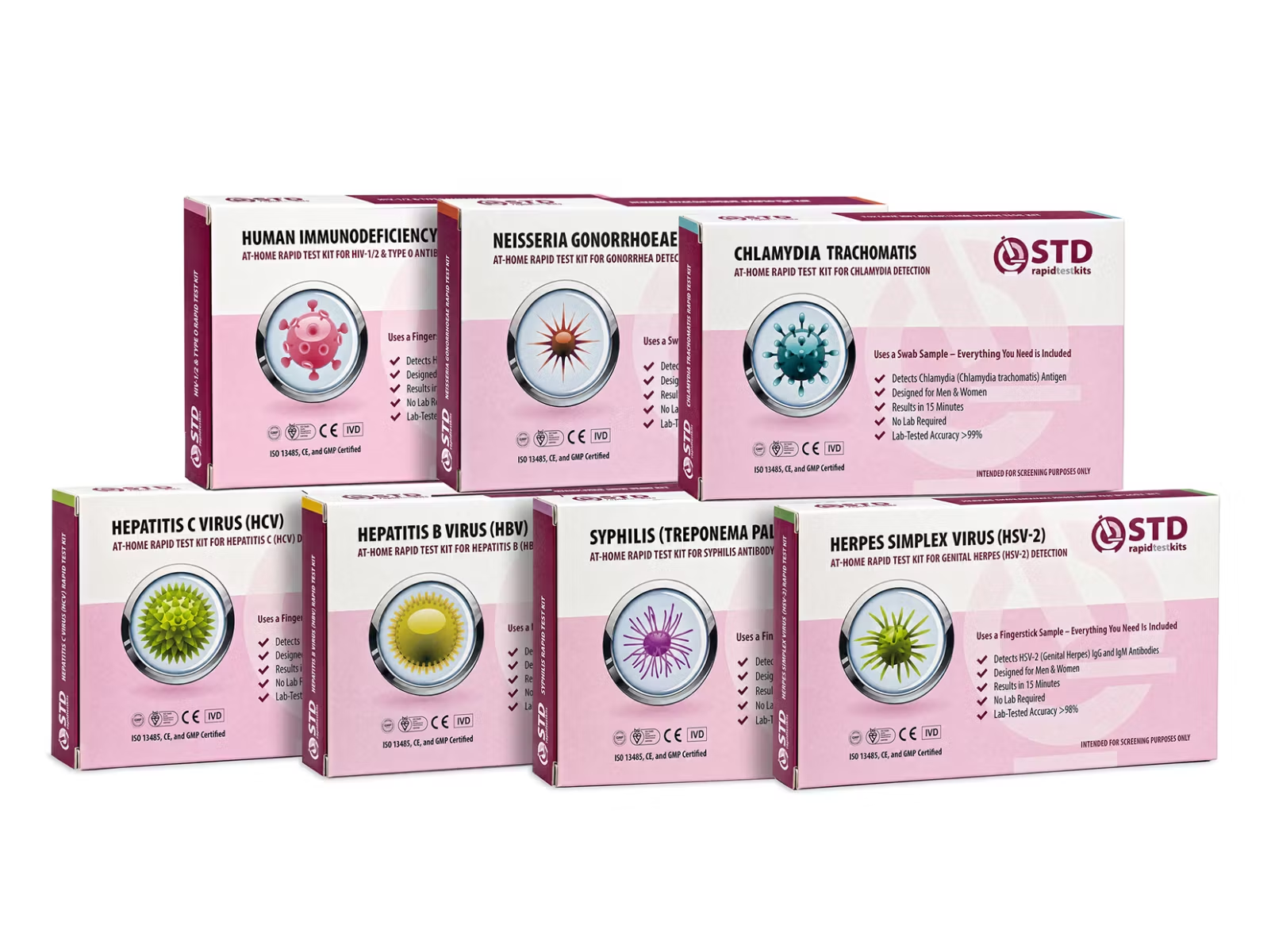
A typical clinic STD panel screens for chlamydia, gonorrhea, syphilis, and HIV. It does not automatically include herpes (HSV-1 or HSV-2), HPV, hepatitis B, or hepatitis C. If you want any of those, ask for them by name. The same is true for at-home combo kits: the contents differ between brands, so check the kit insert before you assume you are covered.
What a "standard STD panel" actually covers
Couples often request a "full STD panel" before the wedding and assume it covers everything. In practice, what your provider runs depends on what they think you need, and most defaults are narrower than couples expect.
The CDC's screening recommendations cover chlamydia, gonorrhea, syphilis, and HIV as the standard set for sexually active adults, with HSV testing offered only when there are symptoms or a known exposure (CDC screening recommendations). HPV testing is part of routine cervical screening for women, but it is not part of an "STD panel" the way most patients picture it. Hepatitis B and C are typically only ordered when there is a specific risk factor.
That gap matters before a honeymoon. A couple who both test "negative" on a default panel can still be carrying HPV or herpes without knowing it. If you want broader coverage, you have a few practical options:
- Ask your provider explicitly for an HSV-2 type-specific blood test (called an IgG test, which looks for the antibody your immune system produces in response to HSV-2 rather than the virus itself), and confirm whether HPV is being screened.
- Add hepatitis B and C testing if either of you has not been vaccinated for hepatitis B or has any specific risk factor.
- Use an at-home combo kit that lists exactly which infections it covers, so you can compare apples to apples instead of assuming.
Knowing what is and is not on your panel takes a thirty-second conversation with the lab tech or a quick read of the kit insert. Either step gives you a more specific answer than a vague "we both tested negative" assumption.
How to bring it up without sounding accusatory
Most couples do not skip the testing conversation because they do not care. They skip it because nobody has shown them what it looks like. The trick is to frame testing as something you do together, rather than something one of you is doing to the other.
The CDC's "before you test" page has a small but useful list of conversation prompts that take the accusation out of the question (CDC: how to talk to a partner about testing). The framing the agency suggests boils down to mutual care. "I want both of us to start the marriage with peace of mind" is hard to misinterpret. "When was your last test?" is a reasonable question between two adults sharing a household.
A few patterns work better than others:
- Lead with logistics, not history. "Want to grab a kit this weekend so we have it before the trip?" is easier to land than "Have you ever been tested?"
- Make it mutual. Both partners test, or neither does. A one-sided ask reads as suspicion. A two-sided plan reads as a couple looking after each other.
- Pick a low-stakes moment. Not the night before the wedding, and not after a fight. Pick a quiet evening when you both have time to schedule a clinic visit or order a kit.
- Plan in advance for the discovery that one of you tests positive. Most STDs are treatable. Decide together that a positive result will be a "what do we do next" conversation, not a "who is to blame" one.
Like any other health conversation, sexual health gets normalized through repetition. Couples who go through the conversation once usually find the second time around takes about two minutes.
Talking about STIs with your partner before having sex helps prevent infection and keeps both of you healthier. It can be hard, but it is part of caring for each other.
Timing your test before the wedding
The right time to test depends on what you are testing for, because different infections have different "window periods," the gap between exposure and the moment a test can reliably detect the infection.
For couples who have been together for a long time and are simply doing a baseline check, this matters less; a test today reflects exposures from earlier than today. For couples in a newer relationship, or one where either partner had a non-condom-protected encounter in recent months, the window matters more. The general guidance from major public health agencies looks like this:
- Chlamydia and gonorrhea: reliable from roughly two weeks after exposure for swab-based or NAAT lab tests. Lateral-flow rapid tests need similar timing.
- HIV: antibody-based rapid tests are reliable from 23 to 90 days after exposure depending on the assay. Fourth-generation antigen-antibody lab tests detect earlier, around 18 to 45 days.
- Syphilis: antibody response usually develops within three to six weeks of exposure.
- Herpes (HSV-2): many people develop antibodies within 2 to 12 weeks, but a reliable negative result generally requires waiting 12 to 16 weeks. Earlier tests can miss new infections.
- HPV: there is no standard time window because there is no standard antibody test. Cervical screening detects current infection rather than past exposure.
These window-period figures align with the CDC's screening recommendations for sexually active adults.
Practical version: aim to test about four to six weeks before the wedding for the standard set. That window leaves time to confirm a result, schedule treatment if needed, and retest if the timing of any specific exposure makes the result uncertain. Couples doing a long-relationship baseline check can comfortably test even closer to the date.
If your timeline is shorter than that, say two weeks before the trip, at-home rapid kits can give you a same-week answer for several infections at once, which beats not testing at all because the wedding is too close.
What to do if a test comes back positive
This is the part most couples worry about most and prepare for least. A positive result is not a verdict on the relationship. It is a piece of medical information with a treatment plan attached.
Bacterial STDs (chlamydia, gonorrhea, syphilis) are usually cleared with a short course of antibiotics. Both partners need treatment, and most clinical guidelines recommend a follow-up test about three months after treatment to confirm the infection is gone. Gonorrhea has strains with reduced susceptibility to some older antibiotic classes, so your clinician will prescribe the current recommended regimen, which remains effective when treatment is started promptly.
Viral STDs (HIV, HPV, HSV-1, HSV-2, hepatitis B, hepatitis C) are managed differently. HIV is now controllable with daily antiretroviral therapy, and an undetectable viral load means effectively zero sexual transmission risk to a partner. According to the WHO hepatitis C fact sheet, hepatitis C now has cure rates above 95% with modern direct-acting antiviral therapy. Most HPV strains clear on their own; high-risk strains are monitored with regular cervical screening. Herpes outbreaks can be managed with antiviral therapy that reduces both outbreak frequency and transmission risk.
None of those treatments require canceling the honeymoon. They do require a short conversation with a clinician, possibly a prescription, and a small adjustment to how you handle intimacy for the first few weeks. The "found out before the trip" version of this conversation is meaningfully easier than the "found out during the trip in a country where the pharmacy labels are unfamiliar" version. Testing early is what gives you the easier version.
If a result comes back positive and you do not know which partner brought it, the honest answer is that the question is often medically unanswerable. Many infections incubate long enough that no one can pinpoint the source. The practical priorities are treatment for both partners, a clear understanding of the timeline before the trip, and a conversation that focuses on next steps rather than blame.

Starting forever with the full picture
The honeymoon is supposed to feel light. The reason a small medical step belongs on the planning list is that it makes the lightness sustainable. A short conversation, a fast test, and a clear picture of what your panel actually covers gives both of you a baseline you can refer back to for the rest of the relationship.
Marriage is good at building trust. It is not, on its own, a screening tool. The two roles are different, and you need both. Pack the swimsuits, book the flights, and put a testing appointment on the calendar four to six weeks before the trip. Then enjoy a honeymoon that does not have a low-grade "what if" running underneath it.
Pre-honeymoon testing checklist
- Book a combined panel four to six weeks before the trip so a positive result still leaves time to confirm and treat.
- Ask explicitly for the herpes (HSV-2 IgG) blood test, plus hepatitis B and C, if you want them included. They are not part of the default panel.
- Frame the conversation as mutual care. Both partners test together, or neither does, so the ask never reads as one-sided suspicion.
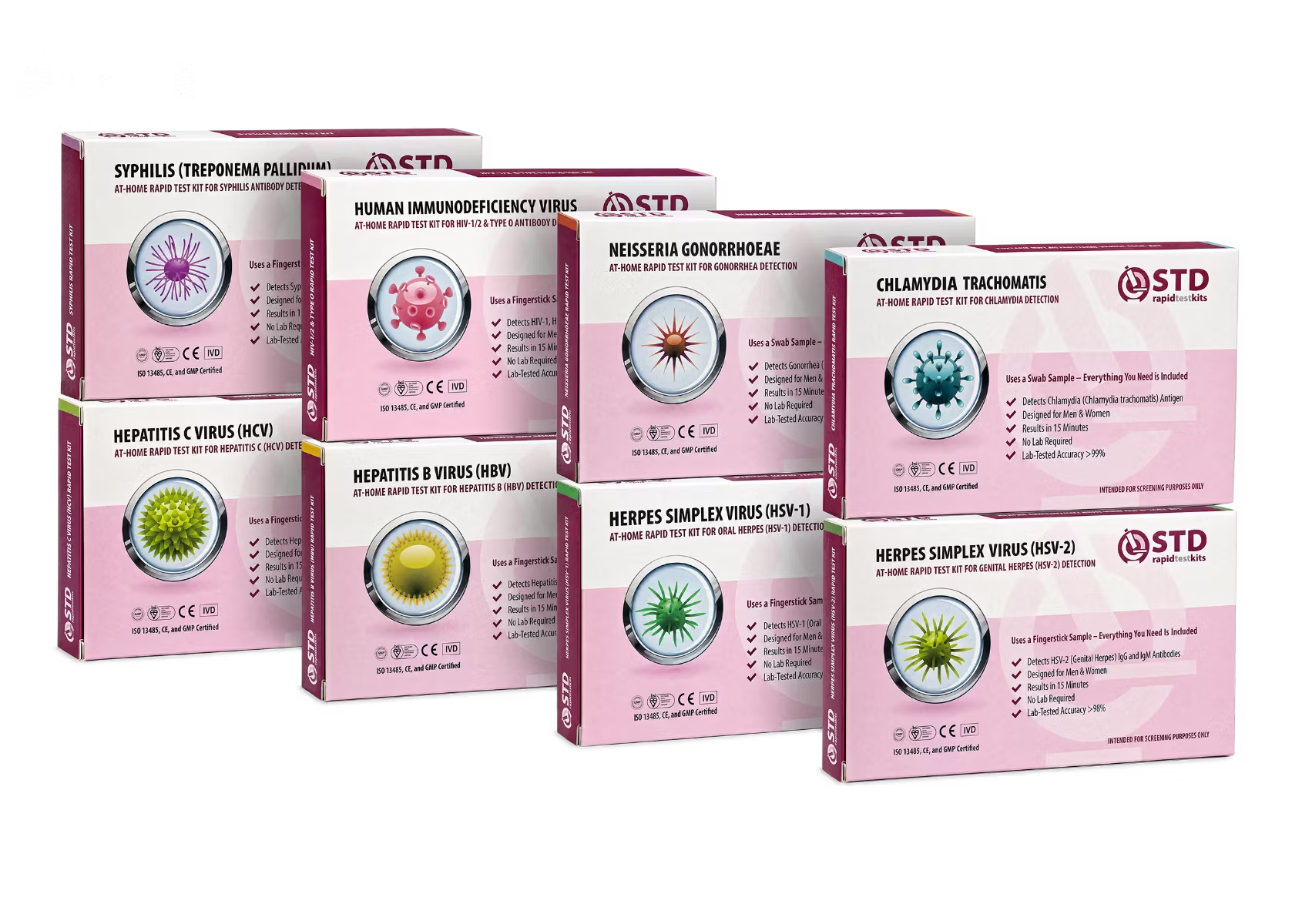
- If the timeline is tight, an at-home rapid combo kit gives a same-week answer for the most common infections.
FAQs
- Can married couples really still get STDs?
- Yes. The biology of an infection does not respond to your relationship status. HPV, herpes, chlamydia, and syphilis can all remain silent for months or years after the original exposure, long enough to surface inside a monogamous relationship that both partners entered in good faith. Two faithful partners can both test positive without either of them breaking a vow.
- If we have both been faithful, how is a positive test even possible?
- It is usually a timing issue, not a fidelity issue. Either partner could have been exposed years before the relationship, and the infection simply never produced symptoms until something (more frequent sex, jet lag, antibiotics, a change in vaginal pH) brought it to the surface. That is why testing is about your body's status, not about suspicion.
- Can a honeymoon itself trigger STD symptoms?
- Indirectly, yes. Honeymoons usually combine more frequent sex, alcohol, jet lag, sun exposure, new lubricants, and changes in diet, all of which can affect immune function and the local genital environment. None of those things give you an STD, but they can move a quiet infection from background to noticeable.
- Doesn't a standard STD panel cover everything?
- No, and the gap matters. The standard clinic panel screens for chlamydia, gonorrhea, syphilis, and HIV. Herpes, HPV, and the hepatitis viruses sit outside that default, so you have to ask for them explicitly, and not every provider will order them without a stated reason. Check your results letter to see exactly which tests ran.
- How long before the wedding should we test?
- Six weeks before the wedding is a comfortable target. It covers the detection window for chlamydia, gonorrhea, syphilis, and HIV, and leaves time to confirm a positive result and start treatment before the trip. Long-term couples doing a baseline check can test closer to the date. If you have two weeks or less, an at-home rapid kit covers the most common infections quickly.
- What if my partner thinks I do not trust them?
- Frame it as mutual care, not suspicion. Phrasing like "I want both of us to start the marriage with peace of mind" or "want to grab a kit this weekend so it is done before the trip" is hard to misread. Pick a low-stakes moment and make the testing plan two-sided so neither partner feels singled out.
- What if one of us tests positive before the trip?
- Most STDs are treatable, and several are curable with a short course of antibiotics. Antiviral therapy controls herpes and HIV. Hepatitis C now has cure rates above 95% with modern medication. A positive test is a piece of medical information, not a verdict on the relationship. Finding out before the trip means you can plan around it.
- Do at-home tests really work, or do we need a clinic?
- Both work. At-home rapid lateral-flow kits give a result in roughly fifteen minutes for the infection they screen. Clinic-run lab tests, especially NAAT for chlamydia and gonorrhea, have higher analytical sensitivity and remain the standard. The two are complementary: at-home is good for fast screening, and lab confirmation is appropriate for any positive result.
- U.S. Centers for Disease Control and Prevention. About chlamydia, including the page's verbatim statement that chlamydia often has no symptoms.
- U.S. Centers for Disease Control and Prevention. About HPV, including HPV's near-universal lifetime prevalence and the 9-in-10 natural-clearance figure within two years.
- U.S. Centers for Disease Control and Prevention. Genital herpes information page, including asymptomatic shedding.
- World Health Organization. Herpes simplex virus fact sheet, including the share of HSV-2 carriers who never develop visible symptoms.
- U.S. Centers for Disease Control and Prevention. Screening recommendations for sexually active adults, including which infections appear in a default panel.
- U.S. Centers for Disease Control and Prevention. Conversation tips for talking with a partner about STD testing.
- World Health Organization. Hepatitis C fact sheet, including current cure rates with direct-acting antiviral therapy.
