







Quick Answer: Chlamydia and gonorrhea often occur together due to shared transmission routes, asymptomatic spread, and biological interactions. Co-infection is common, up to 50% of those with gonorrhea also have chlamydia. Testing, treatment, and partner care are the keys to stopping the cycle.
“I Thought It Was Just a UTI”: The Symptom Trap
Tamara, 25, went to urgent care for what she assumed was a UTI. “I had to pee all the time, it burned, and sex hurt,” she said. She expected antibiotics, maybe cranberry pills. Instead, her nurse said the words that would stick: “We’re going to test you for chlamydia and gonorrhea, just to be safe.”
A week later, Tamara had both.
This is how it happens. Both STDs can cause subtle symptoms, or none at all. Burning while urinating, unusual discharge, spotting after sex, mild cramps. Easily written off as a yeast infection, a condom reaction, or anxiety. In men, the symptoms might include pain while peeing or a drippy discharge that feels “off,” but many never notice anything. In people with vaginas, symptoms can be completely silent.
And when symptoms are invisible, STDs keep moving, quietly, efficiently, from one body to another.
Most people with chlamydia or gonorrhea never knew they were contagious. That’s why these two are often diagnosed together: by the time someone gets tested for one, the other is already along for the ride.

People are also reading: Body Fluids and STDs: What You Need to Know Beyond Semen and Vaginal Fluids
Why It’s Biologically Easy to Get Both
Let’s talk science without the jargon. Gonorrhea is caused by a bacteria called Neisseria gonorrhoeae. Chlamydia comes from Chlamydia trachomatis. They’re both bacterial infections passed through vaginal, oral, and anal sex. And they love the same kind of environments, moist mucous membranes in the throat, urethra, cervix, and rectum.
Because their transmission paths are identical, the risk behaviors overlap. One unprotected encounter can expose someone to both. The same hookup, the same partner, the same night. You don’t need to be sleeping around or living recklessly, these infections aren’t punishments for how you love.
And there’s more. Emerging research suggests that these two bugs might actually support each other once inside your body. In cell studies, gonorrhea has been shown to alter the host environment in ways that help chlamydia survive longer. One paper even suggested that gonorrhea “primes” the cells chlamydia likes to infect. Infections that cooperate? Welcome to bacterial synergy.
Translation: if one gets in, the other often finds a smoother path.
Doctors know this. That’s why when someone tests positive for gonorrhea, they’re automatically treated for chlamydia, even if the second result isn’t back yet. The co-infection rate is just that high.
Check Your STD Status in Minutes
Test at Home with RemediumChlamydia & Gonorrhea Test
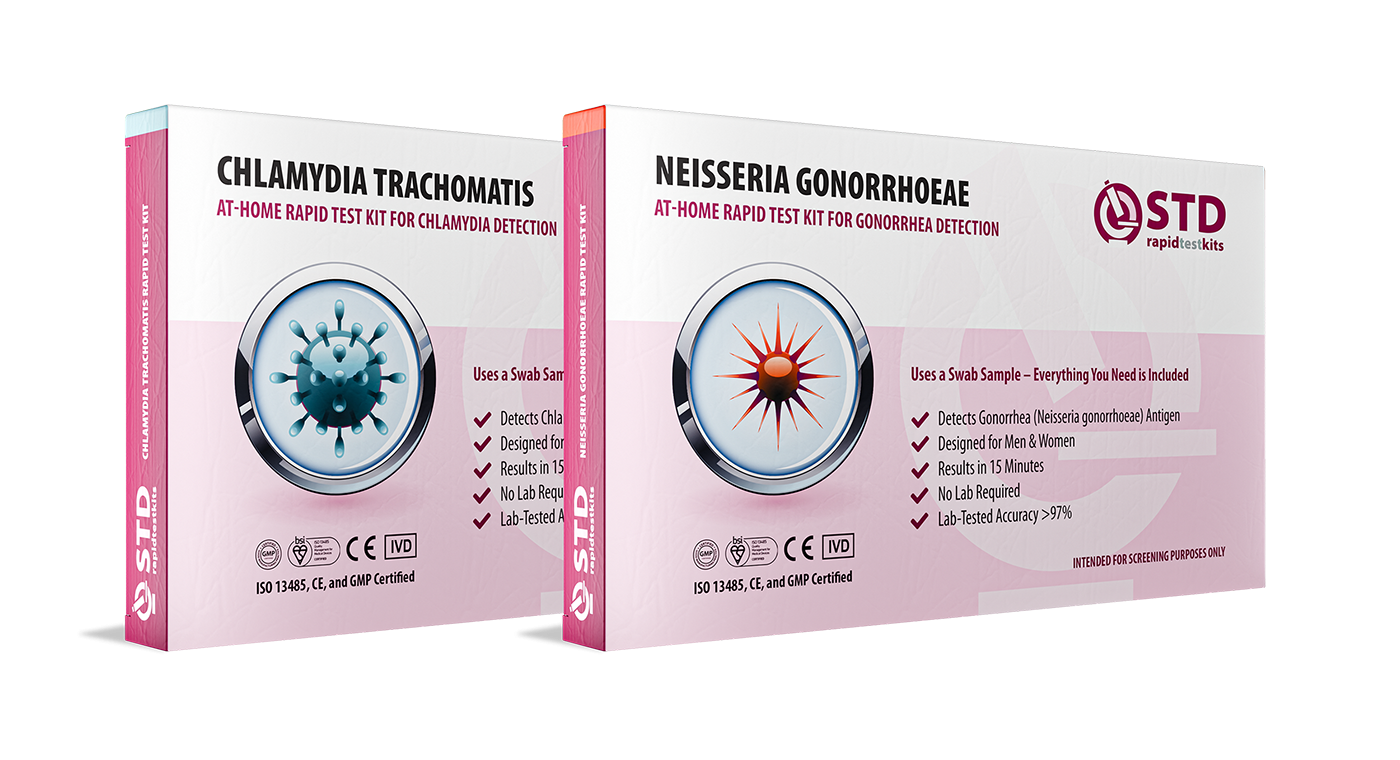
 For Men & Women
 Results in Minutes
 No Lab Needed
 Private & Discreet
Order Now $49.00 $98.00
For all 2 tests
Stigma Lies: Why Testing Positive Doesn’t Mean You’re “Dirty”
So many people spiral after a diagnosis, not just because they’re scared, but because they’re ashamed. “How did I let this happen?” “Am I gross?” “Who gave it to me?” Those are common reactions, but here’s the truth: this isn’t a moral issue. It’s a microbial one.
STDs don’t discriminate. They don’t care if you’re monogamous or poly, if you had a one-night stand or a trusted partner. You can use condoms and still catch chlamydia or gonorrhea, especially through oral sex or imperfect use. Your status is not your worth. You are not your test result.
The Centers for Disease Control (CDC) reports that in 2023 alone, there were over 1.6 million cases of chlamydia and 700,000 cases of gonorrhea in the U.S. Many of these were diagnosed together. Some were treated without the patient ever knowing they had both.
We don’t judge people for catching the flu from a partner. We don’t shame folks for a strep infection after sharing a drink. Sexually transmitted infections shouldn’t be any different.
Testing is care. Treatment is care. Naming it is care.
Testing Positive for Both: The Emotional Fallout
Jordan, 32, got the results on his lunch break. “Chlamydia and gonorrhea both came back positive,” the nurse said. He stared at the wall for a minute before asking, “Am I okay?”
The physical part is simple. These STDs are bacterial. They’re curable. Usually with a one-time injection for gonorrhea and a short course of oral antibiotics for chlamydia. Easy, straightforward, done.
The emotional part? That’s what hits harder. You replay the last few hookups. You wonder if it was that one night you didn’t use a condom, or the regular partner who said they were “clean.” You think about whether to text your ex. Whether they’ll blame you. Whether it’s your fault.
But here’s what Jordan’s doctor said, and what more providers need to say out loud: “This happens all the time. There’s nothing wrong with you. Let’s get you treated and move forward.”
In that moment, the shame cracked. Because the truth is, for people who test positive for both, the experience doesn’t have to be defining. It can be clarifying. Empowering, even. A reminder that knowing is always better than guessing.
Silent Carriers, Reinfection, and the Cycle of Spread
Many co-infections happen because one infection is detected, but the other flies under the radar, sometimes for months. That’s what happened to Lena, 21. She had no symptoms, but when her boyfriend tested positive for gonorrhea, she got tested out of precaution. It turned out she had both, and had unknowingly carried them for weeks.
Neither of them cheated. Neither of them “looked sick.” But one silent infection led to another, and eventually they both had to face the diagnosis together.
This is how STDs spread. Not through malice, but through silence. Most people who transmit chlamydia or gonorrhea don’t even know they’re contagious. They feel fine. They test negative on a rapid panel that didn’t include both. They assume condoms protected them perfectly. But bacteria doesn’t wait for a heads-up.
Reinfection is also common. If one partner gets treated and the other doesn’t, the cycle continues. Studies show that up to 20% of people treated for chlamydia will get it again within a few months, often from an untreated partner. That’s why it’s essential to test, treat, and talk to partners. Your health is linked to theirs.
Even if you feel fine now, your body could be carrying both infections. That’s why clinicians recommend full-panel testing after any new partner, condomless sex, or suspected exposure. Especially if you’ve had either infection in the past.
People are also reading: Exotic Vacations and STDs: The Hidden Dangers of Sex Tourism
Combo Testing Is Not Just Convenient, It’s Necessary
When you test for one STI, always test for more. Especially with chlamydia and gonorrhea, which are the clinical equivalent of frenemies, they show up together so often that most labs screen for both by default.
At-home options make this easier. You don’t need to wait in a clinic or explain your sex life to a stranger. Companies like STD Rapid Test Kits offer FDA-approved combo test kits that screen for chlamydia and gonorrhea in one simple swab or urine sample. It’s discreet, private, and fast.
Think of it like checking the oil and the tires. Just because one system looks fine doesn’t mean the other’s not leaking.
Order your combo test kit here, because peace of mind shouldn’t be a clinic appointment away.
Check Your STD Status in Minutes
Test at Home with Remedium7-in-1 STD Test Kit
 For Men & WomenResults in MinutesNo Lab NeededPrivate & Discreet
Order Now $129.00 $343.00
For all 7 tests
“But We Used Protection…”: A Reality Check on Condoms
Condoms reduce your risk of chlamydia and gonorrhea, yes. But “reduce” doesn’t mean eliminate. Both infections can spread through oral sex, which many people skip protection for. Gonorrhea especially loves the throat, where it often causes no symptoms at all. Chlamydia can live in the rectum, even without anal sex, from bacterial spread.
Riley, 28, always used condoms for intercourse, but didn’t think about oral sex. He was stunned when he tested positive for both. “I didn’t think that counted,” he said. It does.
That doesn’t mean protection is pointless. Condoms still work, and they work best when paired with regular testing, honest communication, and a clear understanding of how STDs really behave.
No one can test or protect their way to 100% safety. But you can build a culture of care around your body, your health, and your partners. That’s where prevention lives.
This Isn’t a Punishment, It’s a Call-In
Too often, an STD diagnosis feels like a sentence. But what if we flipped the script? What if it wasn’t “I did something wrong,” but “My body deserves care”? What if it wasn’t “I’m disgusting,” but “I got caught in a system that doesn’t talk openly about sex, pleasure, or protection”?
Nico, 30, broke down in tears after finding out he had both. “I’ve spent so much of my life afraid of being dirty. This just confirmed it.” But his partner said something that stuck: “This doesn’t make you dirty. It makes you human. And now we get to heal.”
That conversation changed everything. They tested together. Took their antibiotics. Laughed about who had worse side effects. They learned that trust isn’t about never getting sick, it’s about showing up for each other when you do.
That’s what sexual health really is. Not a checklist, but a practice. A process. An invitation to care deeper, not less.
Treatment Is Quick, But Prevention Is Ongoing
Once you’ve tested positive, treatment is usually straightforward. For gonorrhea, it’s typically a single shot of ceftriaxone. For chlamydia, it may be doxycycline twice a day for a week, or a single-dose azithromycin, depending on your provider.
You’ll usually feel fine within days. But don’t stop there. Finish all medication exactly as prescribed. Abstain from sex for at least seven days after treatment, and make sure any partners get treated too. Otherwise, you’ll pass it right back to each other like a microbial ping-pong match.
Some clinics offer expedited partner therapy, basically a prescription for your partner without a doctor’s visit. It’s fast, it’s effective, and it cuts reinfection dramatically.
Once you’re treated, retest in three months. Yes, even if you feel fine. Why? Because reinfection is common, especially if partners weren’t treated, or if you’ve had new exposures since.
And remember: the absence of symptoms is not the absence of disease. If you’ve had unprotected sex, oral or otherwise, testing regularly is part of the care you offer yourself and your community.
People are also reading: Anal Sex and Its Hidden Risks of Getting STDs
Sexual Health Is About Power, Not Fear
You don’t have to be afraid to know your status. You don’t have to dread testing. You don’t need to associate chlamydia or gonorrhea with failure. In fact, the more you know, the more power you hold.
There’s power in telling your partner, “I tested and here’s what I found.” Power in saying, “Let’s do this together.” Power in ordering a combo test kit because you want to stay informed, not scared.
Amanda, 26, puts it like this: “Getting tested with my partner felt sexy. Like we were on the same team. Like we were showing up for each other.” That’s the energy we need more of, where pleasure and protection are not opposites, but intertwined.
Sexual health isn’t a punishment. It’s not a shame parade. It’s a life skill. And in a world full of misinformation, being honest about your body is revolutionary.
Check Your STD Status in Minutes
Test at Home with Remedium6-in-1 STD Test Kit
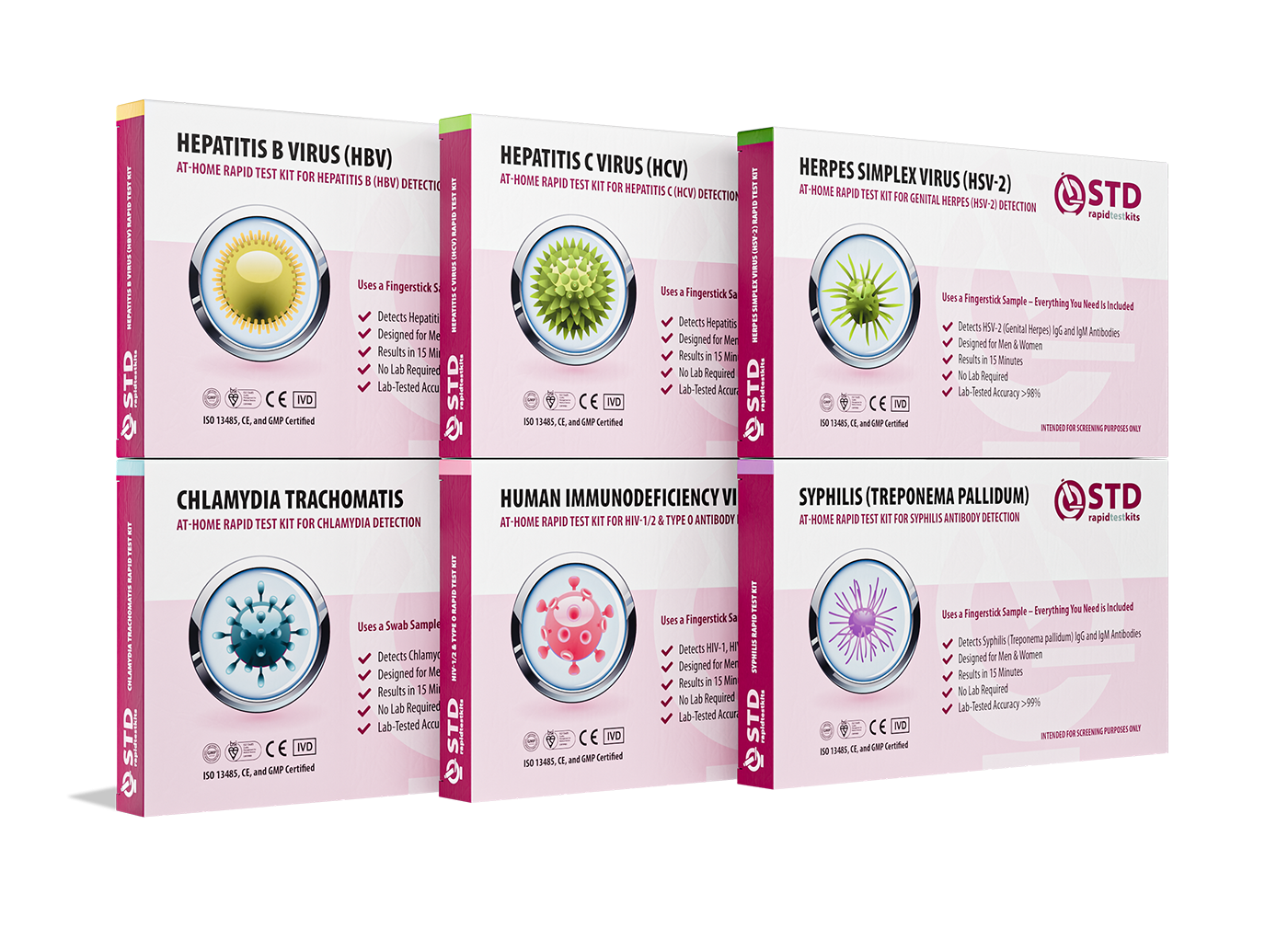 For Men & WomenResults in MinutesNo Lab NeededPrivate & Discreet
Order Now $119.00 $294.00
For all 6 tests
Normalizing the “Both” Diagnosis
If you’ve recently learned you have both chlamydia and gonorrhea, know this: you are not alone. Not even close. In clinical data sets, up to half of all gonorrhea cases are co-infected with chlamydia. In youth clinics, the number can be higher. In queer and trans populations, who often face systemic barriers to care, these numbers can also surge, not because of identity, but because of access.
So if you’re holding that double diagnosis in your hands and feeling like a walking statistic, remember the part of the statistic that matters most: you are treatable, you are supported, and you are part of a community of people who are done being shamed for taking care of their bodies.
Take your meds. Talk to your partners. Keep testing. And if you ever need a reset? It’s as easy as swabbing, mailing, and moving forward. Your next step is right here.
FAQs
1. Can you get chlamydia and gonorrhea from the same person?
Yes. One encounter can transmit both, especially during unprotected vaginal, anal, or oral sex. Co-infection is very common.
2. What is the prevalence of having both gonorrhea and chlamydia?
According to studies, up to 50% of gonorrhea patients also have chlamydia. It is among the most common co-infections of sexually transmitted diseases.
3. Do symptoms change if you have both?
Not necessarily. Many people have no symptoms at all. If symptoms do show, they may be stronger or just confusing, burning, discharge, pain, or nothing.
4. Can I treat both with one round of antibiotics?
Usually, yes. Treatment often involves a shot of ceftriaxone for gonorrhea and oral antibiotics like doxycycline for chlamydia.
5. Do I need to tell my partner?
Yes, for their health and yours. Many regions allow expedited partner therapy, so your partner can get treated without a visit.
6. After treatment, when can I resume having sex?
It’s best to wait at least 7 full days after finishing your treatment—even if you’re feeling fine. That gives the antibiotics time to fully clear the infection and lowers the risk of passing it to someone else. Think of it as a short reset to protect your health and your partner’s. Healing doesn’t mean you’re off-limits—it means you’re being responsible and kind to your body.
7. After treatment, should I take another test?
Indeed. It is frequently advised to perform a follow-up test three months later to verify clearance and look for reinfection.
8. Can I catch it again even after being treated?
Yeah, it’s possible, especially if a partner wasn’t treated or you have new partners after your meds. Treatment clears the infection, but it doesn’t make you immune. That’s why it’s important to talk openly with partners and make testing a regular part of your routine. It’s not about blame, it’s about staying ahead of something that’s way more common than people realize.
9. What if I tested negative but still have symptoms?
False negatives are possible. You might also have another condition. Re-test or get a broader panel to rule out other STIs.
10. Is oral sex risky for these STDs?
Yes. Gonorrhea, especially, spreads easily through oral sex and can live in the throat without symptoms. Chlamydia can too, though less commonly.
You Deserve Answers, Not Assumptions
You might be scared. You might be pissed. You might be Googling symptoms at 3AM, wondering how you ended up with both chlamydia and gonorrhea. But here’s the truth: you’re not a statistic. You’re someone who cared enough to look, to test, to ask questions. And that matters.
Co-infection is common. Testing is smart. Treatment works. And the shame? That belongs to the systems that made it so hard to talk about this in the first place, not to you.
Don’t wait and wonder, get the clarity you deserve. This at-home combo test kit checks for the most common STDs discreetly and quickly.
Sources
1. Co-infection Patterns in STI Cases – PubMed 2024
2. Co-infection Impact Study – BMC Infectious Diseases
3. CDC-Sponsored Surveillance Study – PMC
4. Gonorrhea and Chlamydia Co-infection Patterns – WJMH


