
Published: September 2025 | Last updated: May 2026 | Editorial review and quality control: Martina N.
Which body fluids carry STI risk?
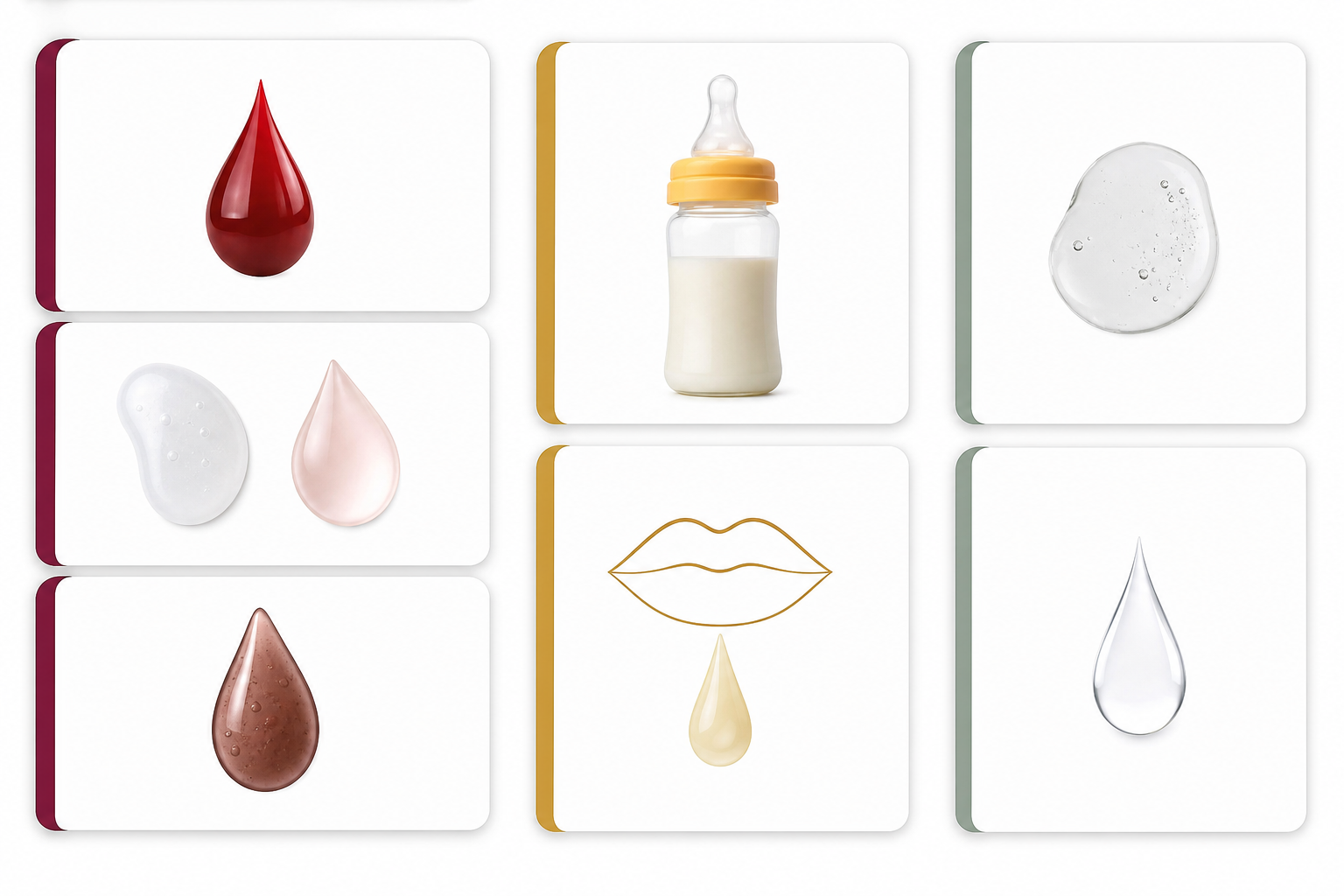
Five carry meaningful risk: blood, semen (including pre-ejaculate), vaginal fluid, rectal fluid, and breast milk. Saliva carries narrow risk, mainly oral herpes (HSV-1). Sweat, tears, and urine are not realistic routes. Separately, HPV, herpes, and primary syphilis can pass by skin-to-skin contact with no fluid exchange at all.
Most STI conversations focus on semen and vaginal fluid, and for good reason: those are the highest-volume sources of infectious organisms during sex. But blood, saliva, breast milk, rectal mucus, and a few other fluids can also carry infection in the right conditions. The risk varies sharply by fluid and by pathogen. A blood splash onto broken skin is a meaningful HIV exposure; sharing a coffee cup with someone who has a cold sore is a different risk profile from kissing them; sweat at the gym is essentially never a concern.
This explainer is published by stdrapidtestkits.com, an at-home rapid STI test retailer. Where a route maps to a test we sell, such as our at-home STI test kits, we point to it; where it does not, we say so plainly. The rest walks through which fluids carry STIs, what raises or lowers the risk, where skin-to-skin contact fits in even when no fluid is involved, and how to think about real-world exposures. Calibrated worry beats paranoia, and it lines up better with what the CDC, WHO, and NHS actually say.
Key Takeaways
- Five fluids carry meaningful STI risk: blood, semen (including pre-ejaculate), vaginal fluid, rectal fluid, and breast milk. Saliva carries narrow risk (HSV-1, and rarely syphilis). Sweat, tears, and urine are not realistic STI routes.
- Three STIs transmit by direct skin-to-skin contact even without fluid exchange: HPV, herpes (HSV-1 and HSV-2), and primary-stage syphilis. Condoms cut these risks but do not eliminate them.
Which body fluids actually carry STIs?
Not every body fluid is a meaningful transmission route. Sorting fluids into rough risk tiers is the fastest way to get past myth and into useful prevention.
High-risk fluids
The fluids that reliably transmit one or more STIs in the right conditions:
- Semen and pre-ejaculate. The classic vehicles for HIV, gonorrhea, chlamydia, syphilis, hepatitis B, and trichomoniasis. Pre-ejaculate is a smaller volume but is not sterile, so withdrawal does not eliminate transmission risk.
- Vaginal and cervical fluid. Carries the same set of pathogens as semen during reciprocal exposure, plus is a route for HPV and HSV during direct mucosal contact.
- Rectal fluid and rectal mucus. Less a stand-alone vehicle and more a high-risk site. The rectal lining is a single-cell-layer columnar epithelium (compared with the multi-layered squamous epithelium of the vagina), it sits over a dense population of HIV-target immune cells, and it tears readily during anal intercourse. That anatomy is part of why receptive anal sex without a condom is the highest per-act sexual HIV exposure per CDC HIV transmission guidance.
- Blood. The most concentrated source of bloodborne viruses. Even tiny amounts on broken skin, mucous membranes, or shared sharp instruments can transmit HIV, hepatitis B, and hepatitis C.
- Breast milk. Documented transmission route for HIV and cytomegalovirus (CMV). HTLV-1, a less commonly discussed retrovirus, also spreads this way and is the primary route by which children acquire HTLV-1 in endemic regions.
Lower-risk fluids (with conditions)
These fluids can transmit specific infections but are not blanket high-risk:
- Saliva. Carries HSV-1, hepatitis B in some scenarios, CMV, and Epstein-Barr virus. HIV is present at very low levels in saliva and salivary enzymes inactivate the virus, which is why deep kissing is not considered a meaningful HIV route in CDC guidance unless visible blood is involved.
- Urine. Generally low-risk on its own. Chlamydia and gonorrhea organisms shed into urine from urethral infection, which is why urine-based lab testing exists in clinics, but urine itself is not a typical transmission medium in everyday contact.
Negligible-risk fluids
The fluids the public worries about most are usually the ones that matter least:
- Sweat. No documented STI transmission through intact sweat. Gym equipment, locker rooms, and shared seating are not realistic exposure routes.
- Tears. Trace viral particles have been detected in tears for some viruses (HIV at extremely low concentrations, Zika in case reports, CMV in some samples), but transmission via tears is not a documented STI route.
- Nasal secretions. Carry respiratory viruses, not STIs.
Knowing which tier a fluid sits in lets you scale your response to the actual risk, instead of treating every body-fluid contact as a crisis. The way CDC STI fact sheets and the World Health Organization's STI fact sheet describe transmission lines up with the tiers above.
How the fluids map to common STIs
The tiers above translate into a simple cross-reference. Read each row as a fluid and each column as a pathogen: 'High' means a well-documented route, 'Possible' means it happens only under specific conditions, and 'Not the typical route' means transmission by that fluid is not how the infection usually spreads.
| Fluid | HIV | Hepatitis B | Hepatitis C | Herpes (HSV) | Chlamydia / Gonorrhea |
|---|---|---|---|---|---|
| Semen, vaginal, rectal | High | High | Lower | High (genital HSV) | High |
| Blood | High | Very high | High | Possible | Not the typical route |
| Saliva | Negligible (no visible blood) | Possible (close contact, sores) | Negligible | High for HSV-1 | Not the typical route |
| Breast milk | Yes (mother-to-infant) | Possible | Rare | Possible if breast lesions | Not the typical route |
| Sweat / tears / urine | Not a route | Not a route | Not a route | Not a route | Urine carries organisms but is not a typical exposure route |
Blood: why even tiny exposures matter
Of every body fluid, blood is the most efficient at transmitting infection. Bloodborne viruses circulate at high concentrations, so a small volume of blood can carry a relatively large infectious dose. The three pathogens most relevant here are HIV, hepatitis B, and hepatitis C.
Hepatitis B is unusually durable
Hepatitis B survives outside the body far longer than people expect. Per CDC hepatitis B clinical-overview guidance, the virus is infectious for at least 7 days on surfaces. That changes the math for shared razors, toothbrushes contaminated with bleeding gums, unsterilized tattoo or piercing equipment, and shared injection equipment. Vaccination is the most effective defense; the hepatitis B vaccine is now part of routine childhood immunization in most countries.
HIV transmission via blood
HIV is fragile outside the body and dies within minutes of drying on most surfaces. The risk scenarios that matter are fresh blood-to-blood or blood-to-mucous-membrane contact: shared injection-drug needles, occupational needlestick injuries in healthcare, and unprotected sexual contact when a partner is bleeding (menstrual blood, an open sore). Per CDC HIV information, casual contact, hugging, and sharing dishes are not transmission routes.
Hepatitis C: mostly bloodborne
Hepatitis C transmits almost exclusively through blood-to-blood contact in modern settings. Per the CDC hepatitis C fact sheet, injection-drug use is the most commonly reported risk factor, linked to about 43% of 2023 U.S. cases that had risk information. Sexual transmission of HCV is uncommon but documented, particularly among men who have sex with men who also have HIV. Shared injection equipment and unsafe medical or tattooing practices remain the dominant risk worldwide.
Other bloodborne viruses worth naming
HTLV-1 and HTLV-2 (human T-lymphotropic viruses) transmit through blood, breast milk, and sexual contact. They are less common in most regions than the trio above, but they belong on the bloodborne map. Syphilis can also pass through transfusion or shared injection equipment in theory, though screened blood supplies and the bacterium's sensitivity to drying make this rare.
Real scenarios where blood exposure happens
- Sharing razors or toothbrushes with someone who has bleeding gums or shaving nicks. Uncommon, but technically possible for hepatitis B and C.
- Unregulated tattoo, piercing, or needling work. Reused or improperly sterilized equipment is a documented hepatitis B and C transmission route.
- Healthcare and caregiving exposures. Needlesticks, mucosal splashes, and contact with open wounds. Personal protective equipment exists for a reason.
- Sex during menstruation or with an active genital sore without barriers. Adds blood to an already-existing fluid exchange.
Hepatitis B can survive in dried blood on a surface for at least 7 days per CDC guidance. Razors and toothbrushes pick up tiny amounts of blood from shaving nicks and bleeding gums, and that is enough for transmission to a household member with their own small skin breaks. Keep both items personal, and replace them when visibly damaged.
Saliva and oral contact: sorting fact from fear
Saliva is the body fluid most people overestimate the danger of for HIV and underestimate the danger of for herpes. Both directions of confusion are worth correcting.
Why saliva is not a meaningful HIV route
HIV is present in saliva at very low concentrations, and salivary proteins (mucins, secretory leukocyte protease inhibitor) interfere with the virus. The CDC has stated for decades that kissing, sharing eating utensils, and other saliva contact are not HIV transmission routes in the absence of visible blood. The narrow exception involves deep kissing when both partners have active mouth bleeding, an unusual combination.
Why saliva is a meaningful herpes route
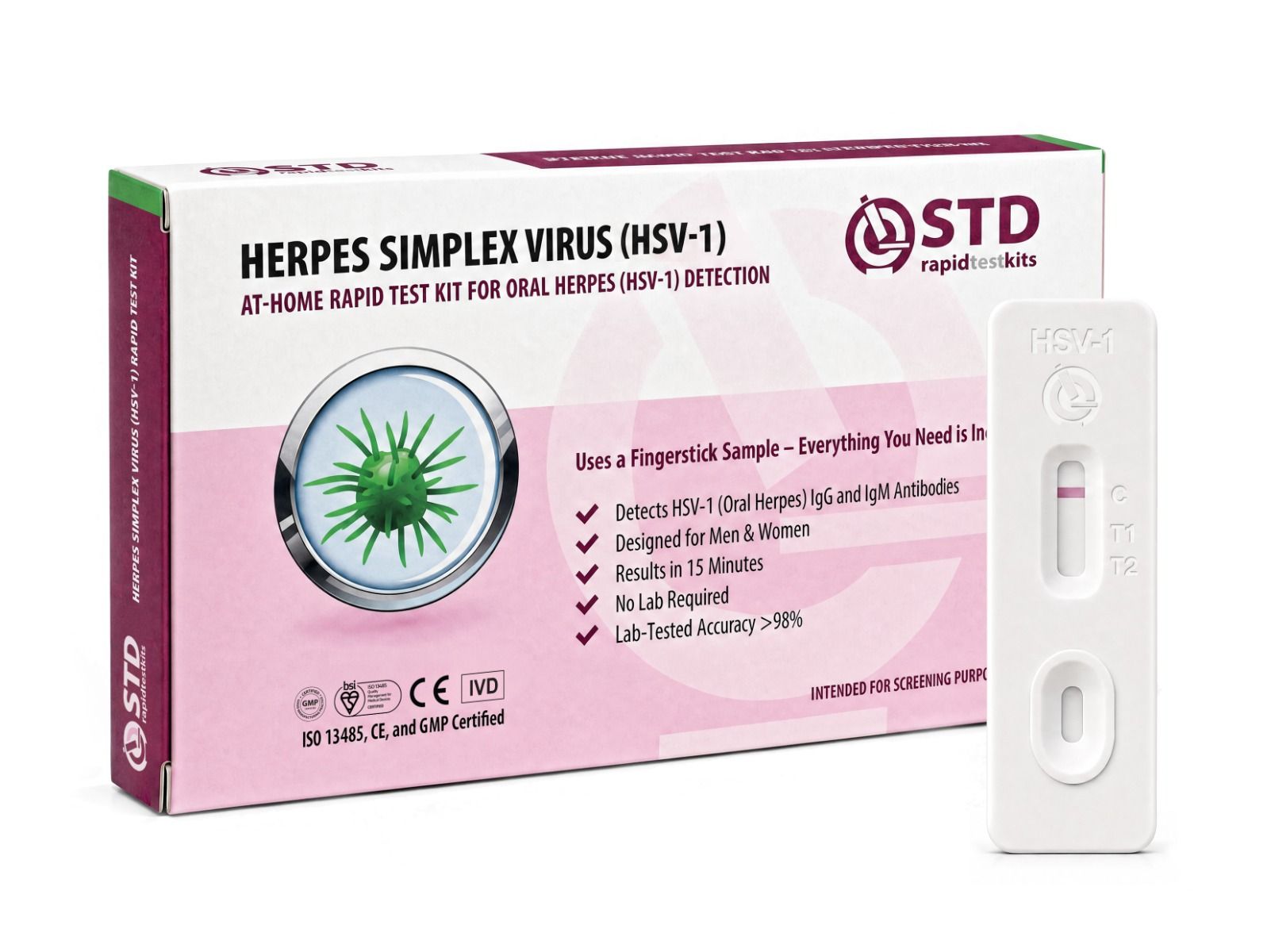
HSV-1, the virus most commonly responsible for cold sores, transmits readily through oral contact, and asymptomatic shedding is the rule rather than the exception. Per CDC genital herpes guidance, most people with herpes have no or very mild symptoms and do not know they are infected, and transmission often happens when the carrier has no visible sore. In practice:
- Kissing during an active outbreak is the highest-risk moment, but transmission is possible between outbreaks.
- Oral-to-genital contact can transmit HSV-1 to the genitals, where it presents as genital herpes. A meaningful share of new genital herpes diagnoses are HSV-1 acquired through oral sex (we cover this in more depth in our guide to the real risks of oral sex).
- Shared lip balm, drinks, or utensils carry a small but real transmission risk during the window when the virus is shedding.
Other infections that travel via saliva or oral contact
Hepatitis B can be present in saliva and transmission has been documented in close-contact household settings, particularly between partners or caregivers. A syphilis chancre on the lip or inside the mouth can transmit the bacterium through kissing or oral contact, though this is uncommon. Pharyngeal gonorrhea is established when a partner's oral mucosa contacts infected genital secretions during oral sex (saliva itself is not the vehicle; oral exposure to genital fluid is). CMV and Epstein-Barr virus pass routinely via saliva, which is why EBV picked up the nickname 'the kissing disease.' These are not strictly STIs but they are common, and they share saliva as a route.
People often separate 'cold sores' from 'herpes' emotionally, but biologically they are the same family of viruses. Most cold sores are caused by HSV-1. The same virus, transmitted through oral sex, can cause genital herpes in a partner. There is nothing shameful or unusual about this; an estimated 3.8 billion people under 50, roughly 64% of that age group, carry HSV-1 worldwide per the <a href="https://www.who.int/news-room/fact-sheets/detail/herpes-simplex-virus" target="_blank" rel="noopener noreferrer">WHO herpes simplex virus fact sheet</a>. Asymptomatic oral shedding is real and worth knowing about.
Skin-to-skin contact: the route that isn't a fluid at all
A fluid-only mental model leaves three meaningful STIs out. The following pathogens transmit primarily by direct skin-to-skin or mucosa-to-mucosa contact:
- Human papillomavirus (HPV). More than 200 known strains, around 14 of which are linked to cancer risk, plus several that cause genital warts. HPV transmits through genital skin contact during vaginal, anal, or oral sex. Condoms reduce risk substantially but do not cover every site of potential contact, so vaccination is the durable defense.
- Herpes simplex virus (HSV-1 and HSV-2). Sheds from skin and mucosa in the area of past outbreaks, often when no lesion is visible. Most HSV-2 transmission events come from partners who do not know they carry the virus.
- Syphilis (primary stage). Direct contact with the chancre, the painless sore that appears at the site of inoculation, transmits the infection. The chancre can sit on genitals, anus, lips, or inside the mouth.
Pubic lice and scabies sit in a related category: parasites that transfer through close body contact rather than through any fluid. They are parasitic rather than viral or bacterial, and they appear in the same sexual-health conversations because their exposure routes overlap with those of STIs.
The practical implication: HPV, genital herpes, and primary syphilis can pass between partners who used condoms correctly and avoided fluid exchange. Routine HPV vaccination, type-specific HSV antibody testing for partners considering condomless sex, and prompt evaluation of any new genital sore close most of the remaining preventable risk.
| Pathogen | Contact route | Condom fully prevents? | Primary prevention |
|---|---|---|---|
| HPV | Genital, anal, or oral skin contact | No (skin outside condom coverage) | HPV vaccination (routine through age 26; shared clinical decision-making through age 45) |
| Herpes (HSV-1, HSV-2) | Skin and mucosa contact, including during asymptomatic viral shedding | No (shedding can extend beyond covered skin) | Type-specific antibody testing before condomless sex; daily suppressive antiviral therapy in serodiscordant couples (where one partner carries the virus and the other does not) |
| Syphilis (primary) | Direct contact with a chancre on genitals, anus, lips, or in the mouth | Partial (only when the chancre sits under the barrier) | Prompt evaluation of any new painless sore; penicillin cures the primary stage |
Breast milk, pregnancy, and vertical transmission
Vertical transmission (from a pregnant or breastfeeding parent to an infant) is its own category of risk and is one of the public-health success stories of the last three decades.
HIV and breastfeeding
Without intervention, an HIV-positive parent can transmit the virus to their infant during pregnancy, delivery, or breastfeeding. Combined antiretroviral therapy taken consistently changes that picture dramatically. Per CDC infant-feeding guidance, for a mother on antiretroviral therapy with a sustained undetectable viral load the risk of transmission through breastfeeding is less than 1%, though not zero, and current guidance supports shared, patient-centered decision-making about feeding options.
HTLV-1 and breastfeeding
HTLV-1 is the less famous member of this story. Prolonged breastfeeding is the dominant route by which children acquire HTLV-1 in endemic regions, and WHO plus several national guidelines recommend formula feeding for HTLV-1-positive parents where safe alternatives exist. Routine prenatal HTLV-1 screening is done in some countries (notably Japan) but not universally.
Hepatitis B and pregnancy
Hepatitis B can be passed at birth. Routine hepatitis B vaccination of newborns within 24 hours, combined with hepatitis B immune globulin when the parent is positive, prevents the vast majority of infant infections.
Syphilis and congenital infection
Untreated syphilis during pregnancy can cause miscarriage, stillbirth, or congenital syphilis with serious infant complications. Routine prenatal syphilis screening and timely penicillin treatment are highly effective at preventing congenital cases. Rising adult syphilis rates have driven a corresponding rise in congenital cases in several countries, which is why universal prenatal screening is the standard of care.
With consistent antiretroviral therapy and a sustained undetectable viral load, the risk of mother-to-child HIV transmission through breastfeeding is less than 1% per CDC guidance. That is one of the clearest public-health wins of the last 30 years. Routine prenatal screening for HIV, hepatitis B, and syphilis is the on-ramp; treatment when positive is the engine.
Sweat, tears, urine, and everyday surfaces
The body fluids people most often worry about turn out to be safer than expected. None of sweat, tears, or urine are documented routes of meaningful STI transmission in everyday, intact-skin contact.
Sweat does not carry HIV, hepatitis B, hepatitis C, herpes, syphilis, gonorrhea, or chlamydia in any clinically meaningful way. Gym equipment, sauna benches, and shared yoga mats are not STI risks. They are still worth wiping down for general hygiene, but the concern there is bacterial skin infection, not STIs.
Tears have shown trace viral particles in laboratory studies for some viruses, but no STI is established as transmissible by tear contact, even directly onto a mucous membrane.
Urine is more nuanced. People confuse urine being a diagnostic sample for chlamydia and gonorrhea (organisms shed into first-catch urine and can be detected in the lab) with urine being a transmission route. It is the first, not the second. You do not catch chlamydia or gonorrhea from urine on a toilet seat, in a swimming pool, or through any environmental urine exposure.
Everyday-contact worries, sorted
Myth: You can catch an STI from a public toilet seat.
Fact: No STI is documented to transmit this way. The bacteria behind chlamydia and gonorrhea die quickly on cool dry surfaces, and the viruses need to reach a mucous membrane or the bloodstream, which seat contact does not provide.
Myth: A shared gym bench, towel, or sauna can give you an STI.
Fact: Sweat is not a transmission route for any STI. Wiping equipment down is good hygiene against skin bacteria, not against sexually transmitted infections.
Myth: You can get an STI from a swimming pool or hot tub.
Fact: Chlorinated water inactivates the relevant pathogens and the exposure is not mucosal. Sexual activity in water carries the same fluid-exchange risk as anywhere else, but the water itself transmits nothing.
Myth: Sharing a drink or a fork spreads STIs.
Fact: It does not, with one narrow exception: HSV-1 can pass during the window it is shedding, and even then direct mouth-to-mouth contact matters far more than a shared cup.
Casual contact like shaking hands, hugging, sharing toilets, sharing dishes, or closed-mouth or 'social' kissing with a person with HIV does not result in HIV transmission.
Shared items that genuinely deserve caution
A useful worry list is short and specific. These are the everyday items where transmission is biologically plausible, and where simple habits close the gap. The UK's NHS STI guidance reaches the same practical conclusions.
- Razors and toothbrushes used by someone with bleeding gums or shaving nicks. Hepatitis B is the main concern because it survives in dried blood. Keep them personal.
- Unsterilized tattoo, piercing, or acupuncture equipment. Reused needles transmit hepatitis B and C and, rarely, HIV. Use licensed studios with single-use needles.
- Sex toys shared without a barrier or cleaning between partners. They carry the same fluid-exchange risk as direct contact for HIV, herpes, HPV, hepatitis B, and bacterial STIs.
- Manicure and pedicure tools that have not been autoclaved. A documented, if uncommon, hepatitis route.
If you provide care for someone with a wound, basic precautions cover the realistic exposures: disposable gloves for blood cleanup, hand-washing around mucous membranes or open wounds, and prompt cleaning of blood spills. Vaccinated caregivers (the hepatitis B vaccine is routine) carry far lower risk than people assume.
- Don't share razors, toothbrushes, or nail clippers; replace them when visibly damaged.
- Use licensed tattoo and piercing studios with single-use needles.
- Keep personal first-aid items separate from communal supplies; wear disposable gloves for blood-cleanup tasks.
- Clean and store sex toys properly, and use barriers when sharing.
- Get the hepatitis B vaccine if you haven't already (routine for adults under 60 per CDC; available for older adults with risk factors).
- Discuss HIV pre-exposure prophylaxis (PrEP) with a clinician if you have ongoing higher-risk exposures.
- Stay current on HPV vaccination through age 26 routinely, with shared clinical decision-making through age 45.
When to test after a worrying exposure
If an exposure has you concerned, the most useful question is: what window period does the test cover, and what should I do in the meantime? Per CDC HIV testing guidance and FDA assay-label statements, conservative ranges look like this:
- HIV (fourth-generation antigen-antibody lab test): reliable detection roughly 18 to 45 days post-exposure. Rapid antibody tests, including most at-home kits, typically detect infection between 23 and 90 days. The conservative answer for ruling out infection with a home antibody test is 90 days.
- Hepatitis B surface antigen: generally detectable within 30 to 60 days post-exposure; most infections are detectable by week 8 to 12.
- Hepatitis C antibodies: typically detectable 8 to 12 weeks post-exposure; conservative ruling-out window is 12 weeks.
- Syphilis (treponemal antibody test, the standard blood screen): usually reactive 3 to 6 weeks post-exposure; CDC and most clinical guidance recommend re-testing at 12 weeks after a known exposure.
- Chlamydia and gonorrhea: reliable from roughly 1 to 2 weeks post-exposure on the appropriate sample site.
- Herpes (HSV antibody tests): roughly 6 to 12 weeks for confident seroconversion; some FDA-cleared assays note outliers up to 16 weeks.
For high-risk HIV exposures (needlestick, sexual assault, condom failure with a known-positive partner), HIV post-exposure prophylaxis (PEP) is a 28-day antiretroviral course that reduces infection risk substantially. PEP must start within 72 hours of exposure, and earlier is significantly better, so contact a clinic or emergency department promptly rather than waiting to test. Hepatitis B has its own post-exposure prophylaxis (vaccine plus immune globulin) that works well within 24 hours of a known exposure to a positive source. Once the right window has passed, an at-home HIV test or a broader panel can screen the blood-borne concerns from the exposure.
Where at-home testing fits
We recommend tests based on the route you are worried about rather than on selling the widest panel. Once the right window has passed, a home test is a private, fast way to screen the most common blood-borne concerns after an exposure event.
Be precise about the technology. Our kits are lateral-flow immunoassays, the same general chemistry used in COVID-19 and pregnancy rapid tests, run on a fingerstick blood drop or a self-collected genital swab. Laboratories use NAAT or quantitative serology, which have higher analytical sensitivity. The two are complementary, not interchangeable: a home test is a strong screening layer with high negative predictive value once the window has passed, and any reactive (positive) result should be confirmed by a lab. A home test fits well when you want to rule out infection after the window. See a clinic instead when you need to confirm a positive, when you are testing too soon for antibodies to show, or when the exposure involved a site our kits do not cover (pharyngeal, rectal, or intrauterine), since we do not sell throat or rectal swabs. For someone whose exposure spanned several routes, one broad panel is usually more practical than a stack of single-infection kits.
Stigma, honesty, and the cost of bad information
Most people with an STI didn't get it through anything reckless. Asymptomatic carriers exist for almost every STI worth tracking. HSV-1 prevalence is roughly 64% of adults under 50 per the WHO herpes simplex virus fact sheet; HPV prevalence is similarly high among sexually active adults; many chlamydia and gonorrhea infections cause no symptoms in the early weeks. Because infection often shows no signs (NIH MedlinePlus makes the same point), routine screening rather than waiting for symptoms is the standard recommendation from CDC and WHO.
Outdated sex education has made this worse. Most school programs focus narrowly on pregnancy prevention and HIV avoidance and skip the practical biology of saliva, breast milk, dried blood on shared items, skin-to-skin viral transmission, and asymptomatic shedding. The result is a generation of adults who panic about toilet seats and shrug off cold sores, which is roughly the opposite of what the actual risk profile would suggest.
Honest conversations with partners, clinicians, and, when relevant, household members are the strongest single prevention tool. 'I've had cold sores in the past' or 'I'd like both of us to test before we stop using condoms' is uncomfortable for thirty seconds and clarifying for the rest of the relationship. The same logic applies when you are the one with a recent exposure: state it early, test when the window allows, and confirm any positive home result at a lab so the answer is reliable.
Because so many STIs cause no early symptoms, periodic testing is how most infections actually get caught. The CDC and WHO both recommend routine screening for sexually active adults whether or not anything feels wrong, rather than waiting for a sign that may never come. If it has been a while since your last test, that is reason enough to schedule one.
Your next step, in order
If a specific exposure is on your mind, work through the questions below in order. They map the exposure to a concrete action: urgent care first when timing matters, then testing once the window allows, then confirmation of any reactive result.
What to do after a worrying exposure
Did a high-risk HIV or hepatitis B exposure (a needlestick, shared injection equipment, or condom failure with a known-positive partner) happen in the last 72 hours?
Yes: Contact a clinic or emergency department now. HIV PEP and hepatitis B vaccine-plus-immune-globulin are time-sensitive and work before any test window opens, so do not wait to test first.
Has the window period for the infection you are worried about already passed (see the detection windows above)?
Yes: Test now. Use an at-home rapid test for the blood-borne infections, or a genital swab test for chlamydia and gonorrhea, then confirm any reactive result with a laboratory test before acting on it. Talk with a clinician about PrEP, HPV vaccination, or partner notification if ongoing risk applies.
No: Wait until the window opens before testing, since a test taken too early can miss a true infection. Set a reminder for that date, and use barrier protection in the meantime.
Guidance only. A healthcare provider can advise based on your specific situation.
Frequently asked questions
- Can I get an STI from kissing?
- HSV-1 (oral herpes) transmits readily through kissing, especially when a sore is present, and can spread between outbreaks too. HIV is not considered a meaningful kissing risk per CDC guidance unless both partners have visible mouth bleeding. Hepatitis B can transmit through close oral contact in some scenarios. Most other STIs do not spread by kissing alone.
- Can I catch an STI from a toilet seat?
- No STI has ever been documented to transmit via toilet-seat contact. The myth persists because people equate proximity to genitals with a transmission route, but the seat is dry skin contact, and the pathogens involved either need a wet mucosal surface or direct entry into the bloodstream. A public toilet provides neither, even right after someone else.
- Which body fluids transmit HIV?
- Per CDC guidance, HIV transmits through blood, semen, pre-ejaculate, vaginal fluid, rectal fluid, and breast milk. It is not transmitted by saliva, sweat, tears, urine, or casual contact in the absence of visible blood.
- Can I get HIV from a shared razor or toothbrush?
- It is possible but uncommon. HIV is fragile outside the body and dies quickly on dry surfaces. The bigger concern with shared razors and toothbrushes is hepatitis B, which can survive in dried blood for at least 7 days, and hepatitis C. The simple rule is to keep these items personal and replace them when visibly damaged.
- Are cold sores really an STI?
- Cold sores are caused by HSV-1, which is in the same viral family as genital herpes (HSV-2) and is transmissible through oral-to-oral and oral-to-genital contact. Most adults with HSV-1 acquired it in childhood and have no idea. It is classified as a sexually transmissible infection because of the oral-genital route, even though most transmission isn't sexual.
- Can I get an STI from breastfeeding?
- HIV, HTLV-1, and CMV can transmit through breast milk. With consistent antiretroviral therapy and a sustained undetectable viral load, the risk of mother-to-child HIV transmission via breastfeeding is less than 1% per CDC guidance. Hepatitis B and syphilis are managed through prenatal screening, infant vaccination, and timely treatment. Routine prenatal care prevents the majority of infant infections.
- If I shared a needle, what should I test for?
- Shared injection equipment is the modern blood-borne transmission route that matters most. Test for HIV, hepatitis B, and hepatitis C at minimum. Hepatitis B has post-exposure prophylaxis (vaccine plus immune globulin) that works well in the first 24 hours, so seek clinical care quickly even before any test result. HIV post-exposure prophylaxis (PEP) is similarly time-sensitive and should be started within 72 hours.
- Are at-home rapid STI tests as accurate as clinic tests?
- At-home rapid lateral-flow tests are screening tools with strong negative predictive value when used after the relevant window period. They are not equivalent to laboratory NAAT or fourth-generation antigen/antibody assays, which have higher analytical sensitivity. The right framing is complementary: home rapid tests for accessible screening, clinic testing for confirmation and for routes (pharyngeal, rectal) that home swabs do not cover.
- U.S. Centers for Disease Control and Prevention. How HIV is transmitted: the fluids that transmit HIV, the highest per-act risk routes, and the saliva/sweat/tears non-routes.
- U.S. Centers for Disease Control and Prevention. HIV testing types and window periods, including antigen/antibody (18 to 45 days) and antibody/rapid (23 to 90 days) assays.
- U.S. Centers for Disease Control and Prevention. Hepatitis B clinical overview: transmission and surface survival of at least 7 days in dried blood, plus vaccination guidance.
- U.S. Centers for Disease Control and Prevention. Hepatitis C: bloodborne transmission and current U.S. exposure patterns (injection-drug use the most commonly reported risk factor).
- U.S. Centers for Disease Control and Prevention. About genital herpes: HSV-1 and HSV-2 transmission, asymptomatic infection, and shedding.
- World Health Organization. Herpes simplex virus fact sheet: global HSV-1 prevalence (about 3.8 billion people under 50, roughly 64%), transmission, and symptoms.
- U.K. National Health Service. Sexually transmitted infections: transmission, symptoms, and testing pathways.
- U.S. National Institutes of Health, MedlinePlus. Sexually transmitted infections: how they spread and why many cause no symptoms.
