






Quick Answer: Yes, you can still get certain STDs, like herpes, HPV, and syphilis, even if you use condoms. These infections spread through skin-to-skin contact, not just fluids.
What Skin-to-Skin Really Means (And Why It Changes Everything)
Skin-to-skin transmission sounds innocent, even vague, until you realize what it actually includes. Grinding, oral sex, rimming, using hands or toys, touching an area around the genitals or anus. These aren’t exceptions; they’re part of normal sex lives. And they’re often unprotected.
Take herpes. It’s not limited to the genitals. HSV-1 can spread through kissing or oral sex. HSV-2 can shed virus from areas that a condom doesn’t cover, like the base of the penis, the vulva, or upper thighs. The same is true for HPV, which often infects areas outside the condom line. Even syphilis can begin with a single painless sore, called a chancre, on the scrotum, lips, or fingers.
This means the idea that condoms offer full protection is well-intentioned… but incomplete. You’re doing something right by using one. But knowing what it doesn’t block is just as critical as knowing what it does.
People are also looking for: STD Misdiagnosis Horror Stories: When Donovanosis Gets Overlooked
“We Only Made Out, And I Still Got Herpes”
Jordan, 27, had just started dating someone new after a long dry spell. They didn’t have intercourse. In fact, Jordan was proud of how slow they were taking it. “We kissed, did a little grinding, that’s it,” they said. “We didn’t even take our clothes fully off.”
Ten days later, Jordan noticed a painful blister near their groin. They thought it was an ingrown hair, until it multiplied. A doctor confirmed: it was genital herpes, likely transmitted during skin-to-skin contact. The other partner hadn’t shown any symptoms.
“I was devastated. I kept asking, ‘How is this possible? We didn’t even have real sex.’”
What Jordan experienced is disturbingly common: Herpes can spread even when no symptoms are present. This phenomenon, called asymptomatic viral shedding, is why nearly 1 in 6 people aged 14–49 in the U.S. have genital HSV, many without knowing it.
What STDs Are Spread by Skin Contact?
Several high-impact STDs do not require penetration or fluid exchange to infect another person. These skin-to-skin STDs can spread during intimate, non-penetrative contact, including oral sex, outercourse, shared sex toys, or even close bodily rubbing.
| STD | Transmission Method | Blocked by Condoms? | Common Symptoms |
|---|---|---|---|
| Herpes (HSV-1, HSV-2) | Skin-to-skin, oral sex, shedding | Partially | Sores, itching, burning |
| HPV | Skin contact, shared toys | Partially | Often none, or warts |
| Syphilis | Contact with chancre or rash | Partially | Painless sore, rash, flu-like signs |
| Molluscum Contagiosum | Direct skin contact | No | Small firm bumps |
| Pubic Lice | Close contact or bedding | No | Itching, visible lice |
Figure 1. Common STDs that spread through skin-to-skin contact, even when condoms are used correctly.
Does This Mean Condoms Don’t Work?
Not at all. Condoms are still one of the most effective tools we have to prevent chlamydia, gonorrhea, HIV, and trichomoniasis, infections that primarily pass through bodily fluids. But condoms were never a magic shield. They reduce, but don’t eliminate, risk for infections that live and spread in areas condoms don’t cover.
According to the CDC’s data on condom effectiveness, using condoms consistently can lower the risk of HSV-2 by about 30% and HPV by up to 70%, but they don’t offer full protection. That’s why education, communication, and retesting matter just as much as barrier use.
And yes, condoms break sometimes. But most skin-to-skin transmissions happen even when condoms do their job. That’s what makes these STDs so slippery, and so emotionally devastating when they’re unexpected.
Check Your STD Status in Minutes
Test at Home with Remedium3-in-1 STD Test Kit
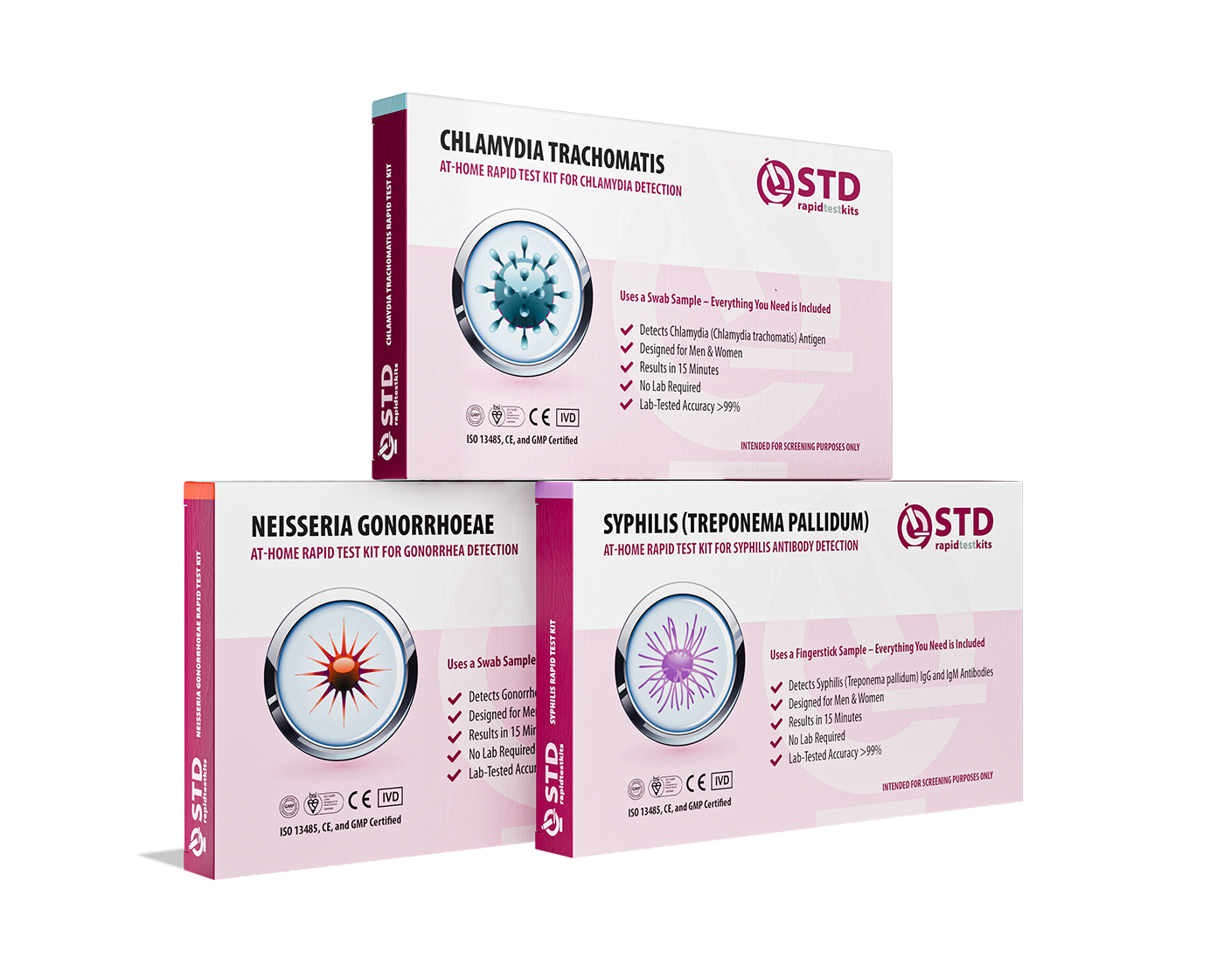
 For Men & Women
 Results in Minutes
 No Lab Needed
 Private & Discreet
Order Now $69.00 $147.00
For all 3 tests
The Symptoms You Can’t Always Trust
One of the cruelest tricks of skin-to-skin STDs is how unpredictable the symptoms can be. Some infections announce themselves loudly, with painful sores or visible warts. Others linger silently for months, even years, before showing a sign. And some never show at all, but still spread.
Herpes often starts with a cluster of blisters that burn or itch. But many people have only a single sore that gets mistaken for razor burn or an ingrown hair. HPV can cause genital warts, but just as often it causes no visible changes, especially in men. Syphilis begins with a single painless bump that may vanish before it’s ever recognized as an infection. This makes visual diagnosis unreliable and dangerous.
Consider Melissa, 34, who thought she had a yeast infection after a weekend hookup. She bought over-the-counter cream, and the itching subsided. Weeks later, a routine checkup revealed she had HPV. Her partner had no symptoms at all. She described feeling “betrayed by my own body.”
Testing Beyond the Condom Line
So how do you find out if you’ve caught a skin-to-skin STD when symptoms aren’t reliable? The answer is testing. But not all tests are created equal, and not all are offered at the same time.
For HPV, routine screening exists mainly for women through Pap smears and HPV DNA testing. Men often only discover HPV if warts appear or if a partner tests positive. Herpes can be swab-tested during an active outbreak, but blood tests vary in accuracy and may give false positives. Syphilis is detected through blood tests, which can take weeks to turn positive after infection.
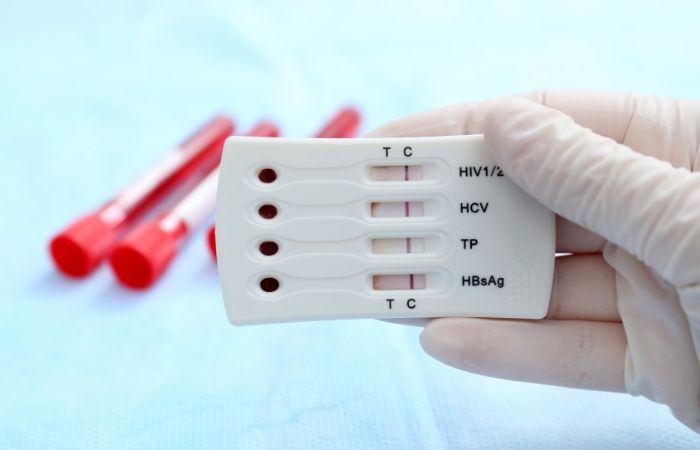
At-home kits, like those from STD Rapid Test Kits, provide discreet options to check for the most common STDs. While not all skin-to-skin infections can be confirmed at home, many, including syphilis, can. This means peace of mind without the clinic wait.
| STD | Best Test Method | Window Period | At-Home Test Available? |
|---|---|---|---|
| Herpes | Swab of sore or blood test | 2–12 weeks for antibodies | Limited, mostly clinical |
| HPV | Pap smear, HPV DNA test | Varies, months to years | No (clinic-based) |
| Syphilis | Blood test (RPR, VDRL) | 3–6 weeks | Yes |
| Molluscum Contagiosum | Visual exam | Variable | No |
Figure 2. Testing methods and availability for common skin-to-skin STDs.
Why Retesting Is Sometimes the Only Way
Even if you test soon after exposure, the result may not be final. Many STDs have “window periods”, the time between infection and when a test can reliably detect it. If you test too early, you might get a false negative. This is especially frustrating for people who did everything right, including condom use, and still worry.
Case in point: A man named Luis, 29, tested for syphilis five days after a risky encounter. His test came back negative. But when sores developed three weeks later, he tested again, this time positive. The first test had been taken too early.
“I thought I was in the clear. The second result floored me,”
This is why many clinics and test-kit providers recommend retesting after the initial window period. For syphilis, that may mean waiting at least 3–6 weeks. For herpes, antibody detection can take even longer. Testing twice is not paranoia, it’s good science.
Condoms Plus: What Else Reduces Risk?
If condoms don’t cover everything, what else can help? Think of protection as a layered approach. Condoms are one layer. Vaccination against HPV is another. Limiting partners, avoiding sex during visible outbreaks, and routine testing all add more layers of defense. Even being honest with a partner about cold sores can help reduce the chance of unexpected transmission.
But here’s the key: these strategies don’t make you “reckless” if you slip. They’re tools, not guarantees. Sex is never risk-free, but it can be safer, kinder, and more informed.
When anxiety is louder than reason, the best thing to do is often to do something. When you order a discreet test kit or make an appointment at a clinic, you turn the unknown into something you can understand. That change alone can help you stop worrying.

People are also reading: Seniors, Sex, and Silent STDs: What Families Need to Know
Why the Shock Feels So Personal
Getting an STD after using a condom often feels like a betrayal. You followed the rules. You did what sex ed and public health campaigns told you to do. And still, here you are, staring at a blister or waiting on a lab result that could change how you see yourself. That shock isn’t just about infection, it’s about trust, identity, and control.
Khadija, 22, remembers crying in her car after being diagnosed with HPV.
“I wasn’t sleeping around. I always used condoms. I thought that meant I was safe.”
Her voice cracked describing the shame she carried.
“I kept replaying everything in my head, wondering what I did wrong.”
But the truth is: she didn’t do anything wrong. Condoms reduce risk. They don’t erase it. And skin-to-skin STDs are proof that risk can exist even when prevention is in place. That’s not a moral failure. It’s biology.
The Silent Spread: Asymptomatic Shedding
One reason these infections persist so stubbornly is that they don’t need symptoms to travel. Herpes is the most famous for this. People with no sores, no tingling, no outward signs can still shed the virus and pass it on. The same is true for HPV. Carriers may go years without knowing they have it, and unknowingly transmit it to partners who later develop warts or abnormal Pap results.
This is why testing and retesting are critical. It’s also why relying solely on a partner’s “I’m clean” or “I don’t have anything” is not enough. Unless they’ve been recently tested for a full panel, including skin-to-skin infections, the reassurance is shaky at best.
Planned Parenthood emphasizes that most people with herpes don’t know they have it. That reality reframes the conversation: if the majority of carriers are unaware, stigma serves no one. Honest talk about uncertainty and risk is safer than false guarantees.
Check Your STD Status in Minutes
Test at Home with RemediumGenital & Oral Herpes Test Kit
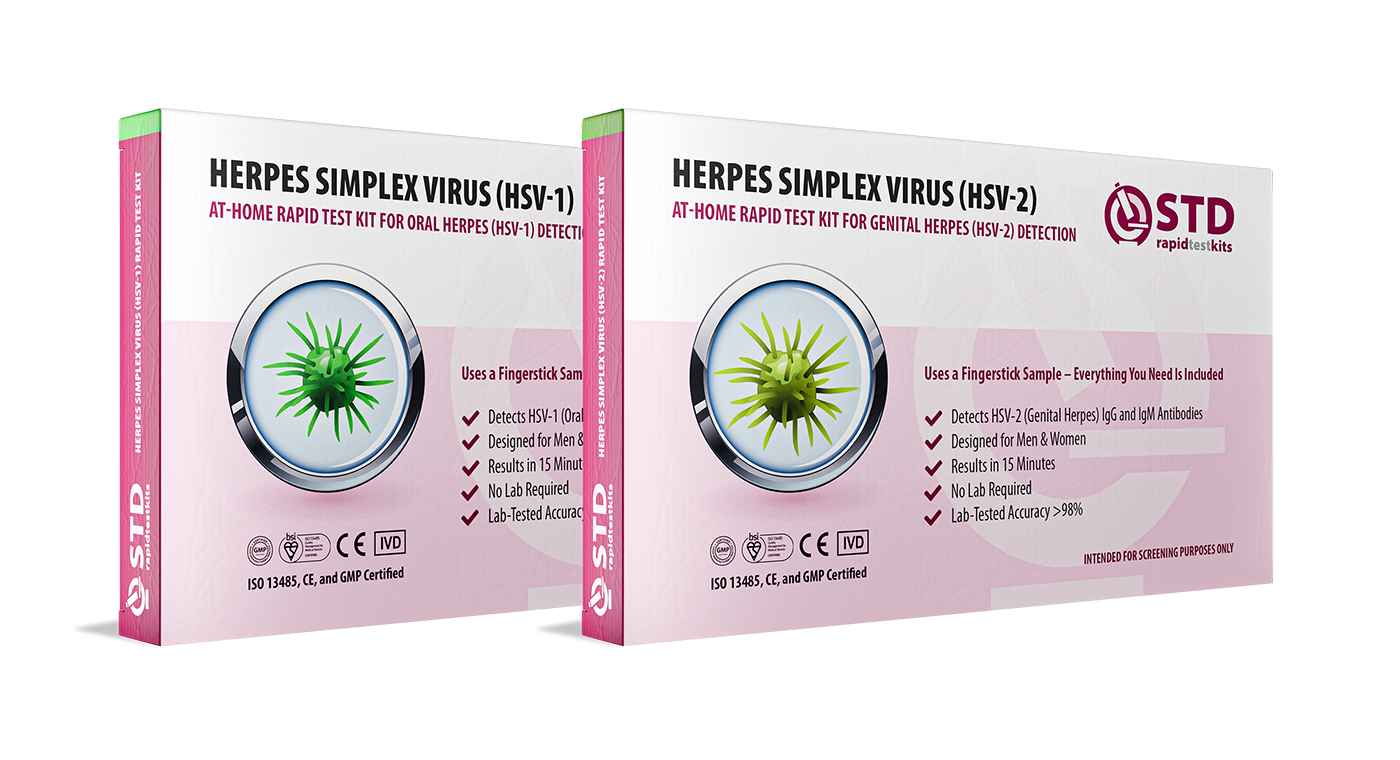 For Men & WomenResults in MinutesNo Lab NeededPrivate & Discreet
Order Now $75.00 $98.00
For all 2 tests
Partners, Disclosure, and the Fear of Rejection
Testing positive for a skin-to-skin STD forces many people into the hardest conversation of their lives: telling a partner. The fear isn’t just about spreading infection, it’s about being judged, abandoned, or branded as “unclean.”
Ramon, 31, tested positive for syphilis after a casual hookup. He agonized over telling his steady girlfriend.
“I thought she’d leave me. I thought she’d call me a cheater, even though I used protection.”
Instead, she cried, then agreed to get tested too. They both started treatment. “It was awful,” he said. “But it also made us stronger.”
This is where stigma does the most damage: it silences people. Yet disclosure, as terrifying as it feels, often creates the path to safety. Partners can test together, treat together, and move forward without secrecy gnawing at the relationship. And with anonymous notification tools now available, even casual partners can be told without direct confrontation.
When the Condoms Aren’t Enough, But You Are
It’s easy to spiral after diagnosis. You may feel dirty, unlucky, or doomed to rejection. But skin-to-skin STDs are among the most common infections on the planet. Most sexually active adults will encounter at least one. And most are manageable with treatment, monitoring, or simply time.
The bigger truth is this: you are not defined by an infection. You are not reckless because biology overruled latex. And you are not alone in this experience. Millions of people share it, even if they rarely talk about it out loud.
That silence is what keeps stigma alive. But when you reach out, to a doctor, a friend, or even an at-home testing service, you take the story back from fear. That act is as powerful as any medication.
Don’t wait in limbo. If you’re worried, you deserve clarity. Order a discreet rapid test kit today and get the answers your body and mind need.
People are also reading: Chlamydia Cases Keep Rising, Here’s Why (And How to Protect Yourself)
FAQs
1. Can I still get herpes if the condom didn’t break?
Unfortunately, yes. Herpes doesn’t care about latex lines, it lives in the skin. Even if the condom stays intact, the virus can shed from areas like the vulva, scrotum, or thighs. Think of it this way: if your bodies are touching outside the covered zone, the virus has a doorway in.
2. Which STDs laugh in the face of condoms?
The biggest culprits are herpes, HPV, and syphilis. They’re skin-to-skin spreaders. Condoms help, but they’re like an umbrella in sideways rain, better than nothing, but you might still get wet.
3. I tested negative right after a hookup. Am I in the clear?
Not necessarily. Most STDs have a “window period” before tests turn positive. If you test too early, it’s like checking your phone for a text before it’s even been sent. Retesting after a few weeks, or when symptoms show up, is the smarter play.
4. What about oral sex, isn’t that safer?
Safer for pregnancy, sure. But oral can pass herpes, HPV, syphilis, and even gonorrhea. A cold sore from kissing can turn into genital herpes after oral. That’s not to scare you, it’s just proof that “safer” doesn’t mean “safe.”
5. My partner swears they’re clean. Should I believe them?
They might be telling the truth as far as they know. But here’s the catch: many people don’t realize they carry HPV or herpes because they’ve never had obvious symptoms. Unless they’ve been recently tested for everything, including skin-to-skin infections, it’s guesswork.
6. Do these infections ever just go away?
Some do. HPV often clears on its own within a couple years, especially in younger people. But herpes sticks around for life (though outbreaks can get milder). Syphilis absolutely needs treatment, it doesn’t politely disappear, it quietly escalates.
7. Can I get herpes or HPV without “real sex”?
Absolutely. Grinding, mutual touching, dry humping, even sharing toys can spread them. One woman I interviewed caught genital herpes during a night of clothed grinding, no penetration at all. That’s why calling it “safe” sex is misleading.
8. Are vaccines part of the answer?
Yes, the HPV vaccine is a game changer. It protects against the strains most likely to cause cancer and warts. No vaccines exist yet for herpes or syphilis, which makes regular testing and condoms still crucial.
9. How often should I be testing?
Once a year is the bare minimum if you’re sexually active. Every 3–6 months if you’ve got new partners, multiple partners, or if you’re just anxious and want peace of mind. Testing isn’t paranoia, it’s self-respect.
10. What if my partner freaks out when I tell them I have something?
Reactions vary. Some people panic, some get angry, some just say, “Okay, what now?” Remember: their fear is about the stigma, not about you. Most STDs are treatable or manageable. The right partner won’t define you by a diagnosis.
You Deserve Answers, Not Assumptions
Finding out you have an STD despite using condoms is not proof of recklessness. It’s proof of how stubborn these infections can be. Skin-to-skin STDs thrive in the blind spots of protection, and that doesn’t make you weak, it makes you human. What matters now is clarity, care, and next steps.
Don’t let fear linger. This discreet at-home combo test kit helps you check multiple infections at once, privately, quickly, and without judgment.
How We Sourced This Article: We combined guidance from leading medical organizations, peer-reviewed research, and lived-experience reporting to make this guide practical and compassionate. Around fifteen references informed the writing; below, we’ve highlighted six of the most relevant and reader-friendly sources.
Sources
1. Planned Parenthood – Herpes Information
2. WHO – Sexually Transmitted Infections Fact Sheet
3. Condom Use: An Overview | CDC
4. Preventing HIV with Condoms | CDC
5. The Lowdown on How to Prevent STDs | CDC
6. About STI Risk and Oral Sex | CDC
About the Author
Dr. F. David, MD is a board-certified infectious disease specialist focused on STI prevention, diagnosis, and treatment. He blends clinical precision with a no-nonsense, sex-positive approach and is committed to expanding access for readers in both urban and off-grid settings.
Reviewed by: Dr. Angela Morris, MPH | Last medically reviewed: September 2025
This article is for informational purposes and does not replace medical advice.


