
Published: September 2025 | Editorial review and quality control: Martina N.
The idea that older adults stop having sex is one of the most stubborn myths in public health. Adults in their 60s, 70s, and 80s are dating, partnering, and reentering the dating pool after divorce or the loss of a spouse. They're also being diagnosed with chlamydia, gonorrhea, syphilis, and HIV at rates that have risen sharply over the past decade, according to U.S. Centers for Disease Control and Prevention surveillance data (CDC STI Surveillance).
This guide is for two readers at once. If you're an older adult who is sexually active or thinking about it again, you'll find concrete answers about which tests matter and how often to use them. If you're a family member worried about a parent or grandparent, you'll find language for a conversation that doesn't feel like a lecture. Either way, the goal is the same: treat sexual health as part of regular health, not an emergency.
Key Takeaways
- Reported STI cases among adults 65 and older have climbed substantially over the past decade, with syphilis, chlamydia, and gonorrhea all showing increases per CDC surveillance.
- The screening tools (rapid lateral-flow tests, NAAT swabs, fingerstick antibody tests) work the same way at 25 or 75, so age alone is not a reason to skip annual STI testing.
This Isn't Just a Phase: Sex After 60 Is Real
There's a strange myth that follows people into retirement, that once you hit a certain age, the sex stops. The data tells a different story. CDC surveillance has documented rising rates of STIs across older age groups (CDC, National Overview of STIs). The reasons aren't what most people assume.
People are living longer and staying sexually active well into their 70s and 80s. Many are dating after divorce or the death of a partner. Apps like SilverSingles and OurTime cater specifically to older adults looking for connection, including sexual ones. In senior living communities, where proximity meets opportunity, intimacy is often rekindled faster than anyone expects.
Take Peter, 72, who moved into a retirement complex after losing his wife. “I didn't expect to meet anyone,” he said. “Then I started having dinner with Gail. One thing led to another. I hadn't bought condoms since Nixon was president.” Older adults came of age before the AIDS crisis, before sex education was mandated in many schools, and long before condoms were normalized in every health class. Many stopped using protection decades ago, often after marriage, and never restarted.
A 2024 Fair Health analysis of more than 47 billion insurance claims found that STI diagnoses rose 4.8% overall from 2020 to 2023, with the biggest jumps in older adults: a 23.8% increase among adults aged 65 and over, and a 16.2% increase among adults aged 55 to 64. Among 19 to 24 year olds, diagnoses actually declined by 6.6% (<a href="https://www.cidrap.umn.edu/sexually-transmitted-infections/std-cases-rose-5-2020-2023-biggest-jumps-among-older-adults-data" target="_blank" rel="noopener">CIDRAP summary of Fair Health data</a>).
Why STDs in Seniors Often Go Undetected
Older adults often don't get tested. Many simply assume they're no longer at risk, holding onto a mental model from their 20s that never updated. STDs registered in their minds as a “young person's problem,” something that happened during wild college years or risky hookups. That assumption lingers into the 60s and 70s.
Another major reason: symptoms are often mild or mistaken for something else. Vaginal dryness, urinary discomfort, fatigue, and joint pain can be dismissed as “just aging.” Those same complaints are also common in chlamydia, gonorrhea, and syphilis. Here's how that confusion plays out in everyday clinical visits:
| Common Misconception | What It Could Actually Be | Why It Gets Missed |
|---|---|---|
| Frequent urination or burning | Chlamydia, gonorrhea | Assumed to be a UTI or bladder changes from aging |
| Fatigue or low-grade fever | Early syphilis, acute HIV | Dismissed as a cold, arthritis, or general aging |
| Vaginal dryness or spotting | Trichomoniasis | Blamed on menopause or hormone changes |
| Rash on palms or soles | Secondary syphilis | Rarely linked to sexual activity by clinicians or patients |
The Numbers Tell a Story Few Are Hearing
State and national data consistently show that older Americans are not aging out of STI risk. The Lancet's healthy-longevity series has highlighted how HIV and other STIs are increasingly diagnosed in adults over 50, with delayed diagnosis being a particular problem in this age group (The Lancet Healthy Longevity). A 2024 narrative review of STIs in older adults published on PubMed Central echoes the same pattern: rising incidence, healthcare barriers, and underrecognized risk profiles (PMC: STIs in the Elderly).
What's fueling this quiet rise? Increased lifespan, lower condom use, and a culture that still treats aging as the end of intimacy. Add the shame and generational silence around sex, and you have risk spreading without ever entering family conversation.
Older women carry an additional vulnerability. After menopause, the vaginal lining becomes thinner and more prone to microtears during intercourse, which can raise transmission risk. Meanwhile, men who use medications for erectile function have intercourse back on the table, often without rethinking protection. The result is a perfect storm: physical vulnerability, unprotected sex, and almost no dialogue.

The Condom Conversation: Why It Still Doesn't Happen
When condoms reappeared in Peter's life, he didn't know what to do. “I felt silly buying them. I didn't even know if I needed them. Gail said she couldn't get pregnant. Neither could I.”
This is common. Many older adults equate condoms only with pregnancy prevention, not STI protection. Because many didn't grow up with comprehensive sex education, that mental shift never happened. Research from the University of Michigan's Institute for Healthcare Policy and Innovation has found that consistent condom use among sexually active adults over 60 is uncommon, with reasons ranging from discomfort to pharmacy embarrassment to a sense that protection “just didn't apply” to them.
That hesitation matters more than it sounds. Infections like HIV can progress faster in older bodies because immune function declines with age, and complications worsen when other chronic conditions are in the mix. An HIV diagnosis at 68 isn't just emotionally isolating, it's medically urgent. And yet, when was the last time your parent, grandparent, or older neighbor mentioned a recent STI test?
How often should sexually active adults over 60 get tested for STIs?
If you're sexually active, plan on a full STI screen at least once a year. Test sooner whenever you have a new partner, after unprotected sex, or when symptoms appear that don't have an obvious explanation. The screening menu (chlamydia, gonorrhea, syphilis, HIV, and trichomoniasis for those with female anatomy) is the same one used for younger adults. Age doesn't change the test recipe, only how often the conversation gets started.
When Testing Isn't Offered, And Why That's a Problem
Ruth, 66, went in for her annual check-up and asked her doctor, offhandedly, if she should be tested “for anything else.” He looked at her and said, “Like what? You're not really at risk.” Ruth had been dating someone new for five months.
This kind of dismissal isn't rare. Many primary-care physicians don't routinely offer STI tests to patients over 60 unless there are visible symptoms or unless the patient asks directly. Many older adults, raised with the idea that polite people don't talk about sex, won't ask. As a result, entire generations go untested. It becomes easier to assume everything's fine. Until it isn't.
The consequences of late diagnoses can be serious. Untreated syphilis can damage the heart, brain, and nervous system. Untreated gonorrhea or chlamydia can cause pelvic inflammatory disease and chronic pelvic pain, even in postmenopausal women. HIV, when caught late, interacts poorly with medications for blood pressure, cholesterol, and diabetes that many older adults already take. Routine testing is essential, full stop.
The Talk No One Wants to Have, But Most Families Need
How do you bring this up with someone who changed your diapers, taught you to drive, or helped raise your kids? Start from love. You're not trying to shame them. You're trying to keep them healthy, independent, and sexually confident.
When Anita, 34, found out her widowed father was going on weekend trips with a woman he'd met at church, she was happy for him. “But I also worried. He wasn't the kind of guy to think about condoms or testing.” Over brunch, she brought it up. “I said, ‘I think it's great you're seeing someone. I just hope you're being safe, and that includes testing.’ He looked embarrassed at first, then he nodded. He said, ‘You're probably right. We didn't talk about this stuff back then.’”
That's often the key. Naming what wasn't available to their generation. Many older adults weren't given tools, they weren't even given language. That doesn't mean they aren't willing. They just need someone to open the door. Here's a practical overview to guide that conversation:
| STI | Common Test Type | Recommended Interval (sexually active seniors) | Why It Matters |
|---|---|---|---|
| Chlamydia | NAAT lab test or rapid swab | Annually | Often silent; easily treated when caught |
| Gonorrhea | NAAT lab test or rapid swab | Annually | Highly contagious, frequently asymptomatic |
| Syphilis | Rapid blood antibody test or RPR/VDRL | Every 1–2 years, or with a new partner | Serious long-term effects if untreated |
| HIV | Rapid antibody test or 4th-generation lab test | At least annually if sexually active | Older immune systems progress faster when untreated |
| Trichomoniasis (women) | Vaginal swab antigen test or NAAT | Annually, or if symptoms appear | Often asymptomatic and easily missed |
How STDs Spread in Senior Living Communities
A Florida retirement community made national news in 2021 when a cluster of syphilis cases was reported. It wasn't the only time. Senior living facilities, especially those that encourage social activities, group outings, and dances, can unintentionally become hotspots for STI transmission. The structure of these communities encourages closeness. Residents dine together, attend movie nights, fitness classes, and worship together. Friendships and romances form quickly, and regular STI screening is almost never part of the wellness program.
Contrary to the bingo-and-news cliche, many residents are dating, kissing, and having sex. There is nothing wrong with that. But the infrastructure around them rarely acknowledges it. Nurses dispense medications for blood pressure and arthritis but don't distribute condoms. Sexual-education seminars are virtually nonexistent. Communal living, for all its benefits, also creates the perfect storm: opportunity, misinformation, and silence in the same building. Families assume that a “safe place” covers sexual health too; most facilities don't proactively offer testing or education.

Older Women, Greater Risk: The Hidden Vulnerability
When people picture STI risk, they often imagine teens and twenty-somethings. They rarely imagine someone like Marisol, 68, soft-spoken, widowed, newly dating after nearly four decades with the same partner. She thought her partner “seemed clean.” They didn't use protection. Two months later, Marisol was diagnosed with trichomoniasis.
What she didn't know, what many older women don't know, is that after menopause the vaginal lining becomes thinner and less elastic. That makes it more susceptible to microtears during intercourse, especially without sufficient lubrication. Microtears provide easy entry points for infections. Layer on a generation raised to avoid conversations about anatomy and pleasure, and you get silence around lubricant, silence around condoms, and silence around the question of testing.
Medical systems compound the problem. Postmenopausal women are less likely to be offered pelvic exams during routine visits, especially when contraception is no longer a concern. If they report vaginal discomfort or unusual discharge, it's often attributed to hormone changes rather than infection. Even the term “STD” feels out of place for many women in their 60s and 70s, who came of age before sexual-health language was part of everyday vocabulary.
Living With HIV at 71: A Turning Point
Paul, 71, thought he had pneumonia. He'd been feeling tired, had lost some weight, and was coughing on and off. His doctor ordered bloodwork. The result: HIV-positive. Paul had no idea. “I didn't even know I was at risk,” he said. “I'd only been with two women since my wife passed. I didn't think that counted.”
Late-life HIV diagnosis is more common than most people think. CDC surveillance data shows that more than half of people living with diagnosed HIV in the United States are aged 50 and older, and a meaningful share of new HIV diagnoses occur in that age group (CDC HIV Surveillance, age demographics). Because symptoms can mirror normal aging (fatigue, weight loss, memory changes), it often goes undetected longer, which leads to worse outcomes.
The shame runs deep. Some older adults fear being judged not only for having sex, but for daring to enjoy it. They fear rejection from family, disapproval from peers, and misunderstanding from providers. Many grew up in eras when homosexuality was criminalized, when sex education was taboo, and when “proper” people didn't discuss these things. And yet, here they are, living full lives, falling in love again, navigating a health system that often forgets they exist. Paul's caseworker said something that stuck with him: “The virus doesn't care how old you are. But we do.”
Reported cases of syphilis, gonorrhea, and chlamydia have continued to rise across U.S. age groups in recent years, and surveillance data shows substantial increases in the 65-and-older age group. Older adults are not aging out of STI risk, and screening guidance applies to sexually active adults of any age (<a href="https://www.cdc.gov/sti-statistics/" target="_blank" rel="noopener">CDC National STI Surveillance</a>).
The Language Barrier: What We Say vs What They Hear
Sometimes the conversation fails on vocabulary alone. Older adults may not resonate with clinical shorthand like “STI” or cultural terms like “hookup.” They may not know what a rapid antigen test is or how to self-collect a swab at home. What resonates instead is simpler language built around peace of mind, staying healthy, and a routine check just in case. Offering information in the vocabulary someone actually uses is a service, not a compromise.
Framing matters as much as content. The same testing recommendation can land as a lecture or as a thoughtful suggestion depending on word choice. Here's how to swap clinical phrasing for language that opens the door:
| Instead of saying | Try saying | Why it lands |
|---|---|---|
| “You should get tested for STDs.” | “It might be smart to do a health check, just to rule things out.” | Frames testing as routine care, not a moral judgment |
| “You need to start using condoms.” | “There are ways to make sex safer and still enjoyable. Want to talk about that?” | Invites a conversation rather than issuing a directive |
| “You're at risk for an STI.” | “A quick screening could give you peace of mind before things go further.” | Replaces clinical jargon with familiar, everyday motivation |
Normalizing Testing: The New Family Wellness Talk
For decades, we've had “the talk” with our kids, the awkward but necessary conversations about bodies, protection, and safety. It's time to have those talks in reverse, too. It can be as simple as sharing your own experience. “I did one of those at-home tests before I started dating again. It was easy.” That kind of casual mention plants a seed without pressure.
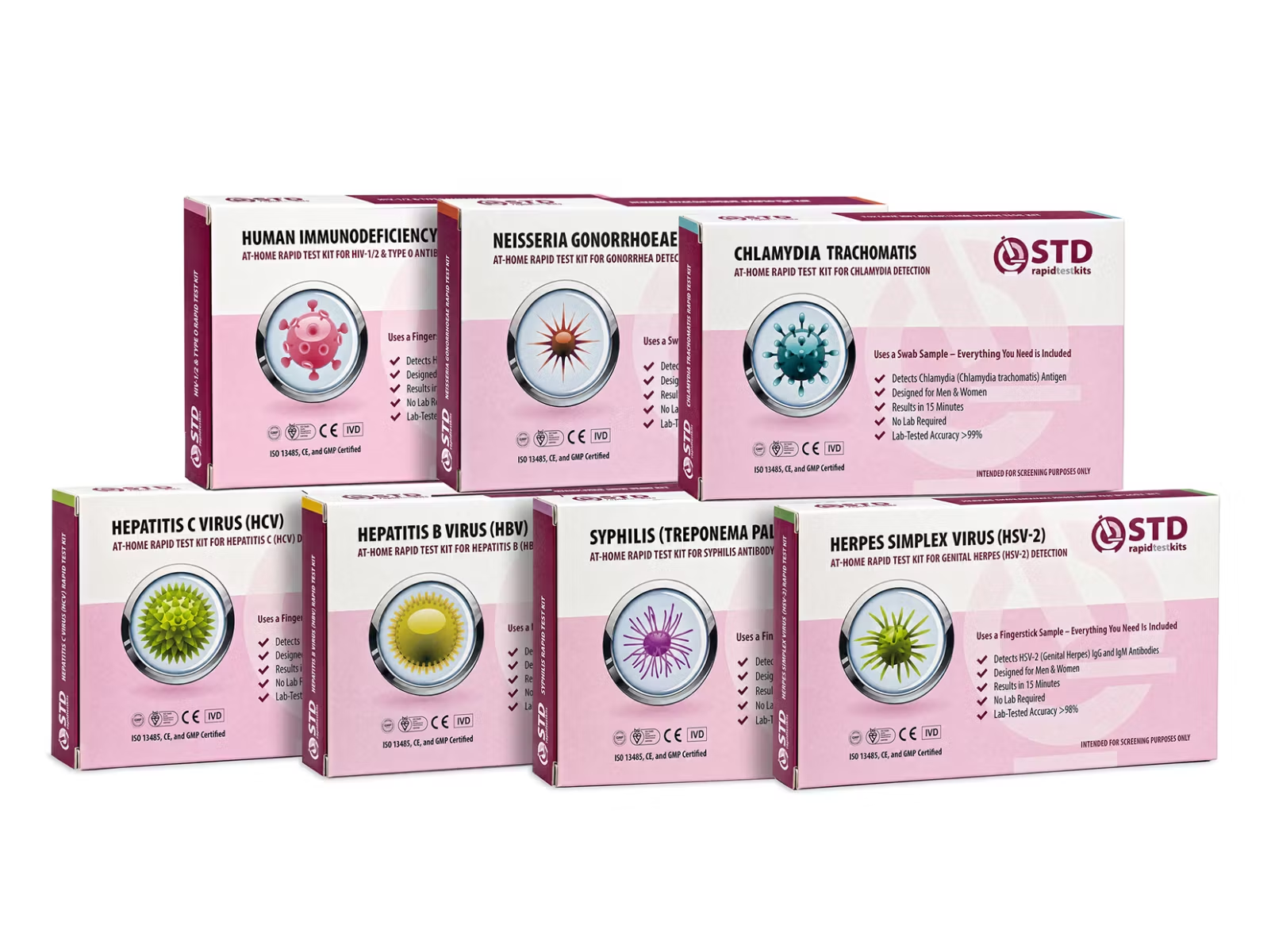
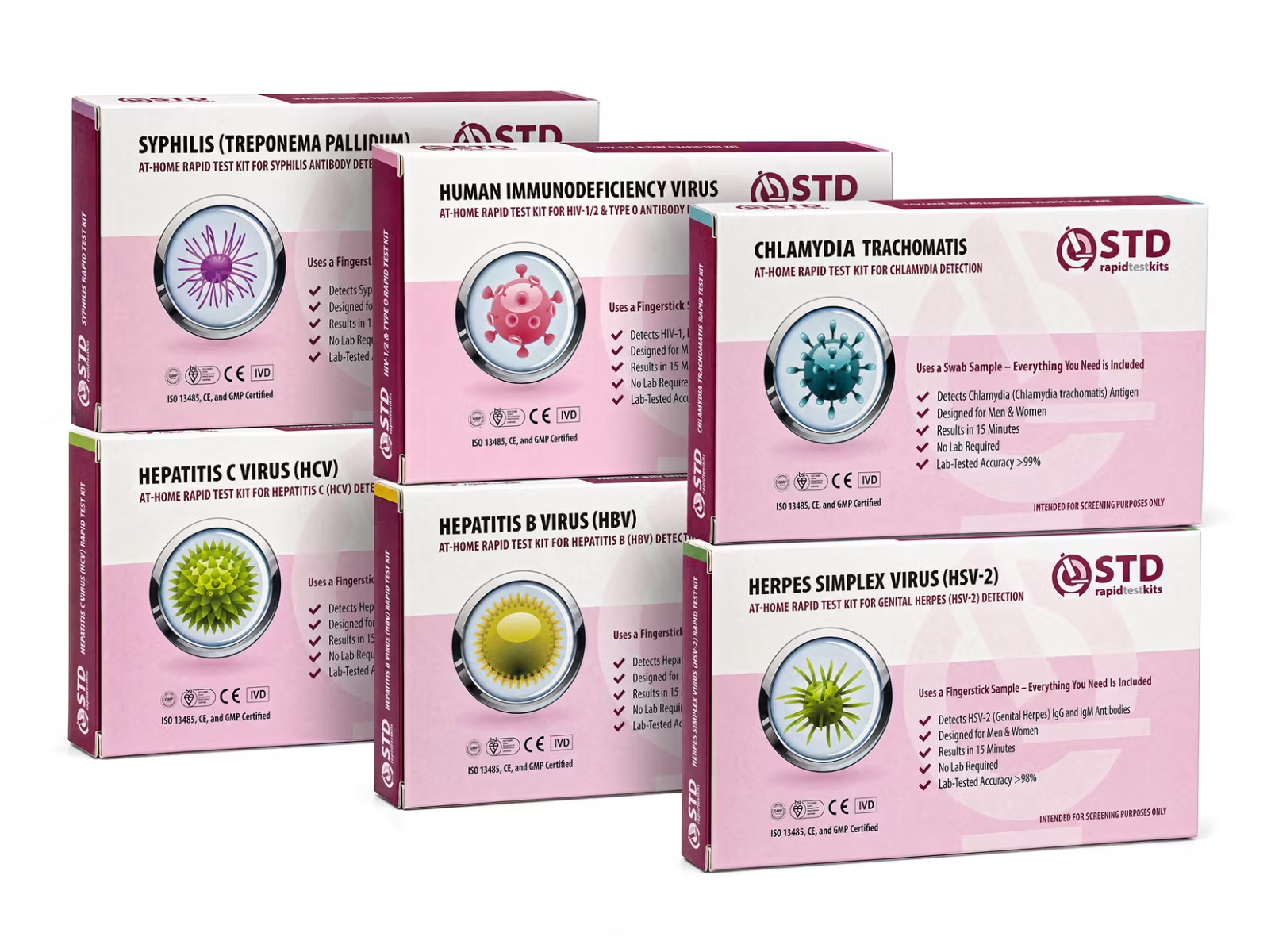
You don't need to preach. You don't need to over-explain. You just need to show that testing is normal, responsible, routine, whether you're 22 or 72. At-home rapid lateral-flow kits (the same strip-based technology used in home COVID tests) make screening private, fast, and accessible for older adults who feel embarrassed walking into a clinic or who live far from one.
At-home rapid lateral-flow kits screen for likely infection in about 15 minutes using a fingerstick blood draw or self-collected swab. Lab NAAT (nucleic acid amplification testing) remains the analytical gold standard for confirmation, especially after a positive home result. Treat the home kit as an accessible first step, then loop in a clinician for confirmation, treatment, and partner notification if anything comes back positive.
You Deserve Answers, Not Assumptions
Whether you're an older adult navigating love again or a family member who wants to protect someone you love, talking about testing is one of the most respectful things you can do for someone you love. Sex doesn't end at 60. Neither does care, safety, or pleasure. The culture may still be catching up, but you can lead by example. Don't wait and wonder. Get clarity, not assumptions.
Your next two steps
- Open the conversation in their vocabulary: a routine health check, peace of mind, just in case. Skip clinical jargon and keep the tone matter-of-fact.
- Pick a rapid at-home kit that covers the infections most relevant to recent partners or symptoms, and treat any positive result as the starting point for a clinician follow-up, not the end of the process.
FAQs
- Can older adults really get STDs?
- Yes. STI rates among adults 65 and older have climbed substantially over the past decade per CDC surveillance, and Fair Health insurance-claims data show diagnoses in the 65-plus group rose 23.8% from 2020 to 2023. Sexual activity continues well into the 70s and 80s, and without consistent condom use, infections spread the same way they do at any age.
- Why are STD rates climbing in senior living communities?
- Senior living facilities are structured for closeness. Shared meals, group events, and proximity create opportunities for connection that often turn into intimate relationships. Most facilities don't offer routine STI screening, don't distribute condoms, and don't include sexual health in their wellness programming, which lets risk compound quietly.
- If pregnancy isn't a concern, why use condoms?
- Condoms block infections, not just sperm. Many older adults stopped using them once pregnancy was no longer a concern, never making the mental shift to thinking of them as STI protection. STIs don't care about menopause or fertility status.
- What symptoms should older adults watch for?
- Many STIs are silent in older adults, so symptoms aren't a reliable trigger for testing. When symptoms do appear (burning with urination, unusual discharge, fatigue, rash on palms or soles), they often get brushed off as a UTI, arthritis, or general aging. Annual screening matters more than symptom-watching.
- Is HIV still a real concern for older people?
- Yes, and it's often diagnosed late. CDC surveillance shows that more than half of people living with diagnosed HIV in the United States are aged 50 or older. Late diagnosis is particularly common because symptoms (fatigue, weight loss, cognitive changes) can mimic normal aging. HIV is manageable with early antiretroviral treatment, but treatment depends on knowing the infection is there.
- Is at-home testing complicated for someone in their 70s or 80s?
- No. Rapid lateral-flow home tests are designed for self-collection, with clear instructions and a 15-minute readout. If someone can use a microwave or a smartphone, they can use these. They offer privacy and discretion without a clinic visit. A positive home result is still worth confirming with a lab test through a clinician.
- How often should sexually active older adults get tested?
- Once a year is a reasonable baseline if you are sexually active. Test sooner with a new partner, after unprotected sex, or when symptoms appear. This matches CDC's general screening recommendations for sexually active adults of any age.
- How can I bring this up with a parent or grandparent without making it weird?
- Come from care, not critique. Try “I love that you are living fully, and I want you to stay safe too.” Offer to help them find a test or leave the information for them to read on their own time. If they say no, respect it. Sometimes the conversation lands later, after the moment has passed.
How We Sourced This Article: Our article was constructed based on current guidance from leading public-health and medical organizations (CDC, NIH, WHO, The Lancet's healthy-longevity series) plus peer-reviewed reviews indexed in PubMed Central, and then translated into plain language around situations older adults and their families actually face. We do not provide clinical diagnosis. For symptoms that concern you, see a licensed provider.
- U.S. Centers for Disease Control and Prevention. National STI surveillance: annual reports on chlamydia, gonorrhea, and syphilis incidence across U.S. age groups.
- U.S. Centers for Disease Control and Prevention. HIV surveillance demographic data, including the proportion of people with diagnosed HIV aged 50 and older.
- CIDRAP (University of Minnesota Center for Infectious Disease Research and Policy). Summary of Fair Health insurance-claims analysis showing STD cases rose 4.8% from 2020 to 2023, with a 23.8% jump in adults 65 and older.
- Sexually Transmitted Infections in the Elderly: A Growing Concern in Geriatric Care. Narrative review covering STI epidemiology, risk factors, and healthcare barriers in older adults. PubMed Central, 2024.
- The Lancet Healthy Longevity. Editorial and research coverage of HIV and STIs in older adults, including patterns of delayed diagnosis.
