Published: November 2025 | Last updated: May 2026 | Editorial review and quality control: Martina N.
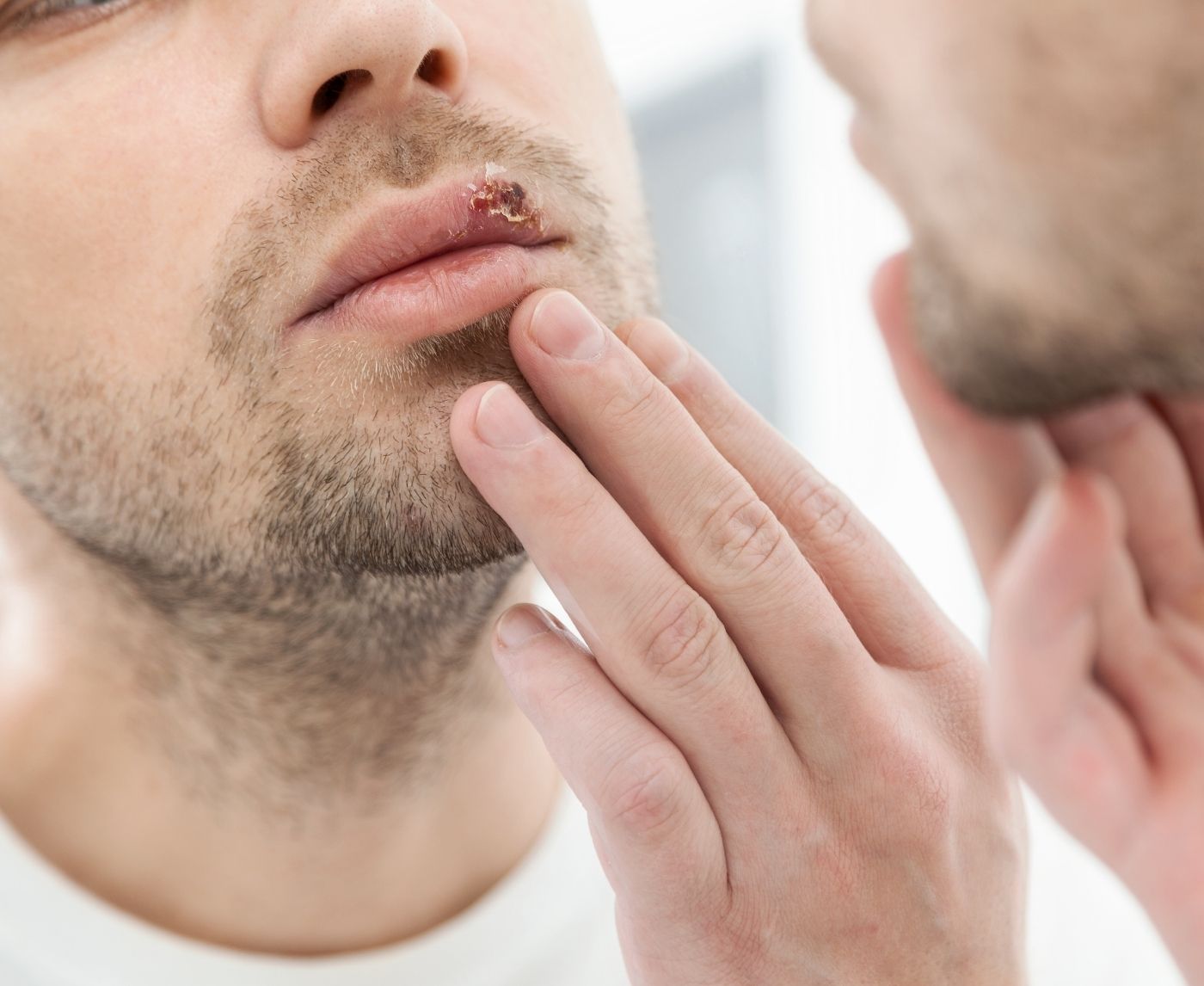
There is a particular kind of dread that arrives with a familiar tingle, itch, or burn after months of feeling fine. You thought the worst was behind you. You took your meds, healed up, moved on. And then your body says: not so fast. If that is the loop running in your head right now, the first thing to know is that this is almost never a brand new infection. It is the same virus you already carry, reactivating from inside your own nerve cells where it has been quietly waiting.
Herpes simplex virus lives in the body for life. Treatments suppress flares; they do not eradicate the virus. That sounds bleak on first read, but most people see outbreaks taper in frequency and intensity over the years as the immune system learns to keep the virus in check. Getting symptoms again is biology behaving the way it tends to, not evidence that you have failed at managing your health.
Key Takeaways
- Recurring herpes symptoms are almost always reactivation of the virus you already carry, not a new infection from a recent partner.
- Outbreaks typically grow shorter and less frequent over time, and daily antiviral medication reduces both their number and the risk of passing the virus to an unaffected partner.
This Isn't a “New” Infection, Even When It Feels Like One
The whiplash of waking up to a familiar symptom after months of quiet is real. So is the shame spiral that often follows. Both are common, and both are amplified by a misunderstanding repeated across the internet: that herpes “comes back” the way a cold does, through fresh outside exposure, which is not what is happening. Once herpes simplex virus settles into the body, it takes up residence in nerve cells near the spine. There it sits, quiet but alive, in a state called viral latency. The CDC's overview of genital herpes notes that this dormancy is a defining feature of the infection, not a sign that treatment has failed.
From those nerve cells, the virus can travel back to the skin during certain triggers and cause an outbreak. The trigger does not have to be sexual. A fever from a flu, a sunburn on the lips, a stressful month at work, a menstrual cycle, dental work, or a major emotional event can all set things off. Your immune system briefly loosens its grip on the virus, the virus seizes the moment, and a visible flare follows the nerve route back to skin or mucous membrane. Understanding this changes the question from “what did I do wrong?” to “what tipped the balance this time?”
The trigger does not have to be sexual or new-partner-related. Reactivations most often follow:
- Fever or other acute illness (flu, COVID, even bad colds)
- Sunburn and sustained UV exposure (especially for HSV-1)
- Menstruation and hormonal shifts
- Major or sustained emotional stress
- Surgery, dental work, or other physical trauma to nearby tissue
- Sleep deprivation over several days
Reinfection or Reactivation? The Difference Matters
When symptoms return, the first instinct is often to wonder whether a partner gave it to you again. In the vast majority of cases, the answer is no. What you are experiencing is reactivation of your existing virus, not a fresh exposure. After the initial infection, the virus moves into a nerve cell bundle called the dorsal root ganglion. It does not replicate or roam while it is dormant. It waits. Triggers tell it when to wake.
True reinfection is rarer, and when it does happen it usually means exposure to a different strain than the one you already carry. The clearest example is someone with HSV-2 picking up HSV-1, or the other way around. The WHO fact sheet on herpes simplex virus notes that HSV-1 and HSV-2 are distinct viruses and that the same person can carry separate infections from each, though that double exposure is uncommon.
Why does this distinction matter? Because the response is different. If symptoms are reactivation, your levers are trigger awareness, immune support, and antiviral medication when frequency or severity warrant it. If you suspect new exposure, testing for a second herpes type or for other STIs becomes the priority. Most of the time, a careful look at timing and pattern points to reactivation. Many people describe the experience as a kind of grief, a sense of “I thought I was past this.” The honest answer is that you are not past it, because nobody fully gets past it. But you can get good at living with it.
Reactivation is your existing virus waking up from nerve cells where it has been dormant. It is by far the most common cause of a returning symptom, and the trigger is usually internal: stress, illness, hormones, or fatigue.
Reinfection means a brand new exposure, usually to the other herpes type (HSV-1 if you already have HSV-2, or vice versa). It is uncommon, and most cases that feel like “catching it again” turn out to be reactivation when a clinician looks closely.
Patterns of Recurrence Depend on Which Herpes You Carry
HSV-1 and HSV-2 share roughly half of their genome, but they behave differently inside the body. HSV-1 strongly prefers the mouth and face. When it does cause a genital infection, it tends to recur far less often than HSV-2 in the same anatomy. HSV-2 favors the genital area and is significantly more prone to repeated flares there. Knowing which type you carry is one of the most useful pieces of information for predicting what to expect.
The table below summarizes typical patterns. Real-world recurrence varies widely from person to person, so treat it as a rough map rather than a forecast. Some people land in the middle of the ranges. Some never get visible symptoms even though they are carrying the virus and occasionally shedding it.
| Herpes Type | Common Location | Recurrence Rate | Typical Triggers |
|---|---|---|---|
| HSV-1 | Mouth, occasionally genitals | Low (especially in the genital area) | Fever, sunburn, dental work, stress |
| HSV-2 | Genitals, buttocks, thighs | Moderate to high | Illness, menstruation, friction, emotional stress |
When It's Not Herpes, But Still Feels Like It
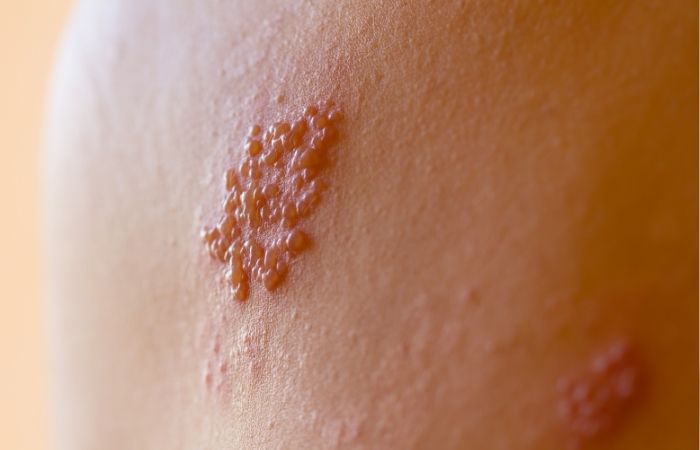
One of the stranger side effects of a herpes diagnosis is that your body becomes a much more attentive narrator. Any tingle, burn, redness, or itch in the same area sets off alarm bells. Sometimes that alarm is right. Sometimes it isn't. A negative swab during what feels exactly like an outbreak happens more often than people expect, and the cause is often something else entirely.
The list of look-alikes is long. Yeast infections, eczema, contact dermatitis from new soaps or laundry detergent, razor burn, friction from clothing or sex toys, and allergic reactions to lubricants or condoms can all produce sensations that feel suspiciously familiar. Bacterial vaginosis, hormonal changes around menstruation, or post-menopausal dryness can produce burning and irritation that mimics a flare. Fungal infections and chafing are common culprits for people with penises.
The practical move is to get retested if symptoms are new, escalating, or accompanied by unusual discharge. A swab during an active lesion is the most informative test you can run. If the swab is negative and symptoms persist, the next step is a clinician who can look at the area in person and rule out the alternatives above. Treating every itch as a flare and reaching for antivirals every time tends to produce more anxiety than relief; treating every itch as a question worth answering tends to produce both better outcomes and a calmer baseline.
How Often Does Herpes Come Back, and Will It Ever Stop?
This is the question most people actually want answered, and the honest reply is that it depends and it changes over time. In the first year after a primary HSV-2 infection, four to six outbreaks is common, often with more intense symptoms. By year three, the average is typically half that or less. Many people eventually reach a quiet baseline of zero to two outbreaks per year, sometimes none at all for long stretches.
Several factors shape the trajectory. The strength of your immune system, your stress and sleep patterns, whether you take daily antiviral medication, and the type of virus you carry all play a role. The CDC's STD treatment guidelines for herpes note that suppressive antiviral therapy significantly reduces both the frequency of recurrences and the amount of asymptomatic shedding, which has knock-on effects on transmission risk to partners.
The table below maps a typical timeline. As with the HSV-type comparison above, treat it as a guide rather than a guarantee. Two people with identical diagnoses can have very different lived experiences of the virus.
| Time Since First Infection | Average Outbreaks Per Year | Common Notes |
|---|---|---|
| 0–1 year | 4–6 outbreaks | Higher frequency, often more intense symptoms |
| 1–3 years | 2–4 outbreaks | Immune system begins regulating viral reactivation |
| 3+ years | 0–2 outbreaks | Many people experience no visible symptoms for long stretches |
Suppressive Therapy: When Should You Consider Daily Medication?
If outbreaks are interfering with your sex life, your sleep, or your peace of mind, daily antiviral medication is worth a conversation with your clinician. The two most common options are valacyclovir and acyclovir, taken once or twice a day depending on the regimen. The medications work by interfering with the virus's ability to replicate, which both prevents flares and reduces the amount of virus you shed between flares.
This is not reserved for severe cases. There is no minimum outbreak threshold you have to clear to be eligible. It is a quality-of-life decision. If a daily pill gives you confidence in your relationships and quiet in your body, that is a valid reason to take it. According to the CDC's STD treatment guidelines for herpes, treatment with valacyclovir has been shown to decrease the rate of HSV-2 transmission to a susceptible partner, on top of reducing how often outbreaks occur.
If cost is a barrier, generic versions of both drugs are widely available and most are affordable through telehealth services or pharmacy discount programs. Talk through side effects, which are usually mild, and any interactions with other medications you take. The decision can be revisited at any time. Many people start daily antivirals during a high-stress life period, taper off when things settle, then restart if outbreaks pick up again.
Why You Might Still Test Positive, Even When You Feel Fine
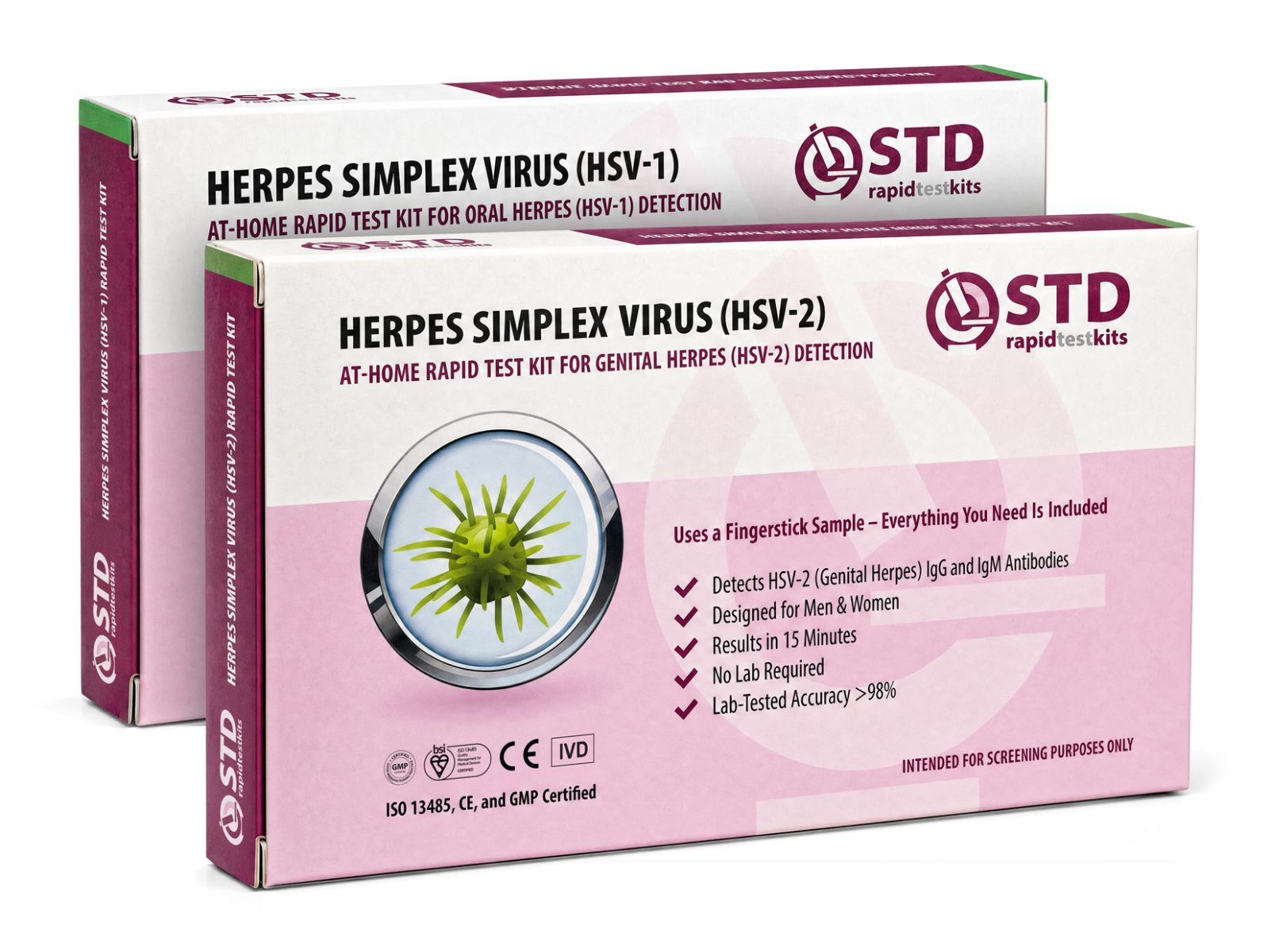
Herpes testing creates more confusion than almost any other STI test, and a lot of that confusion is structural. Unlike chlamydia or gonorrhea, which clear with antibiotics and can be re-tested to confirm cure, herpes does not leave the body. Test results are therefore telling you about your immune system's memory of the virus, not whether you currently have an active infection on the day of the test.
If you have visible lesions, a swab from those lesions sent for PCR is the most specific test available. Once the lesion has healed, that option is gone. A blood test for type-specific IgG antibodies remains useful, but it is interpreting the past, not the present. A positive IgG result usually means you have been exposed to the virus at some point, often long enough ago that the immune system has built durable antibodies that will likely persist for life.
This is why test results from months after a treatment cycle often leave people more confused than reassured. The antibody result will continue to show positive, even when you have no current symptoms and pose minimal day-to-day transmission risk. If a result is confusing or seems to contradict your symptoms, ask which specific test was run (PCR, type-specific IgG, or IgM). According to the CDC's STD treatment guidelines for herpes, type-specific IgG serology is the recommended antibody test for routine diagnosis; IgM testing for herpes is not recommended because of well-known reliability problems and because a positive IgM does not reliably distinguish a new infection from an established one.
Most genital herpes infections are spread by people who do not know they are infected or who do not have symptoms when transmission occurs.
How to Prevent Future Flares Without Losing Your Mind
Nobody can guarantee a fully outbreak-free future, and chasing one tends to make recurrences worse by adding stress to the equation. What you can do is reduce frequency, blunt severity, and build a calmer relationship with your body's signals. Most of the work is unglamorous: sleep, hydration, stress management, and food that keeps your energy stable. None of this is unique to herpes; it is general immune support, and it pays off.
Pattern-tracking is a quietly powerful tool. Many people notice their flares clustering around specific triggers. Once you see a pattern, you can plan around it. For some people, that means having a short course of antivirals on hand to start at the first warning tingle (sometimes called the prodromal sensation, the early signal that often precedes a visible sore). For others, it means daily suppressive therapy during seasons of high stress and pausing it when life calms down. Both are legitimate strategies; the right one depends on your pattern and your priorities.
- Notice clusters: most people's flares tie to a few short nights of sleep, a viral cold, or sustained stress.
- Track the week before a period if you menstruate; hormonal shifts are one of the most reliable triggers.
- Watch for sun exposure patterns, particularly for HSV-1 around the lips.
- Note friction triggers: a new exercise routine, a particular activity, or a piece of clothing can set things off without you connecting the dots.
- Keep a short course of antivirals from your clinician so you can start at the first warning tingle rather than waiting for a full lesion.
- Reassess your suppressive-therapy decision every few months; many people cycle on and off based on what is happening in their lives.
Let's Talk About Sex After Herpes
Sex after a herpes diagnosis or a recent flare is possible, common, and often more honest than what came before. The hardest part for most people is the disclosure conversation, and the second hardest is recalibrating after the first time a partner reacts well. The temptation is to brace for rejection and then be caught off guard when the response is matter-of-fact understanding. Many partners already know someone with herpes. Many have it themselves without knowing.
A few practical principles tend to help. Disclose during a calm moment, not in the heat of physical intimacy. Lead with facts: the type you carry, whether you take suppressive medication, and what you do to reduce risk. Allow space for questions. Most people who react badly are reacting to surprise rather than to herpes itself, and you can reduce surprise with timing.
For protection, condoms and dental dams reduce transmission risk but do not eliminate it, because the virus can shed from skin outside the area a condom covers. Daily suppressive therapy adds a substantial second layer of protection. The combination of barrier methods and suppressive antivirals significantly reduces risk, but does not bring it to zero. The goal is informed consent on both sides, not perfection. Couples where one partner has herpes and the other does not often build long, satisfying relationships once both understand the actual numbers and the trade-offs they are choosing.

When to Retest, and What Retesting Actually Tells You
Retesting is not about confirming a cure for herpes; herpes does not have a cure to confirm. Retesting becomes useful in a handful of specific situations.
If you test during an active outbreak, a lesion swab is the most informative option. If you are between flares, type-specific IgG blood testing is the standard. Avoid IgM-only herpes blood tests; they are prone to both false positives and false negatives, and the CDC's treatment guidelines recommend against them. Bear in mind that antibodies take roughly 12 weeks (and sometimes up to 16 weeks for certain assays) to develop after a new infection, so a negative test soon after a suspected exposure is not always final. If your timing is uncertain, repeat the test after the antibody window has passed.
The situations where retesting earns its place are worth listing:
- Your original diagnosis was uncertain and you want clarity from a type-specific antibody test.
- You are entering a new relationship and want to know which types you carry so you can have a precise disclosure conversation.
- You have new symptoms after a long quiet period and want to confirm they are herpes-related rather than one of the look-alike conditions described earlier.
- You had a possible exposure to a different STI alongside your existing herpes and want a broader panel to rule things out.
You're Not Dirty, You're Human
A herpes diagnosis can feel like a verdict on your character, and that is a story we have been told by culture, not by medicine. Infections that pass through skin contact are not a moral failure. They are a feature of being human, having skin, and being intimate with other people. Herpes is one of the most common viral infections worldwide. According to the CDC's herpes overview, genital herpes is one of the most common STIs in the United States, with hundreds of thousands of new infections each year, and many people who carry the virus never realize it.
The work of getting on with life with herpes is partly medical and partly psychological. The medical part has clear options: antivirals, testing, disclosure scripts, barrier methods. The psychological part is slower and is mostly about replacing reflexive shame with information. Online communities, telehealth clinicians experienced with sexual health, and reading honest accounts from people who manage herpes openly all help. So does noticing that the worst predictions you make about how partners will react usually do not come true. Most people respond to honest disclosure with honest curiosity, not horror.
You Deserve Answers, Not Assumptions
If your herpes is coming back and you are tired of not knowing what is going on inside your body, the first move is information. Whether that means asking a clinician for a specific test, starting daily suppressive therapy, or simply tracking your triggers for a few months, the path forward begins with concrete data rather than catastrophizing. The body you have is the same one you have always had. The work is learning to listen to it without panic, and acting on what it tells you.
FAQs
- Can I actually catch herpes again?
- Not in the way most people fear. Once you have one type of HSV, it stays in your body for life, so recurring symptoms are almost always your existing virus reactivating rather than a fresh infection. The only real reinfection scenario is picking up the other type (HSV-1 if you already have HSV-2, or vice versa). That second exposure is uncommon, and most flares clinicians evaluate turn out to be reactivation of the type the person already carries.
- Why does herpes flare when I'm stressed?
- Stress weakens the immune surveillance that normally keeps the virus dormant. Lack of sleep, illness, hormonal shifts, intense emotional events, and even sustained UV exposure all do similar things. The body is not punishing you; it has briefly let its grip on the virus slip. Recognizing your triggers and addressing them (sleep, rest, and sometimes antivirals at the first warning sign) often shortens or prevents the flare entirely.
- Can I spread herpes when I don't have symptoms?
- The short answer is yes. The virus can shed from the skin even when no sores are visible, especially with HSV-2 in the genital area. According to CDC guidance, the majority of new genital herpes infections come from partners who had no visible symptoms at the time. This is why barrier methods and, when appropriate, daily antiviral medication still matter between flares.
- I tested positive but never had clear symptoms. How?
- This is common. A large share of herpes infections are mild enough to be missed or mistaken for something else: a small itch that healed on its own, a brief tingle, or no symptoms at all. A positive antibody test means your immune system has met the virus at some point in the past; it does not always mean you had an obvious outbreak.
- Do I need to get retested after every flare?
- Not if symptoms match your known pattern and your diagnosis is confirmed. Retesting earns its place when symptoms feel different, move to a new area, are unusually painful, or arrive alongside concerning signs like unusual discharge, lymph node swelling, or fever. In those cases, a swab during the active flare can rule out coinfections.
- How do I tell a new partner without scaring them away?
- Pick a calm, private moment that is not in the middle of physical intimacy. Lead with facts: the type you have, whether you take suppressive medication, and what you do to reduce transmission risk. Frame it as one part of your health, like an allergy or a migraine pattern. Most partners respond with curiosity rather than rejection. If someone reacts badly, that is a compatibility signal, not a verdict on you.
- Can I still have a great sex life with herpes?
- Plenty of people in long-term relationships with mixed HSV status have full, satisfying sex lives. The combination of honest disclosure, suppressive medication where indicated, and consistent use of condoms or dental dams keeps real-world risk low enough that most couples find a workable rhythm. The diagnosis often forces clearer communication, which most people end up valuing in retrospect.
- What if my outbreak just isn't going away?
- Most flares clear in one to two weeks. If sores last longer than that, get more painful instead of better, or come with fever, swollen lymph nodes, or new symptoms in unusual places, see a clinician. You may need a different antiviral dose, or there may be a secondary bacterial infection or coinfection alongside the herpes that needs separate treatment.
How We Sourced This Article: Our article was built from current public-health guidance (CDC, WHO, NHS) and dermatology/infectious-disease references, then molded into plain-English language around the situations people actually experience with recurring herpes symptoms. It is summary, not diagnosis. For symptoms that concern you, see a licensed clinician.
- U.S. Centers for Disease Control and Prevention. Genital herpes overview, transmission, prevalence framing, and asymptomatic shedding information.
- U.S. Centers for Disease Control and Prevention. STD treatment guidelines for herpes simplex virus, including suppressive antiviral therapy and type-specific IgG serology recommendations.
- World Health Organization. Herpes simplex virus fact sheet covering HSV-1 and HSV-2 distinctions, global prevalence, and clinical course.
- National Health Service (UK). Genital herpes patient resource covering triggers, recurrence patterns, and management.
- Mayo Clinic. Genital herpes symptoms, causes, recurrence frequency, and treatment overview.
- American Sexual Health Association. Patient-facing herpes resource on disclosure, testing options, and living with HSV.
- Planned Parenthood. Understanding herpes patient resource covering disclosure and partner-communication framing.
