Published: November 2025 | Last updated: May 2026 | Editorial review and quality control: Martina N.
A sore on the penis is rarely something you want a second opinion on, especially the kind that comes with a panicked Google search history. The reassuring part: the cause is usually identifiable, the testing is straightforward, and most causes have specific treatments that work quickly when started early.
This guide walks through the four most common sore patterns, the non-infectious causes that mimic them, and what to actually do once a sore appears. Concrete information, not a sales pitch and not a doomscroll.
Is a sore on the penis always an STI?
No. Penile sores can come from syphilis, genital herpes, or chancroid, and they can also come from friction injuries, contact dermatitis, ingrown hairs, candida, or skin conditions like lichen planus. The pattern matters: a single painless ulcer that heals on its own is the classic primary syphilis chancre and needs blood-test follow-up even after it disappears, while clustered painful blisters point toward herpes. Any sore that lasts longer than 7 to 10 days, recurs, or appears after a new sexual exposure deserves testing.
Key Takeaways
- A sore on the penis can be syphilis, herpes, or chancroid, but it can also be friction, an allergic reaction, or a skin condition. The morphology (painful vs painless, single vs clustered, ulcer vs blister) narrows the cause.
- Painless sores are not safer sores. Primary syphilis chancres heal on their own in 3 to 6 weeks, and the infection keeps spreading after the ulcer is gone.
What a sore on the penis usually means
"Sore" is a loose word. In the clinic it covers anything from a single round ulcer to a cluster of small blisters to a flat red itchy patch. Each pattern points toward a different short list of causes, which is why dermatologists and sexual-health clinicians ask the same first three questions: Does it hurt? Is it one or many? Has it healed and come back?
Four sexually transmitted infections account for most STI-related penile sores: syphilis (a single painless ulcer with a raised firm border), genital herpes (clustered painful blisters that break and crust), chancroid (a painful soft-edged ulcer, rare in the U.S. but possible), and genital warts from HPV (cauliflower-shaped growths rather than ulcers, sometimes mistaken for skin tags). Each has a distinct visual pattern, a distinct testing approach, and a distinct treatment.
The rest are non-infectious or non-STI infections: friction injuries, contact dermatitis from a new lube or laundry detergent, candida (yeast), bacterial folliculitis, ingrown hairs after shaving, and chronic skin conditions like psoriasis, eczema, or lichen planus. These don't transmit through sex, but they can look unsettlingly similar to an STI sore in the first day or two.
How the four common STI sore patterns differ
Most STI-related penile sores fall into one of four categories. The differences in pain, count, and healing course are how clinicians narrow the diagnosis before testing confirms it. The table below summarizes what to look for, with the caveat that visible inspection alone is unreliable. CDC's STI treatment guidelines on genital ulcer evaluation state plainly that "a diagnosis based only on medical history and physical examination frequently can be inaccurate," which is why clinic visits for visible lesions usually include a swab.
| Cause | Pain | Number | Edges and base | Course without treatment |
|---|---|---|---|---|
| Primary syphilis | Painless | Usually one | Raised firm rolled borders, clean punched-out base | Heals in 3 to 6 weeks. Infection continues. |
| Genital herpes | Painful, often burning or tingling | Clusters of 2 to 10 | Vesicles on a red base, breaking into shallow ulcers | Heals in 1 to 2 weeks. Recurs at the same site. |
| Chancroid | Painful, sometimes severely | One to several | Soft ragged borders, yellow-gray necrotic base | Slow without antibiotics. Often regional lymph swelling. |
| Genital warts (HPV) | Painless | One to many | Raised cauliflower-textured surface, not an ulcer | Variable. May persist for months or self-resolve. |
Painless does not mean harmless: the syphilis trap
Treating absence of pain as reassurance is the single biggest error in self-assessment. The classic primary syphilis chancre is, by clinical definition, painless. CDC's syphilis overview describes the sore as "usually (but not always) firm, round, and painless," lasting 3 to 6 weeks and healing "regardless of whether you receive treatment." CDC also notes that gay and bisexual men are disproportionately affected by syphilis in the U.S.
What makes the chancre dangerous is exactly its mildness. It feels like nothing, looks like a small ulcer, and disappears without treatment. The bacterium Treponema pallidum keeps replicating after the ulcer is gone, which is how the infection moves into secondary syphilis (a body-wide rash, often on palms and soles, weeks to months later) and eventually into latent and tertiary stages where cardiovascular and neurologic complications occur.
Any solitary genital ulcer that does not hurt should be treated as a syphilis chancre until a blood test rules it out, even if it healed on its own days ago. The standard treatment for primary or secondary syphilis is one intramuscular injection of long-acting penicillin (benzathine penicillin G), per CDC syphilis treatment guidelines. Cheap, fast, and curative when caught early.
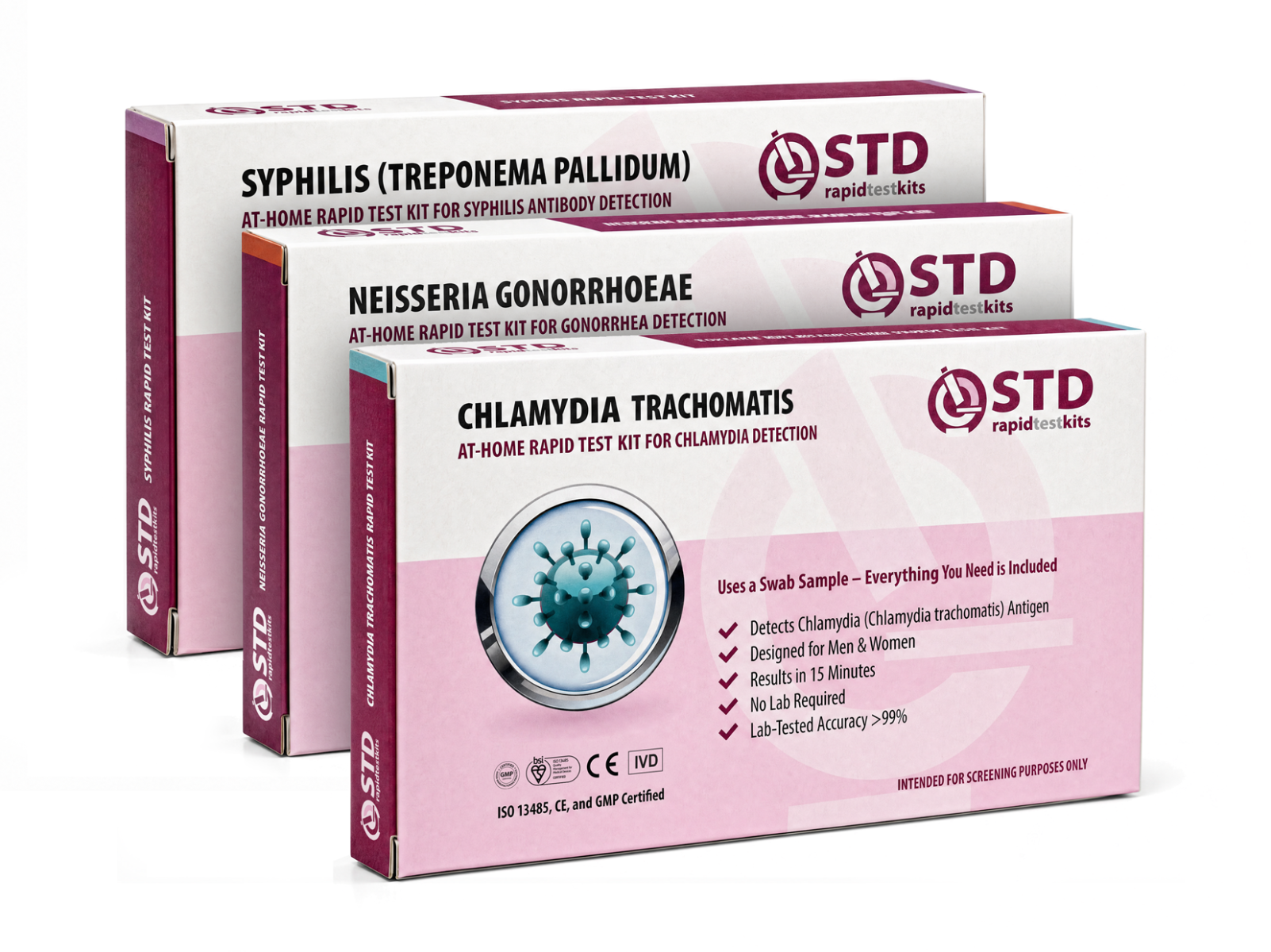
This site sells at-home rapid test kits; products linked below are drawn from that catalog.
Non-STI causes that can mimic an STI sore
Not every sore is sexually transmitted. The non-STI causes split into three buckets: mechanical, chemical, and dermatologic.
Mechanical irritation is the most common single category. Vigorous sex, masturbation without lubricant, tight athletic clothing during a long workout, or a new shaving habit can produce small linear abrasions or follicular irritation that looks like an early sore. The give-aways: the lesion is shallow, the surrounding skin is intact, and there is no firm border or fluid-filled blister. These resolve in 3 to 5 days with rest and lubrication.
Contact dermatitis from a new condom material (latex sensitivity), a new lubricant (warming or flavored variants are common offenders), spermicide, laundry detergent, or scented body wash can produce a red, itchy, sometimes weeping patch easily mistaken for an STI sore. The pattern: bilateral or generalized rather than focal, intensely itchy rather than painful, and onset within hours of the new product. Stopping the trigger and switching to a fragrance-free option resolves it.
Skin conditions can affect genital skin. Lichen planus presents as flat-topped purple papules. Psoriasis shows as well-defined red plaques (the classic silver scale is often absent in moist genital skin). Eczema produces itchy red patches. None of these are infectious, but they can be uncomfortable and they sometimes need a prescription topical steroid to settle.
Two infections that are not classically STIs can still produce sore-like findings. Candida (a yeast overgrowth, more common in uncircumcised men) presents as red itchy patches with a satellite-papule pattern. Bacterial folliculitis from staph or strep produces small pus-filled pimples around hair follicles. Both respond to topical treatments and clear within a week or two.
Mechanical: shallow, linear, intact surrounding skin, resolves in 3 to 5 days with rest. Chemical (contact dermatitis): bilateral, itchy more than painful, onset within hours of a new lube, condom, or detergent. Dermatologic: persistent flat patches or papules with no fluid-filled blisters, often part of a known skin-condition history. If a sore does not fit one of these patterns or persists past 7 to 10 days, treat it as potentially infectious until tested.
When to test, what to test, and how the windows work
The right test depends on the suspected cause and how long it has been since the relevant exposure. Each STI has its own window period: the time between exposure and when a test can reliably detect infection.
For syphilis, treponemal antibody tests (the standard for screening) become reliably positive 3 to 6 weeks after exposure, with most cases positive by 6 weeks. If a chancre is visibly present, a clinic can perform same-day darkfield microscopy (a lab technique that visualizes the syphilis bacterium directly under a specialized microscope) or PCR on a swab from the lesion and not have to wait for the blood window.
For genital herpes, the testing approach depends on whether a lesion is currently visible. If yes, a swab PCR from the lesion is the most sensitive and specific test, with results in 1 to 3 days. If the lesion has healed (or there has never been a visible outbreak but exposure is suspected), a type-specific blood antibody test for HSV-1 and HSV-2 IgG is used. Antibodies typically develop within the first weeks after infection; CDC's herpes treatment guidelines recommend repeat antibody testing 12 weeks after a presumed exposure to confirm seroconversion.
For chlamydia and gonorrhea (which usually present with discharge rather than sores, but can occasionally cause meatal irritation, meaning irritation at the tip of the penis where the urethra opens, that looks ulcer-like), urine NAAT testing is reliable as early as 1 to 2 weeks post-exposure, depending on the assay. At-home rapid lateral-flow swab kits screen at home; lab NAAT remains the analytic gold standard for confirmation.
For HIV, fourth-generation antigen-antibody tests detect infection at 18 to 45 days after exposure, while rapid antibody-only tests have a window closer to 23 to 90 days. HIV testing belongs in any sore-related workup because broken genital skin can substantially raise per-act HIV transmission risk during the same exposure that may have caused the sore. If the exposure happened within the past 72 hours, post-exposure prophylaxis (PEP) is an option worth discussing with a clinician immediately, since PEP eligibility closes at the 72-hour mark.
A clinic can do something at-home tests cannot: it can swab the active lesion. PCR or darkfield microscopy on the lesion itself bypasses the antibody window period entirely. If a sore is currently visible, a clinic visit gives a same-day to 3-day answer. At-home blood antibody tests for syphilis and HSV are useful for confirming seroconversion after the lesion has healed, or for screening before the next exposure.
How home blood tests fit into a sore workup
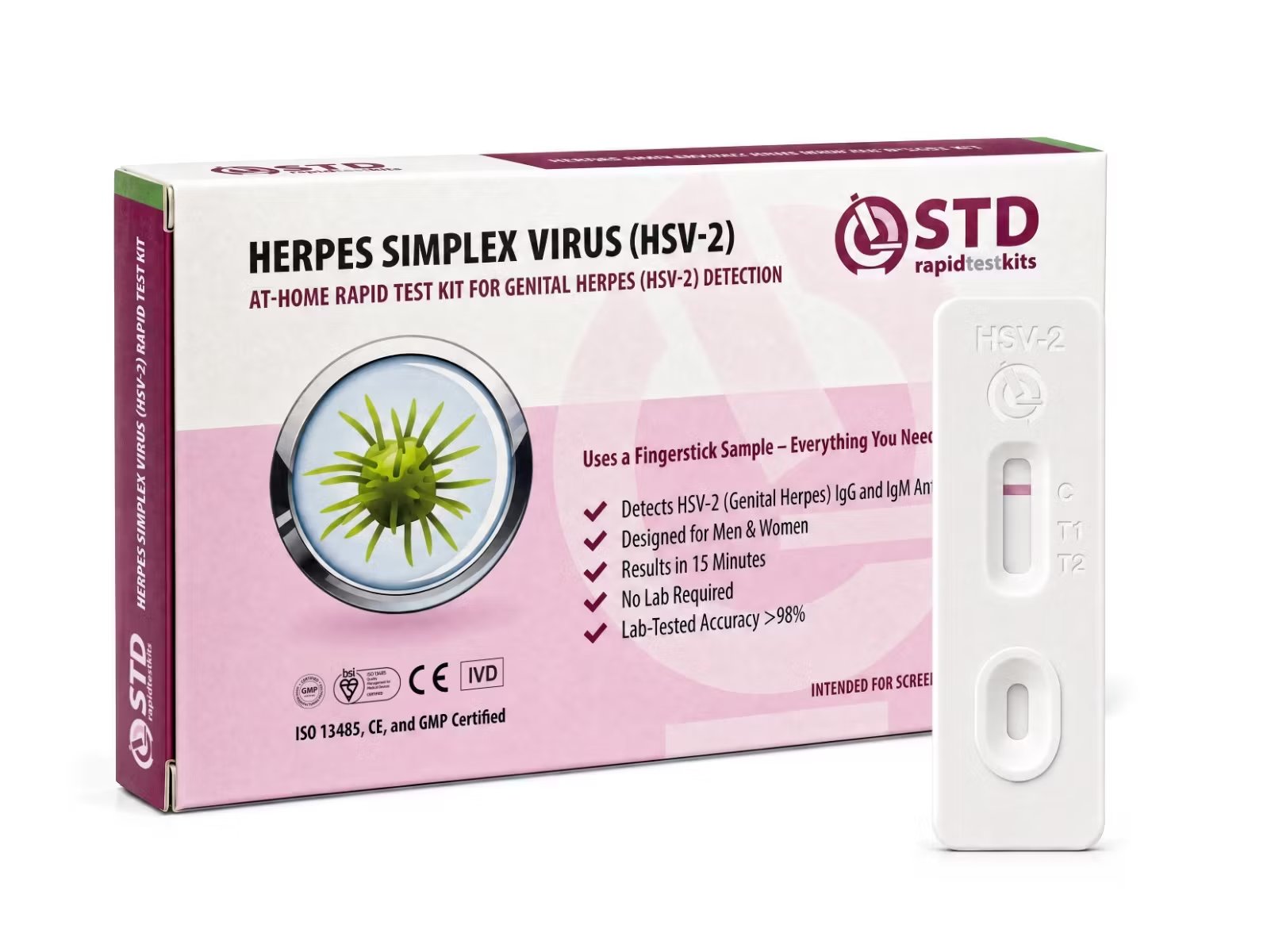
At-home rapid tests for syphilis, HSV-1, HSV-2, HIV, and hepatitis are fingerstick blood antibody tests using lateral-flow chemistry. They detect the antibodies the immune system makes against an infection, not the infection itself. This makes them useful for two specific situations.
The first is confirming exposure status after a healed lesion. If a sore appeared after a recent exposure and has since resolved, a blood antibody test 3 to 12 weeks later (depending on the infection) confirms whether seroconversion happened. The second is baseline screening before a known next exposure, so any future positive can be attributed to a defined timeframe.
What home tests cannot do: detect an active genital lesion. Lateral-flow blood antibody chemistry measures systemic immune response, not local infection. For a visible active sore, the most sensitive test is a swab of the lesion processed by lab PCR or culture, which is a clinic-only workflow.
Home testing for sore workups is therefore complementary, not substitutionary. A clinic visit handles the active lesion. A home blood test handles the antibody confirmation 3 to 12 weeks later, and the screening cadence going forward.
What to do today if you found a sore
The practical sequence, from the moment a sore is noticed:
- Stop sexual contact until the cause is known. Most ulcerative STIs are most contagious during the visible-lesion stage. Condoms reduce but do not eliminate transmission, especially when the sore sits outside the condom-covered area.
- Photograph the sore with a date stamp. Lesions evolve, often resolving by the time of an appointment. A photo gives the clinician something to work with.
- Note the timeline: when the sore first appeared, when the most recent sexual exposure was, and what changed about products, hygiene, or activities in the prior week.
- Book a clinic visit if the sore is currently visible. Same-day swab testing on the active lesion is the highest-yield diagnostic step. Sexual-health clinics, urgent cares, and primary-care offices can all do this.
- Plan a home blood test 3 to 12 weeks later to confirm the antibody picture once seroconversion windows have closed, especially if a clinic swab was negative or inconclusive.
- Notify recent partners if testing confirms an STI. State health departments run anonymous partner-notification programs in most U.S. jurisdictions; this is uncomfortable but it interrupts the chain of transmission and gets people the treatment they need.
What not to do: do not apply over-the-counter antibiotic ointments to a suspected STI sore. They do not treat the underlying infection and they can interfere with diagnostic swabs. Do not pop or unroof a blister. Do not self-diagnose from search-engine images; visible inspection alone is unreliable, even for clinicians, per CDC's genital ulcer evaluation guidance.
A diagnosis based only on medical history and physical examination frequently can be inaccurate. After a complete diagnostic evaluation, more than 25% of patients who have genital ulcers might not have a laboratory-confirmed diagnosis.
Frequently asked questions
- How long after a sore appears should I wait before testing?
- If a sore is currently visible, do not wait. A clinic can swab the lesion the same day for PCR testing on herpes, syphilis, or chancroid. For at-home blood antibody tests, the windows are roughly 3 to 6 weeks post-exposure for syphilis, 4 to 12 weeks for HSV-2, and 18 to 45 days for HIV using a fourth-generation antigen-antibody test.
- Can a sore from oral sex be an STI?
- Yes. Herpes simplex virus type 1, syphilis, and HPV can all transmit from mouth to genitals during oral sex. The resulting genital sore looks identical to one from vaginal or anal exposure; the testing approach is the same.
- What does a herpes sore look like?
- A primary herpes outbreak typically shows as a cluster of 2 to 10 small fluid-filled blisters on a red base. The blisters break within a day or two, leaving shallow ulcers that crust and heal in 1 to 2 weeks. Outbreaks recur, often at the same site, and recurrent episodes are usually milder than the first.
- If a sore heals on its own, can it still have been an STI?
- Yes, and the syphilis chancre is the classic example. Primary syphilis ulcers heal in 3 to 6 weeks without treatment, but the bacterium continues replicating in the body. The sore disappearing does not mean the infection has cleared; a treponemal blood antibody test confirms whether seroconversion occurred.
- Will a condom prevent sore-causing STIs?
- Condoms reduce risk but do not eliminate it. Syphilis, herpes, and HPV transmit through skin-to-skin contact in the genital area, and contact with skin outside the condom-covered area can still transmit infection. Consistent condom use lowers per-act transmission probability significantly but is not a complete barrier for the ulcerative STIs.
- Are at-home blood tests reliable for sore-related STIs?
- At-home rapid lateral-flow blood tests for syphilis, HSV-2, and HIV are reliable when used after the appropriate window period. They are antibody tests, so they are most useful for confirming seroconversion 3 to 12 weeks after exposure or for screening between exposures. They do not replace a clinic swab of an active lesion, which remains the highest-yield test when a sore is visible.
- Do I have to tell my partner if I test positive?
- Most U.S. states run partner-notification programs through public health departments that handle outreach anonymously if you prefer. For STIs that require treatment to prevent transmission (syphilis, chlamydia, gonorrhea, HIV), notification is both a public-health responsibility and the way your partner gets appropriate care.
- What is the difference between a syphilis sore and a herpes sore?
- The two have distinct morphology. Syphilis presents as a single round painless ulcer with a firm raised border. Herpes presents as a cluster of small painful blisters that break into shallow ulcers on a red base. Pain is the easiest single distinguishing feature, but visible inspection is not definitive; lab testing confirms either.
Comprehensive baseline testing after a sore-causing exposure
A sore-producing infection is rarely the only thing worth ruling out from the same encounter. The exposure that caused the sore could just as easily have transmitted a non-ulcerative infection that has no visible symptom yet, which is why a multi-infection baseline panel often makes more sense than testing for one infection at a time.
The seven-infection panel below covers the most common STIs to screen for after an exposure that produced a sore: HIV, syphilis, hepatitis B, hepatitis C, HSV-2, chlamydia, and gonorrhea.

- U.S. Centers for Disease Control and Prevention. About Syphilis: primary chancre clinical features (firm, round, painless), 3 to 6 week heal course, and stage progression.
- U.S. Centers for Disease Control and Prevention. STI Treatment Guidelines for Syphilis, including benzathine penicillin G as the standard treatment for primary and secondary syphilis.
- U.S. Centers for Disease Control and Prevention. STI Treatment Guidelines on Diseases Characterized by Genital, Anal, or Perianal Ulcers, including limitations of visual inspection and recommended swab-based and serologic testing.
- U.S. Centers for Disease Control and Prevention. STI Treatment Guidelines for Genital Herpes, including type-specific antibody testing and the 12-week post-exposure repeat-testing recommendation.
- U.S. Centers for Disease Control and Prevention. About Genital Herpes: symptoms, transmission during asymptomatic shedding, and overview of testing.
- World Health Organization. Sexually transmitted infections fact sheet covering global burden, transmission, and prevention.
- U.K. National Health Service. Genital herpes overview, including symptom description and clinic-based swab testing.
