Published: November 2025 | Last updated: May 2026 | Editorial review and quality control: Martina N.
Most people land on this page at an inconvenient hour with a worry they have not said out loud. They took an antibiotic, maybe prescribed for a sinus infection or a urinary tract infection, maybe leftover from a previous course, and now they cannot tell whether it quietly cured something they were never tested for, or whether it set up a confusing test result down the line. Both outcomes are possible, and which one applies depends on the drug, the dose, the duration, and what kind of organism was actually there. This article walks through each of those variables in plain language, with the public-health guidance that governs how clinicians think about the same question.
Key Takeaways
- Antibiotics can cure some bacterial STIs (chlamydia, gonorrhea, syphilis) if the right drug is taken at the right dose for the full course, but they do nothing to viral STIs like HIV, herpes, or HPV.
- Partial or wrong-drug antibiotic use can briefly lower bacterial levels and confuse a single test, but it rarely hides an established infection long-term. Retesting after the appropriate window resolves nearly all gray zones.
Bacterial, Viral, Parasitic: Three Different Rulebooks
STIs do not all answer to the same drugs. The first thing to settle is which category your worry falls into, because antibiotics only have a fighting chance against two of the three.
Bacterial infections (chlamydia, gonorrhea, syphilis) can be cured by antibiotics when the drug and dose are matched correctly to the bacteria. Parasitic infections like trichomoniasis are also treatable, but with a specific class of medication (typically metronidazole or tinidazole, not the antibiotics you would take for a sinus infection). Viral STIs operate on a completely different biological pathway. Antibiotics do not touch them. Taking amoxicillin will not slow down HIV, will not suppress a herpes outbreak, will not clear HPV. The U.S. Centers for Disease Control and Prevention is explicit on this point in its STI Treatment Guidelines: viral STIs are managed with antivirals, vaccines, or watchful follow-up, never with antibacterial drugs.
| Type of STI | Examples | Can antibiotics cure it? | Can early antibiotics affect testing? |
|---|---|---|---|
| Bacterial | Chlamydia, gonorrhea, syphilis | Yes, with the correct drug and full course | Possibly, depending on timing and drug choice |
| Viral | HIV, herpes (HSV-1/2), HPV, hepatitis B and C | No | No effect on viral detection |
| Parasitic | Trichomoniasis | Yes, with metronidazole or tinidazole | Unlikely to mask if a different antibiotic was taken |
Can Antibiotics “Cure It Before It Shows Up”?
This is the version of the question people actually want answered. If the antibiotic course landed inside the window period (the gap between exposure and the time a test reliably turns positive), can it wipe the infection out before the test ever has a chance to detect it?
Biologically, the answer is yes, with a strong caveat. It is possible for a correctly chosen antibiotic, at a sufficient dose, taken for the full recommended duration, to eradicate a bacterial STI early enough that a properly timed test afterward shows negative because there is genuinely nothing left to detect. A negative result in that scenario is accurate, and the infection was cured before the test was ever run.
The caveat is that most accidental antibiotic exposure does not meet those criteria. A short course of nitrofurantoin for a UTI does almost nothing for chlamydia or gonorrhea, because the drug class is wrong for those organisms. A 5-day amoxicillin course for strep throat is unlikely to cure gonorrhea at all, given current resistance patterns. A 7-day course of doxycycline taken for acne or for a respiratory infection, on the other hand, may genuinely overlap with the regimen the CDC recommends for chlamydia and could, in some cases, clear the infection. Whether it does depends on the bacterial load at the time, whether the course was completed, and whether resistance was a factor.
In short: the drug has to be the right drug, in the right amount, for long enough, before the bacteria adapt or persist. Partial exposure does not equal cure.
Short version: can antibiotics cure an STI before a test catches it?
Sometimes, for bacterial STIs only. If the drug, dose, and full duration happen to match standard treatment (for example, a 7-day doxycycline course for chlamydia), the infection can be cleared before any test is done, and a later test will accurately read negative. Viral STIs (HIV, herpes, HPV) are unaffected by antibiotics at any dose. Partial or wrong-drug treatment may briefly suppress bacteria and create a short-lived false negative, but retesting after the appropriate window resolves it.
What Modern STD Tests Actually Detect
The reason timing matters so much is that today's STI tests are not looking at symptoms or even, in most cases, at live bacteria. They are looking at molecular signatures. The standard test for chlamydia and gonorrhea in a clinic is nucleic acid amplification testing (NAAT), which detects bacterial DNA or RNA at very low concentrations. HIV tests look for either viral antigen, viral RNA, or the antibodies your immune system makes against the virus. Syphilis testing is built on antibody responses.
This matters for the antibiotics question in two directions. First, if antibiotics fully eradicated a bacterial infection, the test will accurately read negative once enough time has passed for residual genetic material to clear. Second, if antibiotics only partially knocked the infection down, the live bacterial population may briefly drop below detectable levels and then rebound. Testing during that brief dip can return a false negative because bacterial counts have fallen temporarily below the test's detection threshold even though some organisms remain, which is exactly why retesting two to three weeks later resolves the ambiguity in nearly every case.
| Timing situation | Recommended action | Why |
|---|---|---|
| Tested within 5 to 7 days of exposure | Retest at the 14-day mark for bacterial STIs | Bacterial levels may not be detectable yet |
| Tested immediately after finishing antibiotics | Wait 2 to 3 weeks before retesting (longer for syphilis serology) | Residual DNA can trigger a positive even after cure |
| Symptoms persist after antibiotics | Retest and seek clinical evaluation | Possible incomplete treatment, wrong drug, or resistance |
| No symptoms but ongoing exposure risk | Routine screening per CDC guidelines | Many bacterial STIs are asymptomatic |
Doxycycline After Sex: A Targeted Protocol
One specific scenario deserves its own section because it has changed the conversation: doxycycline taken shortly after a high-risk exposure, often called Doxy-PEP (post-exposure prophylaxis). The CDC's clinical guidance on Doxy-PEP recommends discussing 200 mg of doxycycline taken as soon as possible within 72 hours after oral, vaginal, or anal sex, for gay, bisexual, and other men who have sex with men and transgender women who have had at least one bacterial STI (gonorrhea, chlamydia, or syphilis) in the last 12 months. The CDC notes there is currently insufficient evidence to recommend it for other populations.
That is a targeted, dose-specific, evidence-backed protocol. Doxy-PEP works because the drug class, dose, and timing are matched to specific bacteria; substituting amoxicillin, nitrofurantoin, or whatever else happens to be in your medicine cabinet after a hookup will not give you the same protection. Doxy-PEP also does not prevent HIV, herpes, HPV, or hepatitis, because those are viral.
If Doxy-PEP genuinely prevented the bacterial infection from establishing itself, a later test will read negative because there is nothing to detect. If it only partially suppressed an infection that had already started, the same window-period and retest logic applies. The decision to use Doxy-PEP should be made with a clinician who can weigh your individual risk, antibiotic resistance patterns in your area, and side-effect profile.
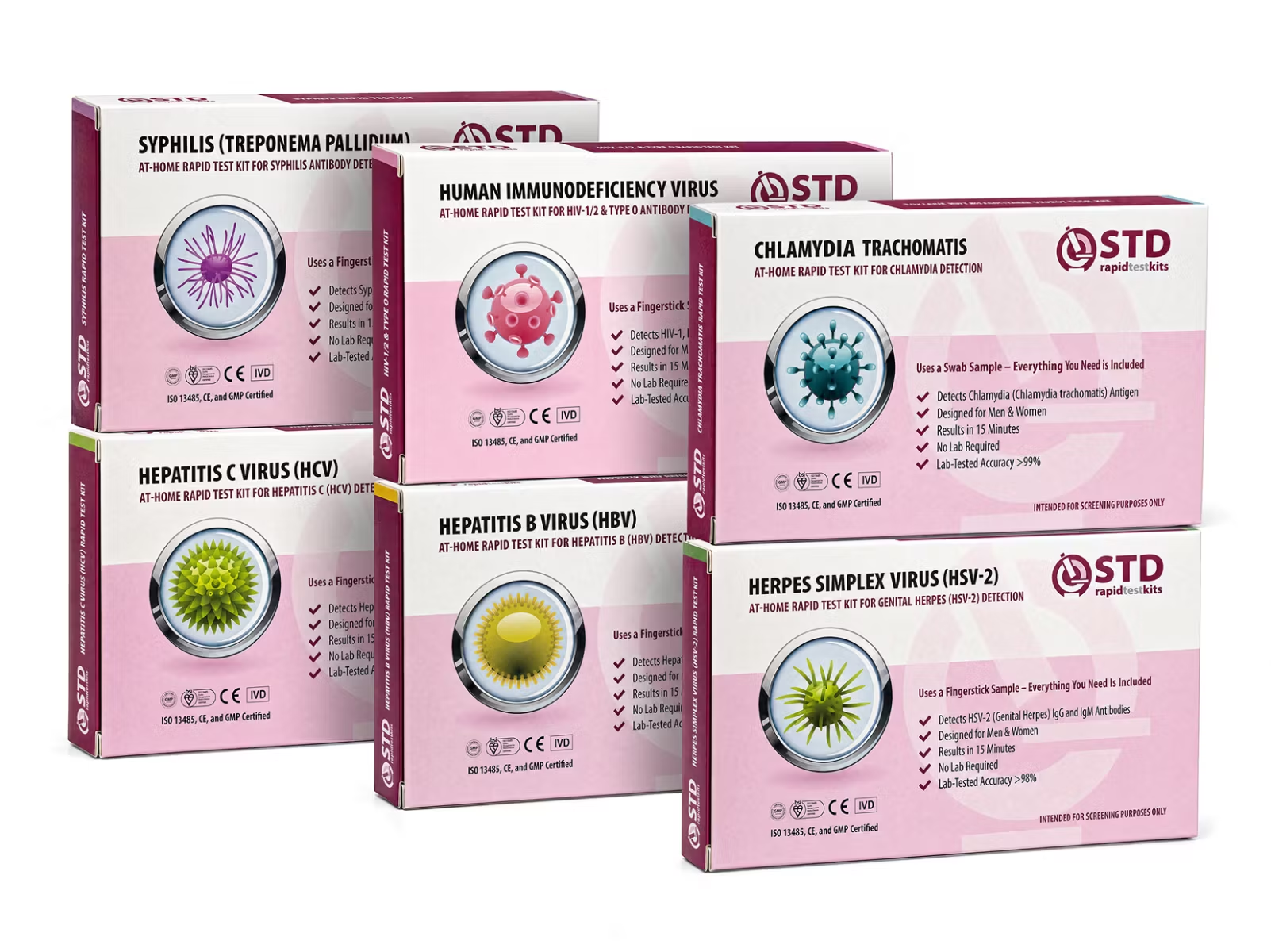
This article is published by stdrapidtestkits.com, which sells rapid at-home STI testing kits. The products linked below are from our own catalog. We recommend kits based on fit for your specific concern, not on commercial benefit.
Can Antibiotics Cause a False Negative STD Test?
This is the fear underneath the fear. Not just “am I cured” but “did I accidentally mess up my own test.”
The reassuring news is that modern NAAT-based tests for chlamydia and gonorrhea are designed to be very hard to fool. They look for bacterial genetic material rather than live, replicating bacteria, so even reduced organism counts can still trigger a positive if any residual material is present. Antibiotics do not instantly erase bacterial DNA from tissue; fragments can linger for days or weeks after a successful treatment course. That is why the CDC actually warns the opposite, that testing too soon after treatment can produce a false positive driven by leftover DNA, not by live infection.
The scenario most people are worried about (taking an antibiotic that wipes the infection so cleanly and quickly that the next morning's test reads negative) requires both full eradication and enough time for the DNA to clear. Partial suppression alone does not reliably produce a long-lasting false negative on a NAAT. What it can produce is a short window during which bacterial levels dip below the test's detection threshold, and that gap is closed by retesting two to three weeks later.

Why Fading Symptoms Do Not Confirm Clearance
One of the most dangerous comforts in sexual-health anxiety is the moment symptoms ease. The burning fades. Discharge slows. The body wants to declare victory.
Symptom relief and bacterial clearance are not the same biological event. Burning can subside because inflammation calmed down, while the organism itself is still present. More importantly, bacterial STIs are commonly asymptomatic from the very start. The CDC's chlamydia overview notes that “chlamydia often has no symptoms” yet can still cause serious long-term reproductive harm if untreated. That means absence of symptoms after antibiotics tells you almost nothing about whether the infection has actually been cleared.
The only reliable confirmation of cure for chlamydia, gonorrhea, or syphilis is testing at the right interval after the right treatment. Some infections also call for a formal test-of-cure (re-testing several weeks after treatment ends) to confirm eradication; the CDC's guidelines specify which scenarios warrant it.
Many people with active chlamydia or gonorrhea have no symptoms at any point during their infection. Symptoms easing after antibiotics is not confirmation of cure. Testing at the right interval is.
Transmission Risk During and After Treatment
The unspoken half of this question is rarely about the person reading it alone. It is about partners. Did the antibiotic close the loop on transmission, or did it leave a gap?
Once a bacterial STI has been fully eradicated by the correct antibiotic course, the person is no longer infectious. The CDC's treatment guidelines recommend abstaining from sexual contact for 7 days after single-dose treatment, or until the full multi-day course is completed and any symptoms have resolved, to give the body time to clear the organism and to avoid reinfecting a partner who is also being treated.
During partial treatment (wrong drug, partial course, or insufficient dose), bacterial counts may drop while transmission is still biologically possible. The organism does not flip off like a switch the moment the first pill is swallowed. That is why public-health guidance is consistent: complete the prescribed course, treat partners concurrently (expedited partner therapy is available in many U.S. states), and confirm with retesting where indicated.
Transmission timing at a glance
- Abstain for 7 days after single-dose treatment, or until the full multi-day course is complete and symptoms have resolved.
- Have partners treated at the same time to prevent reinfection (expedited partner therapy is available in many U.S. states).
- Partial or wrong-drug treatment does not stop transmission. Bacterial counts can rebound during the gray window.
Antibiotic Resistance Is Changing the Math
Gonorrhea is the clearest example of why “whatever antibiotic” is no longer a safe heuristic. The CDC's page on antibiotic-resistant gonorrhea notes that Neisseria gonorrhoeae has developed resistance to nearly all the antibiotics used for its treatment, leaving cephalosporins as the one remaining recommended and effective class. The current CDC-recommended first-line regimen is a single 500 mg intramuscular dose of ceftriaxone, replacing the oral regimens used a decade ago, as detailed in the CDC's STI Treatment Guidelines.
What this means in practice: even if a leftover oral antibiotic at home is the right class, it may be at the wrong dose or no longer fully effective against the strain involved. Partial suppression in that scenario does double damage. Symptoms ease enough to feel reassured, while the organism survives long enough to potentially adapt further. This is not a hypothetical; it is the mechanism driving the resistance trend the CDC has been flagging for years.
Gonorrhea has developed resistance to nearly all the antibiotics used for its treatment. We are currently down to one last recommended and effective class of antibiotics, cephalosporins, to treat this common infection.
What to Do If You Already Took Antibiotics
If you are reading this after the fact, the practical decisions are simpler than the anxiety suggests. Three pieces of information shape what comes next:
- What antibiotic, what dose, and for how many days? Pull up the bottle or the pharmacy record. Doxycycline 100 mg twice daily for 7 days overlaps with chlamydia treatment. A 3-day amoxicillin course for sinusitis does not.
- When was the suspected exposure relative to the antibiotic course? Antibiotics taken before bacteria had time to establish a meaningful infection are a different scenario than antibiotics taken three weeks into a developing infection.
- When was the test, or when do you plan to test? Bacterial NAATs are most informative starting around 14 days after exposure. Testing right after finishing antibiotics can produce a residual-DNA positive; waiting 2 to 3 weeks gives a cleaner answer.
If symptoms persist, do not anchor on the test alone. Persistent burning, discharge, pelvic or testicular pain, or any new sore warrants clinical evaluation, regardless of test result, because resistance and reinfection both exist. For viral concerns (HIV, herpes, syphilis serology), the window periods are longer and follow their own timetables, and antibiotics do not change them at all.
The Bottom Line
Antibiotics are powerful and specific. Used correctly against a bacterial STI they care about, they can absolutely cure the infection, sometimes before a test ever picks it up. Used against the wrong organism, at the wrong dose, or for the wrong duration, they can briefly muddy a test result without clearing the underlying problem. They do nothing at all to viral infections like HIV, herpes, or HPV. If you took something and you are uncertain what your antibiotic exposure means, the most direct path forward is retesting at the correct interval, because modern NAATs are resilient to partial suppression and window-period retesting resolves nearly every gray zone.
Bottom-line decision tree
- Bacterial STIs (chlamydia, gonorrhea, syphilis): retest 2 to 3 weeks after completing any antibiotic course. Modern NAATs resolve nearly every gray zone.
- Viral STIs (HIV, herpes, HPV): antibiotics have no effect. Window periods and testing protocols are unchanged.
FAQs
- Can antibiotics actually cure an STD before a test ever catches it?
- For bacterial STIs (chlamydia, gonorrhea, syphilis), yes, if the drug, dose, and full duration happen to match standard treatment. For viral STIs (HIV, herpes, HPV), no, antibiotics have no effect at any dose.
- If my symptoms went away after antibiotics, am I in the clear?
- Not necessarily. Symptom relief means inflammation calmed down, not always that the bacteria were eliminated. Bacterial STIs are commonly asymptomatic from the start, so feeling better is not a reliable indicator of cure. Testing is.
- Can antibiotics cause a false-negative STD test?
- Modern NAAT tests look for bacterial genetic material and are quite hard to fool. Full eradication produces an accurate negative because there is nothing left to detect. Partial suppression can briefly drop bacterial levels below the test's threshold; retesting two to three weeks later resolves nearly all cases.
- I took antibiotics for a UTI. Could that have also cured chlamydia?
- It depends entirely on the drug. Nitrofurantoin, a common UTI antibiotic, does not treat chlamydia. Doxycycline does, if taken at the right dose for at least seven days. Symptom improvement after a UTI antibiotic is not evidence of STI cure.
- Does Doxy-PEP guarantee I will not get an STI after sex?
- No. Used per CDC guidance (200 mg of doxycycline within 72 hours of oral, vaginal, or anal sex, in specific populations), Doxy-PEP meaningfully reduces the risk of chlamydia and syphilis, and more variably of gonorrhea. It does not prevent HIV, herpes, HPV, or hepatitis, and it does not eliminate bacterial risk completely.
- How long should I wait to retest after finishing antibiotics?
- Two to three weeks is the minimum after finishing antibiotics before a NAAT gives a clean result. Earlier than that, residual bacterial DNA can trigger a false-positive even though the infection is cleared. For some infections, the CDC recommends a formal test-of-cure at a longer interval; your prescribing clinician can specify.
- Can I still pass an STI to a partner after starting antibiotics?
- Yes, until eradication is complete. CDC guidance is to abstain for at least seven days after single-dose treatment, or until the full multi-day course is finished and symptoms resolve, and to ensure partners are treated at the same time to avoid reinfection.
How we sourced this article: This explainer is built from the most current public-health guidance available, primarily the U.S. CDC's STI Treatment Guidelines, CDC condition-specific pages on chlamydia and drug-resistant gonorrhea, the CDC's Doxy-PEP clinical guidance, the WHO STI fact sheet, and the NHS sexual-health pages. It is editorial summary by a public-health writer, not clinical advice, and was reviewed for medical accuracy before publication.
- U.S. Centers for Disease Control and Prevention. Sexually Transmitted Infections Treatment Guidelines, current edition. Source for first-line antibiotic regimens for chlamydia, gonorrhea, and syphilis (including the 500 mg ceftriaxone gonorrhea regimen referenced in this article), and for abstinence and retesting intervals after treatment.
- U.S. Centers for Disease Control and Prevention. About Chlamydia overview page. Source for the statement that chlamydia often has no symptoms, and for the broader description of when chlamydia screening and testing are clinically appropriate.
- U.S. Centers for Disease Control and Prevention. Drug-Resistant Gonorrhea (clinical page for healthcare providers). Source for the cited quote on progressive resistance development in Neisseria gonorrhoeae and for cephalosporins remaining the one effective drug class against the organism.
- U.S. Centers for Disease Control and Prevention. Doxy-PEP Clinical Guidance for healthcare providers. Source for the 200 mg doxycycline dose, the within-72-hours timing after oral, vaginal, or anal sex, and the specific population scope (gay, bisexual, and other men who have sex with men and transgender women with at least one bacterial STI in the prior 12 months).
- World Health Organization. Sexually transmitted infections (STIs) fact sheet. Source for global incidence figures and for the bacterial-vs-viral framing used in this article.
- NHS. Sexually transmitted infections (STIs) overview. Source for plain-English explanation of NAAT testing and post-treatment retesting practice in the UK system.
