
Published: December 2025 | Last updated: May 2026 | Editorial review and quality control: Martina N.
Can a silent STD really damage sperm?
Yes. Chlamydia, gonorrhea, and trichomoniasis often cause no symptoms in men, yet they can inflame the epididymis and lower sperm count, motility, and DNA quality. Caught early, the damage is frequently reversible within one sperm-production cycle. Caught late, scarring can be permanent, which is why testing beats waiting for symptoms.
Most men assume that if a sexually transmitted infection were quietly damaging their fertility, something obvious would tip them off. It is almost never that loud. Chlamydia and gonorrhea are usually silent or barely noticeable in men, and the slow inflammation they cause around the epididymis and the small tubes that carry sperm can leave scar tissue and degrade sperm quality long before a single symptom appears.
This article walks through what the CDC and WHO actually say about how common STIs damage sperm, how reversible that damage tends to be, what testing involves for men, and when to act. The aim is calm, specific information, not panic.
Key Takeaways
- Most male chlamydia cases produce no obvious symptoms, so silent damage to the epididymis and sperm quality can accumulate for months or years before anyone notices.
- Caught early, sperm parameters often improve within two to three months of treatment (one full sperm-production cycle); caught late, scarring may permanently reduce fertility.
Why male STIs so often go unnoticed
The infections most likely to damage male fertility are also the ones least likely to make themselves known. The CDC's chlamydia page notes that chlamydia often has no symptoms, and when symptoms do appear in men they are often mild: a faint urethral itch, occasional discharge, or brief discomfort with urination. Gonorrhea behaves a little differently. It is more likely to produce noticeable signs in men, such as urethral discharge or burning, but those signs can be mild enough to write off as a passing irritation, and some men have none at all. The CDC's gonorrhea page states that the infection can cause a painful condition in the tubes attached to the testicles that, in rare cases, leads to infertility.
Trichomoniasis is the quietest of the three. The CDC's trichomoniasis page reports that about 70% of infected people have no signs or symptoms. In men, the parasite frequently sits in the urethra without any outward sign: no rash, no fever, no clue. It can persist for months while everything outwardly feels normal.
Many men only learn about an old infection when a partner is screened during a routine gynecologic visit and tests positive. If you want a private baseline without a clinic visit, at-home STI test kits cover the most common bacterial infections.
The CDC recommends annual chlamydia screening for sexually active women under 25, and for anyone of any sex with new or multiple partners, but it does not recommend routine screening for the general male population. That asymmetry is one reason silent infections in men persist long enough to affect fertility before anyone thinks to test for them.
How STDs quietly damage sperm: count, motility, morphology, DNA
Sperm cells are produced continuously and travel through a long, narrow plumbing system that is sensitive to heat, pressure, oxidative stress, and infection. STIs interfere in measurable ways: they lower the count, they slow the motility (how well sperm swim), they distort the morphology (the shape of individual sperm cells), and they fragment sperm DNA. That last effect can reduce fertilization success and raise miscarriage risk even when the overall count looks normal.
Chlamydia is the most consistently studied offender. It can trigger epididymitis, an inflammation of the coiled tube where sperm mature and are stored. The combination of heat, swelling, and oxidative stress in that environment damages developing sperm. Gonorrhea behaves similarly and can extend into the prostate, which further changes the seminal fluid that sperm depend on. Trichomoniasis has been linked to abnormal sperm morphology and elevated semen acidity, both of which reduce sperm survival on the way to an egg.
Mycoplasma genitalium is an emerging contributor that most routine STI panels still miss; recent literature ties it to epididymitis and possible sperm-quality changes. The table below summarizes the patterns clinicians see most often. Individual outcomes vary considerably depending on how long the infection went untreated and whether it reached the testicles or the epididymis.
| STI | Main effect on sperm | Symptoms in men | Reversibility with treatment |
|---|---|---|---|
| Chlamydia | Lower sperm count, reduced motility, DNA fragmentation | Often none; sometimes mild urethral irritation or discharge | Often partially or fully reversible if caught early |
| Gonorrhea | Reduced sperm function, possible epididymal scarring | More often noticeable: burning urination or discharge | Usually reversible with prompt antibiotic treatment |
| Trichomoniasis | Abnormal sperm morphology, increased semen acidity | About 70% asymptomatic; sometimes itching or mild burning | Generally reversible after a complete antibiotic course |
| Mycoplasma genitalium | Possible epididymitis and sperm-quality changes; under-studied | Often none; mild urethritis when present | Reversible with an appropriate antibiotic regimen |
| HPV | Possible sperm DNA disruption (still under study) | Usually none; sometimes genital warts | Partial recovery likely as the immune system clears the virus |
| Syphilis | Chronic inflammation, possible testicular damage in late stages | Painless sore early; rashes and systemic symptoms later | Reversible if treated early; late-stage damage may persist |
The epididymis: where the silent damage starts
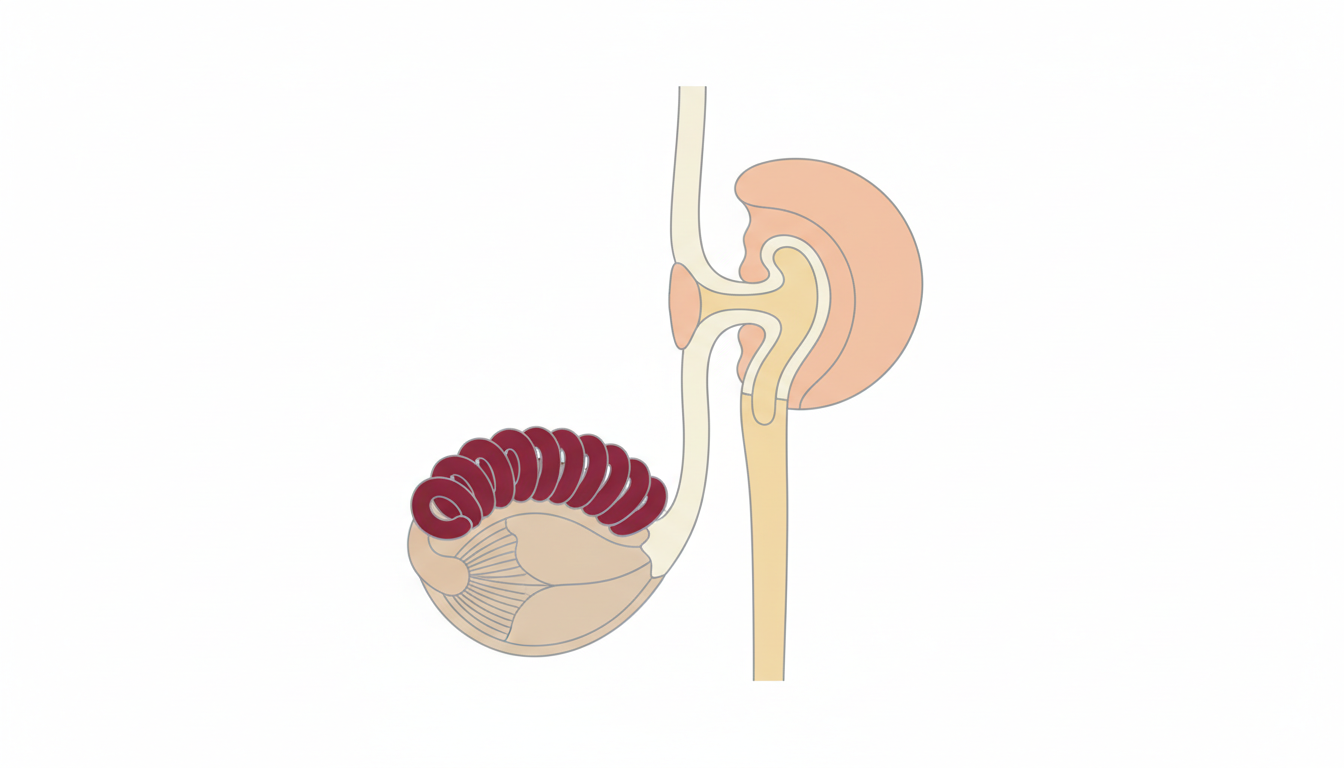
If you have never heard of the epididymis, that is normal. It is a small, tightly coiled tube sitting on the back of each testicle. Sperm produced in the testicle spend roughly two weeks moving through the epididymis, where they finish maturing and gain the ability to swim. It is also a favorite target for ascending bacterial infections.
Epididymitis, inflammation of that tube, is most often caused by untreated chlamydia or gonorrhea in sexually active men under 35, per the CDC's STI Treatment Guidelines. The UK's NHS guidance on epididymitis likewise describes it as swelling of that tube usually caused by a sexually transmitted infection such as chlamydia or gonorrhoea. When symptoms appear they are usually one-sided: a dull ache or swelling on one testicle, sometimes with low-grade fever or tenderness in the groin. Many cases are subclinical and produce no symptoms at all. When nothing surfaces, the only later signal is data from a fertility workup.
Even a mild bout of epididymitis can leave behind scar tissue that narrows the tube, reduces sperm transport, alters the local hormone environment, and raises the oxidative stress that damages sperm DNA. A history of any urological infection in adolescence or early adulthood is worth flagging to a clinician if fertility ever becomes a question.
Signs worth paying attention to (and the absence of them)
An asymptomatic infection is not a mild infection. The CDC notes that untreated chlamydia in men can spread to the testicles and epididymis and may, in rare cases, cause infertility. The absence of symptoms does nothing to prevent that damage from occurring; it only removes the warning. So the checklist below works in two directions. If any of these signs are present, testing is worthwhile. And if none are present but you have had unprotected sex without a recent screen, testing is still worthwhile, because silence is the most common presentation of the infections that matter most here.
Signs that warrant an STI screen or fertility check
Having one or more of these does not confirm an infection, and having none does not rule one out. Only a test can tell you for certain.
- No symptoms at all, despite unprotected sex without a recent screen (the most common scenario for chlamydia and gonorrhea in men) Common
- A faint urethral itch, or clear or cloudy discharge from the penis Common
- Brief burning or discomfort when urinating Less common
- A dull ache or swelling in one testicle, which can signal epididymitis Less common
- Lower sex drive, persistent fatigue, or mood changes that could reflect a hormonal effect Less common
- Trouble conceiving after about 12 months of regular, unprotected sex Less common
- Low-grade fever or groin tenderness alongside testicular pain Rare
What current research shows about STIs and male fertility
The link between common STIs and reduced sperm quality has moved from suspicion to consensus. Multiple peer-reviewed reviews have documented lower semen volume, reduced sperm concentration, and decreased motility in men with active or recent chlamydia and gonorrhea infections. The pattern is consistent: the longer the infection persists, the more pronounced the decline in measurable sperm parameters.
Trichomoniasis has been tied to elevated reactive oxygen species in semen, a marker of cellular stress that damages sperm membranes and DNA. HPV, often dismissed as a women's-health issue, has been detected in the semen of men with unexplained infertility at higher rates than in fertile controls. The exact role HPV plays in sperm function is still being studied, but the association is real. The World Health Organization's STI fact sheet names gonorrhea and chlamydia as major causes of pelvic inflammatory disease and infertility, which is a reminder that the same bacteria threatening a male partner's sperm are also the ones that scar a female partner's fallopian tubes.
If you have ever had unprotected sex and have not been screened in the past year, the chance you have been exposed to a sperm-affecting infection is not zero.
stdrapidtestkits.com publishes this article and sells the at-home rapid tests referenced in the recommendations below. We recommend products based on fit for the reader's concern, not commercial benefit.
Testosterone, inflammation, and libido
A less-discussed consequence of untreated STIs is hormonal. Chronic inflammation in or around the testicles, where testosterone is produced, can lower testosterone output. The downstream effects are subtle and easy to misread: lower sex drive, fatigue that does not lift after sleep, mood changes, and occasional erectile changes. Most men chalk these up to stress, work, or age.
Some research also points to STI-related effects on the hypothalamic-pituitary-gonadal axis, the hormonal loop that controls testosterone and sperm production. If sex drive has shifted alongside any fertility worry, the screen and the hormone panel should run together. In many men, testosterone rebounds after the infection is cleared. In others, persistent damage to testicular tissue calls for longer-term endocrinologic care.
Ask a clinician for a combined STI screen and a basic hormone panel at the same visit: total testosterone, free testosterone, LH, and FSH. Hormones often rebound on their own once the underlying infection is cleared, but persistent low testosterone after a complete antibiotic course is worth a separate endocrinology referral.
When the immune system turns on its own sperm
One unusual fertility complication after an STI is autoimmune in nature. Under normal conditions, sperm cells are shielded from the immune system by a barrier inside the testicle (the blood-testis barrier). Inflammation, trauma, or infection can compromise that barrier, and the immune system can begin producing antibodies against sperm cells. Those antibodies bind to sperm and either immobilize them or block them from fertilizing an egg.
Antisperm antibodies show up in a meaningful fraction of men with otherwise unexplained infertility, and a history of untreated bacterial STIs is one of the more common contributing factors. They are diagnosed with a specific blood or semen test that a fertility specialist can order. Treatment options include corticosteroids in selected cases, and assisted reproduction techniques such as intrauterine insemination (IUI) or in vitro fertilization (IVF) with intracytoplasmic sperm injection (ICSI) when antibody levels are high enough to interfere with conception.
If unexplained low motility shows up after a history of bacterial infection, ask a urologist or fertility specialist specifically for an antisperm antibody screen. It is not part of a standard STI workup and is rarely run unless someone requests it.
How long before damage sets in?
There is no single timeline. The progression from infection to fertility-threatening damage depends on the pathogen, the immune response, whether other infections are present, and how long treatment is delayed. What the literature does show:
- Chlamydia and gonorrhea can begin causing reproductive-tract inflammation within one to three weeks of infection.
- Epididymitis can develop within weeks once bacteria reach the upper genital tract.
- Permanent scarring typically requires weeks to months of untreated inflammation, though a single severe episode of epididymitis can leave lasting damage.
- Repeat or persistent infections compound the risk. Untreated chlamydia can persist asymptomatically for over a year in some people, with damage accumulating quietly the entire time.
By the time scrotal ache, swelling, or fertility problems appear, scarring may already be present. Testing-window awareness matters more than waiting for symptoms. Bacterial swab tests for chlamydia and gonorrhea are reliably accurate within roughly one to two weeks of exposure; rapid antibody tests for HIV, syphilis, and herpes need a window of about two to twelve weeks, depending on the infection, to register reliably.
| Infection | Time to begin causing damage in men | Symptoms usually present? |
|---|---|---|
| Chlamydia | 1 to 3 weeks for tissue inflammation; epididymitis possible within weeks if untreated | Rarely |
| Gonorrhea | 1 to 2 weeks for tissue inflammation; faster when other infections are present | More often, though signs can be mild |
| Trichomoniasis | 4 to 6 weeks for chronic inflammation patterns that may affect sperm quality | About 70% have none |
| Mycoplasma genitalium | Variable; weeks to months of low-grade inflammation | Usually subclinical or very mild |
Can STD-related fertility damage be reversed?
Caught early, sperm parameters often recover fully. Caught late, after scarring has formed, full recovery is less certain. Sperm production renews on a cycle of approximately two to three months, so the body has a built-in window for recovery once an infection is cleared. Mild inflammation, temporary DNA fragmentation, and reduced motility frequently improve over the two to three months following a complete antibiotic course. Trichomoniasis itself responds well to a short antibiotic course (a single dose of metronidazole or tinidazole is the usual regimen).
The longer an infection lingers, the harder full recovery becomes. Scar tissue in the epididymis or vas deferens does not always remodel back to normal, and chronic inflammation can leave persistent changes in sperm quality even after the bacteria are gone. Fertility specialists evaluate whether the issue is obstructive (sperm produced but unable to exit through scarred tubes) or non-obstructive (sperm production itself is impaired). Obstructive cases sometimes respond to surgical reconstruction. Non-obstructive cases may benefit from hormonal evaluation. When unassisted conception is not working, IUI or IVF with ICSI offers a viable path to biological parenthood, with success rates varying by age, sperm parameters, and partner factors. The CDC's Infertility FAQ covers when to seek a fertility evaluation. The roadmap below applies to most uncomplicated cases, but a clinician should personalize it based on how long the infection went untreated and whether the testicles or epididymis were involved.
| Step | Why it matters | Typical timeframe |
|---|---|---|
| Test for the common bacterial STIs | Detect silent infections like chlamydia, gonorrhea, and trichomoniasis | Now, especially before trying to conceive |
| Complete the full antibiotic course | Clear the infection and reduce inflammation | 7 to 14 days, full adherence essential |
| Wait one full sperm-production cycle | Allow sperm regeneration after treatment | Approximately 2 to 3 months |
| Repeat semen analysis if planning conception | Confirm count, motility, and morphology have rebounded | About 3 months after treatment |
| See a urologist or fertility specialist if parameters stay low | Identify scarring, hormone issues, or antisperm antibodies | After a repeat semen analysis shows results remain abnormal |
What testing actually involves
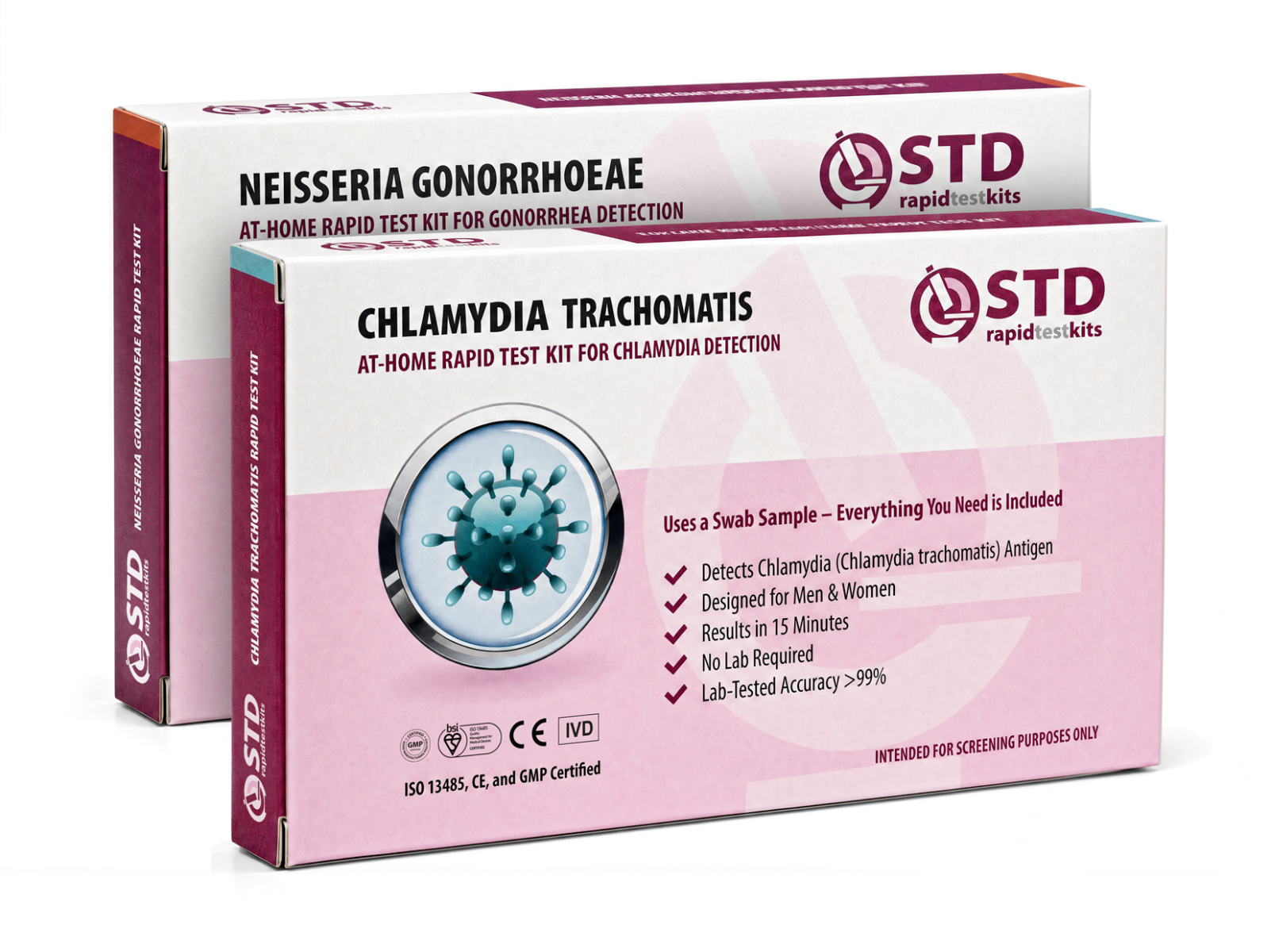
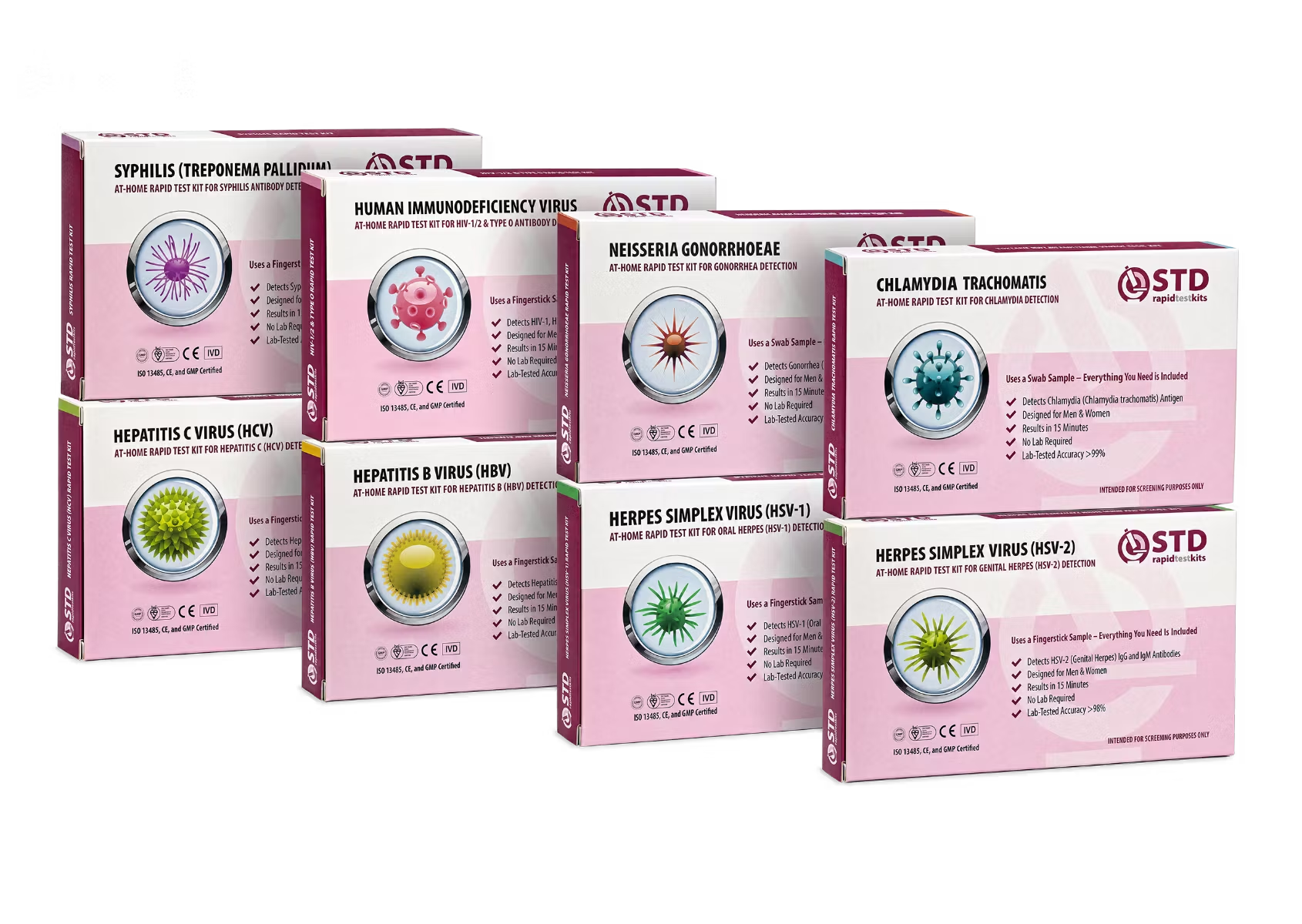
Testing is simpler than the cultural anxiety around it suggests. For chlamydia and gonorrhea, a self-collected genital swab is enough for both at-home rapid screening and for the laboratory NAAT (the analytical gold standard used in clinics). For syphilis and HIV, a fingerstick blood sample is enough at home, and a venous blood draw is used at a clinic. For a complete fertility-relevant workup, add a semen analysis and a basic hormone panel; both usually need a clinic visit, though most can be ordered without a referral. Men who want to start at home can use an at-home chlamydia and gonorrhea test as a first screen.
At-home rapid tests use lateral-flow chemistry, which is faster and more private than a clinic visit but generally less analytically sensitive than a laboratory NAAT. The two are complementary, not equivalent. A positive at-home result is worth confirming with a clinician's NAAT before starting antibiotics, and a negative at-home result during a recent suspected exposure should be repeated after the appropriate window period.
Our at-home trichomoniasis and HPV swab kits are validated for vaginal self-collection only, so men who specifically need trichomoniasis or HPV testing should see a clinic. In heterosexual couples, the practical pattern is often that the female partner self-screens at home for trich while the male partner uses a chlamydia and gonorrhea swab plus a blood-based panel for HIV and syphilis.
Mycoplasma genitalium is the one to flag separately: it needs a specific PCR-based lab test that standard at-home kits do not include, so anyone whose urethral symptoms persist after standard treatment should ask a clinician directly for an Mgen panel.
| Method | Sample | Turnaround | Best for |
|---|---|---|---|
| At-home rapid lateral-flow | Self-collected swab or fingerstick | About 15 minutes | Private first screen with no referral or clinic visit |
| Clinic NAAT (lab molecular test) | Swab or urine processed in a lab | 1 to 5 days | Confirming a positive rapid result, or screening when sensitivity matters most |
| Semen analysis | Semen sample produced at a clinic or sent to a lab | Same day to 1 week | Measuring count, motility, and morphology after treatment |
What to do if you test positive
Treat a positive rapid test as the start of the clinical process, not a final diagnosis. The next four steps are clear and well-supported.
Confirm the result with a clinic-based NAAT test. Most rapid tests are highly specific, but confirmatory testing rules out false positives and gives the clinician a definitive result for treatment decisions.
Treat promptly. For bacterial STIs (chlamydia, gonorrhea, syphilis, trichomoniasis), antibiotic treatment is short, well-tolerated, and highly effective when used as prescribed. Per the CDC STI Treatment Guidelines, current first-line therapies reliably clear infection in most patients.
Notify partners. This is not about blame; it gives them the same chance to test and treat before damage sets in. Anonymous notification services exist if a direct conversation feels too hard, and several state health departments offer them free. Treating one partner without the other invites reinfection, often within weeks.
Retest at three months even after successful treatment, because reinfection from an untreated partner is the most common reason treatment appears to fail. And ask about a fertility evaluation if epididymitis or any complication was diagnosed.
Some states allow expedited partner therapy, which lets a clinician treat both partners from a single visit when in-person testing for the partner is not feasible. Ask the treating provider whether EPT is available in your state, particularly for chlamydia and gonorrhea where reinfection from an untreated partner is the most common reason for treatment failure.
When to retest and follow up
A negative result reflects what was detectable on the day of the test. If the exposure was recent, or a partner later tests positive, a repeat screen after the appropriate window period gives a more reliable answer.
When conception is delayed, follow-up testing beyond the STI screen helps. A semen analysis evaluates count, motility, and morphology in a male partner (MedlinePlus, Semen Analysis), and a hysterosalpingogram (HSG) checks fallopian tube patency in a female partner. Many fertility specialists recommend both as a starting point once a couple has been trying for more than a year without success, in line with the CDC's Infertility FAQ.
- You tested too soon after a possible exposure: chlamydia and gonorrhea swabs are reliable within roughly one to two weeks, while rapid antibody tests for HIV, syphilis, and herpes need about two to twelve weeks depending on the infection.
- Three months after treatment for chlamydia or gonorrhea, because reinfection from an untreated partner is common.
- Before trying to conceive, so you start from a clean baseline within the past 12 months.
- After a new partner, especially without barrier protection.
Talking to a partner about a past or current infection
The conversation is hard but the framing is simple. Most adults have been exposed to a sexually transmitted pathogen at some point. Lead with the medical reality, not the apology. Where blame creeps in, the conversation collapses; where shared responsibility leads, it usually goes fine.
A pattern that tends to work in clinical settings: state what you tested for, what came back positive, what the treatment plan is, and what you would like the partner to do (typically, get tested, and treat if positive). Offer to share the result document. Most partners respond best to facts and a plan, not to a vague confession. If conception is on the table, both people getting screened together, and treated together if needed, removes the question of who infected whom from the conversation entirely.
This matters for the partner too. Per the CDC's PID overview, about 1 in 8 women with a history of pelvic inflammatory disease experience difficulty getting pregnant, and untreated chlamydia or gonorrhea in a male partner is one of the more common upstream causes. Joint screening protects both partners' fertility, not just the one who tested.
The infection can cause a fever and pain in the tubes attached to the testicles. This can, in rare cases, lead to infertility.
Your next step
If reading this surfaced a worry, that worry is the signal to act on. Order a screening test, treat what comes back positive, and check sperm parameters with a semen analysis if you have been actively trying to conceive. None of those steps requires a doctor's appointment first, an awkward phone call, or an admission of anything to anyone.
Whether the answer comes back as relief or as something to treat, the value is the same: a number you can act on instead of a worry you cannot. Sperm production renews on a roughly two-to-three-month cycle, so clearing an infection sooner leaves more of that cycle intact.
Test, treat, recheck: what to do now
Have you had unprotected sex without an STI screen in the past year, or noticed any of the signs listed earlier?
Yes: Order an at-home chlamydia and gonorrhea swab now, or a broader panel if you are planning to conceive.
Did a screen come back positive?
Yes: Confirm with a clinic NAAT, complete the full antibiotic course, and tell recent partners so they can test and treat too.
Are you actively trying to conceive, or was a complication such as epididymitis diagnosed?
Yes: Recheck sperm parameters with a semen analysis about three months after treatment, and see a urologist if the numbers stay low.
No: Retest about three months after any treatment, and again before your next attempt to conceive.
Guidance only. A clinician can tailor these steps to your situation.
FAQs
- Can a past STI still be hurting my sperm if I feel completely fine?
- Yes. Chlamydia most often produces no symptoms in men, and gonorrhea symptoms can be mild enough to miss. The inflammation they cause in the epididymis happens regardless of whether you ever felt sick. If you have ever had unprotected sex and never been screened, or never followed up after an old positive result, a current screen plus a semen analysis is a reasonable check.
- How quickly can chlamydia or gonorrhea start affecting sperm?
- Once an infection reaches the epididymis, where sperm mature, damage can begin within weeks. The catch is that you may feel nothing during that window. The slow inflammation accumulates quietly and only shows up in semen-analysis numbers if someone orders the test.
- If I treat the infection, how long until sperm parameters recover?
- The earliest useful recheck is about three months after finishing antibiotics, which covers one full sperm-production cycle. If inflammation was the main issue, count, motility, and morphology often return to baseline by then. Severe or long-standing infections may not fully recover, and that is when a fertility-clinic referral becomes the practical next step.
- I had an STI in college and never followed up. Am I infertile?
- Not necessarily. A past infection raises the statistical risk of fertility issues but does not predict an individual outcome. The only way to know is testing now: a current STI screen, a semen analysis, and, if numbers look off, a urology consult. Many men with old untreated infections have completely normal sperm parameters.
- Can I test for sperm-damaging STIs at home as a man?
- Yes for chlamydia, gonorrhea, syphilis, and HIV. Chlamydia and gonorrhea use a self-collected genital swab; syphilis and HIV use a fingerstick blood test. Our at-home trichomoniasis and HPV swab kits are validated for vaginal self-collection only, so men who specifically need those should see a clinic.
- Does HPV affect male fertility?
- Research is still evolving. HPV has been detected in the semen of men with unexplained infertility at higher rates than in fertile men, and lab studies suggest possible effects on sperm DNA. The everyday clinical importance is not fully settled, but the association is real enough that HPV is now part of the male-fertility conversation in research literature.
- What does a semen analysis actually tell me?
- A standard semen analysis measures volume, sperm concentration (count), motility (the percentage of sperm that swim well), and morphology (the shape of individual sperm). Some labs also offer a DNA fragmentation index. The test cannot say this damage was caused by an STI, but it can tell you whether your numbers are in the typical range, low-end, or clearly abnormal, which is the data point most decisions hang on.
- If my partner just tested positive, do I need to test even with no symptoms?
- Yes. Most male chlamydia cases are asymptomatic, and partner treatment is the standard medical approach. Waiting for symptoms is not a reliable strategy because many men never develop them. The CDC recommends that partners of someone testing positive get tested and, in many cases, treated empirically.
- U.S. Centers for Disease Control and Prevention. About Chlamydia: fact sheet noting that chlamydia often has no symptoms and that in men it can cause pain in the tubes attached to the testicles and, in rare cases, infertility.
- U.S. Centers for Disease Control and Prevention. About Gonorrhea: fact sheet on symptoms in men and the painful testicular-tube condition that can rarely lead to infertility.
- U.S. Centers for Disease Control and Prevention. About Trichomoniasis: fact sheet stating that about 70% of infected people have no signs or symptoms.
- U.S. Centers for Disease Control and Prevention. Sexually Transmitted Infections Treatment Guidelines, including epididymitis management and the role of chlamydia and gonorrhea in male reproductive complications.
- U.S. Centers for Disease Control and Prevention. About Pelvic Inflammatory Disease, including the figure that 1 in 8 women with a history of PID experience difficulty getting pregnant. Relevant for partner fertility context.
- National Health Service (UK). Epididymitis: explains that epididymitis is swelling of the tube behind the testicle and is usually caused by a sexually transmitted infection such as chlamydia or gonorrhoea.
- MedlinePlus (U.S. National Library of Medicine). Semen Analysis: describes how the test measures sperm count and concentration, motility (movement), and morphology (shape).
- World Health Organization. Sexually transmitted infections (STIs) fact sheet, naming gonorrhea and chlamydia as major causes of pelvic inflammatory disease and infertility.
