
Published: September 2025 | Last updated: May 2026 | Editorial review and quality control: Martina N.
Bringing up STD testing with someone new can feel like a tightrope walk between sounding responsible and sounding like you're auditing their dating history. In polyamory, where sexual networks overlap and timelines connect in ways monogamous dating doesn't, that conversation becomes foundational rather than optional. The good news: it doesn't have to feel clinical, accusatory, or mood-killing. When the conversation lands well, it builds trust faster than skipping it.
This guide covers two things at once: exactly what to say to a new poly partner about testing, and when a test result is genuinely reliable based on how each infection behaves in the body. Both pieces matter, because clarity without correct timing still leaves gaps, and correct timing without an honest conversation puts everyone back on guesswork.
Key Takeaways
- Most chlamydia and gonorrhea infections cause no symptoms, so feeling fine confirms nothing about your or a partner's status. Testing is the only way to know.
- A negative test only reflects status up to the most recent exposure that's past its window period. New partners reset the baseline, so retest timing should match each infection's specific detection window.
Why STD Conversations Matter More in Polyamory
Picture this: you meet someone, there's real chemistry, things move naturally, and your brain throws in the question, "When were they last tested?" In monogamous dating that question already feels loaded. In polyamory, you're not weighing one partner's history alone, you're working with a network of connections where exposure timelines can overlap in ways neither of you fully see.
The biological reason this matters is that many sexually transmitted infections don't produce symptoms, or produce them so mildly they're easy to miss. Chlamydia and gonorrhea are the most common offenders, with most cases producing no noticeable signs while still being transmissible. A "feels fine" baseline is different from a tested-negative baseline.
In polyamorous dynamics, this asymptomatic majority interacts with overlapping timelines to create something specific: an infection can move through a network without anyone noticing for weeks or months. The frame here is math, not fear. The more partners with overlapping sexual contact, the higher the chance that one undetected infection becomes several. Clear, upfront conversations are part of how responsible non-monogamy operates, not an awkward interruption to it.
There's also a common misconception worth pulling apart: trust replaces testing. It doesn't. Trust means believing a partner is being honest about what they know. Testing is what confirms what's happening biologically. A partner can be completely honest and still carry an infection they don't know about, because they haven't tested since their most recent exposure, or because they tested before the relevant window period had passed.
Many STIs have no symptoms. The only way to know your status is to get tested.
What to Actually Say Without Making It Weird
This is the part most people overthink. Treat it like any adult conversation about shared health, not a medical intake form. The tone you bring matters more than the exact wording, but having a starting point makes the first time easier.
A clean version sounds like this: "Hey, before things get physical I like to check in about testing. When was your last STD test?" One sentence, three things accomplished. It normalizes the topic, stays neutral instead of accusatory, and signals that this is your standard, not a reaction to something specific about them.
Another natural moment: you're texting late, things are clearly heading toward meeting up. That's one of the easiest times to bring it up, because you're already in the territory. Something like, "Quick check before we meet, when were you last tested? I usually like to be on the same page about that." It feels casual, but it sets the standard without asking permission.
What makes these conversations awkward is hesitation, not the topic itself. When you treat STD testing like a normal part of adult sex, it lands that way. Frame it like a confession or an interrogation and the tension sits in the framing, not in the question. Most people in poly spaces have already had this conversation multiple times, and many genuinely appreciate when a new connection brings it up first instead of dodging it.
A small shift that helps: lead with your own behavior. "I tested recently and I usually test between partners, what does your routine look like?" That turns a one-sided question into a shared exchange, and gives the other person a model for what an honest answer can look like. It also makes them more likely to be specific instead of giving the reassurance-shaped non-answer.
The underrated truth: bringing up testing doesn't kill the mood, uncertainty does. When both people know where things stand, there's less second-guessing, less low-grade anxiety, and a lot more capacity to be present with each other.

What to Ask Your Partner (And Why It Matters)
Once the conversation starts, the next layer is what to listen for. Not every "yeah, I got tested" statement carries the same information, and this is where people accidentally manufacture false reassurance. The goal here is to align on what each of you actually knows, not to interrogate.
Common scenario: someone says, "I got tested recently." That sounds fine on the surface. But "recently" could mean two weeks ago, or eight months ago, and those numbers tell completely different stories biologically. If they've had partners since that test, the result reflects a past version of their status, not the current one. Clarity matters more here than politeness.
So instead of stopping at "have you been tested?", the more useful question is, "when was your last test, and have you had any partners since then?" That follow-up connects the test result to real-world exposure, which is what determines current risk.
Another piece people skip is what kind of test was done. Different infections need different testing methods. Nucleic acid amplification testing (NAAT) looks for the genetic material of bacteria and is what laboratories use to detect chlamydia and gonorrhea from a swab sample. Blood tests look for antibodies or antigens and are used for HIV, syphilis, herpes, and hepatitis. A "negative" result on a partial panel only covers what the panel actually included, so it's worth asking which infections were in the test.
The word "negative" carries different weight depending on what was tested, when it was tested, and what's happened since. In poly dynamics with overlapping timelines, that shared specificity is what keeps everyone on the same page. If a partner doesn't know the answers, that information is useful too. It tells you testing hasn't been a structured habit yet, and now is the natural moment to introduce one together.
| Question to Ask | What It Actually Reveals |
|---|---|
| When was your last STD test? | How current their results are relative to any possible exposure |
| Have you had partners since that test? | Whether the result still reflects their current biological status |
| What infections did you test for? | Whether the panel included HIV, syphilis, herpes, and hepatitis or only chlamydia and gonorrhea |
| Do you test on a regular schedule? | Their overall approach to sexual health and how often new data is available |
| Was it a swab, a blood test, or both? | Whether the testing method matched each infection's detection requirements |
At-Home STD Testing: What to Take and When
Conversations set expectations. Testing is what turns expectations into actual answers. The two pieces that matter most are choosing the right test for each infection and taking it at the right time, because both can quietly undermine each other if mismatched.
Different infections need different tests because they behave differently in the body. Chlamydia and gonorrhea are bacterial infections that live in mucosal tissues, so the laboratory gold standard is NAAT, which detects bacterial genetic material from a swab sample. HIV, syphilis, herpes, and hepatitis are detected through the body's immune response, which is why blood tests looking for antibodies or antigens are the standard for those. At-home rapid kits use lateral-flow chemistry on either swab or fingerstick blood samples depending on the infection, and a positive lateral-flow result is worth confirming with a lab test where possible.
The table below maps each common infection to its test type and what the test is looking for.
| Infection | Sample Type | What the Test Detects |
|---|---|---|
| Chlamydia | Swab (lateral-flow at home, NAAT in lab) | Bacterial antigen or genetic material |
| Gonorrhea | Swab (lateral-flow at home, NAAT in lab) | Bacterial antigen or genetic material |
| HIV | Blood (fingerstick) | Antibodies and antigens |
| Syphilis | Blood (fingerstick) | Treponemal antibodies |
| Herpes HSV-1 | Blood (fingerstick) | HSV-1 antibodies |
| Herpes HSV-2 | Blood (fingerstick) | HSV-2 antibodies |
| Hepatitis B | Blood (fingerstick) | Surface antigen and antibodies |
| Hepatitis C | Blood (fingerstick) | Antibodies |
Window Periods: Why Timing Decides Whether a Result Means Anything
Here's the part people get wrong most often: timing. Testing too early can produce a false negative, not because you're clear, but because the infection hasn't reached detectable levels yet. This is the window period, and it's the single most important concept in STD testing. Each infection has its own window because each one replicates and triggers the immune response at a different pace.
The detection windows worth knowing:
- Chlamydia: typically reliable from about 14 days after exposure.
- Gonorrhea: typically reliable from about 3 weeks after exposure.
- Syphilis: serologic testing is typically reliable within about 6 to 7 weeks. NHS guidance notes that STIs can take up to 7 weeks to show on a test after unprotected sex, which is a useful general rule that applies here.
- HIV: per CDC HIV testing guidance, the antigen/antibody lab test detects HIV 18 to 45 days after exposure, and the rapid antigen/antibody fingerstick test detects it 18 to 90 days after exposure. CDC advice is to retest after the window period for the specific test you took. For lab antigen/antibody, that means roughly 45 days; for rapid antigen/antibody and antibody-only tests, up to 90 days.
- Herpes HSV-1 and HSV-2: CDC STI treatment guidelines recommend repeat type-specific antibody testing 12 weeks after the presumed time of acquisition for recent suspected infections, because false-negative results are more frequent at early stages.
- Hepatitis B: generally reliable from around 6 weeks after exposure, with the NHS 7-week general rule applying as a conservative baseline.
- Hepatitis C: typically reliable from 8 to 11 weeks after exposure.
A negative result after the relevant window means no detectable infection at that point, which is the closest thing to certainty testing can offer. A negative result before the window doesn't rule anything out yet, which is why early testing usually needs a follow-up at the correct point. A positive result is a confirmed signal that needs follow-up care, not a wait-and-see outcome.
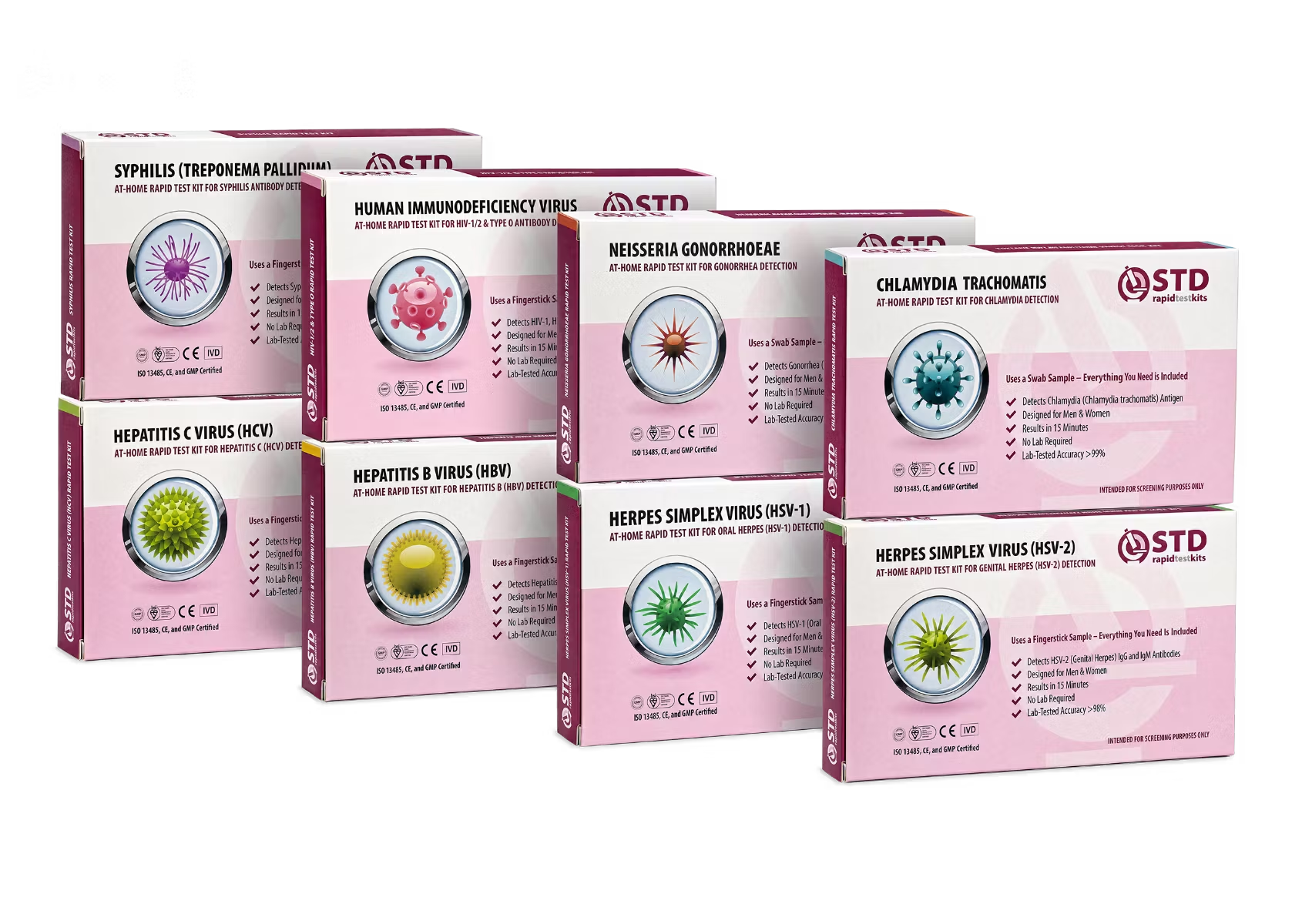
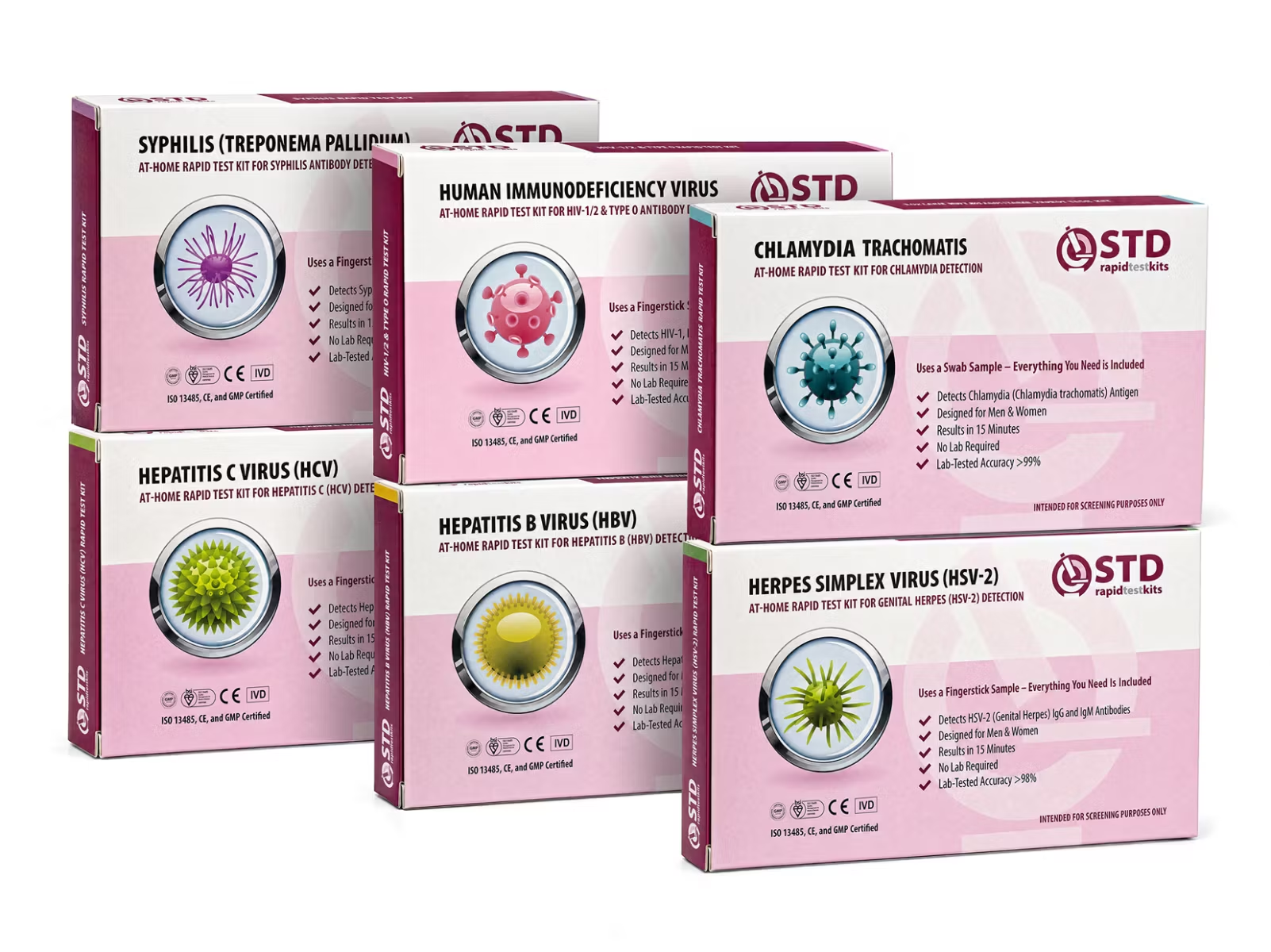
If you want one straightforward way to cover the most common infections in a single round, a combination at-home kit pairs both swab-based and blood-based methods. That helps in poly contexts where a new connection calls for a fuller picture rather than a single-infection check. One disclosure: this article is published by stdrapidtestkits.com, which sells at-home STI test kits. We recommend specific products based on fit for the reader's situation, not commercial benefit.
Timing the Conversation vs Timing the Test
One of the most common points of confusion is this: should you talk first, or test first? In reality, the answer is both, but the order matters depending on your situation. If you've had a recent exposure, your test result might not be reliable yet, which means the conversation needs to include that uncertainty rather than skip past it.
Picture this moment: you're about to start something new with a partner, and you tested "a few days ago" after a recent hookup. On paper, that sounds responsible. Biologically, the result may not mean much yet. If the exposure happened inside the window period, an infection (if present) hasn't reached detectable levels. The honest version of that conversation becomes, "I tested, but it's still early, so I'll need to retest to be sure." That phrasing protects both of you more than the cleaner-sounding alternative.
Clarity builds trust here. Saying "I tested and I'm negative" feels reassuring, but saying "I tested at X days, which is before the reliable window, so I'm planning to retest at the correct time" is more accurate. It shows you understand how testing works, not just that you took one.
On the flip side, if enough time has passed since your last exposure (meaning you tested after the correct window period), then your result is meaningful. The conversation becomes simpler: "I tested after the appropriate window and everything came back negative." That statement carries weight because it reflects how infections behave in the body, not just a timestamp on a calendar.
The same logic applies to your partner. If they say they tested recently, the follow-up serves to align timelines, not to doubt them. When was the test relative to their last exposure? That detail is what tells you whether their result reflects current reality or a past event. In polyamorous dynamics with overlapping timelines, this sequencing is doing real work, and the next section gets into what happens when people skip it.
When you've tested but it was inside the window period, try: "I had a screen done at [X days] after my last exposure. That's before the reliable detection window for most infections, so I'm planning to retest at the correct time. In the meantime, I want to be upfront about that so we can decide together what we're comfortable with." Specific, honest, and not mood-killing.
Common Mistakes That Lead to False Reassurance
Most STD-related anxiety doesn't come from actual diagnoses, it comes from uncertainty. And a lot of that uncertainty is caused by small misunderstandings that feel harmless in the moment but create confusion later.
The first major mistake is testing too early and assuming the result is definitive. This happens all the time. Someone has a new partner, tests within a few days, gets a negative result, and feels reassured. Biologically, the infection (if present) hasn't had time to replicate to detectable levels. The test didn't "miss" anything; it just wasn't the right time yet.
The second mistake is treating "no symptoms" as proof of "no infection." In the early stages, many STIs produce no obvious signs. Chlamydia in particular can be present and transmissible without causing pain or discharge, per CDC guidance. Symptom-based decision-making doesn't work for STIs the way it does for, say, the flu. Testing is the only way to confirm status.
The third mistake is relying on outdated test results. Someone might say, "I tested three months ago and I was negative." That was accurate at the time. But if they've had partners since then, that result no longer reflects their current status. Think of it like checking last season's weather forecast: accurate then, irrelevant now.
Another subtle one: assuming all tests are equal. If someone took a partial panel, their "negative" result might not include infections like herpes, syphilis, or hepatitis. This represents incomplete information rather than deception. In practice it creates gaps in understanding that only show up later.
All of these mistakes have the same outcome: a false sense of certainty. Once you understand how timing, testing methods, and exposure timelines interact, you realize that clarity comes from testing correctly, not from testing more often.
- Testing too early: a negative result inside the window period means "too soon to tell," not "clear." Retest after the window for your test type.
- Trusting "no symptoms": most chlamydia and gonorrhea infections are asymptomatic. Symptom-free is not test-negative.
- Treating old results as current: a negative from three months ago doesn't cover any exposures since. Each new partner resets the baseline.
- Assuming all panels are equal: ask what the panel included. Herpes, syphilis, and hepatitis are often left out of basic panels.
Building a Sustainable Testing Rhythm in Poly Relationships
Once you get past the initial conversation with a new partner, the bigger question becomes: how do you maintain clarity over time? In polyamorous relationships, this becomes an ongoing rhythm rather than a one-time conversation, fitting around your actual sex life rather than a generic calendar reminder.
A lot of people settle into a pattern of routine testing every 3 months when they have multiple partners. That timeline isn't random, it aligns with the longest window periods of the most common infections and provides a consistent check-in point. The exact frequency should match your actual exposure level. More partners or overlapping timelines may mean testing more often; a stable closed polycule with no new exposures may not need 3-month tests.
There's also the "new partner protocol" that many poly people follow without necessarily naming it: before adding a new connection, both people test, share results, and discuss any exposures since those tests. The point is less about rules and more about a shared practice that keeps everyone working from the same information.
Then there's communication. Not the big formal conversations, but the small updates. "Hey, I'm planning to test this week since I had a new partner recently." That kind of transparency keeps everyone aligned without turning sexual health into a constant negotiation. Once the rhythm is in place, the conversations stop feeling like awkward disclosures and start feeling like normal check-ins.
And the checklist below sketches out what that rhythm looks like in practice, so you have something concrete to work from rather than a vague intention to "test more often."
Poly testing rhythm checklist
- Default cadence: a full STI panel every 3 months while actively dating multiple partners.
- New partner protocol: both partners test and share results before becoming sexually active.
- Exposure-triggered retest: after any new partner, retest at the window period that matches the highest-window infection in your panel.
- Light-touch updates: a quick text to current partners when you've tested or had a new exposure keeps everyone aligned without formal meetings.
FAQs
- Do I really need to get tested before every new poly partner?
- If there's been any new sexual contact since your last test, that's the cleanest way to reset the baseline. Think of it less like a rule and more like working from current data instead of assumptions. Many poly people pair this with a standing 3-month routine test.
- How do I bring this up without killing the vibe?
- Honestly, it's usually less awkward than people expect. "Hey, I like to check in about testing before things get physical, when was your last test?" works well. The confidence in how you say it matters more than the exact wording, and uncertainty kills the mood faster than the conversation does.
- What if they say they tested "recently"?
- The word "recently" does a lot of heavy lifting. It could mean last week or last year. Follow up with: when exactly, and have they had partners since? That distinguishes useful information from reassurance-shaped non-answers.
- Is it rude to ask what they were tested for?
- Not at all, it's one of the smartest follow-up questions. A lot of people assume a "full panel" covers everything, but not all panels include herpes, syphilis, or hepatitis. Being specific about what the result actually covers is being precise, not picky.
- If I feel fine, do I still need to test?
- Yes. Most chlamydia and gonorrhea infections cause no symptoms, and many other STIs are mild or invisible in early stages. Feeling fine tells you very little biologically. A test does.
- How soon after sex can I test and trust the result?
- It depends on the infection. Chlamydia is reliable from about 14 days, gonorrhea from about 3 weeks, and syphilis around 6 to 7 weeks per the NHS general rule. For HIV, CDC guidance gives an 18 to 45 day window for the lab antigen/antibody test and 18 to 90 days for rapid antigen/antibody and antibody-only tests, with retesting after the applicable window for your specific test. HSV retesting is recommended at 12 weeks per CDC STI treatment guidelines. Hepatitis B is reliable from about 6 weeks, hepatitis C from 8 to 11 weeks. Testing earlier can produce false negatives.
- What if I already tested, but it was kind of soon after exposure?
- Then that test is a checkpoint, not a final answer. It's useful, but not definitive. Retest after the proper window period for the infections you're concerned about to get a result you can actually rely on.
- How often do people in poly relationships usually test?
- A common rhythm is every 3 months, especially with multiple partners or new connections. It's not one-size-fits-all. If you're adding partners more frequently, testing more often makes sense. The frequency should match your actual exposure, not just a calendar.
- World Health Organization. Sexually transmitted infections (STIs) fact sheet, including asymptomatic infection rates and testing recommendations.
- U.S. Centers for Disease Control and Prevention. STI program home: overview of common sexually transmitted infections, testing, and prevention resources.
- U.S. Centers for Disease Control and Prevention. About chlamydia: transmission, asymptomatic presentation, and testing guidance.
- U.S. Centers for Disease Control and Prevention. About gonorrhea: transmission, asymptomatic presentation, and NAAT testing recommendations.
- U.S. Centers for Disease Control and Prevention. HIV testing: window periods of 18 to 45 days for the antigen/antibody lab test and 18 to 90 days for rapid antigen/antibody and antibody-only tests, with retesting after the window for the test type used.
- U.S. Centers for Disease Control and Prevention. STI Treatment Guidelines, genital herpes section: includes recommendation to repeat type-specific antibody testing 12 weeks after presumed HSV acquisition.
- NHS. Sexually transmitted infections (STIs): overview of testing, common infections, and the general guidance that STIs can take up to 7 weeks to show on a test.
- U.S. Centers for Disease Control and Prevention. About syphilis: stages, transmission, and serologic testing overview.
