Published: October 2025 | Last updated: May 2026 | Editorial review and quality control: Martina N.
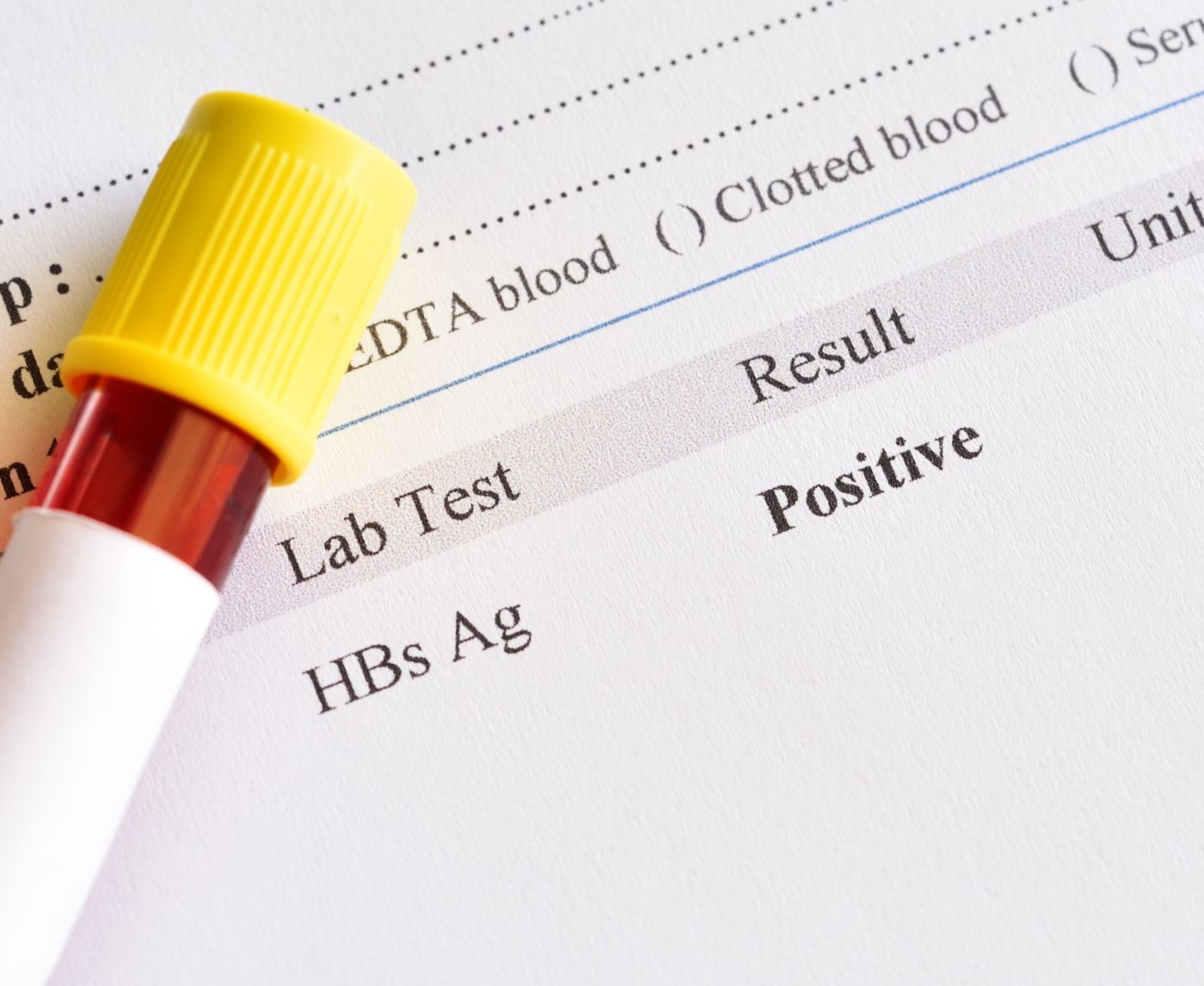
A positive hepatitis B test is jarring, even when you went into the testing knowing it was possible. The first feeling is rarely facts. It is a stomach drop, a tight chest, a head full of half-remembered horror stories about liver disease and lifelong infection. Take a slow breath before you do anything else. Hepatitis B is a serious infection, and it is also one of the most well-understood liver infections in modern medicine. Most healthy adults clear it on their own, treatment exists for those who need it, and a positive rapid result is the start of a process, not a verdict.
This guide walks through the first 24 hours, how to confirm the result, what your follow-up labs mean, who to contact, what treatment can look like, and how to navigate the parts nobody warned you about: telling a partner, sitting with the emotional weight, and protecting your future. None of this needs to happen in the next hour.
Key Takeaways
- Hepatitis B acquired in adulthood becomes chronic in fewer than 5% of cases, per the WHO hepatitis B fact sheet. Adult immune systems usually clear the virus. Infants and young children exposed at birth or in early childhood are at much higher risk of chronic infection.
- A positive rapid home test is a presumptive result. The next step is lab-based confirmatory bloodwork within a week, not an emergency room visit, unless you have severe symptoms like jaundice, repeated vomiting, or confusion.
The First 24 Hours: Slow Things Down
There is a real moment, right after the test, before the plan, where the impulse is to do something dramatic. Drive to the emergency room. Call everyone you have ever slept with. Throw out all the towels in the house. None of those are necessary in the first day. The decisions that matter right now are smaller and calmer.
What you do not need to do: book an emergency appointment if you feel physically well, panic-Google chronic-liver-disease outcomes, or disclose to anyone you do not trust to handle the information with care. Hepatitis B has been a known and managed infection for decades.
- Document the result. Write down when you took the test, what kit you used, how it looked (faint line, clear line), the timing, and the storage temperature of the kit. All of this matters for the lab follow-up.
- Skip alcohol and high-dose pain relievers. Your liver may already be working harder than usual. Hold off on acetaminophen, supplements, and other liver-taxing meds unless medically necessary.
- Pause unprotected sex. Wait until you have talked to a provider about your infectious stage. Rushing this conversation before you have lab data is unfair to everyone involved.
Confirming the Result with Lab Bloodwork
A rapid hepatitis B test detects the surface antigen (HBsAg) in a fingerstick blood sample. That is the same marker labs use, but rapid lateral-flow chemistry is not the same as a laboratory immunoassay. Rapid tests are screening tools. They sometimes show false positives, especially when the test line is faint, the kit was stored outside its temperature range, or the read window was missed. A lab-based blood panel adds two things: a second look at the same antigen using a more sensitive method, and a panel of additional markers that tell you whether the infection is new, old, resolved, or never there at all.
The full hepatitis B panel typically includes HBsAg, anti-HBs (the protective antibody), anti-HBc total, and IgM anti-HBc. Together these answer three questions: are you currently infected, have you been infected in the past, and are you protected by vaccination? Getting this panel is not optional after a rapid positive. It is the difference between guessing and knowing.
You can get the panel through a primary care provider, a sexual-health clinic, an urgent care, or a mail-in lab service. If you do not have insurance, your local health department often runs free or sliding-scale hepatitis testing. The CDC GetTested portal includes a locator you can search by ZIP code. Try to get the bloodwork done within a week of the rapid result so you can move from presumptive positive to a concrete plan quickly.
- HBsAg. Is the virus circulating right now? Positive means active infection (acute or chronic).
- Anti-HBs. Do you have protective antibodies? Positive means immunity from past clearance or vaccination.
- Anti-HBc total. Have you ever been infected? Positive means past or current natural infection. Vaccination alone does not produce this antibody.
- IgM anti-HBc. Is the infection recent? Positive points to acute infection within the past six months.
Reading Your Hepatitis B Lab Markers
If your provider sends you a report full of letters and abbreviations, here is how to translate the most common ones without a medical degree. The combinations matter more than any single marker on its own.
| Marker | Meaning | What It Suggests |
|---|---|---|
| HBsAg Positive | Hepatitis B surface antigen present in your blood | Active infection, either acute or chronic. Follow-up needed. |
| Anti-HBs Positive | Protective antibodies to the surface antigen | Immunity from past cleared infection or from vaccination. |
| Anti-HBc Total Positive | Antibody to the core antigen, present at any time | Past or current infection. Vaccination alone does not produce this. |
| IgM Anti-HBc Positive | Early-response core antibody | Recent or acute infection within the past six months. |
| HBV DNA (Viral Load) | Amount of virus circulating | Used to decide whether antiviral treatment is needed. |
Who to Contact (and How to Open the Conversation)
If you do not already have a primary care provider, you have options. A sexual-health clinic, an urgent care, or a telehealth STI service can each handle a hepatitis B follow-up. Most providers will not need you to bring the physical cassette. A photo of the result, a clear note about the testing date, and your honest exposure history are enough to move forward.
When you book the appointment, mention that you had a positive rapid hepatitis B test and need confirmatory bloodwork plus a care plan. That language gets you routed to a clinician who handles hepatitis cases rather than a generic intake. Telehealth platforms with positive-result pathways often offer same-day or next-day virtual visits for this exact situation.
During the visit, expect questions about possible exposures (sex, needle sharing, occupational blood exposure, a tattoo or piercing in an unsterile setting, birth in or travel to a region where hepatitis B is endemic), any symptoms you have noticed, and your vaccination history. None of these questions are judgments. Honesty about exposure routes helps your provider order the right tests and prepare partner-notification options if you want them.
If you do not know where to start, a 24/7 nurse line through your insurance, your employer's wellness program, or a state public-health hotline can route you. The Hepatitis B Foundation also runs a peer-staffed help line for non-clinical questions, useful when you want to talk through what a diagnosis means without committing to medical appointments first.

What Treatment Actually Looks Like
Hepatitis B is not a take-a-five-day-antibiotic-and-you-are-done infection. The treatment plan depends on whether your case is acute (recent infection, less than six months old) or chronic (the virus persists past the six-month mark) and on how your liver is responding.
For most healthy adults with an acute infection, treatment is supportive: rest, hydration, avoiding alcohol and liver-stressing medications, and monitoring liver enzymes (ALT and AST) until the virus clears on its own. The WHO hepatitis B fact sheet reports that fewer than 5% of adults exposed to HBV go on to develop chronic infection, meaning the adult immune system clears the virus in roughly 95 out of 100 cases. The body does the work, and your provider watches for signs of severe acute hepatitis or progression to chronic infection.
For chronic hepatitis B, the plan is more involved. Your provider will check your viral load (HBV DNA), liver enzymes, and may order liver imaging (ultrasound or elastography) to look for fibrosis. The CDC treatment page notes that several FDA-approved medications exist for chronic hepatitis B. Commonly prescribed options include tenofovir alafenamide, tenofovir disoproxil fumarate, and entecavir, typically dosed as once-daily oral tablets; consult your provider and the prescribing information for the side-effect profile of each. These antivirals do not cure chronic hepatitis B the way antibiotics cure a bacterial infection, but they suppress the virus and reduce the risk of cirrhosis and liver cancer over decades. Some people start antivirals right away. Others are monitored without medication for years, until labs suggest it is time. The decision is individualized to viral load, liver enzymes, age, and other health factors.
| Infection Stage | Typical Treatment Approach | Monitoring Plan |
|---|---|---|
| Acute Hepatitis B (under 6 months) | Supportive care; antivirals only for severe acute hepatitis | Liver enzyme and HBsAg checks every 1-3 months until clearance or 6-month mark |
| Chronic Hepatitis B, low viral activity | Often no medication; lifestyle measures and monitoring | Labs every 3-6 months; periodic liver imaging |
| Chronic Hepatitis B, active liver inflammation | Daily oral antiviral (tenofovir or entecavir) | Labs every 3 months initially, then 3-6 months once stable |
| Resolved past infection | No treatment | Mention on intake forms; recheck if you become immunocompromised |
Telling a Partner Without Spiraling
This is the part most people dread, and the part that often goes better than expected. Hepatitis B is sexually transmissible and also transmissible through blood-to-blood contact such as shared razors, toothbrushes, needles, and certain tattoo or piercing settings. Anyone you have had unprotected sex with, anyone who may have been exposed to your blood, and household members who share personal-care items with you should know.
You do not owe anyone a confession or a full sexual history. A factual, low-drama message is enough. Something like: “I recently tested positive for hepatitis B and wanted to let you know you may want to get tested too. There is a vaccine if you have not had one, and the testing process is straightforward. I am happy to share what I know.”
For partners you would rather not contact directly, many states offer anonymous partner-notification services through public-health departments. Online tools run by health departments in some regions send an anonymous text or email. The exposed person gets a notification, recommended testing, and links to resources without learning who sent it. These tools exist precisely because partner notification has clinically validated benefits for testing rates and the work of starting the conversation is hard.
If a partner reacts badly, that is about them, not about your worth or the validity of telling them. Most people, given a beat to absorb the information, respond with concern rather than blame. The few who do not were going to find a reason for that reaction regardless.

Retesting and Long-Term Monitoring
Even after the initial confirmatory bloodwork, your hepatitis B labs are not one-and-done. The next test depends on what the first panel showed.
If your panel suggested acute infection, your provider will likely repeat HBsAg and anti-HBc at the six-month mark. If HBsAg is still detectable at six months, the infection is considered chronic. If it has cleared, you have recovered. That six-month marker is clinical shorthand for how your immune system handled the virus, and it is the only reliable way to know which category your case falls into.
If your panel showed chronic infection, you move to ongoing monitoring. Most chronic hepatitis B patients have liver enzymes and viral load checked every three to six months, with periodic liver imaging to screen for fibrosis or liver cancer. The frequency depends on your viral load, liver enzymes, age, and whether you are on antiviral therapy. Over years this becomes routine, like any chronic-condition monitoring.
If your panel showed past-cleared infection (HBsAg negative, anti-HBc positive, anti-HBs positive), you generally do not need ongoing hepatitis B labs unless you become immunocompromised. Mention the past infection on any future medical intake form so providers know. The World Health Organization emphasizes routine monitoring for all people with chronic hepatitis B because liver damage often progresses silently, even when you feel completely well.
Protecting Others in Daily Life
Hepatitis B transmits through blood and certain body fluids. It does not transmit through sharing food, hugging, coughing, sneezing, casual contact, or using the same toilet seat. That distinction matters because misinformation creates isolation for people who do not need to be isolated.
Practical day-to-day habits while you are infectious:
- Cover any open cuts or sores with a bandage until healed.
- Do not share razors, toothbrushes, nail clippers, or anything that could carry trace blood.
- Use a condom or other barrier method during sex with unvaccinated partners.
- If you menstruate, wrap used products in tissue before disposal and wash your hands carefully.
- Clean blood spills with a 1:10 bleach-to-water solution.
Vaccinated partners are protected. The hepatitis B vaccine is highly effective and is available at pharmacies, primary care offices, and most health departments. If your partner has not been vaccinated, they can start the series immediately. Post-exposure prophylaxis with hepatitis B immune globulin (HBIG) plus the vaccine can also reduce transmission risk after a known exposure, ideally within 24 hours.
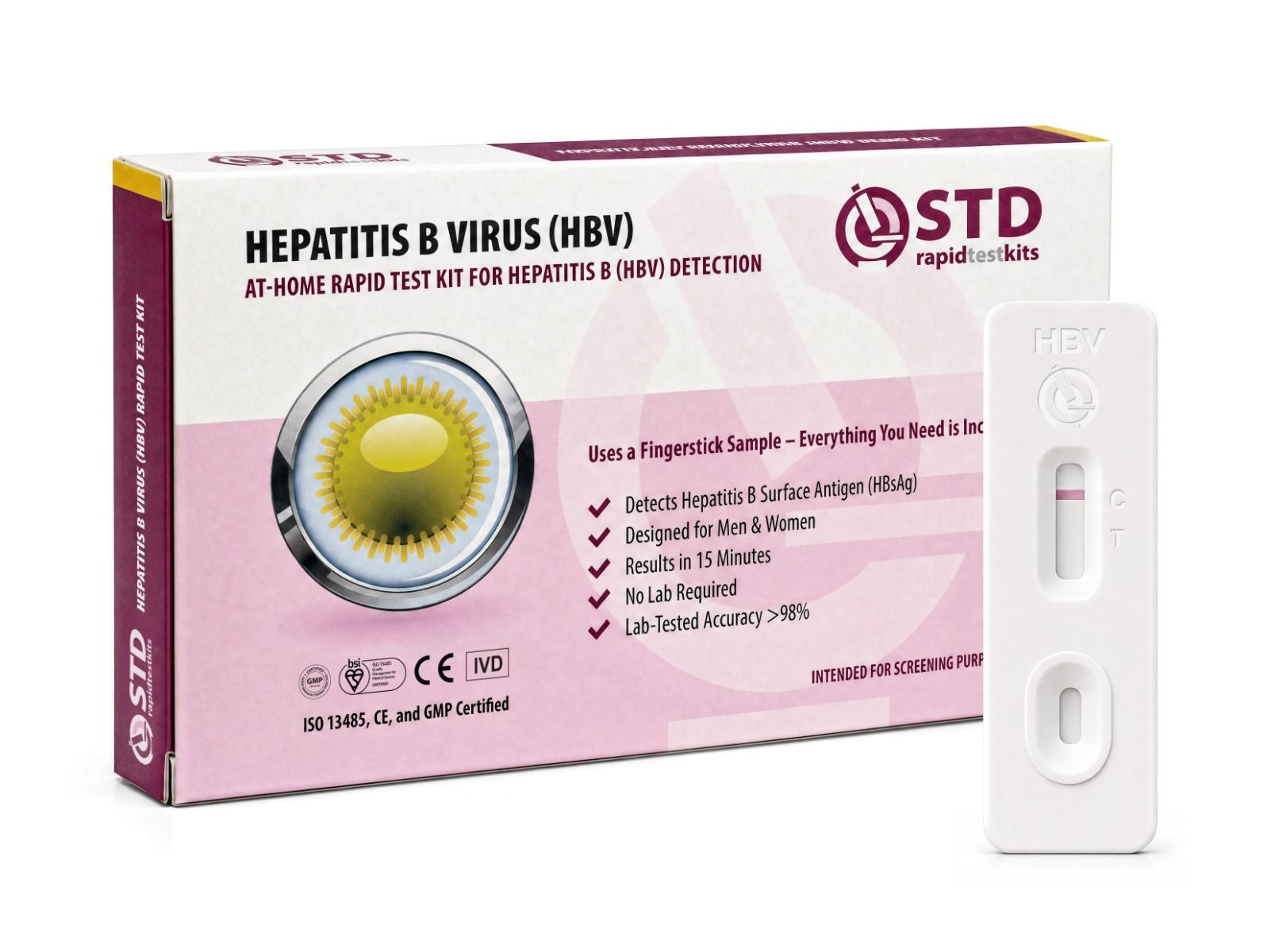
If you live with others, talk with your provider about whether household members should be tested or vaccinated. Most adults in the United States who completed the hepatitis B vaccine series in childhood are protected. Adults who never got the series can complete it at any age. We offer a rapid at-home hepatitis B test below for partners or household members who want a private screen; this site sells the test, and home results should always be confirmed with lab bloodwork.
Your Mental Health Deserves Care Too
The medical side of a hepatitis B diagnosis is well-mapped. The emotional side often is not. Common reactions include shame, anger, grief over an imagined future, and a sense that your body has betrayed you. None of these are wrong. They are the response of a brain trying to make sense of a label that carries cultural weight beyond its actual medical meaning.
A few things tend to help. Talking with one trusted person, whether a therapist, a partner, a friend, or a peer support contact, breaks the isolation that turns a diagnosis into a secret. Peer-support organizations run forums and one-on-one connection programs where people who have lived with the diagnosis for years can share what they wish they had known. Reading evidence-based information from sources like the CDC, WHO, and NHS, instead of forum doom-spirals, helps too. Most of the catastrophic outcomes you will find online are rare and largely preventable with monitoring.
Give yourself permission to take this slowly. You do not need to make every decision today. You do not need to disclose to everyone in your life immediately.
- Hepatitis B Foundation Help Line. Peer-staffed phone and email support for non-clinical questions about living with hepatitis B.
- CDC and WHO root pages. Evidence-based, plain-English explanations of transmission, treatment, and outcomes that contradict most of what panic-Googling will surface.
- A therapist or counselor. Even one session can help separate the medical reality from the cultural weight of the diagnosis.
- Your provider's care team. Many hepatitis clinics include a social worker or patient navigator whose job is exactly this part.
Where to Go From Here
A positive hepatitis B test is the beginning of a managed, often quiet, sometimes inconvenient medical reality. It is not the end of your life. The data is on your side. Treatment is good and getting better. The infection is well-understood. Most people you meet who have hepatitis B live long, full lives with intermittent labs and zero outward signs of anything different.
The biggest predictor of how this goes for you is consistent engagement with care over time. Show up for confirmatory bloodwork. Show up for follow-up visits. Be honest with partners. Cover cuts. Skip alcohol while your liver settles. Take the antiviral if you are prescribed one. The future you in five years will thank the present-day you for small steady actions, not dramatic ones.
If you also want to rule out other infections that may have happened around the same exposure event, a private at-home combination panel can confirm or rule out a wider set of STIs without another clinic visit.

FAQs
- Can hepatitis B clear without treatment?
- For most healthy adults, the immune system clears the virus within six months without medication. The only way to confirm this for your specific case is the six-month HBsAg retest, not the initial rapid result or the first lab panel. Children and infants follow a different pattern and are at much higher risk of developing chronic infection if exposed early.
- How quickly do I need to confirm a positive rapid result?
- Within a week is ideal. The rapid test is a screening tool; lab bloodwork confirms whether the surface antigen is real, whether you have protective antibodies, and whether the infection is recent or older. Faster confirmation means faster clarity, which is its own form of relief.
- Will I have hepatitis B for life?
- Whether the infection becomes chronic depends on your six-month retest. If it does, chronic HBV for most people means periodic labs and, when indicated, a once-daily antiviral tablet, not daily symptoms or a shortened lifespan. Many people with chronic HBV live decades with no outward change in their daily life beyond appointment reminders.
- Can I still have sex if I am hepatitis B positive?
- Yes, with care. Use condoms or other barrier methods with unvaccinated partners. If your partner has completed the hepatitis B vaccine series, they are protected. If they have not, they can start the series at any time. Talk to your provider about your specific viral load before resuming unprotected sex with a long-term partner.
- How is hepatitis B transmitted?
- Through blood, semen, vaginal fluids, and other body fluids. The most common routes are unprotected sex, shared needles or syringes, unsterile tattoo or piercing equipment, mother-to-baby transmission at birth, and household sharing of personal items like razors and toothbrushes. It does not spread through casual contact, kissing without blood exposure, or sharing food.
- What if I do not feel sick?
- Many people with hepatitis B feel completely fine, especially in the first six months. The absence of symptoms does not mean the virus is inactive. Liver damage from untreated chronic hepatitis B often progresses silently over years, which is why ongoing labs matter even when you feel well.
- Do I have to tell former partners?
- Ethically yes, especially anyone you have had unprotected sex with or shared needles with. If a direct conversation feels impossible, anonymous partner-notification services through state health departments and online tools can send a notification without revealing your identity. These tools exist precisely because partner notification is high-value and emotionally hard.
- Should I avoid alcohol completely?
- At minimum while your liver enzymes are elevated, yes. Long-term alcohol use significantly raises the risk of liver damage in anyone with chronic hepatitis B. Your provider can give you a specific plan based on your labs, but during acute infection and while on antiviral therapy, no alcohol is the safest default.
- U.S. Centers for Disease Control and Prevention. Overview of hepatitis B transmission, testing, vaccination, and care recommendations.
- World Health Organization. Global hepatitis B fact sheet; source for adult clearance rate (fewer than 5% of adult-acquired infections become chronic) and clinical course summary.
- U.S. Centers for Disease Control and Prevention. Clinical interpretation of hepatitis B serology panels, including HBsAg, anti-HBc, and anti-HBs combinations.
- U.S. Centers for Disease Control and Prevention. Treatment framework and monitoring guidance for acute and chronic hepatitis B.
- U.S. Centers for Disease Control and Prevention. National testing locator portal for STI and viral hepatitis services.
- UK National Health Service. Patient-facing overview of hepatitis B symptoms, transmission routes, and the care pathway after diagnosis.
