
Published: October 2025 | Last updated: May 2026 | Editorial review and quality control: Martina N.
You asked your partner about getting tested together, and instead of a calm yes, you got silence, or anger, or a question that made you feel like the bad guy for caring. If you are sitting with that knot in your stomach, second-guessing how you brought it up, this guide is for you.
Short version: asking for an STD test is a normal, responsible part of being sexually active. The CDC and the NHS both treat routine screening as a baseline, not a flag of suspicion, and the CDC publishes scripts for exactly this kind of conversation (CDC, Talking with Your Partner). Their reaction is information, but it is not a verdict on your judgment. Below: what to say when it blows up, when refusal becomes a red flag, and how to take care of your own health regardless of what they decide.
Key Takeaways
- An angry reaction is usually about shame, stigma, or fear of being accused. It is not a verdict on your judgment for asking.
- You can still test on your own. Public-health agencies treat routine STI screening as standard sexual health, not a marker of suspicion.
Why one question can set off so much emotion
Conversations about testing rarely stay on the surface. The question itself is simple (have you been tested, can we test together), but the response often comes from somewhere older: shame about sexuality, a past relationship where suspicion was weaponized, or sex education that conflated infections with character. A health question can still pull all of that into the room.
The CDC's partner-conversation guide is built around exactly that emotional charge, and it suggests opening with care rather than facts (CDC conversation tips).
If you are cycling through guilt right now, asking for testing is an act of care.
Public-health research consistently finds that emotional barriers (shame, fear of judgment, stigma) outweigh knowledge gaps as reasons people avoid or react badly to STI testing. Most people know testing exists. What stops the conversation is what asking might seem to mean.
This does not mean you did something wrong
When a partner reacts defensively, the quickest reflex is to scan yourself for the misstep. Did I imply they slept around? Did I sound accusatory? Did I ruin a good evening? The honest answer is almost always no. Testing talks are hard because they press on buried insecurities, not because you brought them up wrong.
Here are common reactions and what tends to sit underneath them.
| Reaction | What it often reflects | What it does not mean |
|---|---|---|
| “Why don’t you trust me?” | Fear of being accused, or a past relationship where they were | You think they are cheating |
| “Are you saying I’m dirty?” | Internalized stigma or sex education that taught shame | You think they are unclean |
| Sudden anger or yelling | Panic response, sometimes unresolved trauma | You were aggressive or out of line |
| Shutting down, walking away | Fear of confrontation or emotional overwhelm | Your request was inappropriate |
What to say when the conversation blows up
If it has already spiraled, you have not lost the chance to repair it. The goal is not to win the argument. The goal is to step back into a shared space where you can both talk without shame or accusation. The CDC recommends leading with care, framing the test as something you do for the relationship, and using short, calm responses when the other person escalates (CDC conversation tips).
Sample responses below. Adjust the wording to fit your relationship.
| If they say this | You could say |
|---|---|
| “Do you think I’m cheating?” | “No. I care about both of us, and I want us to stay healthy.” |
| “You must have something if you’re asking.” | “I don’t have symptoms. A lot of STIs are silent. Testing feels like the responsible thing.” |
| “This is insulting.” | “It isn’t meant that way. This is about health, not accusations.” |
| “I don’t need a test. I’m fine.” | “You might be. Most STIs don’t show symptoms, though, and I’d rather we both know.” |
When refusal starts to look like a red flag
Refusing a test is not automatically a red flag. People panic. Sometimes the first reaction is fear, and a few days later they come around. What pushes refusal into red-flag territory is a pattern: anger paired with guilt-tripping, control over decisions that affect your body, or a flat “no” that doubles as “this conversation is closed.”
A partner can be uncomfortable and still respect you. A partner can disagree on timing and still hear you. What is not okay is being mocked, dismissed, or punished for asking a basic sexual-health question. Chlamydia, gonorrhea, and trichomoniasis are frequently asymptomatic, which is exactly why screening exists (CDC, Getting Tested for STIs). Asking your partner to test together is straightforward sexual-health hygiene, in line with screening guidance from the CDC and the NHS.
If refusal is paired with controlling behavior, the issue runs beyond the test itself.
If you are reading this in the middle of an argument, pause. A walk, a glass of water, anything that lowers the volume. Decisions made in the spike of a fight tend to be worse than the same decisions made an hour later. The test can wait an hour. The relationship probably can too.
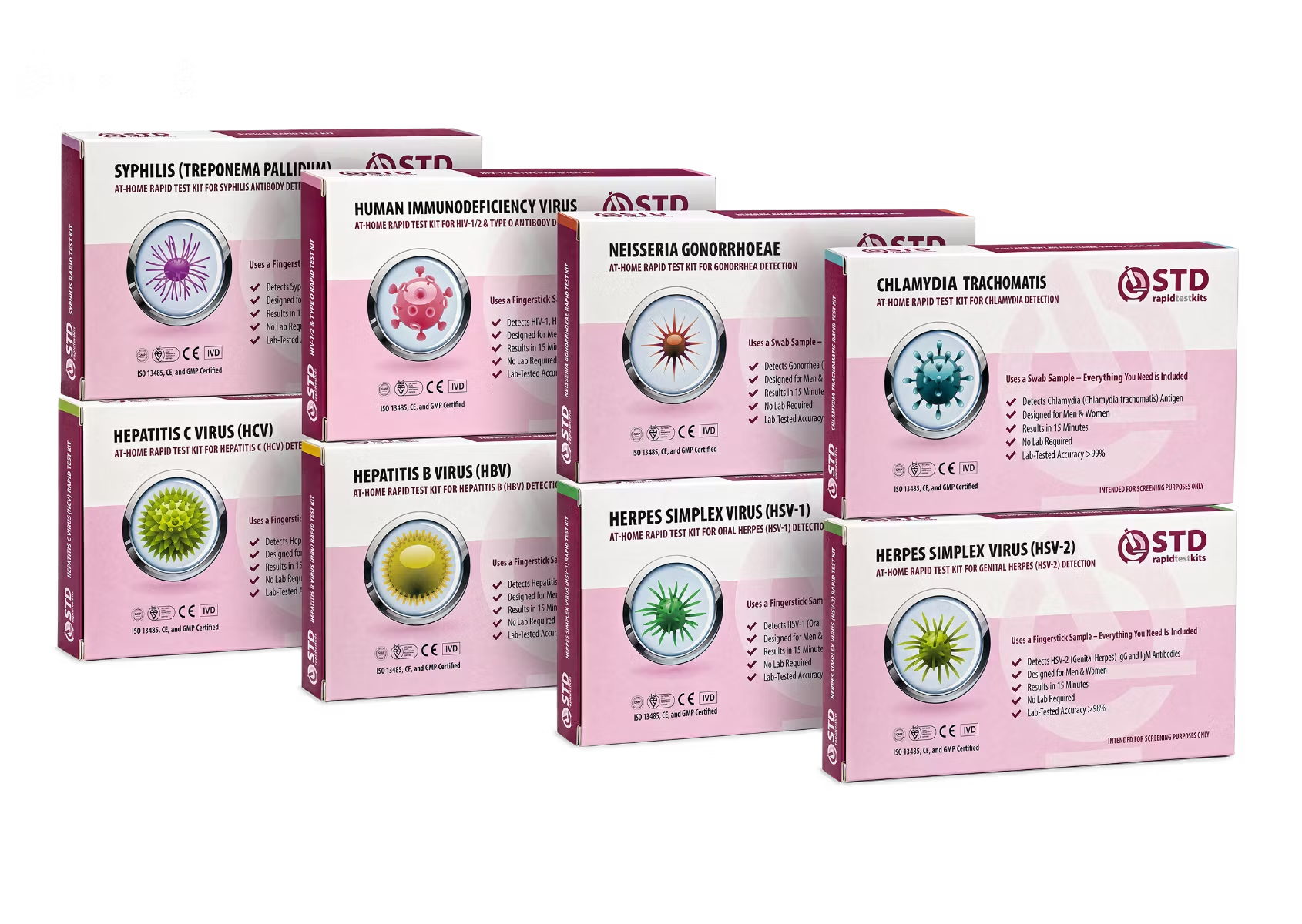
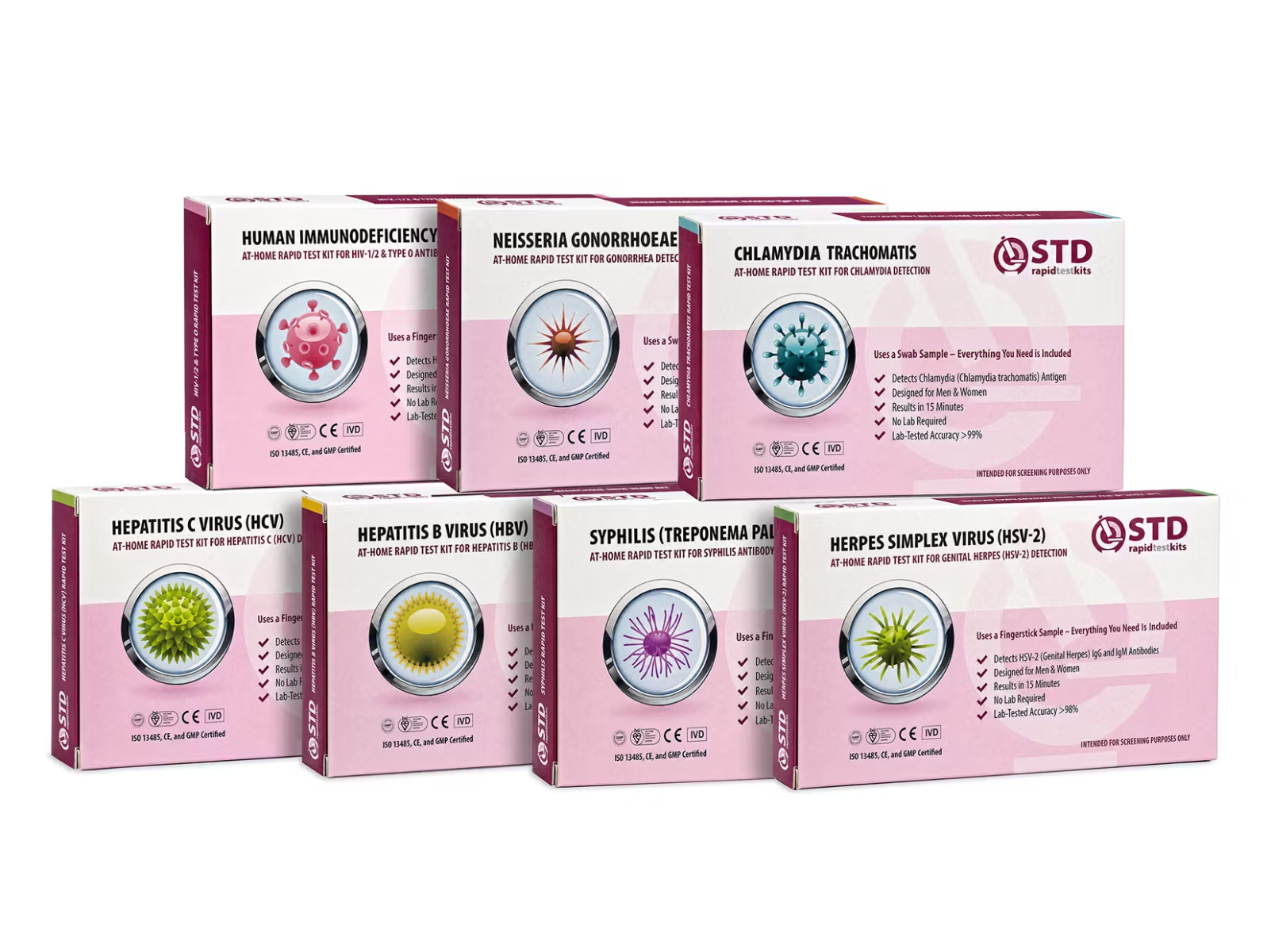
One note for transparency: stdrapidtestkits.com sells the at-home rapid test kits referenced below. We recommend kits based on fit for the reader's situation, not commercial benefit.
What if they never agree to test?
Not every partner will come around, even with the gentlest framing. If the conversation keeps stalling, or if they keep brushing your concern off, you still have options. Your health is not contingent on their participation.
The four options below are not all-or-nothing. Most people end up combining two or three of them. Testing solo, in particular, is having information about your own body that you can act on regardless of what your partner decides.
| Option | What it involves | Why it helps |
|---|---|---|
| Test yourself | Use a home kit or a clinic, with or without their involvement. | Gives you a clear baseline for your own health. |
| Set sexual boundaries | Use condoms, or pause sex until testing happens. | Lowers risk while you keep talking. |
| Revisit the conversation | Try again later with a calmer opening and shared resources. | Time and space can soften a panic response. |
| Walk away | If refusal becomes a pattern of disrespect, leaving is valid. | Your safety and autonomy outweigh keeping the peace. |
Your body, your health, your call
One pattern shows up over and over in sexual-health support conversations: someone gets tested over a partner's objection, the result comes back positive (often for a treatable infection like chlamydia or trichomoniasis), and the partner's first move is to accuse them of cheating. The math here is worth being clear about. STIs can sit in the body, undetected, for months or longer. A positive test does not say when an infection started. It says one is present now (CDC, Getting Tested for STIs).
That fact cuts both ways. It is exactly why testing inside a relationship matters. Either partner can be carrying something they picked up before the relationship started, and only testing tells you. Routine screening sits at the floor of any sexually active relationship, not as a test of fidelity.
If a partner cannot hold that distinction, the issue is the framework they are bringing to the conversation, not the question itself.

What if they refuse with a smile
Not every refusal looks like an argument. Some of the hardest to spot are the gentle ones. “You don’t need to worry, babe.” “I’m clean, you’re clean, what’s the point?” A kiss on the forehead and a quick subject change. Kindness in the moment can still be avoidance, and avoidance can quietly become a pattern.
A partner can be uncomfortable and still respect you. After a soft refusal, check how your body feels: calm and connected, or small and silenced? The first is dialogue. The second is something else, and it is worth noticing even before you can put a name on it.
One practical move: repeat the request once, plainly, after the moment has passed. “I want to come back to the testing conversation. Are you open to it this weekend?” That gives them a chance to engage now that the surprise has worn off. If the answer is still a soft deflection, you have your answer.
Many people who have an STI do not know it. Testing is the only way to know for sure. Talk with your partner about testing.
Testing can be a love language
This rarely gets said out loud, but it should: agreeing to test together is one of the more grown-up moves two partners can make. It says, in shorthand, “I take this seriously. I take you seriously. I am not afraid of what we might learn.” Couples who get through the first awkward minutes of that conversation tend to come out with more trust, not less.
Plenty of couples make the test itself a low-stakes evening. Order a home kit, run it together, cook dinner while you wait for results. The whole thing takes about as long as a movie. For couples moving in together, opening up to fluid bonding, or transitioning off PrEP, that shared step builds the foundation rather than testing it.
If you are not at that place yet, that does not erase your right to ask.
You deserve answers, not assumptions
If you have read this far, you care. You are not trying to pick a fight. You are trying to protect yourself and, if it is possible, the relationship you are in.
You deserve a partner who can sit with this question instead of punishing it. You deserve conversations that are honest rather than designed to avoid bruising feelings. Most of all, you deserve answers about your own body, on your own timeline, regardless of how anyone else feels about it.
You can order a rapid at-home STI test today, run it privately, and read the result in about 15 minutes. Your partner's permission is not part of the process. If a result comes back positive, a clinic can confirm and treat.
FAQs
- What if my partner says I don’t trust them?
- Asking for testing is not an accusation. You can say, “I do trust you, and I also care about both of our health. Testing is just part of how I show that.” Trust and testing can coexist. Public-health agencies actively recommend that sexually active partners screen as a routine baseline, not as a response to suspicion.
- Is it normal for someone to get angry about testing?
- It happens, and it is not always a red flag on its own. STIs still carry stigma, and some people were raised to read “will you test” as “I think you cheated.” Initial defensiveness can soften with time. What matters is how the conversation looks a few days later, not how the first thirty seconds felt.
- Should I still get tested if they refuse?
- Yes. Their refusal does not change your right to know what is happening in your body. You can test on your own, get treated on your own if anything turns up, and protect yourself regardless of their participation. Most home kits are private and can be ordered without a partner ever knowing.
- Can I test without telling them?
- Yes, especially if you are nervous about their reaction. Testing is confidential, and home kits do not require any partner involvement to use. If a result comes back positive, you can decide later how, and whether, to share it. Knowing your own status first puts you in a calmer position to have the next conversation.
- Does asking for a test mean I think they are cheating?
- No, and it is worth saying so out loud if the conversation gets heated. A clear framing: “This isn’t about cheating. It’s about both of us being in the clear before we get more intimate.” Position it as a team baseline, not a courtroom cross-examination. That alone resolves most defensive reactions.
- Is it okay to end a relationship over this?
- Yes, if the refusal is part of a pattern of disrespect, mockery, or control. Protecting your health should not cost you your dignity. A partner who punishes you for a reasonable health request is showing you something important about how future disagreements will go. Trust that information.
- How do I bring it up without starting a fight?
- Timing helps. A relaxed moment, not the start of an argument or a tense evening. A soft opener works: “I’ve been thinking, and it might be a good idea for both of us to get tested. I care about you, and this feels like the right step.” Frame it as an invitation, not a demand, and stay calm if the first reaction is rocky.
- What if I test positive and they still will not get checked?
- Take care of your side first. Get treated. Tell them they should test and be treated too, because reinfection from an untested partner is common. If they refuse, pause sexual contact, or end the sexual side of the relationship, until they engage. You do not owe your body to a partner who will not protect theirs.
Our article was constructed based on current guidance from the most prominent public-health and medical organizations, including the CDC and the NHS, and then molded into plain language based on the situations people actually experience. We do not invent clinical advice and we do not fabricate first-person stories.
- U.S. Centers for Disease Control and Prevention. Conversation tips for talking with a partner about STI testing.
- U.S. Centers for Disease Control and Prevention. Getting tested for STIs: why testing matters and how to start.
- U.S. Centers for Disease Control and Prevention. Know the facts about STIs: prevalence, symptoms, and testing basics.
- NHS. Sexually transmitted infections (STIs) overview, symptoms, and when to seek testing.
- U.S. Department of Health and Human Services, MyHealthfinder. STI testing: conversation starters for partners.
