
Published: July 2025 | Last updated: April 2026 | Editorial review and quality control: Martina N.
Oral HPV is the kind of infection that doesn't announce itself. Most people who carry it never see a sign in their mouth, never feel a lesion on their tongue, and clear the virus on their own within one to two years. The cases that do show signs are usually subtle: a small painless bump that feels different when you run your tongue over it, a patch on the soft palate that didn't used to be there, a sore throat that has outlasted every cold remedy you've thrown at it.
This guide explains what oral HPV can actually look like, why most mouth changes are something else entirely, how it spreads, and when a persistent lesion is worth a clinic visit. There is no FDA-cleared at-home test for oral HPV. The next sections explain why, what genuinely helps in the meantime, and what a clinic visit looks like.
What does oral HPV look like, and how do I know when to worry?
Oral HPV most often looks like nothing at all. When it does show, expect painless cauliflower-textured bumps, flat white or red patches that don't wipe away, or a sore throat that has lingered three weeks or longer with no other cold symptoms. Common mouth changes that worry people most (canker sores, cold sores, oral thrush) usually aren't HPV. The threshold for asking a dentist or ENT to look is straightforward: any painless lesion that hasn't changed in two to three weeks deserves a professional eye.
Key Takeaways
- Most oral HPV infections are silent and clear on their own within one to two years; the lesions worth flagging are the painless ones that persist past two to three weeks.
- There is no FDA-cleared at-home oral HPV test. A dentist, ENT, or primary-care provider is the right route for any persistent oral lesion.
What Oral HPV Can Look Like in the Mouth and Throat
Oral HPV lesions are notoriously variable. They can appear as flesh-colored cauliflower-textured bumps (the classic wart shape, clinically called papillomas) or as flat patches that look more like everyday irritation than an infection. They tend to be painless, which is part of why they get missed for months. Pain almost always points to something else.
The locations that matter most are the ones you can't easily inspect on your own:
- Tonsillar pillars and tonsils. The most common site for high-risk HPV-related oropharyngeal lesions.
- Base of the tongue. Often invisible without a tongue depressor and a hand mirror.
- Soft palate. Felt as a thickened or rough patch when you eat hot food or run your tongue along the roof of your mouth.
- Inside of the cheeks and gum line. Smaller bumps and flat patches show up here too, often noticed while flossing.
The Cleveland Clinic notes that many oropharyngeal HPV infections are detected incidentally during routine provider exams, often before any symptoms appear (Cleveland Clinic, Oropharyngeal HPV Infection). Persistence is the practical threshold for action. A lesion that has not changed in shape, size, or location after two to three weeks is the one to flag, regardless of whether it hurts.
Oral HPV vs Canker Sores, Cold Sores, and Thrush
Most mouth changes that send people searching for answers are not HPV. The differential matters because the timeline, treatment, and follow-up are completely different for each. The table below covers the four conditions most often confused for oral HPV.
| Condition | Typical Appearance | Pain Level | Duration | What Heals It |
|---|---|---|---|---|
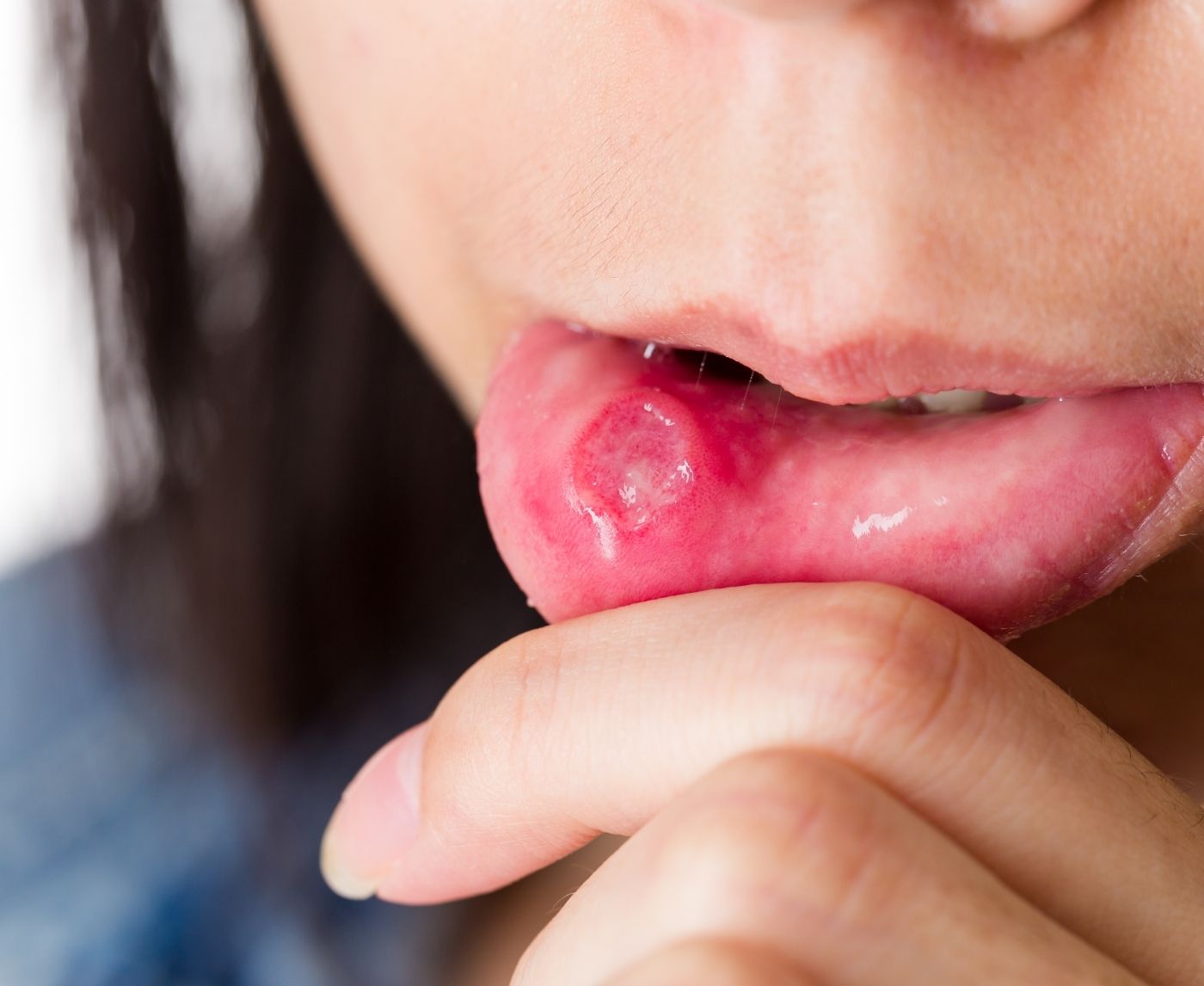
| Canker sore (aphthous ulcer) | White or yellow ulcer with red border, on cheeks, lips, or under tongue | Moderate to high | 7 to 10 days | Self-resolves; topical numbing for comfort |
| Cold sore (HSV-1) | Cluster of fluid-filled blisters on lip border, then crusts | High, often burning or tingling | 7 to 14 days | Antivirals shorten course; recurrent |
| Oral thrush (Candida) | Creamy white patches that wipe off, sometimes leaving raw red surface | Mild burning, altered taste | 1 to 2 weeks with treatment | Antifungal medication |
| Oral HPV lesion | Painless cauliflower bump or flat white/red patch, doesn't wipe off | Usually none | Persists weeks to months unchanged | Most clear in 1 to 2 years; some need excision |
How Oral HPV Spreads
Oral HPV spreads through skin-to-skin contact between mucosal surfaces. The mouth is rich in mucosal tissue and microscopic abrasions, making it a receptive entry point. Penetration is not required for transmission. The dominant route is oral sex, and either giving or receiving can transmit the virus.
Other routes are rarer but real:
- Deep open-mouth kissing with someone who has an active oral lesion. Casual closed-mouth kissing is not a meaningful route.
- Sharing sex toys that haven't been cleaned between partners.
- Mother-to-child during birth in rare cases (a route called recurrent respiratory papillomatosis), most often associated with HPV-6 and HPV-11.
You cannot get oral HPV from hugging, holding hands, sharing utensils, drinking from the same glass, or being in a swimming pool. The CDC's general HPV guidance emphasizes that the virus needs direct contact with mucosal or skin surfaces to transmit (CDC, About Genital HPV Infection).
Condoms and dental dams reduce transmission risk for several oral-route STIs, including HPV. They do not eliminate it, because HPV lives on skin that a barrier may not cover. HPV often travels alongside other oral-route STIs, particularly gonorrhea, chlamydia, syphilis, HIV, and hepatitis. Reducing the number of new partners, using barriers consistently, and getting vaccinated together form the practical risk-reduction approach.
The combination most consistently lowers oral HPV transmission risk: (1) vaccinate with Gardasil 9, which covers the strains responsible for most disease; (2) use barriers consistently for oral sex, including dental dams for oral-vaginal or oral-anal contact and condoms for oral-penile contact; (3) reduce the number of new partners, since fewer mucosal-contact events mean fewer opportunities for transmission. No single step eliminates risk; the combination meaningfully lowers it.
Why Most Oral HPV Cases Cause No Symptoms at All
The CDC estimates that about 10% of men and 3.6% of women in the United States carry oral HPV at any given time, and the great majority have no idea (CDC, HPV-Associated Oropharyngeal Cancer). The immune system clears most infections within one to two years without ever producing a visible lesion.
The exception is high-risk strains, particularly HPV-16, which can persist quietly for years and produce cellular changes at the microscopic level long before anything is visible to the naked eye. That long silent phase is the reason oropharyngeal cancers tied to HPV are usually diagnosed in the 50s and 60s, decades after the original exposure.
Persistence rather than visibility is the issue. The Cleveland Clinic lists signs to watch for that include a one-sided sore throat, persistent earache without infection, hoarseness or voice change lasting more than two weeks, and a lump that you can feel in the neck (Cleveland Clinic, Oropharyngeal HPV Infection). None of those confirm HPV. Each is reason to ask a provider to look.
About 10% of men and 3.6% of women in the United States carry oral HPV at any given moment, per CDC surveillance. Most clear the virus within one to two years without ever showing a visible sign. The fraction that worries clinicians is the small share of high-risk infections (mostly HPV-16) that persist quietly for years.
When to Ask a Provider About a Mouth Lesion
The two-to-three-week rule is the practical filter. Most ordinary mouth changes (a bitten cheek, a canker sore, food irritation) heal within ten to fourteen days. Anything still present and unchanged at the three-week mark is worth a professional eye.
Specific patterns that should not wait:
- A painless lump or thickened patch that has not changed in three weeks or more.
- A red or white patch that does not wipe off and has not faded.
- One-sided tonsil enlargement, especially with neck lymph node swelling on the same side.
- Hoarseness, voice change, or a feeling of something stuck in the throat lasting more than two weeks.
- Difficulty or pain when swallowing that does not match a current cold or strep episode.
- An ulcer or sore in the mouth that bleeds with minimal contact.
Your dentist is often the right first stop. Routine dental exams include a soft-tissue check, and dentists are trained to spot leukoplakia, erythroplakia, papillary lesions, and asymmetric findings. If a dentist refers you for a closer look, follow through promptly. Primary-care providers and ENTs are the next steps; an ENT will use a small flexible scope to inspect the back of the throat and base of the tongue.
A definitive diagnosis of oral HPV (or any concerning oral lesion) comes from a biopsy. There is no blood test for oral HPV, and screening swabs are not yet standard outside research and specialty clinics.
There is no FDA-cleared at-home test for oral HPV. Persistent mouth or throat lesions are evaluated by a dentist, primary-care provider, or ENT, with a biopsy as the definitive diagnostic step. Our role here is plain information and tests for the infections we can actually detect at home.
Why At-Home Oral HPV Testing Doesn't Exist Yet
HPV testing technology exists, just not in a form approved for at-home oral use. The cervical HPV test that runs alongside a Pap smear uses a clinician-collected sample analyzed by PCR in a lab. A few specialty labs offer mail-in oral swab kits aimed at high-risk strains like HPV-16, but those are not FDA-cleared, are inconsistently validated, and most insurance won't cover them.
The barriers are sample reliability and clinical interpretation. An oral swab can miss a lesion at the base of the tongue or behind a tonsil, and a positive result on an unstandardized swab doesn't reliably distinguish a transient infection (which the immune system will clear) from a persistent one (which warrants surveillance). Clinical evaluation, including a visual exam and biopsy when needed, remains the standard of care.
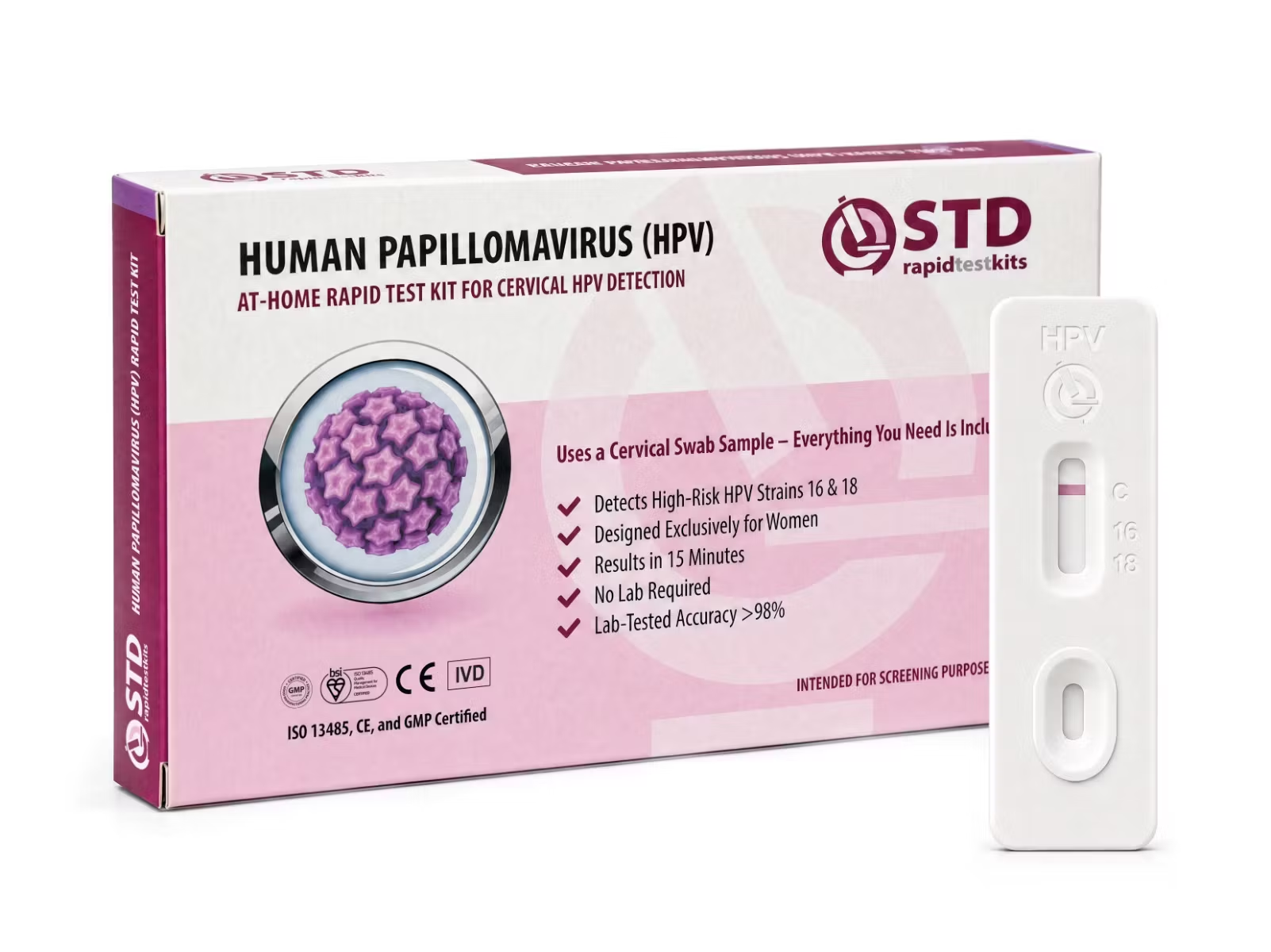
What does exist as an at-home option is the rapid HPV vaginal-swab test for cervical and genital HPV in women. That test screens for genital HPV in female anatomy and is not a substitute for an oral exam. If your concern is oral, the right path is a clinic visit, not a vaginal swab.
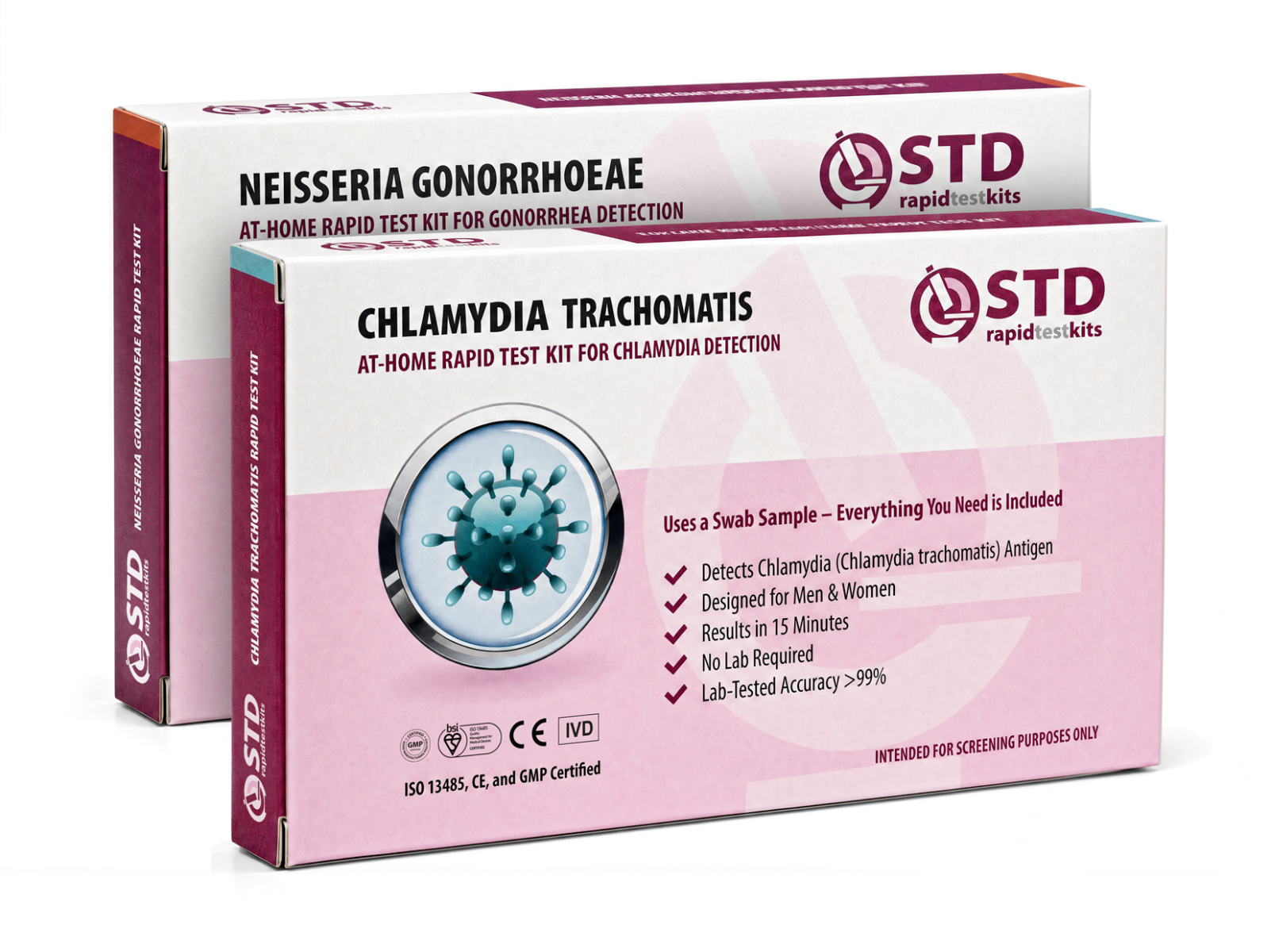
What we can offer practically is screening for the other STIs that often share an oral exposure event. Gonorrhea, chlamydia, syphilis, HIV, and hepatitis can all be acquired through oral routes, and a positive result on any of those points to a discussion with a provider that may also include an oral exam. The combo kit below covers that adjacent risk in any-gender form.

HPV Strains and What Each One Tends to Do
Over 200 HPV types have been described, and only a handful are clinically significant. The strains worth knowing are split into low-risk (warts, generally not cancer) and high-risk (capable of driving cell changes that may become cancer over time). The Gardasil 9 vaccine targets the nine strains responsible for most disease.
| HPV Strain | Risk Level | Common Sites | Associated Conditions |
|---|---|---|---|
| HPV-6 | Low | Mouth, genitals, anus | Benign oral and genital warts |
| HPV-11 | Low | Throat, larynx, genitals | Genital warts; recurrent respiratory papillomatosis in rare cases |
| HPV-16 | High | Tonsils, base of tongue, cervix, anus | Most HPV-related oropharyngeal cancers; cervical cancer |
| HPV-18 | High | Cervix, anus, possibly oropharynx | Cervical cancer; smaller share of oropharyngeal cancers |
| HPV-31, 33, 45, 52, 58 | High | Cervix, anogenital region | Cervical and anogenital cancers; covered by Gardasil 9 |
Oral HPV and Throat Cancer Risk
Oropharyngeal cancers (cancers of the tonsils, base of tongue, soft palate, and back of the throat) have shifted in cause over the past two decades. Smoking and heavy alcohol use used to drive most cases. Today, HPV (predominantly HPV-16) is the leading cause in the United States, particularly in men. The CDC reports that HPV is responsible for 60% to 70% of oropharyngeal cancers in the US (CDC, HPV-Associated Oropharyngeal Cancer).
The numbers in absolute terms are still small relative to how common HPV infection is. The National Cancer Institute frames it this way: most HPV infections clear, persistent infections are uncommon, and progression to cancer generally takes years to decades. That timeline was established primarily in cervical studies and is consistent with the long latency observed in oropharyngeal cases (National Cancer Institute, HPV and Cancer).
The signs that warrant urgent evaluation are the same ones that warrant evaluation of any persistent oral change, with a few extras specific to oropharyngeal involvement:
- One-sided sore throat or earache lasting longer than two weeks.
- A new lump in the neck, especially under the jaw or along the side.
- Difficulty or pain when swallowing.
- Hoarseness or voice change without a respiratory cause.
- Unexplained weight loss alongside any of the above.
HPV-positive oropharyngeal cancers, when caught early, generally respond well to treatment. The clinical pattern most likely to worry a provider is the asymmetric tonsil with a same-side neck lymph node. That combination is exactly why oral HPV awareness matters: the early signs are easy to miss precisely because they don't hurt.
HPV can infect the mouth and throat. It usually takes years after being infected with HPV for cancers to develop in the oropharynx.
How to Lower Your Risk of Oral HPV
The single most effective intervention is vaccination. Gardasil 9 covers the nine HPV strains responsible for the majority of HPV-related cancers and warts, including the high-risk strains tied to oropharyngeal cancer. The CDC's HPV guidance recommends routine vaccination through age 26, with shared clinical decision-making for adults ages 27 through 45 (CDC, About HPV). Vaccination is most effective before exposure but still offers benefit afterward, because it protects against strains a person has not yet encountered.
Other practical steps:
- Use barriers during oral sex. Dental dams during oral-vaginal or oral-anal contact, and condoms for oral-penile contact, reduce skin-to-skin transmission.
- Limit smoking and heavy alcohol use. Both weaken oral mucosal defenses and compound HPV's cancer risk synergistically.
- Keep up with dental visits. A six-month soft-tissue check by a hygienist or dentist is one of the most reliable early-detection routes for oral lesions.
- Test regularly for other STIs. HPV often co-occurs with other oral-route STIs that we can detect at home; clearing those reduces inflammation in the mouth that can mask other findings.
For women whose primary HPV concern is cervical or genital (not oral), the rapid HPV vaginal-swab test is a private at-home screening option. It is validated for vaginal self-swab only and is not a substitute for cervical screening or an oral exam. Male readers wanting genital HPV evaluation should see a clinic; we don't sell a male-anatomy HPV kit.
Routine vaccination: recommended through age 26.
Adults 27 through 45: shared clinical decision-making with a provider, weighing prior exposure history and remaining benefit.
Best timing: before sexual exposure, but the vaccine still protects against strains a person has not yet encountered.
Talking to Partners About Oral HPV
HPV is so common that the WHO describes it as nearly universal in sexually active adults at some point in life (WHO, Cervical Cancer fact sheet). Partner conversations about HPV rarely identify a clear source, because most carriers never knew they had it. Framing the discussion around shared awareness rather than blame reflects what is biologically true.
If a partner has a known HPV history, the practical implications are straightforward: vaccinate if you haven't, use barriers consistently for oral and genital contact, and keep dental visits on the calendar. There is no benefit to repeated panic over an exposure that has likely already happened and is likely already cleared. The benefit comes from reducing future exposures and catching anything persistent early.
"I noticed something in my mouth that hasn't gone away, and I'm getting it checked. Wanted to mention it in case you want to keep an eye on yours too."
That phrasing acknowledges the situation without assigning fault, opens space for a partner to share their own history, and frames testing as a routine health step rather than an accusation.
FAQs
- Can you get HPV in your mouth from oral sex?
- Yes. Oral sex is the dominant transmission route for oral HPV, and either giving or receiving can transmit the virus. Penetration is not required. Men develop oral HPV more frequently than women, though both are susceptible.
- What does oral HPV look like in real life?
- Most often nothing. When visible, expect painless cauliflower-textured bumps, flat white or red patches that don't wipe off, or asymmetric tonsil enlargement. Pain almost always points to something other than HPV.
- How long should a mouth lesion persist before I see a provider?
- Two to three weeks of unchanged appearance is the practical threshold. Most ordinary mouth changes heal within ten to fourteen days; anything still present and unchanged after that warrants a professional eye.
- Can a dentist test for oral HPV?
- Dentists can spot suspicious lesions during routine soft-tissue exams and refer for biopsy. There is no in-office HPV test for the mouth analogous to the cervical Pap-and-HPV co-test. The biopsy is the definitive step.
- Does the HPV vaccine still help if I'm already sexually active?
- Yes. CDC guidance recommends routine vaccination through age 26 and shared clinical decision-making through age 45. The vaccine protects against strains a person has not yet encountered, which is most strains for most people.
- Can deep kissing transmit oral HPV?
- It is possible but rare, primarily when one partner has an active oral lesion. Casual closed-mouth kissing is not a meaningful transmission route.
- How long does oral HPV take to become cancer if it does at all?
- Years to decades, when it happens at all. Most oral HPV infections clear within one to two years. Cancer develops only in the small fraction of cases where high-risk strains persist long-term and produce cellular changes.
- Is there an at-home test for oral HPV I can buy?
- No FDA-cleared at-home oral HPV test exists. A handful of specialty labs offer mail-in oral swabs, but they are inconsistently validated and not insurance-covered. A clinic exam, with biopsy if needed, remains the standard of care.
- U.S. Centers for Disease Control and Prevention. About HPV. General information on HPV biology, transmission routes, vaccination age recommendations, and disease associations.
- U.S. Centers for Disease Control and Prevention. HPV-Associated Oropharyngeal Cancer. Background on HPV's role in throat-and-tonsil cancers (60% to 70% of US oropharyngeal cancers) and prevalence figures.
- U.S. Centers for Disease Control and Prevention. About Genital HPV Infection. Transmission routes, symptoms, and prevention guidance for genital HPV, including oral-route exposure.
- Cleveland Clinic. Oropharyngeal Human Papilloma Virus (HPV) Infection. Detailed clinical overview of oral and throat HPV detection, including symptoms to watch for and the dental-exam pathway.
- National Cancer Institute. HPV and Cancer Fact Sheet. Population-level data on HPV-attributable cancers and progression timelines from persistent infection to malignancy.
