
Published: October 2025 | Last updated: May 2026 | Editorial review and quality control: Martina N.
Telemedicine moved from a pandemic stopgap to a regular way to handle sexually transmitted infection care, and the shift has stuck. A short video consult, a home-collected sample, and an e-prescription can replace a clinic visit for most routine STI testing and treatment. The model is not a fit for every situation. Visible lesions, severe symptoms, and certain anatomic sites still call for an in-person exam. This guide walks through what telemedicine STI care covers, where its limits sit, what at-home rapid testing adds to the picture, and how to pick a service worth your money.
Key Takeaways
- Telemedicine handles routine STI care end to end: virtual consult, home-collected lab sample or rapid self-test, results review, and e-prescription when treatment is needed. The workflow has held up well since pandemic-era adoption.
- Some situations still need an in-person clinic: visible lesions that need a swab, suspected pelvic inflammatory disease (PID), severe or escalating symptoms, or any case where a hands-on exam is essential to a safe diagnosis.
What telemedicine for STI care actually is
Telemedicine is the clinical use of telecommunications technology to deliver care without an in-person visit. That covers video consults, secure messaging, phone calls, and online patient portals. Telehealth is the broader umbrella that includes patient education, remote monitoring, and population-level digital programs; telemedicine is the slice that involves a clinician treating an individual patient.
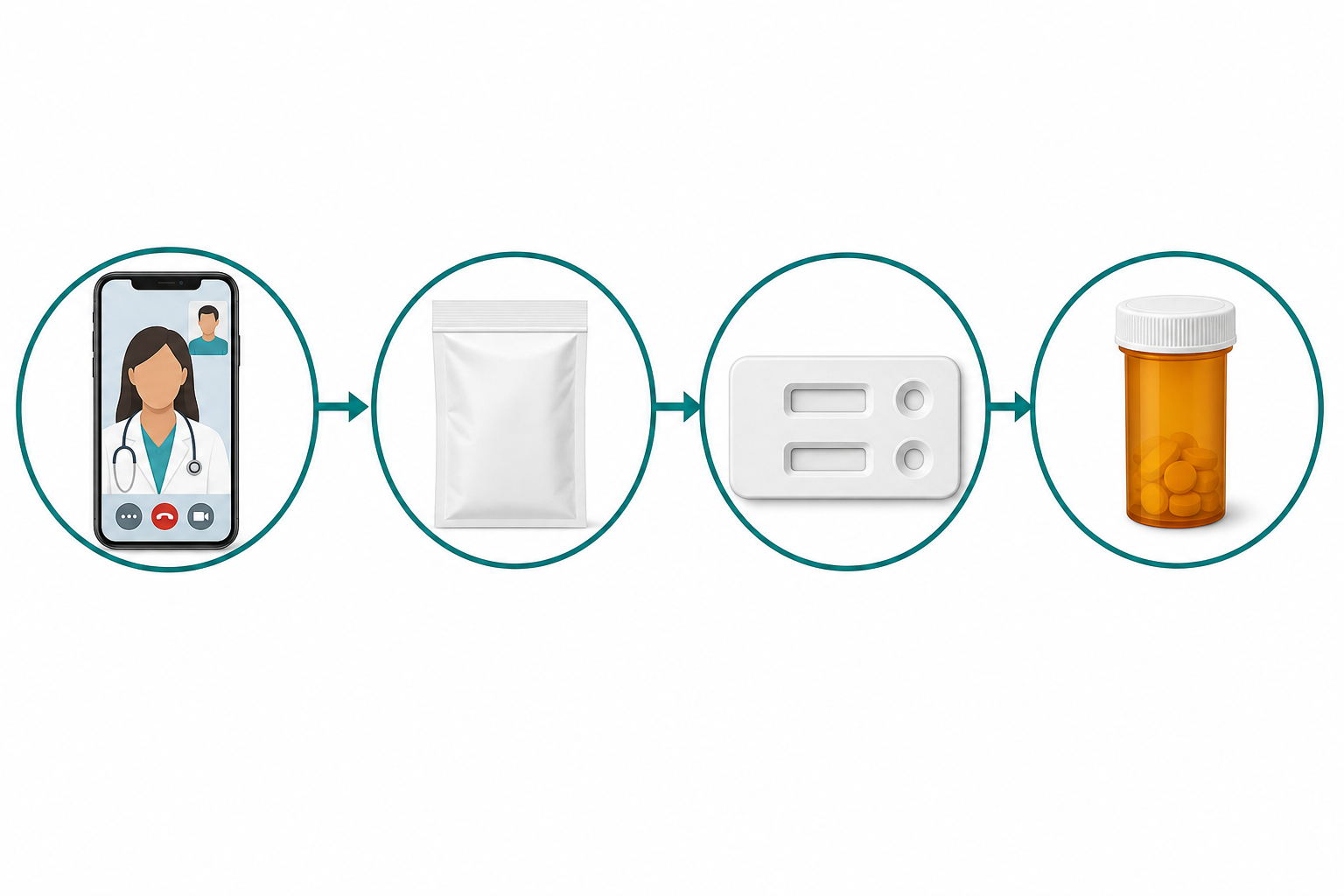
For sexually transmitted infections, the working model has three parts. First is a private virtual consultation with a clinician or nurse practitioner, usually over video or secure chat, where you describe symptoms, recent risk events, and any prior testing. Second is sample collection. Some services ship a lab-mail-in collection kit. Some endorse self-administered rapid tests, the lateral-flow swabs and fingerstick blood tests sold direct-to-consumer. Some combine the two. Third is the loop close: results review with a provider, an e-prescription routed to the pharmacy of your choice when treatment is needed, and a written plan for partner notification and retesting.
Why this took off for STI care specifically is no mystery. Stigma keeps a meaningful share of the population from walking into a clinic, and the privacy advantage of a home visit removes a real barrier to care. The CDC's STD program has long documented an untreated infection burden that traces back, in part, to people who never got tested at all. The Kaiser Family Foundation's issue brief on telemedicine in sexual and reproductive health notes that telehealth can expand access for people facing geographic, social, or stigma-related barriers to in-person STI care. Removing the need to sit in a clinic waiting room, take time off work, or have the visit show on a shared insurance Explanation of Benefits closes a real care gap. Convenience matters too.
1. Virtual consult. A licensed clinician reviews your history and recent risk on video, phone, or secure messaging.
2. Sample collection. A self-swab or fingerstick blood spot run as a rapid lateral-flow test at home, a lab-mail-in panel, or both.
3. Results and treatment. A provider reviews results, e-prescribes treatment when needed, and schedules retesting and partner notification.
How a telemedicine STI visit works, step by step
The shape of a telemedicine STI visit is similar across reputable services, with details that vary by platform.
Step 1: Booking and intake. You pick a provider, fill out a sexual-health intake form, and select an appointment slot. Many services let you start with an asynchronous questionnaire instead of a video visit if you have no symptoms and want a routine screen.
Step 2: The clinical conversation. A clinician reviews your intake. If symptoms are involved, they ask the standard set of clarifying questions: when did the symptom appear, what does it look or feel like, what changed in the last few weeks, what testing have you had before. If the visit is for an exposure check after a recent risk event, the conversation focuses on the exposure type and date, which determines the testing window.
Step 3: A test plan. The clinician recommends specific tests. Choices typically include rapid lateral-flow tests you run at home, lab-collected nucleic acid amplification test (NAAT) panels mailed back to a partner laboratory, or both in combination. Test selection is driven by the suspected infection and the time elapsed since exposure, since each pathogen has its own window period.
Step 4: Sample collection. Samples are collected at home. For chlamydia, gonorrhea, trichomoniasis, and HPV, that means a self-administered swab. For HIV, syphilis, hepatitis B, hepatitis C, and herpes antibody panels, that means a fingerstick blood spot. Rapid lateral-flow kits give you a result in about 15 minutes; lab-mailed samples are processed by a CLIA-certified (Clinical Laboratory Improvement Amendments) lab and reported back through the platform within a few days.
Step 5: Results and treatment. A provider reviews results with you. If a treatable bacterial infection comes back positive, an antibiotic is e-prescribed to your pharmacy. If a viral infection is detected, the conversation shifts to chronic-care management, suppressive therapy when applicable, and counseling.
Step 6: Partner notification and retesting. Reputable platforms walk through how to notify recent partners and, where state law permits, may issue Expedited Partner Therapy prescriptions covered by CDC guidance on EPT. Retest dates are scheduled where re-screening is recommended, typically three months after a chlamydia or gonorrhea infection.
What you can confirm at home and what you cannot
At-home rapid testing covers a defined set of infections and sample types, and its limits matter as much as its strengths. (These are products sold on this site; the descriptions below reflect our own catalog.)
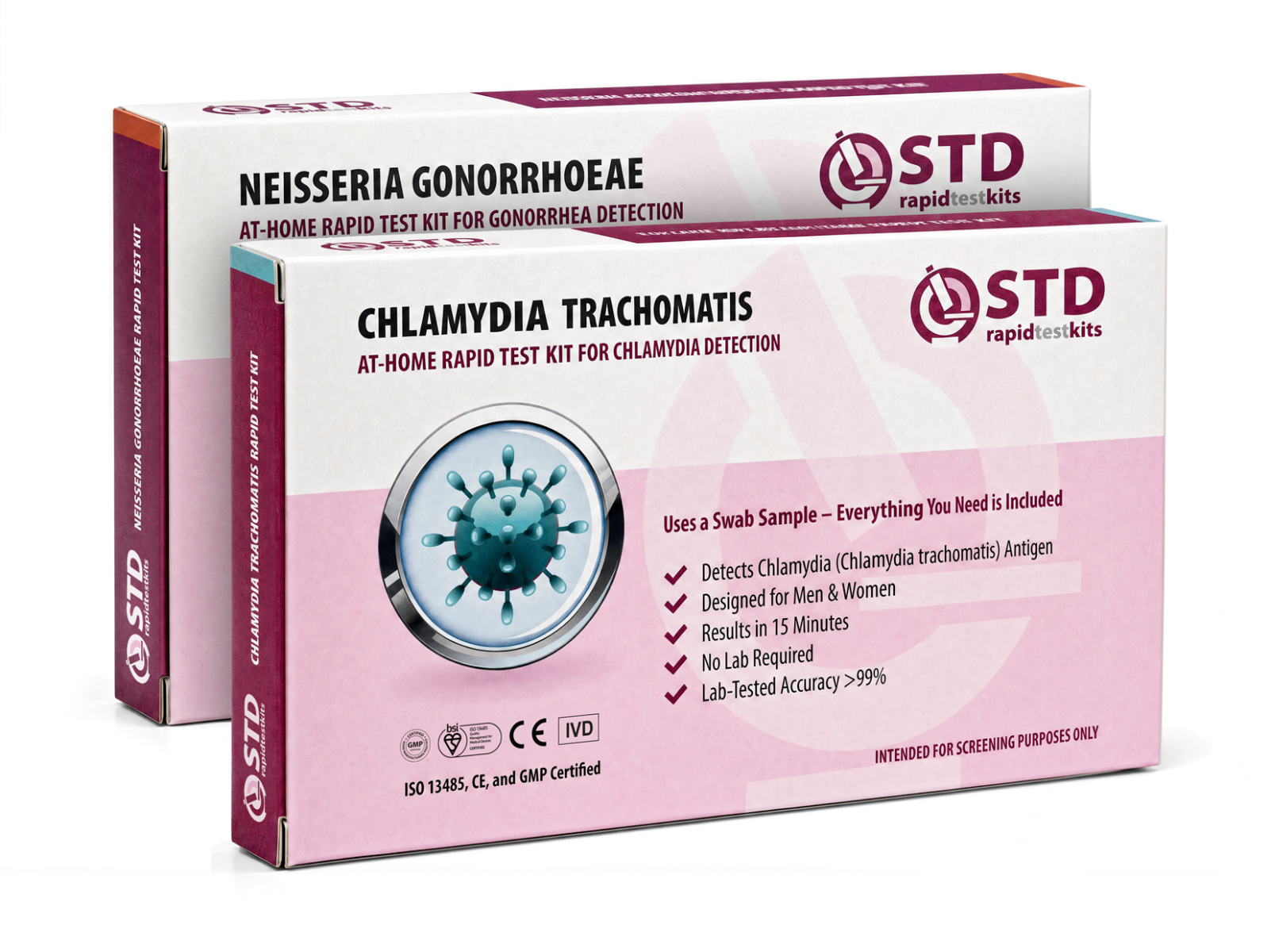
What rapid lateral-flow self-tests can confirm at home. The current generation of consumer rapid kits uses lateral-flow chemistry, the same strip-and-line technology used in pregnancy and COVID tests. The four swab-based products on this site test for chlamydia, gonorrhea, trichomoniasis, and HPV. Trichomoniasis and HPV are validated for vaginal self-swab only, so our at-home trich and HPV kits are not validated for male anatomy; male readers needing those tests should see a clinic. The blood-based products test for HIV, syphilis, hepatitis B, hepatitis C, and herpes antibodies (a separate HSV-1 strip and HSV-2 strip, plus a combined panel). All read out in around 15 minutes.
What lab-mail-in samples add. Many telemedicine services pair the rapid-test option with a CLIA-certified lab NAAT panel. Lab NAAT is what the CDC's 2021 STI Treatment Guidelines describe as the recommended testing technology for chlamydia and gonorrhea, given its higher analytical sensitivity in asymptomatic infections. At-home rapid lateral-flow tests are a faster, cheaper, more private option for screening; lab NAAT is more sensitive for low-bacterial-load asymptomatic cases. The two are complementary tools, not equivalent ones.
What still needs a clinic. Some testing genuinely cannot be done well at home. Pharyngeal (throat) and rectal swab testing for chlamydia and gonorrhea require samples this site does not sell home-collection kits for; if your exposure was oral or anal, see a clinic for the swab. Visible lesions that look herpetic or warty are best diagnosed by a clinician who can swab the lesion directly for PCR; a blood antibody test cannot tell you whether a sore on your lip is herpes today. Suspected PID, testicular pain that suggests possible epididymitis, and any severe systemic symptom need a hands-on exam and may need same-day antibiotics. Telemedicine providers refer out for these.
Does telemedicine actually work for STI testing and treatment?
Yes for routine cases. A virtual consult, an at-home rapid test or lab-collected sample, and an e-prescription cover most chlamydia, gonorrhea, syphilis, HIV, and trichomoniasis screening and treatment. It does not replace an in-person clinic for visible lesions that need PCR swabbing, throat or rectal swabs, suspected PID, or severe symptoms that need a physical exam.
Privacy: what telemedicine protects, what it does not
Privacy is the strongest reason patients pick telemedicine for sexual-health care, and it is also the area where the marketing tends to over-promise. Here is the realistic picture.
What telemedicine genuinely protects. A reputable platform is a HIPAA-covered entity in the United States. That means the same federal protections on protected health information apply as in a clinic. Your visit is not visible to your employer, your roommate, or your parents (if you are over 18). At-home test kits ship in plain, unbranded packaging with no return address that identifies the contents. A video visit at home avoids the social risk of being seen at a sexual-health clinic by someone who recognizes you.
Where the picture is more nuanced. If you use insurance to pay, the visit and any test charges show on the Explanation of Benefits sent to the policyholder. For adults on a parent's or partner's plan, that is the leak point worth knowing about. Almost every reputable telemedicine STI service offers a cash-pay path that bypasses insurance for exactly this reason. State-level public-health reporting also still applies. Positive results for reportable infections (gonorrhea, syphilis, chlamydia, HIV, and others depending on the state) are reported to the state health department by the lab regardless of whether you tested through telemedicine or in person. Reporting is anonymous to the public but tied to your identity in the public-health record.
Practical hygiene on your end. Use a personal device rather than a shared work laptop. Conduct the video visit on a private internet connection. Choose a service that uses end-to-end encrypted video and explicit, separately-itemized data-handling consent. Read the privacy policy on what the platform does with de-identified aggregate data; some sell it to research firms.
1. Insurance Explanation of Benefits. If you bill insurance, the visit and any test charges appear on the EOB sent to the policyholder. For adults on a parent's or partner's plan, a cash-pay telemedicine path keeps the visit off that statement.
2. State-level public-health reporting. Positive results for reportable infections (gonorrhea, syphilis, chlamydia, HIV, and others depending on the state) are reported to the state health department by the lab. This applies whether you test through telemedicine, a clinic, or anywhere else, and is not specific to virtual care.
Cost and insurance: what to expect
Telemedicine STI care has three rough cost models, and which one you pay depends on the platform.
Cash-pay direct services. A flat fee covers the consult and a test kit shipped to your door. Pricing is transparent and usually published on the service's site. This is the path that preserves privacy from a parent's or partner's insurance plan, and that handles uninsured patients without coverage hassle.
Insurance-covered services. Most major commercial plans, Medicaid in many states, and Medicare pay for telemedicine visits at parity with in-person visits, since federal and state telehealth flexibilities introduced during the COVID-19 public health emergency were largely retained. Coverage of the at-home test kit itself is more variable. The visit cost typically gets covered; the kit may be billed separately, sometimes covered, sometimes not. HHS's telehealth resource center publishes current state-by-state coverage rules.
Hybrid services. Some platforms run on a subscription model with a flat monthly fee that bundles consults, periodic screening kits, and prescription delivery. Whether this is a deal depends on how frequently you use the service.
For a comparable-cost frame of reference: a single rapid at-home STI test in this site's catalog runs in the consumer-product range typical of lateral-flow self-tests. A telemedicine consult on its own, when paid in cash without a kit, typically runs in the same range as a primary-care telehealth visit. Bundled telemedicine-plus-testing services land between, depending on the panel size. Always confirm the all-in price before booking; the gap between advertised consult fees and final charges is the most common complaint about telemedicine STI services.
| Factor | In-person clinic | Telemedicine + at-home testing | At-home rapid test only |
|---|---|---|---|
| Provider involvement | Full visit, exam, swab | Video consult, results review, e-prescription | None; you read the result |
| Sample type | Provider-collected swab or blood | Self-collected swab or fingerstick blood | Self-collected swab or fingerstick blood |
| Test technology | Lab NAAT (gold standard) | Lab NAAT or lateral-flow rapid | Lateral-flow rapid only |
| Result speed | 1 to 3 days for lab | 15 minutes (rapid) or 2 to 5 days (lab) | About 15 minutes |
| Treatment access | On-site or e-prescription | E-prescription same day if positive | None; you must seek care separately |
| Privacy from insurance EOB | Low (insurance billed) | High (cash-pay path available) | High (no clinical record created) |
| Best for | Symptoms, lesions, suspected PID, throat or rectal swabs | Routine screening, exposure check, follow-up | Quick personal screen with no provider loop |
When telemedicine is the right call, and when to go in person
The decision is a matter of fit, not a question of whether telemedicine is a legitimate care channel. It is. Some situations are clearer fits than others.
Telemedicine is a strong fit for:
- Routine screening with no symptoms (annual screen, new partner, exposure-anxiety check after the relevant testing window has passed).
- Asymptomatic exposure to a known partner case, after the appropriate window: 14 days for chlamydia and gonorrhea on rapid swab, 21 days for syphilis on rapid blood, 45 days for fourth-generation HIV antigen-antibody combo, and 12 to 16 weeks for HSV-2 antibody seroconversion (most individuals seroconvert by 12 weeks; the conservative window for reliable IgG detection runs to 16 weeks, and a small minority take up to 6 months).
- Follow-up testing after treatment, including retesting at three months for chlamydia and gonorrhea per CDC retesting guidance.
- PrEP follow-up visits and routine HIV maintenance for stable patients on suppressive therapy.
- Pre-exposure planning conversations and partner-notification support after a positive result.
An in-person clinic is the right call for:
- Visible genital lesions that need direct PCR or culture swabbing (suspected herpes outbreak, chancre, warts that need treatment beyond observation).
- Suspected PID: pelvic or lower abdominal pain, fever, abnormal bleeding. PID is a clinical urgency that needs an exam and same-day antibiotics.
- Suspected epididymitis: testicular pain and swelling, especially with fever or urinary symptoms.
- Pharyngeal or rectal exposure that needs a throat or rectal swab. This site does not sell home-collection kits for those sample types; a clinic visit is the right path.
- Pregnancy with any STI concern, given the implications for prenatal management.
- Recurrent or treatment-resistant infections, where extended drug-susceptibility testing and specialist follow-up are needed.
The honest middle case: an exposure event with no symptoms, but where you are anxious enough that a quick rapid screen at home today would help your peace of mind, then a follow-up confirmatory test at the appropriate window. Telemedicine handles that pattern well, and a clinic does not need to be involved unless something on the rapid test changes the picture.
How to choose a telemedicine STI service
The market for telemedicine STI care is crowded, and not every platform is what it claims to be. A short checklist before you pay:
Licensure in your state. Telemedicine clinicians have to be licensed in the state where you are physically located when the visit happens. Reputable services match you to a clinician licensed in your state at booking. If a service does not ask your state, that is a red flag.
HIPAA-covered, with named lab partners. The platform should disclose its HIPAA-covered status and name the CLIA-certified lab(s) that process mail-in samples. A service that uses an unnamed lab is not transparent enough to trust with this kind of result.
A clear test menu and a clear treatment scope. Some telemedicine services only offer testing and refer out for treatment, which is fine if disclosed up front. Others handle treatment through e-prescription. Know which you are buying before you book; the difference matters when a positive result comes back at 7 p.m. on a Friday.
Cost transparency. All-in price for the consult plus the kit, plus any prescription fees, plus shipping. Itemized. The classic complaint is a low advertised consult fee that balloons after the test panel and shipping are added.
Honest scope on what they do not cover. A telemedicine service that admits it cannot do throat or rectal swabs, cannot manage suspected PID, and refers out for visible lesions is more trustworthy than one that claims to handle everything.
Aftercare path. What happens if you test positive? Is there a real provider you can talk to about treatment, or just an automated portal message? How do they handle partner notification? Is retesting included or separately billed?
Frequently Asked Questions
- Are at-home STI test kits used in telemedicine reliable?
- The lateral-flow rapid kits sold for home use are CE-marked and, where applicable, FDA-cleared. They report sensitivity and specificity in the high-90s percent range when used correctly after the appropriate window period, but they are screening tools rather than confirmatory lab NAAT. A positive result on a rapid test should generally be confirmed by a CLIA-certified lab, which a reputable telemedicine service will arrange.
- Which STIs does telemedicine cover?
- Routine telemedicine workflows cover chlamydia, gonorrhea, syphilis, HIV, hepatitis B, hepatitis C, trichomoniasis, HPV, and the herpes simplex viruses. Less common pathogens like Mycoplasma genitalium are available through some lab-mail-in panels but are not in current at-home rapid kits.
- Can a telemedicine clinician prescribe antibiotics for an STI?
- Yes, in most U.S. states. A licensed telemedicine clinician can e-prescribe first-line antibiotics for chlamydia, gonorrhea, syphilis, and trichomoniasis to your local pharmacy. Some states also allow Expedited Partner Therapy prescriptions, where the clinician writes a separate prescription for a sexual partner without a separate visit.
- Will my insurance cover a telemedicine STI visit?
- Most commercial insurance, Medicaid in most states, and Medicare cover telemedicine visits at parity with in-person care, since federal and state telehealth flexibilities were largely retained after the COVID-19 public health emergency ended. Coverage of the at-home test kit itself is more variable. Check with your plan, or pick a cash-pay path if you want the visit to stay off an insurance Explanation of Benefits.
- How long do at-home STI test results take?
- Rapid lateral-flow tests give a result in about 15 minutes after you read the strip. Lab-mail-in samples typically come back through the platform in 2 to 5 days after the lab receives them, plus shipping time. Some HIV self-tests are entirely at-home with no lab involvement.
- Does telemedicine protect my privacy?
- A HIPAA-covered platform applies the same federal privacy protections to your protected health information as a clinic does. Your visit is not visible to family or employers, and shipping is unbranded. The two real leak points are insurance Explanation of Benefits if you bill insurance, and state-level public-health reporting of certain positive results, which applies regardless of where you tested. Cash-pay services solve the first; the second is the same in any care setting.
- When is telemedicine not the right call for an STI concern?
- If you have a visible lesion that needs a swab (suspected herpes, chancre), suspected PID (pelvic pain, fever, abnormal bleeding), suspected epididymitis (testicular pain), or you need a throat or rectal swab, see a clinic. Telemedicine providers refer these out anyway, so going straight to in-person care saves a step.
- Can I follow up after treatment through telemedicine?
- Yes. The CDC recommends retesting for chlamydia and gonorrhea at three months after treatment, given the high reinfection rate from untreated partners. Telemedicine handles this follow-up well: you reorder the same rapid kit or lab-mail-in panel, run the test at the right interval, and review the result with the provider.
- U.S. Centers for Disease Control and Prevention. STD program overview, screening recommendations, and untreated infection burden data.
- U.S. Centers for Disease Control and Prevention. 2021 Sexually Transmitted Infections Treatment Guidelines, including testing technology guidance and retesting intervals.
- U.S. Department of Health and Human Services. Telehealth resource center, covering state-by-state coverage rules and post-public-health-emergency telehealth flexibilities.
- U.S. Food and Drug Administration. In Vitro Diagnostics program overview, covering FDA-regulated diagnostic test categories including home-use and over-the-counter tests.
- Kaiser Family Foundation. Telemedicine in Sexual and Reproductive Health issue brief on adoption, access, and policy considerations.
- U.S. Centers for Disease Control and Prevention. Expedited Partner Therapy program guidance for state-level legality and clinical use.
