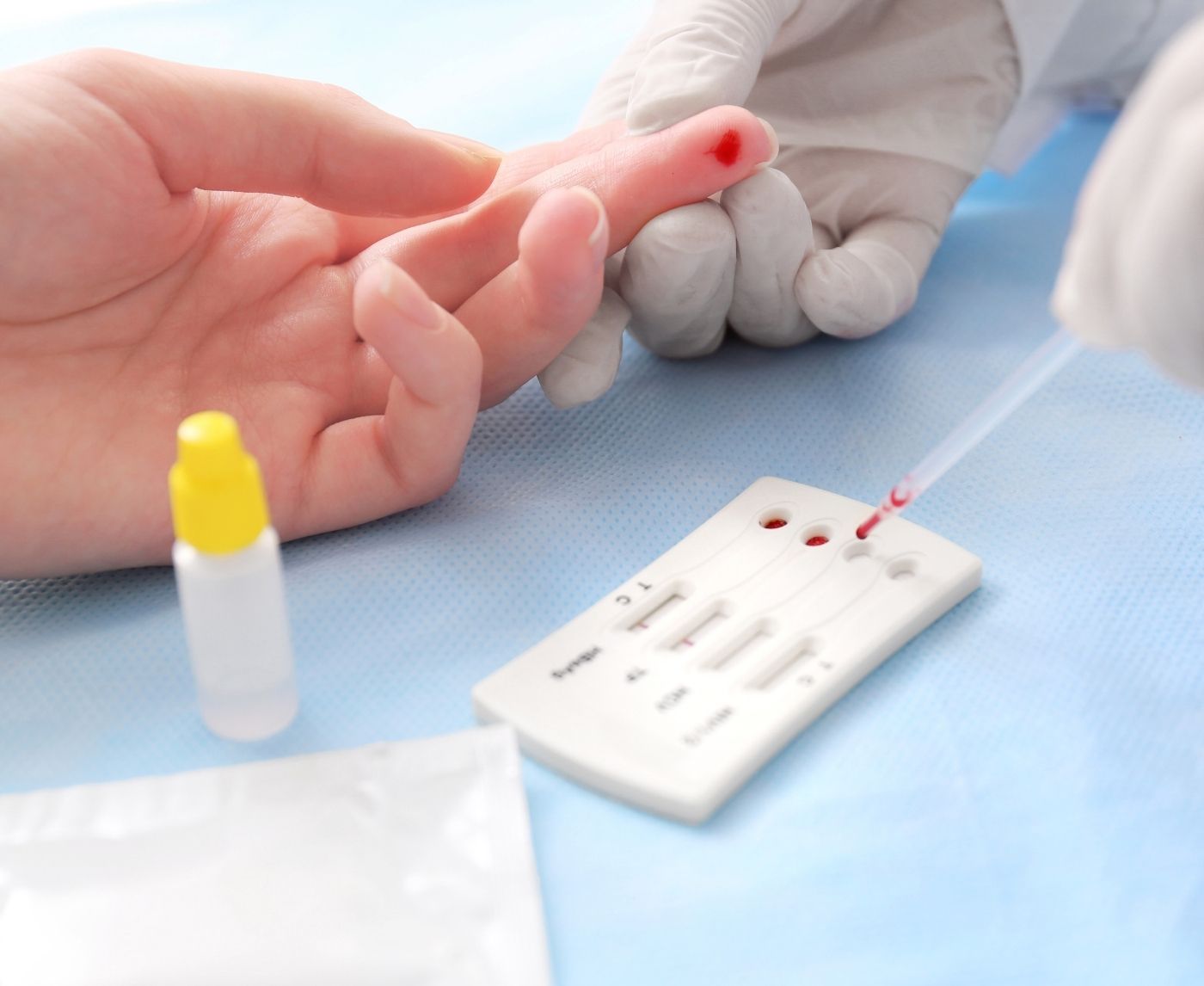
Chlamydia is one of the most common bacterial STIs in the world, and one of the quietest. Most infected women never feel a symptom, yet untreated infection is linked to miscarriage, ectopic pregnancy, and preterm birth. Here is the plain-English version of what the evidence shows, when to test, and what to do if you are already pregnant.
Published: July 2025 | Last updated: May 2026 | Editorial review and quality control: Martina N.
Most people think of chlamydia as something a friend's friend caught at college, treated with a course of antibiotics, and never thought about again. That is sometimes true. What is rarely said out loud is that the same infection is one of the most common bacterial drivers of miscarriage, ectopic pregnancy, and tubal scarring worldwide.
The trait that makes chlamydia easy to ignore (no symptoms in most infected women, per the CDC's chlamydia overview) is exactly the trait that makes it dangerous in pregnancy. The bacterium works in the background, inflaming the cervix, the uterine lining, and the fallopian tubes long before anything feels wrong.
If you are pregnant, planning a pregnancy, or processing a recent loss, what follows is a calm walk through what current public-health and clinical guidance says about the link, who is at higher risk, and the small set of actions that meaningfully change outcomes.
Can chlamydia cause miscarriage?
Yes. Untreated genital chlamydia infection is associated with first-trimester miscarriage, ectopic pregnancy, preterm rupture of membranes, and neonatal eye and lung infection. The risk is highest when the infection is asymptomatic and unscreened, which is the most common pattern in women aged 15 to 24. Screening once before conception and again at the first prenatal visit catches most cases in time for safe oral antibiotic treatment.
Key Takeaways
- Chlamydia is asymptomatic in most infected women, so screening is the only reliable way to find it before it can cause damage to the cervix, uterus, or fallopian tubes.
- Treated promptly with the right pregnancy-safe antibiotic, chlamydia clears in about a week and substantially lowers the risk of pregnancy complications, fetal infection, and long-term infertility.
How chlamydia damages a pregnancy
Chlamydia trachomatis is a bacterium that lives inside the cells lining the cervix and the upper genital tract. From there it spreads upward, slowly, often without producing any symptom that would prompt a clinic visit. The damage it does to a pregnancy operates through three main mechanisms.
Local inflammation of the cervix and uterine lining. An active infection inflames the same tissues that have to remodel and stay calm to support an early pregnancy. Inflammation in the endometrium has been linked to early implantation failure and to first-trimester miscarriage in observational studies, although the size of the effect varies between studies.
Pelvic inflammatory disease (PID). When chlamydia ascends into the uterus and fallopian tubes, it can trigger PID. The CDC notes that untreated PID can result in ectopic pregnancy and that 1 in 8 women with a history of PID experience difficulties getting pregnant. Each episode of PID raises the risk of tubal scarring, and tubal scarring is the single biggest risk factor for an embryo implanting outside the uterus rather than inside it.
Ectopic pregnancy. An ectopic implantation, almost always in a damaged fallopian tube, cannot be carried to term and is a medical emergency. Ruptured ectopics remain a leading cause of first-trimester maternal death, and prior chlamydia is one of the strongest known risk factors.
Direct effects on the fetus and newborn. If a chlamydia infection is still active at delivery, the bacterium can pass to the baby during vaginal birth and cause conjunctivitis (eye infection) or chlamydial pneumonia in the first weeks of life. Both are treatable, but both are also preventable with prenatal screening and a single oral antibiotic course.
Untreated chlamydia inflames the cervix, ascends into the uterus and fallopian tubes, and triggers PID. Scar tissue left behind by PID is the single biggest risk factor for a future ectopic pregnancy. Each of those three steps is interruptible by a single positive test and a short antibiotic course.
The two windows that matter most
Most of the harm chlamydia does to a pregnancy happens in two specific windows, and both have a clear public-health response.
The pre-conception window. Damage that has already happened to the fallopian tubes from a past, untreated infection cannot be reversed by treating the infection now. That is why the CDC recommends annual chlamydia screening for all sexually active women under 25, and for older women with new or multiple partners. The earlier an infection is found, the less chance it has to leave behind scar tissue.
The first-trimester window. If chlamydia is active during the first weeks of pregnancy, the inflammation in the cervix and uterine lining overlaps the most fragile period of placental development. Routine prenatal panels in the United States therefore include a chlamydia screen at the first visit, with re-testing in the third trimester for women under 25 or with ongoing risk factors. Screening is performed even when there are no symptoms because, as discussed in the next section, most infections do not produce any.
Annual chlamydia screening is recommended for all sexually active women under 25, and for older women with new or multiple partners. In pregnancy, a chlamydia screen is part of the standard first prenatal visit, with a repeat test in the third trimester for women under 25 or with ongoing risk factors. Symptoms are not required to qualify; most infections do not produce any.
Why it slips through the net so often
Despite being one of the most common notifiable infections in every country with surveillance data, chlamydia is consistently under-detected. Four causes almost always show up in the same combination.
Most infections are silent. The World Health Organization's STI fact sheet notes that the majority of STIs, including chlamydia, are asymptomatic, and that symptoms when they do appear are often non-specific. They are easily mistaken for a normal change in discharge, a urinary tract infection, or pregnancy itself.
Screening rates are uneven. Even in health systems that recommend annual screening, actual coverage in eligible women is frequently well below recommended targets. People skip screening because they feel fine, because they are in a long-term relationship and assume it is unnecessary, or because they have never been told their age and sexual activity put them in the recommended group.
Doctors do not always offer it. Prenatal panels vary by clinic, country, and insurance plan. In some settings, chlamydia testing in early pregnancy is opt-in rather than routine, which means a quiet patient with no flagged risk factors can finish her first trimester without ever being offered a swab.
Stigma keeps the conversation closed. Many women only learn that an STI can be relevant to a miscarriage after they have already had one. The shame that surrounds the word "STD" delays both testing and partner notification, which together drive reinfection.
- Most infections produce no symptoms in women.
- Screening uptake remains well below recommended targets in most countries.
- Prenatal STI testing is opt-in rather than routine in some clinics.
- Stigma delays both individual testing and partner notification.
Symptoms during pregnancy, when they appear at all
The majority of women with chlamydia have no symptoms at all. The minority who do describe a small, non-specific cluster of changes that overlap heavily with normal pregnancy and with other conditions, which is why none of them is reliable enough to use as a substitute for testing.
The symptoms that may show up include:
- An increase in vaginal discharge, sometimes yellowish or with a faint smell, that is different from the reader's normal pattern.
- Light bleeding or spotting between periods, after sex, or in early pregnancy. Bleeding in early pregnancy has many causes; chlamydia is one of them.
- Lower abdominal or pelvic discomfort that is dull rather than sharp.
- Burning or stinging during urination.
- Pain during or after intercourse.
Two clinical patterns deserve special attention in pregnancy. The first is a sudden, sharp, one-sided lower-abdominal pain with shoulder-tip pain, dizziness, or feeling faint; this is an ectopic emergency until proven otherwise and needs the emergency room, not a home test. The second is heavy bleeding with cramping in the first trimester, which can have many causes including infection, and which warrants same-day medical assessment.
Pregnancy and chlamydia produce overlapping signals, and you cannot tell from symptoms alone whether what you are feeling is the pregnancy itself, a urinary tract infection, or an STI; testing is the only reliable way to distinguish them.

How testing actually works (and what the trade-offs are)
Two technologies dominate chlamydia testing today, and they answer slightly different questions.
Lab-based NAAT (nucleic acid amplification test). NAATs detect the bacterium's genetic material and are the technology used in clinic, prenatal, and lab-based screening. They work on a urine sample or on a self-collected vaginal swab, are highly sensitive, and form the gold standard recommended in CDC's STI treatment guidelines. Turnaround is one to several days depending on the lab.
At-home rapid lateral-flow tests. Lateral-flow tests use the same self-collected swab as the lab path, but the chemistry runs at home in about 15 minutes. They are less sensitive than NAAT, particularly in low-bacterial-load infections, but they are private, fast, and useful as a screening step. A positive result on a rapid test should be followed by a confirmatory NAAT and treatment from a clinician. A negative rapid result in a high-risk situation should still be confirmed with a lab test, especially in early pregnancy where the cost of a missed positive is higher.
The right test depends on context. If you are already pregnant or actively trying to conceive, ask for a NAAT through your prenatal care or family doctor; the swab is included in standard antenatal panels in most settings. If you want to screen privately before booking a clinic visit, an at-home rapid lateral-flow swab gives you a sensible first read.
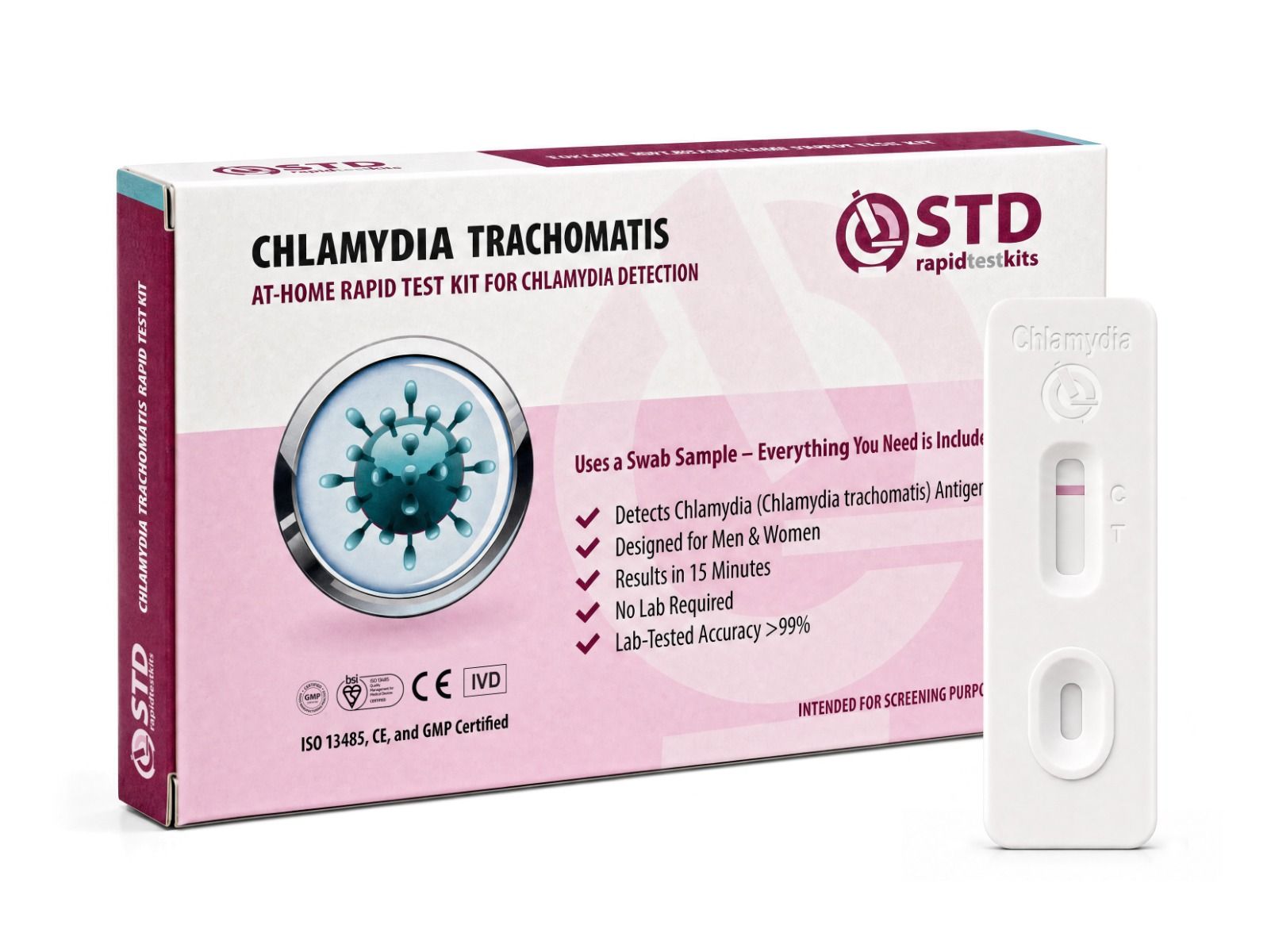
The kit below is the single-infection rapid swab on this site. It is validated for self-collected vaginal sampling and answers one question: do I currently have chlamydia? It is a screening tool, not a substitute for the broader prenatal STI panel.
Treatment during pregnancy: what is safe and what works
Chlamydia is one of the easier sexually transmitted infections to treat, even during pregnancy. The challenge is finding it, not curing it.
Outside pregnancy, the standard regimen in the latest CDC guidance is doxycycline 100 mg taken twice daily for 7 days. CDC notes that doxycycline is contraindicated in pregnancy because of its effects on developing fetal bone and tooth tissue.
The pregnancy-safe options are different. Azithromycin 1 g as a single oral dose is the most commonly used first-line agent in pregnancy and has good cure rates. Amoxicillin is an accepted alternative when azithromycin is unsuitable. Both are oral, both are short courses, and both have been used safely across decades of obstetric practice.
Two pieces of advice apply specifically to pregnancy. First, a test of cure is recommended around 3 to 4 weeks after treatment, and a re-test at 3 months to detect reinfection from an untreated partner. Second, sex should be avoided for 7 days after a single-dose treatment, and until both partners have completed their course, to break the cycle of re-exchange.
If a partner has tested positive, both people get treated at the same time, even if your own initial test was negative. Reinfection from a single untreated partner is the single most common reason a previously cleared infection comes back during pregnancy.
- Azithromycin 1 g, single oral dose. First-line option in pregnancy per CDC STI treatment guidelines.
- Amoxicillin 500 mg three times daily for 7 days. Accepted alternative when azithromycin is unsuitable.
- Doxycycline. Contraindicated in pregnancy because of effects on fetal bone and tooth development.
- Test of cure. Recommended around 3 to 4 weeks after treatment in pregnancy, with a re-test at 3 months to detect partner reinfection.
After a miscarriage: where chlamydia fits into the workup
Roughly 10 to 20 percent of known pregnancies end in miscarriage according to the March of Dimes miscarriage overview, and about 80 percent of those happen in the first trimester. Most miscarriages are caused by chromosomal abnormalities in the embryo and are not preventable. A smaller fraction is driven by maternal factors, and infection is one of them.
Standard medical guidance does not investigate a single first-trimester loss in detail; chromosomal causes are common enough that one event does not change the overall picture. After two or three losses (recurrent pregnancy loss), a more thorough workup begins, and screening for genital infections is part of it.
That said, two situations make chlamydia screening reasonable even after a single loss:
- You have never been screened, you are under 25 or have new or multiple partners, and the loss happened in the first trimester. A swab is cheap, low-friction, and the result changes management.
- The miscarriage was preceded by symptoms (unusual discharge, mild pelvic pain, post-coital bleeding), or by a partner with a confirmed STI. In that situation, screening is part of basic post-event care.
If a chlamydia test is positive after a loss, treatment is the same single short course of antibiotics, with a test of cure at three to four weeks. The infection itself does not affect the next attempt at conception, as long as it is treated and any tubal damage is assessed if needed.

Partner notification and the reinfection trap
The single most preventable reason chlamydia reappears after treatment is partner reinfection. The bacterium does not vanish from a sexual partner because the index case took antibiotics, and unprotected sex with an untreated partner reseeds the infection.
Standard practice is for any partner from the past 60 days, or the most recent partner if longer ago, to be tested and treated. In several US states and other jurisdictions, expedited partner therapy (EPT) is legal: the index patient's clinician can prescribe antibiotics for a named partner without seeing them, which raises real-world treatment rates.
For couples actively trying to conceive, the simplest pattern is to test together, treat together, and confirm cure together.
EPT lets a clinician hand the index patient an antibiotic prescription or course for a named partner who is not present in clinic. It is permissible in most US states (the CDC maintains a state-by-state legal status map) and is associated with higher partner-treatment completion rates and lower reinfection. If reaching your partner for a separate clinic visit is hard, ask whether EPT is available where you live.
Protecting future pregnancies
The actions that make the biggest measurable difference are small and unglamorous.
- Test once before trying to conceive. A single chlamydia and gonorrhea screen, ideally on a NAAT, is the highest-yield item in pre-conception care. If positive, treat, retest, then start trying.
- Accept the prenatal panel. When the first prenatal visit offers an STI screen, take it, even if you feel certain you are negative. The cost of a redundant test is low; the cost of a missed positive in early pregnancy is not.
- Re-test at three months after any positive result. Reinfection is the most common reason chlamydia returns, and it returns most often within three months.
- Use condoms consistently with new or non-monogamous partners. Condoms reduce, but do not eliminate, transmission. Combined with regular screening, they push real-world risk close to zero.
- Have honest partner conversations. An STI in one person is an STI in the relationship. Test together, treat together, and re-test together.
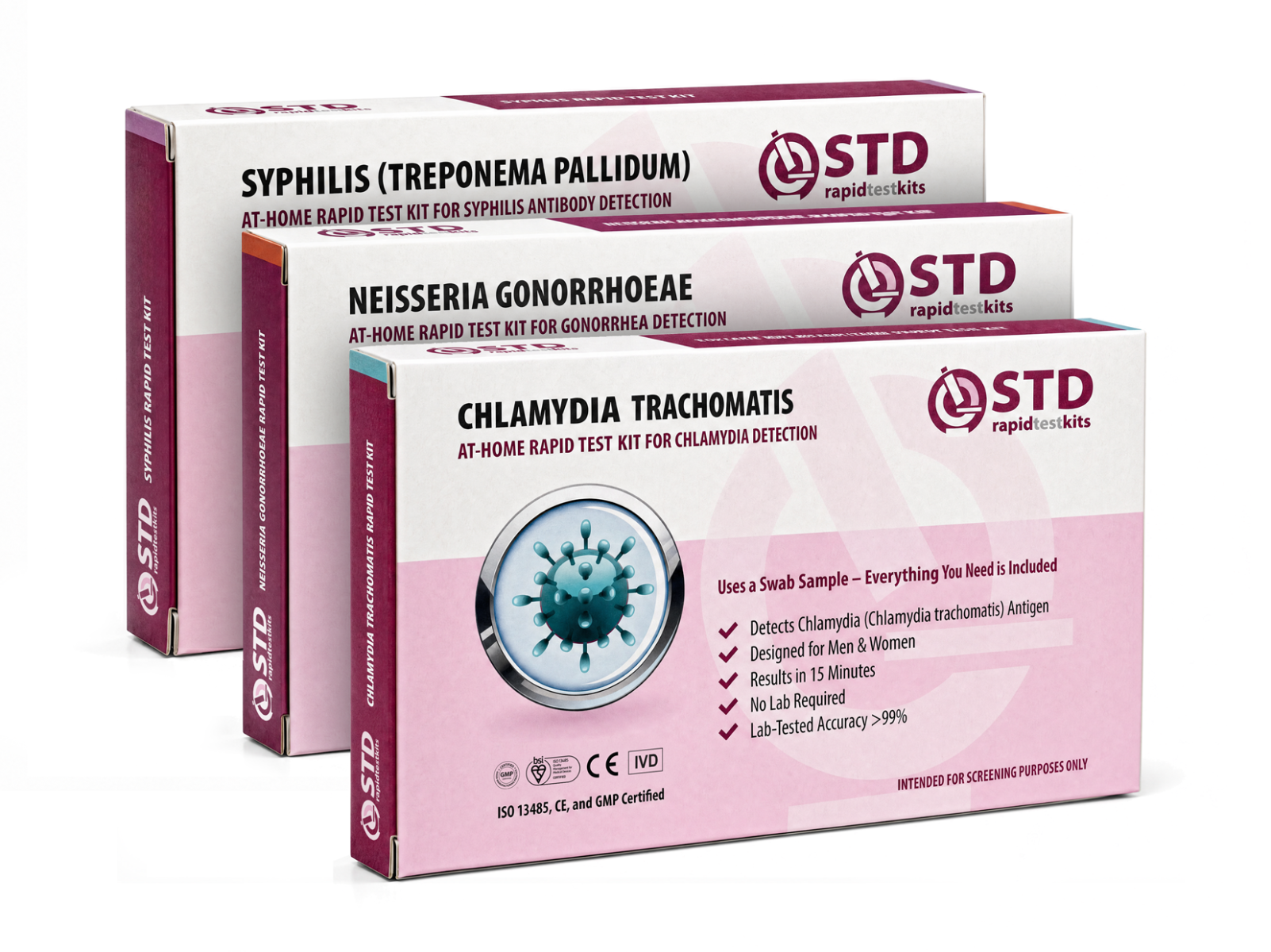
The combination kit below covers the three bacterial STIs that matter most in pregnancy: chlamydia, gonorrhea, and syphilis. It is the kit a couple in the pre-conception window most often wants on hand, and it is the simplest way to walk into a first prenatal visit already knowing the answer.
It can cause permanent damage to a woman's reproductive system. This can make it difficult or impossible to get pregnant later. Chlamydia can also cause a potentially fatal ectopic pregnancy (pregnancy that occurs outside the womb).
FAQs
- Can chlamydia cause a first-trimester miscarriage?
- Chlamydia's link to first-trimester loss runs primarily through endometrial inflammation and, when the infection has progressed to PID, tubal damage that also raises ectopic-pregnancy risk in future cycles. Prompt treatment once a positive result is found substantially lowers both outcomes.
- How is chlamydia treated when I am pregnant?
- Azithromycin 1 g as a single oral dose is the standard pregnancy-safe choice; amoxicillin is used when azithromycin is not tolerated. Whichever is used, a test of cure at 3 to 4 weeks is recommended, and re-testing at 3 months catches partner reinfection before it matters.
- Can chlamydia make me infertile?
- Untreated infection can scar the fallopian tubes, which is the main cause of tubal-factor infertility. Treated promptly, the infection clears in about a week and most women retain normal fertility.
- Should I test if I had a miscarriage but no symptoms?
- A chlamydia screen is reasonable after any miscarriage if you have not been screened recently, are under 25, or have had a new partner. After two or three losses, a full recurrent-loss workup including STI screening is standard.
- Will my pregnancy test detect chlamydia?
- No. A pregnancy test only measures hCG. Chlamydia is detected with a separate swab or urine test (NAAT) at a clinic, or with an at-home lateral-flow swab.
- Is the at-home rapid test as accurate as the lab NAAT?
- No. Lab NAATs remain the most sensitive technology, especially in low-bacterial-load infections. At-home rapid lateral-flow tests are useful for fast, private screening; a positive result should be confirmed in clinic, and a negative result in a high-risk situation also warrants a lab follow-up.
- How soon after exposure can I test?
- Most experts recommend waiting 1 to 2 weeks after a possible exposure for chlamydia testing to be reliable. Testing too early can produce a false negative.
- Does my partner have to be treated even if their test is negative?
- Yes. Reinfection from an untreated partner is the most common reason chlamydia recurs after treatment. Current guidance is to treat both partners at the same time; in some US states, the index patient's clinician can prescribe partner medication directly through expedited partner therapy.
- U.S. Centers for Disease Control and Prevention. Chlamydia overview, screening recommendations, asymptomatic-prevalence figures, and long-term reproductive consequences.
- U.S. Centers for Disease Control and Prevention. Pelvic inflammatory disease (PID) overview, including the 1-in-8 difficulty-getting-pregnant figure for women with a history of PID.
- World Health Organization. Sexually transmitted infections fact sheet, including transmission, asymptomatic prevalence, and pregnancy complications.
- U.S. Centers for Disease Control and Prevention. STI treatment guidelines, including chlamydia regimens and pregnancy-safe alternatives to doxycycline.
- March of Dimes. Miscarriage overview, including the 10 to 20 percent prevalence range for known pregnancies and the first-trimester timing breakdown.
- National Health Service (UK). Chlamydia symptoms, testing pathways, and treatment for the general public.
