What Happens If You Use an Expired STD Test?
How expiration affects rapid test accuracy and when to retest
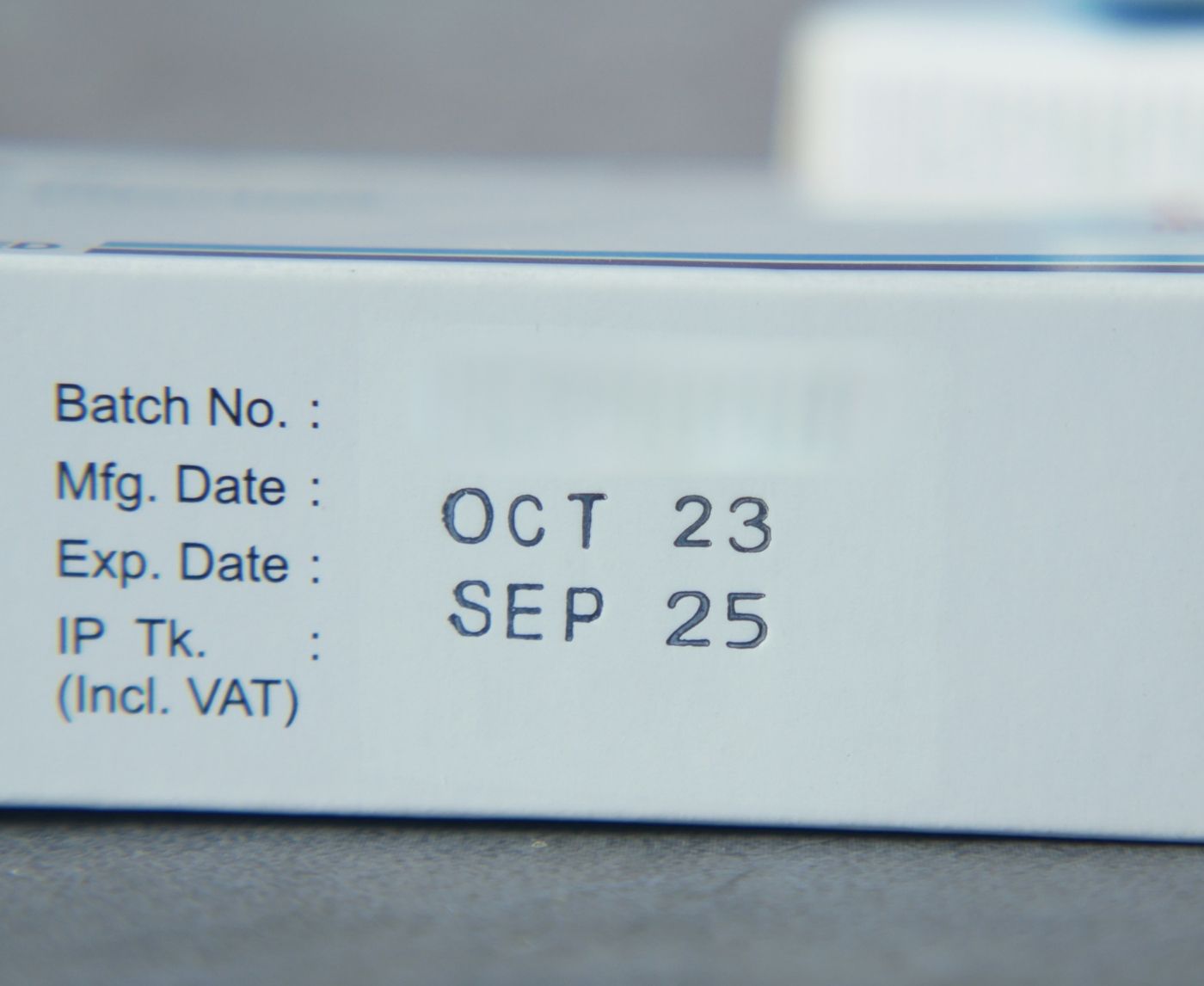



- Expired rapid STD tests are more likely to cause false negatives than false positives, so the bigger risk is missing an infection, not imagining one.
- If you used an expired kit, retest with a new, properly stored, in-date kit at the correct window period; a positive result on an expired test should always be confirmed.
Published: September 2025 | Last updated: May 2026 | Editorial review and quality control: Martina N.
The expiration date on a rapid STD test is not a formality. Manufacturers print it after running stability trials that track how long the antibodies, antigens, and buffer solutions inside the kit keep working within validated performance margins. When you use an expired STD test, the chemistry inside is operating outside that guarantee, and the most common consequence is rarely a dramatic false alarm. It is usually a missed infection, also called a false negative.
If you opened the kit, ran the sample, and only afterwards noticed the date had passed, the next steps are simple. The science behind why those steps matter is worth understanding, because expired tests and window-period timing are two different problems that can overlap and compound each other.
Expiration Dates Are Not Arbitrary, They Protect Accuracy
An expiration date on a rapid STD test reflects stability testing performed by the manufacturer under controlled conditions. These kits contain biological components, antibodies, antigens, and buffer reagents, that are sensitive to time, temperature, and humidity. The components can slowly lose their binding affinity, especially when exposed to heat.
Imagine the test strip as a lock and the infection marker as a key. When the chemistry is fresh, the lock fits cleanly and the result line shows up clearly. As the materials age, the lock can warp. The key still fits sometimes. Other times it does not. That inconsistency is what creates risk.
According to guidance from the U.S. Centers for Disease Control and Prevention and the World Health Organization, diagnostic tests must be used within validated stability windows to maintain sensitivity. Sensitivity is a clinical term that refers to a test's ability to correctly identify infection when it is present. As reagents degrade, sensitivity drops. When sensitivity drops, the most likely problem is false reassurance: a negative line where there should have been a positive one.
Public-health guidance from the CDC and WHO is consistent on this point: rapid diagnostic kits are validated for a defined shelf life under specified storage conditions, and using a kit past that date can compromise the reliability of the result. The expiration date is the boundary of the manufacturer's tested performance window, not a soft suggestion.
What Actually Goes Wrong Inside an Expired Rapid Test
Most at-home STD tests use lateral flow immunoassay technology, the same basic design used in pregnancy tests and many rapid HIV self-tests. Fluid moves across a strip. If infection markers are present in the sample, they bind to antibodies embedded in a test line. A visible colored band appears. Over time, three failure modes become more likely.
First, antibodies on the strip can lose binding strength. They may still detect high levels of an infection marker, but they may not catch lower levels, especially during the early stage of an infection when the body has not yet generated a strong antibody response. This is the textbook setup for a false negative.
Second, the buffer solution inside the kit can evaporate or shift chemically. If the pH balance moves, the reaction becomes less reliable. The control line, which proves fluid moved across the strip, may appear faint. The test can look procedurally valid while being chemically compromised.
Third, environmental stress accelerates breakdown. A kit that sat in a glove compartment over summer can degrade faster than its printed shelf life suggests. A test labeled safe through December may effectively underperform sooner if it was repeatedly exposed to heat above the validated storage range. The search phrases people type at 1 a.m., “does heat ruin STD test” or “rapid test control line faded”, almost always trace back to one of these three failure modes.
Three ways an expired test can fail
- Antibody binding loss: the test-line antibodies weaken and miss low-level infection markers, the textbook setup for a false negative.
- Buffer chemistry shift: pH drift or evaporation makes the reaction less reliable even when the cassette looks procedurally valid.
- Heat-accelerated breakdown: storage above 86°F can shorten the kit's usable life below the printed expiration date.
False Negative vs False Positive: Which Is More Likely?
The fear most people bring to an expired test is a phantom positive, a line appearing where it should not. Scientifically, the more common failure is the quiet one. When reagents weaken, they are less able to detect infection markers that are present in low concentrations. The test fails to catch what is there.
Consider someone named Alex. They had unprotected sex three weeks ago, waited the recommended window period for chlamydia, and used a kit that expired four months prior. The result was negative. Relief, then move on. Two weeks later, mild burning starts. They assume it is irritation. Eventually they retest with a fresh kit. This time, positive. The infection was there the first time. The test simply was not sensitive enough to catch it.
| Factor | In-Date Rapid Test | Expired Rapid Test | Risk Impact |
|---|---|---|---|
| Reagent stability | Validated and tested for accuracy | Potential chemical degradation | Reduced sensitivity |
| Control line reliability | Strong, consistent appearance | May appear faint or inconsistent | Possible invalid interpretation |
| False negative risk | Low when used correctly | Higher, especially in early infection | Missed infection |
| False positive risk | Low | Slightly increased, still less common than false negatives | Unnecessary stress |
Expiration vs Window Period: Two Different Problems
There is another layer that makes interpreting expired results confusing. Sometimes people blame the expiration date when the real issue is timing. The window period is the time between exposure and when a test can reliably detect infection. Even a brand-new, properly stored kit cannot detect infection immediately after exposure, because the body needs time to either grow detectable bacterial loads or develop antibodies.
Testing too early can produce a false negative even with a perfect kit. Testing after the window period with an expired kit can also produce a false negative. These are two separate variables, and they can stack on top of each other. Think of it as photography: the window period is whether the image has developed yet. Expiration is whether the camera lens is intact. Reliable results need both.
The detection windows below assume properly stored, in-date tests. They are drawn from the CDC HIV testing overview and the NHS STI guidance.
| Infection | Typical Detectable Window | Optimal Testing Time | Risk if Expired Test Used |
|---|---|---|---|
| Chlamydia | 7–14 days after exposure | 14 days+ | May miss early low bacterial load |
| Gonorrhea | 7–14 days after exposure | 14 days+ | Reduced sensitivity |
| Syphilis | 3–6 weeks | 6 weeks+ | Antibody detection weakened |
| HIV (rapid antibody) | 23–90 days (about 4–12 weeks) | 12 weeks for highest confidence | Higher false negative risk early |
| Herpes (HSV antibody) | 4–12 weeks | 12–16 weeks | Lower antibody capture |
You Already Used an Expired STD Test. Now What?
The moment after a result appears tends to be the loudest. Maybe the test showed negative. Maybe the control line looked faint but technically visible. Maybe you held the cassette under three different lights trying to convince yourself it counted. That swirl of doubt is a reasonable nervous-system response to a real question: can this result be trusted?
If the test was expired when it was used, the most medically sound move is straightforward: retest with a new, properly stored, in-date kit. The reason is not punishment. Diagnostic accuracy depends on validated stability, and expiration falls outside that guarantee.
If the expired test result was negative and there are no symptoms, retesting at the appropriate window period with a new kit is usually enough. If symptoms are present, or if the test was for an infection like HIV or Syphilis where timing and antibody development matter significantly, confirmatory testing becomes more important. Someone named Jordan, for example, tested negative with a kit that expired two months ago. They felt fine but could not shake the doubt. Ordering a new kit and retesting at the recommended timeframe replaced fragile relief with grounded confidence.
One quick disclosure before the kit below: stdrapidtestkits.com sells at-home rapid STD tests, and the panels recommended in this article are our own. We point to them because they match what readers typically need for a clean retest, not for commercial reasons alone.

When a Negative Result Feels Too Good to Be True
A particular kind of anxiety follows a negative result on an expired STD test. The feeling that follows is neither full panic nor full relief; it sits in a limbo where part of you wants to trust the result and part of you is afraid to. The anxiety is especially common when someone has already searched phrases like “false negative expired test” or “expired HIV test accuracy” before opening the kit. Once doubt is planted, it lingers.
The practical rule is this. If a kit was expired at the time of use, a negative result cannot be considered fully reliable. It may be correct. Many expired tests still function. The lost element is the manufacturer's validated performance guarantee, and that loss matters clinically.
For chlamydia and gonorrhea, early detection relies on picking up relatively small bacterial loads from a swab sample. Reduced sensitivity disproportionately affects early or low-level infection. For antibody-based tests such as Herpes or rapid HIV, degraded reagents may struggle to capture lower antibody concentrations during early seroconversion (the period when the body is first producing detectable antibodies). Expiration narrows the margin of safety, particularly for results taken near the edge of the window period.
Retest with a fresh, in-date kit at the correct window period before acting on the result. If you were already past the window period, you can retest right away with the new kit. If you tested too early, wait until you hit the recommended timing for that infection.
When a Positive Result Appears on an Expired Test
The other scenario carries different weight. The expired test shows a positive line. That moment can feel like the floor dropped out, with the mind jumping straight to partners, stigma, and worst-case headlines. The steady-voice response is this: even if a test is expired, a positive result should never be ignored.
False negatives are statistically more common with degraded tests, yet false positives can also occur as reagents destabilize. Any positive result from an expired kit therefore requires confirmation, either by retesting with a new in-date kit or by laboratory-based testing such as a nucleic acid amplification test (NAAT) for bacterial STIs, or a fourth-generation antigen-antibody panel for HIV. Treat an expired positive result as a signal flare. It means follow-up is required. It does not on its own confirm infection.
This is especially relevant for antibody-based tests where faint lines can be misinterpreted. If reading the cassette involves squinting, tilting it under different lights, or comparing it to internet photos, the next step is a fresh, clearly readable test.
An expired positive is a signal to confirm, not a final diagnosis. Confirm with a new, in-date rapid kit or with a clinic-administered laboratory test (NAAT for bacterial STIs, antigen-antibody combination panel for HIV). Do not start treatment, alert partners, or change anything else until a confirmatory result is in hand.
How Soon Should You Retest?
Retesting depends on two factors: time since exposure and whether symptoms are present. If the original test was taken at the correct window period and used an expired kit, retesting immediately with a new, in-date kit is appropriate. There is no need to wait again unless the first test was taken too early in the window.
If the original test was taken before the optimal window period and the kit was also expired, two layers of uncertainty are in play. In that case, retest at the recommended window period using a properly stored, in-date kit. This resets both variables at once and produces a result that can be trusted.
| Scenario | Recommended Next Step | Urgency Level |
|---|---|---|
| Expired test, negative result, tested after window period | Retest as soon as possible with new in-date kit | Moderate |
| Expired test, negative result, tested before window period | Retest at optimal window period with new kit | High importance for accuracy |
| Expired test, positive result | Confirm with new in-date test or lab test | High |
| Expired test plus ongoing symptoms | Seek clinical evaluation or lab-based testing | High |
Does Storage Matter More Than the Date?
Storage is where the answer turns nuanced. Expiration dates assume the kit was kept within validated conditions for its entire life. Most rapid STD tests are validated between roughly 36°F and 86°F (about 2°C to 30°C). Extreme heat accelerates degradation. Freezing can damage internal components and crack reagent reservoirs.
A test that expired last week but lived in a climate-controlled drawer may still perform close to its in-date specification. A test that expires next month but spent three weeks in a hot car may already be functionally compromised. That mismatch between printed shelf life and real-world conditions is why search terms like “STD test storage temperature” and “does heat ruin STD test” show up so often. The date on the box assumes ideal storage. Real life rarely is.
A pragmatic rule: if storage history is unknown, treat the kit as less reliable, and either retest with a fresh kit or confirm any result with a clinic.

How Long Do STD Tests Actually Last?
Shelf life varies by test type and by the biological materials inside it. A rapid antibody test does not age identically to a nucleic-acid-based mail-in kit. Most rapid lateral-flow tests are assigned shelf lives of roughly 12 to 24 months from manufacturing. That range reflects laboratory stability testing under controlled temperature and humidity, where manufacturers monitor whether sensitivity and specificity stay within acceptable margins. Once performance drifts outside those margins, the date listed on the kit becomes the cut-off.
The plastic cassette itself is not the issue. The chemistry inside is. As reagent precision drifts, the test's ability to either confirm or rule out infection drifts with it.
| Test Type | What It Detects | Typical Shelf Life | Primary Stability Concern |
|---|---|---|---|
| Rapid antibody test (e.g., HIV, Herpes) | Immune response antibodies | 12–24 months | Antibody-binding protein degradation |
| Rapid antigen test | Pathogen proteins | 12–18 months | Antigen capture efficiency decline |
| NAAT / PCR mail-in collection kit | Genetic material (DNA/RNA) | 18–24 months (collection kit) | Stability of collection buffer |
| Combination STD panels | Multiple markers | Varies by component | Weakest reagent determines overall shelf life |
How Expiration Impacts Different Infections
Different STIs interact with expired tests in different ways. Some infections are detected by picking up bacterial or viral proteins that are present in high amounts during infection. Others depend on the immune system having produced enough antibodies to register, which can take weeks. Both categories suffer from degraded reagents, but the practical consequences differ.
HIV is the highest-anxiety case for most readers. Many at-home rapid HIV tests rely on antibody detection. Early infection already carries a window-period challenge because antibodies take roughly four to twelve weeks to develop fully, with the CDC reporting a detection window of 23 to 90 days after exposure for rapid antibody tests. When the kit is also expired, the chance of missing low antibody levels rises further. The same principle applies to Syphilis and Herpes, where antibody development varies between individuals. For these infections, confirmatory testing with a new in-date rapid kit or a laboratory-based antigen-antibody combination test removes both the timing doubt and the reagent stability doubt at once.
| Infection | Detection Method (Rapid) | Expiration Sensitivity Impact | Clinical Risk if Missed |
|---|---|---|---|
| Chlamydia | Antigen or NAAT | May miss low bacterial load | Ongoing transmission, pelvic complications |
| Gonorrhea | Antigen or NAAT | Reduced early detection sensitivity | Increased resistance spread |
| HIV | Antibody-based rapid | Higher false negative risk during seroconversion | Delayed treatment initiation |
| Herpes (HSV-1/HSV-2) | Antibody-based rapid (blood) | Missed early antibody development | Uninformed partner transmission |
| Syphilis | Antibody detection | Weakened antibody capture | Progression to later stages |
Avoiding Expired Tests in the Future
The practical side of this conversation deserves attention. Many people buy a test during a moment of anxiety, then store it “just in case.” Months pass, life happens, and the kit expires unused. The cycle is common and human, which is why a system tends to work better than willpower.
If keeping a kit on hand is the plan, check the manufacturing date before purchase and choose kits with the longest remaining shelf life. Store them in a cool, dry place away from bathrooms where humidity fluctuates. Avoid vehicles, backpacks, and any storage spot exposed to repeated temperature swings.
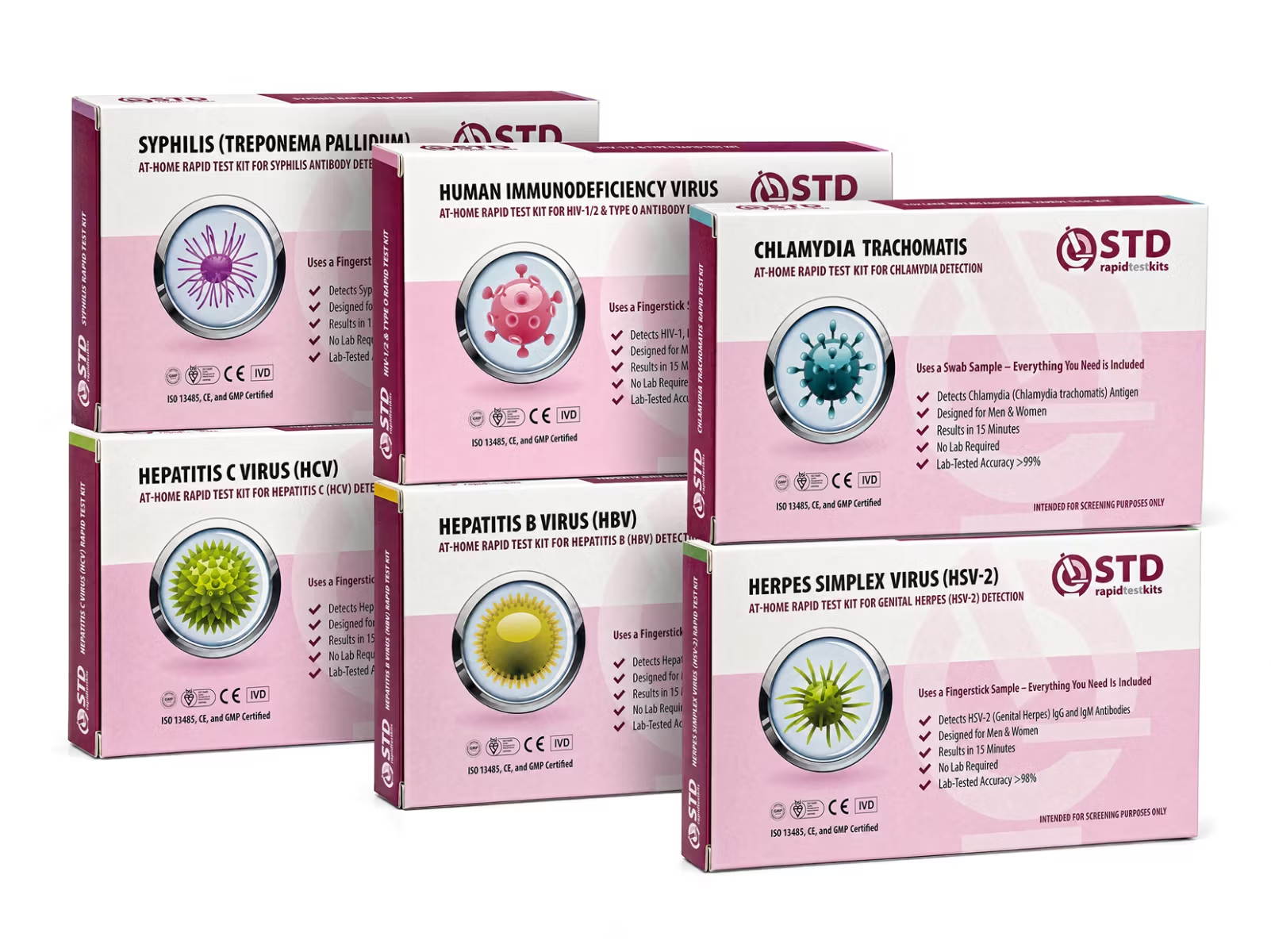
If avoiding expiration anxiety entirely is the preference, ordering close to the intended testing date keeps the kit firmly inside its validated performance window. Discreet combination panels reduce the chance of one expired single-infection kit derailing the whole plan, since multi-infection screening compresses the testing event into one decision.
Before You Spiral, Here Is the Grounded Truth
Using an expired STD test does not automatically mean the result was wrong. It means the certainty around that result is weaker than it should be. Medicine operates on probability and reliability, not perfection. If the result was negative and no symptoms are present, retesting with a fresh kit restores confidence. If the result was positive, confirmation clarifies next steps.
Answers backed by validated performance feel different than answers backed by crossed fingers. If retesting is the right next move, an in-date kit, properly stored, removes both the expiration variable and the doubt that came with it.
Negative result on the expired kit and no symptoms? Retest with a fresh, in-date kit at the right window period. Positive result on the expired kit? Confirm with a new in-date kit or a clinic-administered NAAT or antigen-antibody panel before acting. Symptoms present either way? See a clinician.
FAQs
- I used an expired STD test and it was negative. Am I safe?
- If storage was within the validated temperature range and timing was past the window, the negative result may still hold, but a single fresh kit removes the uncertainty entirely. The expiration date is when the manufacturer's validated accuracy guarantee ends, so anything past it is a probabilistic answer rather than a confirmed one. For the cost of one new kit, you trade probability for certainty.
- The test expired last week. Does that really matter?
- Many tests function close to their expiration date, but diagnostic medicine is built on validated reliability rather than luck. Even a slightly expired kit sits outside the manufacturer's tested performance window. For a decision as important as STI status, a fresh kit is the safer foundation.
- What is more likely with an expired test, a false positive or a false negative?
- Reagent degradation reduces the test's ability to catch real infection, not its tendency to produce phantom positives, so the clinical term you want is reduced sensitivity rather than reduced specificity. Expired kits produce false reassurance rather than false alarms, which is what makes this failure mode difficult to catch in real life.
- I got a positive result on an expired test. Should I panic?
- No. An expired positive result is a signal to confirm, not a final diagnosis. Use a new in-date rapid kit or go to a clinic for a laboratory test such as a NAAT for bacterial STIs or a fourth-generation antigen-antibody panel for HIV; that result will be unambiguous.
- Does heat really make that much of a difference?
- Yes. Heat accelerates chemical breakdown. A kit left in a hot car can degrade faster than its printed shelf life predicts. Rapid tests rely on delicate antibodies and buffers and are not built for glove compartments or sun-exposed shelves.
- What if the control line showed up but looked weak?
- A faint control line indicates that fluid moved across the strip, but it does not prove the reagents are at peak strength. On an expired kit, a faint control line is reason for caution. Retest with a fresh, clearly readable kit before drawing conclusions.
- Is an expired HIV test more risky than an expired chlamydia test?
- It can be, because many rapid HIV tests detect antibodies that may already be lower in early infection. Adding expiration to that timing challenge increases the chance of a missed positive. Confirmatory testing with a fresh kit or a laboratory antigen-antibody panel is the safer route when HIV is the concern.
- If I feel fine, do I really need to retest after using an expired kit?
- Chlamydia is asymptomatic in roughly 70% of cases and gonorrhea in about 50%, so the absence of symptoms carries little diagnostic weight on its own. An expired kit's reduced sensitivity adds a second reason to retest with a fresh kit rather than rely on how you feel.
- U.S. Centers for Disease Control and Prevention. STI screening recommendations and overview of laboratory and point-of-care testing methods.
- U.S. Centers for Disease Control and Prevention. HIV testing overview, including the 23-to-90-day antibody-test window and confirmation procedures.
- World Health Organization. Sexually transmitted infections (STIs) fact sheet, global testing and treatment guidance.
- World Health Organization. Consolidated guidelines on HIV prevention, testing, treatment, service delivery and monitoring (2021), including guidance on rapid HIV self-testing and partner notification within the broader testing chapters.
- U.K. National Health Service. Sexually transmitted infections guide, including symptoms, testing, and clinic referral guidance.
- U.S. National Library of Medicine, MedlinePlus. Sexually transmitted diseases overview, including testing, treatment, and prevention resources.