
Published: September 2025 | Last updated: May 2026 | Editorial review and quality control: Martina N.
Semen in the eye is one of those situations that feels much worse than it usually turns out to be, and at the same time isn't entirely harmless. The conjunctiva, which is the thin pink membrane lining your eyelids and covering the white of your eye, is mucous tissue. The same kind of mucous surface that allows bacterial STIs to take hold in the urethra, vagina, throat, or rectum can also support infection in the eye. Most exposures don't end in infection. Some do. The next 48 hours are the window where what you do matters most.
This guide walks through what's possible, what to do in the first ten minutes, when symptoms typically appear, how to know whether you need a test, and how clinicians treat each ocular STI when one does develop.
Can semen in the eye actually give you an STI?
Yes for a few specific bacterial infections, particularly gonorrhea and chlamydia, which can cause conjunctivitis within 1 to 12 days of exposure. Herpes simplex can also infect the eye through this route. HIV transmission through eye contact alone is documented but extremely rare. The first move is to flush your eye with clean water or saline for 5 to 10 minutes. Then monitor for redness, pus-like discharge, pain, or vision changes over the next 2 weeks. If your partner has a known STI or unknown status, plan a test on the right window for each infection.
Key Takeaways
- The eye's mucous membrane can transmit bacterial STIs from semen, with gonorrhea and chlamydia the most likely culprits; gonococcal conjunctivitis carries the highest urgency because untreated cases can damage the cornea within days.
- Immediate flushing with clean water or saline reduces but does not eliminate infection risk. Watch for redness, swelling, or discharge over the next 1 to 14 days, and consider STI testing on the right window if your partner's status is unknown.
Why a splash of semen in the eye can transmit an STI
The conjunctiva is mucous membrane, in the same broad tissue category as the urethra, vagina, and rectum. Each of those surfaces is what infectious-disease researchers call a portal of entry: a place where pathogens can move from outside the body into local tissue, set up infection, and in some cases enter the bloodstream. The eye is anatomically smaller and more compact than other mucous surfaces, but the cell biology is similar.
What this means in practice: if a fluid carries a pathogen that infects mucous membranes, eye contact with that fluid creates a real, if smaller, transmission opportunity. Semen from someone with an active gonorrhea or chlamydia infection can carry bacteria capable of colonizing the conjunctiva. Genital herpes lesions shed virus into surrounding fluid even when the lesion is not visible. The transmission probability per single exposure is lower than for genital-to-genital contact (because the volume is smaller and the contact time is brief), but the mechanism is the same.
The categories that matter most are bacterial. Bacteria like Neisseria gonorrhoeae and Chlamydia trachomatis are aggressive about colonizing mucous surfaces and can multiply quickly once they reach a hospitable environment. Viruses are a more variable picture: HSV (herpes simplex virus) can infect the eye and cause significant problems, while HIV, despite being present in semen, requires very specific conditions to enter through eye tissue and is documented only rarely.
One more piece of context worth knowing: a lot of the redness and irritation in the first hour after exposure is not infection at all. Semen is mildly alkaline (pH around 7.2 to 8.0) and contains enzymes and prostaglandins that the eye's surface reacts to. That kind of chemical irritation usually resolves within a few hours of flushing. Infection, when it happens, builds over days, not minutes.
The eye is technically a mucous-membrane exposure site, the same broad category that includes the rectum, vagina, urethra, and oropharynx. Per the CDC's <a href="https://www.cdc.gov/hiv/causes/index.html">page on HIV causes</a>, fluids must contact a mucous membrane or damaged tissue or be injected for transmission to occur. Semen's mild alkalinity (pH 7.2 to 8.0) and active enzymes account for most of the immediate stinging and redness; bacterial colonization, when it happens, develops over days.
Which STIs can infect the eye after semen exposure
Five infections account for nearly all documented cases of STI transmission through eye contact with genital fluid. The risk profile and symptom timing differs for each.
Gonorrhea (gonococcal conjunctivitis)
Risk level: Highest concern of any ocular STI. Gonococcal conjunctivitis is uncommon but progresses fast and can cause permanent eye damage if not treated quickly. The CDC's STI treatment guidelines for gonococcal infections include a dedicated section on gonococcal conjunctivitis among adults and recommend a single 1 g intramuscular injection of ceftriaxone with one-time saline lavage of the infected eye.
Timeline: Symptoms typically appear within 1 to 5 days of exposure. The classic presentation is profuse pus-like (purulent) discharge, severe redness, swelling of the eyelids, and pain. Vision can blur as discharge coats the cornea.
Why it's dangerous: Untreated gonococcal conjunctivitis can ulcerate the cornea and cause blindness. This is a same-day urgent-care or emergency-room presentation, not a watch-and-see situation.
Chlamydia (chlamydial conjunctivitis)
Risk level: Moderate. Chlamydia trachomatis is the most common bacterial STI in the United States. When it reaches the eye, it produces what clinicians call adult inclusion conjunctivitis, a milder, slower-onset infection than the gonococcal form.
Timeline: Symptoms develop more slowly than gonorrhea, typically 5 to 12 days after exposure. The presentation is milder: redness, watery to mucopurulent discharge, itching, and light sensitivity.
Why it's dangerous: Adult chlamydial conjunctivitis often becomes chronic if untreated and can produce conjunctival scarring. It responds well to oral antibiotics, but it needs to be identified first.
Herpes simplex (ocular herpes)
Risk level: Moderate when an active genital lesion is present in the source semen, lower otherwise. Both HSV-1 and HSV-2 can cause keratoconjunctivitis. The CDC's page on genital herpes describes asymptomatic transmission as a real source of infection, which means the source partner does not need a visible sore for the virus to be present.
Timeline: Symptoms can appear within 2 to 12 days. Look for eye pain, redness, watery discharge, blurred vision, and sometimes blister-like vesicles on the eyelid margin.
Why it's dangerous: Ocular herpes can recur, because the virus stays latent in nerve ganglia after the first infection. Repeated outbreaks scar the cornea, which threatens long-term vision. Antiviral treatment limits damage when started early.
HIV (theoretical, very low risk)
Risk level: Very low but not zero. HIV is present in semen, and the conjunctiva is technically a mucous membrane. The CDC's page on HIV causes states that infectious fluids must contact a mucous membrane or damaged tissue (or be directly injected) for transmission to occur. Documented cases of HIV transmission via splash to the eye are rare and typically involve healthcare workers exposed to bloody body fluid in occupational settings.
Timeline: No eye-specific symptoms. If transmission did occur, it would follow the standard course (a possible acute retroviral syndrome 2 to 4 weeks later). Per the CDC's HIV testing guidance, lab antigen/antibody testing usually detects HIV 18 to 45 days after exposure, while a fingerstick rapid antigen/antibody test is reliable from about 18 to 90 days.
Why it's worth thinking about: The transmission probability per single eye-splash exposure is well under 1 in 10,000 events when no broken skin or active eye injury is involved. Open sores, conjunctival abrasions, or active conjunctivitis raise the theoretical probability somewhat, which is why post-exposure prophylaxis (PEP) is occasionally considered for occupational eye exposures to known HIV-positive fluid.
Syphilis (ocular syphilis, rare via this route)
Risk level: Low for the eye specifically through semen exposure. Syphilis primarily transmits through direct contact with a primary chancre (the painless ulcer that develops at the original infection site). Transmission to the eye via genital fluid is not a typical route, though ocular syphilis does occur as a secondary or tertiary manifestation of an established systemic infection. The CDC's syphilis fact sheet covers the staged disease course.
Timeline: Eye involvement, when it occurs, is more often a complication of disseminated syphilis weeks to months after primary infection rather than a direct splash injury.
| Infection | Onset window | Main symptoms | Risk level |
|---|---|---|---|
| Gonorrhea | 1 to 5 days | Heavy pus-like discharge, severe redness, eyelid swelling, pain | High; same-day care |
| Chlamydia | 5 to 12 days | Redness, watery to mucopurulent discharge, itching, light sensitivity | Moderate |
| Herpes simplex | 2 to 12 days | Eye pain, redness, watery discharge, blister-like vesicles on eyelid margin | Moderate when active lesion present |
| HIV | No eye-specific symptoms | Possible acute retroviral syndrome 2 to 4 weeks later | Very low (under 1 in 10,000) |
| Syphilis | Weeks to months | Eye involvement is a complication of systemic infection, not splash | Low via this route |
What symptoms to watch for, and on what timeline
The most useful thing about a symptom timeline is that it tells you when to relax and when to act. Different infections show up at different speeds, and the type of symptom is often more diagnostic than its severity.
First 24 hours. Almost any redness or irritation in the first day is more likely chemical irritation from the seminal fluid itself than infection. Semen is alkaline, contains active enzymes, and the eye's mucous membrane reacts to all of those. This kind of redness usually resolves within a few hours of flushing.
Days 1 to 5: the gonorrhea window. Heavy yellow or green pus-like discharge, marked swelling of the eyelid, and significant pain that does not improve with flushing are the classic signs. If this picture develops, you need same-day medical care.
Days 2 to 12: the herpes window. Eye pain often disproportionate to what you can see, watery discharge, sensitivity to light, and small blister-like vesicles on the eyelid margin are typical.
Days 5 to 14: the chlamydia window. Symptoms are milder and slower-onset: a gritty or itchy feeling, lighter mucus discharge, redness that builds rather than slams in. It can be misdiagnosed as ordinary allergic or viral conjunctivitis. The NHS guide to conjunctivitis covers the broader symptom overlap that makes self-diagnosis tricky.
Beyond two weeks without symptoms, the probability of an active ocular infection from this single exposure drops sharply. STI testing for the underlying systemic infection, however, may still be appropriate within the relevant window periods (covered in the testing section below).
Get to urgent care, an emergency room, or an ophthalmologist the same day if any of the following develop: heavy pus-like discharge, severe pain, vision changes, eyelid swelling that closes the eye, or persistent sensitivity to light. Gonococcal conjunctivitis in particular can damage the cornea within days if untreated, so early antibiotic therapy is the difference between full recovery and lasting visual impairment.
What to do in the first ten minutes if semen gets in your eye
Action in the first ten minutes meaningfully reduces infection risk. The mechanics are simple, but the order and the technique matter.
Step 1: Flush, fully and gently
Rinse the affected eye with plain, lukewarm water or sterile saline for 5 to 10 minutes. A clean cup, a squeeze bottle of saline, or a steady gentle stream from a tap (head tilted so water runs from the inner corner to the outer corner of the eye) all work. Hold the eyelid open during the rinse so the fluid actually contacts the conjunctiva. Avoid soap, hydrogen peroxide, contact lens solution, or any chemical agent. These irritate the eye further and can damage the cornea.
Step 2: Don't rub the eye
Rubbing pushes contaminating fluid deeper into the conjunctival folds and can cause small abrasions that increase infection probability. If your eye itches, blink rapidly or apply a clean cool compress instead of rubbing.
Step 3: Remove and discard contact lenses if you wear them
Contact lenses trap fluid against the conjunctiva and act as a reservoir for any organisms in the splashed fluid. Remove the lens, throw it away (do not reuse), and don't put a new lens in the eye until you've been symptom-free for at least 48 hours. If symptoms develop, see an eye-care provider before going back to lenses.
Step 4: Set a watch period
Note the date and time of exposure. Mark a calendar reminder for day 5 and day 14 so you do a brief check on yourself even if you've forgotten about it by then. Watch for redness, discharge, pain, or vision changes during these windows.
Step 5: Plan testing if your partner's STI status is unknown
Eye exposure is a real STI exposure. If you don't know your partner's status, the same testing-window logic applies as for any other exposure (covered in the next section).

When and how to test for STIs after eye exposure
Testing serves two separate purposes here. The first is diagnosing an ocular infection if you develop eye symptoms; that is a clinic visit, with a provider taking a swab from the conjunctiva for laboratory PCR or culture. The second is confirming whether the underlying STI was actually present in the source semen, which is a regular STI panel done on you (the recipient) on the right window.
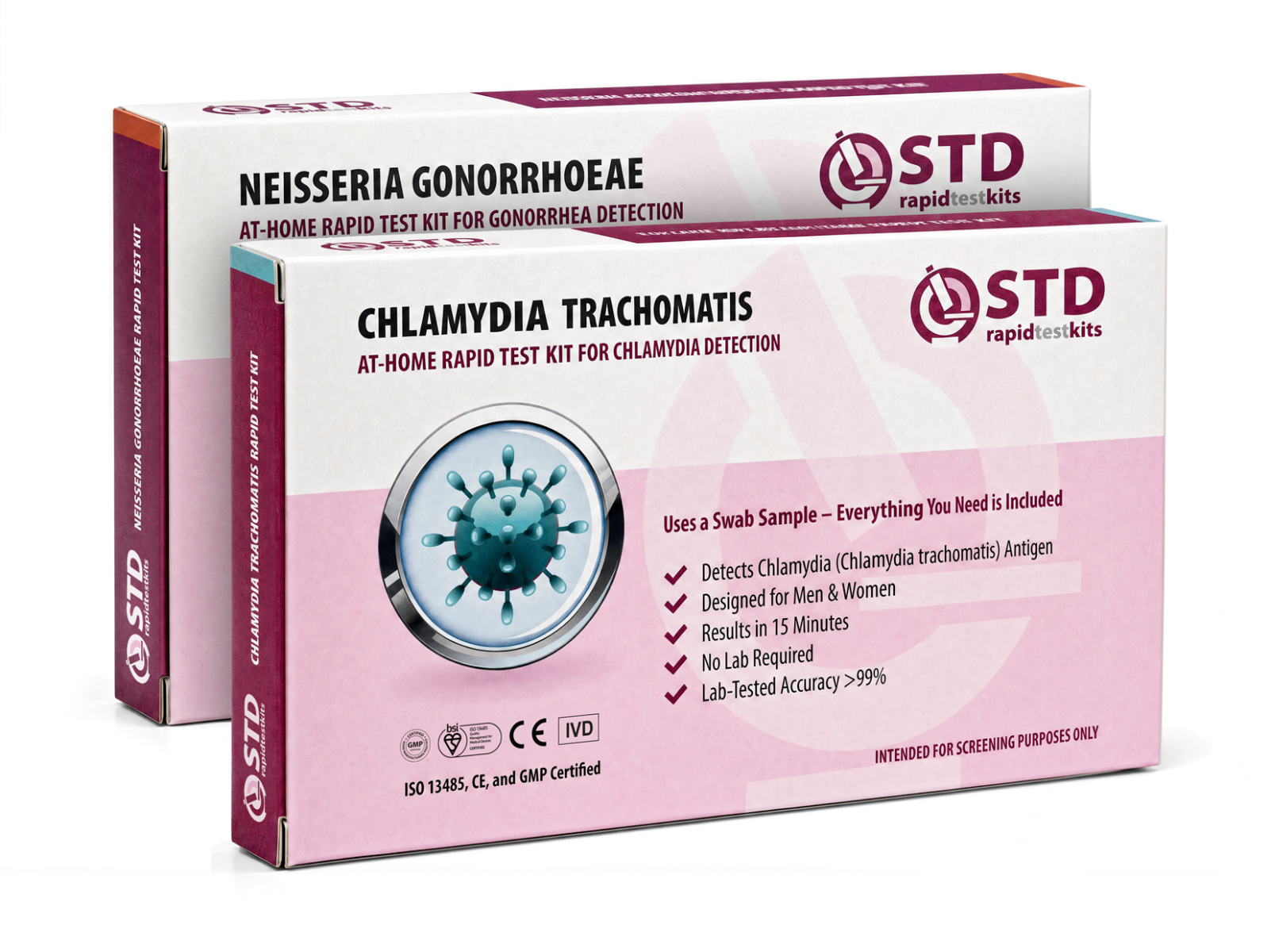
Honest scope note about our home tests. Our at-home rapid kits are designed for genital self-swab (chlamydia, gonorrhea, trichomoniasis, HPV) or fingerstick blood antibody testing (HIV, syphilis, hepatitis, herpes). They cannot diagnose ocular conjunctivitis directly. If you have eye symptoms, see an in-person provider for a conjunctival swab and clinical exam. The home tests answer a separate question: am I now carrying the underlying STI from this exposure event?
Testing windows for the recipient if the partner's status is unknown:
- Gonorrhea and chlamydia: testable from about day 14, with most reliability after 2 to 3 weeks. Self-collected swab or urine NAAT in clinical settings; lateral-flow rapid swab for at-home screening (genital swab only, not for conjunctival sampling).
- HIV: per the CDC's testing guidance, lab antigen/antibody testing detects HIV from 18 to 45 days post-exposure, while fingerstick rapid antigen/antibody testing is reliable from about 18 to 90 days. A definitive negative is usually at 90 days.
- Syphilis: antibody testing from about 3 weeks, definitive at about 12 weeks.
- Herpes: serology can detect HSV-2 antibodies from about 6 to 12 weeks after primary infection, but testing is generally most useful when symptoms are present and a swab can be taken from a visible lesion.
If you and your partner can have a direct conversation, the most useful question is whether they have been tested recently and what the result was. Partner-known-negative status is the single biggest reassurance after this kind of exposure.
Sexually transmitted infections that affect mucous membranes, including the conjunctiva, can cause lasting damage when treatment is delayed. Gonococcal conjunctivitis in particular benefits from same-day antibiotic therapy, and even slower-onset chlamydial infection responds best to timely diagnosis. If you develop eye symptoms after exposure, treat it like any other suspected eye infection and see a clinician promptly.
How ocular STIs are treated
Each ocular STI has a different first-line treatment. The good news is that every infection on this list responds to therapy when caught early. The harder reality is that several of them, untreated, cause permanent vision damage; that's why the watch period above isn't optional.
Gonococcal conjunctivitis
Per the CDC's STI treatment guidelines, the recommended regimen for adult gonococcal conjunctivitis is a single 1 g intramuscular injection of ceftriaxone, often with a one-time saline lavage of the infected eye and concurrent treatment for chlamydia (since co-infection is common). Severe cases may require hospitalization and IV antibiotic therapy. With prompt treatment, full recovery is the typical outcome.
Chlamydial conjunctivitis
Oral antibiotics, most commonly doxycycline for 7 days or a single dose of azithromycin, are the standard. Topical antibiotic drops are sometimes used adjunctively. Recovery is generally complete; chronic conjunctival scarring is a complication of untreated infection rather than a residual of treated disease.
Ocular herpes (HSV keratitis or conjunctivitis)
Antiviral medication (oral acyclovir or valacyclovir, or topical trifluridine eye drops in some cases) shortens the active episode and reduces the chance of corneal scarring. Long-term suppressive antiviral therapy is sometimes recommended after multiple recurrences, since each recurrence can damage the cornea further. Steroid drops are sometimes added, but only under ophthalmologist supervision; steroids in the wrong herpes presentation can worsen the disease.
Ocular syphilis
Treated as neurosyphilis (because the eye and brain share the same blood-brain-barrier sanctuary): intravenous penicillin G for 10 to 14 days. This is a hospital-managed course rather than an outpatient prescription.
Bacterial conjunctivitis without an STI
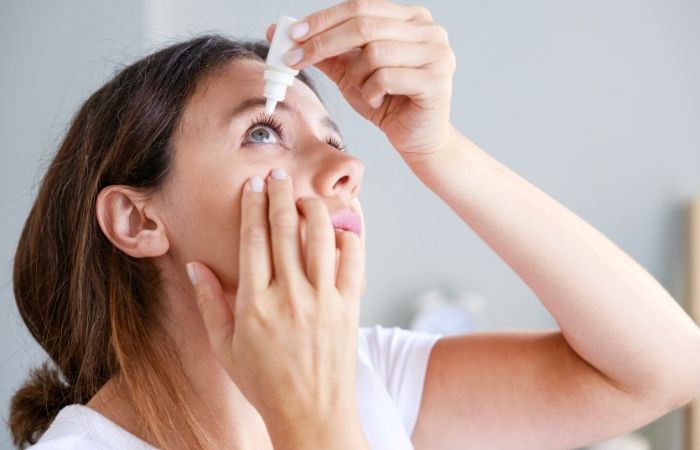
Sometimes the bacteria that overgrow after a semen splash aren't STI organisms but ordinary skin or environmental bacteria that found a hospitable surface. Standard topical antibiotic eye drops (erythromycin or polymyxin/trimethoprim) clear most of these in a few days. A clinician's swab can distinguish this picture from gonococcal or chlamydial infection.
Should you do broader STI testing after this exposure?
The exposure event matters as much as the symptom picture. Eye contact with semen is one route; if the same partner had also had oral or genital contact, the broader testing question shifts.
Test broader if any of these apply:
- The partner has a known STI or unknown status, and the eye exposure happened during a sexual encounter that also involved oral or genital contact.
- You haven't had a comprehensive STI screening in the past 6 to 12 months.
- You have any symptoms, even subtle ones, on body areas other than the eye (urethral discharge, pelvic discomfort, sores, or rash on hands or trunk).
- You are immunocompromised, pregnant, or planning pregnancy.
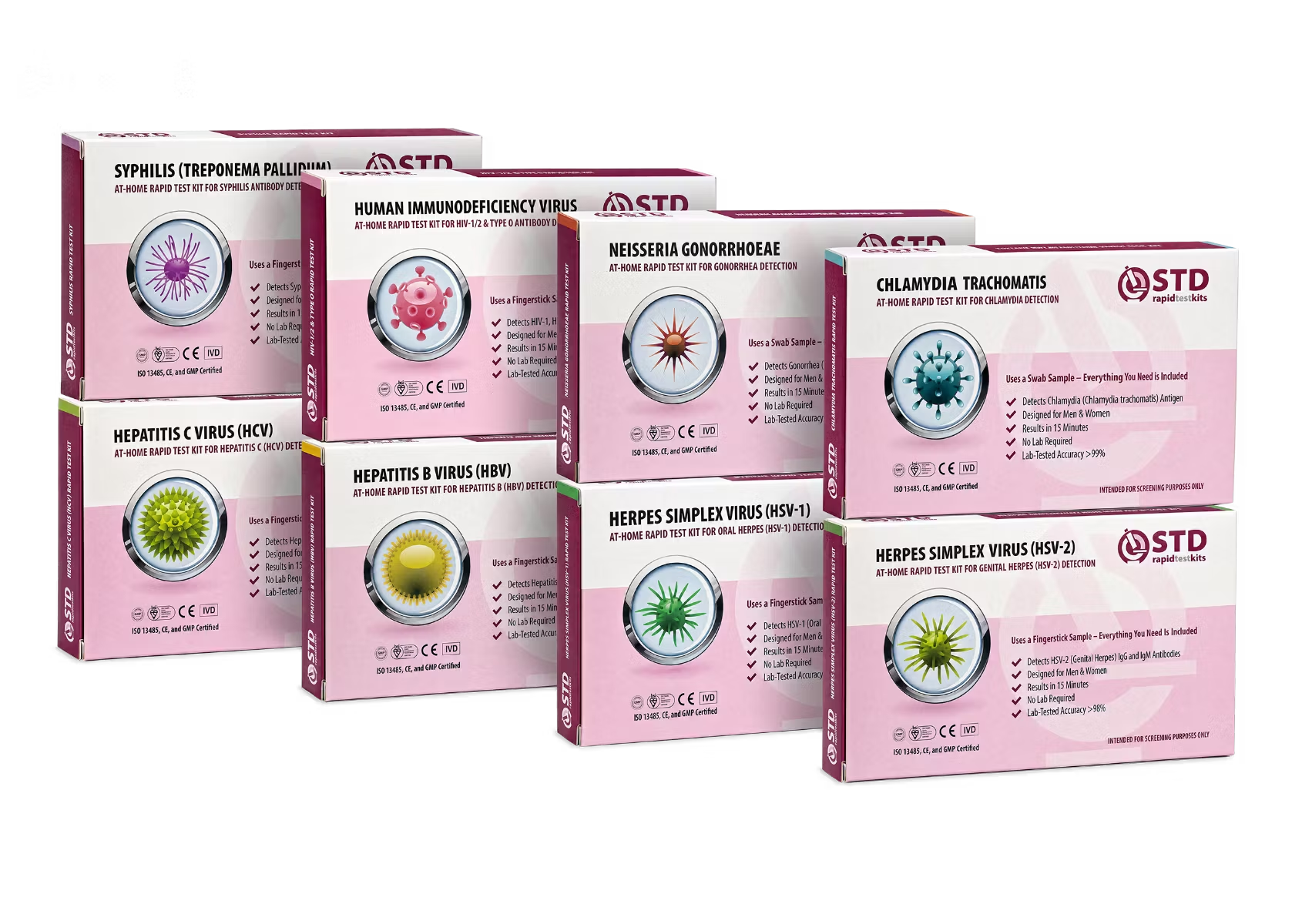
An 8-infection panel covering HIV, syphilis, hepatitis B, hepatitis C, HSV-1, HSV-2, chlamydia, and gonorrhea is the most comprehensive at-home option and gives you a clear baseline. If any individual test reads positive, follow up with a clinician for confirmation testing and treatment planning.
If your partner has a known specific STI and you only need to test for that one, a single-infection kit is faster and less expensive. Match the test to the actual exposure rather than testing for everything reflexively.
FAQs
- Can semen in the eye actually give you an STI?
- Gonorrhea is the infection to take seriously first. Gonococcal conjunctivitis can develop within 1 to 5 days, produce heavy pus-like discharge, and ulcerate the cornea within days if untreated. Chlamydia is the next most likely transmission, with milder, slower-onset symptoms over 5 to 12 days. Herpes simplex can also infect the eye through this route, especially when the source partner has an active genital lesion. Syphilis transmission via this exact route is uncommon, since syphilis usually transmits through contact with a primary chancre rather than through fluid splash. HIV transmission through eye contact alone is documented but extremely rare.
- Which ocular STI is the most dangerous?
- Gonococcal conjunctivitis. It progresses fast (1 to 5 days), produces heavy purulent discharge, and can ulcerate the cornea within days if untreated, with permanent vision loss as a possible outcome. Same-day medical care is the right move if heavy yellow-green discharge, severe pain, or eyelid swelling develops.
- How quickly do symptoms appear after exposure?
- Gonorrhea: 1 to 5 days. Herpes: 2 to 12 days. Chlamydia: 5 to 12 days. Syphilis (when it affects the eye): weeks to months, usually as part of a broader systemic infection rather than directly from the splash. Anything appearing within the first few hours is more likely chemical irritation from the seminal fluid itself, not infection.
- Can HIV be transmitted from semen in the eye?
- The risk is very low but not zero. Per the CDC, fluids must contact a mucous membrane or damaged tissue (or be directly injected) for HIV transmission to occur, and the conjunctiva is technically a mucous membrane. The estimated transmission probability per single eye-splash exposure is well under 1 in 10,000 when no broken skin or active eye injury is involved. Documented cases mostly involve healthcare workers exposed to bloody fluid in occupational settings. If the source partner is known HIV-positive and the exposure was recent, a clinician can discuss whether post-exposure prophylaxis is appropriate within the 72-hour window.
- What should I do in the first ten minutes?
- Flush the affected eye with clean lukewarm water or sterile saline for 5 to 10 minutes, holding the eyelid open. Do not rub. Remove and discard any contact lens that was in place. Avoid soap, hydrogen peroxide, or any chemical agent. Note the date and time so you can check yourself on day 5 and day 14 for symptoms.
- Should I see a doctor if I don't have any symptoms?
- If your partner has a known STI or unknown status, yes, plan a test on the right window even without symptoms. Several STIs can transmit and establish without obvious eye involvement, especially in early stages. Asymptomatic chlamydia and gonorrhea are common. A clean, on-window negative test gives you certainty that the symptom-watch alone cannot.
- Can semen permanently damage my eye?
- Direct chemical damage from semen alone is unlikely; the irritation usually resolves within hours. Permanent damage, when it does happen, comes from untreated bacterial or viral infection. Untreated gonococcal conjunctivitis can cause corneal ulceration and blindness. Untreated or recurrent ocular herpes can scar the cornea over time. Both outcomes are largely preventable with prompt diagnosis and antibiotic or antiviral treatment.
- How can I prevent this in the future?
- Barrier methods (condoms, dental dams) used consistently are the strongest prevention. Knowing your partner's recent STI status meaningfully changes the risk math; mutual testing every 6 to 12 months for sexually active people is a reasonable cadence per CDC guidance. If a high-risk situation occurs, the same flush-watch-test sequence applies. Eye contact alone is rarely the only route in a sexual encounter, so broader screening is usually appropriate.
- U.S. Centers for Disease Control and Prevention. STI treatment guidelines for gonococcal infections, including the dedicated section on gonococcal conjunctivitis among adults and the recommended ceftriaxone regimen.
- U.S. Centers for Disease Control and Prevention. Genital herpes overview, including asymptomatic transmission and HSV epidemiology.
- U.S. Centers for Disease Control and Prevention. Causes of HIV, including mucous-membrane and damaged-tissue exposure routes.
- U.S. Centers for Disease Control and Prevention. HIV testing guidance, including window-period detection ranges for lab antigen/antibody and rapid antigen/antibody tests.
- U.S. Centers for Disease Control and Prevention. Syphilis fact sheet, including the staged disease course and ocular syphilis as a complication of established infection.
- National Health Service (UK). Conjunctivitis overview, presentations, and when to seek care.
