
Published: October 2025 | Last updated: May 2026 | Editorial review and quality control: Martina N.
Untreated bacterial STIs (chlamydia, gonorrhea, syphilis) cause progressive scarring, infertility, and organ damage; left long enough, the damage becomes permanent. Untreated viral STIs (HIV, hepatitis B and C, HPV, herpes) advance silently toward AIDS, liver failure, and cancer over years. Caught early, most are curable or highly manageable, and all can be screened at home or at a clinic within days.
Most sexually transmitted infections do not announce themselves clearly. They sit quietly for weeks or even years, often without symptoms, while bacteria scar tissue, viruses replicate, and the immune system either compensates or starts to fall behind. CDC tracking of STI epidemiology in the United States shows that these infections remain common and are disproportionately asymptomatic; a large share are detected only on routine screening rather than from symptoms. Understanding what each infection does on its own timeline makes the decision to test considerably easier to evaluate. The infections covered below differ in how fast they cause damage, what kind of damage they cause, and how curable they are. Across all of them, early detection turns most of the worst outcomes into avoidable ones.
This article is published by stdrapidtestkits.com, which sells at-home STI testing kits. We recommend products based on fit-for-purpose for the reader's concern, not commercial benefit.
Key Takeaways
- Bacterial STIs (chlamydia, gonorrhea, syphilis) are curable with antibiotics if caught early; left untreated, they can cause permanent scarring, infertility, or organ damage.
- Viral STIs (HIV, hepatitis B and C, HPV, herpes) are highly manageable when detected early, and HPV-related cancers plus HIV progression to AIDS are almost entirely preventable with timely screening and treatment.
Why untreated STIs cause more damage than the early infection
Time turns most untreated STIs dangerous. Bacteria like Neisseria gonorrhoeae and Chlamydia trachomatis live in mucosal tissue. Each day they remain there, they trigger inflammation, recruit immune cells, and slowly create scar tissue. By the time symptoms appear (or a clinician spots damage during a workup for infertility or chronic pelvic pain), the original infection might already be cleared, but the scarring is permanent.
The cervix, urethra, rectum, and throat all produce relatively weak symptom signals compared to skin, joints, or abdomen. A person can be carrying an active gonorrhea or chlamydia infection in one of these sites and feel completely well. The asymptomatic majority is also what drives most population-level transmission: people who feel fine continue to have sex normally while the infection moves through the network.
Viral infections work on a different timeline. HIV gradually depletes CD4 T cells over years if antiretroviral therapy is delayed. Hepatitis C silently inflames the liver until cirrhosis develops, which is often the first sign most people notice. High-risk HPV can persist in cervical or oropharyngeal tissue for a decade or more before driving the cell changes that progress to cancer. Syphilis is the unusual one. It is bacterial, but it has a multi-year latent phase before late-stage neurosyphilis or cardiovascular disease emerges, which is why it has historically been called the great pretender.
The CDC notes that most women and roughly half of men with chlamydia have no symptoms at all. The same pattern holds for HPV, HSV-2, and HIV in latency. The infection is still active and progressing internally even when the person feels completely fine. Routine screening, rather than waiting for symptoms, is what catches these silent cases before they cause lasting harm.
Chlamydia: the silent infection that erodes fertility
Chlamydia is the most commonly reported STI in the United States. The CDC's chlamydia page and the NHS chlamydia guide both emphasize that most infected people have no symptoms; when symptoms do appear, they are often mistaken for a urinary tract infection or normal discharge variation. As a result, chlamydia frequently goes untreated for months or longer, which is exactly the timeline over which it does its damage.
Pelvic inflammatory disease in women is the most consequential complication of untreated chlamydia. Roughly 10 to 15 percent of untreated cases progress to PID, which raises the risk of tubal-factor infertility, chronic pelvic pain, and ectopic pregnancy. Bacteria ascend from the cervix through the uterus into the fallopian tubes, where inflammation produces scarring that does not reverse once antibiotics clear the infection. In pregnancy, untreated chlamydia is associated with preterm delivery and can pass to the newborn, where it causes neonatal conjunctivitis and pneumonia.
Men are not exempt. Untreated chlamydia in men can cause epididymitis (inflammation of the coiled tube behind each testicle) and, rarely, reactive arthritis. Both chlamydia and gonorrhea also raise the risk of HIV acquisition if exposure occurs, because the inflammation creates more entry points for the virus.
Treatment is straightforward when caught: a short course of azithromycin or doxycycline cures the infection. The CDC recommends annual screening for sexually active women under 25 and for older women with risk factors. Routine screening, rather than symptom-driven testing, is the strategy that prevents the long-term damage.
About 10 to 15 percent of untreated chlamydia infections in women progress to pelvic inflammatory disease, and PID-related scarring of the fallopian tubes does not reverse once it forms. Rapid swab tests are reliable from roughly day 14 after a possible exposure, so testing within two to three weeks of a known exposure is the most effective way to catch the infection before lasting reproductive damage accumulates.
Gonorrhea: scarring, antibiotic resistance, and infertility risk
Gonorrhea is a bacterial infection caused by Neisseria gonorrhoeae. It can colonize the urethra, cervix, rectum, throat, and rarely the eyes. According to the CDC's gonorrhea fact sheet, many people develop no symptoms or only mild symptoms that mimic a urinary tract infection or vaginal discharge. That is part of why untreated gonorrhea is so common; nothing prompts the person to seek care.
Untreated gonorrhea has three main long-term consequences. First, in women, the bacteria can ascend from the cervix into the uterus and fallopian tubes, causing the same pattern of pelvic inflammatory disease, ectopic pregnancy risk, and tubal-factor infertility seen with chlamydia. Second, in men, untreated infection can cause epididymitis, urethral scarring, and rarely sterility. Third, in newborns delivered through an infected birth canal, gonococcal conjunctivitis can lead to permanent blindness if not promptly treated. A small fraction of untreated cases also develop disseminated gonococcal infection, which causes joint pain, skin lesions, and rarely endocarditis.
Antibiotic resistance has become the sharpest new concern. The World Health Organization has flagged drug-resistant Neisseria gonorrhoeae as a high-priority pathogen, and CDC treatment guidance has been updated multiple times in recent years as resistance to azithromycin and other older first-line agents has grown. Current first-line treatment is a single intramuscular ceftriaxone injection. People with a history of gonorrhea or who suspect re-exposure should test promptly so treatment can keep up with the bug's evolving resistance profile.
Current first-line treatment is a single ceftriaxone injection. Because resistance to older agents like azithromycin has grown, a follow-up test-of-cure is advisable if symptoms persist after treatment, and re-screening 3 months after treatment is recommended to catch reinfection.
Syphilis: stages and the late-stage damage you can avoid
Syphilis is a bacterial infection caused by Treponema pallidum. The CDC's syphilis page and the Mayo Clinic syphilis overview both describe four distinct stages, each with a different clinical picture.
Primary syphilis presents as a single painless ulcer (chancre) at the site of infection, typically genital, anal, or oral. The chancre heals on its own in 3 to 6 weeks, which is part of why so many cases go untreated. The visible problem disappears even though the bacteria are still inside the body.
Secondary syphilis develops weeks to months later and can include a non-itchy rash (often on the palms and soles), mucous membrane lesions, fever, swollen lymph nodes, and patchy hair loss. Like the chancre, these symptoms resolve without treatment.
Latent syphilis follows. The infection is internally active but produces no outward signs. This phase can last for years.
Tertiary syphilis may develop 10 to 30 years after the initial infection in roughly a third of untreated cases. It can damage the heart and large blood vessels (cardiovascular syphilis), cause large soft-tissue lesions called gummas, or affect the brain and spinal cord (neurosyphilis), with consequences ranging from personality changes to dementia, stroke, and paralysis.
Congenital syphilis (passed from a pregnant person to their fetus) has been rising sharply in the United States in recent years and can cause stillbirth, neonatal death, or serious birth defects. The CDC has issued specific guidance pushing for prenatal screening at multiple time points in pregnancy in higher-prevalence areas. Treatment has been unchanged for nearly a century: a single intramuscular dose of long-acting penicillin G is curative for primary, secondary, and early latent syphilis. Late or tertiary syphilis requires a longer course.
| Stage | Signature signs | Approximate timing |
|---|---|---|
| Primary | Single painless chancre at the site of infection | 3 to 90 days after exposure; ulcer heals in 3 to 6 weeks |
| Secondary | Non-itchy rash on palms and soles, mucous lesions, fever, swollen lymph nodes | Weeks to months after the primary chancre |
| Latent | No outward signs; infection still active internally | Months to many years after the secondary stage |
| Tertiary | Cardiovascular syphilis, neurosyphilis, gummas | 10 to 30 years after initial infection (in roughly a third of untreated cases) |
HIV: from acute infection to AIDS without treatment
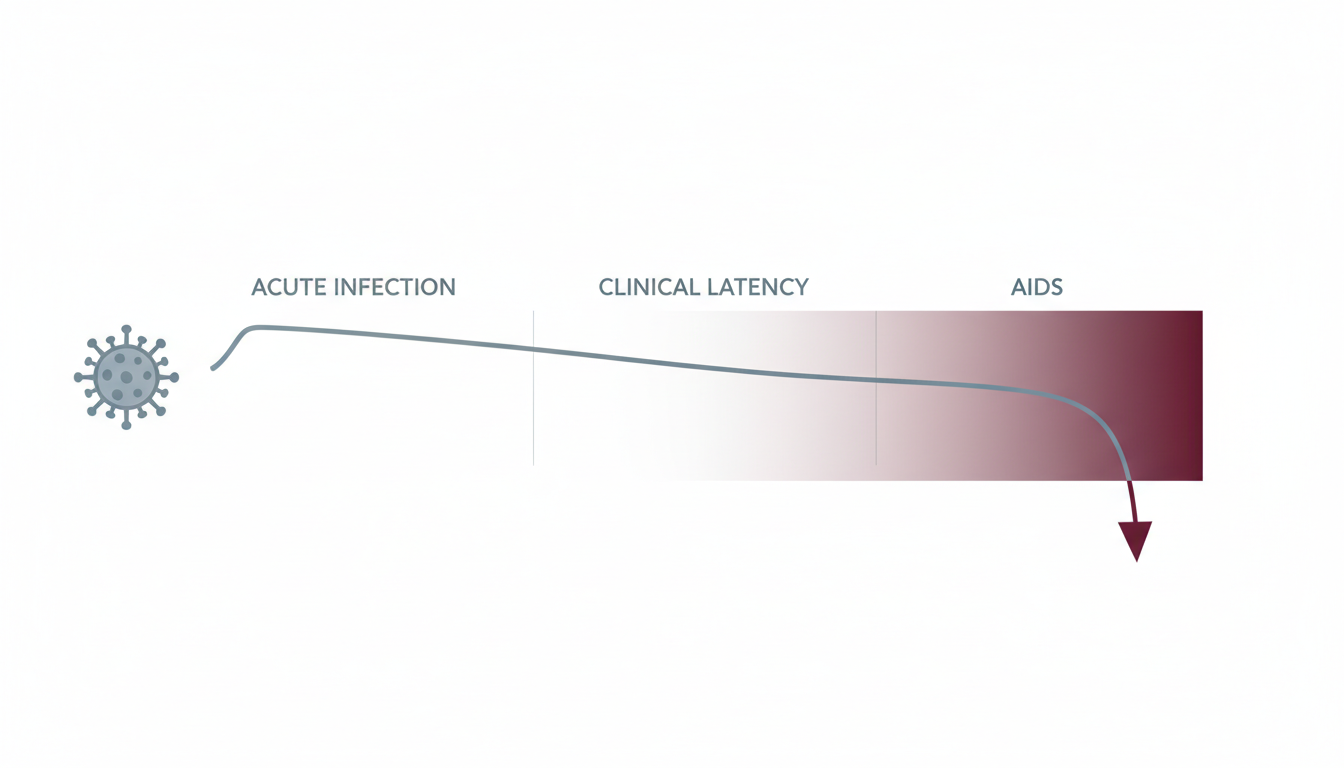
HIV is a viral infection that, untreated, gradually destroys CD4 T cells until the immune system can no longer fight off opportunistic infections. According to CDC HIV surveillance and clinical guidance, untreated HIV typically progresses through three phases: acute infection (often with flu-like symptoms 2 to 4 weeks after exposure), clinical latency (often 8 to 10 years with few or no symptoms while the virus continues replicating at low levels), and AIDS (when CD4 counts fall below 200 cells per cubic millimeter and opportunistic infections become common).
HIV is now one of the most treatable chronic infections in modern medicine. Antiretroviral therapy (ART) suppresses the virus to undetectable levels in the blood. People with undetectable viral loads on consistent ART have a near-normal life expectancy and, importantly, do not sexually transmit HIV (the U=U principle: undetectable equals untransmittable). ART must be started early and taken consistently for life to deliver these outcomes.
Without treatment, untreated HIV substantially raises the risk of opportunistic infections (such as Pneumocystis jirovecii pneumonia, cryptococcal meningitis, and cytomegalovirus retinitis), AIDS-defining cancers (Kaposi sarcoma, certain non-Hodgkin lymphomas, invasive cervical cancer), wasting syndrome, HIV-associated neurocognitive disorders, accelerated cardiovascular disease, kidney and liver complications, and ultimately death from AIDS-related illness.
Testing-window math matters here. Fourth-generation antigen-antibody lab tests detect HIV roughly 18 to 45 days after exposure. Most rapid antibody-only home tests have a longer window, often 23 to 90 days. If you are testing soon after a possible exposure, plan a follow-up at the end of the window, or ask a clinic about a NAAT (nucleic acid test), which can detect HIV as early as 10 to 14 days after exposure and works best for very recent high-suspicion exposure. Anyone who suspects a possible HIV exposure within the last 72 hours should ask a clinician about post-exposure prophylaxis (PEP), a 28-day course of antiretrovirals that can prevent infection when started promptly.
Hepatitis B and C: silent liver damage over years
Hepatitis B (HBV) and hepatitis C (HCV) are viral infections that primarily damage the liver. Both can be transmitted sexually, although hepatitis C is more commonly bloodborne (shared needles, tattoo equipment, unscreened transfusions in the past). Both can cause acute illness or progress silently for years.
For hepatitis B, the CDC's HBV resources explain that most healthy adults clear the virus within 6 months, often without specific treatment. A minority (around 5 to 10 percent of adult-acquired infections) progress to chronic hepatitis B. Without monitoring and antiviral treatment, chronic HBV raises the lifetime risk of cirrhosis, liver failure, and hepatocellular carcinoma. A safe and effective vaccine has existed since the 1980s and is now part of routine childhood immunization in the United States.
Hepatitis C is the more concerning of the two for adults today, mostly because it tends to progress silently and is not preventable by vaccine. According to the CDC's HCV information, most acutely infected people have no symptoms, and chronic HCV can quietly inflame the liver for 20 to 30 years before cirrhosis or hepatocellular carcinoma appears. Direct-acting antiviral therapy has transformed hepatitis C care over the past decade. Eight to 12 weeks of oral medication now cures over 95 percent of treated cases. The CDC currently recommends that all adults aged 18 and older be screened for HCV at least once.
If untreated, both infections share a similar end-stage progression: liver fibrosis becomes cirrhosis, cirrhosis impairs liver function, and decompensated cirrhosis raises the risk of bleeding, encephalopathy, hepatocellular carcinoma, and ultimately liver failure requiring transplant.
HPV: from infection to cancer over a decade or more
Human papillomavirus is the most common STI in the United States. Most HPV infections clear on their own within 1 to 2 years thanks to the immune system. The minority that do not clear, particularly those caused by high-risk types like HPV-16 and HPV-18, can drive cellular changes that progress to cervical, anal, throat (oropharyngeal), penile, vaginal, or vulvar cancer. The window from persistent infection to invasive cancer is typically 10 to 20 years, which is why routine cervical screening (Pap testing and HPV co-testing) catches most precancerous changes long before they become invasive.
Routine HPV vaccination through age 26 prevents most cervical cancers and a substantial share of anal and oropharyngeal cancers in vaccinated populations. The Advisory Committee on Immunization Practices also recommends shared clinical decision-making for HPV vaccination through age 45 in adults who were not previously vaccinated and have ongoing risk. The CDC's HPV information covers vaccination, screening intervals, and what positive HPV results mean.
Our at-home HPV rapid swab is validated for vaginal self-swab only. Male readers concerned about anal or oropharyngeal HPV should see a clinician for site-specific evaluation; we do not sell a male-compatible at-home HPV kit. Cervical Pap and HPV co-testing on a clinician-collected sample remains the gold standard for cervical cancer prevention.
The immune system clears the large majority of HPV infections within 1 to 2 years without any treatment. Cancer risk concentrates in persistent infections with high-risk types, principally HPV-16 and HPV-18. Routine cervical screening catches the cell changes those persistent infections cause years before they become cancer, which is why screening cadence matters more than the result of any single HPV test.
Herpes: a lifelong infection you can manage well
Genital herpes is most often caused by herpes simplex virus type 2 (HSV-2), although HSV-1 (more often associated with cold sores) increasingly causes genital infections too. The CDC's genital herpes fact sheet notes that the majority of people with genital HSV are asymptomatic or have such mild symptoms that they do not recognize the infection.
Herpes establishes lifelong latency in nerve cells. Once you have it, you have it; what changes is how often it reactivates. Some people have one outbreak and never another. Others have recurrent outbreaks during periods of stress, illness, or hormonal change. Asymptomatic viral shedding (the virus being released from the skin when no lesions are visible) is one of the main ways herpes spreads.
Untreated herpes is rarely life-threatening for healthy adults. The complications worth knowing about are: increased HIV transmission risk (the inflammation around lesions creates entry points for HIV), neonatal herpes (which can be severe if a primary infection occurs in late pregnancy or if active lesions are present at delivery), and severe disseminated infection in immunocompromised people. Antiviral medications (acyclovir, valacyclovir, famciclovir) substantially reduce outbreak frequency, shorten outbreak duration, and reduce the risk of transmission to partners. Suppressive daily therapy is an option for people with frequent recurrences or for couples in which one partner is uninfected.
HSV-2 antibody tests detect IgG antibodies and require a 12-week or longer window after exposure to be reliable. Antibody tests cannot tell you whether an active lesion is herpes; for that, a clinician's swab and PCR are the appropriate tools. If you have visible lesions right now, see a clinician promptly so they can swab while the lesion is fresh.
Antibody tests measure seroconversion, not active lesions. If you have a visible sore right now, see a clinician for a swab while the lesion is fresh. A blood antibody test will not diagnose an active outbreak.
Pregnancy: when STIs become a risk to the baby
Untreated STIs during pregnancy carry risks that extend to the fetus and newborn. Routine prenatal screening exists precisely because catching these infections early in pregnancy prevents most of the worst outcomes.
Chlamydia and gonorrhea infections during pregnancy can cause preterm labor, premature rupture of membranes, low birth weight, and neonatal conjunctivitis (an eye infection acquired during vaginal birth that can scar the cornea and threaten vision). Routine eye prophylaxis at birth and antenatal screening have reduced this risk substantially in countries with prenatal care.
Untreated syphilis in pregnancy is one of the most preventable tragedies in modern obstetrics. Without treatment, syphilis crosses the placenta. The result, congenital syphilis, can cause stillbirth, neonatal death, severe bone deformities, brain damage, deafness, and lifelong disability. A timely course of penicillin given to the mother prevents virtually all of it.
Genital herpes during pregnancy is risky mainly during delivery. If a mother is shedding HSV when the baby passes through the birth canal, the newborn can develop neonatal herpes, an infection of the skin, eyes, mouth, central nervous system, or all of the above. Untreated neonatal herpes is frequently fatal. Suppressive antivirals from week 36 onward, plus cesarean delivery if active lesions are present at the time of labor, prevent most cases.
HIV vertical transmission used to be common before the era of routine antenatal HIV screening and treatment. Modern antiretroviral therapy during pregnancy and delivery, combined with avoidance of breastfeeding where formula is safe, reduces mother-to-baby transmission to under 1 percent in well-managed cases. Hepatitis B can pass at delivery as well; routine infant immunization within 12 hours of birth for at-risk infants prevents nearly all transmission. Trichomoniasis, a parasitic infection treated with a short course of metronidazole, is associated with preterm delivery and low birth weight when untreated in pregnancy.
Prenatal STI screening is one of the most effective preventive interventions in medicine. Ask your obstetric provider about a full STI panel at your first prenatal visit, and again in the third trimester if you have a new partner during pregnancy. At-home rapid tests are useful for pre-pregnancy screening, but during pregnancy, prenatal care should be the primary testing pathway.
How testing windows protect you (and why timing matters)
Testing too early is the most common preventable mistake readers make. Each STI has a window period: the time between exposure and the moment a test can reliably detect the infection. Testing inside the window can produce a false-negative result that feels reassuring but is misleading.
Use the table below for approximate windows by infection. If you are testing earlier than the window for a given infection, plan a follow-up test once the window has passed.
| Infection | Window for rapid or antibody test | Notes |
|---|---|---|
| Chlamydia and gonorrhea | 1 to 2 weeks | Swab-based NAAT or rapid lateral-flow |
| Trichomoniasis | 1 to 4 weeks | Vaginal swab (women only for at-home kits) |
| HIV | 23 to 90 days (rapid antibody); 18 to 45 days (4th-gen lab) | NAAT can detect at 10 to 14 days for high-suspicion cases |
| Syphilis | 3 to 6 weeks | A primary chancre may be visible before antibodies turn positive |
| Hepatitis B | 4 to 10 weeks | HBsAg becomes detectable in this range |
| Hepatitis C | 8 to 11 weeks (anti-HCV antibody) | HCV RNA/PCR can detect within 1 to 2 weeks for high-suspicion cases |
| Herpes (HSV-2 IgG) | 12 weeks or longer | Antibody tests do not diagnose active lesions |
| HPV | Detects current cervical infection rather than a fixed exposure window | Vaginal swab (women only); cervical Pap remains the gold standard |
Untreated outcomes at a glance
The infections in this guide differ in how fast and how severely they cause harm if left untreated. The table below summarizes the worst-case progression for each, alongside whether the infection is curable with current treatment.
| Infection | If left untreated, can lead to | Curable? |
|---|---|---|
| Chlamydia | Pelvic inflammatory disease, tubal-factor infertility, ectopic pregnancy, neonatal pneumonia and conjunctivitis | Yes (antibiotics) |
| Gonorrhea | PID, scarring of fallopian tubes or urethra, neonatal blindness, disseminated gonococcal infection | Yes (ceftriaxone), but resistance is rising |
| Syphilis | Cardiovascular syphilis, neurosyphilis, dementia, stroke, congenital syphilis | Yes (penicillin G) |
| HIV | AIDS-defining illnesses, opportunistic infections, certain cancers, premature death | Not curable, but ART suppresses virus and restores life expectancy |
| Hepatitis B | Cirrhosis, liver failure, hepatocellular carcinoma | Sometimes; chronic HBV is managed with antivirals |
| Hepatitis C | Cirrhosis, liver failure, hepatocellular carcinoma | Yes (direct-acting antivirals cure over 95 percent of cases) |
| HPV | Cervical, anal, oropharyngeal, penile, vaginal, or vulvar cancer (10 to 20 years for high-risk types) | Most clear spontaneously; persistent cases managed by screening and treatment of cell changes |
| Herpes (HSV-2) | Recurrent outbreaks, increased HIV transmission risk, neonatal herpes (rare) | Not curable, but managed with antivirals |
| Trichomoniasis | Chronic urogenital inflammation, preterm delivery, raised HIV-acquisition risk | Yes (metronidazole) |
Why people delay testing (and what actually helps)
The reasons people give for postponing STI testing follow predictable patterns. Each has a counter worth understanding before the delay turns into damage. The single most effective intervention against most of these reasons is making testing easier. At-home rapid tests, mail-in lab kits, and walk-in clinics that do not require an appointment all reduce the friction so more people test in time.
Six common reasons for delay (and what is actually true)
- "It will go away on its own." Some viral infections do clear; most bacterial ones do not. Symptom resolution often means the infection moved deeper, not that it left.
- "I have no symptoms." For most common STIs, having no symptoms is the rule, not the exception. Asymptomatic infection is the most common presentation for chlamydia, gonorrhea, HPV, HSV-2, and HIV in latency.
- "My partner says they tested clean." Partner self-report is unreliable. Many people with infections do not know they have them; routine STI panels at most clinics do not always include herpes, HPV, or trichomoniasis; and a test from before the most recent partner does not cover current status.
- "I am too embarrassed to walk into a clinic." This is the reason at-home testing exists. The kit arrives in discreet packaging, you collect the sample privately, and the result is yours alone.
- "I do not want this on my medical record." Confidential and self-pay options exist; many at-home tests are mailed and processed without insurance involvement.
- "My last test was negative." A negative test is only valid until your next exposure. Routine repeat screening at intervals appropriate to your sexual activity catches infections during the curable or easily managed window.
What at-home testing covers (and when you need a clinic)
Home rapid lateral-flow tests are useful as a first-line screen, especially when seeing a clinic feels impractical or when you want privacy. They use lateral-flow immunoassay chemistry rather than laboratory NAAT or PCR; sensitivities typically fall in the mid-90s to high-90s when used after the appropriate window period. They are most useful for routine screening, peace-of-mind testing after a known exposure (once the window has passed), and fast triage of new symptoms.
What they do not replace: confirmatory testing of any positive result, clinical evaluation of active symptoms (especially genital lesions, pelvic pain, or systemic illness), and the lab tests recommended in pregnancy or for people at high cumulative risk. A positive home test result should always be confirmed at a clinic, both because the clinic test has higher analytical sensitivity and because the clinic encounter is the gateway to treatment, partner notification, and follow-up screening.
Our trichomoniasis and HPV rapid swabs are validated for vaginal self-swab only, so male readers needing those tests should see a clinic. Our genital chlamydia and gonorrhea swab kits cover the genital sample only. Our HIV, syphilis, hepatitis, and herpes tests are all fingerstick blood tests rather than swabs.
When to see a clinician instead of relying on an at-home test
If any of these apply, an in-person visit is the right next step. At-home rapid tests are good for routine screening, but the situations below need a clinician's exam, prescription, or site-specific swab.
- You are pregnant or planning to conceive (prenatal screening should be part of obstetric care)
- You have visible lesions, sores, or significant genital pain that a clinician should swab while fresh
- You had a possible HIV exposure within the last 72 hours (you may be a PEP candidate)
- You suspect a pharyngeal (throat) or rectal infection (we do not sell those swab types)
- An at-home rapid test came back positive and needs laboratory confirmation
- You are immunocompromised, on chemotherapy, or have other significant medical conditions that warrant clinician-led management
Your next step
Did you have a possible HIV exposure in the last 72 hours?
Yes: Contact a clinic or emergency room about post-exposure prophylaxis (PEP) right now. PEP only works when started within 72 hours of exposure and continued for 28 days.
Has the appropriate window period for your most likely infection passed (1 to 2 weeks for chlamydia or gonorrhea, 3 to 6 weeks for syphilis, 23 to 90 days for rapid HIV antibody, 12 weeks for HSV-2)?
Yes: Order an at-home rapid test or book a clinic NAAT. Use the window-period table above to confirm timing for the specific infection you are testing for.
Did an at-home rapid test come back positive (or do you already have symptoms)?
Yes: Book a clinic visit for confirmatory laboratory testing before starting treatment. Notify recent sexual partners and ask your clinician about re-screening in 3 months.
No: If the test was negative but you tested inside the window, plan a repeat test once the window has closed.
A short walk-through of what to do after reading. Not a substitute for clinical advice.
Sexually transmitted infections are common in the United States. Many people who have one do not know it because they have no symptoms. Without testing, infections can go undiagnosed and cause serious health problems.
Frequently asked questions
- Can untreated STDs really cause infertility?
- Yes. Untreated chlamydia and gonorrhea are leading preventable causes of tubal-factor infertility in women, primarily by causing pelvic inflammatory disease that scars the fallopian tubes. The risk increases with each repeat infection. In men, both can cause epididymitis and rarely sterility. Untreated syphilis can also cause complications in pregnancy. The good news is that all three are curable with antibiotics if caught early, which is why routine screening is so important.
- If I have no symptoms, do I still need to get tested?
- Yes. Most major complications of untreated STIs (PID-related infertility, congenital syphilis, HPV-driven cancer, HIV progression to AIDS) develop in people who never had obvious early symptoms. Asymptomatic infection is the rule, not the exception, for chlamydia, HSV-2, HPV, and HIV in latency. Annual screening for sexually active adults under 25, and for older adults with risk factors, is the standard recommendation.
- How soon after a possible exposure should I test?
- Windows run from 1 to 2 weeks for chlamydia and gonorrhea up to 12 or more weeks for the HSV-2 antibody test. The most commonly misjudged is HIV: a rapid antibody-only home test needs up to 90 days to be reliable, while a fourth-generation lab test can confirm by day 45. Test inside any window and a negative result is not reliable; schedule a repeat once the window has closed.
- If my symptoms went away, did the infection clear?
- Usually no. Symptom resolution often means the infection moved from a highly innervated tissue to a quieter site, or entered a latent stage. Syphilis chancres heal on their own while the bacteria continue to multiply. Acute herpes outbreaks resolve while the virus retreats to nerve roots. Test rather than assume the infection is gone.
- Can untreated STDs cause cancer?
- Yes. Persistent infection with high-risk HPV strains causes nearly all cervical cancers, most anal cancers, and a growing share of oropharyngeal cancers, although most HPV infections clear spontaneously without ever progressing. Chronic untreated hepatitis B and hepatitis C significantly raise the lifetime risk of hepatocellular carcinoma. Untreated HIV raises the risk of certain AIDS-defining cancers including Kaposi sarcoma and certain non-Hodgkin lymphomas.
- Can you die from an STI?
- Untreated HIV, untreated chronic hepatitis B (via cirrhosis or liver cancer), untreated chronic hepatitis C, and tertiary syphilis are all potentially fatal over years. With modern treatment, all four are manageable conditions and survival is near-normal. The deciding factor is how early treatment starts.
- Does HIV always progress to AIDS?
- Left untreated, HIV typically progresses to AIDS over roughly a decade. With consistent antiretroviral therapy, it does not. People on effective ART have a near-normal life expectancy, an undetectable viral load, and (per the U=U principle) do not sexually transmit HIV. The single most important step after a positive HIV test is connecting with a clinician quickly to start ART; the earlier ART begins, the better the long-term outcome.
- How accurate are at-home rapid STI tests compared to clinic tests?
- At-home rapid lateral-flow tests are accurate for screening when used after the appropriate window period; sensitivities typically fall in the mid-90s to high-90s. Laboratory NAATs (for bacterial infections) and laboratory antibody panels (for viral infections) have higher analytical sensitivity, especially for very early or very low-level infections. Home rapid tests and laboratory tests work together rather than substitute for each other. A positive at-home result should be confirmed with a laboratory test before starting treatment.
- U.S. Centers for Disease Control and Prevention. STI overview, prevalence statistics, and screening guidance for the United States population (covers chlamydia, gonorrhea, syphilis, trichomoniasis, and general screening cadence).
- U.S. Centers for Disease Control and Prevention. HIV basics, surveillance, treatment, U=U guidance, and PEP recommendations.
- U.S. Centers for Disease Control and Prevention. Hepatitis B and C information, including chronicity rates, complications, and direct-acting antiviral cure rates.
- U.S. Centers for Disease Control and Prevention. HPV vaccination and cervical cancer prevention, including ACIP guidance through age 26 routinely and through age 45 with shared clinical decision-making.
- World Health Organization. Sexually transmitted infections fact sheet covering global epidemiology, antimicrobial resistance in gonorrhea, complications, and prevention strategies.
- U.K. National Health Service. Chlamydia overview including symptoms, testing pathways, and treatment basics for adults in the UK.
