Published: November 2025 | Last updated: May 2026 | Editorial review and quality control: Martina N.
Daily antiviral pills like valacyclovir do more than reduce herpes outbreaks. For people living with HSV-2, they can also lower the risk of acquiring or transmitting HIV during sex. The connection comes down to three things: skin integrity, tissue inflammation, and a class of immune cells called CD4 cells, the same cells HIV targets when it enters the body. This guide walks through what the research shows, how suppression therapy works in practice, and what testing to consider before adding a daily pill to your routine.
Key Takeaways
- HSV-2 infection raises the risk of acquiring HIV during sex by approximately three times, even without visible sores, because the virus causes inflammation and recruits HIV-target immune cells to genital tissue.
- Daily valacyclovir or acyclovir suppression therapy reduces herpes viral shedding sharply, healing lesions faster and lowering the inflammatory pathways HIV uses to establish infection.
Why Herpes Makes HIV Easier to Acquire
Herpes simplex virus type 2 changes the local tissue environment in ways that matter directly for HIV transmission. Each outbreak creates micro-tears, shallow ulcers, or visible lesions in the genital mucosa. Even after the visible sores heal, the underlying tissue often stays inflamed for several weeks, which is what creates the elevated risk window.
The inflammation does two things at once. It disrupts the skin barrier that normally keeps viruses from crossing into the bloodstream, and it pulls CD4 immune cells to the area to fight the herpes infection. CD4 cells are the exact immune cell HIV is built to infect. So an active herpes site, whether visibly inflamed or quietly healing, is a target-rich environment for HIV. According to the WHO fact sheet on herpes simplex virus, people with HSV-2 are approximately three times more likely to acquire HIV during exposure than those without HSV-2.
This pattern holds whether or not symptoms are visible. Most people with HSV-2 do not know they carry it. The CDC genital herpes page notes that the majority of people with genital herpes are unaware of their infection because outbreaks are often mild, misidentified as ingrown hairs or yeast infections, or absent entirely.
If you have HSV-2 and are sexually active in a setting where HIV is a possibility (a partner with HIV, multiple partners, or community-level prevalence), your background risk is meaningfully higher than someone without HSV-2, even on days when nothing feels wrong. Suppression therapy is designed to close that gap.
HSV-2 raises HIV risk through two linked effects in the same patch of tissue: it disrupts the skin and mucosal barrier (creating physical entry points for HIV), and it recruits CD4 immune cells to fight the herpes infection (handing HIV its preferred target cell). Both effects can persist between visible outbreaks, which is why background risk is elevated even on symptom-free days.
What the Research Shows About Risk and Suppression
Two patterns appear consistently across the literature. First, HSV-2 raises HIV acquisition risk by roughly two to three times in HIV-negative people, even in the absence of visible symptoms. A NIH-published systematic review reports an adjusted relative risk of 2.7 (95% confidence interval 2.2 to 3.4) for HIV acquisition in general populations with prevalent HSV-2, and a smaller but still meaningful 1.7 in higher-risk populations (Looker et al., review of HSV-2 and HIV acquisition).
Second, daily antiviral suppression with valacyclovir or acyclovir cuts genital HSV viral shedding sharply. Fewer shedding episodes means fewer windows of high local inflammation, which translates to a meaningfully lower-risk baseline during sexual contact.
The harder question is whether suppressing herpes directly cuts HIV transmission rates in clinical trials. The answer is mixed. The CDC STI treatment guidelines note that trials of daily suppressive antiviral therapy against HSV-2 have not shown reduced risk of HIV acquisition or transmission in the populations studied. More recent analyses point out that several of those trials used dosing regimens too low to consistently suppress shedding, and the indirect protective signal (less inflammation, fewer recruited CD4 cells) remains biologically plausible at adequate doses.
For people already living with HIV who also have HSV-2, suppression has a clearer benefit. Daily valacyclovir reduces HSV reactivation frequency and improves quality of life by cutting outbreaks. Genital HIV viral load reduction during HSV suppression has also been observed in coinfected patients, though magnitude varies by study.
None of this turns HSV-2 suppression into HIV prevention on its own. It is a layered tool. Combined with consistent condom use, antiretroviral therapy for partners living with HIV, and PrEP when indicated, suppression contributes one more downward pressure on transmission risk.
| Factor | Effect on HIV risk | Effect of daily suppression |
|---|---|---|
| Active herpes lesions | Open ulcers create HIV entry points | Heals lesions faster, reducing the exposure window |
| Genital inflammation | Recruits CD4 cells (HIV's target cell) to tissue | Reduces background inflammation over time |
| Asymptomatic viral shedding | Increases HIV susceptibility silently | Cuts shedding episodes sharply |
| HSV-2 plus HIV coinfection | Raises HIV viral load in genital secretions | Lowers genital HIV shedding |
What Daily Suppression Looks Like in Practice
Suppression therapy is straightforward. Most patients take one or two pills a day, every day, of either valacyclovir or acyclovir. Both have been in widespread use since the 1980s and 1990s for genital herpes, with decades of post-marketing safety data behind them. Valacyclovir tends to be preferred for adherence because the dosing is simpler.
According to the CDC STI treatment guidelines for genital herpes, the standard suppressive doses are listed in the table below. Most people tolerate these medications well at suppression doses. Headache, mild nausea, and occasional abdominal discomfort are the most commonly reported side effects, and they are rarely severe enough to stop therapy. For people living with HIV, dosing may be adjusted upward by their HIV provider when coinfection is confirmed.
| Medication | Typical daily suppression dose | Notes for HIV-aware suppression |
|---|---|---|
| Valacyclovir | 500 mg once daily (1,000 mg once daily for frequent outbreaks) | Higher dose often used when partner is HIV-positive or shedding is frequent |
| Acyclovir | 400 mg twice daily | Lower-cost generic alternative; same mechanism, more frequent dosing |
Does taking valacyclovir daily really lower my HIV risk if I have HSV-2?
Yes, when used consistently. Daily valacyclovir cuts herpes viral shedding sharply, heals lesions faster, and lowers genital tissue inflammation. Each of those effects reduces HIV's two main pathways into the body (skin breaks and recruited CD4 target cells). It is not standalone HIV prevention. Combined with condoms, partner antiretroviral therapy, or PrEP, it adds a meaningful protective layer.
Protecting Partners in HIV-Discordant Relationships
For couples where one partner is living with HIV and the other is not, HSV-2 in either partner adds a meaningful layer of risk. The math works in two directions. If the HIV-negative partner has HSV-2, their genital tissue is more permissive to HIV during exposure. If the HIV-positive partner has HSV-2, their genital tissue can shed HIV at higher levels during HSV reactivation, even when their blood-level antiretroviral therapy is otherwise suppressive.
Daily suppression with valacyclovir or acyclovir addresses both directions of this risk. In a randomized trial of HSV-2 discordant heterosexual couples, once-daily valacyclovir reduced HSV-2 acquisition in the susceptible partner from 3.6 percent to 1.9 percent over eight months, roughly a 48 percent reduction in transmission (Corey et al., New England Journal of Medicine, 2004). Combined with consistent condom use and avoiding sex during visible outbreaks, the overall annual herpes transmission rate drops further.
For HIV transmission specifically, the most reliable prevention combination in a serodifferent couple remains the HIV-positive partner taking antiretroviral therapy with an undetectable viral load (the basis of U=U, undetectable equals untransmittable), plus the HIV-negative partner on PrEP if indicated. Adding HSV-2 suppression for either partner does not replace that core combination. It supplements the combination by removing the tissue-level vulnerabilities herpes creates.
Ask your provider whether suppression makes sense for your situation. People most likely to benefit include those with frequent or symptomatic outbreaks, those whose partner is HIV-positive, those whose ongoing risk of HIV exposure is otherwise elevated, and those who prefer the lower-outbreak quality of life that suppression provides regardless of transmission math.
Think of it as three layers, in order of impact: first, antiretroviral therapy for the partner living with HIV (U=U: undetectable viral load means effectively zero sexual transmission risk); second, PrEP for the HIV-negative partner if exposure risk remains elevated; third, HSV-2 suppression for either partner who carries herpes. Suppression supplements the first two layers; it does not replace them.
Why Testing Comes First
Before starting daily suppression, two pieces of information matter: do you have HSV-2, and do you have HIV. Testing answers both questions, sets a clear baseline, and makes the conversation with a provider more concrete.
HSV-2 testing is the trickier of the two. The most accurate result comes from swabbing an active lesion with a PCR or culture test done at a clinic during an outbreak. Outside of an outbreak, blood antibody tests can identify a past or current HSV-2 infection, but they take roughly 12 to 16 weeks after exposure to become reliably positive because the body needs time to build detectable antibodies. The CDC STI treatment guidelines recommend type-specific HSV-2 serology when symptoms suggest herpes but no active lesion is present.
HIV testing is more straightforward. Fourth-generation antigen and antibody lab tests can usually detect HIV from 18 to 45 days after exposure, and rapid finger-stick antigen/antibody tests detect HIV from about 18 to 90 days after exposure, per the CDC HIV testing page. Knowing your HIV status is the gateway to either treatment if positive or prevention tools like PrEP if negative. Either result is actionable.
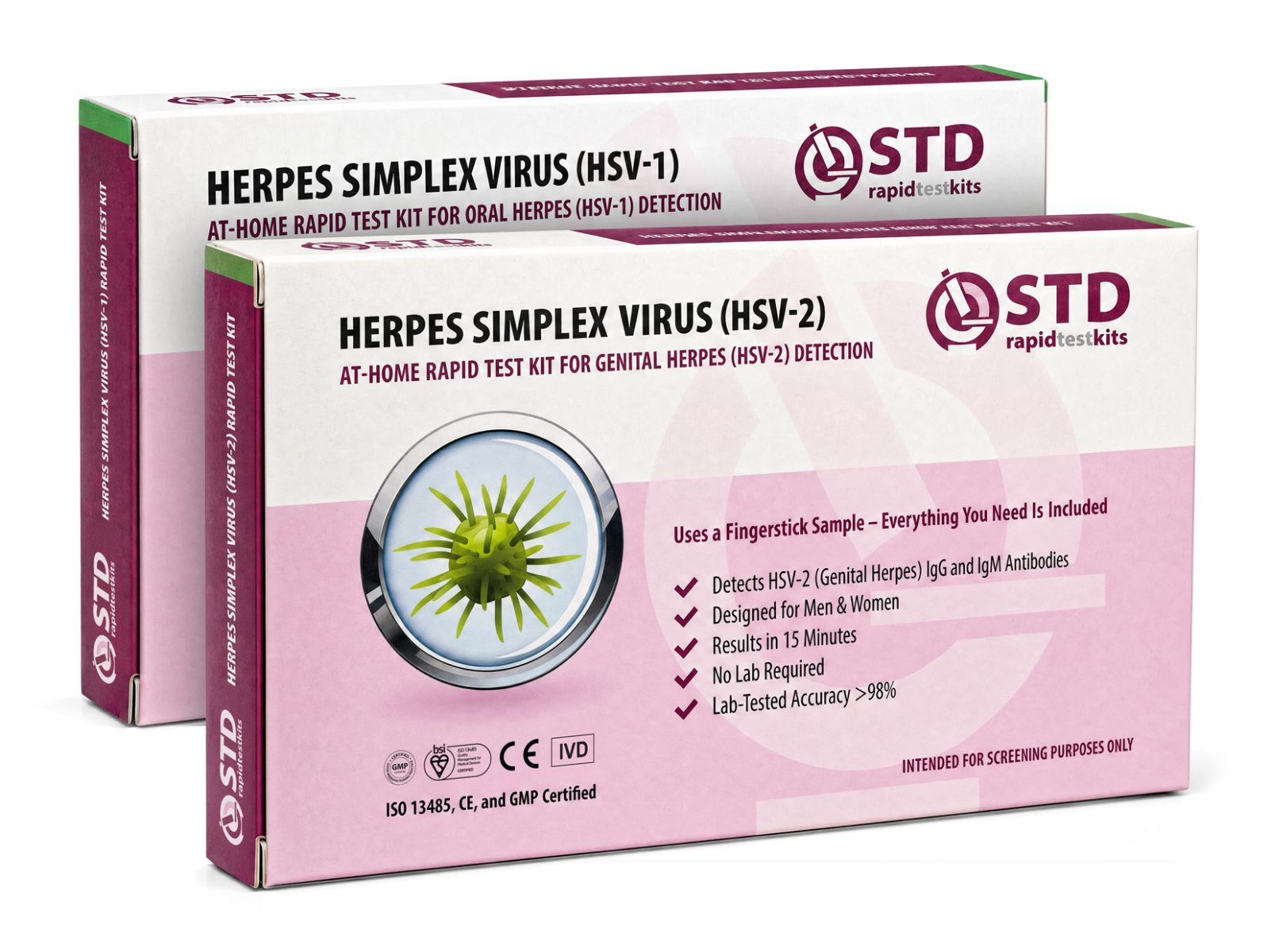
If you are considering suppression therapy because you suspect HSV-2 but have never had a confirmed diagnosis, an at-home antibody test can give you an answer without a clinic visit. The same approach works for HIV. A reactive at-home result should always be confirmed with follow-up lab testing through a clinician, but the screening step is where most people get the information they need to make a decision. This site sells rapid at-home STI tests, including the herpes antibody kit below.
What Asymptomatic Shedding Means in Practice
Asymptomatic shedding is the gap between visible outbreaks and complete viral quiet. The virus periodically reactivates in nerve endings and sheds from the skin surface even when there is nothing to see or feel. Surveillance studies of people with HSV-2 show shedding on roughly 10 to 20 percent of days, sometimes more during the first year after infection and tapering somewhat over time.
For HIV transmission, asymptomatic shedding is the larger concern. Most herpes-driven elevated HIV risk does not come from a partner having a visible sore on the day of sex. It comes from the cumulative effect of many low-grade reactivation episodes, each one creating a brief window of tissue inflammation that an exposure can exploit. Suppression therapy substantially flattens that variability: the CDC STI treatment guidelines note that daily suppression reduces recurrences by 70 to 80 percent in people with frequent outbreaks, and shedding studies show comparable drops in subclinical activity.
Feeling fine on any given day is a poor proxy for transmission safety. This matters especially for groups with concurrent elevated HIV exposure: men who have sex with men, transgender women, people with multiple partners, and those engaging in anal sex where mucosal fragility itself raises baseline susceptibility. For these populations, each percentage point of shedding reduction compounds into a meaningful absolute risk drop over time.

Stacking Suppression with PrEP
PrEP (pre-exposure prophylaxis) is daily or on-demand antiretroviral medication taken by HIV-negative people to prevent HIV acquisition. Daily oral PrEP reduces HIV acquisition from sex by about 99 percent when taken consistently, according to the CDC HIV risk and prevention page. Long-acting injectable PrEP is also available. PrEP is the strongest single HIV prevention tool currently available for HIV-negative people at elevated exposure risk.
Where does HSV-2 suppression fit if someone is already on PrEP? The two tools target different points in the transmission pathway and work better together than either alone. PrEP makes any HIV particles that reach CD4 cells unable to establish infection. HSV-2 suppression reduces the number of CD4 cells recruited to vulnerable tissue and reduces the tissue-level inflammation that creates entry points. PrEP blocks the establishment step; suppression makes the entry step harder.
If you are starting PrEP, ask your provider whether testing for HSV-2 makes sense for your situation. If you already know you have HSV-2 and are starting PrEP, the conversation about adding suppression is reasonable to bring up. The combined regimen is well-tolerated by most patients, and neither drug interacts with the other in a clinically significant way.
| Tool | Mechanism | What it blocks |
|---|---|---|
| PrEP | Antiretroviral drugs maintain protective levels in genital and rectal tissue | Stops HIV from establishing infection once it reaches CD4 cells |
| HSV-2 suppression | Daily valacyclovir or acyclovir reduces herpes shedding and tissue inflammation | Reduces the tissue-level entry opportunities HIV needs in the first place |
Common Misconceptions About Suppression Therapy
Several beliefs about long-term herpes medication come up repeatedly in clinic conversations and online forums. Most are partially true but misleading in their conclusions.
"If I have no symptoms, I have no risk." Data on asymptomatic shedding is clear. People with HSV-2 shed virus on a meaningful percentage of days regardless of how they feel. Symptomatic outbreaks are the visible tip of a quieter pattern. Risk of transmission to a partner and elevated HIV susceptibility persist between outbreaks.
"Suppression is only relevant if I have HIV." Both HIV-negative and HIV-positive people with HSV-2 can benefit. For HIV-negative people, suppression reduces the local tissue vulnerability that raises HIV acquisition risk. For HIV-positive people, suppression reduces genital HIV viral load and lowers reactivation-driven discomfort.
"Valacyclovir is just for active outbreaks." Episodic dosing (during outbreaks only) is one valid use. Suppressive dosing (daily, regardless of symptoms) is a separate, evidence-supported use case. They serve different goals: episodic treatment shortens individual outbreaks; suppression reduces shedding frequency and lowers transmission risk.
"Daily medication means my condition is severe." Suppression is a preference and risk-management decision rather than a marker of disease severity. Many people on suppression have mild or infrequent outbreaks and choose daily medication to lower transmission risk to a partner. Severity is not the threshold for candidacy.
"Condoms alone are sufficient." Condoms reduce both herpes and HIV transmission, but they do not cover all sites where herpes can shed (labia, scrotum, perineum, upper thighs). Suppression and condoms together provide more complete coverage than either alone, and they target somewhat different transmission pathways.
HSV-2 infection increases the risk of acquiring HIV approximately three-fold. People with both HIV and HSV-2 infection are more likely to spread HIV to others.
When to Talk to a Clinician
Starting suppression is a clinical conversation rather than a self-prescription. Several situations make that conversation more relevant.
If you have a confirmed HSV-2 diagnosis and your partner is HIV-positive (or you are), suppression is part of the standard discussion in current STI treatment guidelines. If you have HSV-2 and any HIV exposure risk that brings you to consider PrEP, suppression is reasonable to layer onto that plan. If you have frequent outbreaks (more than six per year is a common threshold), suppression is worth considering for symptom management alone.
Bring three pieces of information to that conversation: your current testing results (HSV-2 status, HIV status, both ideally recent), your outbreak history if you know it, and your sexual partner context (number of partners, partner HIV or STI status if known, condom use patterns). A provider with all three can give a much more specific recommendation than a generic yes or no on suppression.
Daily suppression does not have to be a permanent commitment. You can start it, stop it, restart it, or adjust the dose as your situation changes. The decision is reversible, the medications are generic and inexpensive, and most patients tolerate them well over years of use.
FAQs
- Does taking valacyclovir really lower my HIV risk if I have herpes?
- It lowers a piece of it. Daily valacyclovir cuts how often the herpes virus reactivates and sheds, which means less local inflammation and fewer CD4 cells pulled to genital tissue. Both factors raise HIV acquisition risk in the first place, so reducing them reduces background risk. It is not standalone HIV prevention. Combined with condoms, partner antiretroviral therapy, or PrEP, it adds a measurable protective layer.
- How much does daily herpes suppression reduce HIV transmission?
- In couples where one partner has HSV-2 and the other does not, daily valacyclovir reduces herpes transmission by roughly half. The effect on HIV transmission specifically is harder to quantify cleanly because trials have used different doses and study designs, but the indirect protection from less inflammation, less shedding, and fewer recruited CD4 cells is well-documented across cohort studies.
- I do not have many outbreaks. Should I still consider daily meds?
- It depends on your context. If you have few visible outbreaks but a partner is HIV-positive, or your sexual exposure pattern carries elevated HIV risk, suppression is worth discussing with a clinician. Even people with quiet HSV-2 still shed virus on a meaningful percentage of days. Severity of symptoms is not the only criterion for the decision.
- Do I need to be on PrEP and herpes suppression at the same time?
- They serve different functions and work well together. PrEP blocks HIV from establishing infection at the cellular level. Herpes suppression reduces the tissue vulnerability that creates entry points in the first place. If you are HSV-2 positive and on PrEP (or considering it), the two layers combined provide more complete coverage than either alone.
- Can people living with HIV benefit from valacyclovir too?
- Yes. For people with HSV-2 and HIV coinfection, daily valacyclovir reduces genital HIV viral load (separately from blood-level viral load), lowers herpes outbreak frequency, and is part of the standard discussion in HIV care when HSV-2 is confirmed. The benefits include partner protection and personal symptom management.
- What are the typical side effects of long-term valacyclovir?
- Most people tolerate suppression doses well. Mild headache, occasional nausea, and abdominal discomfort are the most commonly reported side effects, and they are rarely severe enough to require stopping the medication. Kidney function is sometimes monitored during long-term use, particularly in older patients or those with pre-existing kidney conditions.
- How do I get tested for herpes and HIV without going to a clinic?
- At-home rapid antibody kits remove the clinic step for both. The main constraint is timing: each kit has a window period it cannot reliably see through, so the right move is to count back from the most recent exposure before ordering. A reactive at-home result should always be confirmed by a clinician with follow-up lab testing, but the home screen is usually enough to start the next conversation and decide whether suppression therapy or PrEP belongs on your plan.
- Can I stop daily herpes meds if I am in a monogamous relationship?
- Yes. You can start, stop, or restart suppression based on your relationship context, exposure risk, and how you feel about outbreak frequency. The medications are generic and inexpensive, and the decision is reversible. Many patients pause suppression during periods of low exposure and restart it as their situation changes.
- U.S. Centers for Disease Control and Prevention. Genital herpes fact sheet, including data on asymptomatic infection, prevalence in U.S. adults, and recognition of mild or unnoticed outbreaks.
- World Health Organization. Herpes simplex virus fact sheet, including statement that HSV-2 infection raises HIV acquisition risk approximately three-fold.
- U.S. Centers for Disease Control and Prevention. STI Treatment Guidelines: Genital Herpes, including recommended valacyclovir and acyclovir suppressive dosing and 70 to 80 percent reduction in recurrences with suppression.
- Looker et al., NIH-published systematic review of HSV-2 infection and subsequent HIV acquisition risk, reporting adjusted relative risks of 2.7 in general populations and 1.7 in higher-risk populations.
- U.S. Centers for Disease Control and Prevention. HIV risk and prevention page, including PrEP efficacy figure of about 99 percent with consistent daily use.
- U.K. National Health Service. Genital herpes patient information, including symptom recognition and treatment overview.
- U.S. Centers for Disease Control and Prevention. HIV testing page, including window periods for fourth-generation antigen/antibody lab tests (18 to 45 days) and rapid finger-stick antigen/antibody tests (18 to 90 days).
- Corey L, Wald A, Patel R, et al. Once-daily valacyclovir to reduce the risk of transmission of genital herpes. New England Journal of Medicine, 2004. Pivotal randomized trial showing valacyclovir reduced HSV-2 acquisition in the susceptible partner from 3.6 percent to 1.9 percent.
