Published: September 2025 | Last updated: May 2026 | Editorial review and quality control: Martina N.
Antifungal cream will not cure chlamydia. Yeast infections and chlamydia can feel almost identical when symptoms first appear, which is why so many people reach for an over-the-counter cream and assume the problem is solved. The cream works on fungi. Chlamydia is a bacterial infection, and only the right antibiotic clears it.
If you have tried an antifungal product and the irritation, discharge, or burning has not improved, that is useful information. Your body is telling you the original guess was wrong, not that you did something wrong. The rest of this guide walks through why the confusion happens, where the symptoms genuinely overlap, and how to get a clear answer without sitting in a waiting room.
Key Takeaways
- Antifungal creams target yeast (Candida) and have no effect on bacterial infections like chlamydia, which lives inside cells and needs a systemic antibiotic.
- If symptoms persist after three to five days of antifungal treatment, treat that as a signal to test for an STI rather than to try a stronger cream.
Why the antifungal-first instinct is so common
Most people who reach for antifungal cream for what turns out to be chlamydia are not careless. They are pattern-matching with limited information, and the symptoms genuinely overlap.
Itching, irritation, an unfamiliar discharge, and mild burning when urinating: vaginal yeast infections and early chlamydia can present with all of these. If you have had a yeast infection before, the brain reaches for the simpler explanation and the easier fix. An over-the-counter cream is cheap, available at any pharmacy, and does not require an appointment or a conversation.
That instinct is reasonable. It is also why so many people end up searching phrases like "why antifungal cream not working" or "itching down there chlamydia or yeast" a week later. Symptom lists online tend to blur together, and bodies do not announce which infection they are carrying.
You cannot reliably tell chlamydia from a yeast infection by feel. Many chlamydia infections produce no symptoms at all. Others produce changes so subtle they get shrugged off. A cream that does nothing is one of the clearest signals available that the original assumption was wrong.
What antifungal cream actually does, and what it doesn't
Antifungal creams are designed to kill a single category of organism: fungi, including the yeast species Candida that causes the most common vaginal yeast infections. The active ingredients (clotrimazole, miconazole, terconazole, and a handful of others) damage the fungal cell membrane, which stops the yeast from growing and lets the immune system clear the rest.
That mechanism is narrow, and it is the only thing those products do. They have no antibacterial activity, no antiviral activity, and no anti-parasitic activity. When the cause is genuinely a yeast overgrowth, relief usually appears within two to four days of the first application, and the irritation fades over the rest of the week.
When the cause is something else, the cream does nothing useful. The base in the cream can soothe surface dryness for a few hours, the way any moisturizer might, but the underlying infection continues. That brief lull is one reason the wrong diagnosis sticks: it feels like the cream did something, even when nothing has changed inside.
| Condition | What causes it | What actually clears it |
|---|---|---|
| Vaginal yeast infection | Fungus (most often Candida albicans) | Topical or oral antifungal (clotrimazole, fluconazole) |
| Bacterial vaginosis | Overgrowth of vaginal anaerobic bacteria | Prescription antibiotic (metronidazole or clindamycin) |
| Chlamydia | Chlamydia trachomatis bacterium living inside cells | Prescription oral antibiotic (doxycycline or azithromycin) |
Why the biology of chlamydia changes the playbook
Chlamydia is caused by the bacterium Chlamydia trachomatis. It is one of the most commonly reported bacterial sexually transmitted infections in the United States, with elevated incidence among adolescents and young adults per the CDC STI treatment guidelines.
The biology is the part that matters for treatment. Chlamydia trachomatis is an obligate intracellular organism: it lives and replicates inside the cells lining the urethra, cervix, rectum, and throat. A topical cream applied to a skin or mucous-membrane surface cannot reach an infection that hides inside cells by design. The only reliable way to clear it is an antibiotic taken by mouth, which circulates through the bloodstream and reaches the tissues where the bacteria are working.
This is also why "more cream" or "a stronger cream" never solves a chlamydia infection. The drug class is wrong and the delivery route is wrong. Adding more of the wrong thing does not move the situation forward.
The symptom overlap that traps everyone
Symptom-by-symptom, yeast infections and chlamydia share enough territory to confuse almost any first guess. A yeast infection usually shows up as intense external itching with a thick, white, sometimes clumpy discharge, often without much in the way of urinary burning. Chlamydia, when it produces symptoms at all, tends to feel different: a thinner and sometimes yellowish discharge, burning during urination, and occasionally pelvic, lower-abdominal, or testicular discomfort.
Those textbook profiles are a starting point. They are also unreliable in practice. Plenty of people with chlamydia notice an itch or a vague irritation that easily passes for a yeast infection. Plenty of yeast infections do not produce the classic thick discharge. And a meaningful share of chlamydia infections produce no symptoms at all, which is why the CDC and NHS both classify it as a frequently asymptomatic infection (NHS chlamydia overview).
The table below is a guide, not a diagnosis. If your symptoms map cleanly onto the yeast column and resolve with cream, the original call was probably right. If they sit in the middle, or if the cream is not working, you are well outside the range where symptom-matching is reliable.
| Symptom | Yeast infection | Chlamydia |
|---|---|---|
| External itching | Common, often intense | Sometimes mild |
| Discharge | Thick, white, clumpy | Thin, sometimes yellow or cloudy |
| Burning when urinating | Mild if present | More common |
| Pelvic or testicular pain | Rare | Possible, especially later in the infection |
| Symptoms after a new sexual contact | Possible but uncorrelated | Correlated with recent exposure |
| Possibility of zero symptoms | Uncommon | Very common |
What actually clears chlamydia
The good news is that chlamydia is one of the more straightforward STIs to cure. The CDC's current STI treatment guidelines recommend doxycycline 100 mg taken twice daily for seven days as the preferred regimen for uncomplicated chlamydia in non-pregnant adults. Azithromycin (a single one-gram oral dose) is an alternative when adherence to a week-long course is unlikely. During pregnancy the regimen flips: azithromycin 1 gram as a single dose is the CDC-recommended option, with amoxicillin 500 mg three times daily for seven days as the alternative (CDC chlamydia treatment guidelines).
These are all systemic antibiotics. They circulate in the bloodstream, reach the intracellular sites where the bacterium lives, and clear the infection over the course of treatment. Symptoms usually start to fade within a few days, though the CDC recommends abstaining from sex for seven days after a single-dose regimen, or until completion of a seven-day course and symptom resolution, to avoid passing the infection on while the antibiotic is still working.
None of this is available over the counter, and that is by design. Bacterial infections need the right drug at a calibrated dose for a defined duration. Sub-therapeutic exposure (a too-low dose, a too-short course, or the wrong drug class) can leave bacteria alive and partially adapted, which is the mechanism that drives antibiotic resistance.
The pivot point: when to stop guessing and test
If you have used an antifungal product as directed for three to five days and your symptoms are unchanged or worse, that is the moment to switch strategies. The cream was the diagnostic test you ran. The result was negative.
You do not need to wait for the symptoms to escalate before testing. You do not need to prove the situation is serious enough. The CDC's general recommendation is that anyone with new genitourinary symptoms after a recent sexual exposure should be tested for chlamydia and gonorrhea at minimum, and that asymptomatic annual screening is appropriate for sexually active women under 25 and for older women with risk factors (CDC clinical guidance).
Testing is the fastest way out of the loop. If the result is negative, you can stop treating something that is not the problem and look at other causes (irritation from a new product, hormonal shifts, bacterial vaginosis, contact dermatitis). If it is positive, antibiotics start, and the timeline back to feeling normal is days rather than weeks.

What happens if chlamydia is left untreated
The most uncomfortable part of this topic is also the most important to be plain about. Chlamydia does not always force the issue. It can sit quietly for weeks or months, producing only mild symptoms or none at all, while continuing to damage tissue.
Across CDC, NHS, and Mayo Clinic clinical summaries, a consistent set of complications is described when the infection runs unchecked:
- Pelvic inflammatory disease (PID) in women, in which the bacterium ascends from the cervix into the uterus, fallopian tubes, or ovaries
- Chronic pelvic pain and internal scarring that can persist long after the infection itself is cleared
- Tubal damage that increases the risk of infertility and ectopic pregnancy in later years
- Epididymitis in men, an inflammation of the tube at the back of the testicle that can cause pain, swelling, and (rarely) fertility issues
- Reactive arthritis, plus an increased risk of acquiring or transmitting HIV, since inflamed tissue is more vulnerable
- Vertical transmission during childbirth, which can cause neonatal conjunctivitis or pneumonia in newborns
None of those outcomes are guaranteed, and most are uncommon when treatment happens within the usual screening window. The reason they show up at all is the same reason chlamydia is sometimes called a silent infection: by the time the body forces a clear signal, the bacterium has had time to move internally. Treating within the first few weeks of symptoms (or the first screening cycle after an exposure) is what keeps the timeline short.
Untreated, chlamydia can cause serious health problems. In women, untreated infection can spread into the uterus or fallopian tubes and cause pelvic inflammatory disease (PID).
Why over-the-counter shortcuts fall short for STIs
The reason people search "over the counter treatment for chlamydia" is rarely confusion about biology. It is about privacy, cost, and not wanting to escalate something that may turn out to be minor. The reality is that no non-prescription antibiotic for chlamydia exists in the United States, and the regulatory reason is straightforward. Bacterial infections need the right drug, at a calibrated dose, for a defined duration. Anything short of that risks leaving the infection partially treated and contributes to the slow drift toward antibiotic resistance.
This is also why antifungal creams, hygiene washes, douches, garlic, tea-tree-oil rinses, and similar home remedies do not cure chlamydia, even when they briefly calm the surface symptoms. Some of those approaches actively disturb the natural vaginal microbiome and can make irritation worse. None of them reach a bacterium living inside human cells.
The realistic shortcut for chlamydia is not a stronger OTC product. It is a faster route to the prescription antibiotic that does work, which today often means a same-day telehealth consult after a positive home or clinic test.
Per CDC guidance, current sex partners of someone diagnosed with chlamydia should be tested and treated regardless of their symptoms, ideally within 60 days of the partner's diagnosis. Waiting for your own symptoms to confirm exposure can mean weeks of silent infection. Skip the antifungal-cream phase entirely in this scenario and go straight to testing.
Why self-diagnosis is unreliable for this
Even with careful attention, symptom history, and time spent reading, chlamydia cannot be confirmed by symptoms alone. The CDC and NHS both classify it as a frequently asymptomatic infection. Some people have classic discharge and burning. Others have a vague itch that comes and goes. A meaningful share feel completely normal until a routine screening turns positive, or until a partner is diagnosed and reaches out.
That is why the question "can you self-diagnose chlamydia?" comes up so often, and why the realistic answer is "not reliably." The presence of symptoms does not confirm it, and the absence of symptoms does not rule it out. The only way to know is a test that looks for the bacterium itself or its genetic material.
Framing a test as overreaction is a trap. A test is how you stop guessing. For most people the result is reassuring; even when it is positive, it is the start of a short, well-defined treatment plan rather than a crisis.
What at-home testing for chlamydia looks like
Modern at-home options have collapsed most of the friction that used to come with STI testing. Two formats are worth knowing about.
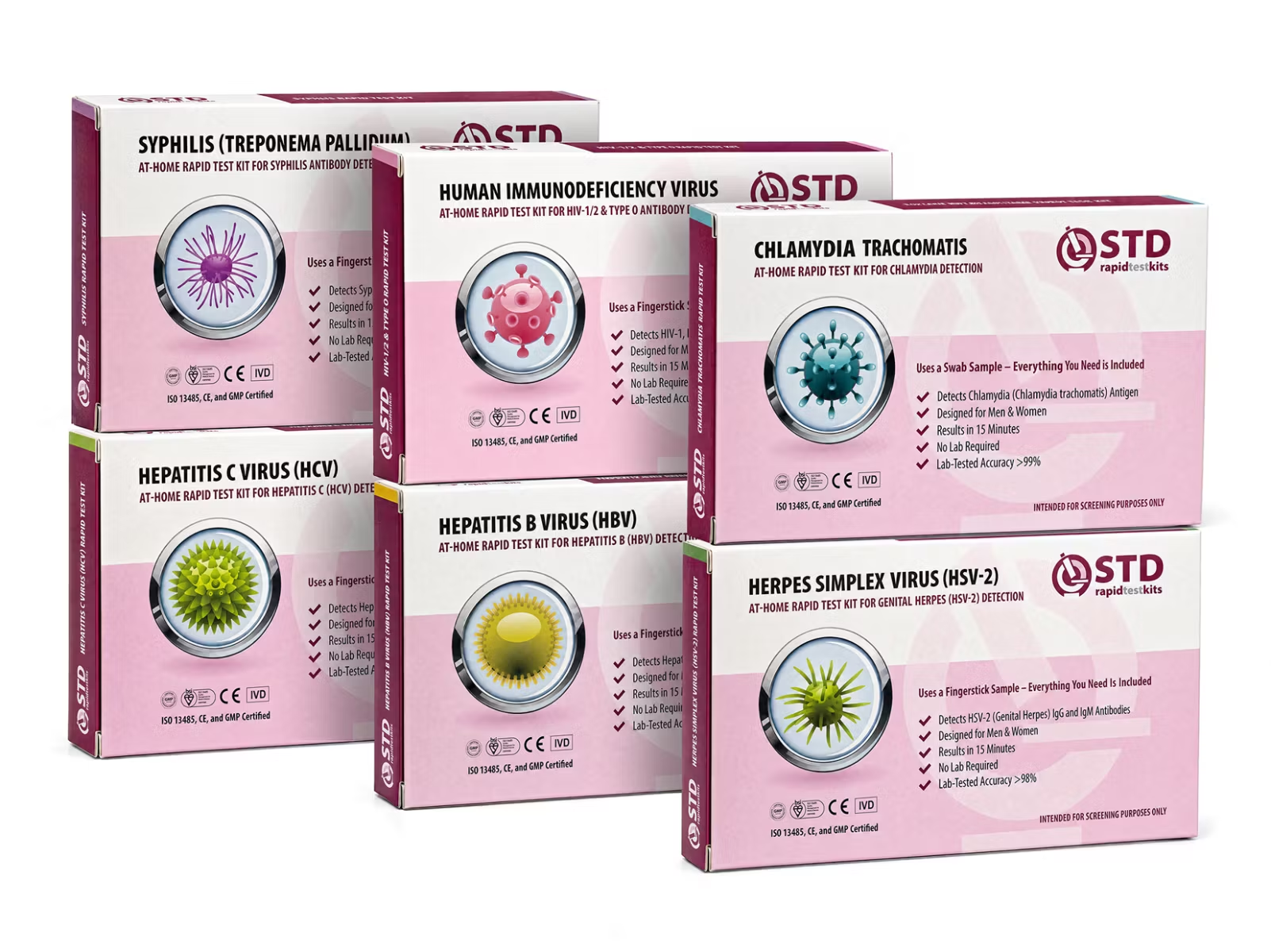
The first is the rapid lateral-flow home test, which uses a self-collected swab and produces a readable line-based result in roughly 15 minutes. It works the same way a home pregnancy test does: antibodies on a strip bind to the target and produce a visible band. Lateral-flow chemistry is highly specific, meaning a positive line is almost always a real positive, but its analytical sensitivity is lower than laboratory-grade methods. A clearly negative rapid result during early infection is worth re-checking later in the window if exposure was recent.
The second is a mail-in laboratory NAAT (nucleic-acid amplification test), in which a swab or urine sample is shipped to a lab and processed using PCR. NAATs are the CDC-cited gold standard for sensitivity in chlamydia diagnosis (CDC treatment guidelines), with the trade-off of a few days of waiting for results.
The two formats are complementary, not competitive. A rapid home test answers "do I almost certainly need to start treatment today" quickly and privately. A lab NAAT confirms ambiguous results and is the standard for test-of-cure follow-up after antibiotics. Either way, the swab approach reflects how labs actually sample for chlamydia, which is one reason rapid swab tests can offer useful screening information at home.
If a correctly used antifungal product has not produced clear improvement by day three to five, treat the cream as a diagnostic test that came back negative. Switch to an STI test before reaching for a second tube.
A simple decision rule going forward
If antifungal cream clears the symptoms within a few days, the original call was probably right and no further action is needed.
If antifungal cream does not clear the symptoms within three to five days, treat that as the test result. The next step is not a stronger cream or more patience. It is a chlamydia (and ideally a broader STI) test, either at home or through a clinic, followed by the appropriate antibiotic if the result is positive.
The shift in framing matters. The cream that did not work is not a personal failure. It is data. The fastest route back to feeling normal is acting on that data rather than cycling through a second or third tube of the same product. The timeline below is what most people who waited too long describe in hindsight.
| Days since symptoms started | What usually happens | What the body is signalling |
|---|---|---|
| Day 1 to 2 | Notice itching, irritation, or discharge | Something has changed; cause is still unclear |
| Day 2 to 3 | Assume yeast, start antifungal cream | Reasonable first guess given symptom overlap |
| Day 4 to 6 | Little or no improvement | First sign the assumption may be wrong |
| Day 7 and beyond | Search symptoms again, second-guess the product | Time to test, not to retry |
Clarity is the actual goal
The single most useful thing to do with a body that is not responding to the treatment you tried is to stop guessing. You are not behind. You are not foolish for reaching for the cream first. You are in the same position most people reach by the time they search for clarity: out of guesses, ready for an answer.
If the test is negative, you save yourself weeks of repeating an approach that was never going to work, and you can look at other plausible causes. If it is positive, the treatment is short, the prognosis is very good, and the timeline back to baseline is measured in days. Either way, the worst part of the situation, the uncertainty, ends the moment a real test result comes back.
FAQs about antifungal cream and chlamydia
- Can antifungal cream treat chlamydia?
- No. Antifungal creams are built to kill yeast (a fungus), and chlamydia is a bacterial infection caused by Chlamydia trachomatis. Different organism, different drug class, different delivery route. The cream cannot reach a bacterium that lives inside cells, and it has no antibacterial activity even at the surface.
- Why did the cream seem to help a little, but not actually fix anything?
- The base in most antifungal creams can soothe surface dryness and irritation for a few hours, similar to a moisturizer. That brief comfort is not the cream curing anything. If the underlying cause is chlamydia, the infection continues unchanged, so the discomfort returns once the soothing effect wears off.
- Can I trust the cream's response to tell me what I have?
- Only partially. A clear, complete improvement within a few days of correct use is consistent with a yeast infection. No improvement, partial improvement, or symptoms that come back as soon as you stop are not diagnostic, but they strongly suggest the cause is not yeast. Use that as a signal to test, not as a signal to repeat the cream.
- I used antifungal cream as directed and nothing changed. What now?
- After three to five days of correct use with no improvement, treat that as a test result. The next step is to test for chlamydia (and ideally gonorrhea) using either a rapid home swab test or a mail-in NAAT, then start the appropriate antibiotic if the result is positive.
- Is there any over-the-counter cure for chlamydia in the US?
- No. The FDA has not approved any non-prescription antibiotic for chlamydia. Topical creams, washes, and home remedies do not clear the infection. The treatment is a prescription oral antibiotic, most often doxycycline twice daily for seven days or a single one-gram dose of azithromycin.
- Could I have both a yeast infection and chlamydia at the same time?
- Yes. The two conditions are not mutually exclusive, and antibiotics used for some STIs can actually trigger a yeast infection as a side effect. If symptoms partially resolve with antifungal cream but never fully clear, a co-infection is one explanation worth ruling out with a test.
- How long after I start antibiotics will my symptoms go away?
- Most people notice improvement within a few days of starting doxycycline or azithromycin. The CDC recommends abstaining from sex for seven days after a single-dose regimen, or until you have completed a seven-day course of doxycycline and symptoms have resolved, to avoid passing the infection on while the antibiotic is still working.
- Is at-home testing accurate enough to act on?
- Rapid lateral-flow home tests for chlamydia are highly specific, meaning a positive line is almost always a true positive worth acting on. They have lower analytical sensitivity than laboratory NAATs, so a negative rapid result during a very recent exposure is worth re-checking with a lab test if symptoms persist. The two formats work well as a screening-plus-confirmation pair.
How we sourced this article: This guide synthesizes current public-health guidance on chlamydia from the U.S. Centers for Disease Control and Prevention, the UK National Health Service, the Mayo Clinic, and the World Health Organization. Treatment recommendations follow the CDC's most recent STI treatment guidelines. Patient-experience framing reflects common search patterns and patient-reported themes, not personal clinical advice. For a personal evaluation, see a licensed clinician.
- U.S. Centers for Disease Control and Prevention. Chlamydia overview page, including transmission, complications (PID, infertility), and asymptomatic-infection pattern.
- U.S. Centers for Disease Control and Prevention. STI treatment guidelines for chlamydia: doxycycline 100 mg twice daily for 7 days as preferred regimen, azithromycin 1 g single dose as alternative, azithromycin preferred in pregnancy, partner-management and abstinence guidance.
- UK National Health Service. Chlamydia symptoms, testing, and treatment overview, including asymptomatic-infection pattern.
- Mayo Clinic. Chlamydia symptoms and causes page, including the bacterial-versus-fungal distinction and complications.
- World Health Organization. Sexually transmitted infections fact sheet, providing global incidence and transmission context.
