

Published: October 2025 | Last updated: April 2026 | Editorial review and quality control: Martina N.
How do you tell a partner you might have an STD?
Be direct, be calm, and lead with information rather than blame. Tell them what you know, why you are telling them, and what you plan to do next (usually testing or treatment). You do not need a confirmed diagnosis to start the conversation; if you have reason to believe an exposure happened, that is enough. Most common STIs are treatable, and early notification protects both of you.
Key Takeaways
- Disclosure is information sharing, not confession. Give your partner the facts they need to decide whether to test, then let them choose.
- You do not need a confirmed result before saying something. A short heads-up early lets both of you test inside the right window period and avoids a heavier conversation later.
Telling a partner you might have been exposed to a sexually transmitted infection is one of the most uncomfortable conversations in modern dating, and it is rarely the disaster your brain rehearses at 2am. The vast majority of common STIs are treatable, and most are far more common than the silence around them suggests. Most partners, once they hear the news clearly and calmly, are grateful to be told. The hard part is not the medicine. The hard part is finding words while your nervous system is doing somersaults.
This guide walks you through what to say, when to say it, and how to keep the conversation focused on shared health instead of blame. It covers timing and window periods so you know whether you are saying something too early or too late, scripts for new partners, casual partners, and exes you have not spoken to in months, and the anonymous notification tools you can use when reaching out directly is not safe or feasible. Throughout, the framing is the same: you are not confessing, you are sharing information someone needs to make their own health decisions.
What If You Are Not Even Sure You Have an STD?
The most common reason people delay this conversation is uncertainty. Maybe you noticed a symptom that might be nothing. Maybe an ex texted you something vague. Maybe you tested but the result is not back yet. The instinct is to wait until you have a clean, contained answer to deliver.
Waiting is usually the wrong move. STI exposure is about timelines and possibilities, not proof. If there is a reasonable chance you exposed someone or were exposed yourself, that is enough to justify a short, honest message. The reason: window periods (the gap between exposure and when a test can reliably detect the infection). Many infections are contagious before they are detectable on a test, so if you wait for confirmation, your partner may already be inside their own window with no idea. According to the CDC's overview of STIs, many infections are also asymptomatic in the early stages, which makes early communication the only reliable way for both of you to act in time.
You do not need to compose an essay. A short, grounded message lets your partner decide what to do with the information. Here are three frames that work, depending on where you are in the timeline.
| Your situation | Sample script |
|---|---|
| Waiting on test results | Hey, I am getting tested because something came up from a previous partner. I do not have results yet, but I wanted you to know in case it matters for you. |
| Just tested positive | I got my test results back today and one of them was positive for [infection]. I am starting treatment, and I wanted you to know so you can talk to your provider or test if you want to. |
| Ex reached out with a warning | Someone I was with before you let me know they tested positive. I am not sure yet what it means for me, but I thought you should have the heads-up. |
How to Word It Without Triggering the Spiral
The shape of a disclosure that lands well is consistent across situations. Lead with what you know, not what you are guessing. Stick to your own experience rather than diagnosing the other person. Offer options, not orders. Acknowledge that you are scared or uncertain if you are; that honesty makes the message easier to receive than a polished one.
Avoid two specific patterns. The first is over-apology, where you spiral into how sorry you are before the other person has had a chance to react. That makes the situation feel heavier than it is and primes them to respond defensively. The second is the directive ("you need to get tested ASAP"), which often reads as accusation even when you do not mean it that way. The fix is to keep the focus on yourself and the information, and let your partner choose what to do with it.
This side-by-side table shows the difference between phrasings that escalate anxiety and phrasings that keep the conversation calm.
| What ramps up anxiety | What keeps the conversation calm |
|---|---|
| I think I gave you something. I am so sorry. | I just found out I may have been exposed to something, and I wanted to let you know in case it affects you. |
| You need to go get tested ASAP. | I care about your health and thought you would want the heads-up so you can decide if testing makes sense. |
| It must have been you who gave it to me. | I honestly do not know where or when it happened. I am trying to handle it responsibly now. |
| We need to talk. It is bad. | I have something on my mind I want to be upfront about. It is not a crisis, but it does involve our health. |
Timing and Window Periods: When to Disclose
One of the biggest worries before this conversation is whether you are speaking up too soon or too late. The answer depends on which infection is involved, when the possible exposure happened, and whether you have already tested.
Window periods matter for two reasons. First, they tell you when a test will actually be reliable, so you and your partner can plan when to test rather than testing too early and getting a falsely reassuring negative. Second, many infections are contagious before they are detectable, which means the most useful disclosure often happens before you have a confirmed result. Talking with partners about testing and recent exposures is part of routine sexual health care, not an emergency measure.
Here are common window periods for the infections most often involved in disclosure conversations. Treat these as planning ranges; the right test timing for you depends on the specific test used and your provider's advice.
| Infection | Approximate window period | When to consider disclosing | Contagious before symptoms? |
|---|---|---|---|
| Chlamydia | 1 to 2 weeks | As soon as possible exposure is suspected | Yes |
| Gonorrhea | About 1 to 2 weeks | As soon as a positive result or warning arrives | Yes |
| Trichomoniasis | 5 to 28 days | As soon as symptoms appear or a partner discloses | Yes |
| Syphilis | 3 to 6 weeks for blood antibody detection | Once a positive result is received | Yes, especially during primary and secondary stages |
| HIV (4th gen antigen/antibody) | About 18 to 45 days | After a confirmed positive or strong clinical suspicion | Yes, including before seroconversion |
| Herpes (HSV-1 / HSV-2 antibodies) | Several weeks to 12+ weeks for antibody detection | When symptoms appear or a partner discloses | Yes, including during asymptomatic shedding |
| Hepatitis B / C | Several weeks to a few months | After confirmation or strong exposure history | Yes |
Tailoring the Conversation to the Relationship
The wording that works for a long-term partner does not work for a one-night stand, and the message you send to an ex you have not seen in six months is not the same as the one you send to someone you slept with last weekend. The underlying principles do not change, but the tone and the level of context do.
For a long-term partner, lead with teamwork. You are not delivering bad news from across a divide; you are surfacing something the two of you will handle together. Acknowledge the discomfort, then move quickly to the practical step of testing. Most established couples can absorb the conversation more easily than people fear, particularly when the framing is health, not history.
For a new relationship, where the trust is still being built, keep it short and low-pressure. Something like "I want to be upfront about something. I just found out I may have been exposed to an STI from a previous partner, and I am getting tested. I wanted to let you know now rather than later." Most people respect the directness, and the ones who do not respect it have told you something important about how they handle difficulty.
For a casual or one-time partner, you owe them the information, but you do not owe them a relationship-grade conversation. A clean message is enough: "Hey, I wanted to let you know I recently tested positive for [infection]. It may or may not affect you, but I felt you deserved the heads-up so you can test if you want to." If they respond with questions, answer them. If they do not respond at all, you have still done your part.
For an ex you have not spoken to in months, the awkwardness is real, but the medical case for reaching out is the same. If a direct message feels impossible, anonymous notification (covered below) is a legitimate alternative.
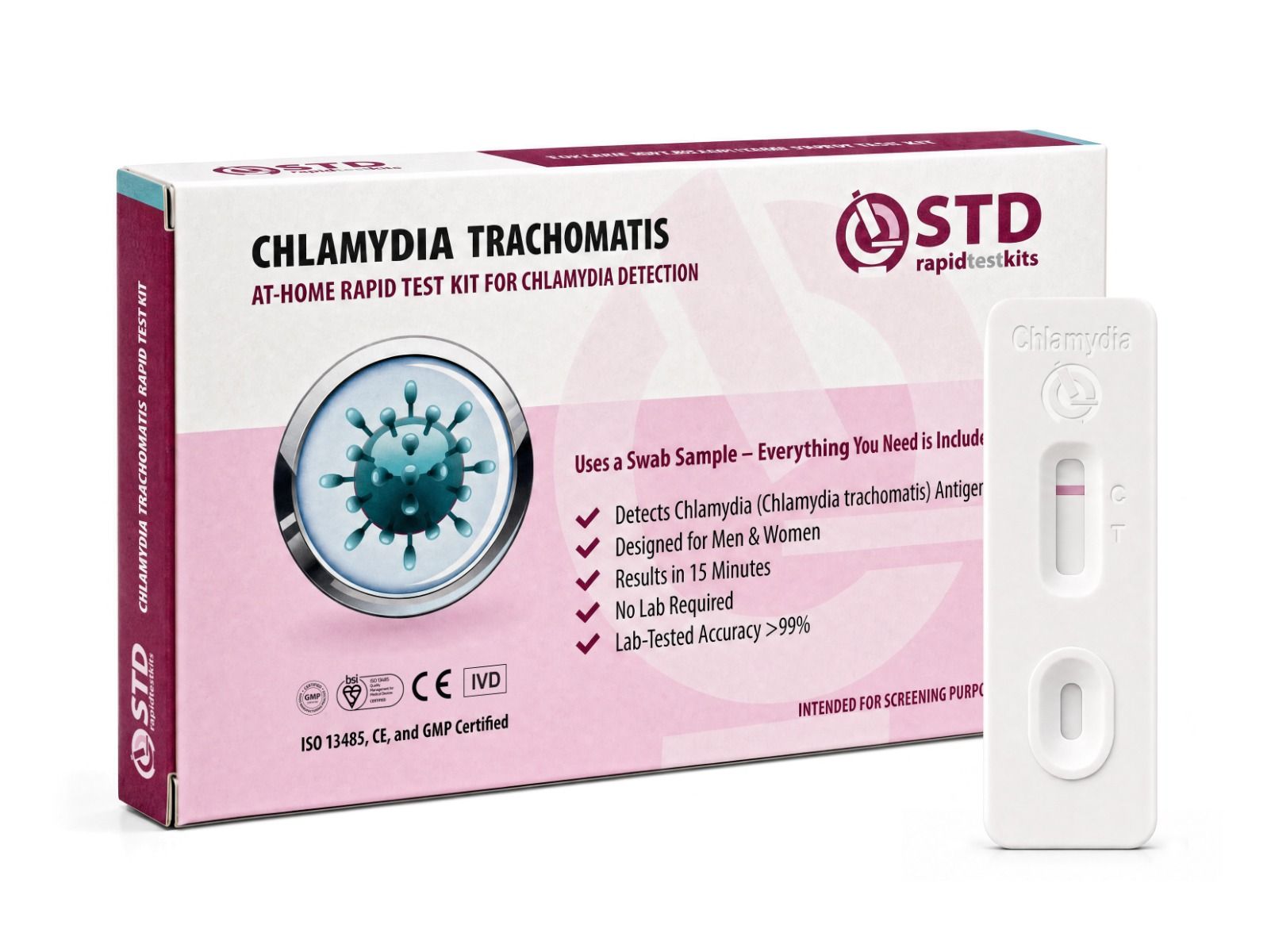
STD Rapid Test Kits sells at-home rapid lateral-flow tests for the infections discussed in this article, which is one private way to handle the testing step on your own timeline.


When You Need to Notify Anonymously
Direct disclosure is usually the best option, both for accuracy and for the relationship. But there are situations where reaching out directly is not safe, not feasible, or not appropriate: a former partner who was abusive, a hookup whose name you never knew, a relationship that ended badly, or simply a person you genuinely cannot find. In those situations, anonymous notification is a legitimate medical and ethical choice, not a cop-out.
Several services exist specifically for this. Some are operated by public health agencies, some by nonprofits, some by clinics. They send a standardized message to a phone number or email letting the person know they may have been exposed and recommending they get tested. Most allow you to specify the infection or keep that detail vague. CDC partner services programs enable state and local health departments to contact partners confidentially; your name is not shared with the notified partner. If reaching out yourself is not safe, ask your local health department whether they offer this kind of partner notification on your behalf.
| Tool or resource | What it does |
|---|---|
| TellYourPartner.org | Sends an anonymous text or email to a partner with a stigma-neutral message and a link to information about testing. |
| DontSpreadIt.com | Free anonymous SMS or email notification, lets you specify the infection and add a short personal note. |
| State and local health department partner services | Public health staff confidentially contact named partners, often offering testing and treatment at no cost. Your identity is protected. |
| Provider-led partner notification | Some clinics and providers will contact partners on your behalf as part of routine STI care; ask at your next appointment. |
After the Talk: Processing Their Reaction and Yours
You can do everything right and still get a reaction that throws you. Some partners go quiet. Some get defensive. Some immediately ask whether you cheated. Some surprise you and respond with thanks. The thing to remember is that the first reaction is rarely the final reaction; people often need a few hours or a few days to process the information before they know how they actually feel.
If the response is anger, do not match it. Stay grounded in your intent: "I am not trying to figure out where this came from right now. I just wanted you to have the information." If the response is silence, give it space. If the response is grief or fear, sit with it; you do not have to fix it for them.
And take care of yourself. Disclosing is genuinely hard, and the discomfort does not necessarily disappear once the message is sent. The fact that you said something at all means you handled this with more honesty than most people manage in similar situations. That counts.
Partner services help people who have sexually transmitted infections, including HIV, find their sex partners and connect them with testing and treatment, often with the option for the original patient to remain anonymous.
How Soon to Retest After a Possible Exposure
If your disclosure was triggered by a recent exposure (an ex's positive result, a partner's symptoms, a broken condom), the next question is when to retest yourself. The answer depends on the infection. Bacterial infections like chlamydia and gonorrhea are usually detectable within one to two weeks, so retesting roughly two to three weeks after the suspected exposure is reasonable. Syphilis blood tests become reliable around three to six weeks. HIV antigen/antibody tests typically detect infection by 18 to 45 days, with a follow-up at three months for full assurance. Herpes antibody tests often need 12 weeks or longer.
If you were treated for a bacterial infection, follow your provider's guidance on when to retest. The CDC's STI treatment guidelines recommend a test of cure or reinfection check for some infections; do not assume that a single round of antibiotics is the end of the story without confirming with your provider.
Whether you test at home or at a clinic, the goal is the same: stop guessing, get a number, and act on it. A confirmed result lets both of you make decisions instead of cycling through worst-case scenarios.
Frequently asked questions
- Do I really have to tell them if I am not sure where it came from?
- Yes. You do not need to know the source to share the information. If there is a real possibility you exposed someone, a short heads-up gives them the chance to make their own health decisions. You are not making a legal claim about origin; you are sharing what you know.
- What if the encounter was months ago and we are not in contact anymore?
- Reach out anyway, especially for infections that can stay asymptomatic for long periods (HIV, syphilis, hepatitis B and C, herpes). A short message like "This is out of the blue, but I recently tested positive for something and thought you should know" is enough. If direct contact is not safe or feasible, use an anonymous notification service or ask your local health department for partner services.
- How do I tell someone without making them think I am blaming them?
- Keep the framing on yourself and the information. Try "I found out I may have been exposed to something, and I wanted you to have that information in case it is helpful." That sentence does not point a finger; it just opens a door. If they ask whether you think they are the source, answer honestly: in most cases you do not actually know.
- Can I do this by text, or does it have to be in person?
- Text is valid, especially when you are anxious, the relationship is casual or long-distance, or in-person logistics would create days of delay. Many partners actually prefer it because it gives them time to process before reacting. Keep the message clear and short, not a wall of guilt-ridden paragraphs.
- What if they ghost me after I tell them?
- It happens. It does not mean you did something wrong. You showed up with honesty; how someone receives that is about their capacity, not your worth. Take care of your own health, retest as appropriate, and move on. Their silence is information about them, not a verdict on you.
- When should I retest after a possible exposure?
- Timing varies by infection. Chlamydia and gonorrhea typically show up within roughly two weeks; syphilis blood tests become reliable at three to six weeks; HIV with a 4th-generation antigen/antibody test detects infection by about 18 to 45 days, with a confirmation test recommended at three months; herpes antibody testing often needs 12 weeks or longer to be reliable. If you were treated, ask your provider whether a test of cure is recommended for your specific infection.
- Can I notify a partner anonymously without it seeming dishonest?
- Yes. Anonymous notification exists specifically because direct disclosure is not always safe or feasible. Tools like TellYourPartner.org and DontSpreadIt.com, plus state and local health department partner services, are designed to deliver the medically important information without exposing you to retaliation or unwanted contact. The recipient still gets what they need to act.
- If we used a condom, do I still need to say something?
- Usually yes. Condoms reduce risk significantly but do not eliminate it, particularly for infections that spread through skin-to-skin contact (herpes, HPV, syphilis chancres) or in cases of slippage or breakage. If you tested positive or have strong reason to suspect exposure, the conversation is still worth having.
- U.S. Centers for Disease Control and Prevention. About sexually transmitted infections, including transmission, asymptomatic infection, and the role of testing.
- U.S. Centers for Disease Control and Prevention. Sexually transmitted infections (STI) hub, including links to partner services programs run by state and local health departments that contact partners confidentially.
- U.S. Centers for Disease Control and Prevention. STI treatment guidelines, including testing windows and follow-up testing recommendations after treatment.
- World Health Organization. Sexually transmitted infections (STIs) fact sheet, including global prevalence and the importance of partner notification.
- NHS. Sexually transmitted infections (STIs) overview, covering testing, treatment, and partner notification in a UK public-health context.
- Mayo Clinic. Sexually transmitted diseases (STDs): symptoms and causes, including window-period and asymptomatic-infection context.
