Published: October 2025 | Last updated: May 2026 | Editorial review and quality control: Martina N.
Most readers landing here have a foil pouch in one hand and a question in their head. You ordered an at-home trichomoniasis test, the box arrived in plain packaging, and now the only thing standing between you and an answer is fifteen minutes and a few small steps. This article walks through what each piece of the kit does, how to collect a usable sample, what the lines actually mean (including the faint ones), and what to do when the result is not what you hoped for.
One thing to flag up front: the at-home trichomoniasis kit sold on this site is a self-collected vaginal swab, validated for female anatomy. Male readers worried about a recent exposure should see a clinic for a urine-based NAAT, since we don't sell a male-compatible home version of this test. The rest of this guide assumes a vaginal-swab kit unless noted otherwise.
Key Takeaways
- Trichomoniasis is one of the most common curable STIs, and roughly 70 percent of people who carry it have no symptoms at all.
- An at-home rapid test gives a usable answer in 10 to 15 minutes, but timing, sample quality, and proper follow-up decide whether that answer is the right one.
Why testing for trichomoniasis matters
Trichomoniasis is caused by a microscopic parasite, Trichomonas vaginalis. According to the U.S. Centers for Disease Control and Prevention, it is one of the most common non-viral sexually transmitted infections in the country, with millions of prevalent infections at any given time. The catch is that most carriers, about 70 percent according to CDC estimates, never develop noticeable symptoms. They feel fine, they have sex, and the parasite quietly moves on.
When symptoms do show up, they overlap with several other conditions and can be hard to attribute. Common signs include vaginal discharge with an unusual smell, a mild burning during urination, and itching or soreness around the vulva, none of which reliably distinguish trich from bacterial vaginosis or a yeast infection. That ambiguity is exactly why a real test, rather than a guess, is worth the fifteen minutes.
Untreated trichomoniasis raises the risk of acquiring or transmitting HIV, and the CDC notes it can contribute to preterm birth and low birth weight in pregnancy. It also tends to bounce between sexual partners until both are treated. None of that is meant to alarm you. It is the basic math of why people screen.
Our at-home trichomoniasis rapid test is a vaginal self-swab validated for female anatomy. We do not sell a male-compatible home version. Male readers with a known exposure should request a urine NAAT through a clinic or telehealth provider. This article is also published by stdrapidtestkits.com, which sells at-home STI testing. We recommend products based on whether they fit the reader's question, not commercial benefit.
What's inside the kit and what each piece does
Open the box on a clean, dry surface. A typical at-home trichomoniasis rapid test kit contains a sealed foil pouch with the test cassette inside, a sterile self-collection swab, a small tube of buffer solution (sometimes pre-filled, sometimes a dropper), and a printed insert with step-by-step illustrations. Some kits also include disposable gloves and a small biohazard bag.
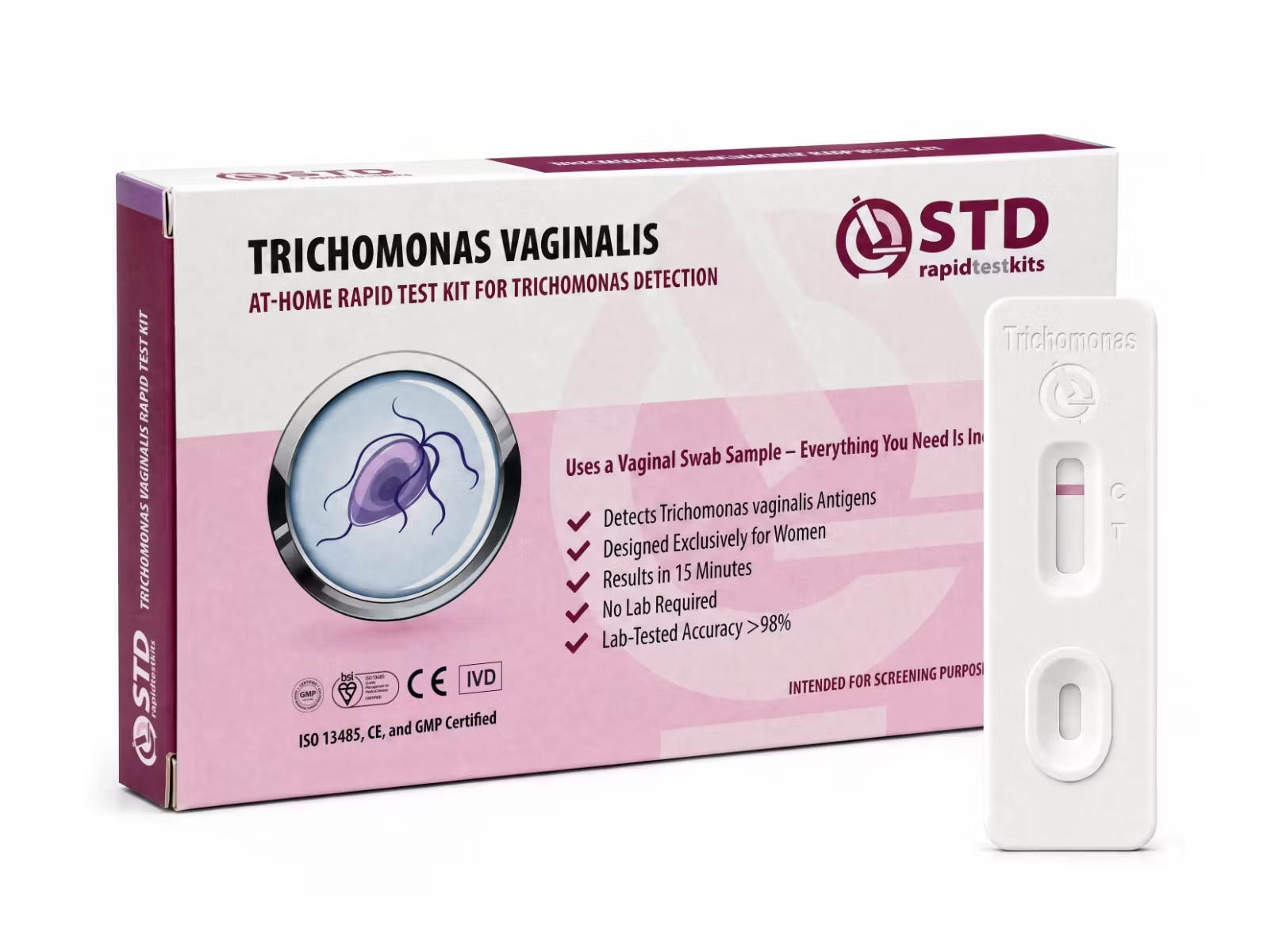
The cassette is the result window. It has two zones marked with letters: a “C” line for control and a “T” line for test. Inside the cassette is a strip coated with antibodies designed to bind antigens that the parasite sheds. The buffer is the chemical bridge: it pulls those antigens off your swab and carries them across the strip. If antigens are present, they stick to the antibodies near the T line and a colored band appears. Either way, a control band at C should appear to confirm the strip is working at all.
One technical point that matters for how you read your result: this is a lateral-flow immunoassay, not a NAAT or PCR test. Lab-based NAAT detects the parasite's own DNA and is more sensitive in low-load infections. Rapid antigen tests are useful because they are fast and private, and a positive result on one is highly specific. We will come back to when each tool is the right one to reach for.
Step 1: Collect your sample
Most people get nervous at this step, and that is fair. The actual mechanics are gentler than they sound. Wash your hands. Open the swab pouch without touching the cotton tip. Get into a position you can hold steady: standing with one foot on the toilet seat, sitting at the edge of the seat with your knees apart, or squatting. Insert the swab about two inches into the vagina and rotate it slowly against the side walls for the time the insert specifies, usually 10 to 30 seconds. You are not searching for anything. You are letting the swab pick up vaginal fluid.
A few habits will quietly ruin a sample. The 24 hours before testing matter as much as the swabbing itself, since anything that rinses or dilutes the vaginal environment can lower the antigen the test is looking for.
When the swab comes out, do not let the tip touch your skin, your clothing, or any surface in the room. Move it directly into the buffer tube.
- Vaginal lubricants, spermicides, and intravaginal medications
- Vaginal douching
- Penetrative sex
- Tampon use directly before swabbing
- Testing during heavy menstrual flow if you can wait until bleeding stops
Step 2: Mix the sample with the buffer
The buffer step is small, and it is where most user errors happen. Place the swab tip into the buffer tube and stir or swirl it for the time the insert specifies, usually about 15 seconds. Press the swab against the inside wall of the tube once or twice to release fluid. If the kit instructs you to break off the swab handle and leave the tip in the buffer, do that. Cap the tube.
Now wait the prep time the manufacturer specifies (often a minute or two) before applying the mixture to the cassette. This pause matters. The buffer needs time to lift parasite antigens off the swab and into solution. Skip the wait, and the strip may run before the antigens are fully released, which can hide a real positive.
| Step | What to Do | What Can Go Wrong |
|---|---|---|
| Collect sample | Use the included swab as directed; rotate against the vaginal wall for the full time | Insufficient or contaminated sample can lead to false negatives or invalid results |
| Mix with buffer | Swirl the swab in the tube and press it against the wall to release fluid | Skipping or rushing this step prevents antigen extraction |
| Apply to cassette | Add the exact number of drops the insert specifies into the sample well | Too little fluid will not wet the strip; too much will flood past the test line |
Step 3: Apply to the cassette and start the timer
Open the foil pouch and place the cassette flat on a level surface. Add the number of drops your kit specifies into the sample well. Some kits use a dropper attached to the buffer tube. Others have you transfer with a small pipette. Either way, drop count matters: too few and the strip does not fully wet, too many and the sample floods past the test line.
Set a timer for the read window in the insert, usually 10 to 15 minutes. Do not peek and do not decide early. Reading too soon can miss faint positives that are still developing. Reading too late, after 20 or 30 minutes, can show ghost lines from drying chemicals that are not real positives. The valid window is narrow on purpose.
What does my result actually mean?
A line at C and no line at T is a negative result. A line at C plus any line at T (faint or strong) read within the kit's window is a positive result. No line at C is invalid: the test failed and the result carries no information. If the result is positive or invalid, the next step is treatment or running a fresh test, respectively, not a third re-read of the same cassette.
Reading the result without second-guessing
The phone-flashlight angle, the squinting, the “did I just see something?” feeling: that is normal. Two practical rules cut through it. Read in good light, and read within the window. If you genuinely cannot tell whether a line is there, photograph the cassette under bright neutral light at the read time and trust the photo over your memory ten minutes later.
What you should not do is wait an hour and check again. Lateral-flow strips dry, and dried reagents create faint pink shadows that can mimic a real T line. Those late-appearing shadows are not reliable evidence of infection. If you missed the read window entirely, run a fresh kit instead of trusting a stale one.
| Visible Lines | Interpretation | Recommended Action |
|---|---|---|
| Line at C only | Negative | If you have no symptoms, no immediate action needed. If symptoms persist, follow up with a clinic NAAT. |
| Line at C plus faint line at T | Positive (lower antigen) | Treat as a real positive. Reach out to a clinician for treatment. |
| Line at C plus strong line at T | Positive | Active infection likely. Begin treatment and partner notification. |
| No line at C | Invalid | Test failed. Discard and run a new kit, or seek a lab test. |
Faint lines: what they mean and what they don't
A faint T line that appears within the read window, alongside a clear C line, is a positive result. Faint does not mean “almost positive” or “a little positive.” It usually reflects a lower antigen load, which is common early in infection or when the swab picked up a smaller amount of fluid. The clinical interpretation is the same: treat it as a real positive and start the next step.
If a faint line shows up after the read window has closed (say, 25 or 35 minutes in), the picture is different. That line could be the strip drying rather than antigen binding. Take a photo within the window if you want to compare later, but do not rely on a late line as evidence of infection. Run a fresh test or move to a lab NAAT for confirmation.
When the test fails: invalid results
Sometimes you do everything right, and the cassette stays blank, or the C line never shows up. That is an invalid test, not a negative one. The strip's chemistry did not run, which means the result carries no information at all.
Discard the cassette in a sealed bag, open a fresh kit if you have one, and start over. If you do not have a backup kit, this is a good moment to consider a clinic-based NAAT instead of running through several rapid kits trying to find a clean read.
- Kit was too cold or too hot before use (left in a cold mailbox, hot car, or near a heater)
- Cassette is past its expiration date or visibly damaged
- Too little or too much liquid added to the sample well
- Mixing step skipped or rushed before applying to the cassette
- Storage exposed the kit to high humidity
When a negative result might still be wrong
Rapid antigen tests are sensitive enough to be useful, not sensitive enough to be perfect. Manufacturer data for rapid trichomoniasis antigen tests generally reports sensitivity in the low to mid 80s on vaginal swabs against NAAT comparison, with specificity above 97 percent (see the manufacturer's instructions for use packaged with your kit for the exact figures). In plain terms: a positive is highly likely to be real, while a negative misses some real infections, especially when antigen levels are low.
Reasons a real infection can read negative on a rapid test include testing too soon after exposure (parasite load is still climbing), a swab that did not pick up enough fluid, blood diluting the sample during a period, or a strain at the lower edge of what the test can detect. The CDC's 2021 STI treatment guidelines recommend NAAT (a lab-based DNA test) as the most sensitive method for diagnosing trichomoniasis. If your symptoms persist after a negative rapid result, that is the next step, not a third home cassette.

When to retest
Retesting is not paranoia. The table below covers the three most common reasons it makes sense.
| Situation | When to Retest | Why It Matters |
|---|---|---|
| Tested positive and completed treatment | Three months after treatment | CDC recommends a follow-up test because reinfection from an untreated partner is common |
| Tested negative, symptoms persist | Within 5 to 7 days, then a NAAT if still negative | Rules out an early false negative or a different infection |
| Tested too soon after a known exposure | 7 to 10 days later | Antigen levels need time to rise to a detectable level |
If your result is positive
A positive trichomoniasis test is an action item, not a crisis. Treatment is straightforward: a course of oral metronidazole or tinidazole, prescribed by a clinician through telehealth or in person. Both medicines clear the parasite quickly when taken as directed. Avoid alcohol during the course and for a short window after, since both medications can cause unpleasant interactions with it.
Tell recent sexual partners. A clinician or your local health department can advise on how far back partner notification should extend for trichomoniasis. Partners should be treated even if they have no symptoms. Without partner treatment, the cycle restarts the moment you have sex again. Many U.S. states allow expedited partner therapy, in which a clinician writes a prescription for your partner without requiring them to be examined first. That is worth asking about during your appointment.
Schedule a follow-up test about three months out, regardless of whether you feel symptoms. According to the CDC, reinfection rates within three months can reach roughly one in five, almost always from an untreated partner rather than treatment failure.
Most people who have trichomoniasis (about 70%) do not have any signs or symptoms.
When a rapid test is not the right tool
A clinic-based NAAT is worth arranging when symptoms are persistent and the rapid test was negative, when pregnancy is a factor and maximum sensitivity matters, or when a higher-risk exposure calls for a broader STI screen. Lab NAAT can detect a much smaller amount of parasite DNA than a lateral-flow strip can detect antigen, and it is the CDC-preferred diagnostic in clinical settings.
The trade-off is turnaround and convenience: results take days, not minutes, and the sample is collected at a clinic or returned via a mailed self-collection kit handled by a lab. The two technologies are complementary rather than interchangeable. A negative rapid screen plus stubborn symptoms is reason to escalate, not reason to reassure yourself.
If you are screening after a higher-risk exposure event, a multi-infection panel can answer more than one question with one round of testing. The combination kit below covers seven of the most common STIs and is a useful option when the concern is broader than trichomoniasis alone.

Sexual health is ongoing, not a one-time check
A negative result today is good news for today, not a permanent verdict. Trichomoniasis can be acquired with the next exposure, just like any other STI. The point of testing is to give you a time-stamped answer for a specific window so you can make decisions you trust. People who screen routinely after new partners, after a known exposure, or as part of an annual checkup get more useful information than people who only test in a panic.
The kit you used today fits in a drawer. Putting one there for next time turns testing from a stressful event into a normal habit, which is exactly what makes it work as a screening tool over years.
- Keep one spare rapid kit in a drawer so testing does not depend on shipping speed.
- If you tested positive, set a calendar reminder for a follow-up test three months after finishing your prescription.
- Save a telehealth provider in your phone now, so a positive result has a clear next step instead of a search bar.
Frequently asked questions
- How accurate are at-home trichomoniasis rapid tests?
- Sensitivity for vaginal swab rapid tests sits in the low to mid 80s. Specificity is above 97 percent. In other words, a positive result is reliable, while a negative result with persistent symptoms is worth confirming with a lab NAAT. Manufacturer instructions for use list the exact figures for your specific kit.
- Can I use the test during my period?
- Heavy menstrual flow can dilute or contaminate the swab sample and produce invalid or unreliable results. If you can wait until bleeding stops, do that. Light spotting between cycles usually does not prevent the test from running, but follow the specific guidance in your kit's insert.
- Do I need to avoid sex or douching before testing?
- The 24-hour rule covers more than just sex. Skip vaginal lubricants, spermicides, douches, and intravaginal medications in the day before testing, and pause tampon use right before swabbing. Each one can dilute, rinse, or chemically alter the antigen the test is trying to pick up.
- What does it mean if my test line was very faint?
- Any visible T line read inside the kit's stated time window is a positive result. The depth of color reflects how much antigen is in the sample, not how serious the infection is. Move on to a treatment conversation with a clinician, not a re-read of the same cassette.
- Can men use this kit?
- No. The at-home trichomoniasis rapid test we sell is a vaginal self-swab validated only for female anatomy. Male readers concerned about a possible exposure should request a urine NAAT through a clinic or telehealth provider, since urine testing is the standard method for screening men.
- How long after a possible exposure should I wait to test?
- Five to seven days after the exposure is the earliest sensible point. Earlier than that and the parasite has not multiplied to the level a rapid antigen test can pick up. If a same-week negative comes back but you still have a known exposure, run a second test 7 to 10 days out or escalate to a NAAT.
- Will trichomoniasis go away on its own without treatment?
- No. Trichomoniasis does not clear without antibiotics. Symptoms can fade and return, but the parasite remains in the body and can still be passed to a partner. A short oral course of metronidazole or tinidazole is the standard treatment and clears the infection in most people.
- What if I tested positive but my partner tested negative?
- This happens for several reasons: your partner may have tested too early after exposure, used a less sensitive test type, or be in a brief window before the parasite is detectable. The standard CDC recommendation is for both partners to be treated regardless, and to wait until both have completed treatment before resuming sex. Ping-pong reinfection is otherwise common.
How we sourced this article: Our article was constructed based on current advice from the most prominent public health and medical organizations, and then molded into simple language based on the situations that people actually experience at home with a rapid test in their hand. Sources include the U.S. Centers for Disease Control and Prevention's STI treatment guidelines and trichomoniasis fact sheet, NHS patient guidance, Mayo Clinic clinical references, the World Health Organization STI fact sheet, and the manufacturer instructions for use packaged with each rapid test kit.
- U.S. Centers for Disease Control and Prevention. About Trichomoniasis fact sheet, including prevalence, the share of asymptomatic infections, pregnancy complications, and reinfection rate within three months of treatment.
- U.S. Centers for Disease Control and Prevention. 2021 STI Treatment Guidelines, trichomoniasis section, including NAAT diagnostic preference, oral metronidazole and tinidazole regimens, and the three-month retest recommendation.
- NHS. Trichomoniasis patient information, including symptoms, treatment, and partner notification guidance.
- Mayo Clinic. Patient health library covering trichomoniasis symptoms and the symptom overlap with bacterial vaginosis and yeast infections.
- World Health Organization. Sexually transmitted infections fact sheet, including the relationship between curable STIs and HIV transmission risk.
