
Published: September 2025 | Last updated: May 2026 | Editorial review and quality control: Martina N.
Oral sex sits in a strange place in how we think about risk. Most people treat it as the safer option, and in some narrow senses, it is. You cannot get pregnant from oral sex. Many STIs spread less efficiently through mouth-to-genital contact than through vaginal or anal sex. But lower per-event transmission rates do not equal low overall risk, and the gap between popular perception and what clinicians screen for is wide enough that asymptomatic oral infections quietly drive a meaningful share of transmission.
Here is what current public-health guidance from the CDC, WHO, and major medical bodies says about oral sex risk, the infections involved, and how to test after a possible exposure. No alarmism, no moralizing, just the clinical picture.
Key Takeaways
- Oral sex can transmit herpes (HSV-1 and HSV-2), gonorrhea, chlamydia, syphilis, HPV, hepatitis B, and (rarely) HIV. Many oral-route infections cause no symptoms.
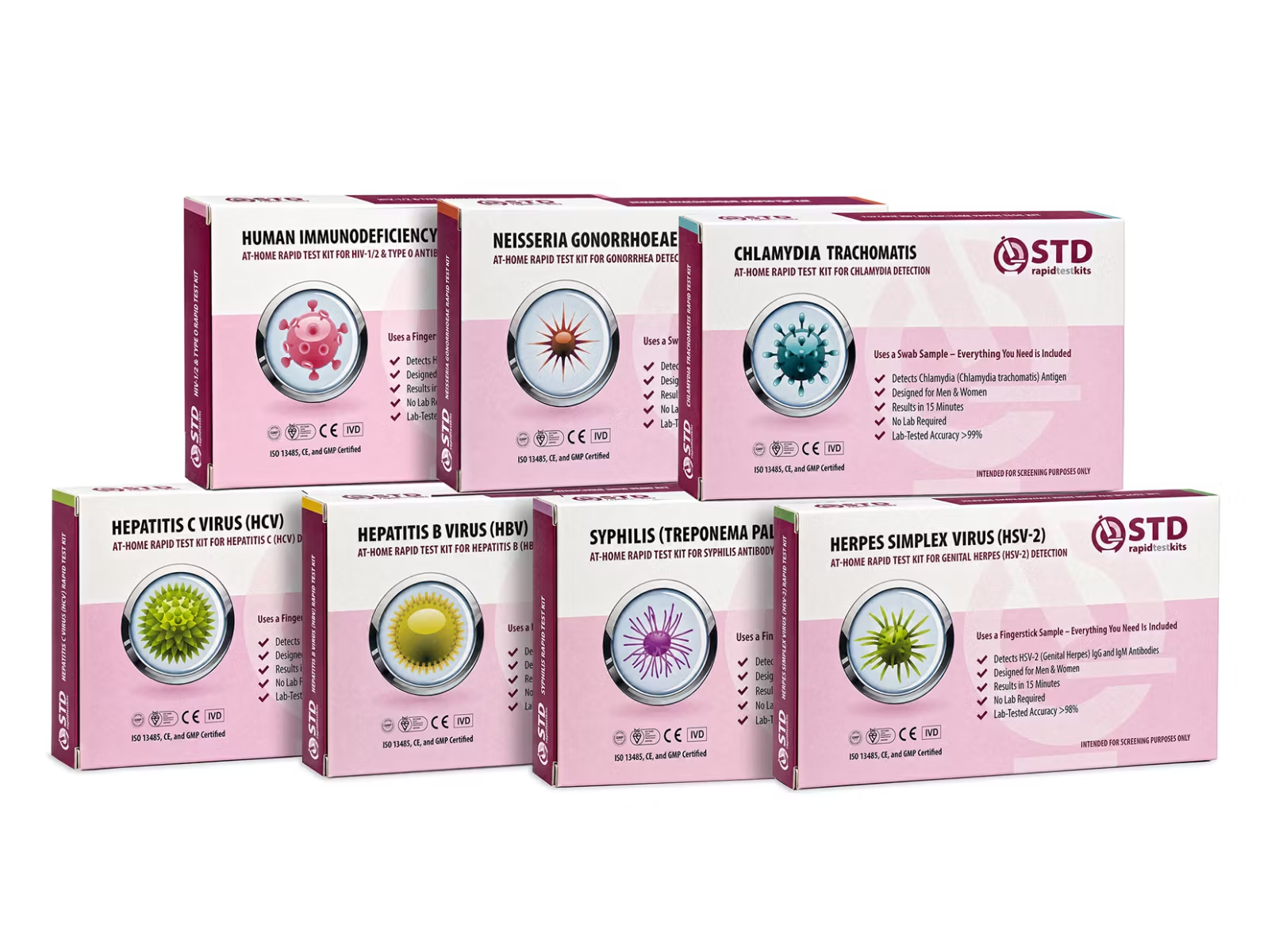
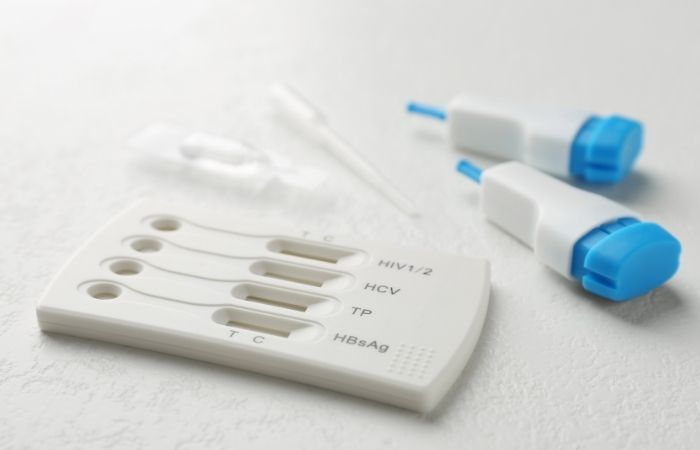
- At-home rapid tests cover the systemic STIs via fingerstick blood (HIV, syphilis, hepatitis, HSV antibodies) and genital chlamydia or gonorrhea via swab. Pharyngeal (throat) swabs require a clinic visit.
What Can Spread Through Oral Sex
Six or seven infections account for most of the oral-route transmission documented in the public-health literature. Each has a different mechanism, a different time window for testing, and a different chance of causing visible symptoms.
Herpes simplex (HSV-1 and HSV-2)
HSV-1 is the cold-sore virus. Oral-to-genital transmission means it accounts for a growing share of new genital herpes diagnoses in many high-income countries, particularly among young adults, a shift documented in regional surveillance. HSV-2 remains the main cause of genital herpes globally, according to the WHO herpes simplex virus fact sheet. Transmission goes both directions: oral-to-genital from a person shedding HSV-1, and genital-to-oral from HSV-2. Crucially, viral shedding occurs even when no sore is visible, which is how most transmissions actually happen.
Gonorrhea and chlamydia
Both bacteria can colonize the pharynx. CDC surveillance notes pharyngeal gonorrhea is frequently asymptomatic, which is part of what makes it a sustained reservoir for transmission. Routine STI panels typically do not include a throat swab unless the patient requests one, so an infection sitting in the back of the throat can be missed by an otherwise clean clinic visit.
Syphilis
The chancre (the painless ulcer that marks primary syphilis) can develop wherever the spirochete entered the body, including the lip, tongue, or tonsil. Because the sore does not hurt and often heals on its own within a few weeks, it gets ignored. The infection does not. CDC syphilis surveillance has documented substantial increases in case counts over the past decade, with oral-genital exposure a frequently identified route.
HIV
Per CDC HIV guidance, oral sex carries a much lower HIV transmission risk than vaginal or anal intercourse, but the risk is not zero. It rises when the receptive partner has cuts in the mouth, bleeding gums, recent dental work, or active oral inflammation, and when ejaculation occurs in the mouth. Acute HIV (the first weeks after exposure, before antibodies develop) is the highest-transmission window.
HPV
Most oral HPV infections clear on their own. The minority that persist matter: high-risk HPV types are the primary driver of oropharyngeal cancers in the United States. These cancers develop years to decades after the initial infection, which means current screening cannot reliably identify who will go on to develop disease.
Hepatitis B
Less commonly discussed but well-documented: hepatitis B can spread through saliva-blood contact during oral sex. Routine childhood vaccination has substantially limited this risk for younger adults in countries with mature vaccination programs.
How Common Is Oral STI Transmission, Really?
The honest answer is that we have better numbers for some infections than others. For HPV and herpes, prevalence data is robust. For oral gonorrhea, chlamydia, and syphilis, the data is patchier because routine surveillance does not always capture site-specific infection.
HPV and oral cancers
HPV causes roughly 12,500 oropharyngeal cancers in men and 2,300 in women each year in the United States, per CDC reporting. The lifetime risk of acquiring HPV is high for sexually active adults, but the risk of a persistent infection progressing to cancer remains relatively low. The ACIP recommends routine HPV vaccination through age 26, with shared clinical decision-making through age 45.
Herpes prevalence
In US-specific surveillance, CDC estimates that roughly half of US adults carry HSV-1 (the oral herpes virus), and about one in eight adults aged 14 to 49 has HSV-2. Globally, the figure for HSV-1 is higher, around 64 percent of people under 50 according to WHO modeling. Both viruses can establish oral or genital infection, with transmission possible during asymptomatic periods of viral shedding.
Pharyngeal gonorrhea and chlamydia
Public-health surveys consistently find that a meaningful share of gonorrhea and chlamydia diagnoses in screened populations are pharyngeal, particularly among people who report frequent unprotected oral sex. The infections are often silent: studies cited in CDC reviews suggest the majority of pharyngeal gonorrhea cases produce no symptoms at all.
Syphilis
Syphilis case counts in the US have risen sharply over the past decade. Outbreak investigations frequently identify oral-genital exposure as a transmission route, partly because primary syphilitic lesions in the mouth are usually painless and easy to overlook.
HIV
Estimates from CDC analyses place the per-exposure HIV transmission risk for receptive oral sex at well below the rate for receptive vaginal or anal sex, but the cumulative risk over many exposures with an untreated partner is not negligible. Untreated viral load, oral wounds, and the acute-infection window all push the risk upward.
Many people who have oral sex do not think of it as 'sex,' so they do not think about using condoms or dental dams to reduce their risk for STDs.
What Symptoms Should You Watch For
The frustrating reality of oral STIs is that most do not present with the kind of unambiguous warning sign people expect. Pharyngeal gonorrhea and chlamydia produce no symptoms in the majority of cases. Asymptomatic HSV shedding accounts for a large share of transmission. HPV is silent for years. But certain signs do warrant a clinic visit, even if you are not sure they are infection-related.
Signs in the mouth or throat
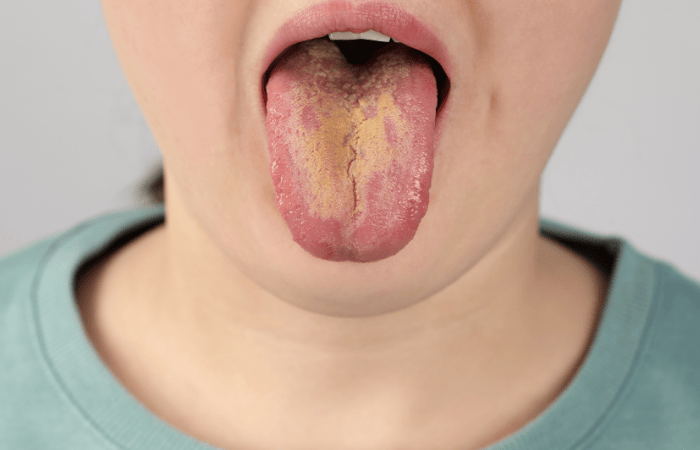
A persistent sore throat that does not respond to typical viral or bacterial treatment, especially in someone who has had recent oral sex with a new partner, is worth investigating. The same goes for white patches on the tonsils, swollen lymph nodes in the neck without other cold or flu symptoms, painful swallowing that lingers beyond a few days, or a painless ulcer on the lip, tongue, or inside the mouth. A painless ulcer is the classic primary syphilis presentation and the easiest one to miss.
Signs that show up elsewhere
Cold sores on the lips can be HSV-1 reactivation rather than new infection, but a first outbreak can also follow a recent oral encounter. Vesicles or ulcers on the genitals after receiving oral sex from someone with a cold sore are consistent with HSV-1 genital infection. Unusual genital discharge or burning during urination in the days to weeks after oral sex points toward gonorrhea or chlamydia and warrants both a urine NAAT and a genital swab.
Signs that need urgent attention
Flu-like symptoms (fever, swollen glands, sore throat, fatigue) two to four weeks after a possible exposure are consistent with acute HIV seroconversion and warrant an urgent fourth-generation HIV antigen-antibody test plus an HIV RNA (viral load) test if the initial test is negative. Do not wait this out: acute HIV is the highest-transmission window, and early diagnosis materially changes treatment outcomes.
Fever, swollen glands, fatigue, and sore throat two to four weeks after a higher-risk exposure can indicate acute HIV seroconversion. This is the period of highest onward transmission risk. Get same-day testing with a fourth-generation antigen-antibody assay plus HIV RNA rather than waiting out the standard testing window.
Why So Few People Use Protection During Oral Sex
Survey data consistently shows that condom and dental dam use during oral sex is rare, even among adults who report consistent protection during vaginal or anal sex. Several factors drive this gap.
Sex education has historically been silent or hedged on oral sex, leaving many people without a clear mental model of the risks. Public messaging around dental dams has been minimal, to the point that the product is often not stocked in pharmacies that sell condoms. The infections that spread through oral contact are frequently asymptomatic, which means most people have never had a personal experience that connected oral sex to a diagnosis. Pregnancy concerns drive condom use in many heterosexual contexts, and oral sex removes that motivator entirely.
Healthcare interactions reinforce the silence. Many clinicians do not ask about oral sex when taking a sexual history, and few routine STI panels include pharyngeal swabs without an explicit patient request. A person can leave a clinic believing they have a complete screen when in fact the back of the throat was never tested. The result is undetected reservoirs of pharyngeal gonorrhea and chlamydia that quietly seed onward transmission.
None of this means barrier protection during oral sex is impossible or impractical. Flavored condoms exist precisely to make oral protection more tolerable. Dental dams (or a cut-open condom, or a sheet of non-microwavable plastic wrap as a stopgap) work the same way for oral-vulvar and oral-anal contact. The barriers are real, they work, and normalizing their use is an ongoing public-health project rather than a solved problem.

How to Reduce Oral Sex STI Risk
Risk reduction during oral sex follows the same logic as other safer-sex practices: layered, imperfect, and worth doing anyway. None of these steps eliminate risk on their own. Combined, they meaningfully shift the odds.
Barrier protection
A condom on a penis for oral sex (flavored condoms are formulated specifically to make this less unpleasant) blocks the highest-risk fluids. A dental dam, or a condom cut lengthwise to lay flat, serves the same function for oral-vulvar or oral-anal contact. Non-microwavable plastic wrap is a reasonable improvisation when nothing else is available. None of these is perfect against HSV, which can shed from skin outside the barrier area, but they reduce viral and bacterial load substantially.
Oral health
The mouth's risk profile changes when there are open entry points. Bleeding gums, fresh dental work, mouth ulcers, and microabrasions from aggressive brushing or flossing all give pathogens easier access to bloodstream and mucosa. Standard guidance is to avoid oral sex for several hours after vigorous dental hygiene and during any active oral inflammation.
Vaccination
The HPV vaccine prevents the strains responsible for the great majority of oropharyngeal cancers. The ACIP recommends routine vaccination through age 26, with shared clinical decision-making through age 45 for adults who were not previously vaccinated. Hepatitis B vaccination, now part of standard childhood immunization in most countries, protects against the saliva-blood transmission route relevant for oral sex.
Communication and testing history
Asking a partner when they were last tested, what they were tested for, and whether throat swabs were included shifts the practice from awkward to routine over time. Mutual testing before unprotected oral sex with a new partner does more than barrier protection alone, because it identifies infections that no barrier can fully prevent.
Treatment as prevention
For HIV specifically, a partner on effective antiretroviral therapy with sustained viral suppression does not transmit HIV through any route, including oral sex. This is the U=U (undetectable equals untransmittable) principle. Daily PrEP also substantially reduces the risk for HIV-negative partners with ongoing exposure.
No single step eliminates risk, but stacked together they meaningfully shift the odds:
- Barrier protection: flavored condoms for penile oral; dental dams (or a cut-open condom) for vulvar or anal oral.
- Oral health: skip oral sex during active gum bleeding, mouth ulcers, or fresh dental work.
- Vaccination: HPV vaccine (through age 26 routinely, age 45 by shared decision) and hepatitis B vaccine.
- Mutual testing: ask when, what, and whether throat swabs were included before unprotected oral with a new partner.
- Treatment as prevention: a virally suppressed partner on ART does not transmit HIV (U=U); PrEP cuts risk further for HIV-negative partners with ongoing exposure.
Testing After a Possible Oral Exposure
Testing after an oral exposure is a two-track decision: what site was the likely entry point, and what infections need to be ruled out given that exposure window?
For systemic infections (the blood-borne ones)
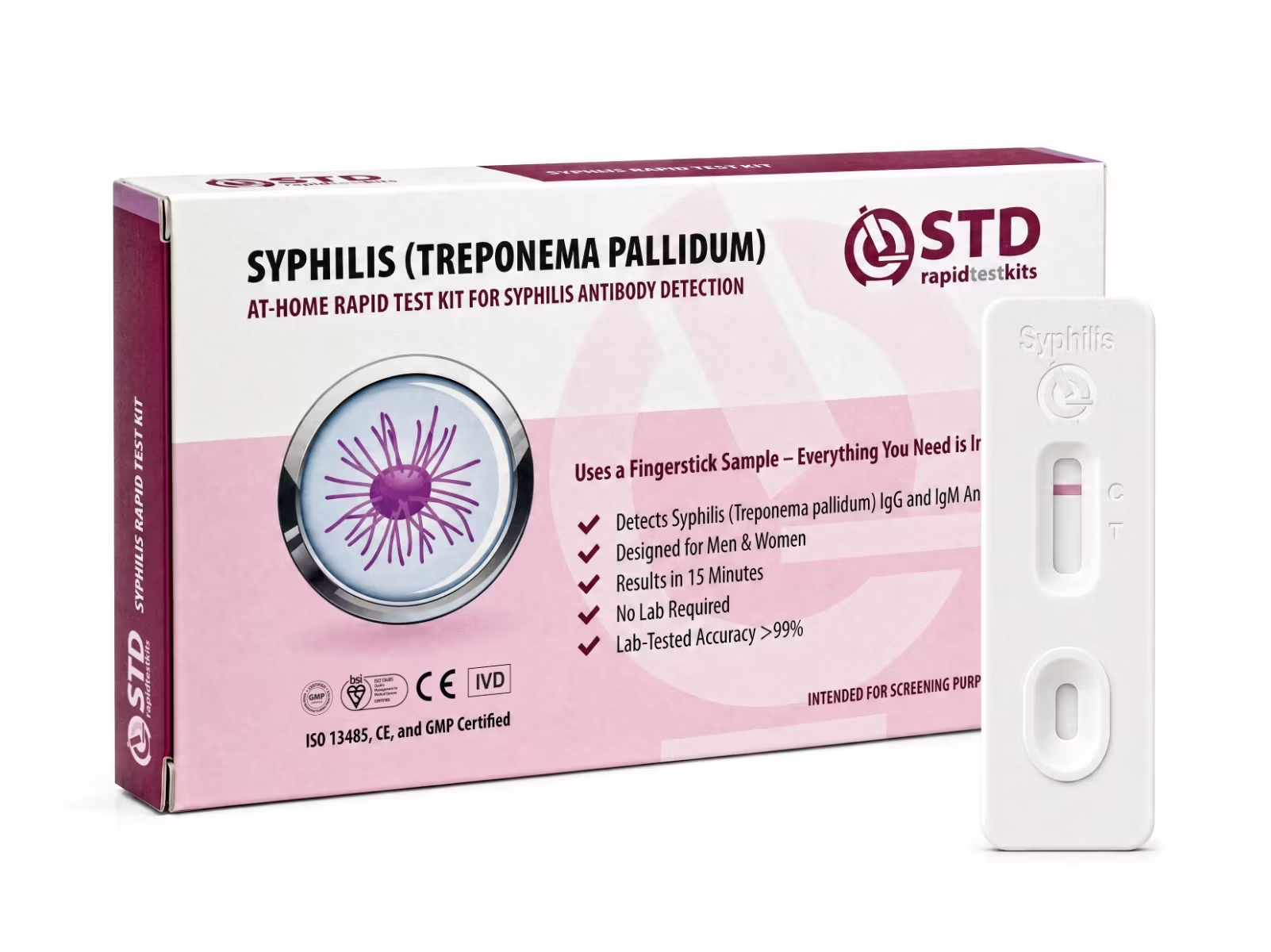
HIV, syphilis, hepatitis B and C, and HSV antibodies all show up in blood once the body has produced antibodies or detectable antigen. Window periods vary: a fourth-generation HIV antigen-antibody test reliably detects HIV by about 45 days post-exposure (CDC HIV testing guidance), with most infections detected earlier. Syphilis serology is typically positive 3 to 6 weeks after exposure (CDC). HSV-2 IgG antibodies generally become detectable 6 to 12 weeks post-exposure (CDC herpes guidance). Hepatitis B surface antigen shows up around 4 to 10 weeks (CDC hepatitis B guidance). These are detectable through at-home fingerstick rapid tests as well as conventional lab draws.
For local pharyngeal infections (gonorrhea, chlamydia, HPV)
Pharyngeal infections are diagnosed with a throat swab analyzed by NAAT (nucleic acid amplification testing). A clinic provides this. We do not sell a pharyngeal swab home test, and we want to be straight about that. A genital self-swab kit is not equivalent to a throat swab; the molecular technology is similar, but the sample has to come from the site of suspected infection. If a clinic visit is not realistic right now and you want to start the testing process at home, a useful pattern is to use an at-home blood panel to clear the systemic infections (HIV, syphilis, hepatitis) and a genital self-swab to clear any concurrent genital infection from the same encounter, then book a clinic appointment specifically to request a throat NAAT.
A note on window periods and rapid tests
Home rapid tests are lateral-flow immunoassays. They are powerful screening tools, but they are not the same chemistry as clinical NAAT. A positive home rapid test should be confirmed at a clinic. A negative home rapid test taken before the full window period closes should be repeated at the proper window, because the test cannot detect what is not yet measurable in the blood. None of this changes the value of the home test for triage and reassurance; it sets the expectation that home screening is a step in the testing process, not a substitute for clinical workup when one is needed.
Common Oral Sex Myths, Corrected
Myth: You cannot get STIs from oral sex
You can. The list is long: herpes, gonorrhea, chlamydia, syphilis, HPV, hepatitis B, and (rarely) HIV all transmit through oral contact under the right conditions.
Myth: If you do not have symptoms, you do not have anything
The majority of pharyngeal gonorrhea and chlamydia infections are asymptomatic. Most HPV infections clear silently. HSV sheds without sores. HIV is symptomless for years after the acute phase resolves. Symptom absence is not a clean bill of health.
Myth: Oral sex is safe as long as no one ejaculates
Pre-ejaculate, vaginal fluid, blood from a small cut on the gums, and direct mucosal contact all carry pathogens. Ejaculation increases certain risks (notably HIV) but does not gate transmission for most oral STIs.
Myth: Only people with many partners get oral STIs
A single unprotected oral encounter is enough to transmit HSV, HPV, syphilis, or gonorrhea if the partner is infected. Partner count correlates with cumulative risk, but the per-event risk is what determines what happens in any given encounter.
Myth: A clean STI panel means you are clear
Only if the panel included the right sites. A standard urine and blood panel will not catch pharyngeal gonorrhea or oral HPV. Ask explicitly what was tested. If a throat swab was not part of the panel, your pharyngeal status was not assessed.
Myth: Barrier protection ruins oral sex
Subjective, but worth challenging. Flavored condoms exist precisely to make oral protection bearable. Mileage varies, and partners who refuse on principle are signaling something about their priorities. The point is that the barrier exists, it works, and it is a reasonable thing to ask for.
When To See a Clinician
Home screening covers a useful range of post-exposure questions, but it does not replace clinical care for several specific situations. Get a clinic appointment if any of the following apply:
- Persistent oral findings after a recent exposure: sore throat that does not clear, painless mouth ulcer, swollen neck lymph nodes, white tonsillar patches, or a lingering oral lesion. Pharyngeal NAAT, oral examination, and (for syphilis) dark-field or PCR testing of the lesion are clinic-only workups.
- Acute flu-like illness two to four weeks after a likely high-risk exposure: fever, fatigue, rash, swollen glands, sore throat. This is the acute HIV window; testing with antigen-antibody plus HIV RNA matters here.
- Known high-risk HIV exposure: a partner you know to be HIV-positive and not virally suppressed, or an unknown-status exposure that was high-risk. PEP (post-exposure prophylaxis) is most effective when started within 72 hours.
- A reactive home rapid test: every positive screening result needs clinical confirmation with a more sensitive assay, and the next steps (partner notification, treatment, follow-up) benefit from clinical guidance.
- Pregnancy or trying to conceive: several oral-transmissible STIs (syphilis, HSV, HIV, hepatitis B) have specific maternal-fetal implications that warrant prenatal screening even when symptoms are absent.
Frequently asked questions
- Can you really get an STI from oral sex?
- Yes. Herpes, gonorrhea, chlamydia, syphilis, HPV, and hepatitis B all transmit through oral contact, and HIV does so rarely. Several of these infections are asymptomatic, which is part of why they remain in circulation.
- How long after oral sex should I get tested?
- Window depends on the infection. A fourth-generation HIV test is reliable by about 45 days; syphilis serology by 3 to 6 weeks; HSV-2 antibodies by 6 to 12 weeks. For acute symptoms (fever, sore throat, swollen glands within a few weeks of a high-risk exposure), see a clinician immediately rather than waiting out the window.
- Do at-home STI test kits work for oral infections?
- At-home rapid tests cover the systemic, bloodborne STIs well: HIV, syphilis, hepatitis B and C, and HSV antibodies are detectable through fingerstick lateral-flow tests. Pharyngeal gonorrhea, chlamydia, and oral HPV require a throat swab analyzed at a lab, which is a clinic-only test. We sell rapid blood and genital-swab kits; we do not sell a pharyngeal swab home test.
- Does using a condom for oral sex actually reduce risk?
- Yes, substantially. A condom on a penis or a dental dam over a vulva or anus blocks the highest-risk fluids. Barriers do not perfectly prevent HSV, which can shed from skin outside the barrier zone, but they meaningfully reduce risk for the other oral-transmissible STIs.
- Is the HPV vaccine still worth getting as an adult?
- Often, yes. The ACIP recommends routine HPV vaccination through age 26 and shared clinical decision-making for adults aged 27 to 45 who were not vaccinated earlier. The vaccine prevents the strains responsible for most oropharyngeal cancers, and many adults have not been exposed to all the strains the vaccine covers.
- If I had a one-time unprotected oral encounter, what should I do?
- Watch for symptoms in the following weeks (sore throat, mouth ulcers, swollen glands, flu-like illness). Schedule a clinic visit and explicitly ask for a pharyngeal swab if you received or performed oral contact. Use an at-home blood test panel to screen for the systemic STIs at the appropriate window. If the encounter was high-risk for HIV and very recent (within 72 hours), see an urgent-care or emergency clinic about PEP.
- Why don't more clinicians ask about oral sex?
- Several reasons, none of them good: training gaps, time pressure in primary care visits, and a historical assumption that oral sex is low-risk. The practical workaround is to mention oral sex yourself and explicitly request a pharyngeal swab when getting tested. Most clinicians will order the test when asked; many will not order it without being asked.
- U.S. Centers for Disease Control and Prevention. STI overview and prevention guidance, covering transmission routes including oral-genital contact.
- U.S. Centers for Disease Control and Prevention. HIV transmission, testing windows, and risk by exposure route, including oral sex.
- U.S. Centers for Disease Control and Prevention. Cancers caused by HPV, including annual oropharyngeal cancer case counts attributable to HPV.
- World Health Organization. Herpes simplex virus fact sheet covering global HSV-1 and HSV-2 prevalence and transmission routes, noting HSV-2 as the main cause of genital herpes globally.
- U.S. Centers for Disease Control and Prevention. Syphilis overview covering signs, stages, oral chancre presentation, and recent surveillance trends.
- U.S. Centers for Disease Control and Prevention. Gonorrhea overview, including pharyngeal site involvement and asymptomatic presentation.
- U.S. Centers for Disease Control and Prevention. Genital herpes overview, including HSV-1 and HSV-2 US prevalence and testing window guidance.
- U.S. Centers for Disease Control and Prevention. Hepatitis B information including transmission routes and testing window for HBsAg.
