
Published: November 2025 | Last updated: May 2026 | Editorial review and quality control: Martina N.
Syphilis earned its nickname “the great imitator” for a precise clinical reason: its symptoms can look like dozens of unrelated conditions at different points in the infection, which is why even experienced clinicians sometimes miss it. A painless sore that looks like an ingrown hair. A faint, non-itchy rash that gets blamed on laundry detergent. Fatigue and swollen glands that pass for a mild virus. None of those signals shout “STI” on their own, and that is exactly the problem.
This article walks through what each stage of syphilis can actually look like, why the symptoms are so easy to misread, and what to do if any of the pattern below feels familiar. Caught early, syphilis is curable with antibiotics, with benzathine penicillin G being the standard of care for primary, secondary, and early latent infection (CDC STI treatment guidelines). The harder part is recognizing it in time.
Key Takeaways
- Syphilis moves through stages, and each one looks like something else: a painless sore, then a non-itchy rash, then flu-like symptoms, then often nothing visible at all.
- Blood antibody tests are the standard way to detect syphilis. The first signs of infection usually appear about 3 weeks after exposure, and testing very soon after a possible exposure can return a false negative because antibodies have not yet built up.
The First Sore: A Painless Ulcer That Is Easy to Dismiss
Primary syphilis usually starts with a single sore called a chancre. It appears at the spot where the bacterium Treponema pallidum entered the body, most often on the genitals, in the anal area, or inside the mouth. The catch is that a chancre is almost always painless. There is no burning, no itching, no urgency to investigate. The CDC describes the sore as “usually (but not always) firm, round, and painless” (CDC syphilis overview).
Most people associate STIs with discomfort, so a sore that does not hurt rarely triggers concern. The chancre is also typically firm, round, and clean-edged. To someone who is not specifically looking for syphilis, it can pass for an ingrown hair, a friction blister, or a small pimple. It usually appears between 10 and 90 days after exposure, about 3 weeks on average, and heals on its own within 3 to 6 weeks, even without any treatment.
That self-resolution is where things go wrong. The sore disappearing feels like recovery, but the bacterium is still in the body and is already moving toward the next stage. People with a single chancre are often the ones who say later, “I noticed something but it went away, so I never thought about it again.”
A syphilis chancre heals on its own in 3 to 6 weeks even when nothing is done, but the infection itself is still active and progressing inside the body. “It went away” is one of the strongest reasons people delay testing.
The Body Rash That Looks Like Allergies or Eczema
Six weeks to six months after the original sore, syphilis often comes back as a rash. This is the secondary stage. The rash is usually faint, scattered, and (the part that throws people off) almost never itchy. Compared to an allergic reaction or eczema, it behaves nothing like what most people expect from a rash they should worry about. The NHS describes it as a rash “on the palms of your hands and soles of your feet that can sometimes spread all over your body, this is not usually itchy” (NHS syphilis page).
The classic location is the palms of the hands and the soles of the feet, where small reddish-brown or coppery spots appear in a roughly symmetric pattern. The rash can also cover the torso, back, arms, and legs. Some people develop moist, raised, grey-white plaques in warm skin folds (called condyloma lata) or small painless patches inside the mouth.
Because the rash is non-itchy and does not hurt, people commonly assume it is a reaction to a new soap, detergent, or food. Searching online for “rash on hands” surfaces dozens of more likely-sounding explanations long before syphilis appears in the results. The pattern below is what clinicians look for when considering the diagnosis.
When Syphilis Feels Like a Flu or a Cold
Secondary syphilis is not only a skin story. It is a systemic infection, and at this stage it commonly comes with general unwell symptoms. The CDC lists fever, swollen lymph glands, sore throat, patchy hair loss, headaches, weight loss, muscle aches, and fatigue among the signs of secondary syphilis (CDC syphilis overview). Some people also notice small painless mouth ulcers or a sore throat with no obvious cause.
These symptoms are vague by design. Fever and tiredness sound much more like a passing virus or work stress than an STI. And because the original sore is long gone by the time the flu-like symptoms appear, the two events rarely get connected in the patient's own head. The result: a believable story that does not include syphilis.
A useful pattern to remember: a vague flu-feeling four to ten weeks after a notable sore, rash, or new sexual partner is worth at least one blood test, not just rest and fluids.
Per CDC, the systemic symptoms of secondary syphilis can include:
- Fever
- Swollen lymph glands, especially in the neck, armpits, or groin
- Sore throat
- Patchy hair loss
- Headaches and muscle aches
- Unexplained fatigue
- Weight loss
Any of these in the weeks after a possible STI exposure, especially alongside a non-itchy rash, is worth a syphilis blood test. The pattern overlaps with mononucleosis and routine viral illness, which is why it gets missed.
The Latent Stage: When Symptoms Vanish but the Infection Stays
After secondary symptoms fade (usually within a few weeks to a few months), syphilis enters its latent stage. This is the longest and most misleading part of the infection. There are no visible signs, no rash, no fatigue, often nothing at all. The bacterium is still in the body, but it is not announcing itself.
Latent syphilis is split into “early latent” (within the first year of infection, when the person is still potentially infectious to sexual partners) and “late latent” (after one year, generally non-infectious to partners but still progressing internally). Without treatment, latent syphilis can persist for years. According to the CDC, most people with untreated syphilis do not develop tertiary syphilis, but the cases that do can damage the heart, brain, or nervous system, and that damage can appear decades after the original exposure (CDC syphilis overview).
This is why blood-test screening matters even in the absence of symptoms. Once syphilis is latent, the only way to know is to test for antibodies in the bloodstream. Pregnancy is one specific case where universal screening is built in for exactly this reason: untreated maternal syphilis can be transmitted to the fetus.
| Stage | What it looks like | Why it confuses people |
|---|---|---|
| Primary | Single painless sore (chancre) at the entry point | No pain, heals on its own in weeks |
| Secondary | Non-itchy rash on palms, soles, or torso plus flu-like symptoms | Sounds like allergies or a passing virus |
| Latent | No visible symptoms, can last for years | Easy to assume the infection has cleared |
| Tertiary | Damage to heart, brain, or nerves; now rare with screening | Disconnected in time from the original exposure |
What Syphilis Is Most Commonly Mistaken For
The reason “great imitator” stuck as a nickname is that syphilis copies the look of a long list of unrelated everyday conditions. Knowing the common decoys is useful, both for self-checks and for thinking about when to ask a clinician (or a home test) about syphilis specifically rather than testing for just one thing.
| Syphilis sign | Often mistaken for | Why the confusion happens |
|---|---|---|
| Painless genital or oral sore | Ingrown hair, pimple, friction blister | Small, painless, heals quickly on its own |
| Palm or sole rash | Contact allergy, detergent reaction, hand eczema | Non-itchy, faint, does not behave like normal eczema |
| Truncal rash | Pityriasis rosea, viral rash | Pink macules on the torso fit several common conditions |
| Mouth patches or sore throat | Canker sores, strep, common cold | Vague oral symptoms have many possible causes |
| Fatigue with swollen lymph nodes | Mononucleosis, generic viral illness | Looks like a passing virus on its own |
| Patchy hair loss | Stress, alopecia areata, vitamin deficiency | Hair loss is non-specific by itself |
Why the Timeline Makes Syphilis Hard to Spot
Syphilis does not unfold like most infections. Where a strep throat or a yeast infection produces clear cause-and-effect over days, syphilis stretches its symptoms over weeks and months, with quiet gaps in between.
A typical progression looks like this: a sore appears 10 to 90 days after exposure (about 3 weeks on average per NHS guidance), heals on its own in another 3 to 6 weeks, and is essentially forgotten. The rash, fatigue, or flu-like phase then arrives anywhere from 6 weeks to 6 months later. By the time the second-stage symptoms show up, the first-stage sore is long gone, and the two events rarely get linked.
That separation in time is what allows the infection to keep moving forward unnoticed. The body is not sending mixed signals. It is sending a sequence that is hard to read as one story when each piece arrives a month or two apart.
Syphilis is known as 'the great imitator' because so many of the signs and symptoms are indistinguishable from those of other diseases.
When to Test for Syphilis
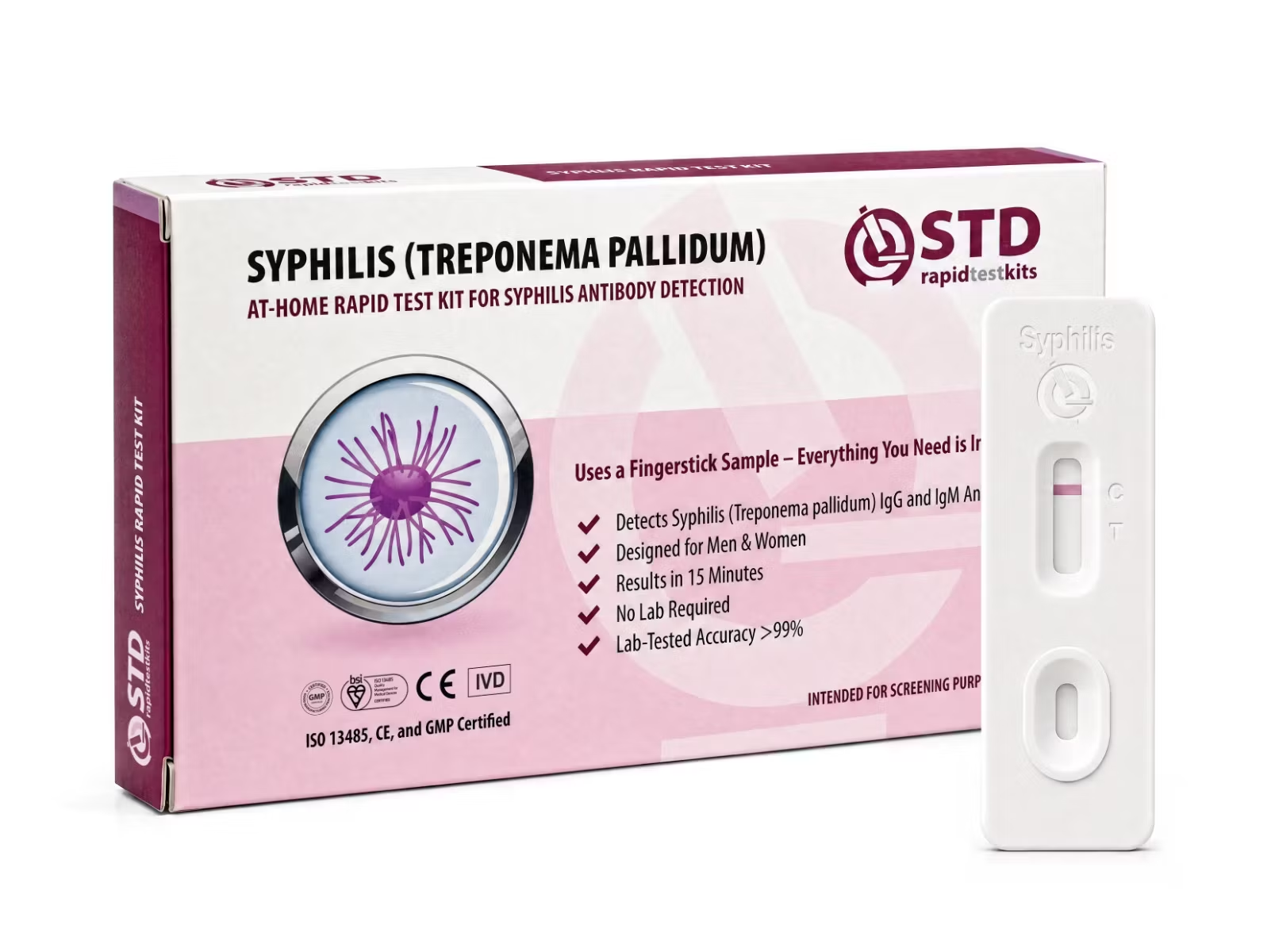
Antibody-based blood tests are how syphilis is detected, including at-home rapid lateral-flow tests. The test looks for antibodies your immune system produces against Treponema pallidum, not for the bacterium itself. That has a practical consequence: testing very soon after a possible exposure can return a false negative because the antibody response has not yet built up.
The first signs of infection usually take about 3 weeks to appear after exposure, and they can take longer (NHS syphilis page). Antibody tests generally become reliable around the time symptoms appear. If a sore, rash, or vague flu-like illness has already shown up, testing now is appropriate, because the antibody response is established once symptoms appear. If your possible exposure was within the last few weeks and you have no symptoms, the conservative approach is to test now and repeat the test several weeks later if the first result is negative and concern remains.
You do not need a confirmed exposure to justify testing. A reasonable trigger is any of: a recent partner with unknown STI status, an unexplained painless sore, a non-itchy rash that includes the palms or soles, or a vague unwell stretch in the weeks after a sexual risk event. Lab-based confirmation, which combines an RPR (Rapid Plasma Reagin) blood test with a treponemal antibody test, is still the gold standard, but at-home rapid tests are a low-friction first step. The kit linked below is sold by this site.
If You Are Testing for Syphilis, Think About the Others Too
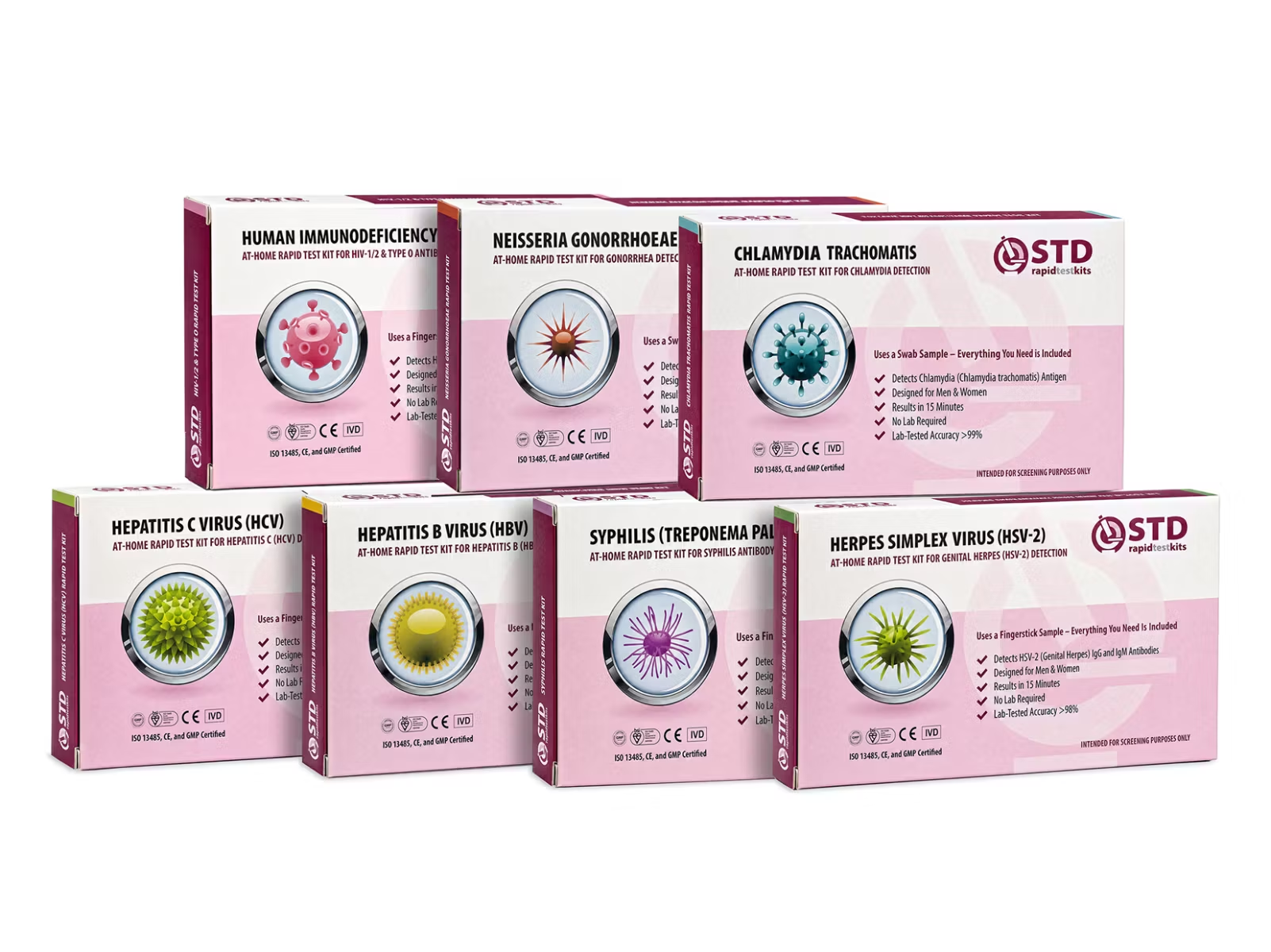
Syphilis often shares an exposure event with other STIs, especially chlamydia, gonorrhea, HIV, and herpes. CDC screening guidance recommends that people at elevated STI risk be screened for multiple infections simultaneously rather than checked for one at a time (CDC STI screening recommendations).
A combination home-test kit can save the friction of running each test separately and gives a fuller picture of what a single exposure event might have transmitted. The trade-off is that combination kits use both fingerstick blood (for syphilis, HIV, hepatitis) and self-collected swabs (for chlamydia and gonorrhea), so the testing session takes a few extra minutes than a single-infection kit. For most readers worried about more than one possible exposure, that trade is worth it.
FAQs
- Can syphilis really look like a regular rash?
- Yes, and that is exactly why it gets missed. The secondary-stage rash is usually faint, scattered, and not itchy, which does not match most people's mental picture of a serious rash. It can sit on the torso, the palms, or the soles of the feet and look more like a contact allergy or heat rash than an STI.
- If the sore did not hurt, does it still count as a symptom?
- Yes. A painless ulcer is the most characteristic primary-stage sign of syphilis. The chancre is typically firm, round, and clean-edged, and it does not burn or itch. Because pain is what most people use to gauge severity, the absence of pain is a major reason this stage gets dismissed.
- The sore went away on its own. Am I in the clear?
- No. Self-resolution of the chancre is part of how syphilis behaves, not a sign that the infection has cleared. The bacterium remains in the body and moves into the secondary stage within weeks. Only treatment, typically benzathine penicillin G for early-stage infection, clears it.
- How long can syphilis stay in the body without symptoms?
- Latent syphilis can sit silently in the body for years. Most untreated cases do not progress to tertiary disease per current CDC guidance, but those that do can damage the heart, brain, or nervous system. Because there are no visible symptoms during the latent stage, a blood antibody test is the only reliable way to confirm whether the infection is still present.
- When can a syphilis test reliably detect the infection?
- Antibody-based tests, including at-home rapid tests, generally become reliable around the time symptoms appear, which is typically about 3 weeks after exposure. A test done very soon after a possible exposure can return a false negative because antibodies have not yet built up. If you tested negative early and your concern is recent, repeating the test several weeks later is the conservative approach.
- Can I really mistake syphilis for acne or an ingrown hair?
- Yes, especially in primary syphilis. A chancre is small, firm, and painless, which can closely resemble an ingrown hair, a small pimple, or a friction blister, particularly when it appears in an area that already gets minor skin irritation from shaving or clothing.
- Is an at-home syphilis test as accurate as a clinic test?
- Rapid at-home lateral-flow tests detect the same syphilis antibodies that lab tests look for, and modern home kits report high sensitivity and specificity when used inside the recommended window. A positive at-home result should be confirmed with a clinic blood test (RPR plus a treponemal test) to differentiate active from past infection and guide treatment. Negative results within the testing window are usually trustworthy if symptoms are absent.
- What happens if syphilis is ignored?
- Untreated syphilis can progress to tertiary disease, which can damage the heart valves, the aorta, the brain (neurosyphilis), and the peripheral nerves. The reassuring part: early syphilis is curable with antibiotics, typically benzathine penicillin G, and even late-stage syphilis is treatable, although existing tissue damage may not reverse.
- U.S. Centers for Disease Control and Prevention. Syphilis overview page, including the painless chancre description, four-stage progression (primary, secondary, latent, tertiary), the secondary-stage systemic symptom list (fever, swollen lymph glands, sore throat, hair loss, headaches, weight loss, muscle aches, fatigue), and the statement that most untreated cases do not progress to tertiary disease.
- U.S. Centers for Disease Control and Prevention, STI Treatment Guidelines. Syphilis section, including the recommendation of parenteral penicillin G (with benzathine penicillin as the standard preparation for primary, secondary, and early latent infection).
- NHS UK. Syphilis symptoms and testing page, including the non-itchy palm and sole rash, the typical painless sore, and the statement that first symptoms can take 3 weeks or more to appear after exposure.
- World Health Organization. Syphilis fact sheet, including the non-itchy palm and sole rash and white or grey lesions characteristic of secondary syphilis.
- U.S. Centers for Disease Control and Prevention. STI screening recommendations, including the rationale for screening higher-risk patients for multiple STIs at once rather than one infection at a time.
