
Published: September 2025 | Last updated: May 2026 | Editorial review and quality control: Martina N.
A faint line on your trichomoniasis rapid test usually means positive. Even a whisper of color in the test zone counts as a real result in most lateral-flow kits, because the chemistry flags antigen presence, not antigen volume. If you saw a line, a real one inside the manufacturer's read window, the test detected something.
False negatives are the trickier scenario. Trichomoniasis can hide behind low parasite loads, antibiotic interference, blood from menstruation, or a sample taken too early after exposure. Around 70 percent of people with trich never show classic symptoms, according to the CDC's trichomoniasis page, which means a no-line result can occasionally miss a real infection in someone who feels fine or only mildly off.
This article walks through how at-home antigen tests work, what a faint line actually means, why false negatives happen, when retesting is the right call, and when a lab-based NAAT is worth the extra step. The goal is a clear read on your own result, not more anxiety.
Key Takeaways
- A faint line on a trichomoniasis rapid test, read inside the manufacturer's time window, almost always indicates a positive result. Faint is still positive.
- A negative result is not always final. If you tested within the first week of exposure, retest at 14 to 21 days. If symptoms persist after any negative result, retest in 7 to 14 days or confirm with a lab-based NAAT, which the CDC considers the most sensitive diagnostic method.
How a Trichomoniasis Rapid Test Reads a Line
Trichomoniasis is caused by Trichomonas vaginalis, a single-celled parasite that lives in the urogenital tract. At-home rapid tests are lateral-flow immunoassays, the same chemistry family as a pregnancy test. The cassette holds antibodies that bind to specific Trichomonas antigens, which are proteins the parasite produces and sheds into vaginal fluid.
When you apply the sample, fluid carries any antigens through a region of labeled antibodies. If antigens are present, they bind to the labeled antibodies and then to a second antibody anchored at the test line. The bound complex shows up as a visible color at that test zone. A separate control line confirms the test ran correctly.
The strength of that test line depends on how many antigens were in the sample. A heavy parasite load produces a dark, obvious line within a couple of minutes. A lighter load can produce a faint line, sometimes barely perceptible. Clinically, both are positive results.
One thing worth knowing up front: rapid antigen tests are screening tools, not diagnostic NAATs. They look for the parasite's protein signature in your sample at the moment you swab. A laboratory NAAT (Nucleic Acid Amplification Test), by contrast, uses molecular techniques like PCR to amplify and detect even trace amounts of Trichomonas DNA. NAATs catch infections that rapid lateral-flow tests sometimes miss, especially in asymptomatic carriers or when antigen shedding is low. The CDC's STI Treatment Guidelines for trichomoniasis recommend NAAT as the most sensitive diagnostic method.
Is a faint line on a trichomoniasis rapid test really positive?
Yes, in most cases. Lateral-flow rapid tests are designed so that any visible line at the test zone, even a faint one, signals that the test detected Trichomonas antigens. The line is a yes-or-no chemistry, not a brightness scale. The one caveat is that the result must be read inside the manufacturer's stated window, typically 5 to 15 minutes after applying the sample. A line that appears later than that can be a drying artifact and is not a reliable read.
What a Faint Line Actually Means (and When It Is Real)
Say your test strip shows a faint line. Not bold, not screaming positive, just a whisper of color. Does it count?
In most rapid antigen tests, yes. The test is engineered to make the chemistry binary at the molecular level. Antigens either bind to the test-line antibodies, producing color, or they do not. The intensity of the visible line is a rough proxy for how much antigen the test bound, but it does not separate positive from negative. Any visible line in the test zone, read within the time window, is a positive.
That is also why faint results show up in the early stage of an infection. When antigen shedding is low (early in the infection course, or after partial antibiotic exposure), the test still detects what is there, and the line is correspondingly thin. A pregnancy test works the same way: a faint second line at four weeks is the same yes as a bold line at eight weeks.
The exception is the so-called ghost line. If the test is expired, stored at the wrong temperature, or read after the 5 to 15-minute window, drying artifacts can leave a faint residue at the test line that does not reflect a real antigen binding event. That is one reason to time the read precisely and to inspect the result in good light, but not to keep checking back hours later.

Why False Negatives Happen, and When to Retest
False negatives are the harder problem to spot, because there is no visible line to second-guess. The test simply says no, and most people accept it. A few patterns explain most of the missed cases.
Testing too soon after exposure. Trichomoniasis has an incubation period of roughly 5 to 28 days, with most symptomatic cases declaring themselves between days 4 and 28 (CDC). If you test within the first week of exposure, parasite levels may be too low for the antigen test to register.
Low parasite load. Trichomoniasis is famously asymptomatic in around 70 percent of people who carry it. Lower parasite shedding can mean less antigen in the sample, and a lateral-flow test that runs below its detection threshold returns a negative. NAATs, which amplify DNA, are far more forgiving in this scenario.
Sample collection issues. Not swabbing deeply enough, not soaking the swab adequately, or mixing up the application steps can all leave you with a sample that does not represent your actual infection status. Reading the manufacturer instructions carefully, twice, is the cheapest accuracy upgrade available.
Kit storage problems. Lateral-flow strips are heat-sensitive. A kit that has been sitting in a hot mailbox, shipping container, or sunny car can degrade enough to skew results. Buying from a seller with controlled storage and a clear expiration date helps.
When to retest is straightforward. If you tested within 7 days of a possible exposure, repeat the test in 14 to 21 days. If symptoms persist after any negative result, retest or, better, request a lab NAAT through a clinic. A confirmed negative twice in the right window is much more reassuring than one early negative.
- Tested too soon (within 7 days of exposure): parasite load is below the detection threshold.
- Low parasite shedding (especially in asymptomatic carriers): not enough antigen in the sample for a lateral-flow strip to bind.
- Sample collection error: under-swabbed, swab not fully soaked, or steps mixed up.
- Degraded kit: stored hot or expired, so the antibody chemistry no longer reacts reliably.
How Accurate Is an At-Home Trich Test?
Accuracy is best discussed as two numbers, not one: sensitivity (the true-positive rate) and specificity (the true-negative rate). The CDC's STI Treatment Guidelines and FDA-cleared assay data give the reference ranges below.
| Test Type | Sample | Sensitivity | Specificity | When to Use |
|---|---|---|---|---|
| Rapid Antigen Test (lateral-flow) | Self-collected vaginal swab | 82–95% | 97–100% | Same-day screening at home |
| Lab NAAT (molecular) | Vaginal swab or urine | 95–100% | 95–100% (assay-dependent; most commercial NAATs exceed 99%, Aptima range 95.2–100%) | Confirmation and gold-standard diagnosis |
| Wet-mount Microscopy | Vaginal fluid (clinic) | 51–65% | Near 100% | Older method, falling out of favor |
When to Test After a Possible Exposure
Timing is the single biggest predictor of whether a rapid antigen test will return an accurate result. Test too early and the parasite has not yet shed enough antigen. Test too late after symptom onset, especially if your immune system has begun to clear the infection or you have taken antibiotics for something else, and the antigen signal may already be fading.
The window most kits perform best in is the second and third week after exposure, after the parasite has had time to colonize but before any clearing has started. The table below maps the rough timeline.
| Days Since Possible Exposure | What Is Happening Inside the Body | Rapid Test Reliability |
|---|---|---|
| 0–5 days | Parasite establishing, antigen shedding minimal | Low. Retest later. |
| 6–13 days | Infection developing, some antigen detectable | Moderate. Confirm if symptomatic. |
| 14+ days | Parasite load near peak, antigens detectable | High. Best window for rapid screening. |
| 28+ days, symptomatic | Established infection, immune response active | Reliable, but a NAAT is worth considering. |
What to Do When Your Result Does Not Match Your Body
If you tested negative but you still feel something is off, you are not being paranoid. You are paying attention to your body, and that instinct is correct more often than people give it credit for.
A handful of conditions can produce a real negative result when trichomoniasis is actually present. Each one is worth knowing about before you write the result off.
Menstrual bleeding. Blood in a vaginal swab can interfere with antigen detection. If you tested during a period, repeat the test a few days after bleeding stops.
Recent vaginal medication or douching. Topical antifungals, vaginal antibiotics, douches, and even some lubricants can reduce detectable antigen on the swab. Wait at least 48 to 72 hours after the last application before testing.
Recent or current antibiotic use. Even antibiotics taken for an unrelated infection can lower the trichomoniasis parasite load enough to skew an antigen test. Wait roughly a week after finishing the course before testing, unless symptoms worsen.
Co-infection. Trichomoniasis often shows up alongside chlamydia, gonorrhea, or bacterial vaginosis. The symptoms can blur together, and treating one without testing for the others can leave the second infection untreated. If your symptoms persist after a negative trich test, it is worth asking a clinician to test for the full panel.
When in doubt, retest after the window has fully opened, or escalate to a lab NAAT. The NHS trichomoniasis page reinforces the same point: rapid screening is a starting line, not a finishing one, when symptoms persist.
- Menstrual bleeding on the day of the swab can dilute or mask antigen detection.
- Recent douching or vaginal medication (within 48 to 72 hours) can wash away detectable antigen.
- Antibiotic use, even for an unrelated infection, can suppress parasite load below the detection threshold for about a week.
- Co-infection with chlamydia, gonorrhea, or bacterial vaginosis can produce identical symptoms even when the trich test is genuinely negative.
When a Lab NAAT Is Worth the Extra Step
Lab-based NAATs detect Trichomonas DNA directly, using molecular amplification (typically PCR). Because the test multiplies even tiny amounts of DNA, it picks up infections at much lower parasite loads than antigen-based rapid tests. That is why CDC guidance lists NAATs as the recommended diagnostic for clinical confirmation.
A lab NAAT is worth the extra step if any of the following apply:
- Your rapid test showed a faint line and you want a clear confirmation before starting treatment.
- Your rapid test was negative but symptoms persist beyond two weeks of the result.
- You are asymptomatic but had a high-risk exposure and want a definitive answer.
- You have already taken antibiotics and need to confirm whether the infection cleared.
Many at-home testing services offer mail-in NAAT kits that bridge the gap between a same-day rapid screen and a clinical lab visit. The sample is collected at home and processed in a CLIA-certified lab. Results are slower (usually 2 to 5 business days) but far more sensitive than a lateral-flow strip alone.
NAATs are highly sensitive, detecting more T. vaginalis infections than wet-mount microscopy among women.
Testing After You Have Already Taken Antibiotics
Antibiotic timing is one of the most common reasons for a confusing result. The standard treatment for trichomoniasis is metronidazole or tinidazole, the antibiotics most clinicians prescribe to clear the parasite. The CDC recommends a test of cure roughly three months after treatment, but a shorter-term retest is reasonable if symptoms come back or never fully resolved.
The catch is what happens to a rapid antigen test in the days after treatment starts. Antibiotics can lower the parasite load below the detection threshold for a few days even when the infection has not fully cleared. Testing too soon after antibiotics can produce a false negative that looks like a cure but is not.
The table below maps the rough window for retesting after a course of trich antibiotics.
| Days Since Last Antibiotic Dose | What to Do | Why |
|---|---|---|
| 1–6 days | Wait. Do not test yet. | Antigen levels may be suppressed or distorted by the active drug. |
| 7–13 days | Test if symptoms persist. | May still detect residual infection or confirm clearance. |
| 2–3 weeks | Reasonable retest window. | Most infections will have cleared; antigen levels should reflect true status. |
| 3 months | CDC-recommended test of cure. | Catches reinfection from an untreated partner or a relapse. |
Reading Your Test Inside the Correct Time Window
The read window is the single most misunderstood part of a lateral-flow rapid test. Most kits specify a window of 5 to 15 minutes after applying the sample. Results read before that window may be incomplete, and results read after the window can produce drying artifacts that look like positive lines but are not chemically valid.
A useful habit: set a timer for 5 minutes the moment you apply the sample. Read the strip at 5 minutes. If the result is clearly positive or clearly negative, you are done. If it is faint, give it another two or three minutes (still inside the window) and read again under good light. After 15 minutes, the test is no longer reliable, regardless of what shows up on it.
If you missed the window or are not sure when you applied the sample, the right move is to run a second test rather than trying to interpret an out-of-window strip. Most kits include or sell single replacements cheaper than a clinic visit.
- Start a timer at the moment you apply the sample.
- Read at 5 minutes. A clear positive or clear negative ends the test.
- If faint, re-read at 7 to 8 minutes under good light. The line will usually deepen if it is real.
- After 15 minutes, discard the strip and retest with a fresh cassette. Late lines are drying artifacts, not valid results.
Talking to a Partner When You Are Not Sure
One of the harder parts of a faint or uncertain result is the partner conversation. The fear of being wrong about a positive can feel as big as the result itself. The honest framing is that a borderline test is not a betrayal to share. It is the responsible read on imperfect information.
Trichomoniasis transmits readily during vaginal sex, even when the infected partner has no symptoms. Untreated trichomoniasis also raises the risk of acquiring HIV if you are exposed, because the inflammation and micro-abrasions from an active trich infection create easier entry points for the virus across vaginal tissue. The increased risk is real but modest in absolute terms, and treating trichomoniasis promptly removes it. Untreated trich can also contribute to pelvic inflammatory complications in some people. None of those risks need to be the headline of the conversation, but they are the reason it matters.
A simple, calm version of the conversation works better than a long explanation. Something like: "I took an at-home trich test and the result was unclear. I am retesting and will share what I find, and we should both consider holding off on sex until we know." That is real care, not drama.
The CDC recommends that all current sex partners of someone diagnosed with trichomoniasis be treated, regardless of whether the partner has symptoms or has tested positive themselves. This is called expedited partner therapy, and many clinics can arrange it without a separate visit for the partner.
When a Multi-Infection Panel Makes Sense
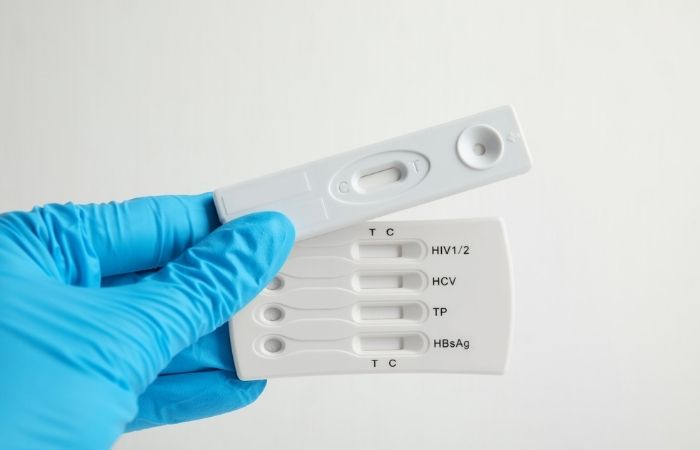
Trichomoniasis often shares symptoms with chlamydia, gonorrhea, and bacterial vaginosis. The discharge, the burning, the irritation: all of those can come from any one of several infections, and treating one without checking for the others is one of the most common reasons symptoms come back.
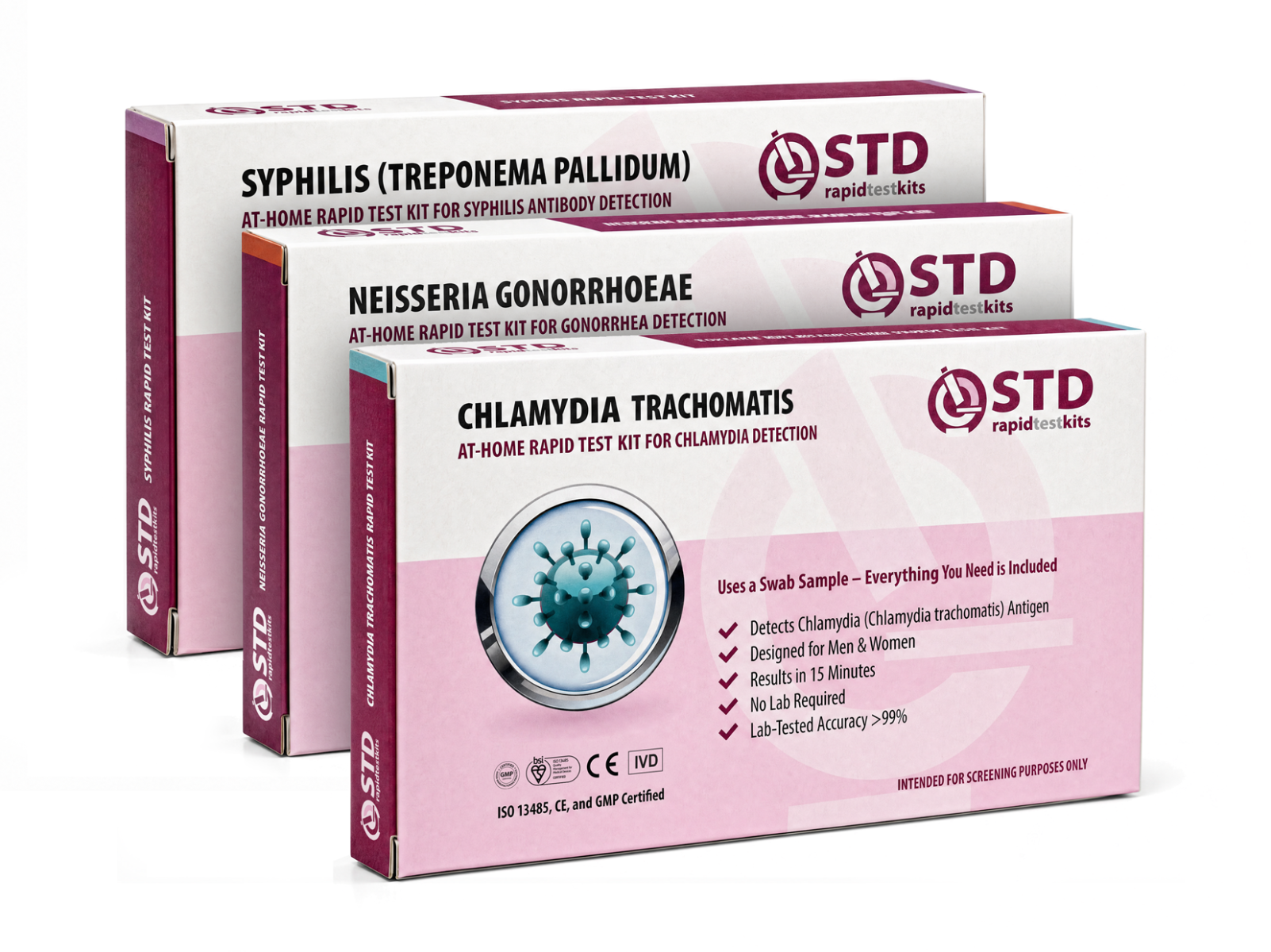
If your exposure scenario was a partner whose status you do not know, or if your symptoms are not clearly trichomoniasis-shaped, a combined panel that tests for chlamydia, gonorrhea, and syphilis alongside the trich screen is usually a better first move than testing one infection at a time. A combined screen costs less than three separate tests and catches the co-infections that often hide behind ambiguous symptoms.
Your Next Step
If you are here, you are not just looking for a verdict. You are looking for clarity, and you have already done the hardest part by testing. Whatever your strip shows, the answer is the same: trust the result if it was read inside the window, retest if the timing was off, and escalate to a lab NAAT if the symptoms outlast the test. A faint line is still a line. A negative early in the window is still a maybe. Knowing which scenario you are in is most of the work, and the sections above walk through each one.
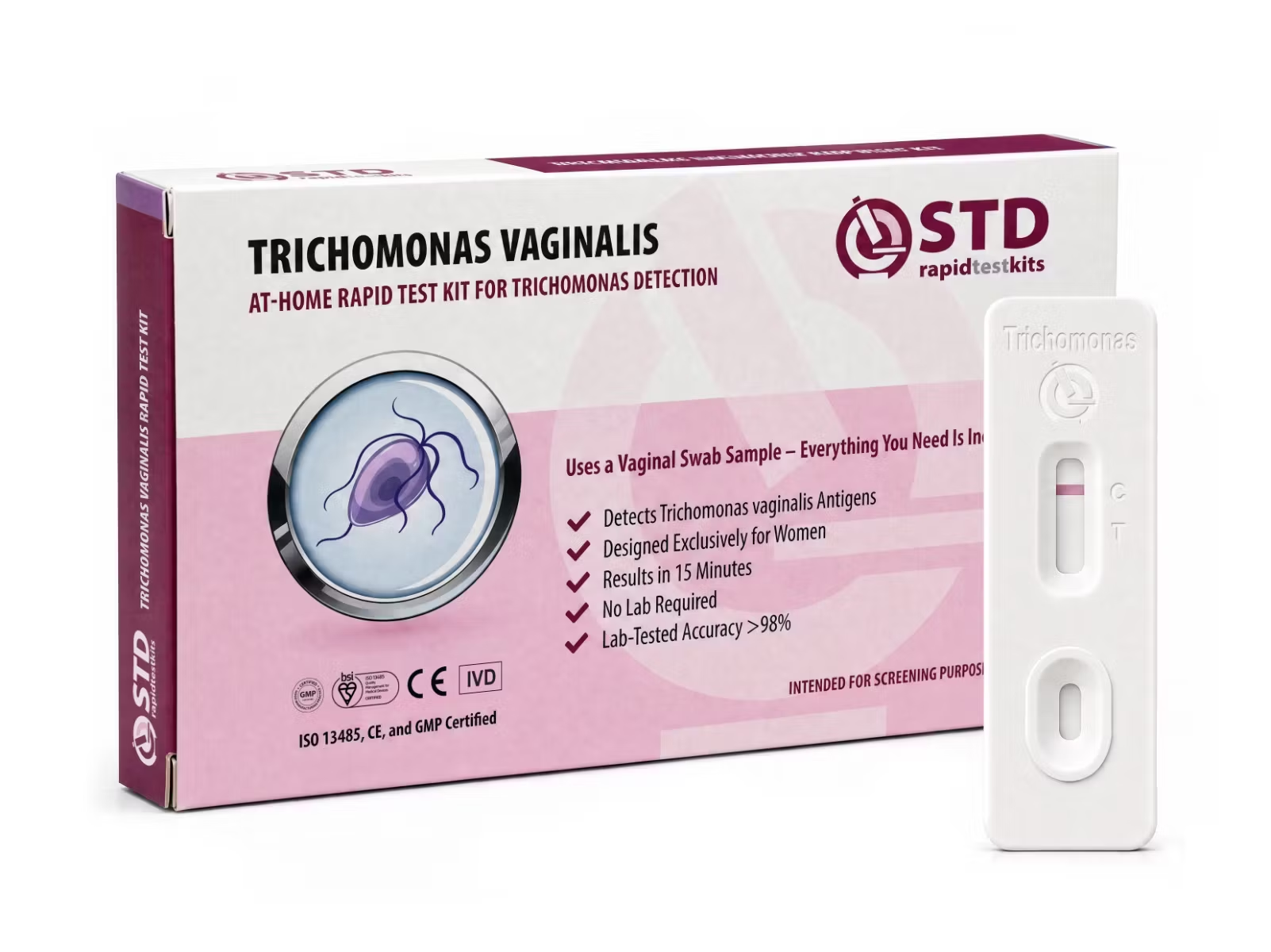
stdrapidtestkits.com sells the at-home rapid trichomoniasis test and the combined 3-in-1 rapid screen linked above. The clinical guidance in this article is drawn independently from CDC, NHS, and WHO sources, and we recommend products based on fit for the reader's concern, not commercial benefit.
FAQs
- Does a faint line on a trichomoniasis rapid test count as positive?
- A visible line, even a faint one, read inside the 5-to-15-minute window is a positive result. The cassette chemistry is binary: antigens either bind and leave a color mark, or they do not. Intensity reflects parasite load, not the yes/no answer. A line that only appears after 15 minutes is a drying artifact and is not valid.
- How long after exposure should I wait to take a trich test?
- Trichomoniasis has an incubation period of 5 to 28 days. Rapid antigen tests perform best in the second and third weeks after exposure, when parasite levels are highest. Testing within the first week can produce a false negative because antigen shedding has not yet ramped up. If you tested early and the result was negative, repeat the test 14 to 21 days after the exposure.
- Can a trichomoniasis test be wrong if I have no symptoms?
- Yes. Around 70 percent of trich infections are asymptomatic, and asymptomatic infections tend to shed less antigen, which makes rapid lateral-flow tests more likely to miss them. If you have a recent exposure but no symptoms and want a definitive answer, a lab NAAT is more sensitive than any at-home rapid screen.
- Should I retest if my symptoms continue after a negative result?
- Yes. Persistent symptoms after a negative rapid test is one of the clearest signals that something was missed, either trichomoniasis at low parasite load or a different infection with overlapping symptoms (chlamydia, gonorrhea, or bacterial vaginosis are the common culprits). Repeat the trich test in 7 to 14 days, or ask a clinician for a NAAT and a broader STI panel.
- Can antibiotics interfere with my trich test result?
- Yes. Even antibiotics taken for an unrelated infection can lower the Trichomonas parasite load enough to produce a false negative on an antigen test. After finishing any course of antibiotics, wait at least 7 days before retesting. For a confirmed test of cure after trich-specific treatment, the CDC recommends retesting around 3 months later.
- Is the at-home rapid trichomoniasis test available for men?
- Our at-home trichomoniasis rapid kit is validated for self-collected vaginal swabs only, which means it is for female anatomy. Readers with male anatomy who suspect trichomoniasis should see a clinic, because the male sample collection (urethral swab or first-catch urine) and the corresponding NAAT are best handled by a clinical lab.
- How is trichomoniasis treated once I test positive?
- Trichomoniasis is treated with a course of oral antibiotics, usually metronidazole or tinidazole, prescribed by a clinician. All current sexual partners should be treated at the same time to prevent ping-pong reinfection, even if they have no symptoms or have not tested positive themselves.
- Can I get reinfected with trich after treatment?
- Yes, and reinfection is common, usually from an untreated partner. The CDC recommends a test of cure roughly 3 months after treatment, especially for people with multiple partners or whose partners did not get treated at the same time. If symptoms return within weeks of completing treatment, retest sooner.
How we sourced this article: This guide summarizes current public-health guidance from the CDC, NHS, MedlinePlus, and the World Health Organization, plus FDA-cleared assay performance data for at-home rapid trichomoniasis tests. We do not provide clinical diagnosis. For persistent symptoms or a confirmed positive, see a licensed clinician for treatment.
- U.S. Centers for Disease Control and Prevention. STI Treatment Guidelines, Trichomoniasis section. Source for NAAT sensitivity comparisons, rapid antigen test specificity range (97 to 100 percent), and test-of-cure timing.
- U.S. Centers for Disease Control and Prevention. Trichomoniasis topic page. Source for asymptomatic rate (around 70 percent) and 5-to-28-day incubation period.
- U.K. National Health Service. Trichomoniasis condition page. Reference for symptom presentation, retesting guidance when symptoms persist, and treatment context.
- MedlinePlus, U.S. National Library of Medicine. Trichomoniasis. General patient-facing overview cross-referenced for clarity on symptoms and transmission.
- World Health Organization. Sexually transmitted infections (STIs) fact sheet. Used for global incidence framing and broader STI co-infection context.
