UTI or STD? How to Tell the Difference and When to Test
Burning when you pee, urgent trips to the bathroom, pelvic pressure: these are classic UTI signs, and they are also classic chlamydia, gonorrhea, and trichomoniasis signs. When antibiotics don't help, symptoms keep coming back, or a TikTok cure has not worked, the cause may not be your bladder at all. Here is how to tell the difference, when to test, and what to skip.




- Chlamydia and gonorrhea frequently cause burning urination and urgency that look identical to a UTI, and they will not respond to a typical UTI antibiotic like nitrofurantoin.
- If symptoms persist after 48 hours of UTI treatment, or if your urine culture is negative, the underlying infection is likely something else, and an STI swab is the next step.
Published: December 2025 | Last updated: May 2026 | Editorial review and quality control: Martina N.
Is it a UTI or an STD?
Often it really is a UTI, and the burning, urgency, and cloudy urine clear up fast on the right antibiotic. But if you have had a new sexual partner in the past two weeks, the same symptoms can mean chlamydia, gonorrhea, trichomoniasis, or a first herpes outbreak, which UTI antibiotics will not treat. The fastest way to know is a urine test plus an STI swab, done the same day.
Burning during urination, the urge to pee every twenty minutes, a low ache in the pelvis: these symptoms can mean a urinary tract infection, but they can also mean a sexually transmitted infection that has nothing to do with your bladder. Chlamydia, gonorrhea, trichomoniasis, and the first genital herpes outbreak can all produce signs that overlap almost exactly with a classic UTI, especially in women. When antibiotics aimed at E. coli don't fix the problem, or the same 'UTI' keeps returning, or a video tells you to drink cranberry juice and wait it out, it's worth widening the lens. This guide walks through how to tell the difference, what tests actually catch what, and where at-home rapid swabs fit in.
Most people reading this just want the burning to stop. Some will turn out to have a textbook UTI; some will turn out to have an STI; a smaller number will have both at once. The right move is the same in every case: stop guessing, get a test that targets the right organism, and treat what's actually there.
Key Takeaways
- Chlamydia and gonorrhea frequently cause burning urination and urgency that look identical to a UTI, and they will not respond to a typical UTI antibiotic like nitrofurantoin.
- If symptoms persist after 48 hours of UTI treatment, or if your urine culture is negative, the underlying infection is likely something else, and an STI swab is the next step.
Why UTI and STI Symptoms Feel So Similar
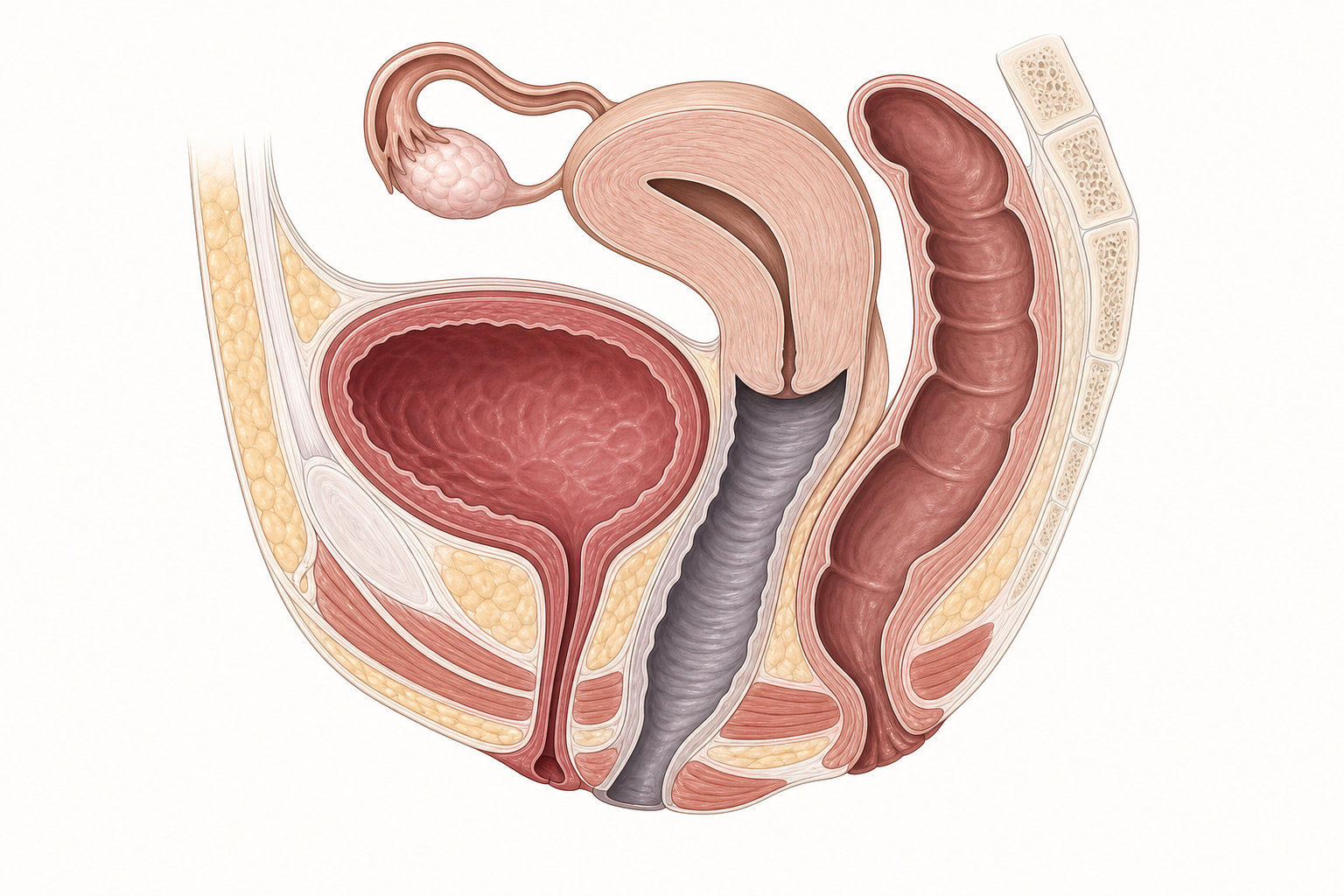
Urinary tract infections and several sexually transmitted infections share a small anatomical neighborhood and a similar set of nerves. Bacteria irritating the urethra, whether E. coli that climbed up from the perineum or Chlamydia trachomatis from a recent partner, produce the same set of warning signs: a burning sting during urination, a constant urge to go even when nothing comes out, low pelvic pressure, and sometimes a dull abdominal ache. The body has a limited vocabulary for problems in this region, so very different causes often sound the same.
In people with vaginas, the urethra and reproductive tract sit close enough that an infection in one can mimic the other. The urethra runs just in front of the vaginal opening, and the urethral lining responds to inflammation the same way whether the irritant is bacteria from the bladder or bacteria living in the cervix. UTIs are common in women to begin with, about four times as common as in men (MedlinePlus, urinary tract infections), and standard UTI care leans on bladder-focused antibiotics (NHS, urinary tract infections), which is part of why the STI possibility gets waved off. In people with penises, true UTIs are uncommon, so sudden burning urination after sex is far more often urethritis caused by an STI than a bladder infection (CDC STI Treatment Guidelines (2021)).
Despite the overlap, many urgent-care visits end with a UTI prescription based on symptoms alone, with no urine culture and no STI swab. Reviews of emergency-department care for women with urinary symptoms have repeatedly found that a large share are never tested for chlamydia or gonorrhea, even when the urine workup is inconclusive.
Symptom Overlap at a Glance
Here is how the symptom signatures of the common UTI mimickers compare to a textbook UTI. The fastest practical tells: vaginal or penile discharge that does not match a typical UTI, symptoms that flare specifically after sex, and a urine bacterial culture that comes back negative while the burning continues.
| Symptom | UTI | Chlamydia | Gonorrhea | Trichomoniasis |
|---|---|---|---|---|
| Burning during urination | Common | Common | Common | Possible |
| Frequent urge / urgency | Very common | Possible | Possible | Possible |
| Pelvic or low abdominal pain | Sometimes | Common | Common | Common |
| Unusual vaginal or penile discharge | Rare | Common | Common | Very common |
| Cloudy or strong-smelling urine | Common | Possible | Possible | Possible |
| Blood in urine | Sometimes | Rare | Rare | Possible |
| Symptoms appear after sex | Possible (post-sex UTIs) | Common | Common | Very common |
| Positive urine bacterial culture | Yes | No | No | No |
The STDs Most Often Hiding Behind a 'UTI' Diagnosis
Four sexually transmitted infections account for most cases where someone is treated for a UTI but actually has something else. Knowing which is which doesn't change what you need to do (test, then treat), but it helps explain why a 'simple' UTI keeps not behaving like one.
Chlamydia. The most common reportable STI in the United States, with 1,648,568 cases reported in 2023 (CDC STI Surveillance, 2023). Most people with chlamydia have no symptoms; when symptoms do appear, they often look exactly like a UTI: burning urination, pelvic pain, sometimes a thin discharge. Untreated chlamydia in women can climb into the upper reproductive tract and cause pelvic inflammatory disease, a leading cause of preventable infertility (CDC Chlamydia Fact Sheet).
Gonorrhea. Often paired with chlamydia and frequently mistaken for a UTI in both men and women. In men it usually causes more obvious urethral symptoms (burning urination, discharge); in women it is commonly silent or mild, which is why testing matters even without dramatic signs (CDC Gonorrhea Fact Sheet).
Trichomoniasis. A protozoal infection that frequently presents with frothy or strong-smelling vaginal discharge, irritation, and burning urination. The CDC estimated more than 2 million U.S. infections in 2018, and only about 30 percent of people develop symptoms, so it is easy to miss during a UTI workup (CDC Trichomoniasis). Globally it is one of the most common curable STIs, with an estimated 156 million new infections in 2020 (WHO STI fact sheet).
Genital herpes (first outbreak). The first herpes outbreak can produce painful urination strong enough to be mistaken for a UTI, often before any visible blisters appear. Urine touching a fresh sore creates a stinging burn that feels like classic painful urination. Subsequent outbreaks are usually less intense and more clearly localized to the skin, but the first one can fool both patient and provider.
If you have tested negative for chlamydia, gonorrhea, and trichomoniasis but still have UTI-like symptoms, ask a clinician about Mycoplasma genitalium. It causes urethritis and cervicitis with the same symptom profile, is not part of standard rapid kits, and requires specific antibiotics. It's worth raising as a possibility rather than accepting another round of UTI antibiotics.
Signs That Point to an STD, Not a Bladder Infection
No single symptom proves it is an STI rather than a UTI, but a few patterns shift the odds. Run through the list below, and if any of it matches your situation after recent sexual contact, treat that as a reason to test for an STI rather than assume a bladder infection.
Symptoms More Suggestive of an STD Than a UTI
Having one or more of these does not confirm an STI, and a real UTI is still possible. Only a test can tell you which infection you actually have.
- Burning urination that began within a week or two of sex with a new partner Common
- Unusual discharge from the vagina or penis, especially thin, frothy, yellow, or green Common
- Pelvic or lower-abdominal ache that does not ease after a UTI antibiotic Common
- Symptoms that fade and then return a week or two later with no new trigger Common
- Genital itching, irritation, or a fishy odor alongside the urinary symptoms Less common
- A painful sore, blister, or raw patch that stings sharply when urine touches it Less common
- Spotting or bleeding between periods or after sex Less common
Other Conditions That Cause UTI-Like Symptoms
Not every persistent 'UTI' is an STI. Several non-infectious conditions cause the same constellation of urinary symptoms and are also commonly mistaken for a bladder infection. They matter for the same reason STIs do: a UTI antibiotic won't fix any of them.
- Interstitial cystitis (painful bladder syndrome). Chronic urgency and pelvic pain without bacterial growth on culture. Treatment is very different from a UTI.
- Bacterial vaginosis or yeast infection. Burning during urination caused by surface irritation, not a bladder infection. Look for changes in discharge, odor, or vulvar itching.
- Kidney stones. Sudden severe flank or low back pain, sometimes with blood in the urine. Pain that radiates toward the groin and waves of nausea suggest stones, not infection.
- Prostatitis (in men). Painful urination, pelvic pressure, and sometimes fever or flu-like symptoms in someone who almost never gets bladder infections.
- Endometriosis. Cyclical pelvic pain that worsens around the menstrual cycle and is not bacterial in origin.
If symptoms cycle with your period or persist for months without a positive urine culture, interstitial cystitis is worth raising with a urologist rather than accepting another round of antibiotics. The diagnostic and treatment pathway is completely different from a bacterial UTI.
Red Flags Your 'UTI' Might Be Something Else
A real UTI usually responds to the right antibiotic within 24 to 48 hours. If your situation matches one of the patterns below, the working diagnosis is probably wrong and an STI panel should be the next step.
- Urine culture comes back negative but symptoms continue.
- Antibiotics don't help within 48 hours.
- Symptoms return within weeks of finishing treatment, with no obvious new trigger.
- You have unusual discharge alongside the urinary symptoms.
- You're a man with sudden burning urination after sex (UTIs are uncommon in men; STIs are not).
- You've had a new or non-monogamous sexual partner in the last few months.
- You've been treated for several 'UTIs' in the past year without a clear pattern.
One of these red flags isn't a diagnosis on its own. Two or three together are a strong signal to swap the assumption and test for an STI before another round of the wrong antibiotic.
When to push back on a UTI diagnosis
- Symptoms haven't improved 48 hours after starting antibiotics.
- Urine culture is negative or wasn't collected at all.
- Discharge, pelvic pain, or symptoms after sex are part of the picture.
- This is your second or third 'UTI' in a few months.
Why TikTok 'UTI Cures' Won't Touch an STD
Search 'UTI cure' on social media and the top hits are usually the same handful: cranberry juice, D-mannose powder, garlic cloves inserted vaginally, baking soda baths, apple cider vinegar, hydrogen peroxide rinses, tea-tree-oil tampon soaks. They are cheap, private, and emotionally satisfying, which is exactly why short-form video spreads them. None of them cure a bacterial or parasitic STI, and a few are actively harmful.
Cranberry juice and D-mannose can discourage E. coli from sticking to bladder walls, which is why some clinicians suggest them for preventing recurrent UTIs. They have zero effect on chlamydia, gonorrhea, or trichomoniasis. Those organisms live inside the cells lining the cervix and urethra rather than floating in urine, so a cranberry capsule never reaches them.
Garlic inserted vaginally, baking soda douches, peroxide rinses, and essential-oil tampons belong to a different category: irritating at best, tissue-damaging at worst. The vagina maintains its own protective bacterial balance, and pouring acid, base, or essential oil into it disrupts the lactobacilli that keep yeast and bacterial overgrowth in check. The bacteria behind chlamydia or gonorrhea are not in the vaginal canal where a rinse could reach them anyway.
The bigger risk is delay. A creator describing their own recovery is not a diagnosis, and symptoms can fade on their own (or be masked by short-term anti-inflammatory effects) while the infection stays put. Untreated chlamydia or gonorrhea can climb into the upper reproductive tract over weeks and trigger pelvic inflammatory disease, which carries lasting risks to fertility and raises the chance of ectopic pregnancy. The CDC notes that about 1 in 8 women with a history of PID have trouble getting pregnant (CDC Pelvic Inflammatory Disease).
No food, supplement, douche, or essential oil cures a bacterial or parasitic STI. Cranberry, garlic, lemon water, hydrogen peroxide, apple cider vinegar, and tea tree oil either do nothing or actively harm vaginal tissue. If symptoms persist or recur after 48 hours of UTI treatment, the next step is an STI test, not another round of home remedies.
Why UTI Antibiotics Don't Cure STDs
Most uncomplicated UTIs are caused by E. coli and treated with nitrofurantoin, trimethoprim-sulfamethoxazole, or fosfomycin. These drugs work well against the gut bacteria that cause bladder infections. They are not the right tools for chlamydia, gonorrhea, or trichomoniasis, which need different drug classes (typically doxycycline or azithromycin for chlamydia, ceftriaxone for gonorrhea, and metronidazole or tinidazole for trichomoniasis, per the CDC STI Treatment Guidelines (2021)).
Taking the wrong antibiotic for an STI usually doesn't make you sicker, but it can mute symptoms enough to feel like the problem is gone while the actual infection keeps spreading. The reverse is worth keeping in mind too: if you genuinely have a UTI, an STI test won't catch it and you still need a urine culture and the right antibiotic. Untreated chlamydia and gonorrhea are the leading preventable causes of pelvic inflammatory disease, which scars the fallopian tubes and is a major contributor to ectopic pregnancy and infertility (CDC Pelvic Inflammatory Disease). An untreated infection persisting while someone cycles through repeated UTI antibiotic courses is the mechanism behind a meaningful share of preventable PID and infertility cases.
Chlamydia often has no symptoms, but it can cause serious health problems, even without symptoms.
When to Test: Window Periods Matter
Every infection has a window period, the gap between exposure and when a test can reliably detect it. Test too early and a negative result doesn't mean you're in the clear; the bacteria or antibodies just haven't reached detectable levels yet. This is the part most social-media advice skips: a single negative test taken whenever gets treated as proof, when the result is only as good as its timing. The numbers below are based on CDC guidance and the manufacturer instructions for common rapid and laboratory tests. Herpes is the slow outlier here, because an HSV-2 antibody blood test can take 12 to 16 weeks after exposure to turn reliably positive, far longer than the swab tests for chlamydia and gonorrhea.
Two practical takeaways follow. First, if your possible exposure was within the last few days and your STI test is negative, that result alone doesn't rule out an infection; plan to retest at the 14-day mark. Second, if your symptoms started before the listed window opens, the cause is more likely a UTI or an earlier exposure you didn't connect at the time. Either way, a single early negative should not end the investigation while symptoms persist, and an at-home STI test kit makes a timed retest easy to do without another clinic trip.
| Infection / Test | Earliest reliable detection | Most reliable testing window |
|---|---|---|
| UTI (urine culture or dipstick) | Same day as symptoms | Day of symptoms |
| Chlamydia (swab or urine) | About 5 to 7 days post-exposure | 14 days post-exposure |
| Gonorrhea (swab or urine) | About 5 to 7 days post-exposure | 14 days post-exposure |
| Trichomoniasis (swab) | About 5 to 7 days post-exposure | 2 to 4 weeks post-exposure |
| Genital herpes (PCR swab during outbreak) | While lesion is fresh | During active outbreak |
| Genital herpes (HSV-2 antibody) | 6 weeks (some people) | 12 to 16 weeks post-exposure |
At-Home Testing for the STIs That Mimic UTIs
At-home rapid swab tests are designed for screening at home with results in about 15 minutes. They use lateral-flow immunoassay chemistry on a self-collected vaginal or penile swab. They are not the same as the molecular NAAT panels labs run, which have higher analytical sensitivity, especially in asymptomatic infections. The two are complementary: a rapid kit gives you a fast answer at home, and a positive result is worth confirming with a lab NAAT when possible. The home test's strengths are speed, privacy, and skipping a clinic visit when symptoms make that hard.
For the UTI mimickers specifically:
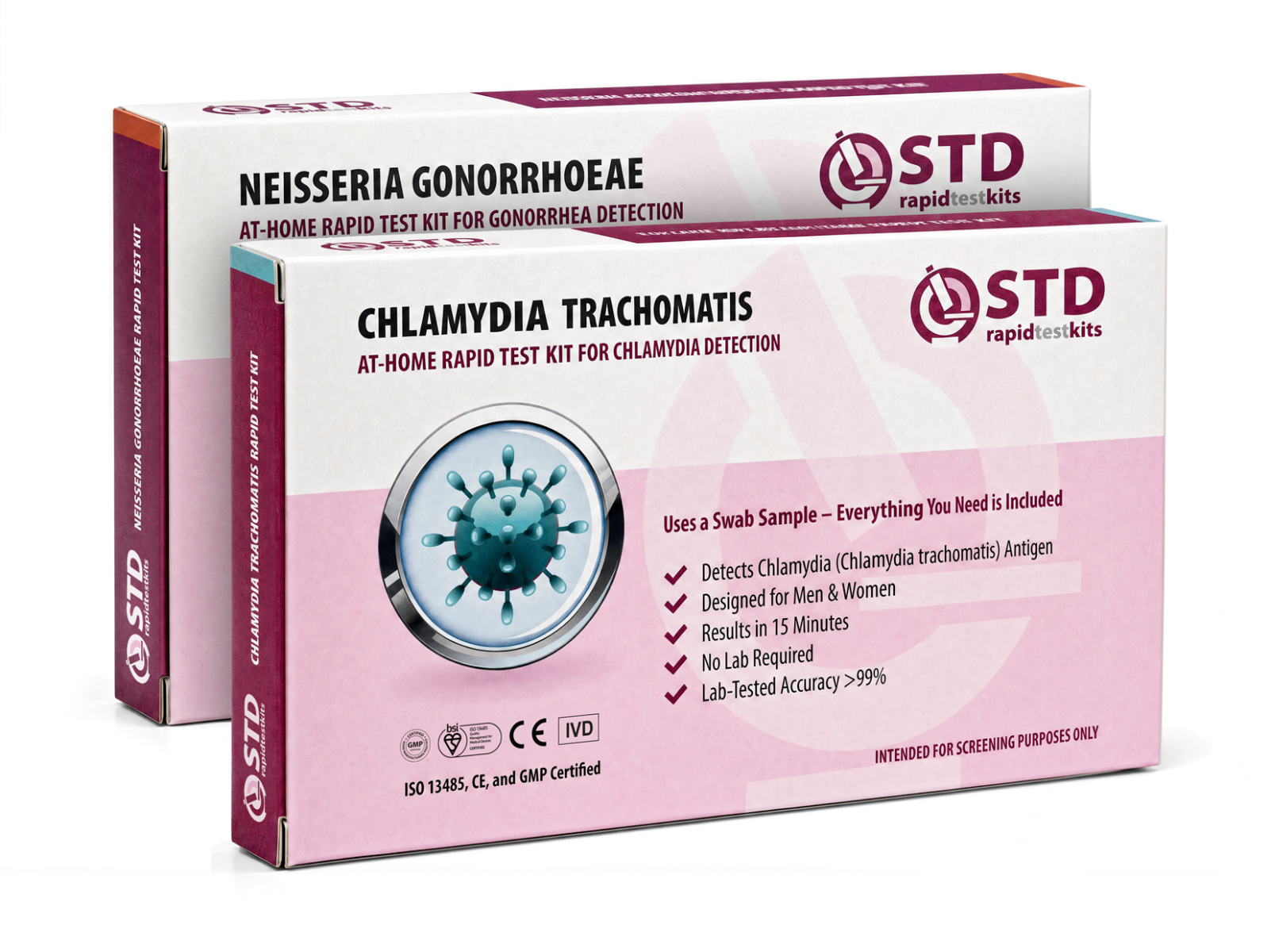
- Chlamydia and gonorrhea are the two most common UTI mimickers. A combined chlamydia and gonorrhea swab kit covers the highest-yield pair in one test, and an at-home chlamydia test is an option if that is your single concern.
- Trichomoniasis at-home rapid swab kits are validated for vaginal self-swab only. Our trichomoniasis kit is for women only; men with suspected trich need a clinic visit.
- Comprehensive panels screen for several common infections at once and are useful when you're not sure what's going on or want to rule out several causes in one round.
Whichever you choose, follow the timing guidance above. A negative rapid test taken less than 48 hours after a possible exposure does not mean you're clear; the timing is simply too early to detect a recent infection. The kit below is sold by stdrapidtestkits.com, which sells at-home STI testing kits; we recommend it because its target infections match what this article covers, not for commercial benefit, and we don't suggest products that don't fit the reader's concern.
After a Positive Test: Treatment and Partners
A positive STI result is information you can act on. The common UTI mimickers are all curable with short antibiotic courses:
- Chlamydia: usually doxycycline 100 mg twice daily for seven days, or a single dose of azithromycin in selected cases (CDC STI Treatment Guidelines (2021)).
- Gonorrhea: a single 500 mg intramuscular dose of ceftriaxone (1 g for people who weigh 150 kg or more), often with doxycycline if chlamydia hasn't been ruled out.
- Trichomoniasis: oral metronidazole or tinidazole, dosed per current CDC guidance.
Treatment itself is the easy part. The harder part is partner notification. Recent sexual partners need to be tested and treated too, otherwise you can pass the infection back and start the cycle over. Most public-health departments offer free anonymous partner notification services if you'd rather not have the conversation directly. The CDC recommends retesting for chlamydia and gonorrhea about three months after treatment, because reinfection from an untreated partner is common (CDC STI Treatment Guidelines (2021)).
You should also avoid sex for seven days after starting treatment (or after a single-dose regimen), and confirm your partner has completed treatment before resuming. If a positive result also flags herpes antibodies, the goal shifts from cure to symptom management. Antivirals reduce outbreak frequency and lower transmission risk, and most people who carry the virus do not know they have it (CDC Genital Herpes Fact Sheet).
Myths That Make Misdiagnosis Worse
Myth: STIs always come with obvious symptoms. In practice, most don't. Chlamydia often causes no symptoms at all, and gonorrhea is frequently silent in women (CDC Chlamydia Fact Sheet). Symptoms, when they appear, often look like a UTI rather than a textbook STI.
Myth: If my partner had something, they'd know. Not necessarily. Asymptomatic infection is the rule, not the exception, for chlamydia and trichomoniasis.
Myth: Antibiotics fix everything. Only the right antibiotic for the right infection. UTI drugs and STI drugs are different drug classes for different organisms.
Myth: I only need to test if I have new partners. An untreated infection from a previous relationship can still be active. Recurrent 'UTIs' that don't culture positive are a common signal of a missed STI from earlier exposure.
Myth: My symptoms went away, so I'm fine. Chlamydia in particular can go quiet without going anywhere, then resurface as PID weeks or months later. Fading symptoms are not proof of cure.
Myth: A short-form video can tell me what I have. A creator describing their own symptom is not a diagnosis. The same burning sensation can mean five different things, only one of which responds to the suggested remedy.
Three myths to drop today
- Most STI infections cause no symptoms at all, so feeling fine is not the same as being clear.
- Standard UTI antibiotics do not cure chlamydia, gonorrhea, or trichomoniasis; the drug classes are different.
- An STI from an earlier relationship can still be active years later, even when current sexual life is monogamous.
What To Do Next
If you are weighing whether to test, the quick decision aid below covers the two situations that most often change the plan. It is guidance, not a diagnosis, and a clinician can tailor it to your own history and exposure.
Should You Test for an STI Instead of Just Treating a UTI?
Have you had a new or non-monogamous sexual partner in the past 1 to 4 weeks?
Yes: Ask for a chlamydia and gonorrhea test alongside any UTI urine test, even if a clinician assumes a bladder infection. Use the 14-day mark for the most reliable read.
Has a UTI antibiotic failed to improve symptoms within 48 hours, or did your urine culture come back negative?
Yes: Request a chlamydia, gonorrhea, and trichomoniasis panel before starting another antibiotic course, and avoid sex until you have a result. If those are negative and symptoms persist, ask about interstitial cystitis or Mycoplasma genitalium.
No: A UTI that clears on schedule usually needs no STI workup. Retest only if symptoms return or you have a new exposure, and notify recent partners if any STI result comes back positive.
Guidance only, not a diagnosis. A clinician can tailor this to your situation.
FAQs
- Can an STD really feel exactly like a UTI?
- Yes, and the overlap is precise enough that large proportions of women with urinary symptoms are never swabbed for chlamydia or gonorrhea in urgent care. The most reliable practical tell is treatment response: a true UTI clears within 48 hours of the right antibiotic, while STI symptoms continue or worsen on UTI medication.
- If my urine culture is negative, can I rule out an infection?
- No. A negative urine culture means there are no urinary tract bacteria growing. It does not test for chlamydia, gonorrhea, trichomoniasis, or herpes. If symptoms persist after a negative culture, an STI panel is the logical next step.
- How soon after sex can I test for chlamydia or gonorrhea?
- About 5 to 7 days post-exposure for an early result, with the most reliable detection at around 14 days. A negative test taken within the first few days after exposure is not conclusive and should be repeated.
- Will the antibiotics for a UTI also clear chlamydia or gonorrhea?
- Almost never. Standard UTI drugs like nitrofurantoin and trimethoprim-sulfamethoxazole are the wrong drug class for chlamydia, gonorrhea, or trichomoniasis. Symptoms may briefly feel better while the underlying infection continues.
- Will a UTI dipstick catch an STI?
- No. UTI dipsticks look for nitrites and white blood cells, both signs of bacterial bladder infection. They were not designed to detect chlamydia, gonorrhea, trichomoniasis, or herpes, and a negative dipstick says nothing about whether you have one. An STI swab or panel is the only way to find an STI.
- My symptoms went away on their own. Am I in the clear?
- Probably not. Chlamydia in particular can enter a silent phase where symptoms fade without the bacteria going anywhere; it can keep migrating up the reproductive tract and trigger PID weeks or months later. Testing even when you currently feel fine is the only way to confirm the infection has actually cleared.
- Can a clinician tell the difference between a UTI and an STI on exam?
- Not reliably. Visible discharge, cervical inflammation on a speculum exam, or specific lab clues can raise suspicion, but the only definitive answer comes from a urine NAAT, a swab tested in a lab, or an at-home rapid test. Good clinicians order both a urine culture and an STI panel when the picture is mixed.
- Can men get UTIs, or is it always something else?
- Men can get UTIs, but they are uncommon, especially in men under 50. Sudden burning urination after sex in a younger man is far more likely to be urethritis caused by an STI, particularly gonorrhea or chlamydia. A clinical evaluation is worthwhile rather than assuming a UTI.
- What if I'm not sexually active and I have UTI symptoms?
- Then the odds heavily favor a real UTI. Sexual activity is one risk factor, but plenty of women get UTIs from incomplete bladder emptying, dehydration, hormonal shifts, or certain hygiene patterns. See a clinician for a urine culture and the appropriate antibiotic; an STI panel is not necessary if there has been no recent exposure.
- Can I take leftover antibiotics from a previous UTI?
- Better not. A wrong-class antibiotic can drive resistance without curing anything, mask symptoms long enough for an STI to progress, and disrupt your gut and vaginal flora. UTI antibiotics like nitrofurantoin do not treat chlamydia or gonorrhea. The right move is a current diagnosis and a current prescription.
- U.S. Centers for Disease Control and Prevention. Sexually Transmitted Infections Treatment Guidelines, 2021. Drug regimens for chlamydia, gonorrhea, and trichomoniasis, plus retesting and window-period guidance.
- U.S. Centers for Disease Control and Prevention. Chlamydia Basic Fact Sheet. Asymptomatic prevalence, UTI-like symptoms, and PID/infertility consequences of untreated infection.
- U.S. Centers for Disease Control and Prevention. Trichomoniasis Fact Sheet. More than 2 million U.S. infections estimated in 2018, with roughly 30 percent symptomatic.
- World Health Organization. Sexually transmitted infections fact sheet. Global incidence of curable STIs, including an estimated 156 million new trichomoniasis infections in 2020.
- U.K. National Health Service. Urinary Tract Infections (UTIs). Standard UTI definition, symptoms, and first-line antibiotic treatment.
- MedlinePlus (U.S. National Library of Medicine, NIH). Urinary Tract Infections. UTI epidemiology, including that about four times as many women as men get UTIs.