





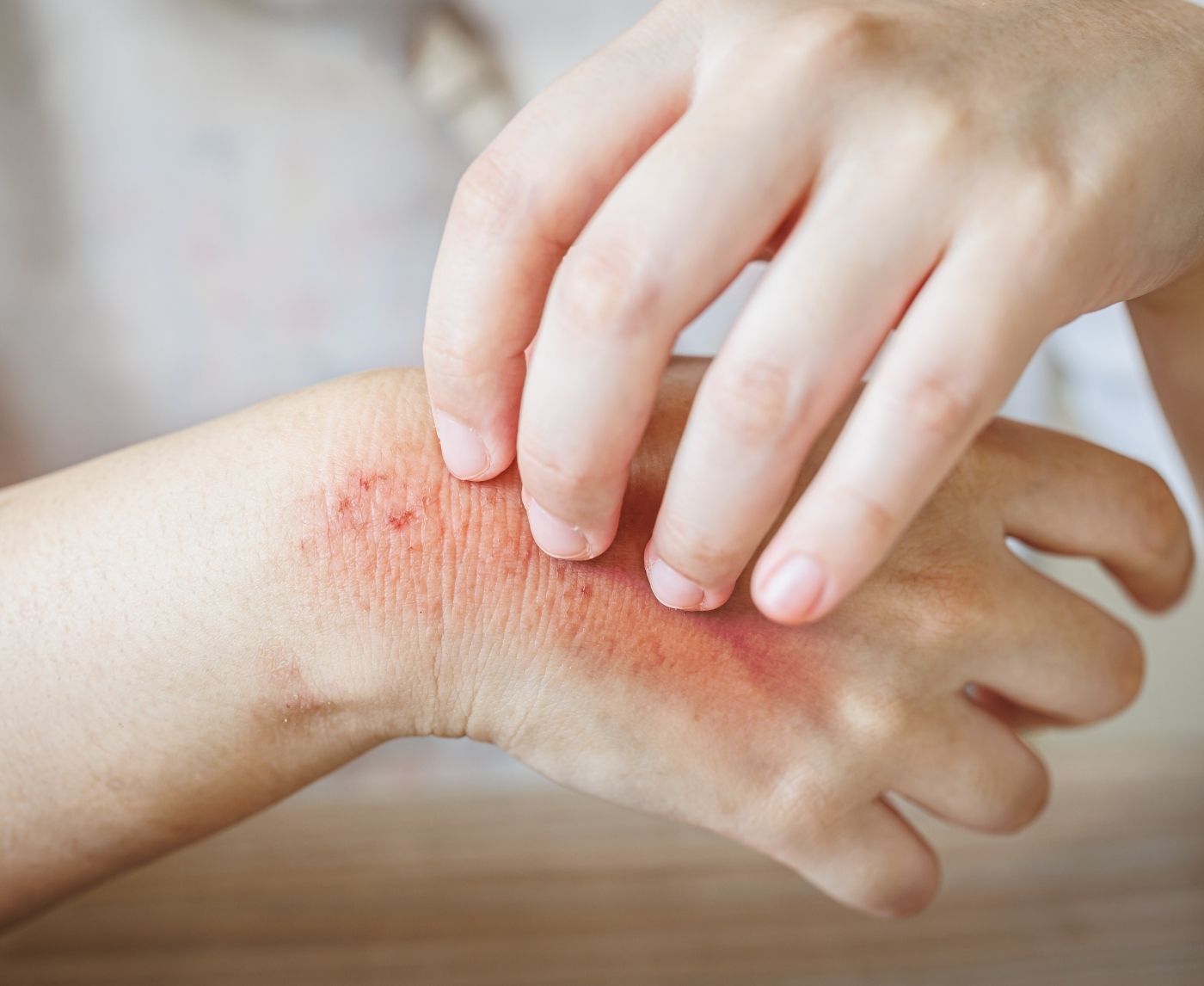

Quick Answer: Yes, syphilis can sometimes look like eczema. The rash that appears during secondary syphilis can cause dry, reddish patches that resemble eczema, dermatitis, or other skin conditions, which is why many people don’t recognize it as an STD at first.
Why Syphilis Rashes Fool So Many People
When most people picture a sexually transmitted infection, they imagine dramatic symptoms, painful sores, blisters, or something obviously wrong. Syphilis doesn’t always follow that script. In fact, its second stage often shows up as a rash that can blend into the background of everyday skin problems.
Dermatologists sometimes call syphilis “the great imitator” because it can mimic dozens of other conditions. Eczema, psoriasis, fungal infections, allergic reactions, and even heat rash have all been mistaken for syphilis at some point.
The reason comes down to timing. After the initial infection, many people develop a small painless sore that heals on its own. Weeks later, the infection spreads through the bloodstream and triggers a rash. By then, most people have forgotten the earlier sore entirely.
“I thought it was just dry skin,” said Luis, 29, describing the faint patches that appeared on his torso. “Nothing hurt, nothing itched. It just looked like eczema.”
This stage, called secondary syphilis, is where the confusion usually begins.
What a Syphilis Rash Actually Looks Like
The rash associated with secondary syphilis is surprisingly variable. Some people get flat red spots. Others develop slightly raised patches that resemble eczema or dermatitis. The texture can even feel dry or scaly.
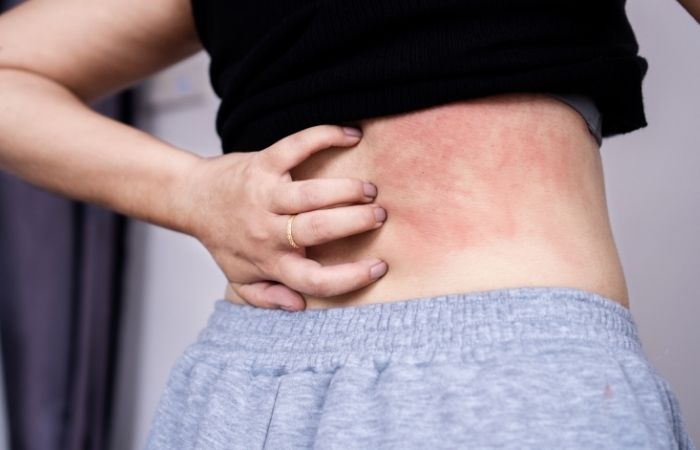
One of the biggest clues is location. Unlike typical eczema, which tends to cluster in specific areas like elbows or behind the knees, a syphilis rash can appear across multiple parts of the body at once.
The palms of the hands and soles of the feet are especially important. Few common skin conditions show up there, but syphilis frequently does.
| Feature | Typical Description |
|---|---|
| Color | Red, reddish-brown, or faint pink patches |
| Texture | Flat or slightly raised, sometimes dry or scaly |
| Itching | Often not itchy at all |
| Locations | Torso, arms, legs, palms, soles |
| Timing | Usually appears weeks after infection |
Because the rash can look subtle, people often search online phrases like “eczema or STD rash” or “rash after sex that looks like eczema.” These searches usually come from confusion rather than panic. Most people genuinely believe they’re dealing with something harmless.
Unfortunately, that uncertainty can delay testing for weeks or even months.
People are also reading: Tested Positive for Gonorrhea? What to Do in the First 24 Hours
Eczema vs. Syphilis: A Side-by-Side Reality Check
Eczema and syphilis rashes can overlap visually, but the way they behave tends to differ. Understanding those differences can help you decide whether it’s time to get checked.
| Characteristic | Eczema | Syphilis Rash |
|---|---|---|
| Itchiness | Usually very itchy | Often not itchy |
| Common locations | Elbows, knees, neck folds | Torso, palms, soles |
| Trigger | Allergies, dry skin, irritants | Bacterial infection |
| Spread pattern | Usually localized flare-ups | Often widespread |
| Other symptoms | Dryness and itching | Fatigue, swollen lymph nodes |
One key difference people notice is that eczema tends to flare in familiar spots. If you’ve had eczema before, your body usually repeats the same pattern.
A rash that suddenly appears in new places, especially the palms or soles, deserves a closer look.
The Symptoms That Sometimes Appear Alongside the Rash
Not everyone with syphilis feels sick, but some people experience subtle symptoms at the same time the rash appears. These can be mild enough that they’re easy to dismiss.
People sometimes describe feeling like they’re coming down with a light flu. Others notice swollen lymph nodes or fatigue that doesn’t quite make sense.
“I thought I was just run down from work,” said Danielle, 32. “The rash didn’t itch, so I assumed it was nothing serious.”
Some individuals also develop patchy hair loss or small sores inside the mouth. None of these symptoms alone confirm syphilis, but together they can create a pattern doctors recognize quickly.
The tricky part is that each symptom by itself can look ordinary. That’s why the infection often goes undiagnosed until someone finally decides to get tested.
When a Rash Appears After Sex
A surprising number of people first start worrying about syphilis after noticing a rash weeks after a new sexual encounter. The timing can feel confusing because symptoms rarely appear immediately.
Syphilis has an incubation period that can stretch several weeks. By the time the rash shows up, the original exposure may feel like distant history.
Here’s a simplified look at how the timeline usually unfolds.
| Stage | What Happens | Timing |
|---|---|---|
| Primary | Single painless sore appears | 10–90 days after exposure |
| Secondary | Rash and flu-like symptoms | Weeks after sore heals |
| Latent | No visible symptoms | Months or years |
Because the rash stage can happen long after the initial exposure, many people don’t connect the two events. That disconnect is one reason the infection spreads quietly.
If a rash appears and you’re unsure what it is, testing can provide clarity quickly. Many people choose discreet at-home testing options, like those available through STD Rapid Test Kits, because they don’t require scheduling a clinic appointment.
Check Your STD Status in Minutes
Test at Home with Remedium6-in-1 STD Rapid Test Kit

 For Men & Women
 Results in Minutes
 No Lab Needed
 Private & Discreet
Order Now $119.00 $294.00
For all 6 tests
Why Doctors Sometimes Miss a Syphilis Rash
It might feel surprising, but even experienced clinicians occasionally miss syphilis in its early or secondary stages. The reason is simple: the rash doesn’t follow a predictable script. It can look faint, patchy, dry, or almost identical to common skin problems like eczema or allergic dermatitis.
Dermatology textbooks often refer to syphilis as “the great imitator.” That phrase exists for a reason. The infection can mimic psoriasis, fungal infections, drug reactions, heat rash, and eczema. When someone already has a history of eczema or sensitive skin, it becomes even easier to misattribute the symptoms.
“I treated it like eczema for a month,” said Aaron, 34. “Steroid cream actually made the redness calm down a little, which made me even more convinced that’s what it was.”
Topical creams sometimes reduce redness temporarily, which can make the rash appear to improve even though the underlying infection is still active. That false reassurance delays testing, and the infection continues circulating through the body.
This is why sexual health specialists often recommend testing whenever a new rash appears alongside possible exposure, even if the rash doesn’t look obviously sexual-health related.
Small Clues That a Rash Might Not Be Eczema
Most people don’t jump straight to the conclusion that a rash might be an STD. That’s completely normal. Eczema and dermatitis are incredibly common, while syphilis still carries a lot of stigma and misunderstanding.
But there are a few patterns that make clinicians pause and look deeper. These patterns don't prove anything by themselves, but they can help you know when it might be a good idea to test.
| Possible Sign | Why It Matters |
|---|---|
| Rash appears on palms or soles | Few common skin conditions show up there |
| Rash spreads across multiple body areas | Syphilis often creates widespread patches |
| Rash doesn’t itch | Eczema usually causes intense itching |
| Recent sexual exposure | Timing can align with the secondary stage |
| Flu-like symptoms with rash | Secondary syphilis sometimes causes fatigue and swollen nodes |
None of these signs confirm anything on their own. But when several appear together, clinicians usually recommend testing rather than guessing.
What Testing for Syphilis Actually Looks Like
The good news is that testing for syphilis is straightforward. Most tests look for antibodies made by the immune system after being exposed to the bacteria Treponema pallidum in a small amount of blood.
In clinics, testing typically involves a quick blood draw. Results may come back within a few days depending on the laboratory.
At-home options are increasingly common as well. Many people prefer them because they remove the anxiety of sitting in a waiting room or explaining symptoms face-to-face.
If you want to test privately, options like the STD Rapid Test Kits homepage provide discreet home testing kits that can detect several common infections, including syphilis.
These tests usually involve a small finger-prick blood sample. Results appear on a cassette similar to a pregnancy test, allowing people to get answers from home.
The key factor with any STD test is timing.
Why timing is important for getting the right results
After being exposed, the body needs time to make antibodies that can be found. This time is known as the "window period." Sometimes, testing too soon can give a false negative even when the infection is there.
For syphilis, most modern tests become reliable several weeks after exposure.
| Time After Exposure | Test Reliability |
|---|---|
| 1–2 weeks | Often too early for reliable detection |
| 3–6 weeks | Most infections become detectable |
| 6+ weeks | Very high detection accuracy |
If symptoms appear before the window period ends, clinicians sometimes recommend retesting a few weeks later. This ensures early infections aren’t missed.
The important thing to remember is that testing provides clarity. Guessing rarely does.

People are also reading: How to Use an At-Home Gonorrhea Rapid Test and Read the Results
The Part Most People Don’t Expect: Treatment Is Straightforward
One of the biggest fears people have when they start wondering about STDs is that treatment will be complicated or life-altering. With syphilis, that fear usually isn’t justified.
When detected early, treatment typically involves antibiotics that clear the infection effectively. In many cases a single injection is enough. The earlier the infection is caught, the simpler treatment tends to be.
Public health experts emphasize this point constantly: syphilis is highly treatable when diagnosed early. The biggest risk comes from delayed detection.
“The hardest part for most patients isn’t treatment,” one sexual health nurse explained. “It’s the weeks they spend worrying before they finally get tested.”
That’s why health professionals encourage people not to wait if something feels unusual. A quick test can replace uncertainty with real information.
How the Rash Can Look Different on Different Skin Tones
One reason the syphilis rash causes so much confusion is that it doesn’t look the same on everyone. Skin tone plays a major role in how redness, discoloration, and texture appear. What looks like faint pink patches on lighter skin may appear darker brown, purplish, or slightly gray on deeper skin tones.
Because many online photos focus on lighter complexions, people with darker skin sometimes don’t recognize the rash at all. Instead of obvious redness, the skin may simply look slightly darker or feel rough in patches. It can resemble dry skin, eczema, or even a mild allergic reaction.
Dermatologists often emphasize texture rather than color when evaluating a rash. In secondary syphilis, the skin may feel slightly raised or rough even when the color change is subtle. People sometimes describe the rash as “sandpapery” or dry.
“It just looked like uneven dry spots,” said Nia, 27. “I assumed it was eczema because my skin gets dry in the winter.”
This is why relying solely on photos or online comparisons can be misleading. Two people with the same infection may see very different-looking rashes depending on their skin tone.
What Happens If the Rash Disappears
One of the most confusing parts of syphilis is that symptoms can vanish even when the infection is still present. The rash from secondary syphilis often fades on its own after several weeks.
For someone who assumed they were dealing with eczema, that disappearance can feel like confirmation that nothing serious was happening. Moisturizer helped. Time passed. The rash faded. Problem solved.
But the rash doesn't mean that the syphilis infection is gone. The bacteria may instead enter what doctors call the latent stage, where there are few or no symptoms.
This silent period can last months or even years. During that time the infection can still affect the body internally, which is why early detection is so important.
Testing is the only reliable way to know whether the rash was harmless irritation or something that needs treatment.
Why Online Symptom Searching Gets Confusing
Most people don’t run to a doctor the moment they notice a rash. They do what almost everyone does: they search the internet. Terms like “rash that looks like eczema STD” or “syphilis rash vs eczema” bring up a huge range of images and explanations.
The problem is that these images often show only extreme cases. Real-life symptoms frequently look much milder. A rash might consist of a few faint patches rather than dramatic spots covering the entire body.
Another challenge is that eczema itself has many variations. Some forms cause redness and itching, while others appear as dry, scaly patches that barely itch at all. That overlap makes self-diagnosis incredibly difficult.
In clinical practice, doctors usually rely on a combination of information: symptoms, timing, medical history, and testing. The rash alone rarely tells the whole story.
Check Your STD Status in Minutes
Test at Home with Remedium8-in-1 STD Test Kit
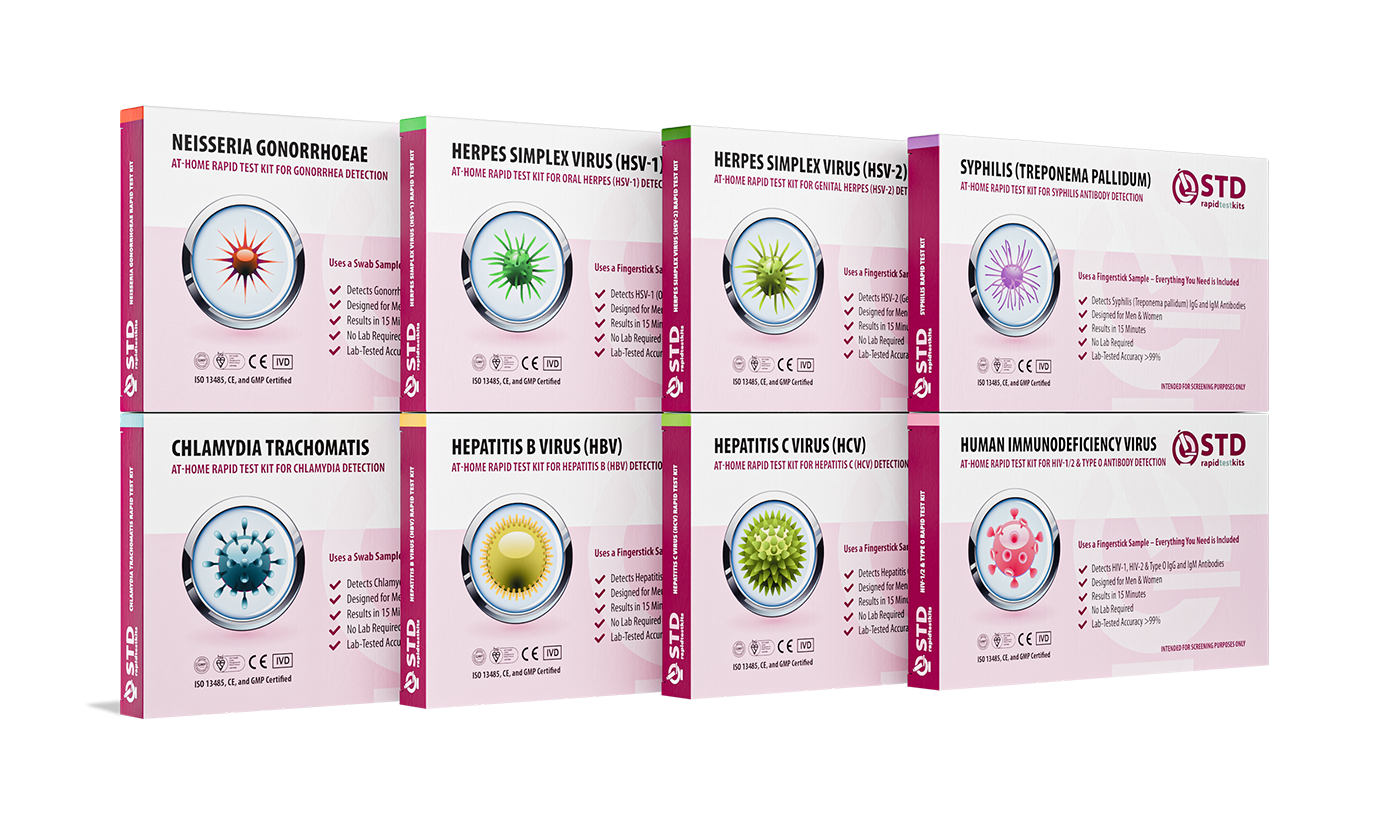 For Men & WomenResults in MinutesNo Lab NeededPrivate & Discreet
Order Now $149.00 $392.00
For all 8 tests
When It’s Worth Getting Tested
Testing isn’t only for people who feel certain something is wrong. In sexual health, testing is often about ruling things out. A quick negative result can bring enormous peace of mind.
Most clinicians suggest considering testing in situations like these:
- A new rash appears after a sexual encounter and doesn’t behave like your usual skin issues.
- The rash spreads beyond the areas where eczema normally appears.
- The rash appears on the palms or soles, which is uncommon for eczema.
- Other symptoms appear, such as fatigue, swollen lymph nodes, or mouth sores.
If any of these scenarios feel familiar, testing can provide a straightforward answer. A lot of people choose private options like the at-home STD testing kits we have here, which let you test without having to go to a clinic.
Getting tested doesn’t mean you expect a positive result. It simply means you want reliable information instead of guessing.
A Quick Word About Stigma and Skin Symptoms
There’s still a lot of stigma around sexually transmitted infections, which is one reason people hesitate to consider them as a possibility. But infections like syphilis are medical conditions, not moral judgments.
Public health data shows that syphilis cases have been increasing in many countries over the past decade. That rise isn’t happening because people are reckless, it’s happening because infections can spread quietly when symptoms are subtle or mistaken for other conditions.
Skin symptoms are one of the body’s ways of signaling that something unusual is happening. Sometimes that signal points to eczema, allergies, or dryness. Occasionally it points to an infection that needs treatment.
The important thing is responding with curiosity rather than shame. Your health deserves clarity.
FAQs
1. Wait… can syphilis actually look like eczema?
It absolutely can. That’s part of why doctors sometimes call syphilis “the great imitator.” The rash that shows up in the secondary stage can look like dry patches, faint red spots, or rough areas that resemble eczema or dermatitis. More than one patient has walked in saying, “I swear it’s just dry skin,” only to discover it was something else entirely.
2. If it’s syphilis, why doesn’t the rash itch like eczema?
That’s one of the weird giveaways. Eczema usually itches like crazy, people scratch in their sleep, tear up their skin, the whole thing. A syphilis rash, on the other hand, often just sits there quietly. It may look irritated, but it doesn’t demand attention the same way eczema does.
3. Where on the body does the syphilis rash usually show up?
The rash can appear almost anywhere, but a classic clue is the palms of the hands or the soles of the feet. That’s not common for eczema. When doctors see a rash in those spots, especially if it’s paired with fatigue or swollen lymph nodes, they usually start thinking about syphilis pretty quickly.
4. Could someone treat it like eczema and not realize what it is?
That happens more often than people think. Someone notices dry patches, grabs moisturizer or steroid cream, and the redness fades a little. That temporary improvement can make it seem like eczema even when the infection is still present underneath.
5. How long after sex would a syphilis rash show up?
Usually not right away. The rash often appears several weeks after infection, sometimes long after the original exposure. That delay is part of what makes it confusing, by the time the rash shows up, people aren’t always connecting it to a sexual encounter from a month earlier.
6. What if the rash disappears on its own?
People are surprised by this: the rash can go away even when the infection is still in the body. It might look like everything cleared up, but syphilis can move into a silent stage where symptoms disappear for a while. That’s why testing matters more than guessing.
7. Is there a way to know for sure just by looking at the rash?
Not really. Skin can be deceptive. Doctors can sometimes spot patterns that make them suspicious, but a test is the only reliable way to confirm whether syphilis is present. Visual clues help guide the investigation, they don’t finish it.
8. Do I have to go to a clinic to get tested?
Clinics are one option, but they’re not the only one anymore. Many people use discreet at-home STD tests because they can check things privately and get answers quickly. For people who feel nervous walking into a clinic, that option can make testing much easier.
9. If it turns out to be syphilis, is treatment complicated?
Thankfully, no. When caught early, syphilis is typically treated with antibiotics that clear the infection effectively. The real challenge is usually the uncertainty beforehand, not the treatment afterward.
10. So when should someone stop guessing and just get tested?
If a rash looks unusual, spreads in strange places, or shows up after a new sexual encounter, testing is simply the smartest move. Think of it less like assuming the worst and more like checking the smoke alarm when it beeps. Most of the time it’s nothing, but you’ll sleep a lot better knowing for sure.
You Deserve Clarity, Not Guesswork
Most rashes really are harmless. Dry skin. A reaction to soap. A flare of eczema that shows up when the weather changes. But every now and then the body throws a signal that deserves a closer look, and syphilis happens to be one of the conditions that can hide behind ordinary-looking skin.
The goal isn’t to panic over every patch of redness. The goal is to separate normal skin irritation from something that deserves a simple test. If a rash shows up in unfamiliar places, behaves differently than your usual eczema, or appears after a new sexual encounter, testing replaces uncertainty with actual answers.
Don’t sit with the question longer than you need to. If infection is even a small possibility, start with a discreet screen like the Combo STD Home Test Kit. Results stay private. The process is straightforward. And clarity feels a lot better than guessing.
How We Sourced This Article: This guide combines current clinical guidance on syphilis diagnosis with peer-reviewed dermatology and infectious disease research. We reviewed medical literature on secondary syphilis rash patterns, diagnostic testing windows, and common conditions that mimic STD-related skin symptoms, including eczema and dermatitis. Only established medical authorities and research publications were used to support the clinical explanations presented here.
Sources
1. Centers for Disease Control and Prevention – Syphilis Fact Sheet
2. World Health Organization – Syphilis Fact Sheet
4. Planned Parenthood – Syphilis Information
5. DermNet NZ – Cutaneous Signs of Syphilis
6. Medscape – Syphilis Clinical Overview
7. StatPearls (NCBI Bookshelf) – Syphilis
About the Author
Dr. F. David, MD is a board-certified infectious disease specialist focused on STI prevention, diagnosis, and treatment. His work centers on translating clinical evidence into clear, stigma-free guidance that helps people make informed decisions about their sexual health.
Reviewed by: Karen Mitchell, MD, Infectious Disease | Last medically reviewed: February 2026
This article is only for informational purposes and should not be used instead of professional medical advice, diagnosis, or treatment.


